Custodial Parent Under With Child
Description
Get your form ready online
Our built-in tools help you complete, sign, share, and store your documents in one place.
Make edits, fill in missing information, and update formatting in US Legal Forms—just like you would in MS Word.
Download a copy, print it, send it by email, or mail it via USPS—whatever works best for your next step.
Sign and collect signatures with our SignNow integration. Send to multiple recipients, set reminders, and more. Go Premium to unlock E-Sign.
If this form requires notarization, complete it online through a secure video call—no need to meet a notary in person or wait for an appointment.
We protect your documents and personal data by following strict security and privacy standards.

Make edits, fill in missing information, and update formatting in US Legal Forms—just like you would in MS Word.

Download a copy, print it, send it by email, or mail it via USPS—whatever works best for your next step.

Sign and collect signatures with our SignNow integration. Send to multiple recipients, set reminders, and more. Go Premium to unlock E-Sign.

If this form requires notarization, complete it online through a secure video call—no need to meet a notary in person or wait for an appointment.

We protect your documents and personal data by following strict security and privacy standards.
Looking for another form?







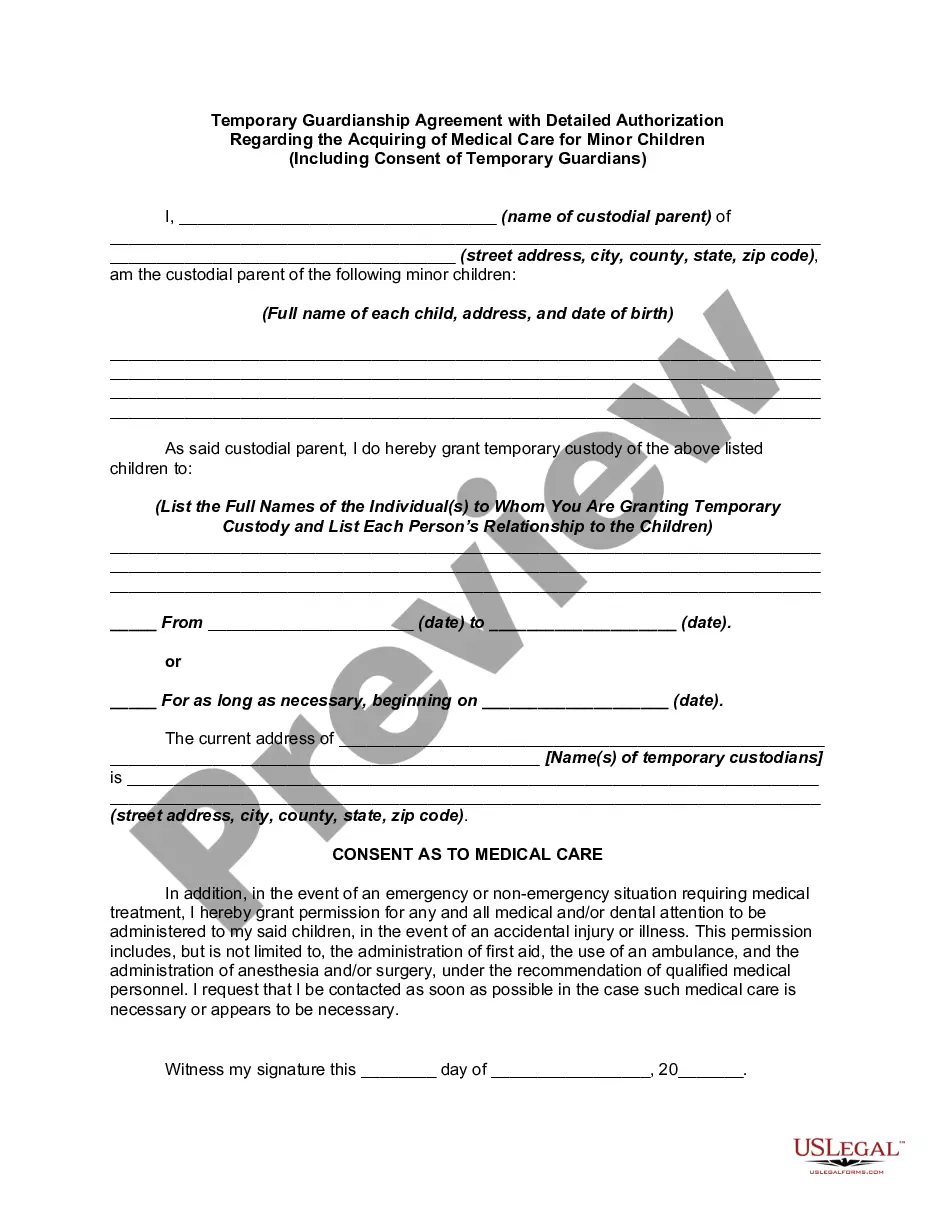
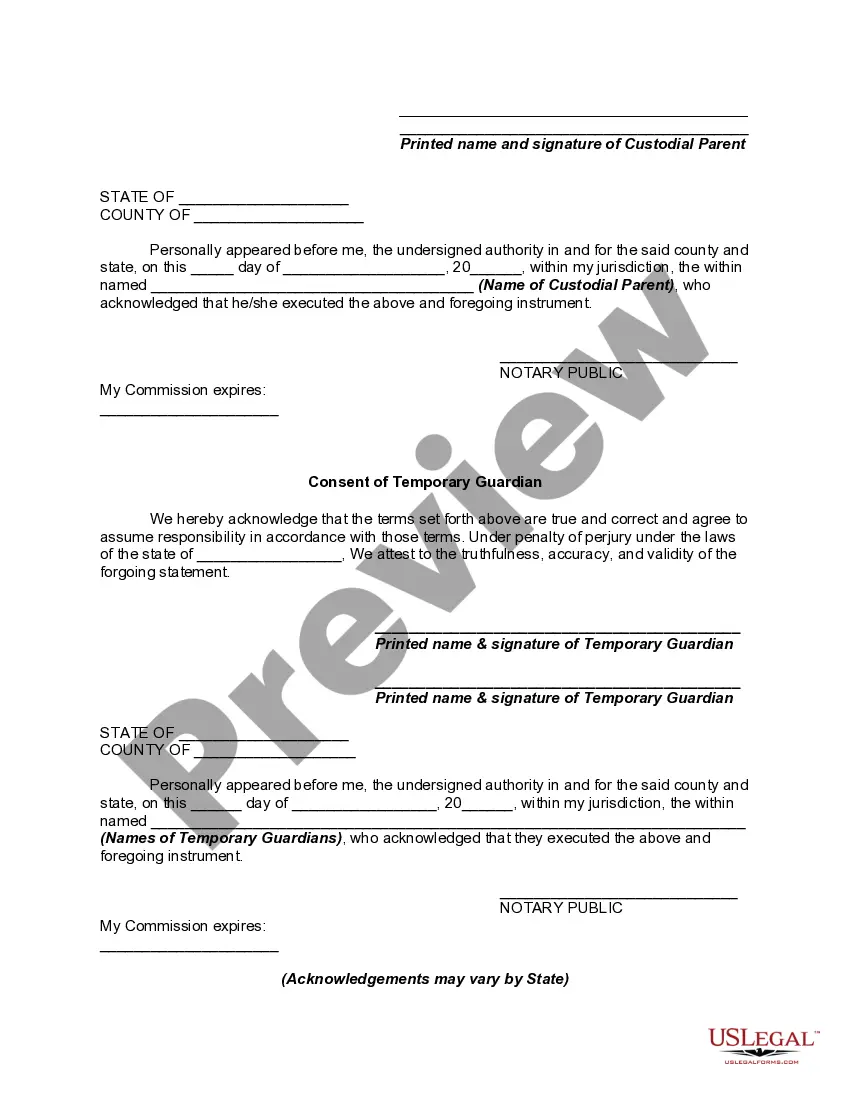
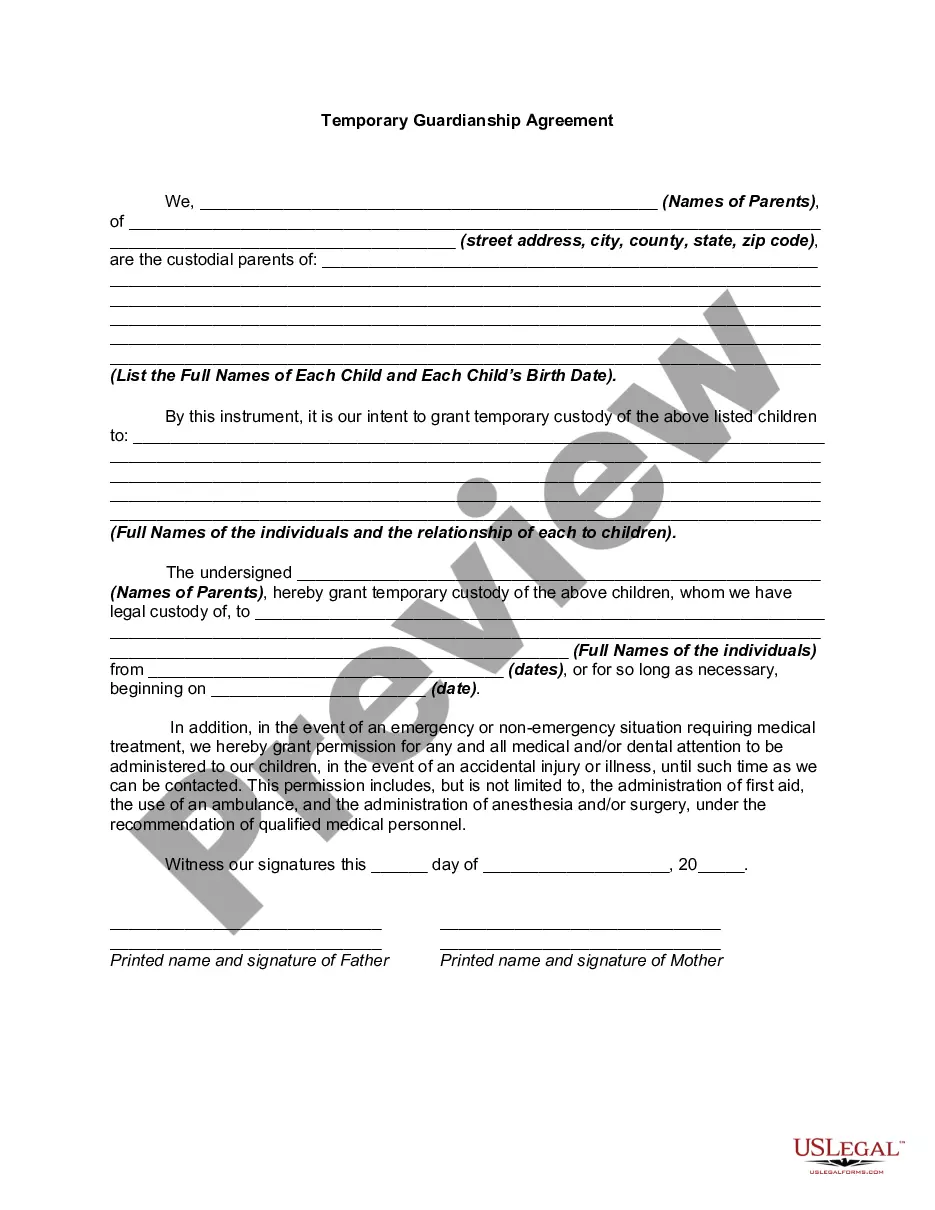
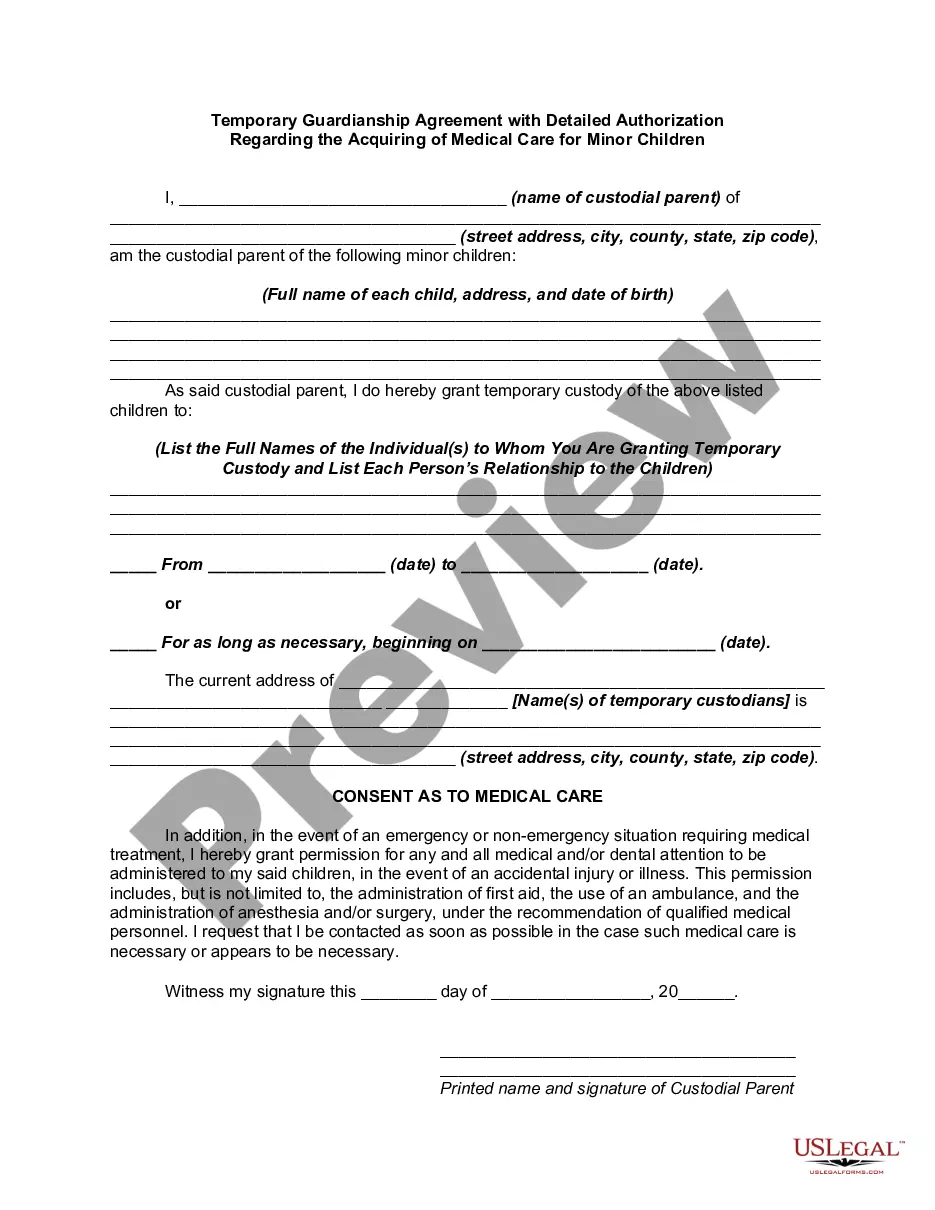
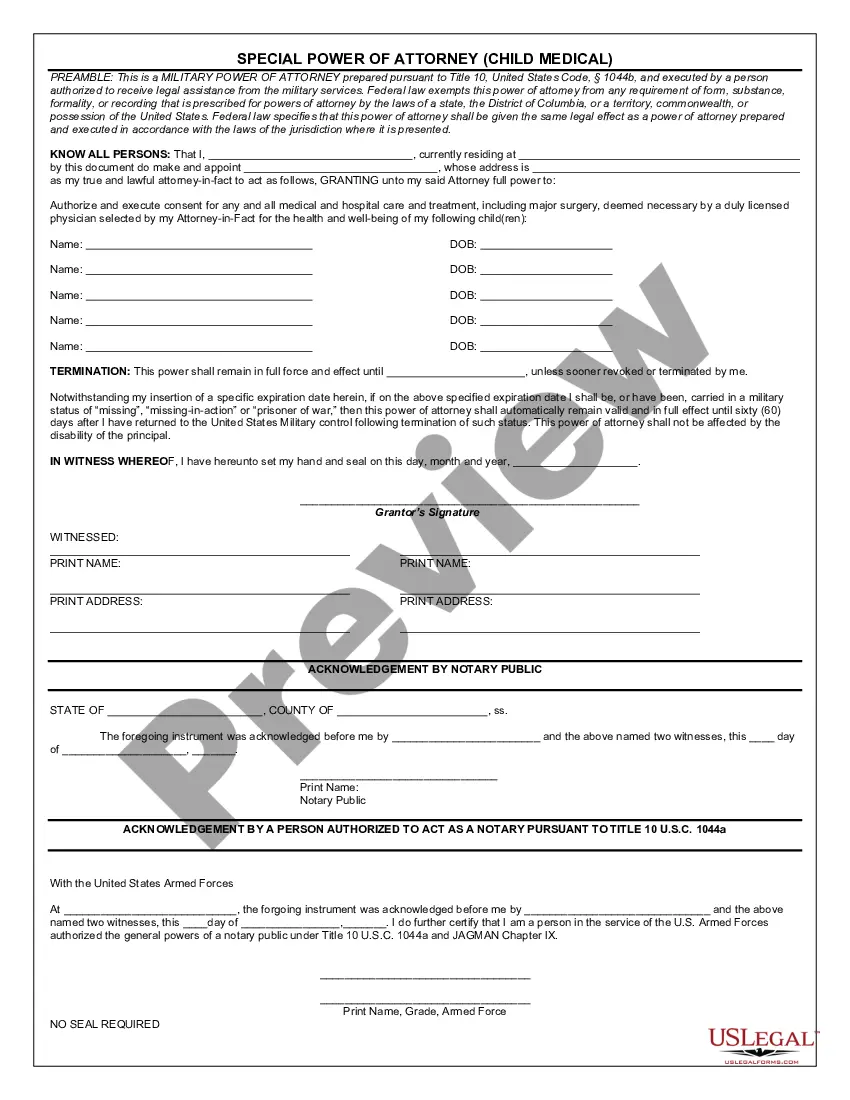
How to fill out Temporary Guardianship Agreement With Detailed Authorization Regarding The Acquiring Of Medical Care For Minor Children - Including Consent Of Temporary Guardians?
Whether for professional reasons or personal issues, everyone encounters legal matters at some point in their lives. Completing legal paperwork requires meticulous consideration, starting from selecting the correct form template.
For instance, if you select an incorrect version of the Custodial Parent Under With Child, it will be rejected once you submit it. Thus, it is crucial to have a dependable source of legal documents like US Legal Forms.
With an extensive catalog from US Legal Forms available, you no longer need to waste time searching for the correct template online. Utilize the library’s straightforward navigation to find the right form for any circumstance.
- Locate the template you require by using the search bar or browsing the catalog.
- Review the form’s details to ensure it aligns with your case, state, and locality.
- Click on the form’s preview to inspect it.
- If it is the incorrect document, return to the search function to find the Custodial Parent Under With Child template you need.
- Download the file if it is suitable for your requirements.
- If you have a US Legal Forms account, simply click Log in to access previously saved documents in My documents.
- In case you don’t have an account yet, you can download the form by clicking Buy now.
- Select the appropriate pricing option.
- Fill out the account registration form.
- Choose your payment method: use a credit card or PayPal account.
- Choose the document format you prefer and download the Custodial Parent Under With Child.
- Once it is downloaded, you can complete the form with the aid of editing software or print it and fill it out by hand.
Form popularity
FAQ
To promote a positive co-parenting experience, focus on clear communication and mutual respect. Create a structured parenting plan that benefits the child while respecting each parent's role. Engaging in mediation or seeking legal support from platforms like US Legal Forms can further streamline the process and reduce stress. By working together, custodial parents under with child can build a cooperative relationship that nurtures their child's needs.
Co-parenting is not about merely sharing time with the child without effective communication or collaboration. It also doesn't entail one parent undermining the authority or decisions of the other. Instead, successful co-parenting focuses on cooperation, mutual respect, and maintaining a stable environment for the child, especially under the custodial parent under with child arrangement.
This is a common misconception. A child under 18 does not have a legal right to refuse visitation. However, children aged 12 and older can express their wishes to the judge. The judge can then consider the child's preference but isn't obligated to follow it.
At 12 years old, your child can have a say in who they would prefer to live with going forward. This measure is sometimes called ?teenage discretion.? The idea is that a child can make logical decisions about how much time they want to spend with each parent.
What Age Does a Child Have a Say in Custody? Although children cannot officially decide which parent they want to live with until they are 18 years old, Texas law does allow children that are 12 or older to have a say in where they'd like to live, but ultimately a judge will make the final decision.
It's not uncommon for a child, especially a teenager, to express a desire to live with one parent over the other. In Texas, a child is not allowed to unilaterally make that decision. However, there is a mechanism in place in which they can make their wishes known to the judge.
CP = Custodial Parent. CRC = California Rules of Court. CSC = Custody Settlement Conference.