Accounting For Insurance
Description
Get your form ready online
Our built-in tools help you complete, sign, share, and store your documents in one place.
Make edits, fill in missing information, and update formatting in US Legal Forms—just like you would in MS Word.
Download a copy, print it, send it by email, or mail it via USPS—whatever works best for your next step.
Sign and collect signatures with our SignNow integration. Send to multiple recipients, set reminders, and more. Go Premium to unlock E-Sign.
If this form requires notarization, complete it online through a secure video call—no need to meet a notary in person or wait for an appointment.
We protect your documents and personal data by following strict security and privacy standards.

Make edits, fill in missing information, and update formatting in US Legal Forms—just like you would in MS Word.

Download a copy, print it, send it by email, or mail it via USPS—whatever works best for your next step.

Sign and collect signatures with our SignNow integration. Send to multiple recipients, set reminders, and more. Go Premium to unlock E-Sign.

If this form requires notarization, complete it online through a secure video call—no need to meet a notary in person or wait for an appointment.

We protect your documents and personal data by following strict security and privacy standards.
Looking for another form?


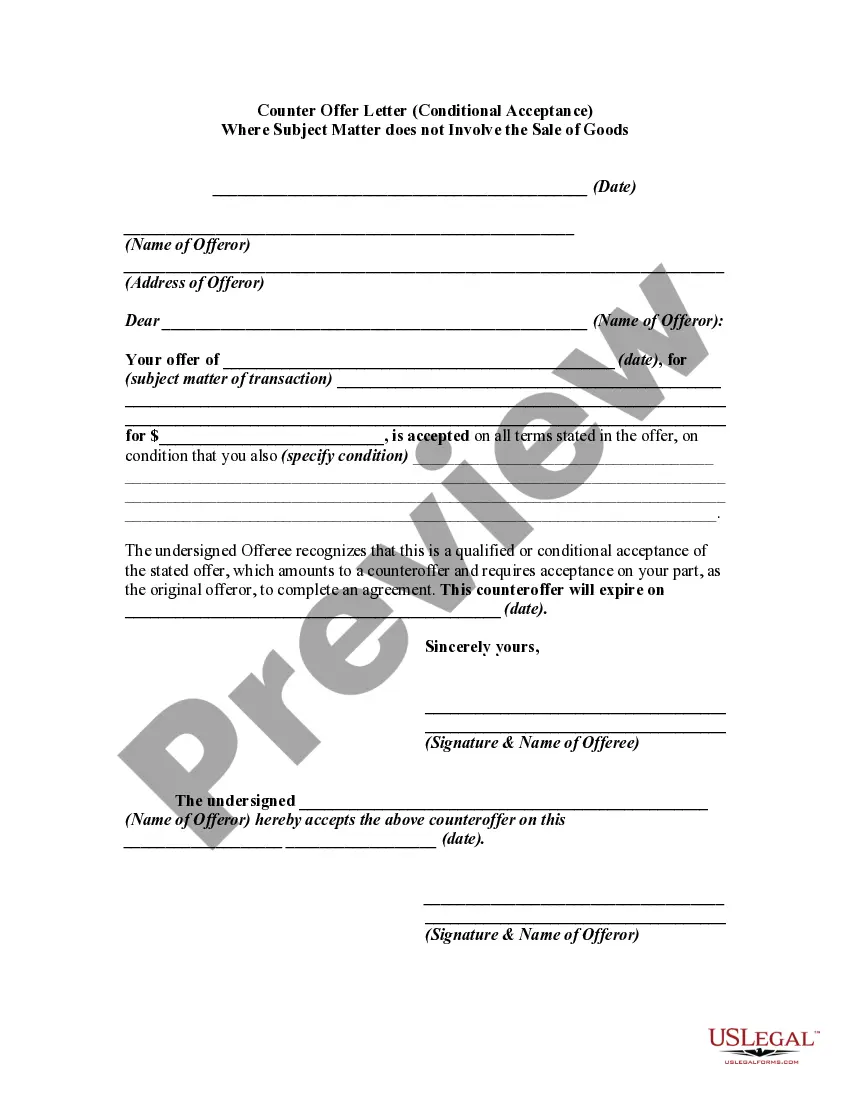



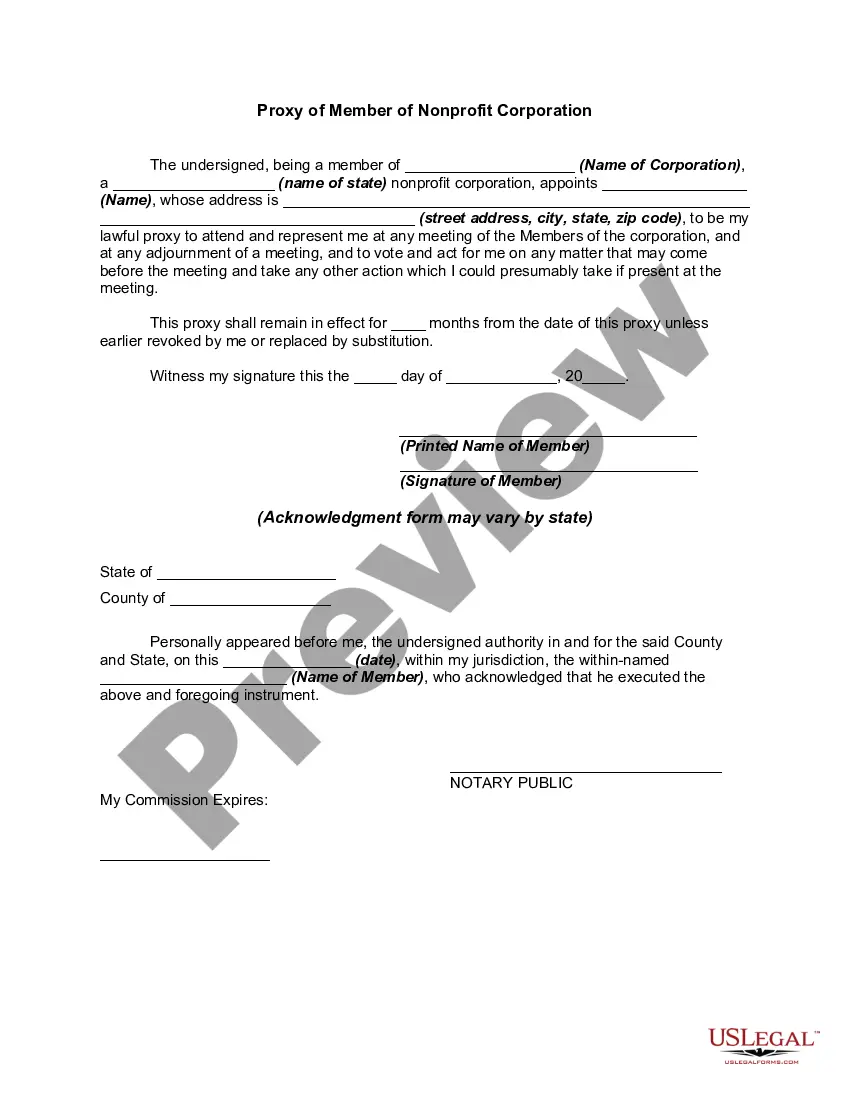


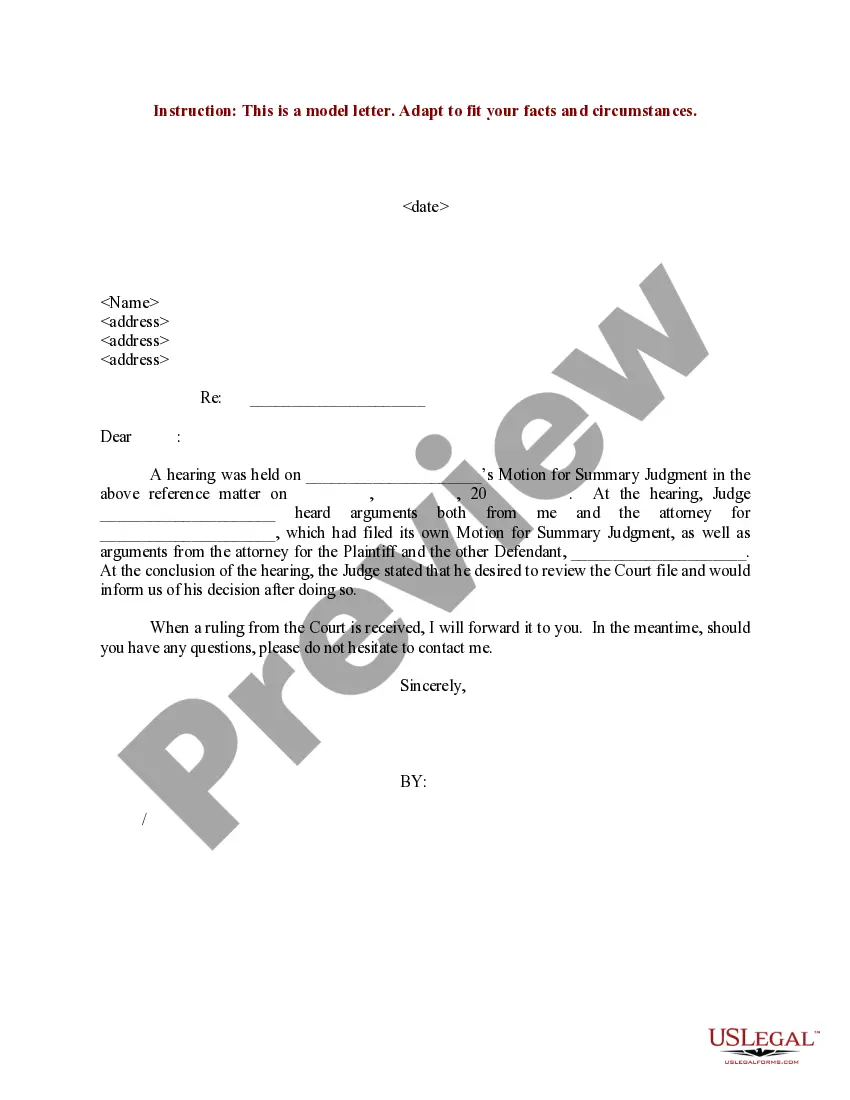
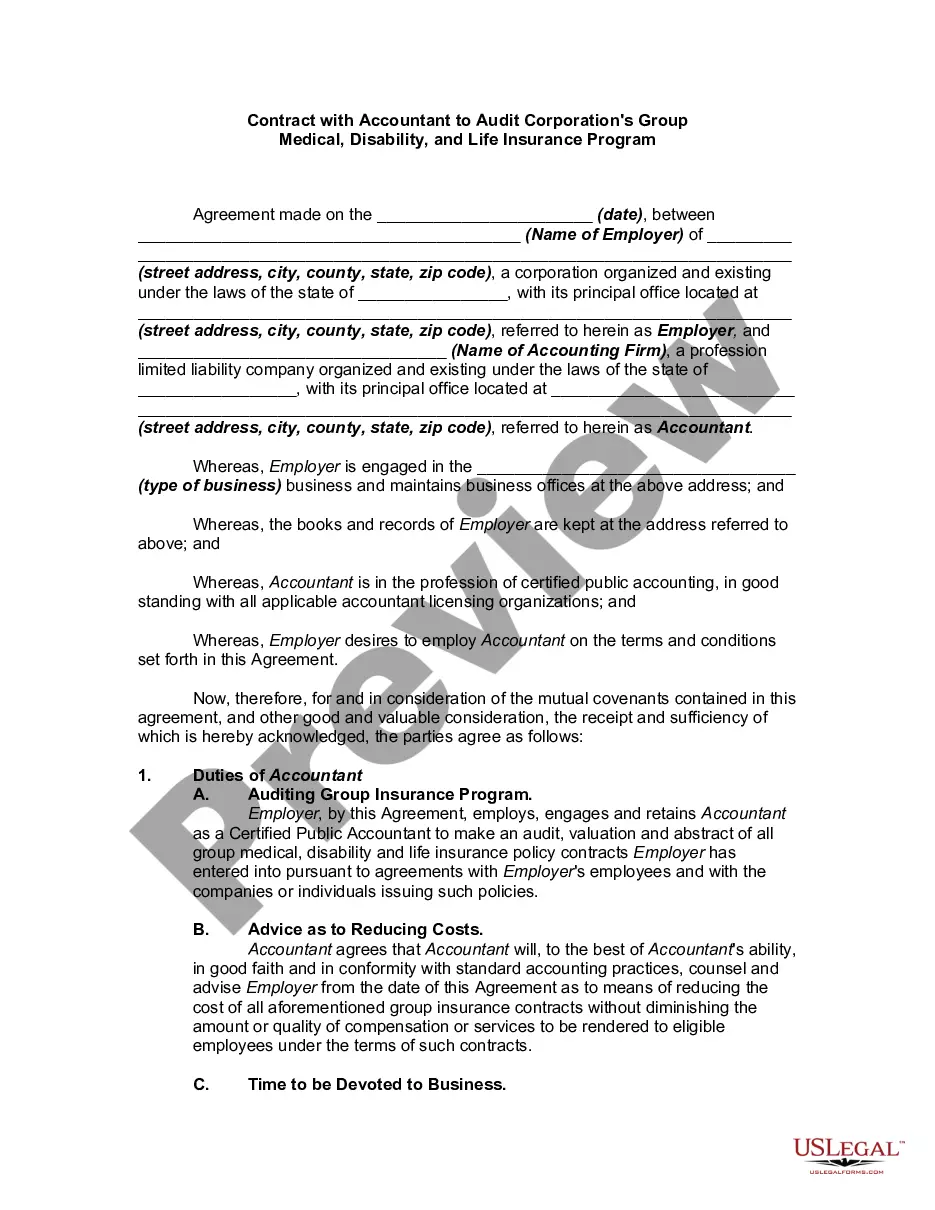
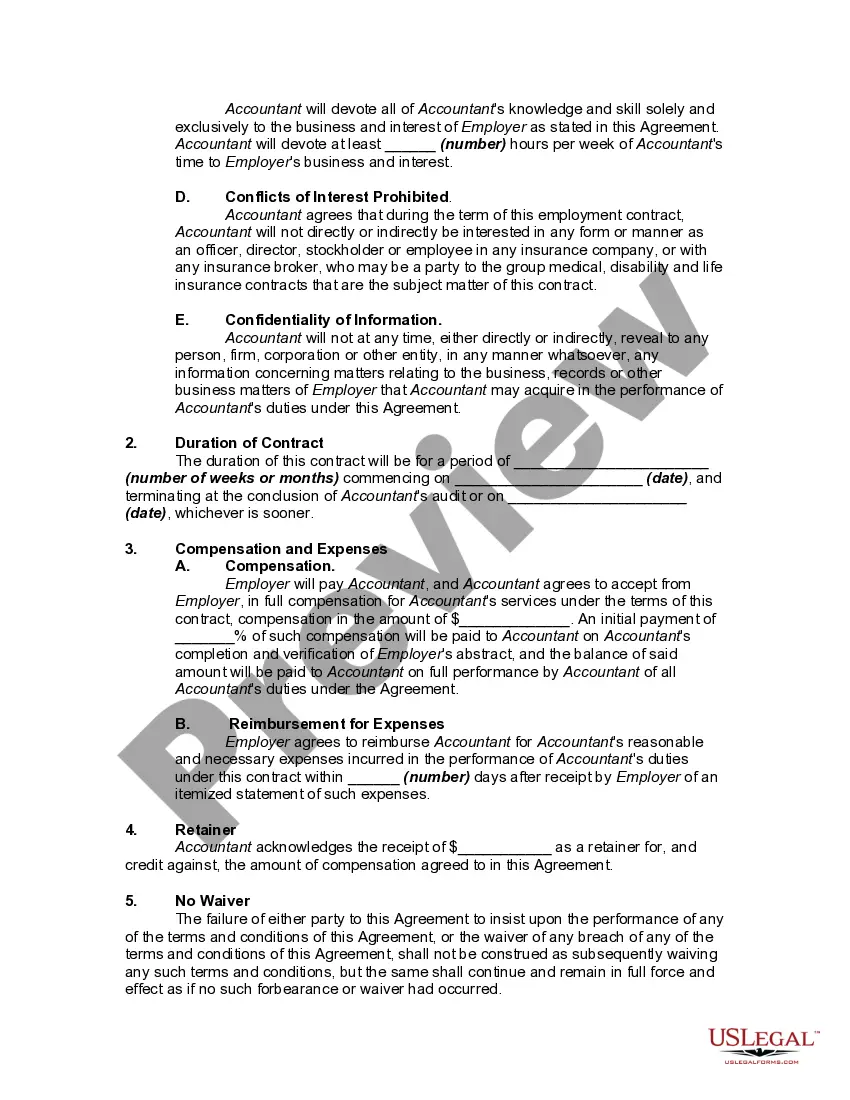
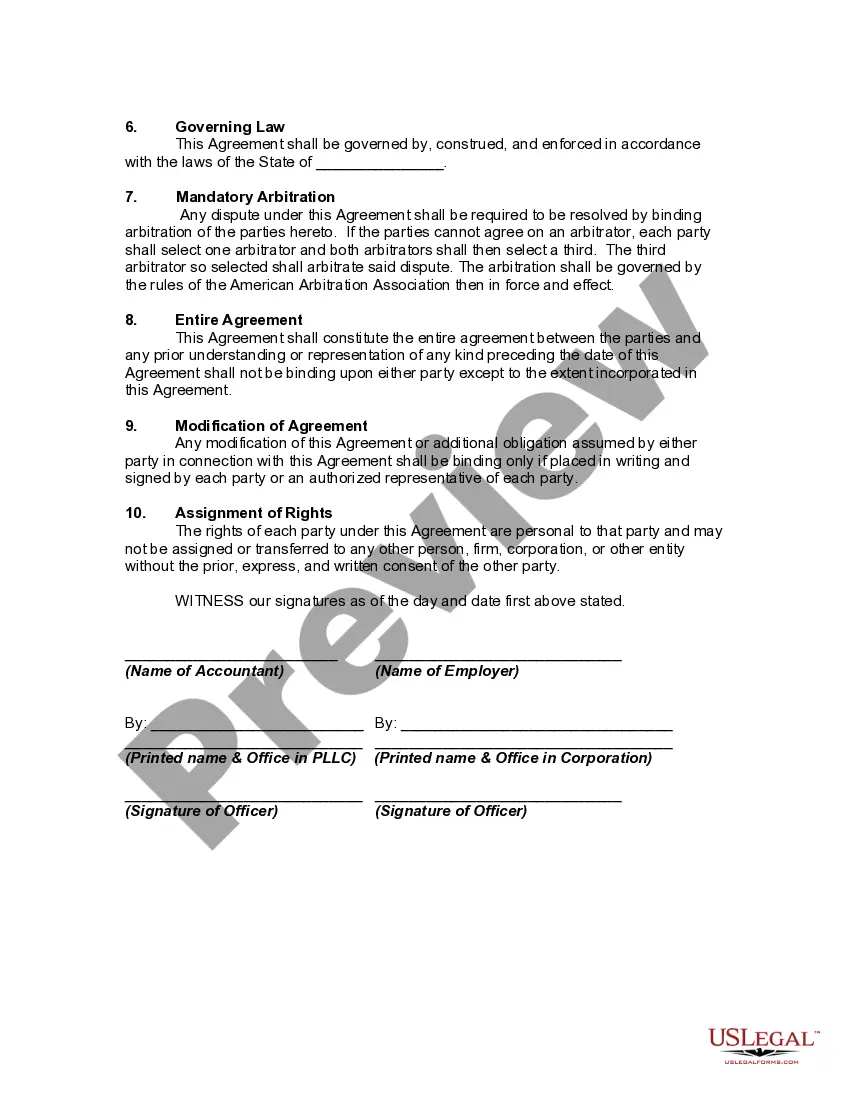
How to fill out Contract With Accountant To Audit Corporation's Group Medical, Disability, And Life Insurance Program?
Dealing with legal documents and procedures can be a lengthy addition to your schedule.
Accounting For Insurance and similar forms often necessitate searching for them and comprehending how to fill them out accurately.
For this reason, whether you are managing financial, legal, or personal issues, having a comprehensive and efficient online repository of forms readily available will be immensely beneficial.
US Legal Forms is the premier online platform for legal documents, featuring over 85,000 state-specific templates and various tools to assist you in completing your paperwork with ease.
Is this your first time using US Legal Forms? Create an account and set it up in a few minutes to access the form library and Accounting For Insurance. Then, follow these steps to fill out your form: Ensure you have identified the correct form using the Preview feature and reviewing the form details. Select Buy Now when ready, and choose the monthly subscription plan that suits you best. Click Download then complete, sign, and print the form. US Legal Forms has twenty-five years of experience assisting clients with their legal documents. Obtain the form you require today and streamline any process without effort.
- Browse the collection of relevant documents available to you with just one click.
- US Legal Forms provides state- and county-specific forms accessible for download at any time.
- Protect your document management processes with a high-quality service that enables you to prepare any form within minutes without any extra or concealed charges.
- Simply sign in to your account, locate Accounting For Insurance, and download it instantly from the My documents section.
- You can also access forms you have saved previously.
Form popularity
FAQ
Insurance expense refers to the cost incurred by a business or an individual for obtaining insurance coverage. These costs are paid as premiums to an insurance company and are typically accounted for as expense items in the entity's financial statements.
Protection Expenses This expense category is typically used for all types of insurance, such as property insurance, health insurance, and liability insurance.
The following journal entry can be used to record the insurance claim: Debit: Insurance Claim Receivable (Assets) - Increase in the amount of insurance claim receivable. Credit: Loss on Damaged Goods (Expenses) - Record the loss incurred due to damaged goods.
Statutory Accounting Principles, also known as SAP, are used to prepare the financial statements of insurance companies. In the United States, authorized insurers are required to prepare financial information ing to SAP.
Any insurance premium costs that have not expired as of the balance sheet date should be reported as a current asset such as Prepaid Insurance. The costs that have expired should be reported in income statement accounts such as Insurance Expense, Fringe Benefits Expense, etc.