Beneficiary Bank
Description
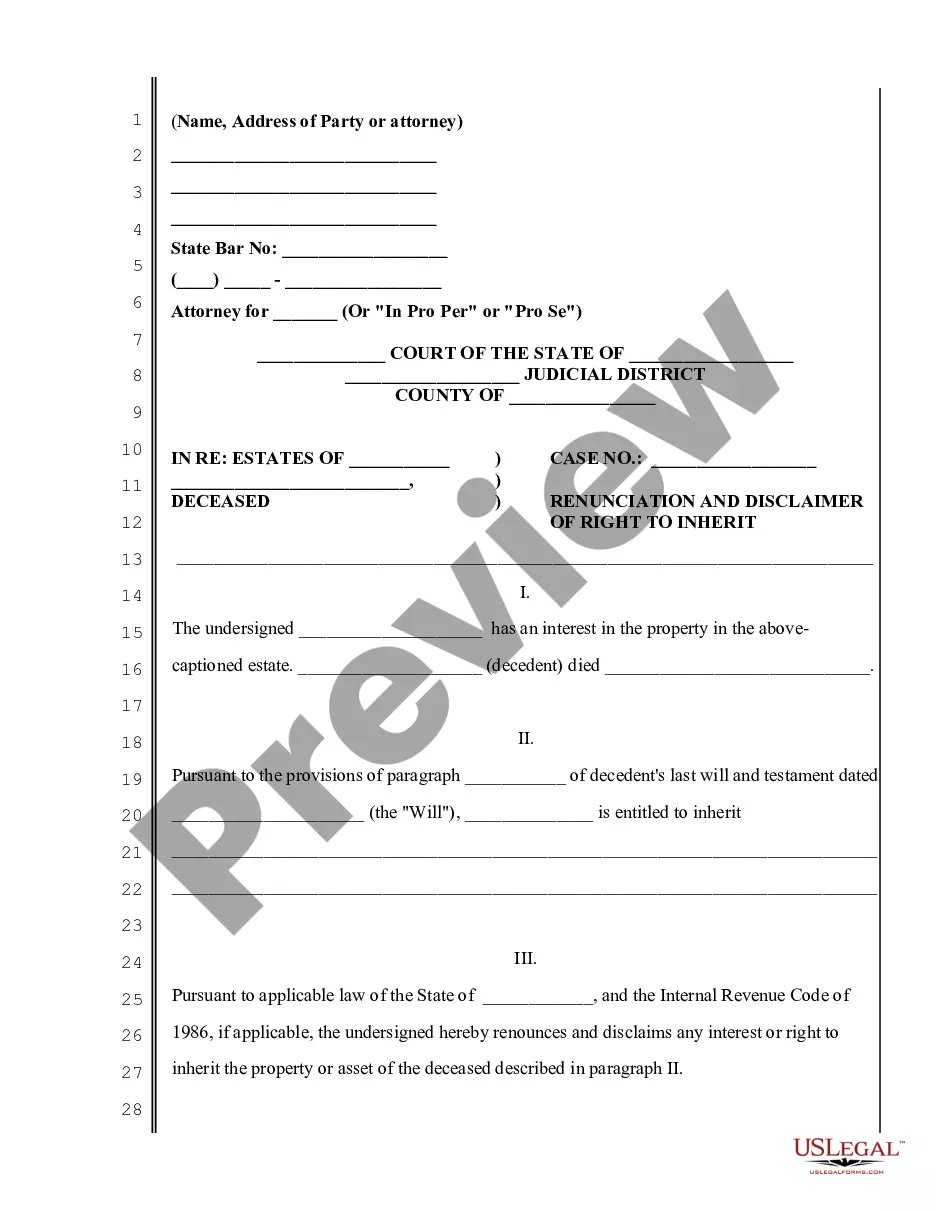
Get your form ready online
Our built-in tools help you complete, sign, share, and store your documents in one place.
Make edits, fill in missing information, and update formatting in US Legal Forms—just like you would in MS Word.
Download a copy, print it, send it by email, or mail it via USPS—whatever works best for your next step.
Sign and collect signatures with our SignNow integration. Send to multiple recipients, set reminders, and more. Go Premium to unlock E-Sign.
If this form requires notarization, complete it online through a secure video call—no need to meet a notary in person or wait for an appointment.
We protect your documents and personal data by following strict security and privacy standards.

Make edits, fill in missing information, and update formatting in US Legal Forms—just like you would in MS Word.

Download a copy, print it, send it by email, or mail it via USPS—whatever works best for your next step.

Sign and collect signatures with our SignNow integration. Send to multiple recipients, set reminders, and more. Go Premium to unlock E-Sign.

If this form requires notarization, complete it online through a secure video call—no need to meet a notary in person or wait for an appointment.

We protect your documents and personal data by following strict security and privacy standards.
Looking for another form?






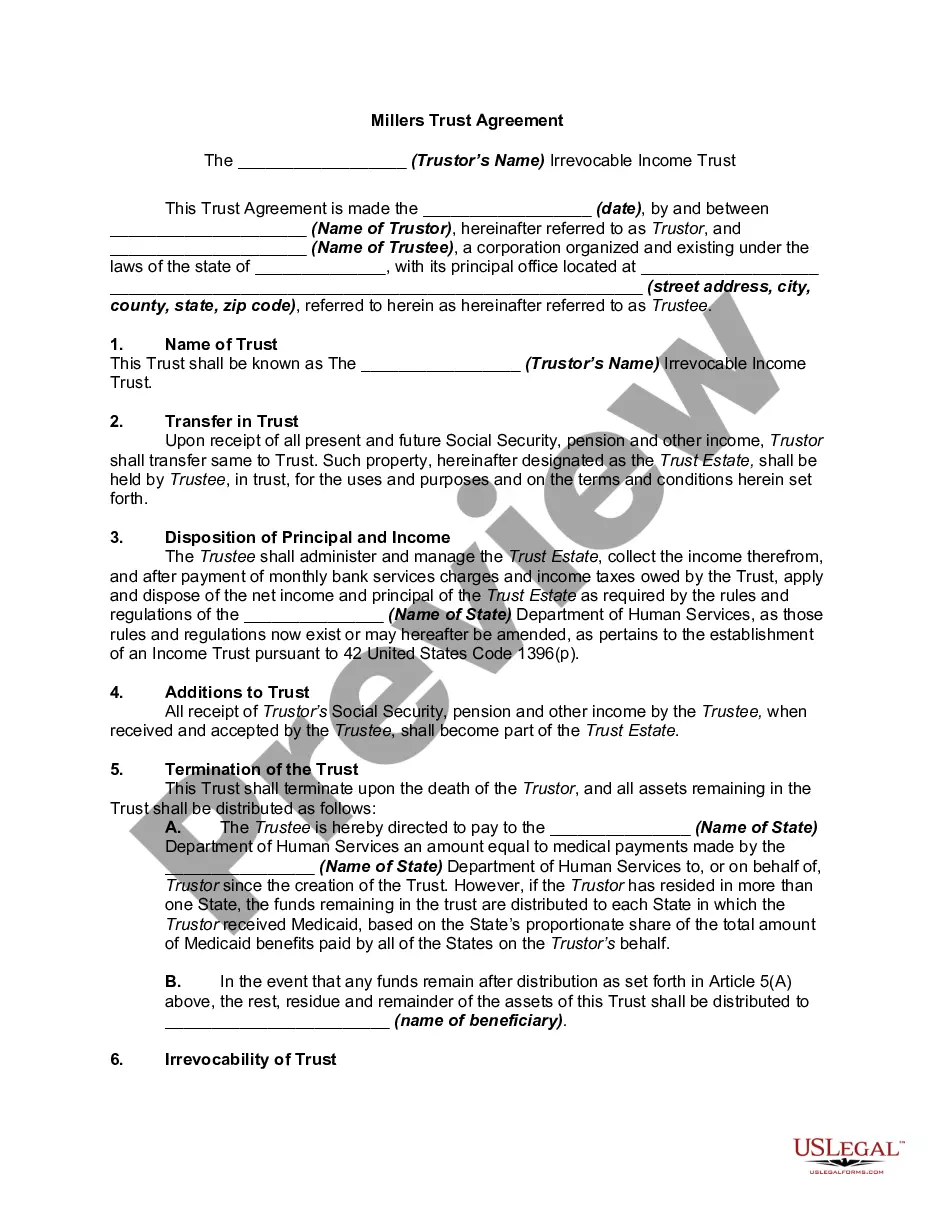
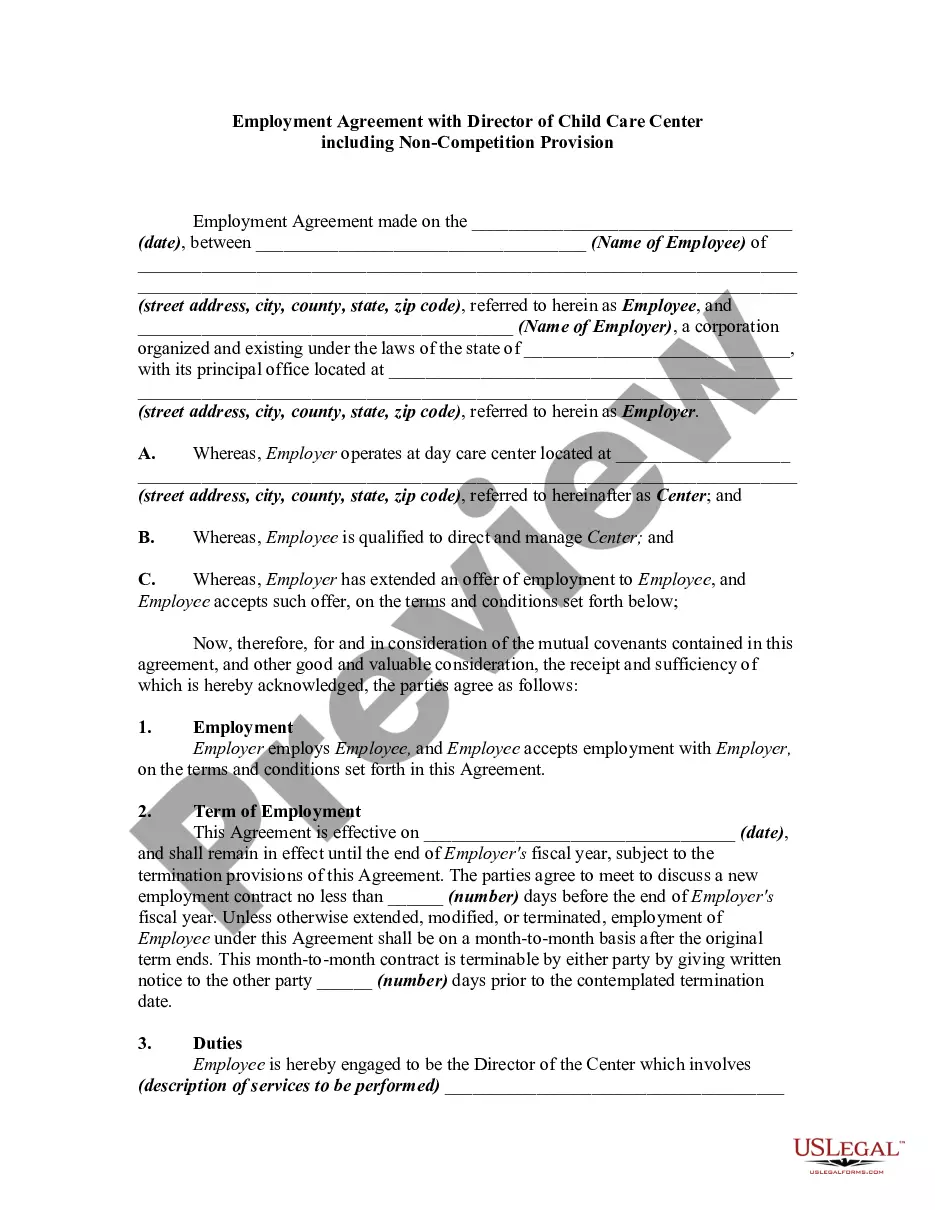


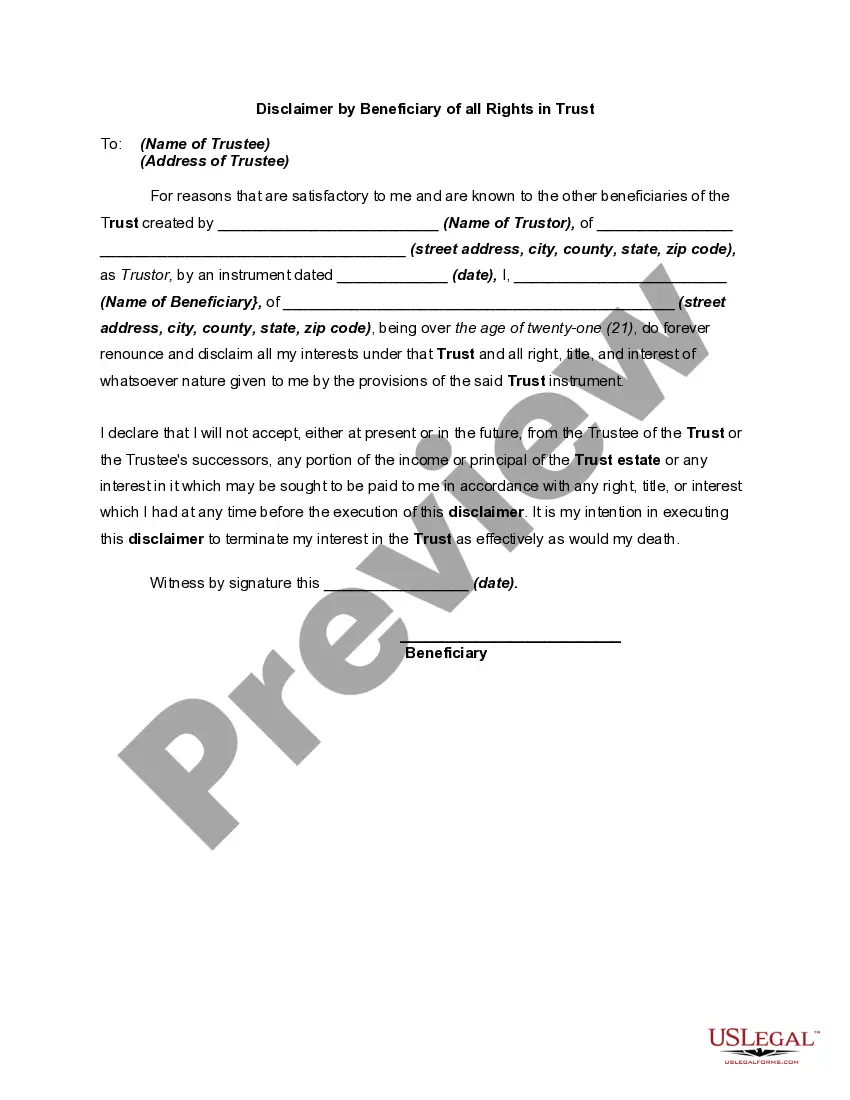
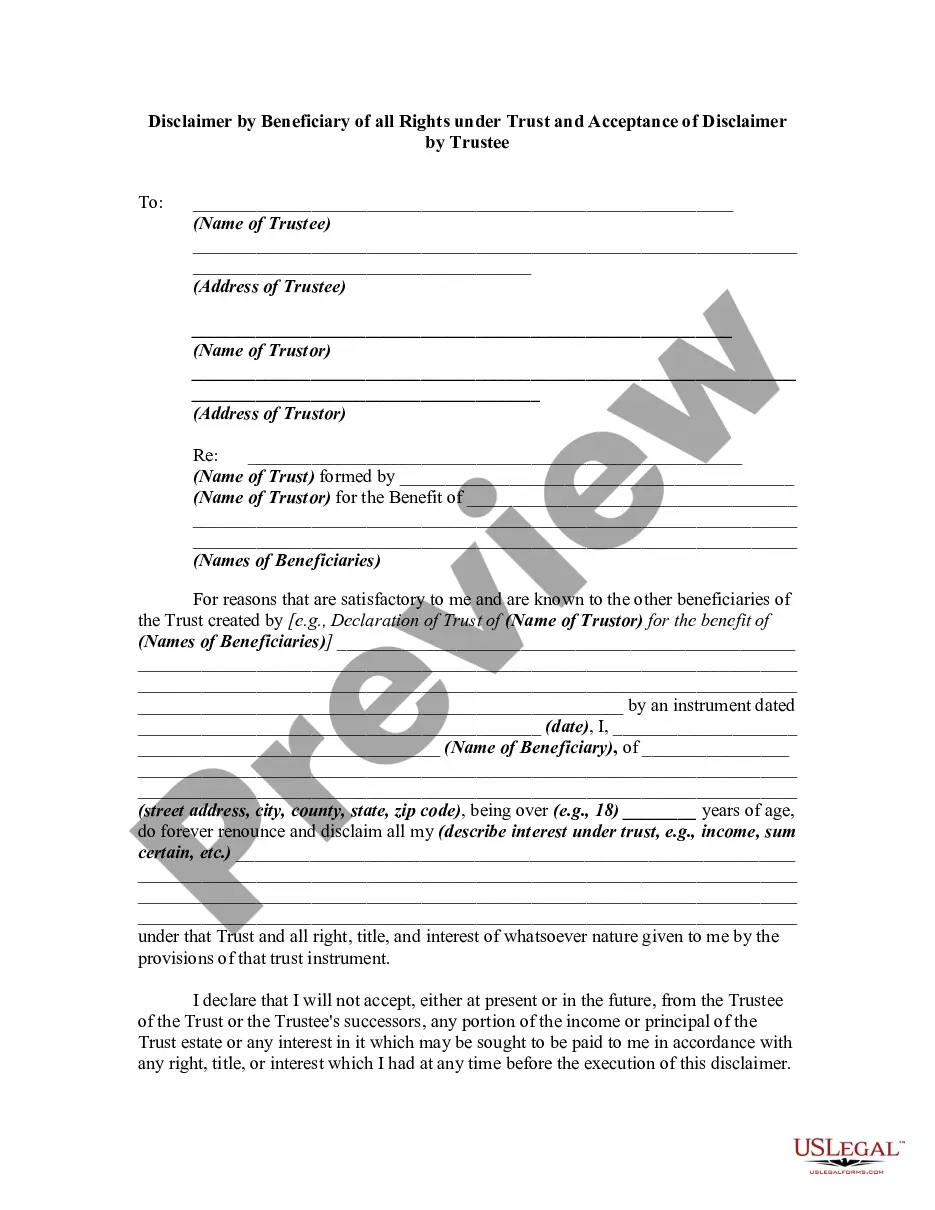
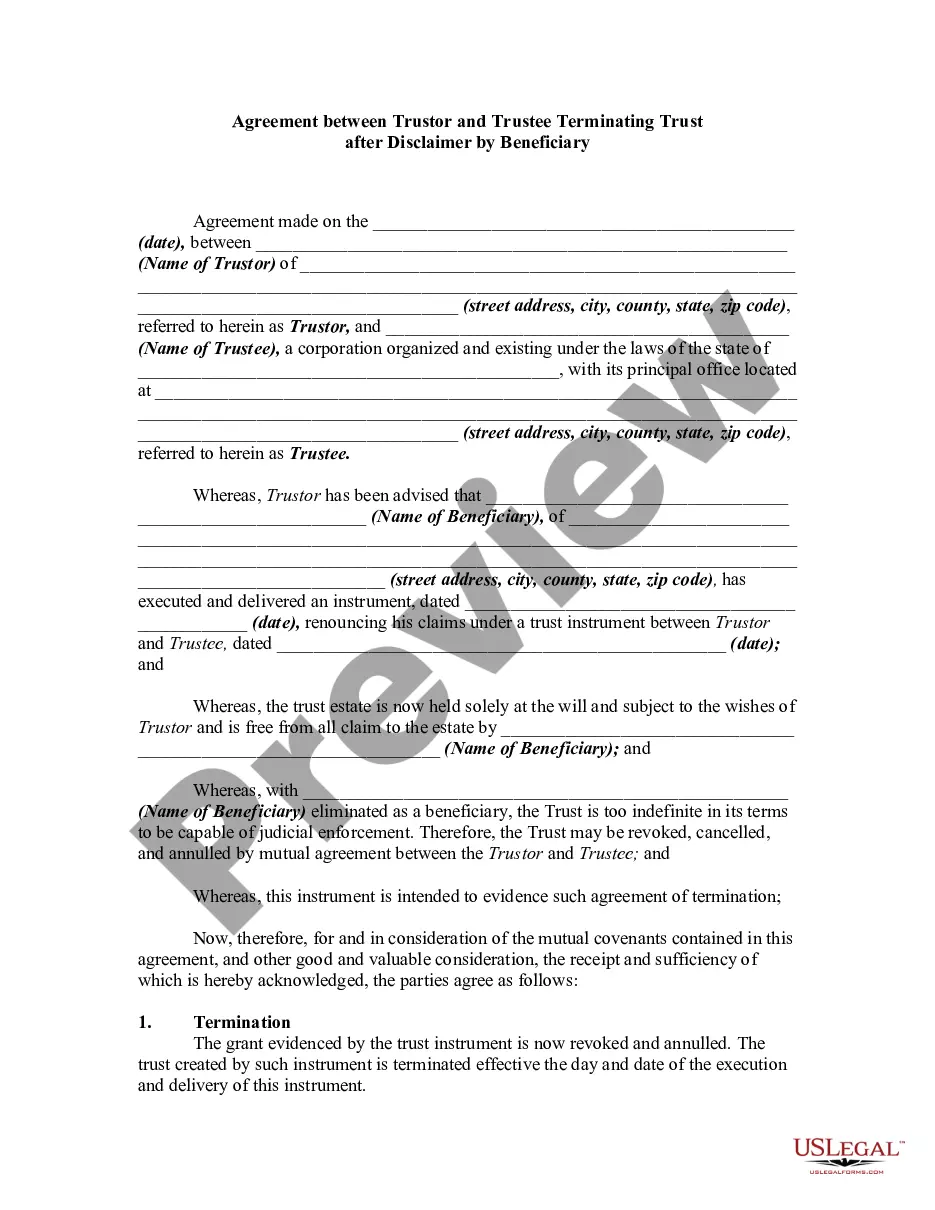
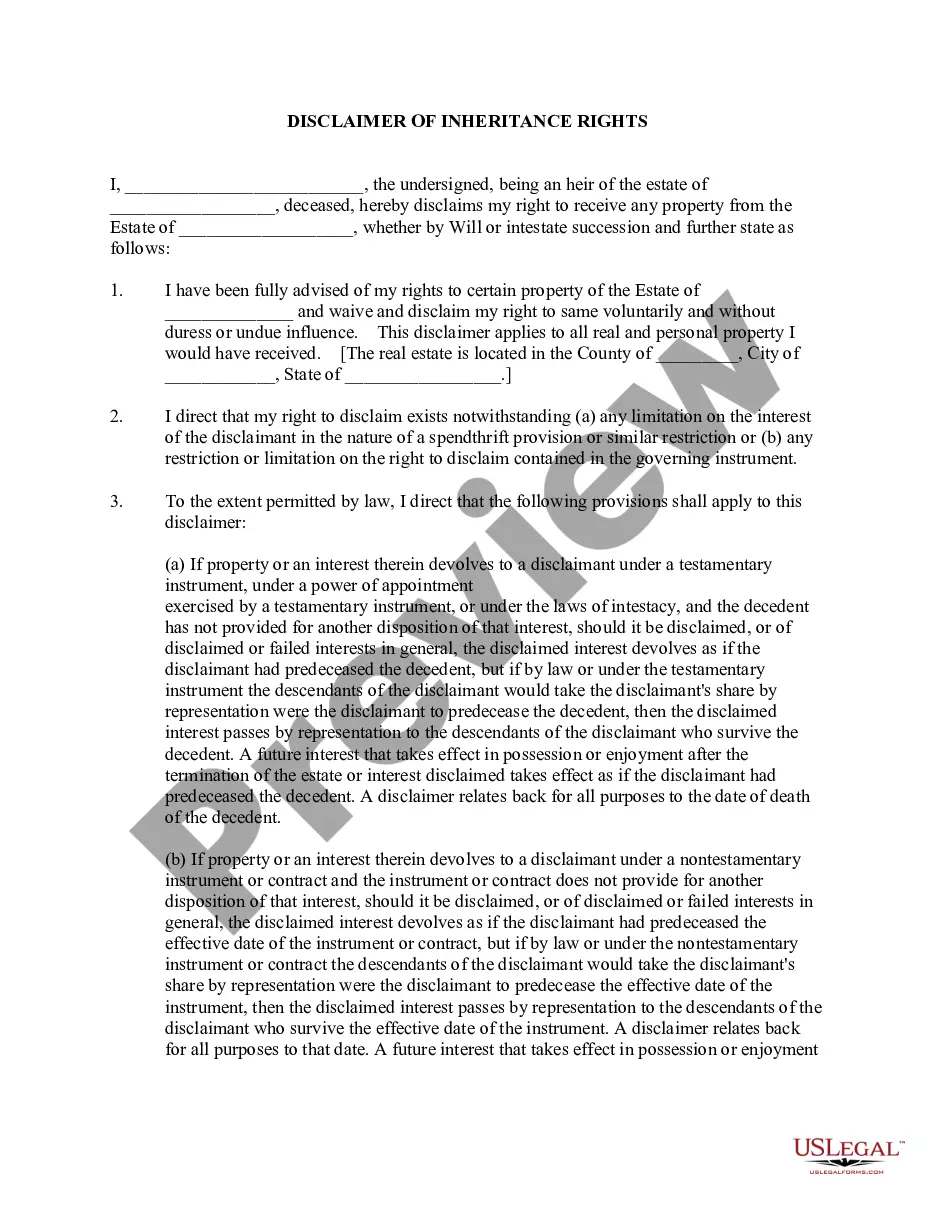
How to fill out Disclaimer By Beneficiary Of All Rights In Trust?
- If you are a returning user, log in to your account at US Legal Forms and navigate to your dashboard. Ensure your subscription is active to access the required form.
- For first-time users, start by browsing the library. Utilize the Preview mode to review form descriptions and confirm that you select the appropriate document for your needs.
- If you need a different form, use the Search tab to find alternatives that align with your local jurisdiction.
- Once you've found the correct form, click the Buy Now button and choose a subscription plan that best fits your needs. Registration will be necessary to access the library fully.
- Complete your purchase by providing the required payment information, either through credit card or PayPal.
- Now that your transaction is complete, download your document to your device, and access it anytime through the My Forms section of your profile.
US Legal Forms enhances your experience by offering not just variety but also access to premium experts ready to assist, ensuring that your documents are accurate and legally sound.
Start today and simplify your legal document needs by exploring US Legal Forms. Access superior forms for your beneficiary bank requirements with ease!
Form popularity
FAQ
The main difference lies in the transaction's flow. The receiving bank is the first point of contact that receives funds from the sender, while the beneficiary bank is ultimately where these funds are deposited for the final recipient. Recognizing this distinction can help you manage your funds more effectively, ensuring they arrive at the right beneficiary bank without any hitches.
The remitter bank and beneficiary bank perform different functions in a financial transaction. The remitter bank is the institution that sends funds on behalf of the sender, while the beneficiary bank is where the funds reach and are credited to the recipient's account. Clearly understanding these roles can streamline your financial interactions and help you stay informed throughout the transfer process.
The receiving bank is a crucial player in the payment process. This bank is where funds are initially directed before reaching the beneficiary's account. Understanding the role of the receiving bank can help you navigate transactions more effectively, ensuring timely and accurate transfers to your intended beneficiary bank.
The receiving bank and the beneficiary bank serve distinct roles in financial transactions. A beneficiary bank is the institution that receives the final funds deposited into an account for the individual or entity defined as the beneficiary. On the other hand, the receiving bank refers to the bank that initially gets the funds and processes the transaction, which usually involves multiple banks for successful fund transfer.
To add a beneficiary to your bank account, visit your bank or use their online platform. You will need to complete a beneficiary designation form, providing the necessary details of the chosen individual. This simple step ensures that your wishes are honored, and your assets are directed correctly. Stay proactive about your financial planning.
Placing a beneficiary on a bank account can be a sound decision, helping ensure that your funds are easily accessible to your loved ones after your passing. This setup reduces emotional stress and legal complications during a challenging time. It is an effective way to manage your estate without the hassle of probate courts. Overall, it provides peace of mind and clarity.
Having a beneficiary on your bank account is often recommended for smooth transitions of funds after death. It simplifies the process, avoiding lengthy probate procedures. However, you should consider your financial situation and family dynamics to make this decision wisely. A clear plan can protect your assets, making it easier for your loved ones.
To add someone as a beneficiary on your bank account, you will typically need to fill out a designated form provided by your bank. This form will ask for essential details about the beneficiary, such as their name and relationship to you. After completing the form, submit it to your bank for processing. For users seeking clarity, USLegalForms offers helpful resources that can assist you in understanding the steps and requirements involved in this process.
To list beneficiaries on your bank account, start by contacting your bank. You can usually do this either online, by phone, or by visiting a branch. You'll need to provide the names and information of the beneficiaries you wish to add. Additionally, using a platform like USLegalForms can guide you through necessary paperwork if your bank requires formal documentation.
Setting up a beneficiary bank account is a straightforward process. Start by visiting your bank and inquiring about their specific requirements for designating a beneficiary. Typically, you'll need to complete a form that names your chosen beneficiary and may require identification. This simple step can provide peace of mind, knowing your assets will directly transfer to your designated beneficiary upon your passing.