Real Estate - Tradução
Description
Get your form ready online
Our built-in tools help you complete, sign, share, and store your documents in one place.
Make edits, fill in missing information, and update formatting in US Legal Forms—just like you would in MS Word.
Download a copy, print it, send it by email, or mail it via USPS—whatever works best for your next step.
Sign and collect signatures with our SignNow integration. Send to multiple recipients, set reminders, and more. Go Premium to unlock E-Sign.
If this form requires notarization, complete it online through a secure video call—no need to meet a notary in person or wait for an appointment.
We protect your documents and personal data by following strict security and privacy standards.

Make edits, fill in missing information, and update formatting in US Legal Forms—just like you would in MS Word.

Download a copy, print it, send it by email, or mail it via USPS—whatever works best for your next step.

Sign and collect signatures with our SignNow integration. Send to multiple recipients, set reminders, and more. Go Premium to unlock E-Sign.

If this form requires notarization, complete it online through a secure video call—no need to meet a notary in person or wait for an appointment.

We protect your documents and personal data by following strict security and privacy standards.
Looking for another form?








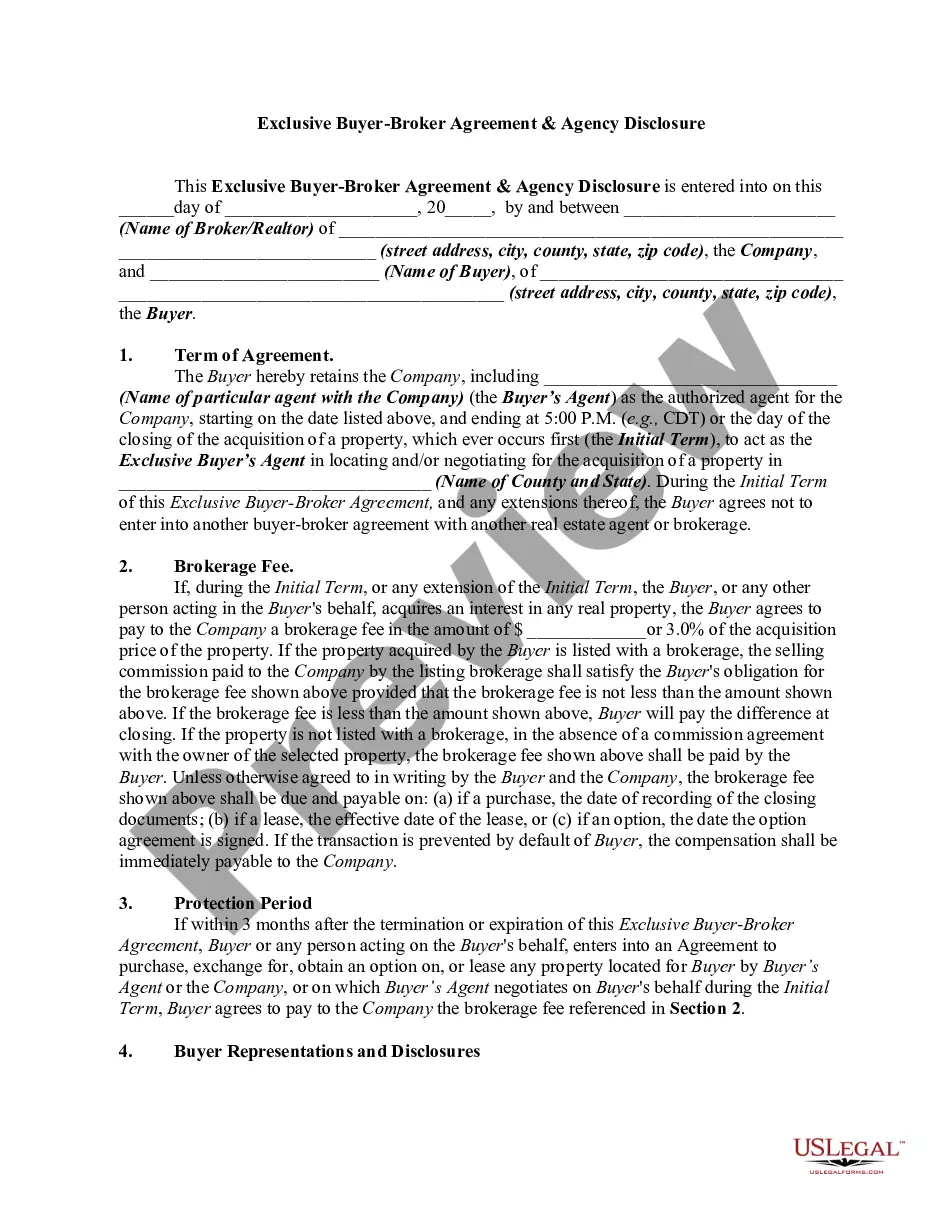
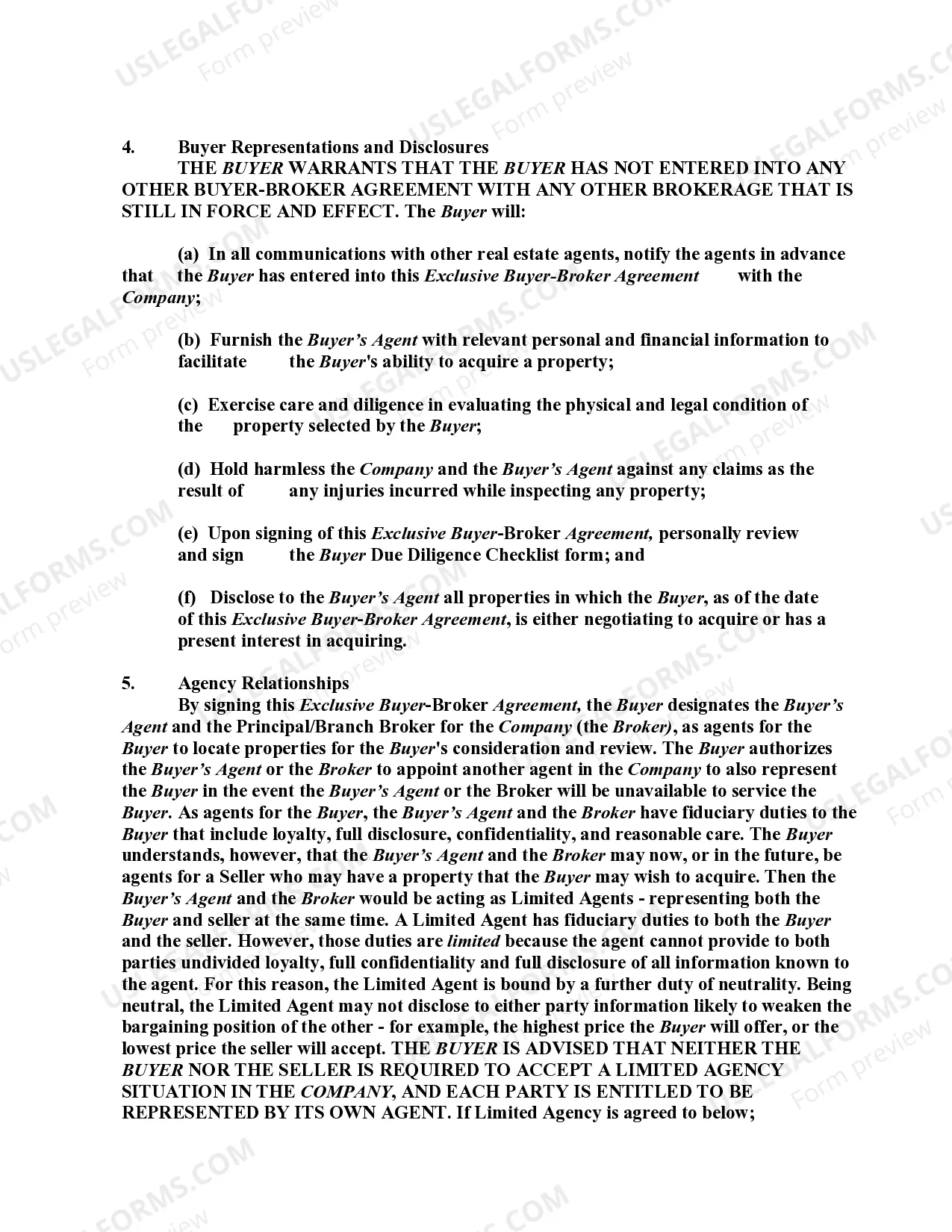
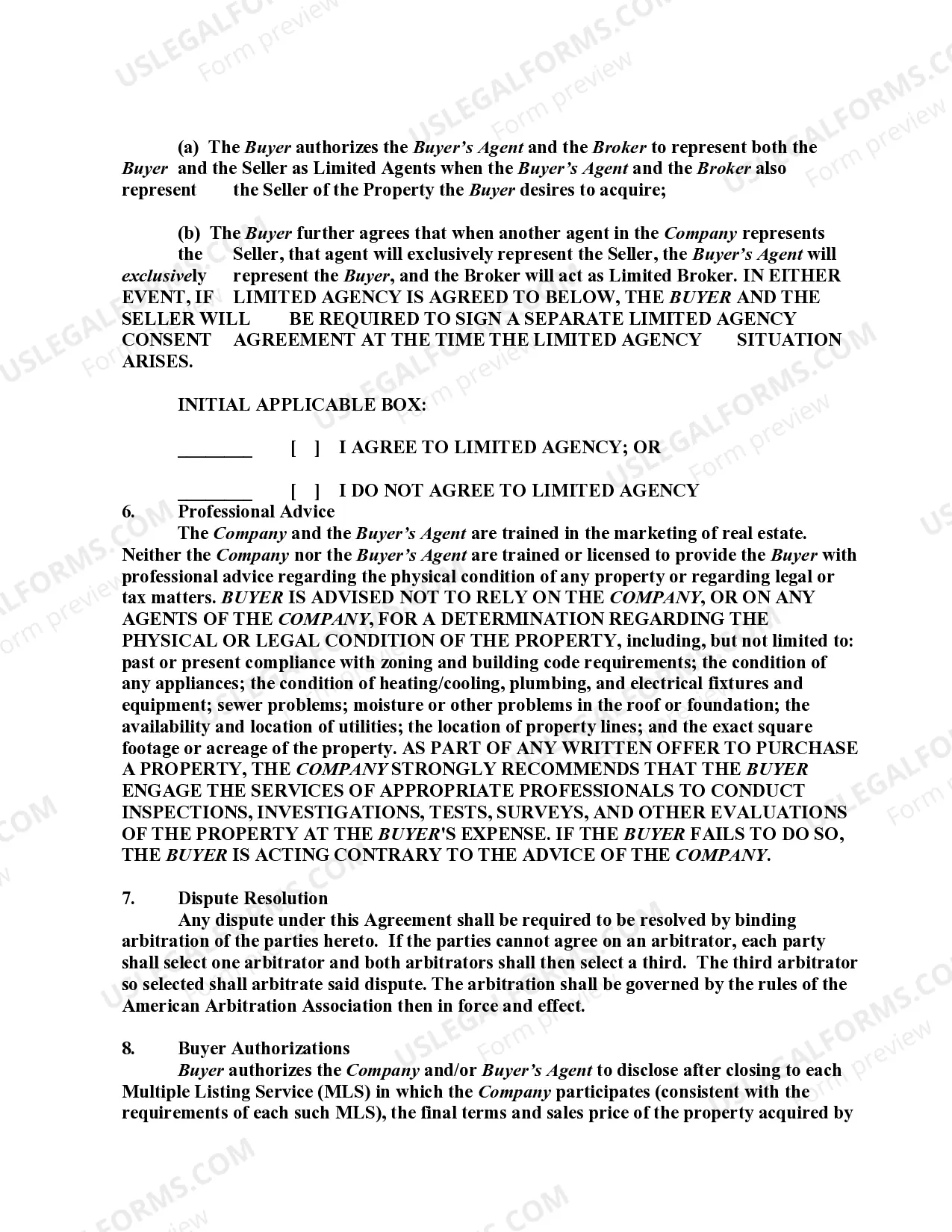
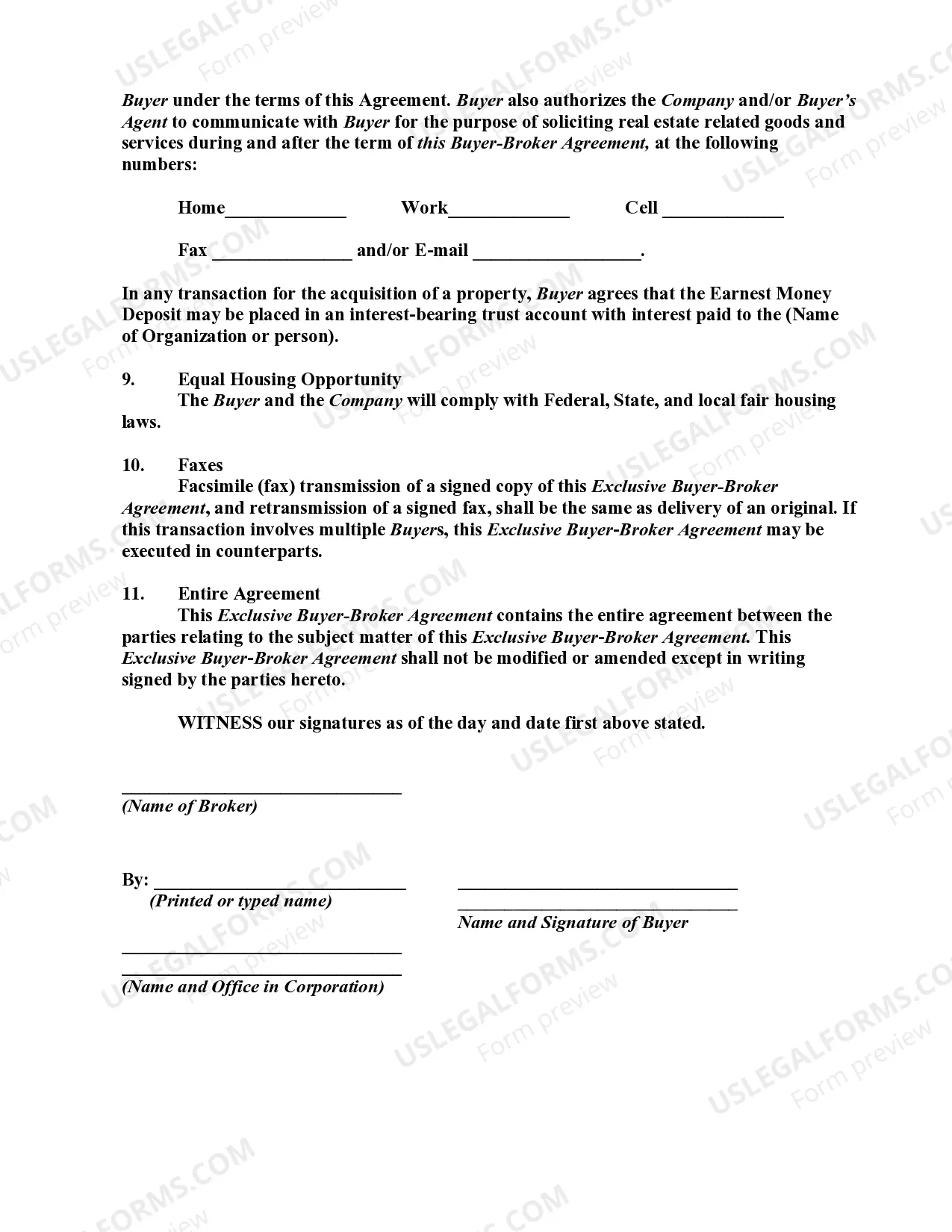
How to fill out Exclusive Buyer-Broker Agreement And Agency Disclosure?
- If you have used US Legal Forms before, simply log in to your account and download the desired form template by clicking the Download button. Ensure your subscription is active.
- For first-time users, start by checking the Preview mode and form descriptions. Make sure you select the appropriate template that meets your needs and complies with your local laws.
- If the current template isn't quite right, utilize the Search tab to find a more suitable document.
- Once you've decided on a form, click the Buy Now button and choose your preferred subscription plan. Account registration is required to unlock the library's offerings.
- Complete your purchase by entering your credit card information or opting to use your PayPal account for payment.
- Lastly, download your form and save it to your device. You can access it anytime through the My Forms section in your profile.
US Legal Forms empowers individuals and attorneys alike to execute legal documents efficiently. Their comprehensive library ensures you will find the exact form you need with the added benefit of guidance from premium experts.
Take the stress out of real estate documentation today by utilizing US Legal Forms. Start your journey toward hassle-free legal compliance now!
Form popularity
FAQ
You report real estate taxes on your tax return typically as an itemized deduction if you choose to file this way. Ensure you keep your real estate tax bills, as they can help support your deductions. Accurate reporting can lead to significant savings on your tax liability. Consider using UsLegalForms for guidance on reporting these expenses correctly.
Reporting proceeds from real estate transactions involves detailing them on your tax return, primarily using Schedule D. You need to specify the gross proceeds received from the sale, along with your expenses to calculate any capital gain or loss. Accurate, timely reporting can help you avoid complications with the IRS. If you need assistance, UsLegalForms can provide valuable resources.
Yes, generally you must report the sale of real estate to the IRS, even if you do not owe taxes due to exclusions. Reporting the transaction ensures compliance and clarity regarding your financial activities. Failing to do so could lead to penalties, so it’s best to keep thorough records and seek guidance if necessary. Resources from UsLegalForms can be very helpful in understanding your reporting requirements.
Real estate agents file taxes by reporting their income earned through commissions on property sales. Agents typically categorize these earnings and deduct eligible business expenses, such as marketing costs and vehicle expenses. It's essential for agents to maintain accurate records throughout the year to streamline this process. Utilizing platforms like UsLegalForms can help simplify tax filing with guided resources.
Yes, real estate transactions are typically reported to the IRS, especially when they involve the transfer of ownership. Real estate agents and title companies usually handle the paperwork, ensuring that relevant information reaches the IRS. This safeguard helps maintain transparency and compliance in property sales. Knowing this can assist you in understanding your tax responsibilities.
The 4 3 2 1 rule in real estate refers to a guideline for organizing your property preferences. It suggests identifying four features you want, three you can compromise, two that are less important, and one deal-breaker. This method streamlines your search and helps clarify your priorities. Integrating 'Real estate - tradução' fosters clearer communication with real estate agents.
The number one rule in real estate is often summarized as 'location, location, location.' This principle highlights that the property’s location significantly impacts its value and desirability. Understanding this rule helps homeowners make educated investment decisions. With 'Real estate - tradução,' you ensure your comprehension transcends beyond basic concepts.
If real estate companies are calling you, they might be reaching out to discuss potential property sales or offers related to your home. They may have acquired your information through public records or marketing lists. To manage these calls, consider using 'Real estate - tradução' to clarify your needs and establish boundaries with these companies.
The golden rule in real estate suggests purchasing properties in attractive areas, as they tend to appreciate over time. Properties in desirable neighborhoods offer strong potential for investment returns. Thus, focusing on the right location is crucial to success in this field. Consider incorporating 'Real estate - tradução' in your strategies to enhance your understanding.
The golden rule in real estate emphasizes the importance of location. A good location influences property value and attracts potential buyers or renters. It is essential to understand market trends and demographics to make informed decisions. By using the keyword 'Real estate - tradução,' you can better navigate region-specific insights.