Disclosure Statement For Real Estate
Description
Get your form ready online
Our built-in tools help you complete, sign, share, and store your documents in one place.
Make edits, fill in missing information, and update formatting in US Legal Forms—just like you would in MS Word.
Download a copy, print it, send it by email, or mail it via USPS—whatever works best for your next step.
Sign and collect signatures with our SignNow integration. Send to multiple recipients, set reminders, and more. Go Premium to unlock E-Sign.
If this form requires notarization, complete it online through a secure video call—no need to meet a notary in person or wait for an appointment.
We protect your documents and personal data by following strict security and privacy standards.

Make edits, fill in missing information, and update formatting in US Legal Forms—just like you would in MS Word.

Download a copy, print it, send it by email, or mail it via USPS—whatever works best for your next step.

Sign and collect signatures with our SignNow integration. Send to multiple recipients, set reminders, and more. Go Premium to unlock E-Sign.

If this form requires notarization, complete it online through a secure video call—no need to meet a notary in person or wait for an appointment.

We protect your documents and personal data by following strict security and privacy standards.
Looking for another form?






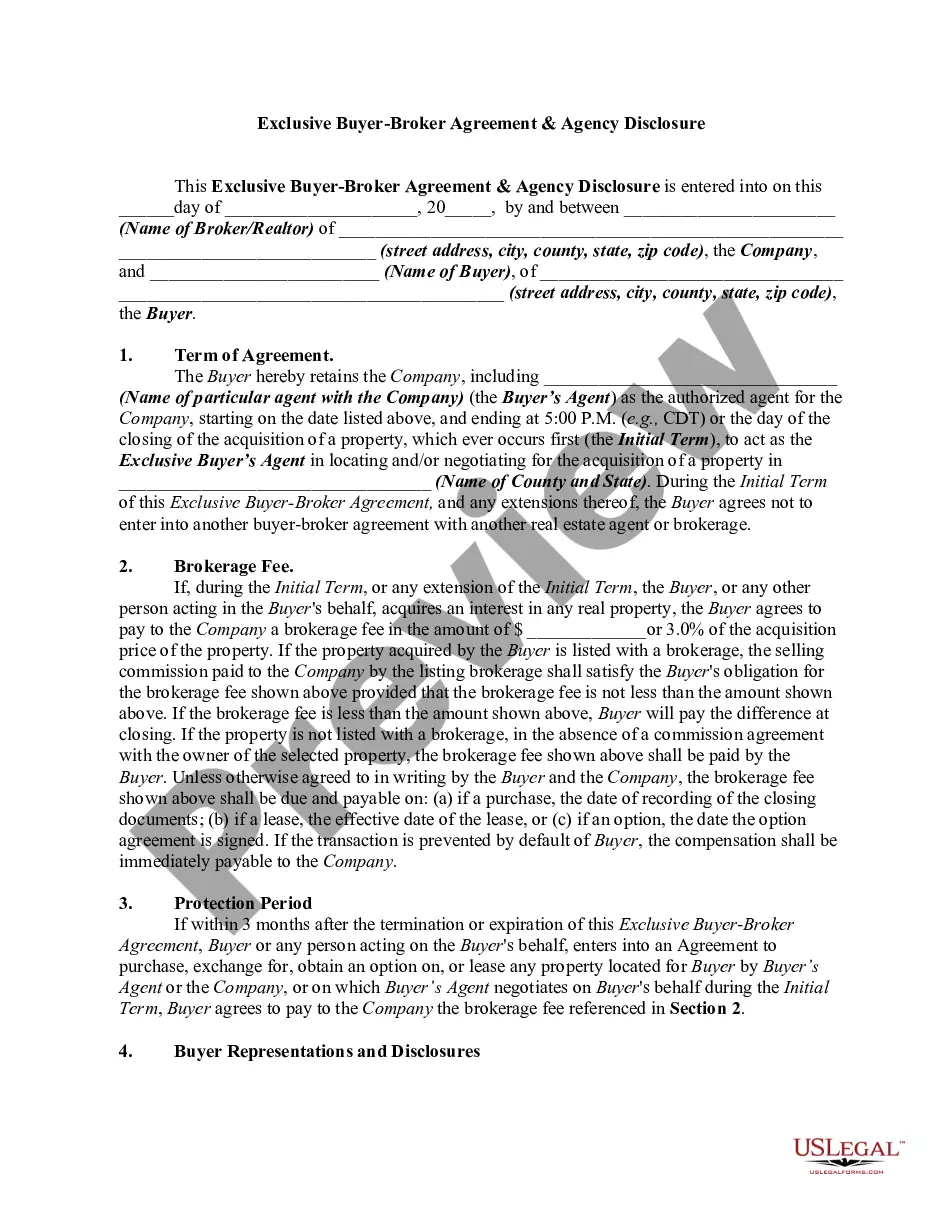
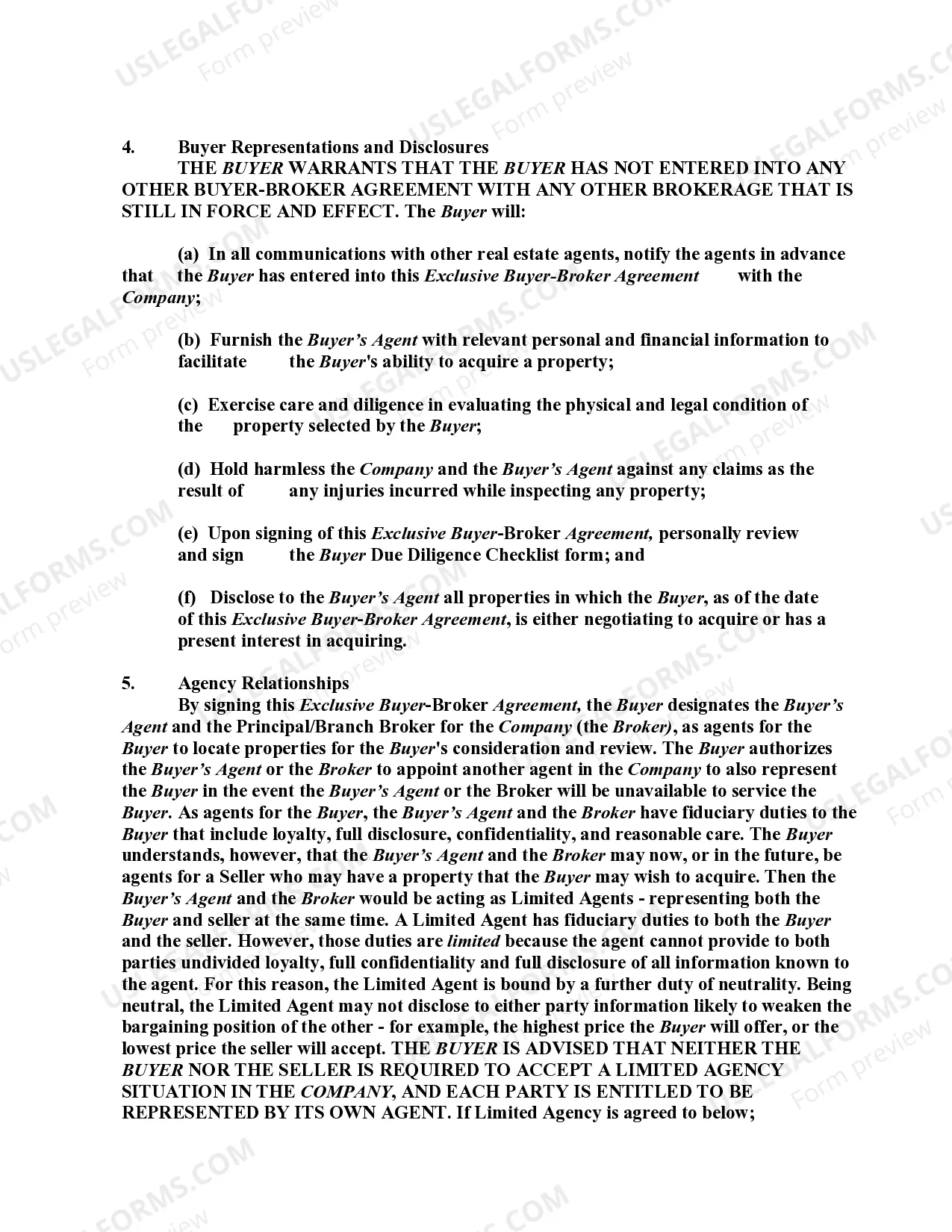
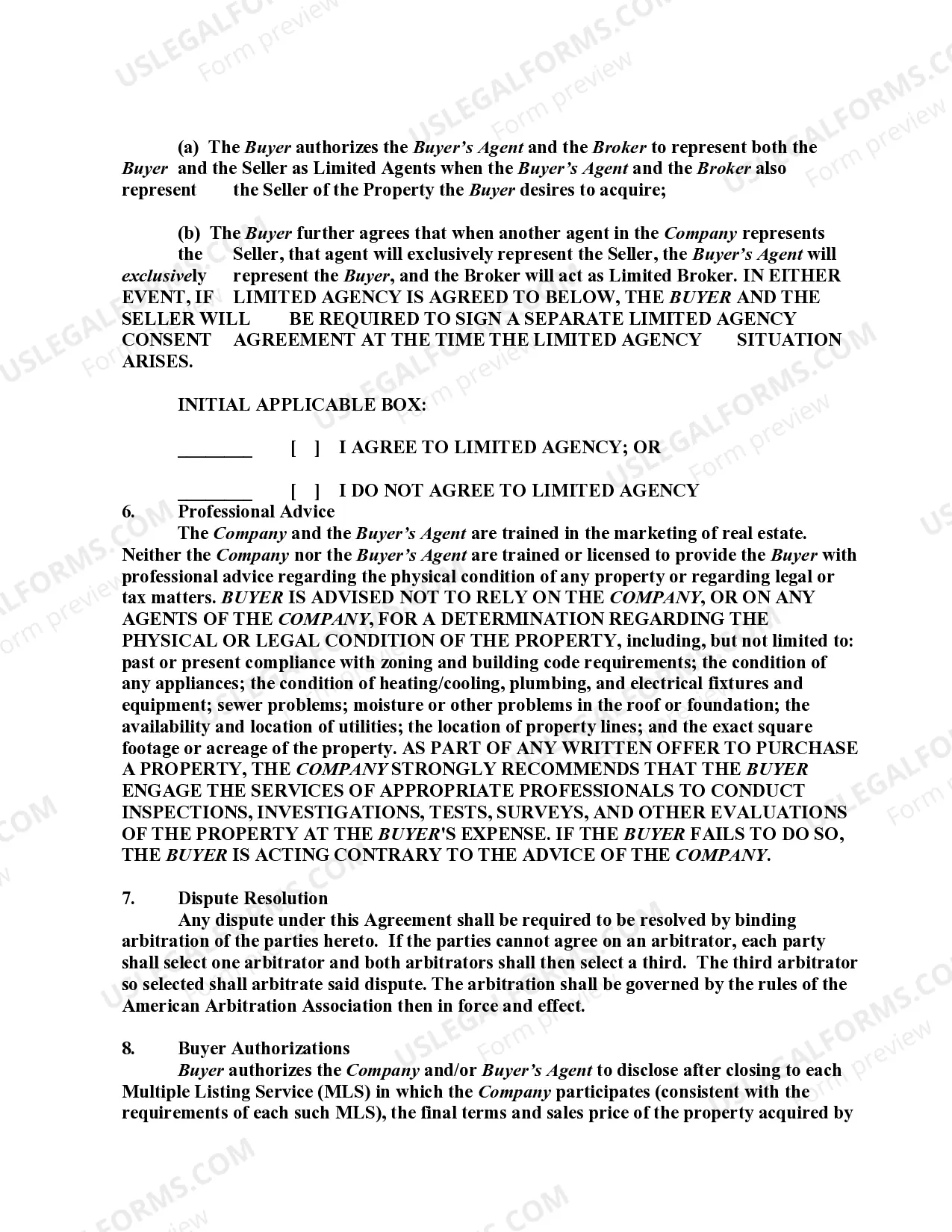
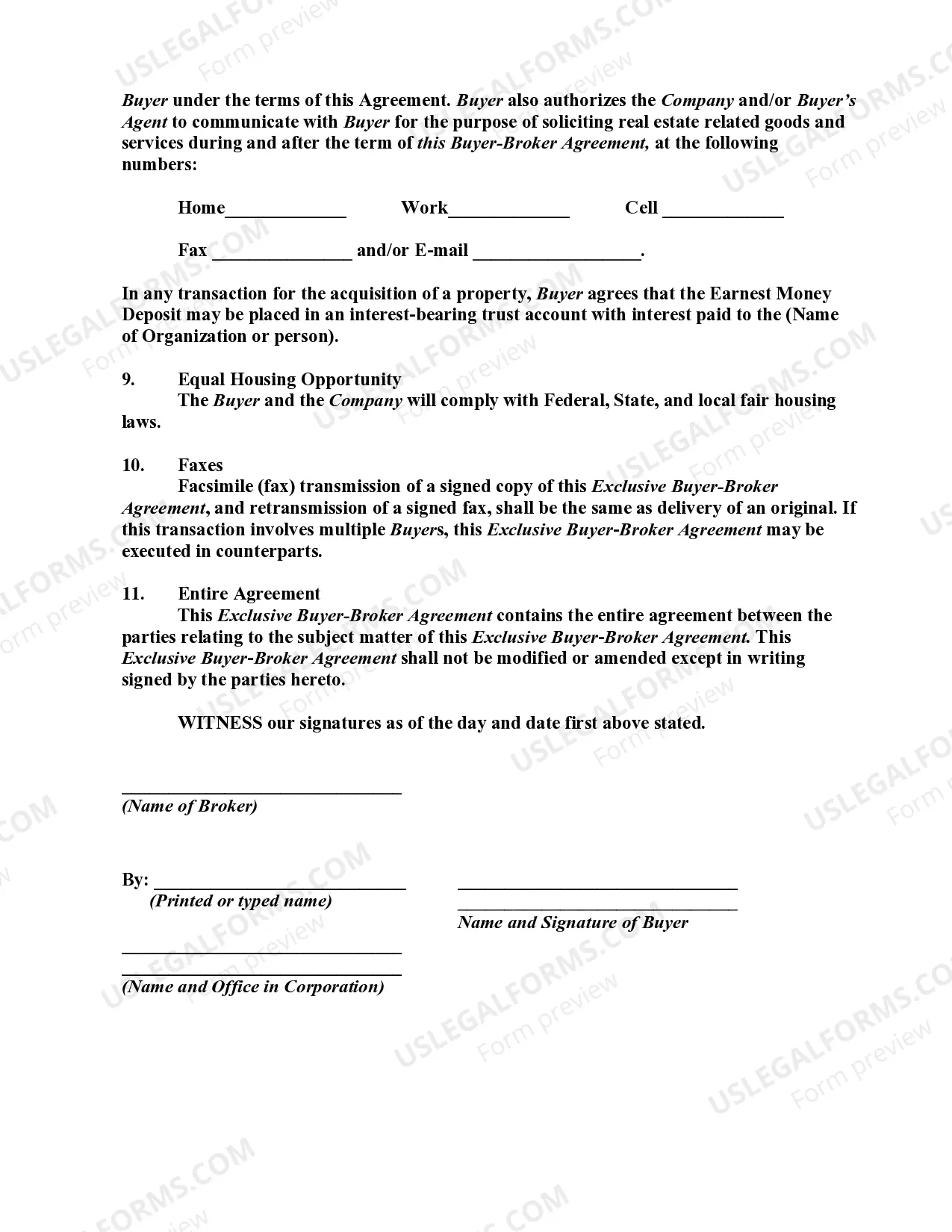
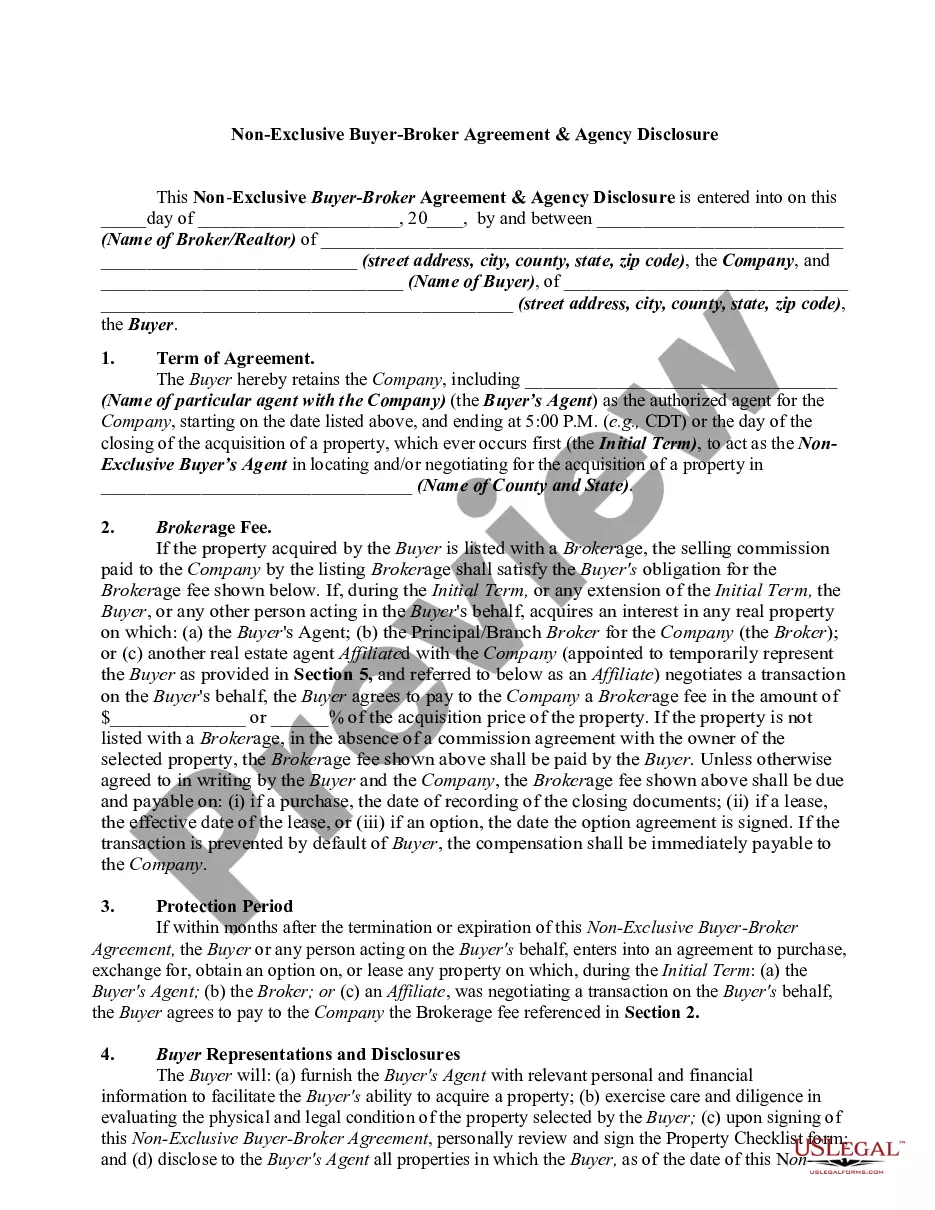
How to fill out Exclusive Buyer-Broker Agreement And Agency Disclosure?
- Log into your US Legal Forms account if you're a returning user to download the necessary template by clicking the Download button. Ensure your subscription is active; if it's not, renew it as per your plan.
- If you're a first-time user, start by browsing the Preview mode and form description to confirm you select the correct document that fits your needs and complies with local jurisdiction requirements.
- If your preferred template is not suitable, utilize the Search tab to explore other relevant templates. Once you find what you need, proceed to the next step.
- Purchase the document by clicking the Buy Now button and selecting your preferred subscription plan. You will need to create an account for full access.
- Complete your transaction by entering your credit card information or using your PayPal account to finalize your subscription.
- Finally, download your form. Save it on your device for easy access, and you can also find it in the My Forms section of your profile whenever needed.
By following these straightforward steps, you'll be equipped to create your disclosure statement for real estate quickly and efficiently. US Legal Forms not only simplifies the process but also ensures you have access to quality, legally sound documents.
Ready to get started? Visit US Legal Forms today to explore your options and make your real estate transactions seamless and compliant.
Form popularity
FAQ
In New Jersey, property disclosure laws require sellers to provide a detailed disclosure statement for real estate regarding any known defects. This includes information about the condition of major systems, such as plumbing and electrical. If you're unsure how to navigate these requirements, US Legal Forms can offer helpful templates and guidance.
Yes, Kansas is a full disclosure state, meaning sellers must provide comprehensive information about the property. This includes details about any known defects or issues that might affect the property’s value. For assistance in drafting a disclosure statement for real estate that complies with Kansas law, consider using the resources on US Legal Forms.
Yes, real estate disclosures are often considered public records, depending on state laws. This means that interested parties, such as potential buyers, can access this information. To ensure transparency, it's advisable to use a reliable platform, like US Legal Forms, to create a compliant disclosure statement for real estate.
Lying on the seller disclosure can lead to significant legal consequences, including lawsuits and financial penalties. Buyers may seek damages if they discover undisclosed issues that impact the property's value. To protect yourself, always provide truthful and complete information in your disclosure statement for real estate.
Creating a disclosure statement for real estate involves identifying relevant property details and potential issues. You should include information about any renovations, past damages, or neighborhood concerns. Tools, such as US Legal Forms, offer templates to help ensure your disclosure statement meets legal requirements.
To find seller disclosures, start by checking local real estate listings and ask your real estate agent for a copy. Online platforms, like the US Legal Forms database, can provide easy access to standard disclosure statements for real estate. These resources simplify the process, ensuring you can make informed decisions.
To deal with bad neighbors legally, first try to resolve issues through open communication. If problems persist, consider reporting them to local authorities or homeowner associations, if applicable. Legal recourse, such as mediation or small claims court, can also serve as a final option if neighborly discussions fail.
Yes, disclosing bad neighbors is often required when selling a house. As part of your disclosure statement for real estate, you must inform potential buyers about any significant disturbances or disputes. This transparency not only meets legal requirements but also helps ensure that buyers are informed about the living conditions they may encounter.
To spot bad neighbors, visit the neighborhood at different times of the day and observe the surroundings. Look for signs of neglect, excessive noise, or unsightly yards, as these can indicate potential trouble. Engaging local residents can also provide valuable insights into the community atmosphere and neighborly relations.
The disclosure statement for real estate typically includes details about property conditions, such as structural problems, past damages, and known environmental hazards. It may also cover neighbor-related issues, zoning laws, and any community restrictions. This document serves to protect both buyers and sellers by ensuring transparency in real estate transactions.