Contracts Implied In Fact
Description
Get your form ready online
Our built-in tools help you complete, sign, share, and store your documents in one place.
Make edits, fill in missing information, and update formatting in US Legal Forms—just like you would in MS Word.
Download a copy, print it, send it by email, or mail it via USPS—whatever works best for your next step.
Sign and collect signatures with our SignNow integration. Send to multiple recipients, set reminders, and more. Go Premium to unlock E-Sign.
If this form requires notarization, complete it online through a secure video call—no need to meet a notary in person or wait for an appointment.
We protect your documents and personal data by following strict security and privacy standards.

Make edits, fill in missing information, and update formatting in US Legal Forms—just like you would in MS Word.

Download a copy, print it, send it by email, or mail it via USPS—whatever works best for your next step.

Sign and collect signatures with our SignNow integration. Send to multiple recipients, set reminders, and more. Go Premium to unlock E-Sign.

If this form requires notarization, complete it online through a secure video call—no need to meet a notary in person or wait for an appointment.

We protect your documents and personal data by following strict security and privacy standards.
Looking for another form?



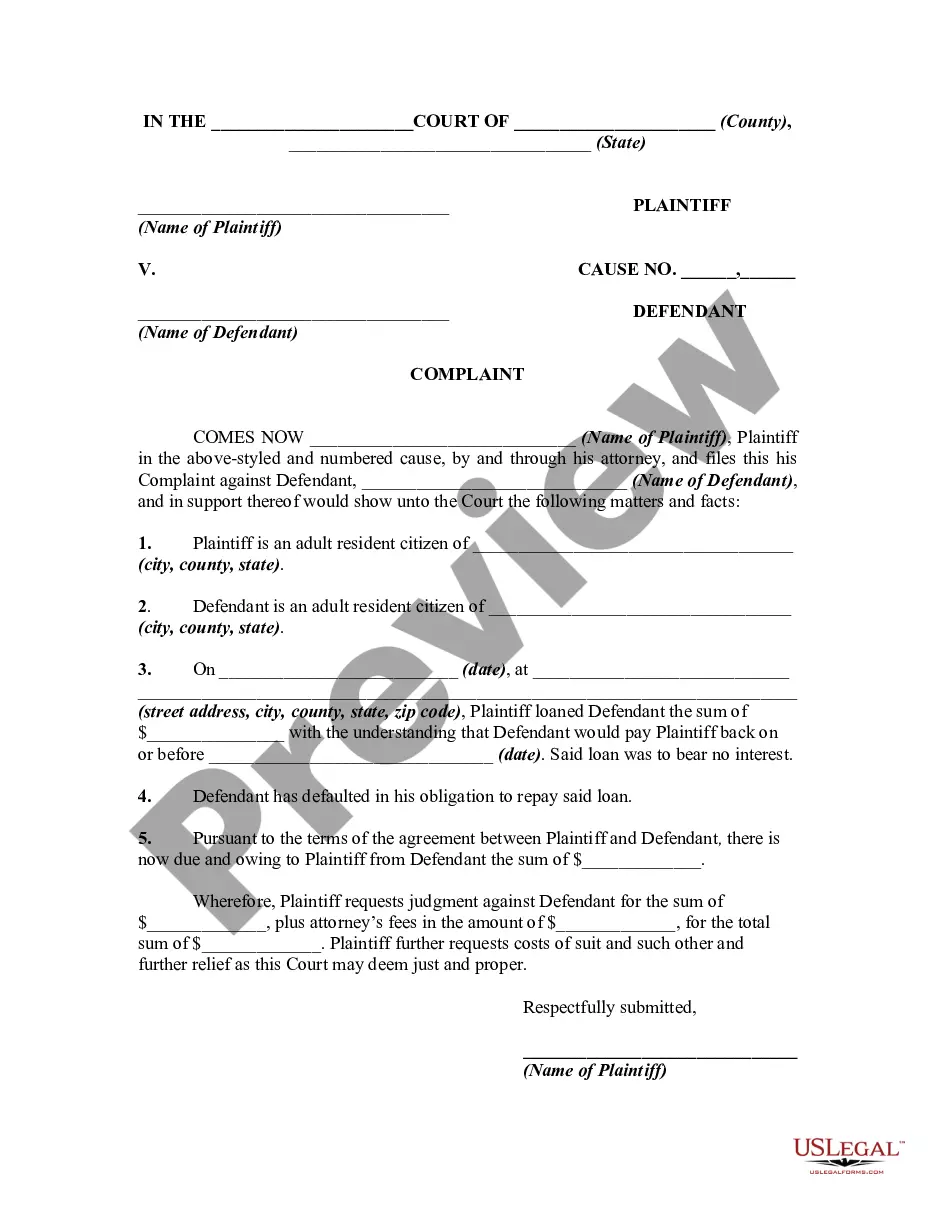
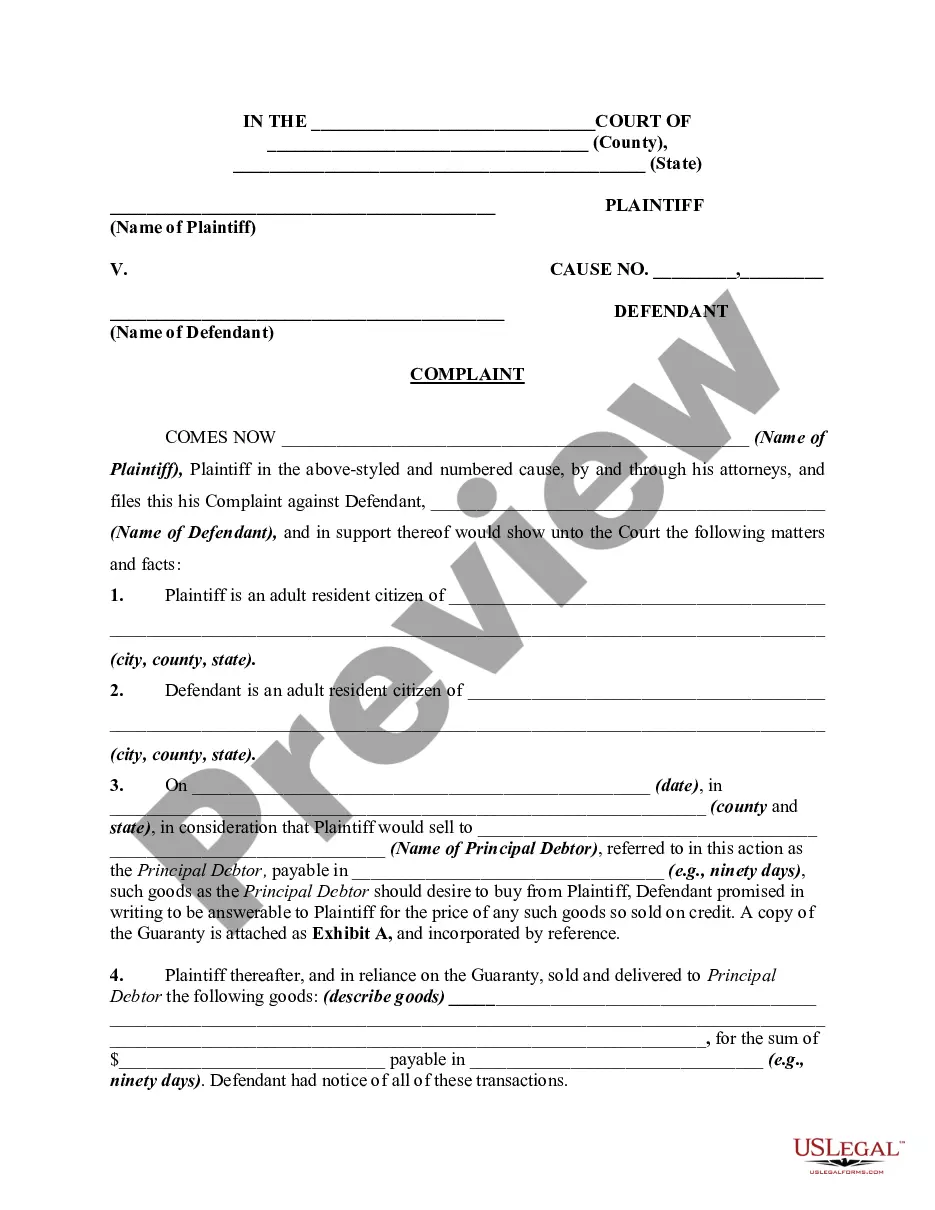
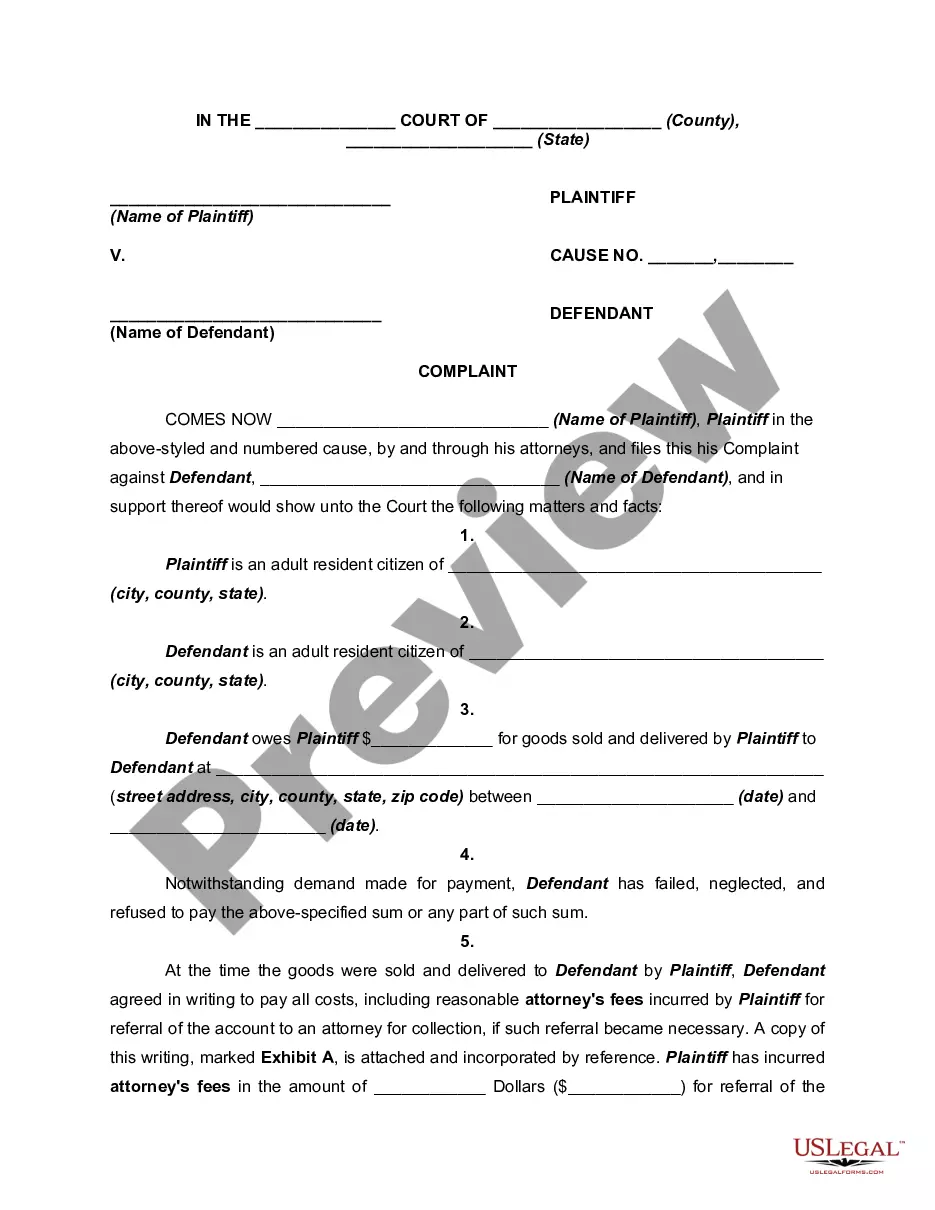
How to fill out Complaint For Refusal To Pay Debt - Breach Of Oral Or Implied Contracts?
Locating a reliable source for the latest and pertinent legal templates is a significant part of dealing with bureaucracy.
Identifying the appropriate legal documents necessitates precision and meticulousness, which is why it is crucial to obtain samples of Contracts Implied In Fact solely from credible sources, such as US Legal Forms. An incorrect template can squander your time and hinder your situation.
Once the form is on your device, you may modify it with the editor or print it and complete it manually. Eliminate the hassle associated with your legal documentation. Explore the vast US Legal Forms collection to discover legal samples, assess their relevance to your situation, and download them instantly.
- Utilize the library navigation or search bar to locate your template.
- Review the form’s description to determine if it aligns with the requirements of your state and county.
- Access the form preview, if available, to confirm that the form is indeed the one you seek.
- Return to the search and find the correct document if the Contracts Implied In Fact does not meet your needs.
- If you are confident about the form’s applicability, download it.
- If you are a registered user, click Log in to verify and access your chosen templates in My documents.
- If you do not have an account yet, click Buy now to acquire the template.
- Choose the pricing plan that suits your needs.
- Proceed to the registration to complete your purchase.
- Finalize your purchase by selecting a payment option (credit card or PayPal).
- Choose the file format for downloading Contracts Implied In Fact.
Form popularity
FAQ
To support a claim for contracts implied in fact, specific evidence is necessary. Documentation, communications, and actions that reflect the intent of both parties can serve as strong indicators. Additionally, witness testimony about the interactions and behaviors leading up to the agreement can further substantiate the claim. Collectively, this evidence helps establish the existence of the implied contract.
A key requirement of contracts implied in fact is the existence of a mutual understanding between the parties involved. This understanding can be inferred from their actions and the context of their relationship. Additionally, the parties’ behavior must demonstrate that they intended to create a binding agreement. Without these factors, the courts may not recognize the implied contract.
To establish contracts implied in fact, certain elements must be present. First, there must be mutual assent, which means both parties understand and agree to the terms of the contract, even if not formally stated. Second, the conduct of the parties must indicate a clear intention to enter into a contract. Lastly, the circumstances surrounding the interaction should suggest that an agreement exists, reflecting the parties' expectations.
An implied-in-fact contract exists based on the behavior of the respective parties when, for example, one party enters a hair salon, sits down in a chair, and asks for a haircut, which the other party then provides. By asking for the haircut, the first party has implicitly agreed to pay for the haircut.
An implied-in-fact contract exists based on the behavior of the respective parties when, for example, one party enters a hair salon, sits down in a chair, and asks for a haircut, which the other party then provides. By asking for the haircut, the first party has implicitly agreed to pay for the haircut.
Definition of implied-in-fact condition: a condition that is not clearly stated in the language of a contract. An implied-in-fact condition may be inferred from the actions of the parties, from a reasonable expectation, or from the nature of the transaction.
A breach of an implied-in-fact contract can occur when someone makes a promise to you, either verbally or as the result of particular conduct or circumstances, that they will fulfill a particular task and then fails to do so.
An implied-in-fact contract is formed when parties' promises are inferred from their intentional conduct and one party knows or at least has reason to know the other party will interpret the conduct as assent or an agreement.