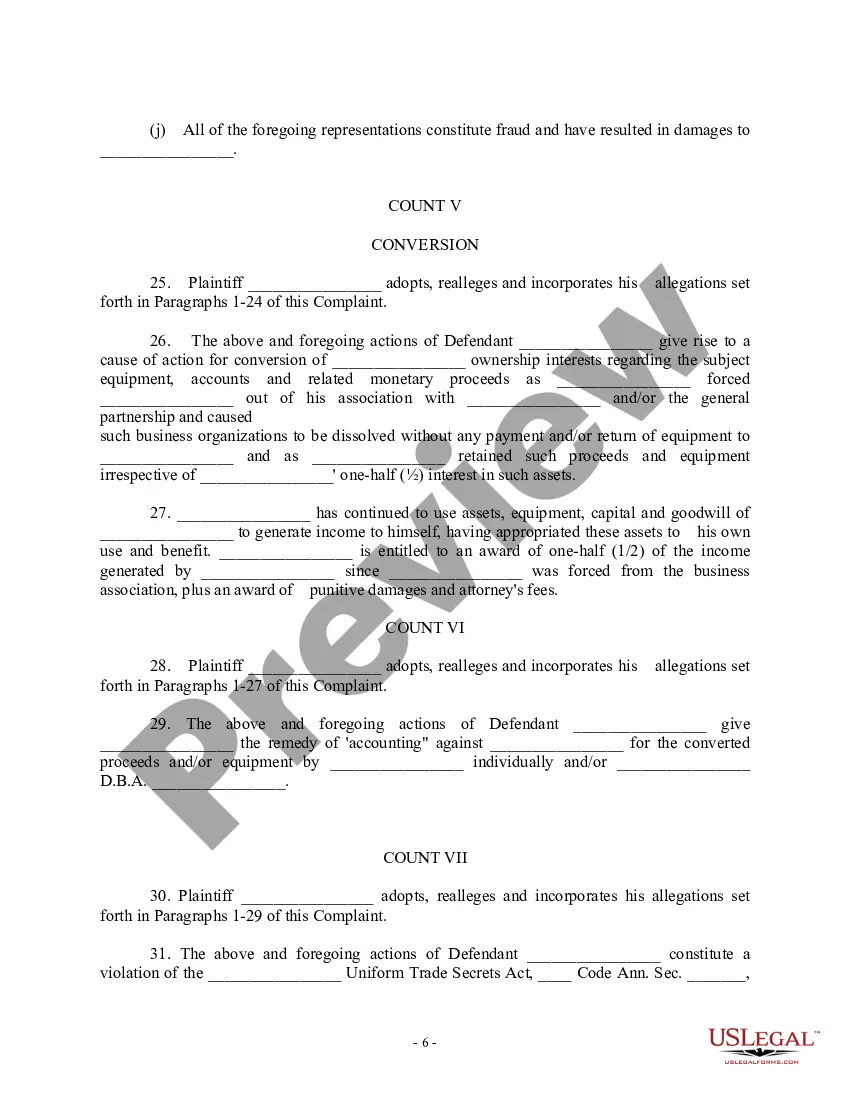
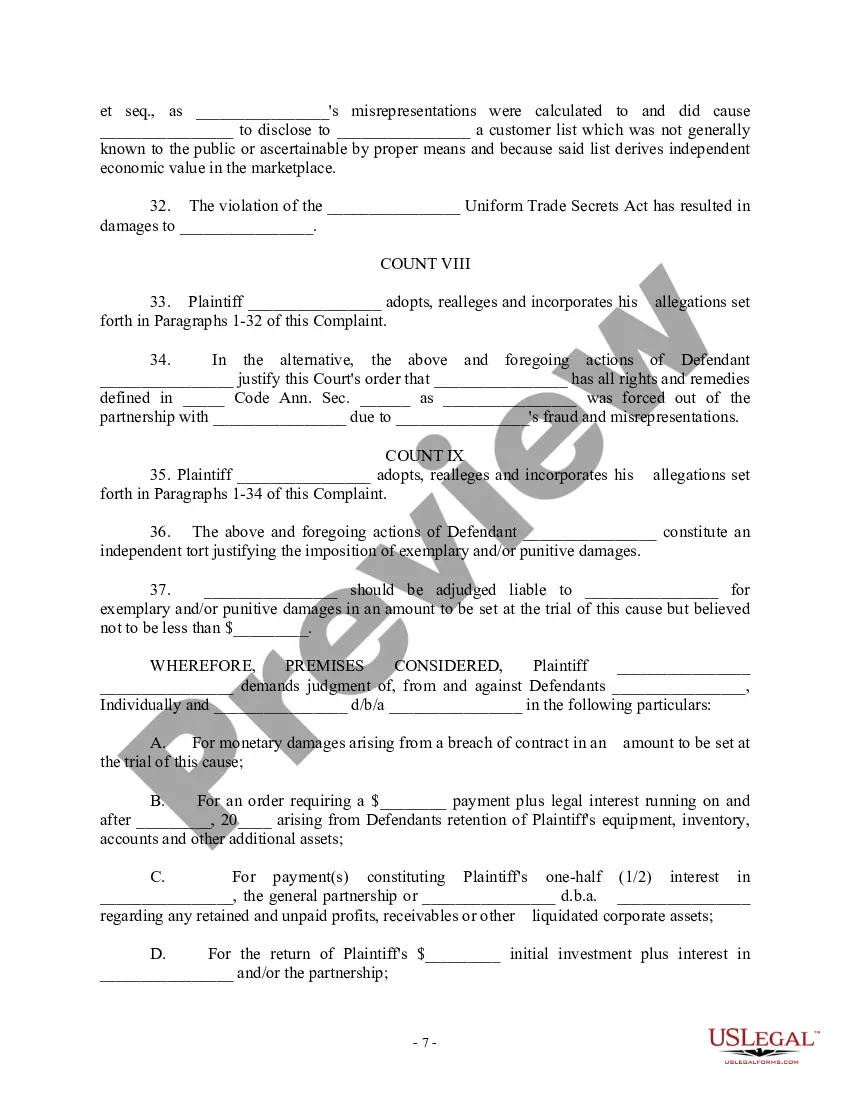
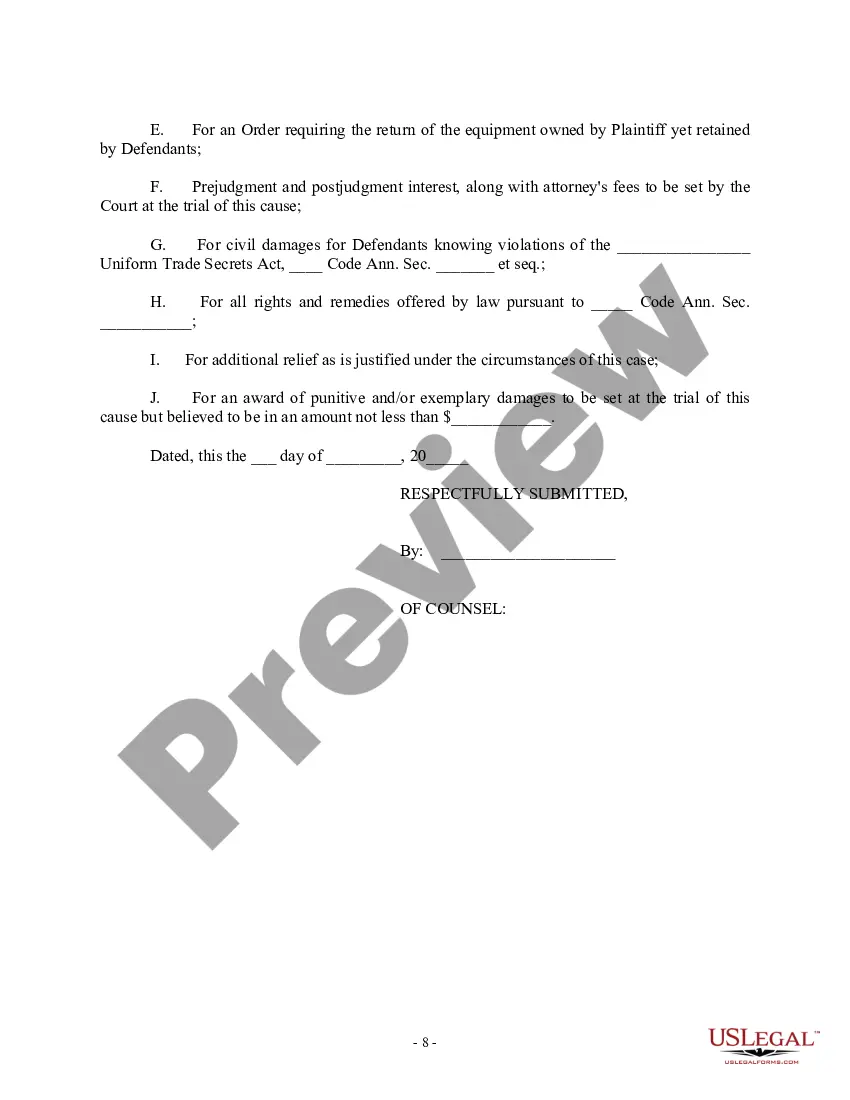
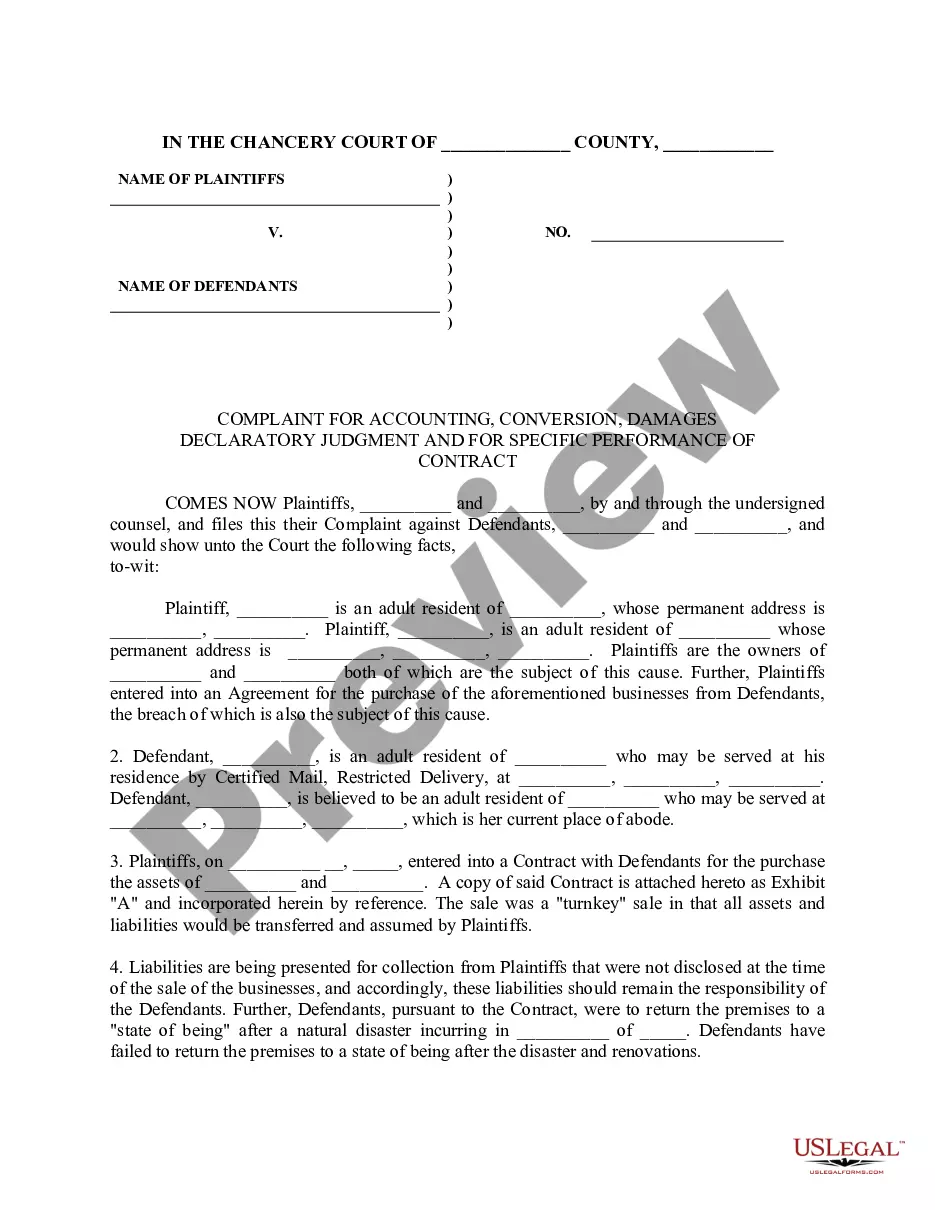
Complaint For Conversion
Description


Get your form ready online
Our built-in tools help you complete, sign, share, and store your documents in one place.
Make edits, fill in missing information, and update formatting in US Legal Forms—just like you would in MS Word.
Download a copy, print it, send it by email, or mail it via USPS—whatever works best for your next step.
Sign and collect signatures with our SignNow integration. Send to multiple recipients, set reminders, and more. Go Premium to unlock E-Sign.
If this form requires notarization, complete it online through a secure video call—no need to meet a notary in person or wait for an appointment.
We protect your documents and personal data by following strict security and privacy standards.

Make edits, fill in missing information, and update formatting in US Legal Forms—just like you would in MS Word.

Download a copy, print it, send it by email, or mail it via USPS—whatever works best for your next step.

Sign and collect signatures with our SignNow integration. Send to multiple recipients, set reminders, and more. Go Premium to unlock E-Sign.

If this form requires notarization, complete it online through a secure video call—no need to meet a notary in person or wait for an appointment.

We protect your documents and personal data by following strict security and privacy standards.
Looking for another form?
How to fill out Complaint Regarding Breach Of Contract, Fair Dealing, Fraud, Conversion, Accounting, Trade Secrets Act. Agreement To Merge Businesses?
Whether for commercial objectives or for individual matters, each person must confront legal circumstances eventually in their lifetime.
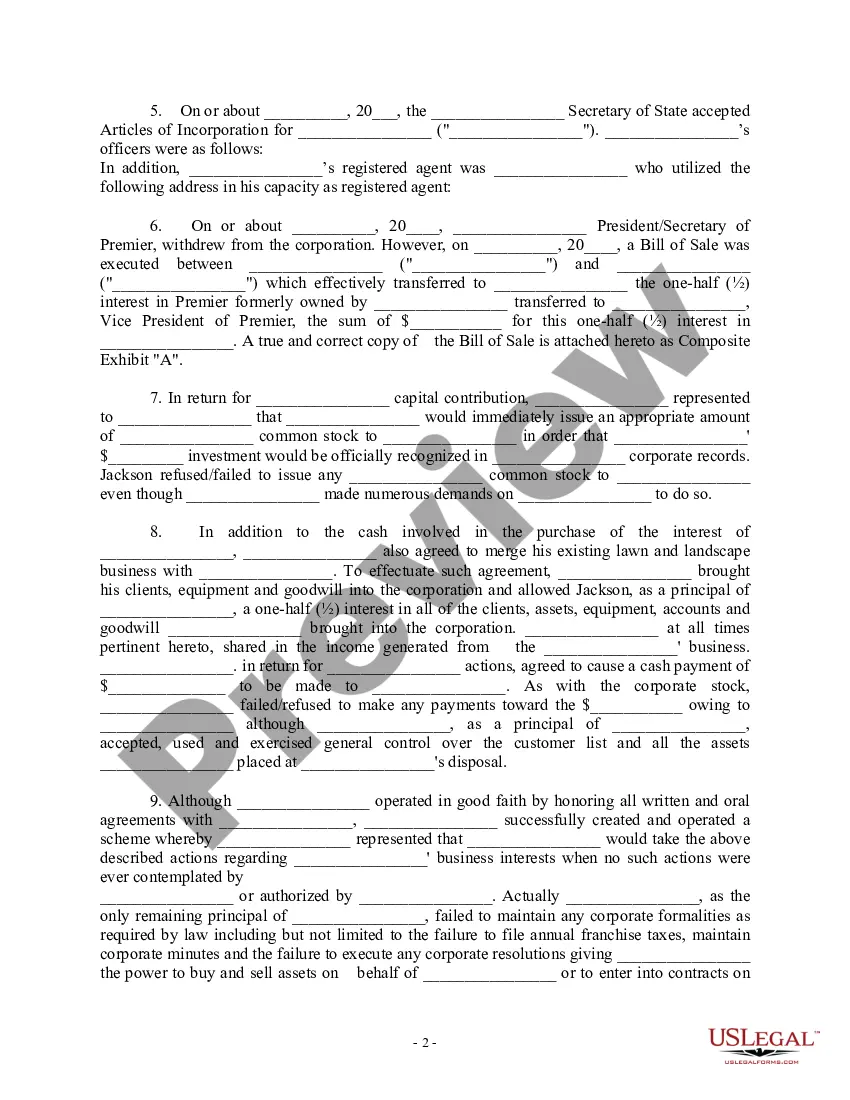
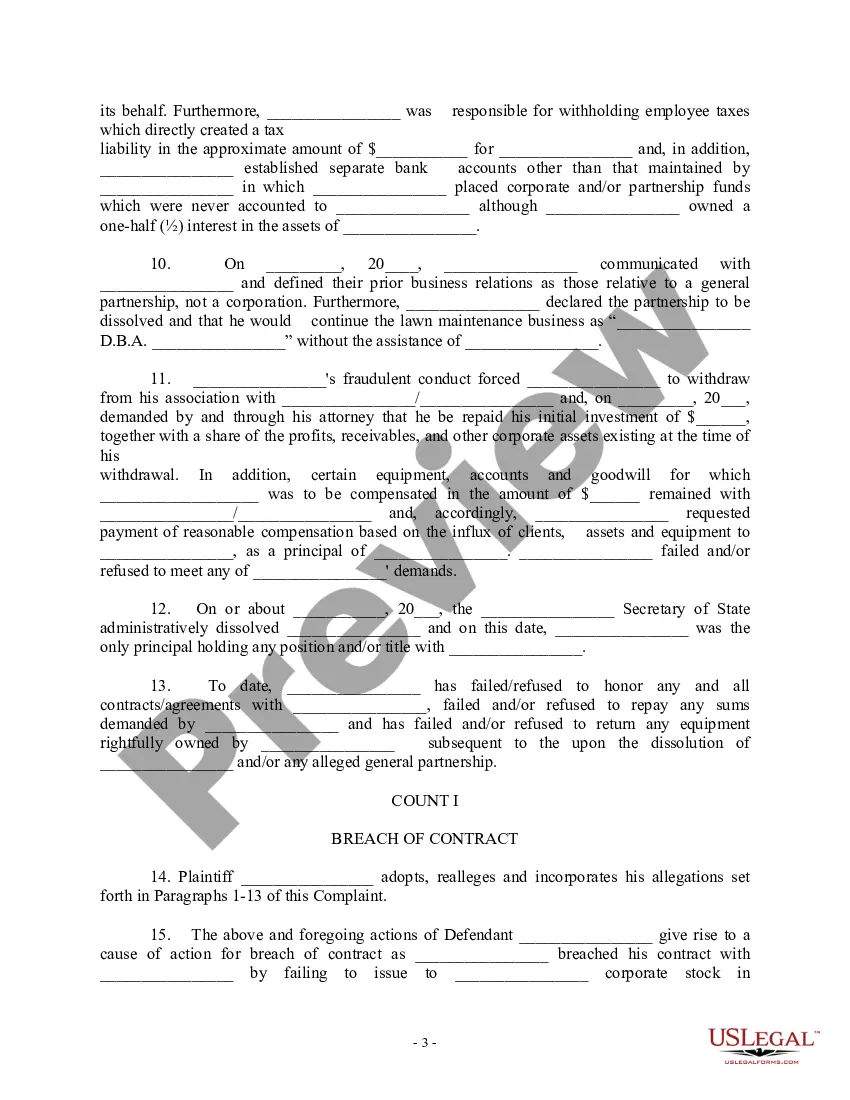
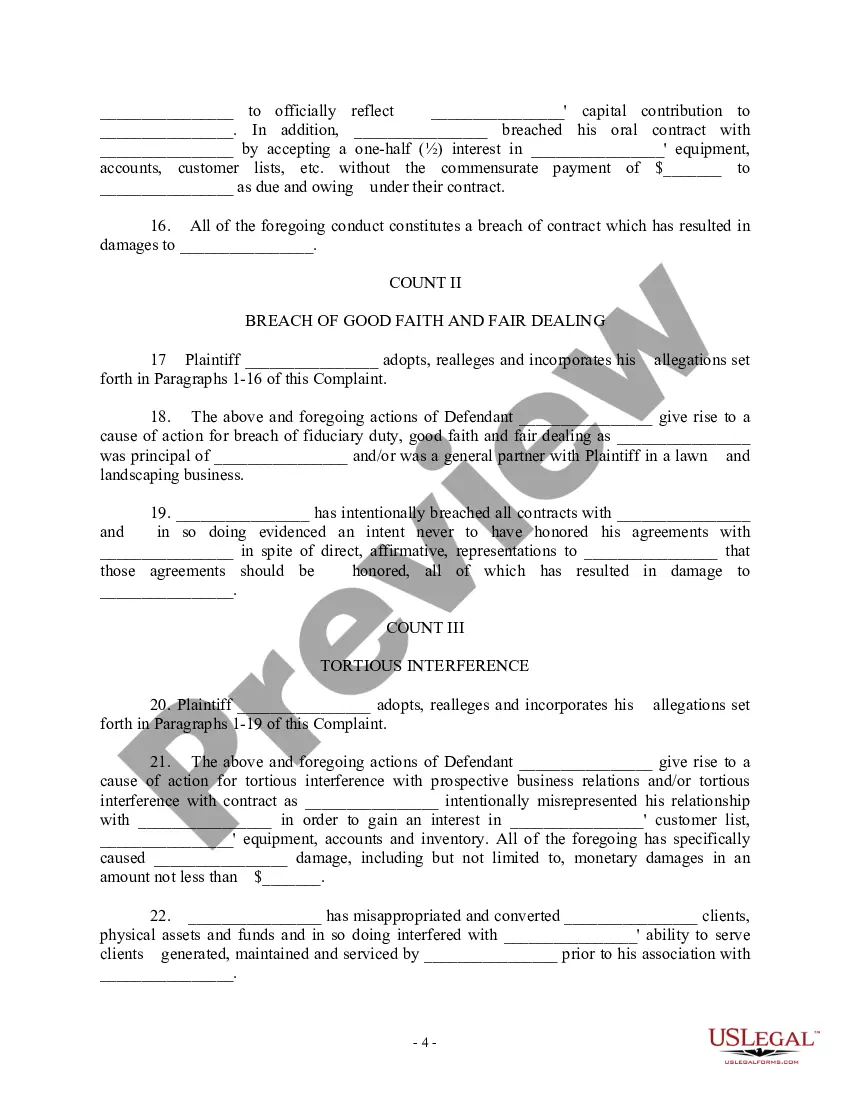
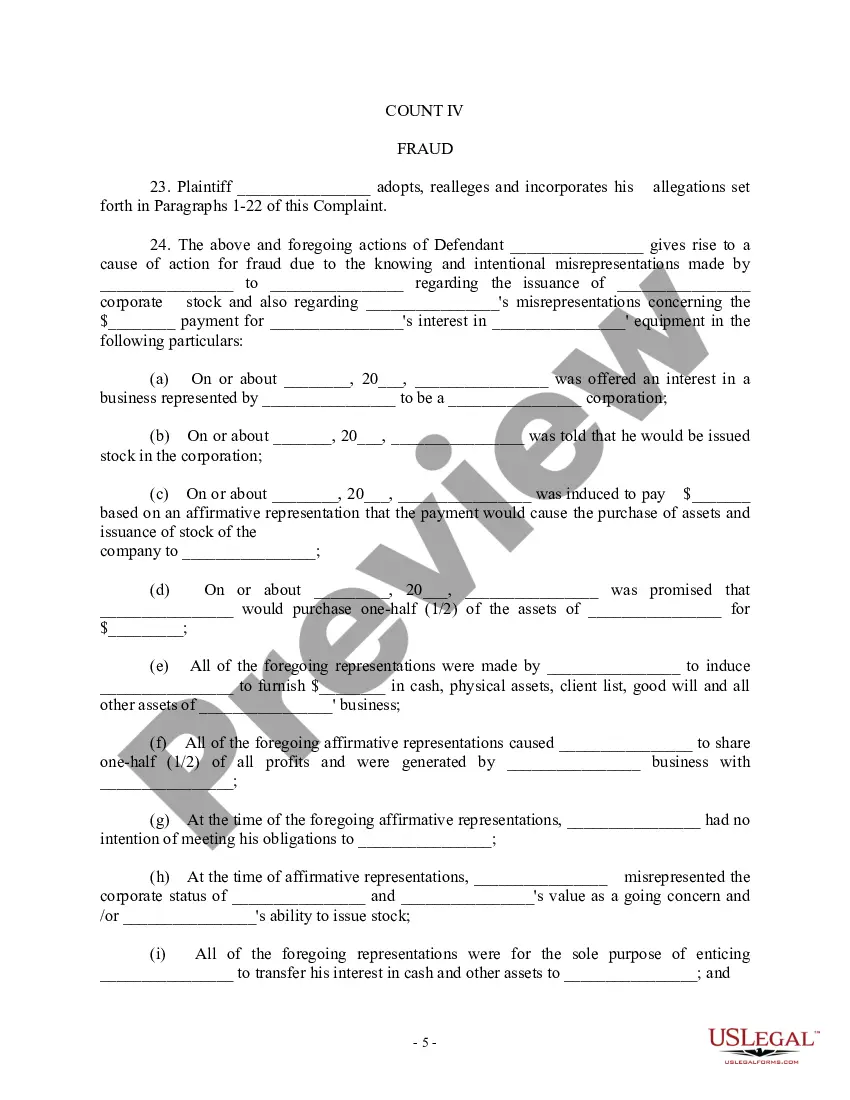
Completing legal documents requires careful consideration, beginning with selecting the correct form template. For instance, if you select an incorrect version of a Complaint For Conversion, it will be rejected upon submission. Thus, it is essential to obtain a reliable source of legal forms such as US Legal Forms.
Once it is downloaded, you can fill out the form using editing software or print it and complete it by hand. With a vast US Legal Forms collection at your disposal, you never need to waste time searching for the suitable sample online. Utilize the library’s easy navigation to find the right template for any scenario.
- Locate the sample you require by using the search box or catalog browsing.
- Review the form’s description to confirm it corresponds with your case, jurisdiction, and location.
- Click on the form’s preview to examine it.
- If it is the incorrect form, return to the search feature to find the Complaint For Conversion sample you require.
- Download the template if it fulfills your criteria.
- If you already possess a US Legal Forms account, click Log in to retrieve previously stored documents in My documents.
- In case you do not have an account yet, you may get the form by clicking Buy now.
- Select the appropriate pricing option.
- Complete the account registration form.
- Choose your payment method: you can utilize a credit card or PayPal account.
- Pick the file format you prefer and download the Complaint For Conversion.
Form popularity
FAQ
Yes, a company can be liable for conversion if it unlawfully takes or uses another person's property without permission. This includes situations where a business wrongfully retains, destroys, or misappropriates someone else's belongings. When pursuing a Complaint for conversion, it is essential to demonstrate how the company's actions caused harm to the rightful owner. By documenting your case with our US Legal Forms platform, you can effectively navigate the complexities of your legal rights and responsibilities.
Suing for conversion means taking legal action against an individual or entity for unlawfully interfering with someone's property rights. This action typically involves filing a complaint for conversion in a court to seek remedy for the wrongful taking or retention of property. The aim is to recover the property or obtain compensation for its value. Understanding the process of suing for conversion is essential for anyone facing such a situation.
Examples of conversion cases can include scenarios where someone's car is taken without permission, or when personal belongings are sold without the owner's consent. Other instances might involve retaining property, such as failing to return rented equipment. Each of these situations may prompt an individual to file a complaint for conversion. Being aware of these examples can help potential victims understand their rights.
The burden of proof for conversion lies with the individual filing the complaint for conversion. They must demonstrate that they had ownership or a right to possess the property in question, and that the other party interfered with that right. Evidence can include documentation of ownership and records of the alleged interference. Successfully meeting this burden is vital for the case's outcome.
A complaint for conversion is a formal legal document filed by an individual claiming that their property has been wrongfully taken or retained without consent. This complaint outlines the details of the incident, the value of the property, and the legal grounds for the claim. Filing a complaint for conversion initiates the legal process to reclaim the property or seek damages. It serves as a critical step in protecting one's property rights in court.
Conversion negligence refers to situations where an individual may unintentionally interfere with someone else's property rights. Although it lacks the intentional element typically associated with conversion, it can still lead to liability. In legal terms, if someone's careless actions cause another person to lose their property, the affected individual might file a complaint for conversion. This emphasizes the importance of careful behavior in handling others' property.
Compensation for conversion often involves the monetary value of the property taken or damaged. The goal is to restore the victim to the financial position they were in before the interference occurred. In some cases, additional damages for emotional distress or punitive damages may also be awarded. Therefore, when filing a complaint for conversion, it is crucial to include all potential forms of compensation.
In a court case, conversion refers to the unauthorized taking or retaining of someone's property. This situation occurs when someone intentionally interferes with another person's right to possess their property. A complaint for conversion is typically filed by the property owner to seek justice and recover their property. Understanding this concept is essential in legal proceedings.
When you file a Complaint for conversion, you may seek different types of damages. Generally, you can recover the value of the property converted, any lost profits, and even compensation for distress. Additionally, punitive damages may apply if the behavior of the offender was particularly egregious. Understanding the potential damages can help you effectively prepare your case.
Conversion is not classified as negligence; rather, it is a deliberate act of taking or using someone else's property without permission. While negligence involves failure to act responsibly, conversion requires intent to deprive the rightful owner of their property. If you're facing issues related to this, consider filing a Complaint for conversion to protect your property rights effectively.