Trust Grandchildren Sample For Job
Description

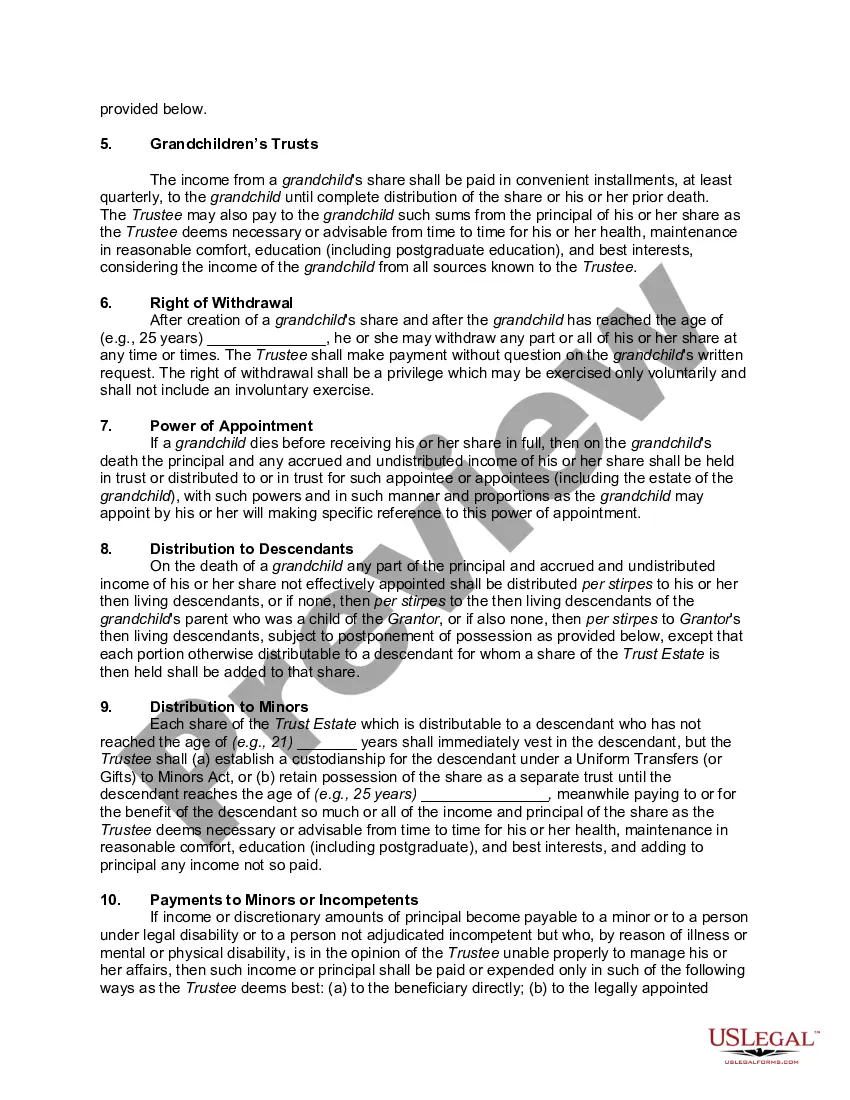
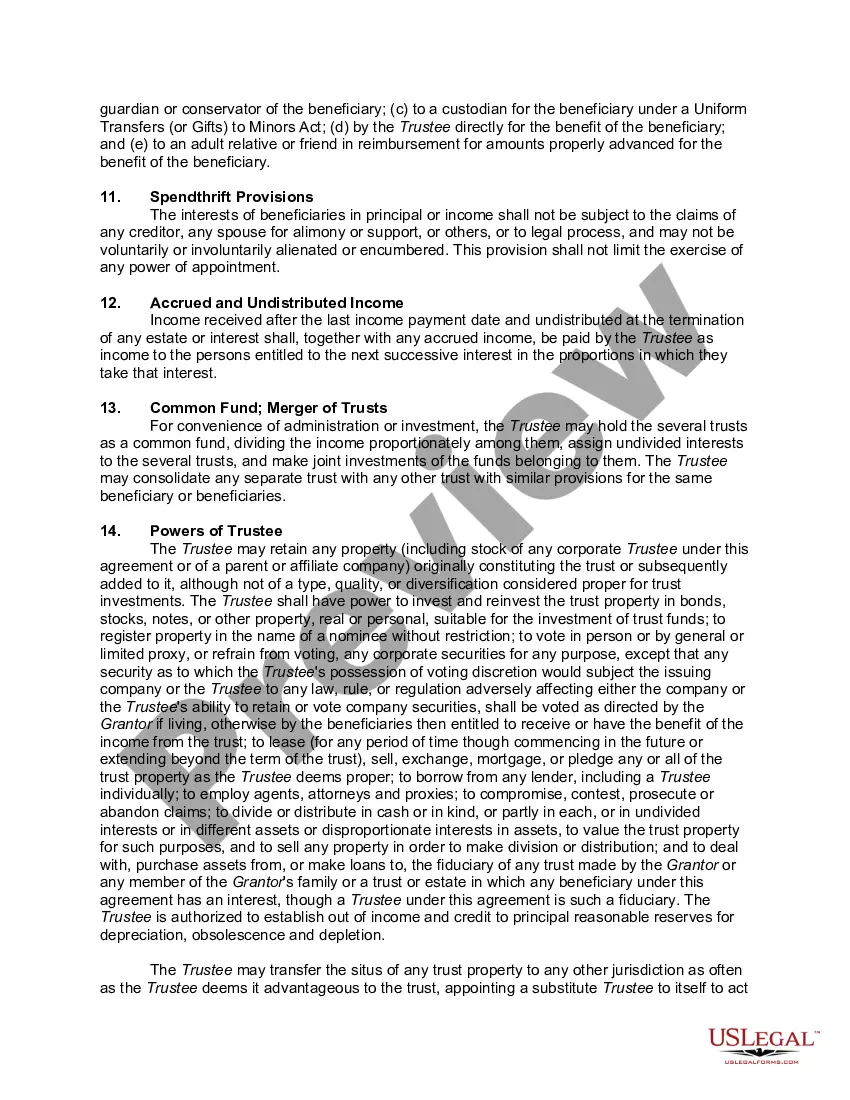
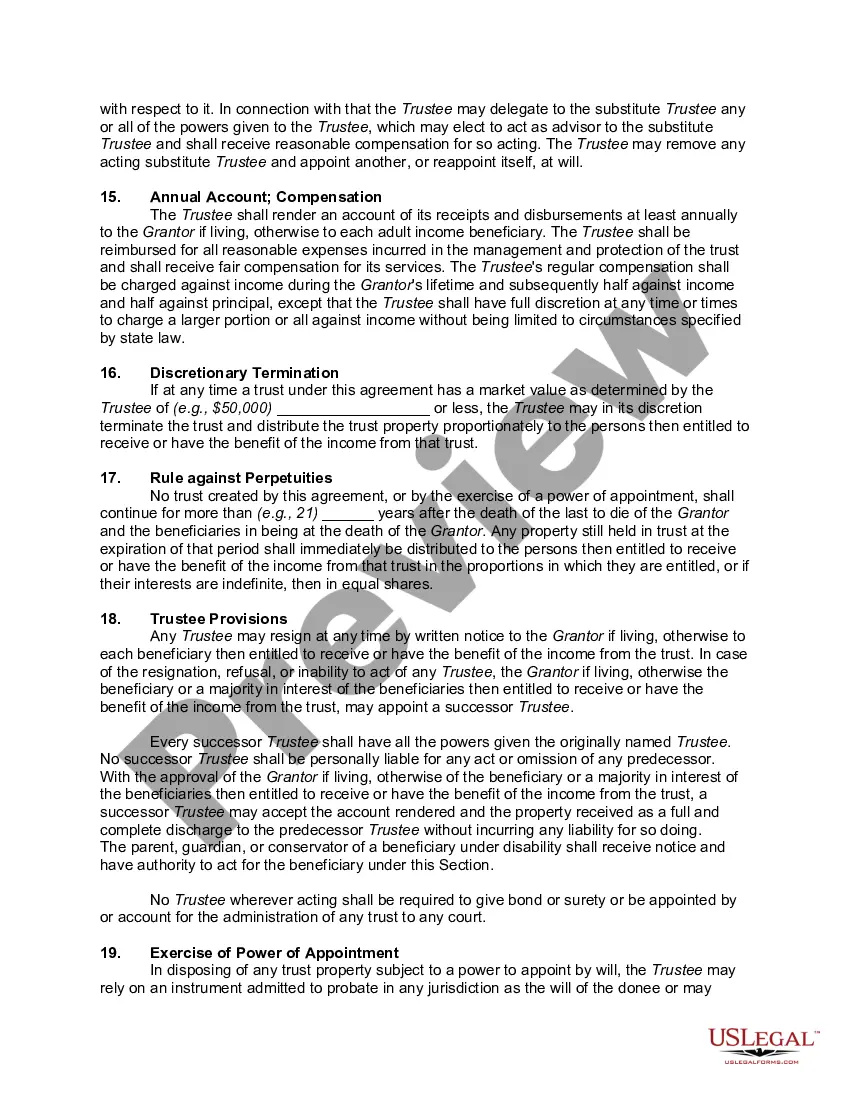
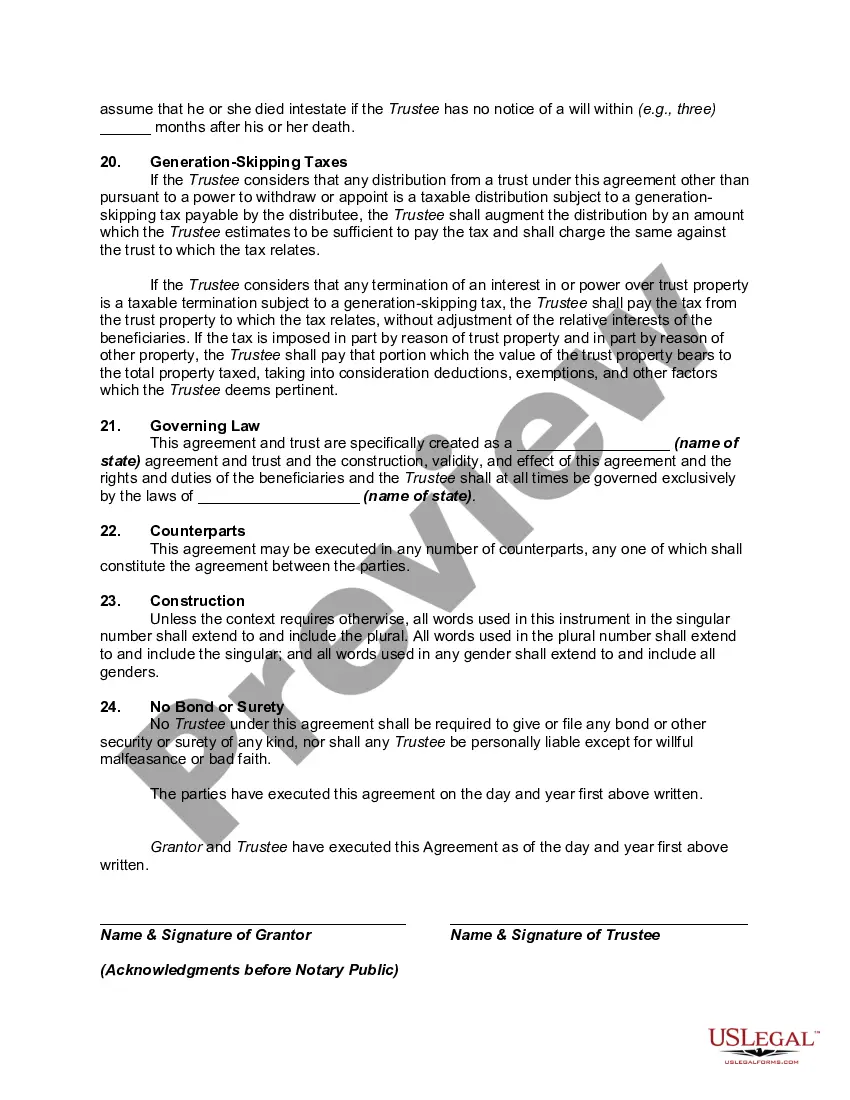

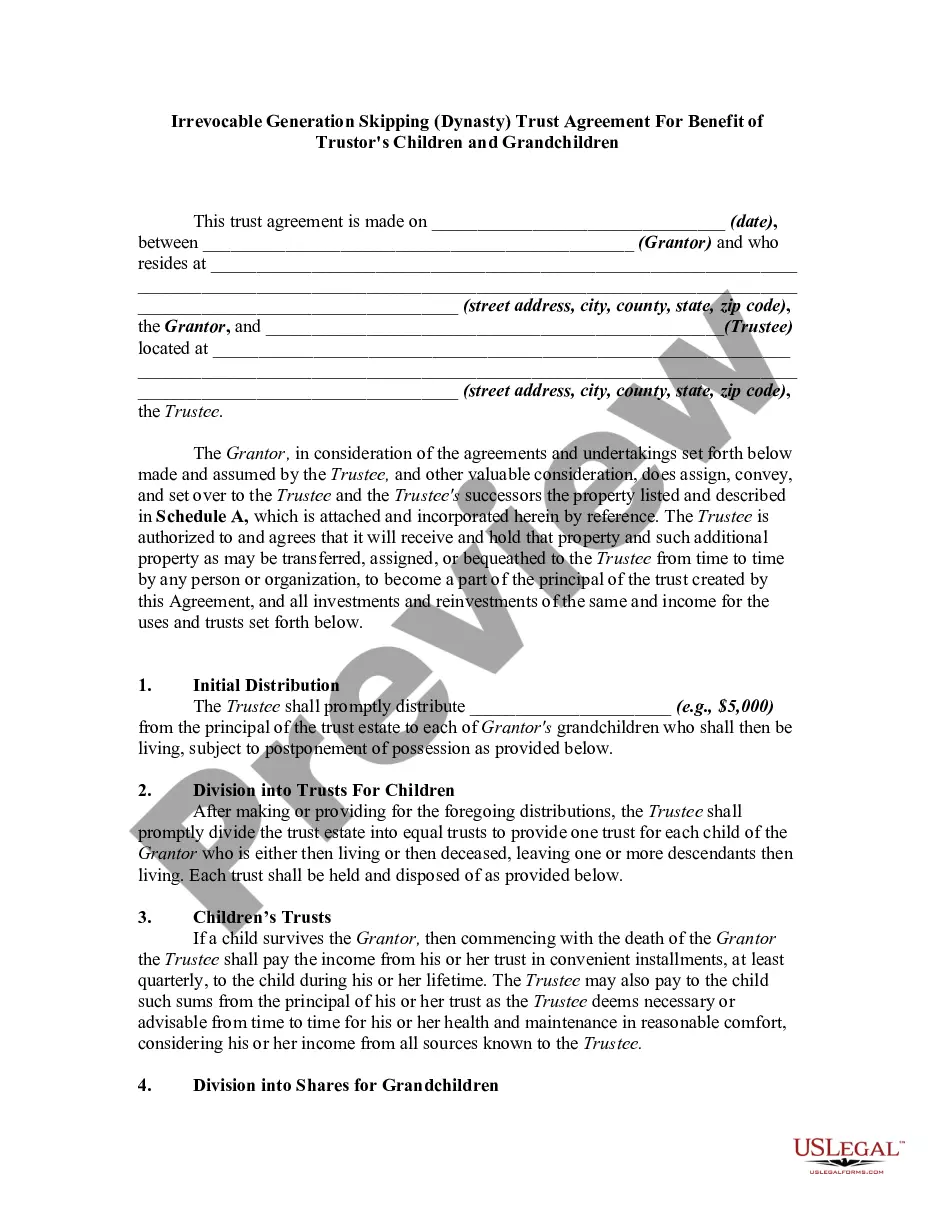
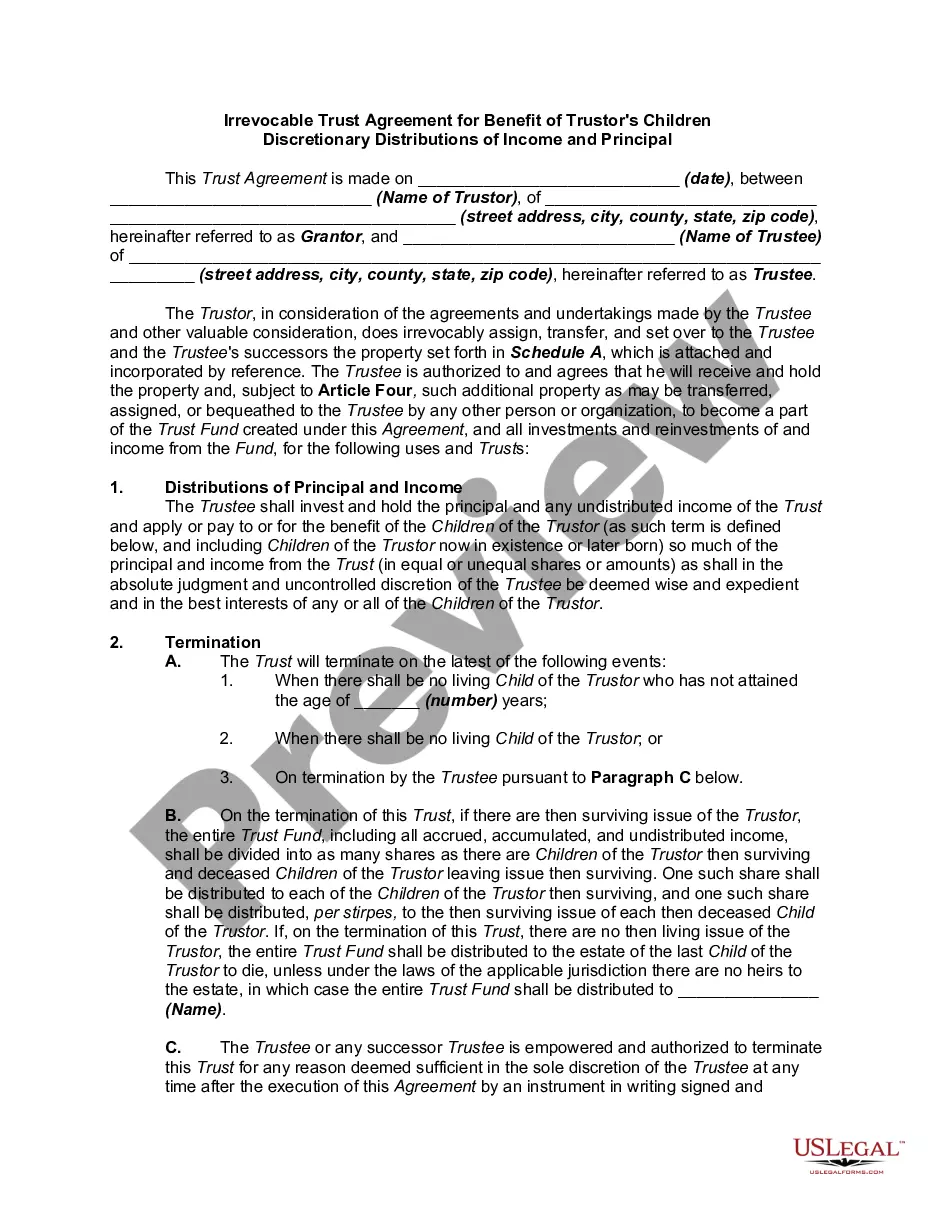
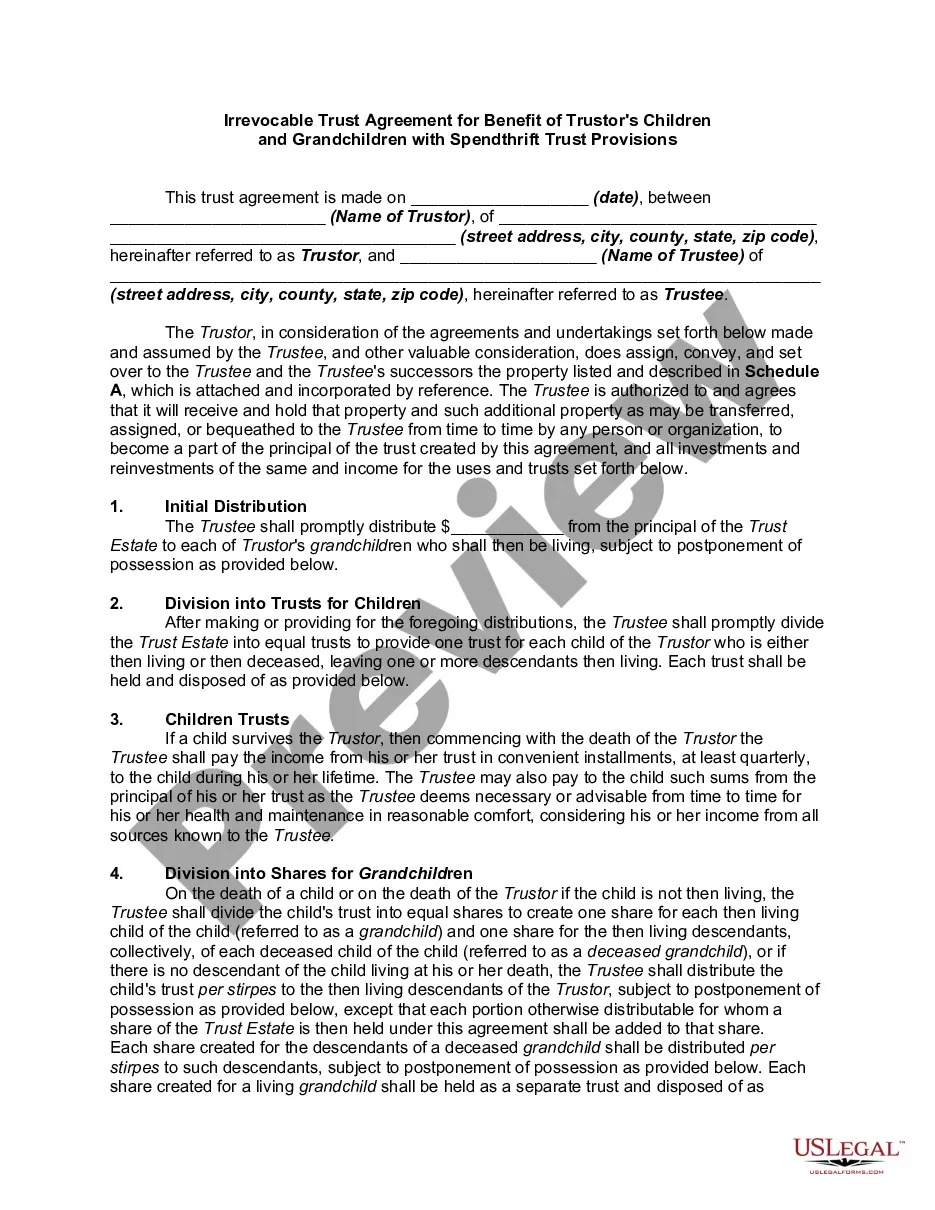

Get your form ready online
Our built-in tools help you complete, sign, share, and store your documents in one place.
Make edits, fill in missing information, and update formatting in US Legal Forms—just like you would in MS Word.
Download a copy, print it, send it by email, or mail it via USPS—whatever works best for your next step.
Sign and collect signatures with our SignNow integration. Send to multiple recipients, set reminders, and more. Go Premium to unlock E-Sign.
If this form requires notarization, complete it online through a secure video call—no need to meet a notary in person or wait for an appointment.
We protect your documents and personal data by following strict security and privacy standards.

Make edits, fill in missing information, and update formatting in US Legal Forms—just like you would in MS Word.

Download a copy, print it, send it by email, or mail it via USPS—whatever works best for your next step.

Sign and collect signatures with our SignNow integration. Send to multiple recipients, set reminders, and more. Go Premium to unlock E-Sign.

If this form requires notarization, complete it online through a secure video call—no need to meet a notary in person or wait for an appointment.

We protect your documents and personal data by following strict security and privacy standards.
Looking for another form?






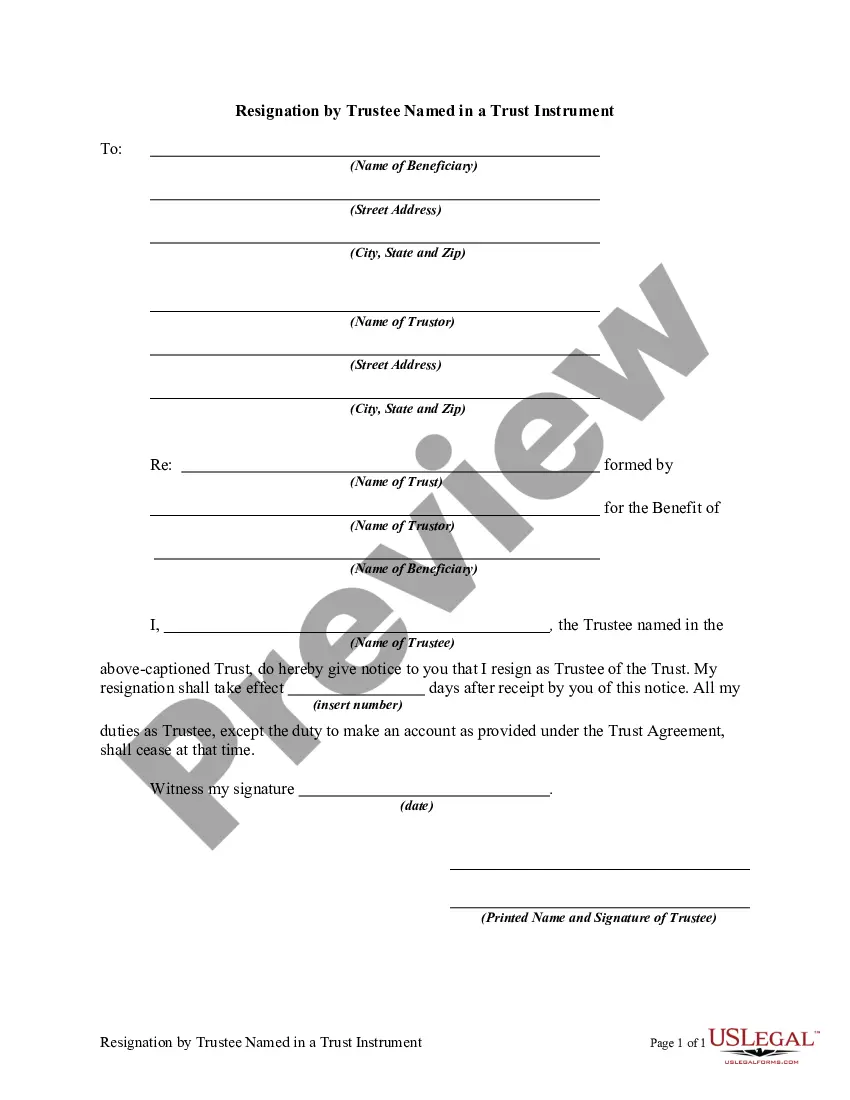



How to fill out Irrevocable Trust Agreement For Benefit Of Trustor's Children And Grandchildren?
It’s clear that you cannot transform into a legal authority in a single night, nor can you learn to swiftly create a Trust Grandchildren Sample For Job without possessing a specific skill set.
Producing legal documentation is a labor-intensive process that demands a distinct education and abilities. Therefore, why not entrust the creation of the Trust Grandchildren Sample For Job to the professionals.
With US Legal Forms, one of the most comprehensive libraries of legal templates, you can obtain anything from court documents to templates for internal communication.
If you require a different template, commence your search anew.
Create a free account and select a subscription plan to purchase the template. Click Buy now. After the payment is completed, you can download the Trust Grandchildren Sample For Job, complete it, print it, and send or mail it to the relevant individuals or entities.
- We recognize the significance of compliance and conformity to federal and local laws and regulations.
- This is why, on our site, all templates are tailored to specific locations and are current.
- Let’s start with our website and obtain the document you need within moments.
- Locate the document you need using the search bar at the top of the page.
- Preview it (if this feature is available) and review the accompanying description to determine if the Trust Grandchildren Sample For Job is what you need.
Form popularity
FAQ
Some wish to include their step-grandchildren as fully as their biological and adopted grandchildren, and others prefer to leave their step-grandchildren out of their will. Both options are entirely valid, and it is our goal to create an estate plan that prioritizes your individual wishes for your unique family.
You can usually create a trust in four steps: Draft an agreement. A lawyer or other legal entity drafts a formal trust agreement. ... Establish the trust's property. The settlor makes an irrevocable donation into the trust, which becomes the trust property. ... Open a trust account(s) ... Complete the process.
What is a trust fund? A trust fund is one of the best ways for grandparents to give money to grandchildren in Canada. The typical trust fund is straightforward in terms of its legality and liabilities.
A trust is considered a taxpayer in Canada even though it is not considered a legal entity. A trust pays tax at the highest personal marginal tax rate on its taxable income and doesn't have the benefit of individual tax credits.
Custodial Brokerage ? UTMA/UGMA You can open a custodial brokerage account (UTMA/UGMA) for your grandchild and manage it until they reach majority age (18/21) depending on the state) when they take over control. There are disadvantages, however, such as tax on withdrawals.