Trust Agreement Form With A Bank
Description
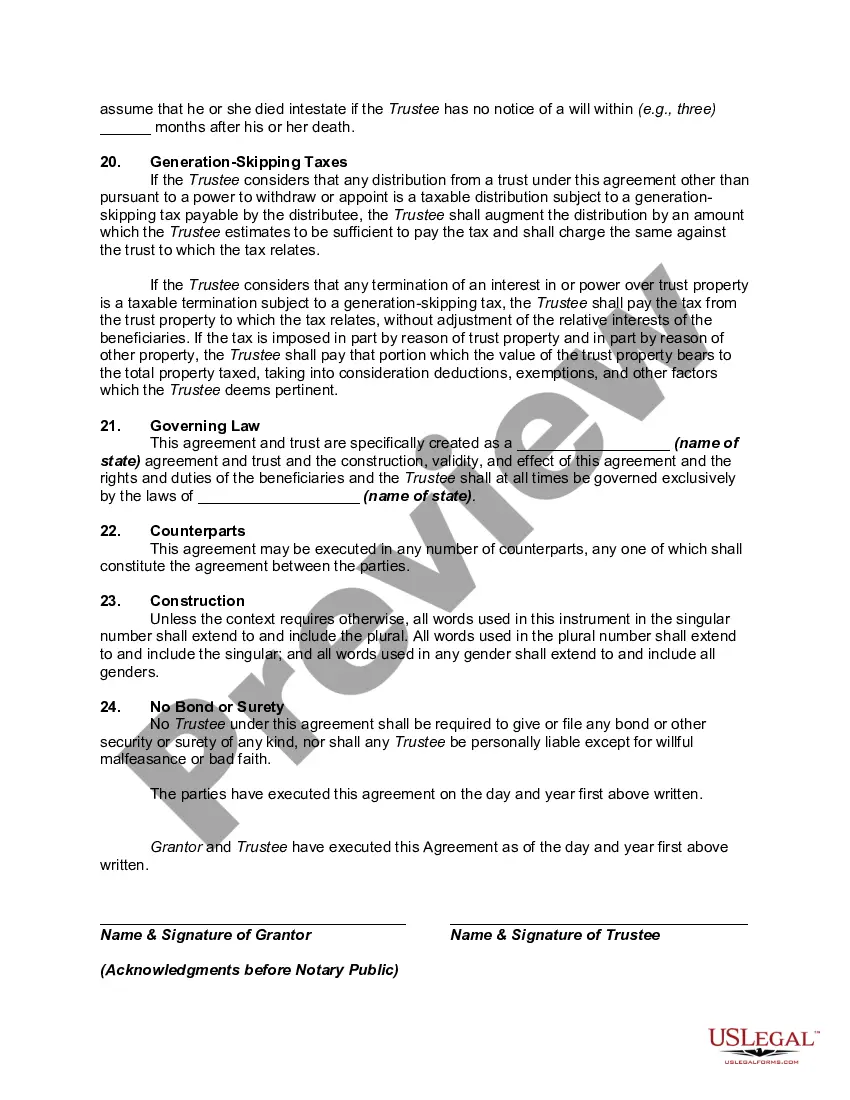

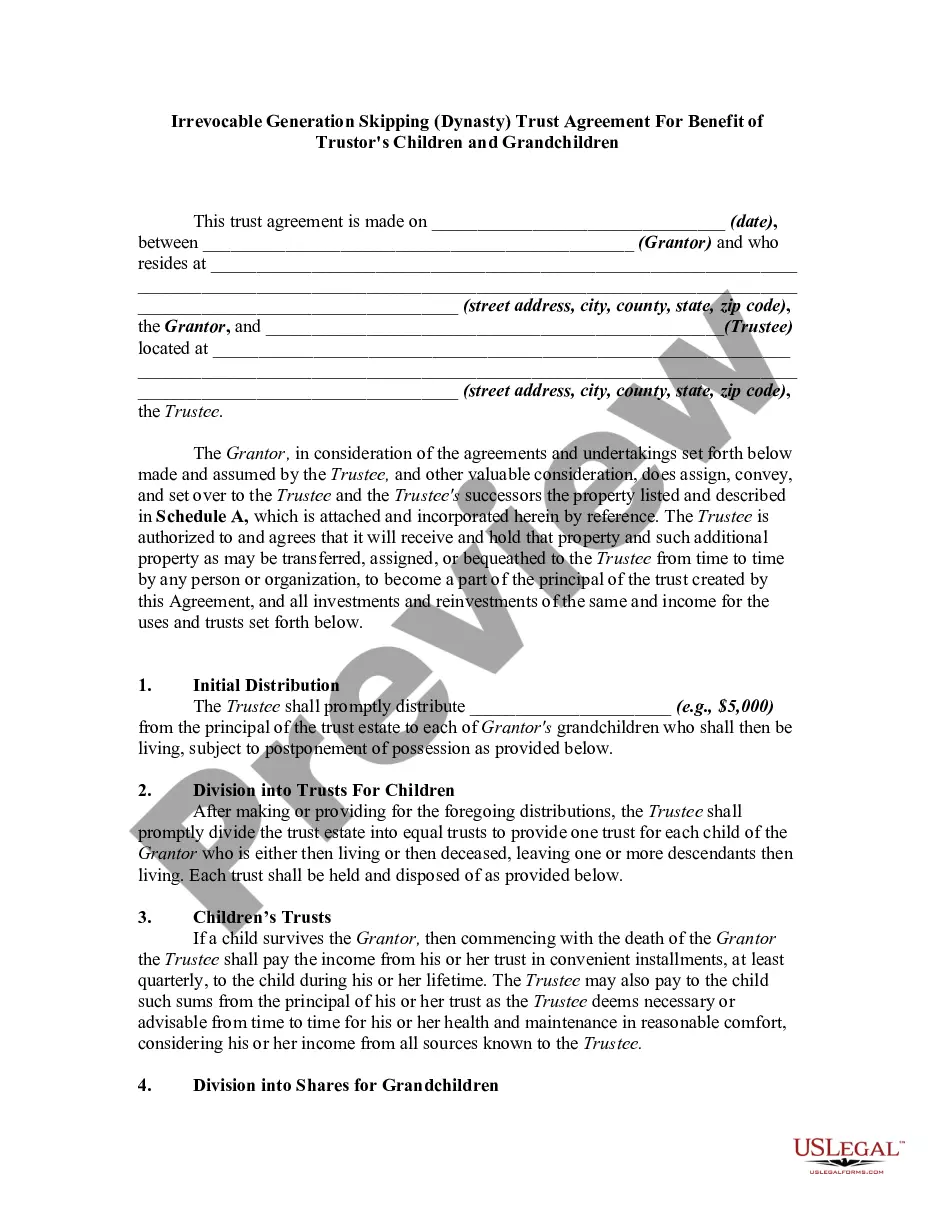
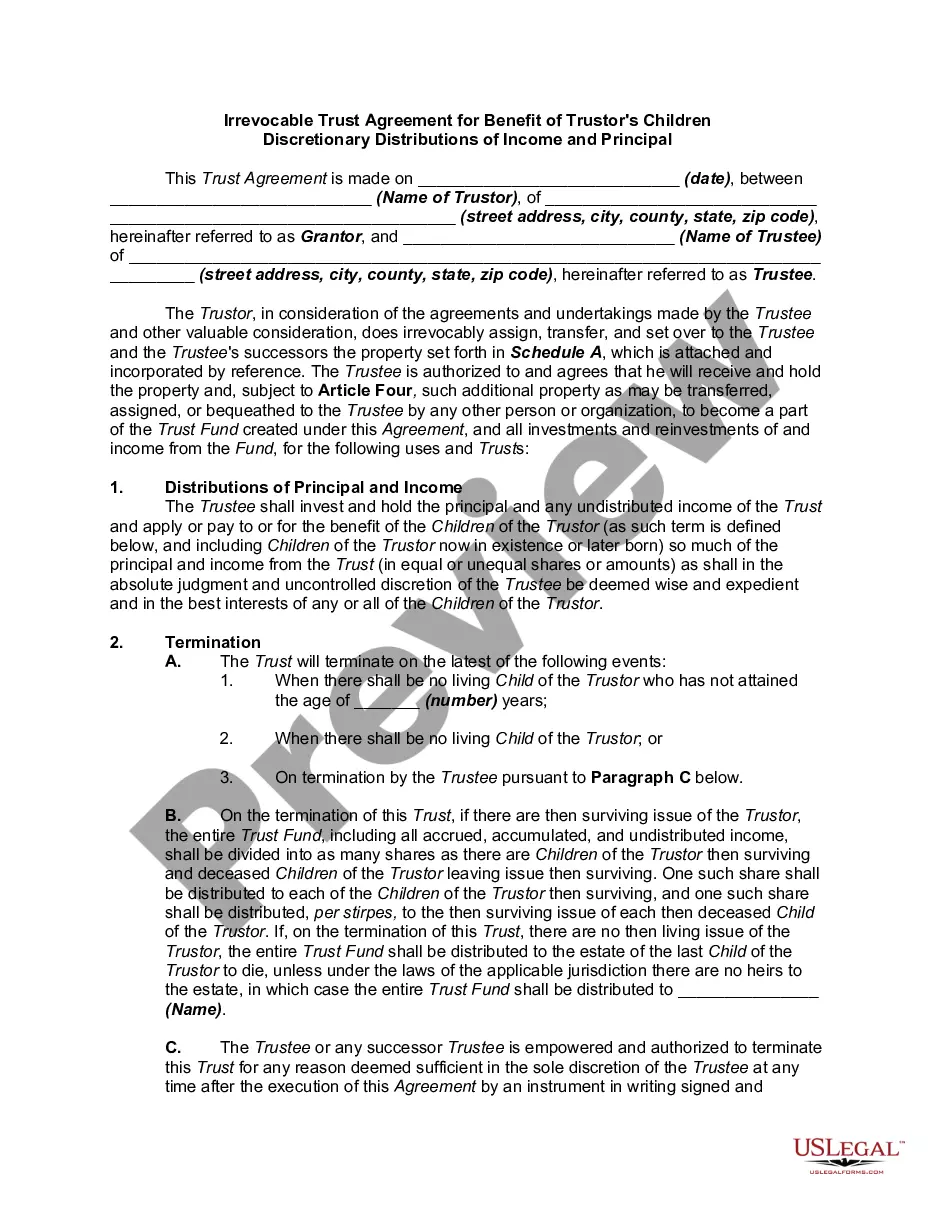
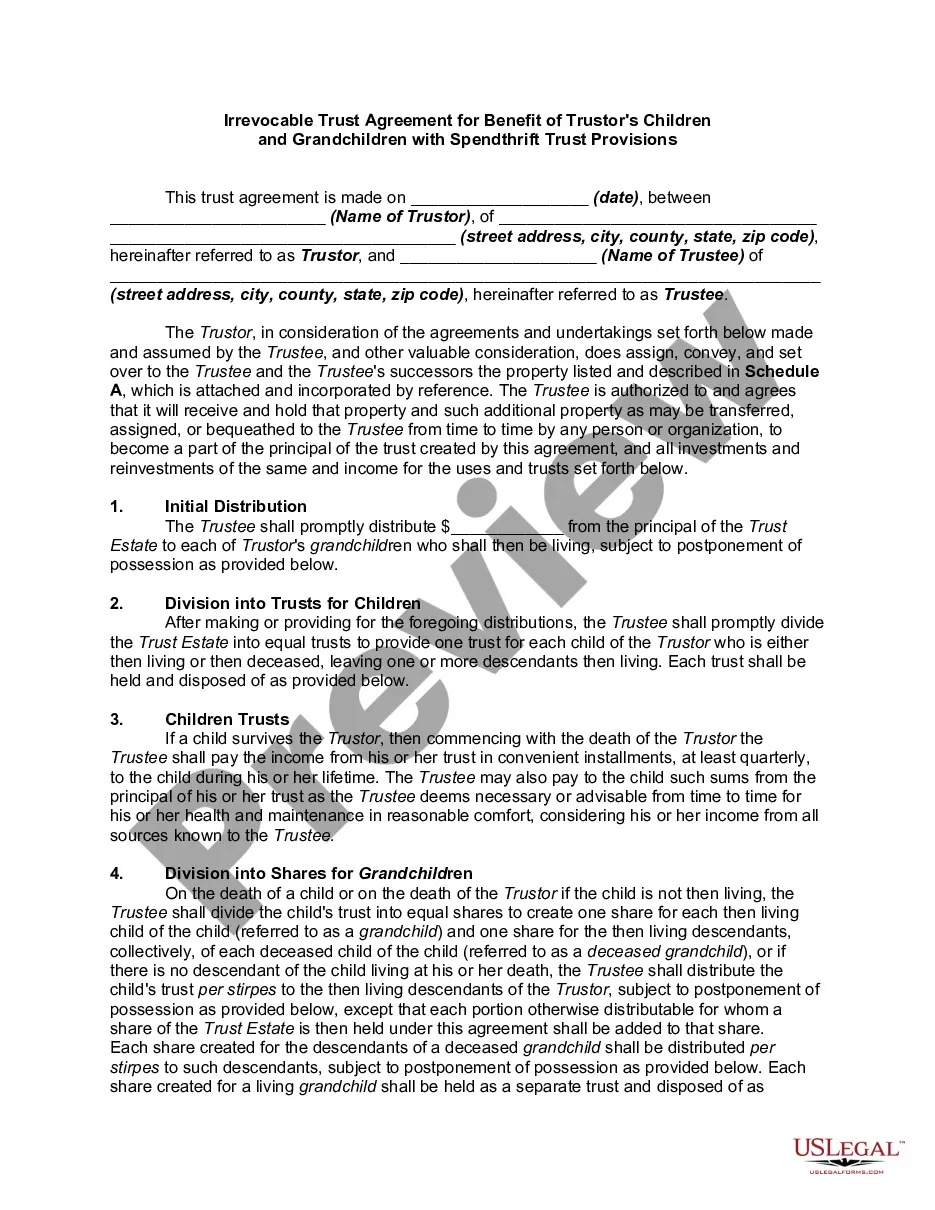
Get your form ready online
Our built-in tools help you complete, sign, share, and store your documents in one place.
Make edits, fill in missing information, and update formatting in US Legal Forms—just like you would in MS Word.
Download a copy, print it, send it by email, or mail it via USPS—whatever works best for your next step.
Sign and collect signatures with our SignNow integration. Send to multiple recipients, set reminders, and more. Go Premium to unlock E-Sign.
If this form requires notarization, complete it online through a secure video call—no need to meet a notary in person or wait for an appointment.
We protect your documents and personal data by following strict security and privacy standards.

Make edits, fill in missing information, and update formatting in US Legal Forms—just like you would in MS Word.

Download a copy, print it, send it by email, or mail it via USPS—whatever works best for your next step.

Sign and collect signatures with our SignNow integration. Send to multiple recipients, set reminders, and more. Go Premium to unlock E-Sign.

If this form requires notarization, complete it online through a secure video call—no need to meet a notary in person or wait for an appointment.

We protect your documents and personal data by following strict security and privacy standards.
Looking for another form?


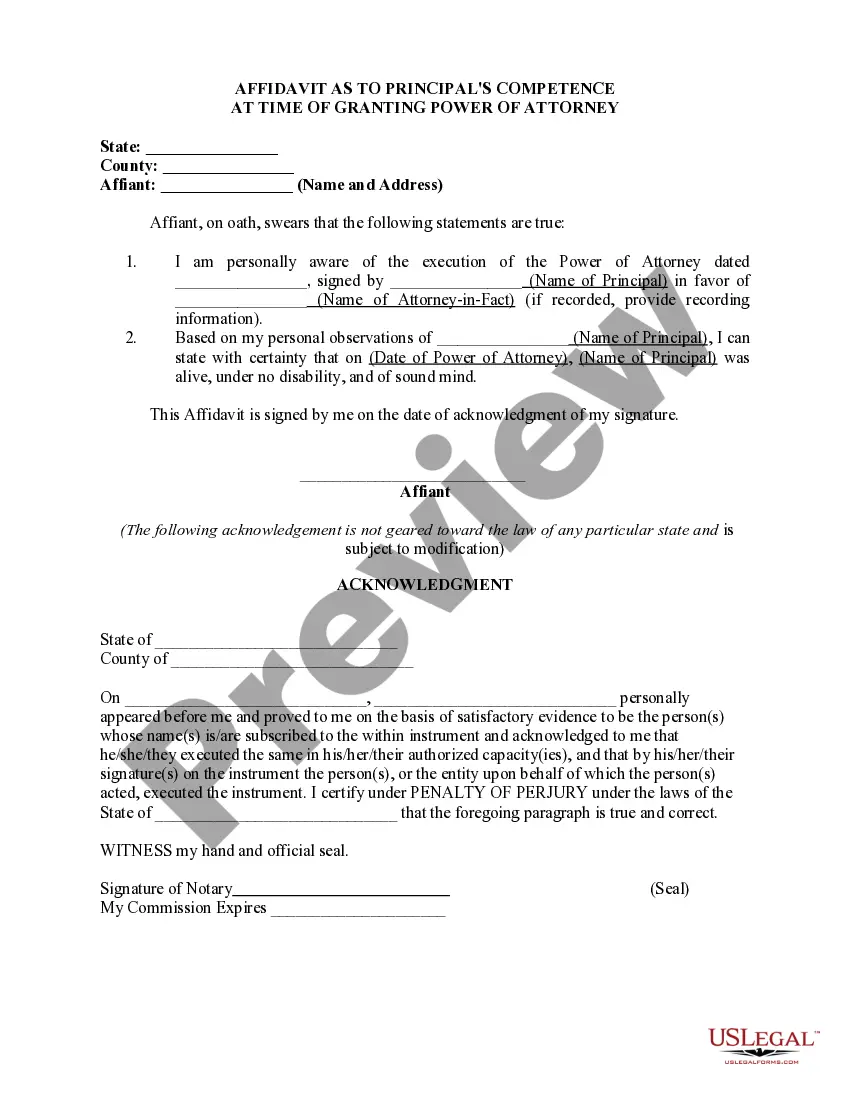






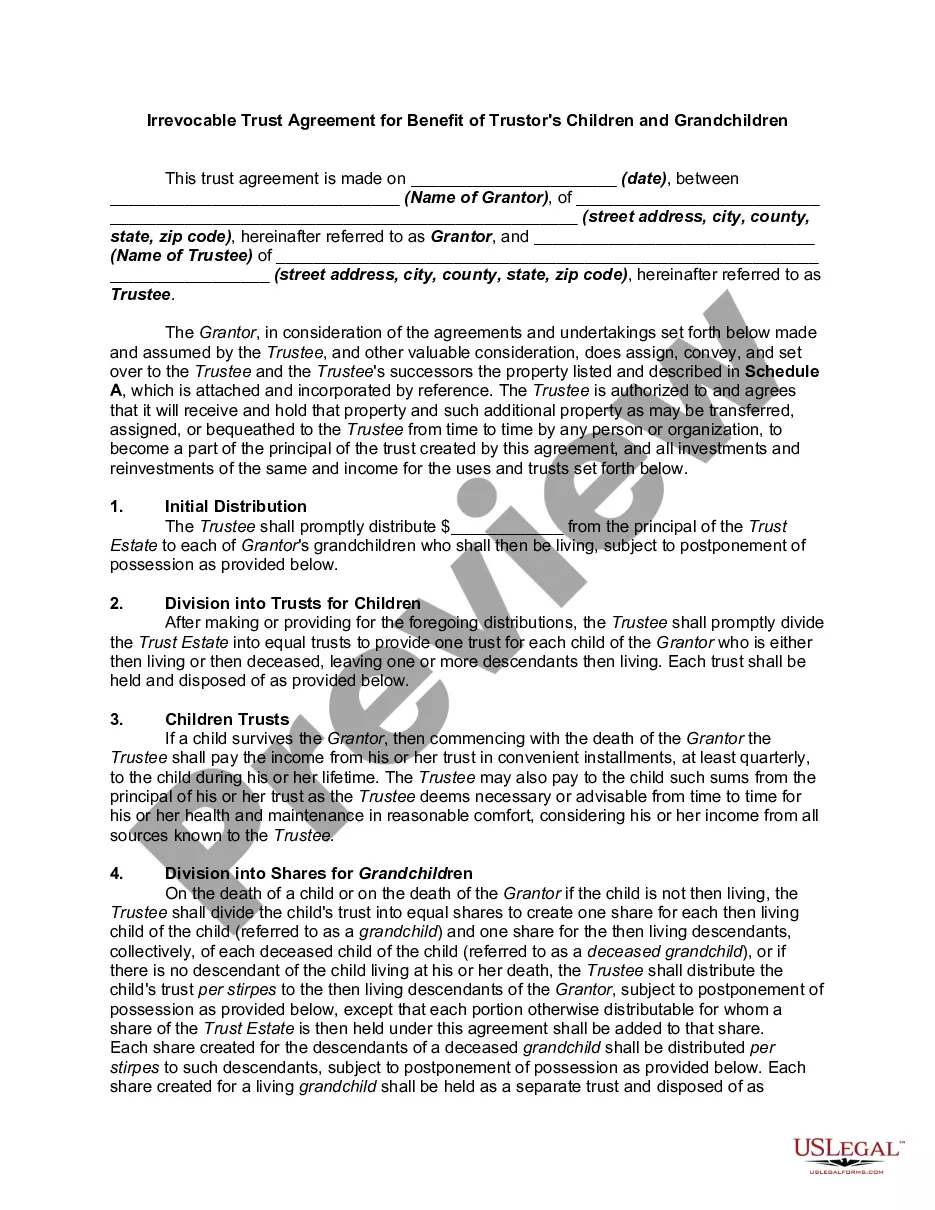
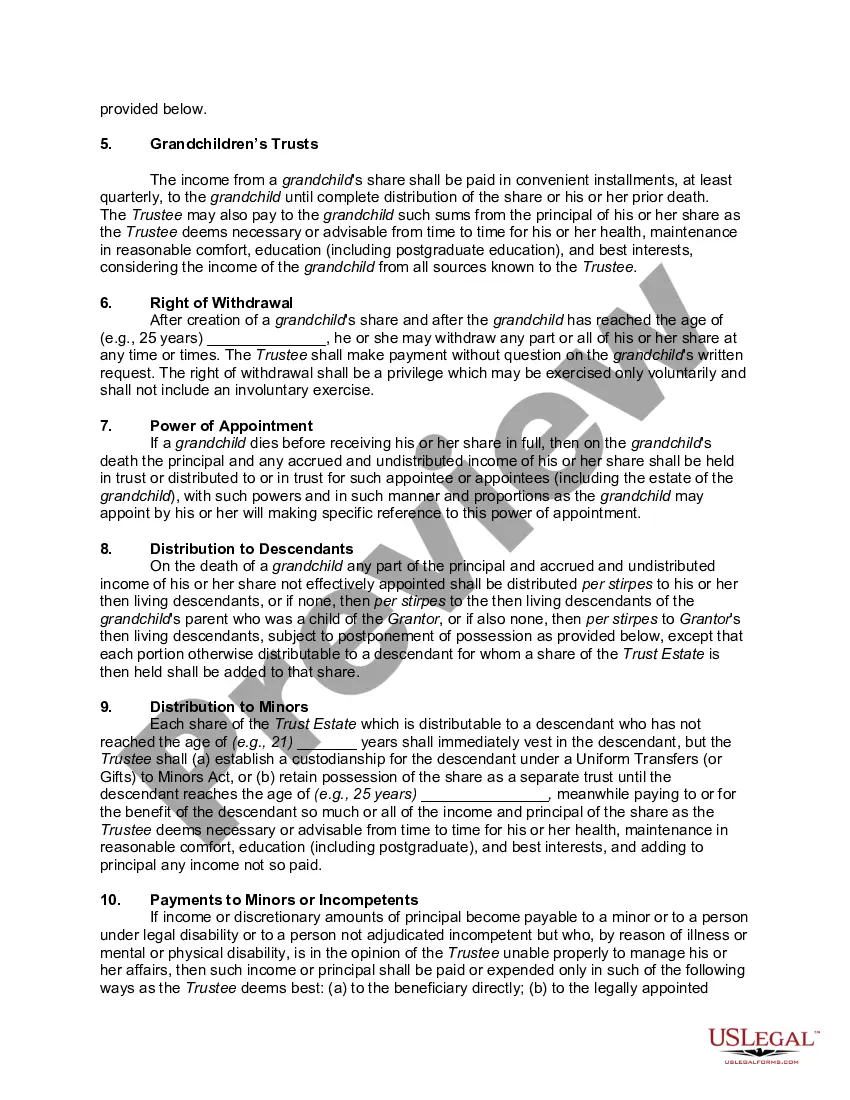
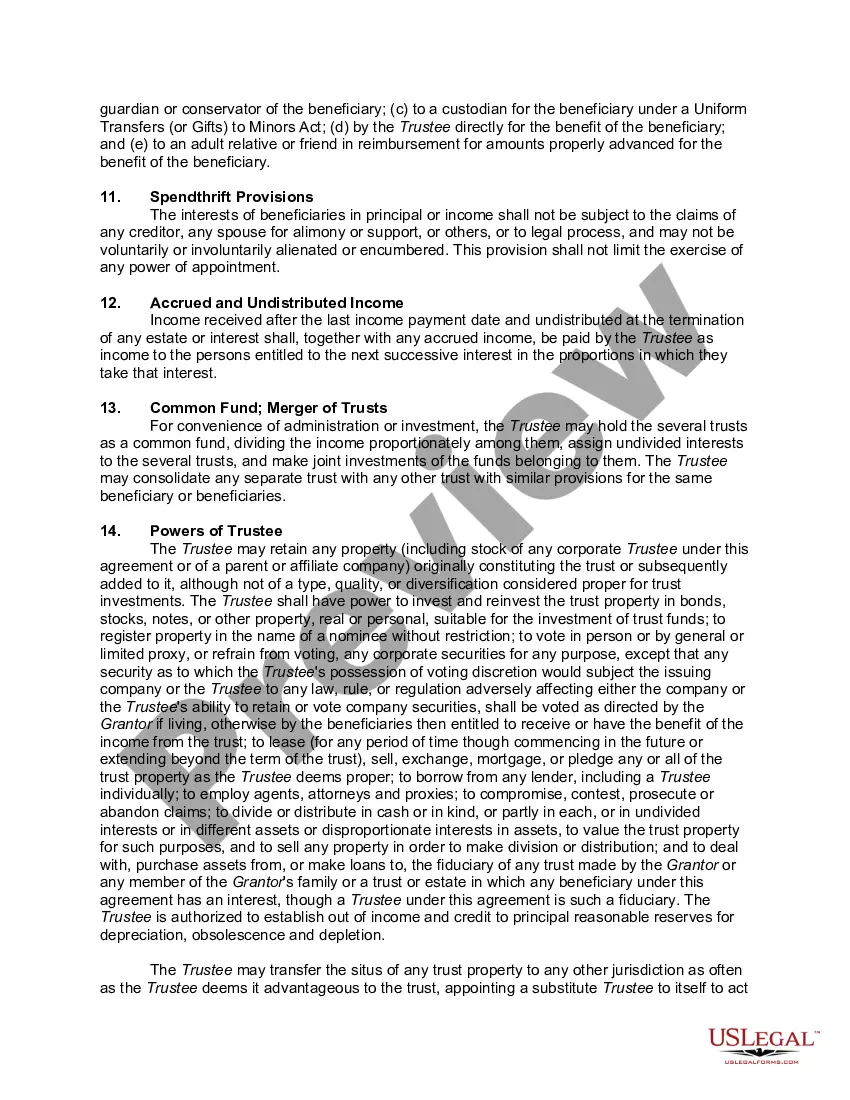
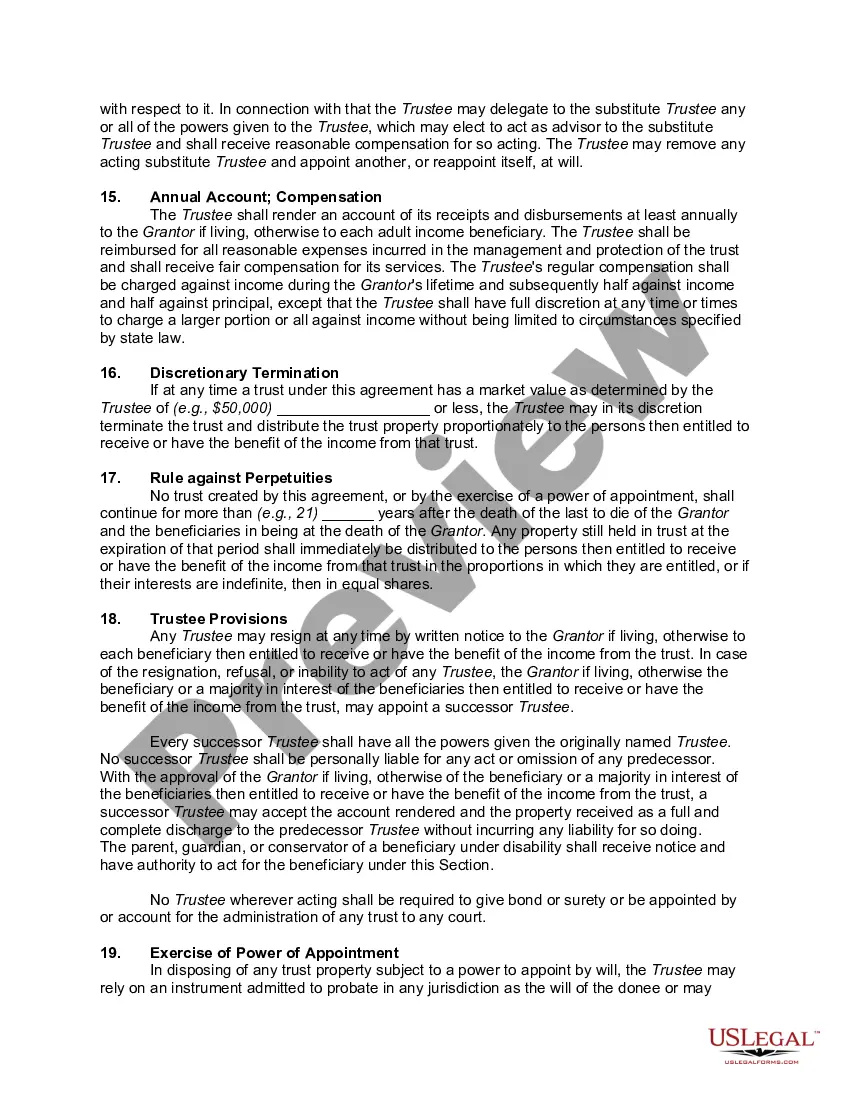
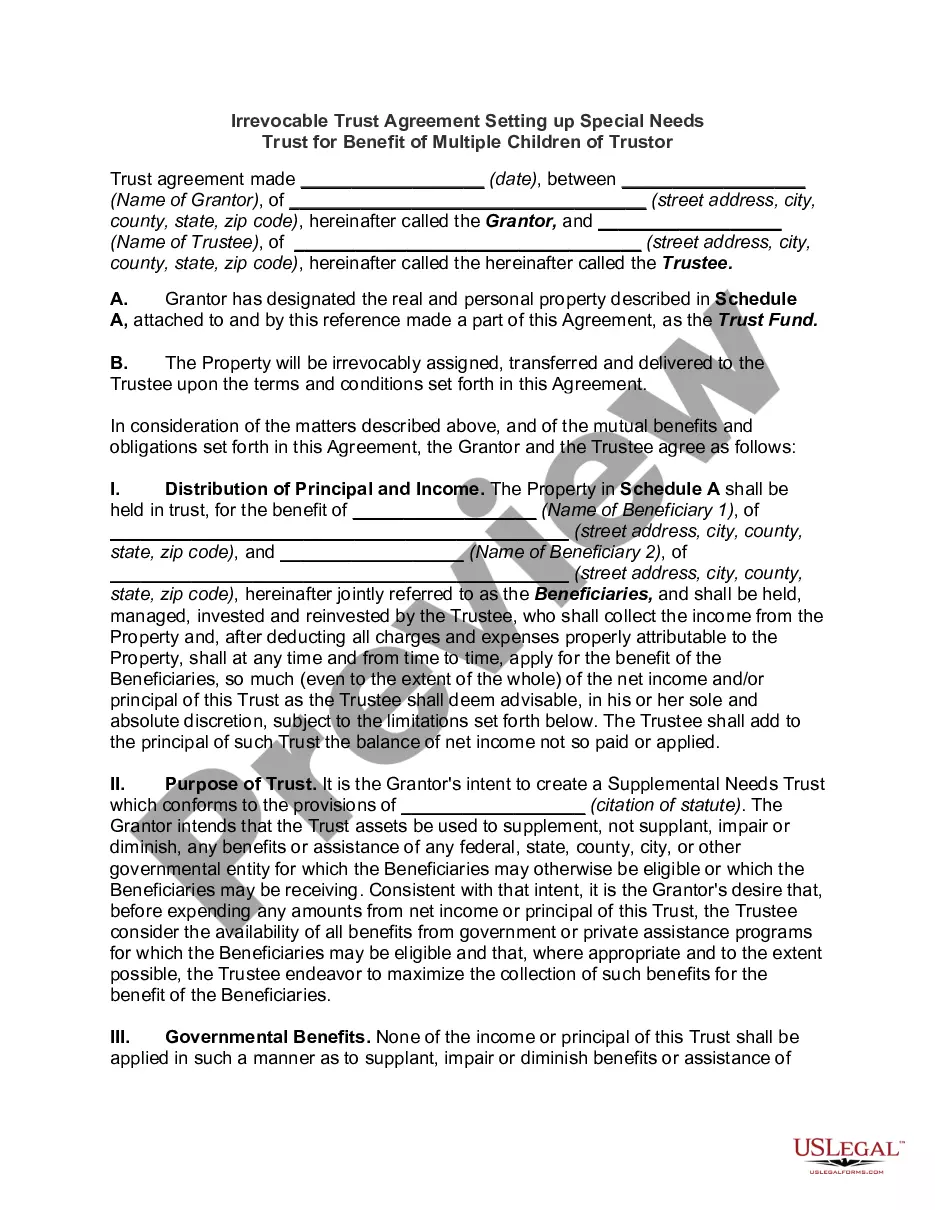
How to fill out Irrevocable Trust Agreement For Benefit Of Trustor's Children And Grandchildren?
- If you are a returning user, log in to your account and locate the necessary template by clicking the Download button. Ensure your subscription is active; renew it if needed.
- For first-time users, start by exploring the Preview mode and reading the form description to confirm it matches your needs and local jurisdiction.
- If you need a different template, use the Search tab at the top to find an appropriate form. Repeat this step until you’re satisfied with your selection.
- Proceed to purchase the document by clicking on the Buy Now button. Choose your preferred subscription plan and register for an account to access the forms library.
- Complete your purchase by entering your credit card information or utilizing your PayPal account for payment.
- Finally, download the form to your device for easy access. You can also find it in the My Forms section of your profile whenever you need it.
US Legal Forms offers a robust collection of over 85,000 legal documents, empowering individuals and attorneys alike with the tools needed to execute legal forms quickly and accurately. This extensive library includes far more options than competitors at similar prices, ensuring clients have what they need.
Additionally, users can benefit from premium expert assistance for form completion, guaranteeing that their documents are both precise and legally sound. Start your journey toward effective legal documentation today!
Form popularity
FAQ
A family trust may complicate decisions regarding asset management and distribution among family members. Such trusts can also require significant legal documentation, which may lead to costly maintenance over time. When using a trust agreement form with a bank, it helps to clearly define the roles and expectations to minimize misunderstandings.
Setting up a trust at a bank usually starts with drafting a trust agreement form with a bank, which outlines the trust’s terms and conditions. You will need to provide identification and possibly a tax identification number for the trust. Once the paperwork is completed, the bank will help facilitate the establishment of the trust accounts.
To list bank accounts in a trust, you typically need to change the account ownership to the trust itself. This involves providing the bank with a trust agreement form with a bank that outlines the trust’s details. It’s advisable to consult with a legal or financial professional to ensure proper completion.
While a trust can provide many benefits, it may limit access to certain assets during the trust's duration. Furthermore, setting up a trust often requires thorough planning and legal assistance, which can be a time-consuming process. The trust agreement form with a bank also necessitates ongoing oversight.
If your parents wish to manage their assets and plan for the future, a trust may be a beneficial option. A trust agreement form with a bank can help safeguard their assets and provide clear instructions for distribution. It’s important to consider their specific circumstances and goals when deciding.
Having a trust can involve complex legal and financial responsibilities. It may require ongoing management, such as maintaining accurate records and filing taxes. Additionally, establishing a trust agreement form with a bank may incur costs, which some individuals may overlook.
Yes, many banks keep copies of trust documents as part of their records, provided you have shared these documents when opening your account. This practice helps banks ensure compliance with regulatory requirements and manage the trust effectively. If you have any concerns, consider using the uslegalforms platform to streamline the process of preparing and submitting your trust agreement form with a bank.
Trust records are generally kept for several years, often aligned with state laws and your specific trust's requirements. Typically, it is advisable to maintain these records for at least seven years, as they can be valuable for tax purposes and legal requirements. By keeping thorough records, you protect the integrity of your trust agreement form with a bank and ensure proper management of assets.
Your bank may request a copy of your trust agreement form because they need to verify the trust's structure and the powers granted to the trustees. This process helps the bank ensure compliance with regulations and manage the accounts associated with the trust appropriately. Providing this documentation safeguards your assets and ensures proper administration of the trust.
To obtain proof of trust, you can request a copy of your trust documents from your attorney or the entity that prepared them. Alternatively, if your trust agreement form with a bank is already established, you may ask the bank to provide documentation showing the trust's existence and details. This proof is essential for various legal and financial processes, ensuring transparency and trust management.