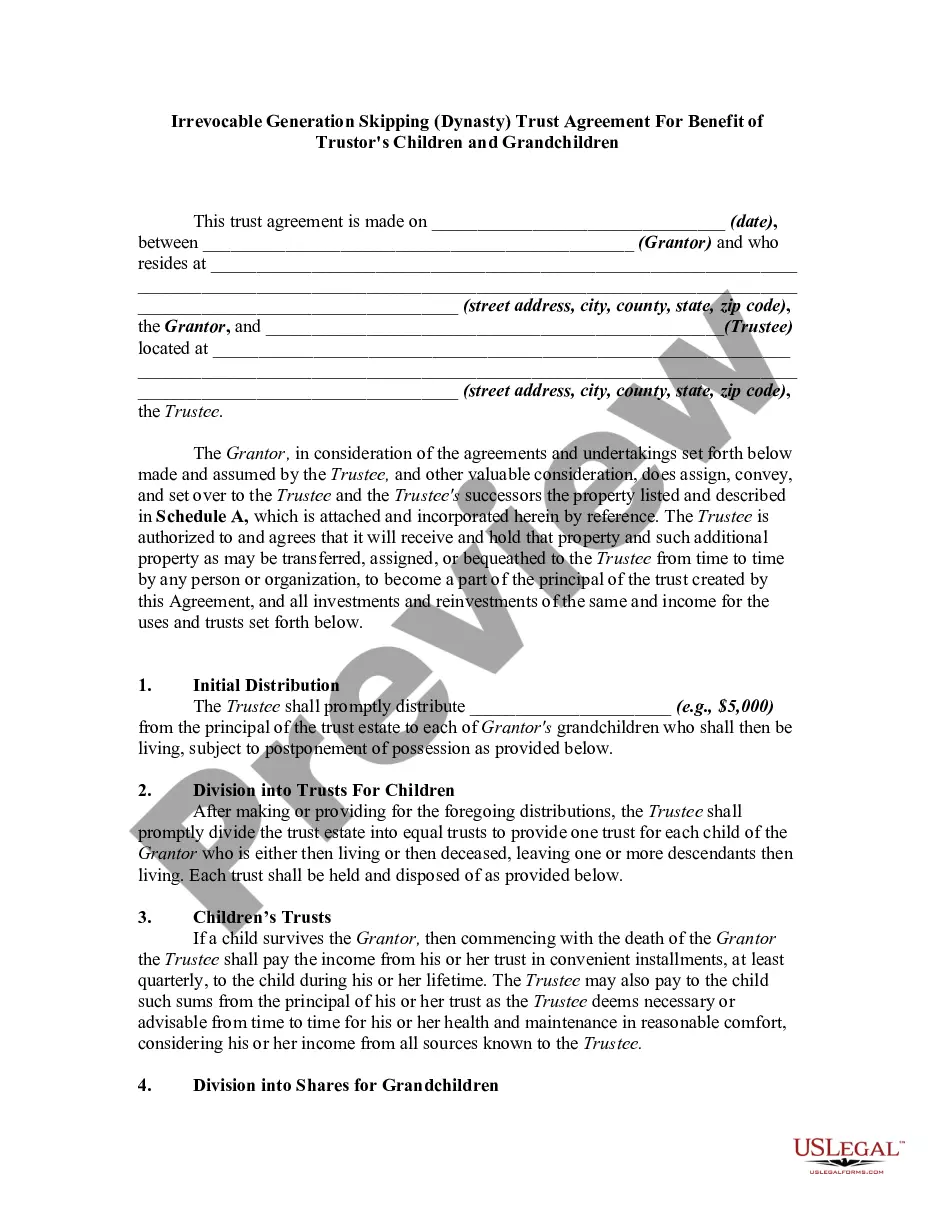
Irrevocable Trust Form For Dummies
Description

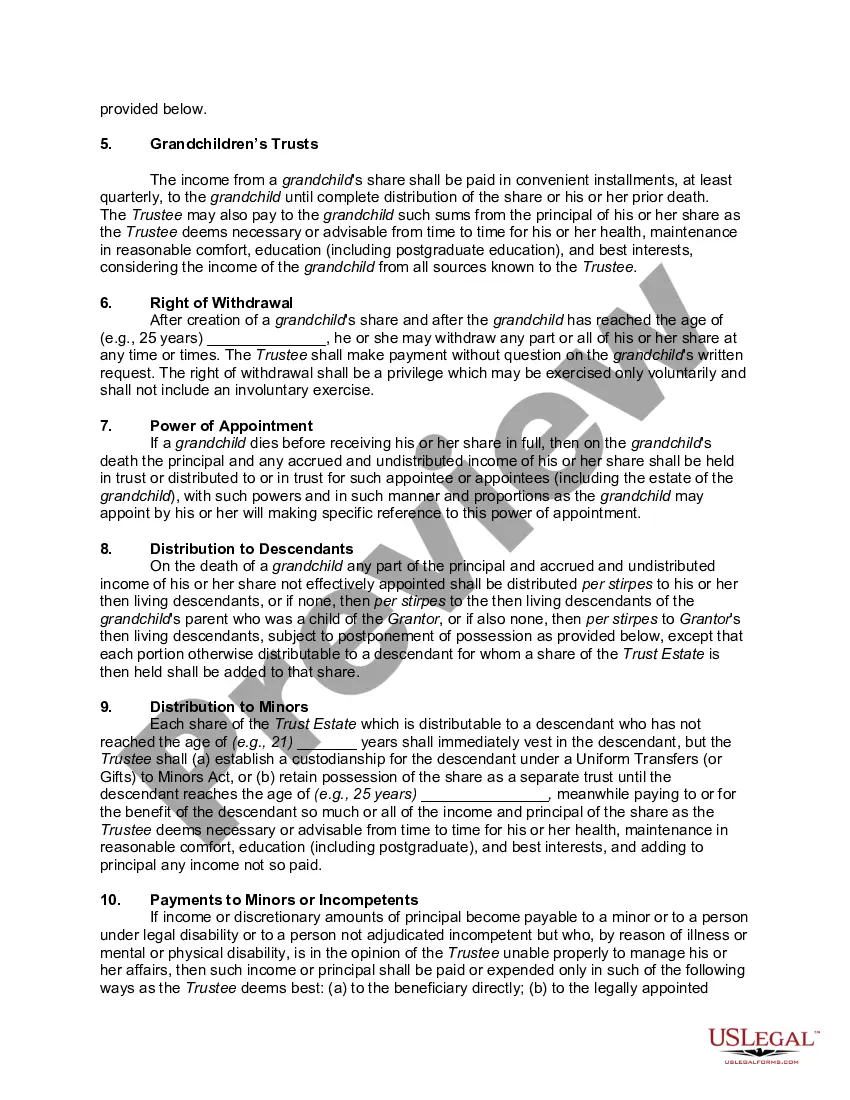
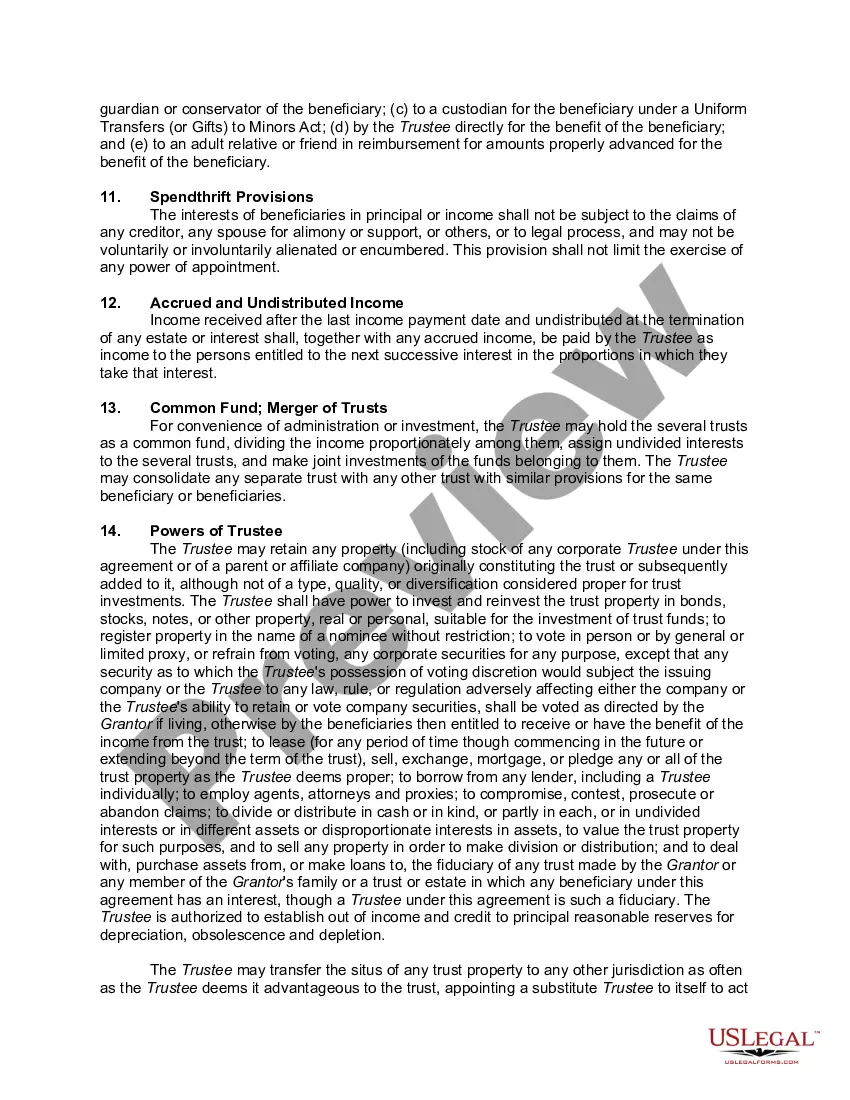
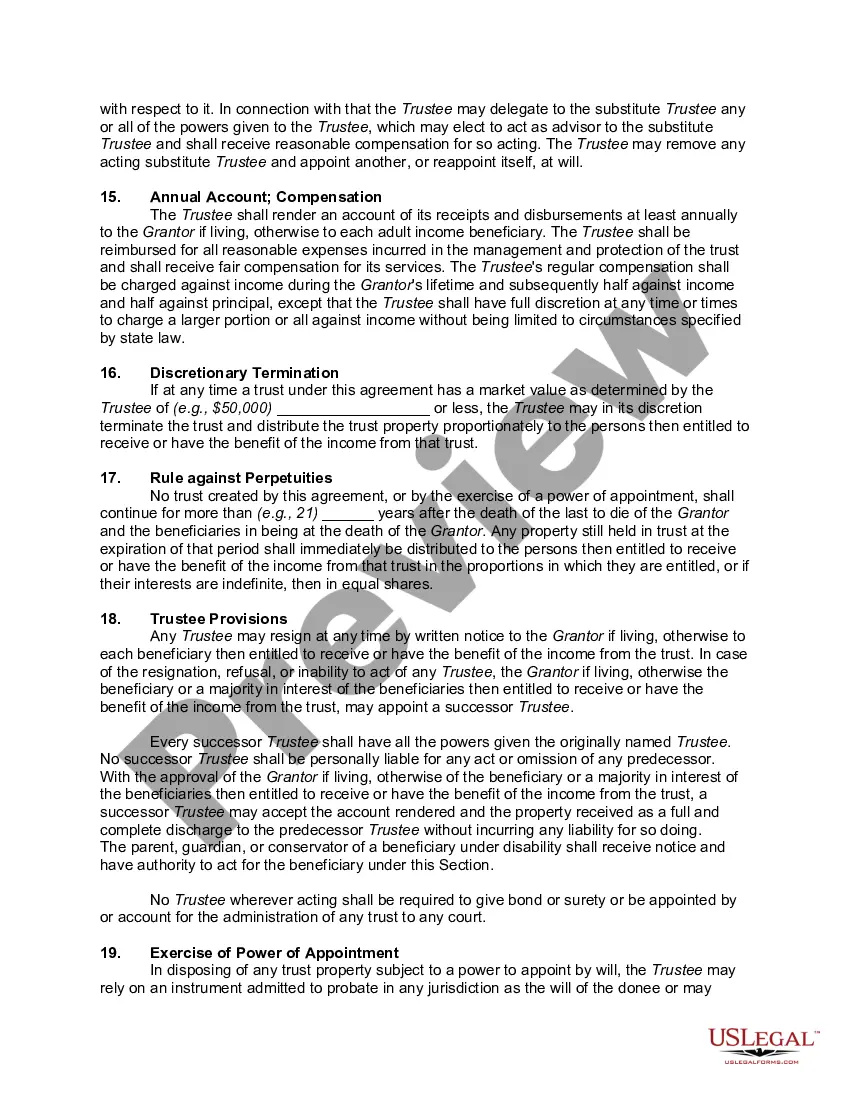
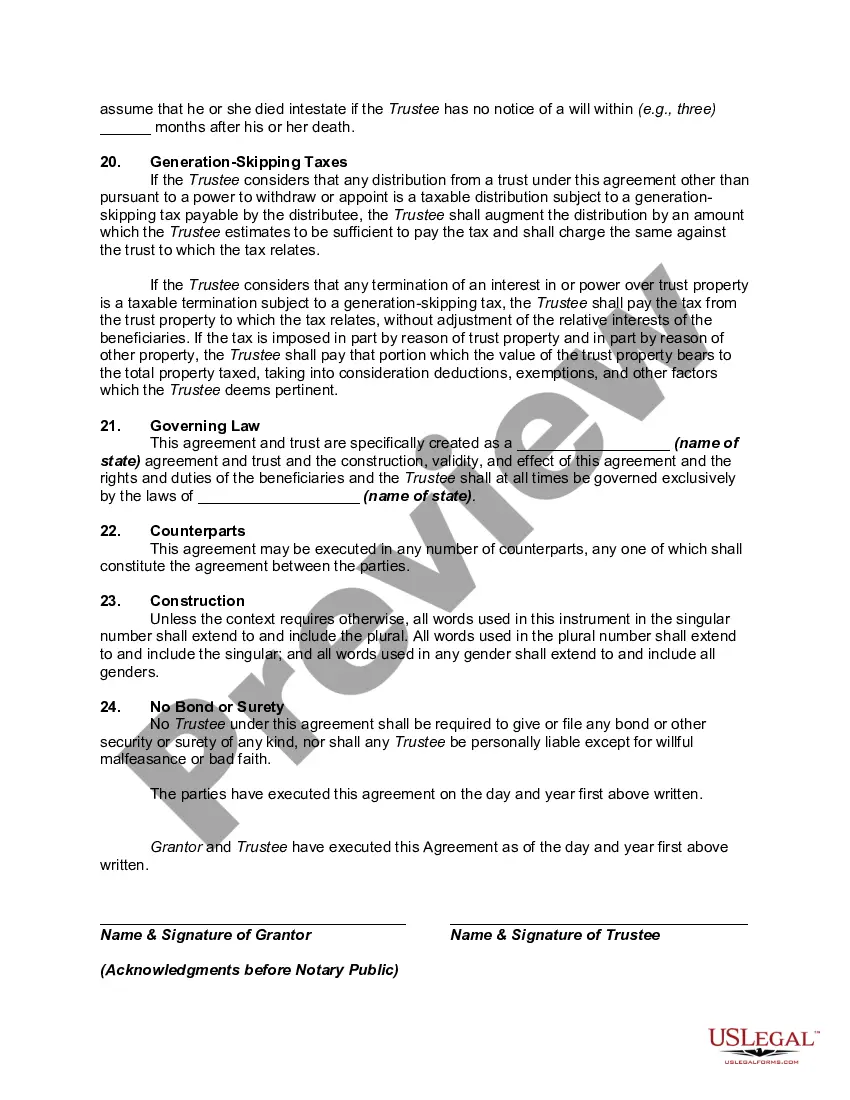



Get your form ready online
Our built-in tools help you complete, sign, share, and store your documents in one place.
Make edits, fill in missing information, and update formatting in US Legal Forms—just like you would in MS Word.
Download a copy, print it, send it by email, or mail it via USPS—whatever works best for your next step.
Sign and collect signatures with our SignNow integration. Send to multiple recipients, set reminders, and more. Go Premium to unlock E-Sign.
If this form requires notarization, complete it online through a secure video call—no need to meet a notary in person or wait for an appointment.
We protect your documents and personal data by following strict security and privacy standards.

Make edits, fill in missing information, and update formatting in US Legal Forms—just like you would in MS Word.

Download a copy, print it, send it by email, or mail it via USPS—whatever works best for your next step.

Sign and collect signatures with our SignNow integration. Send to multiple recipients, set reminders, and more. Go Premium to unlock E-Sign.

If this form requires notarization, complete it online through a secure video call—no need to meet a notary in person or wait for an appointment.

We protect your documents and personal data by following strict security and privacy standards.
Looking for another form?







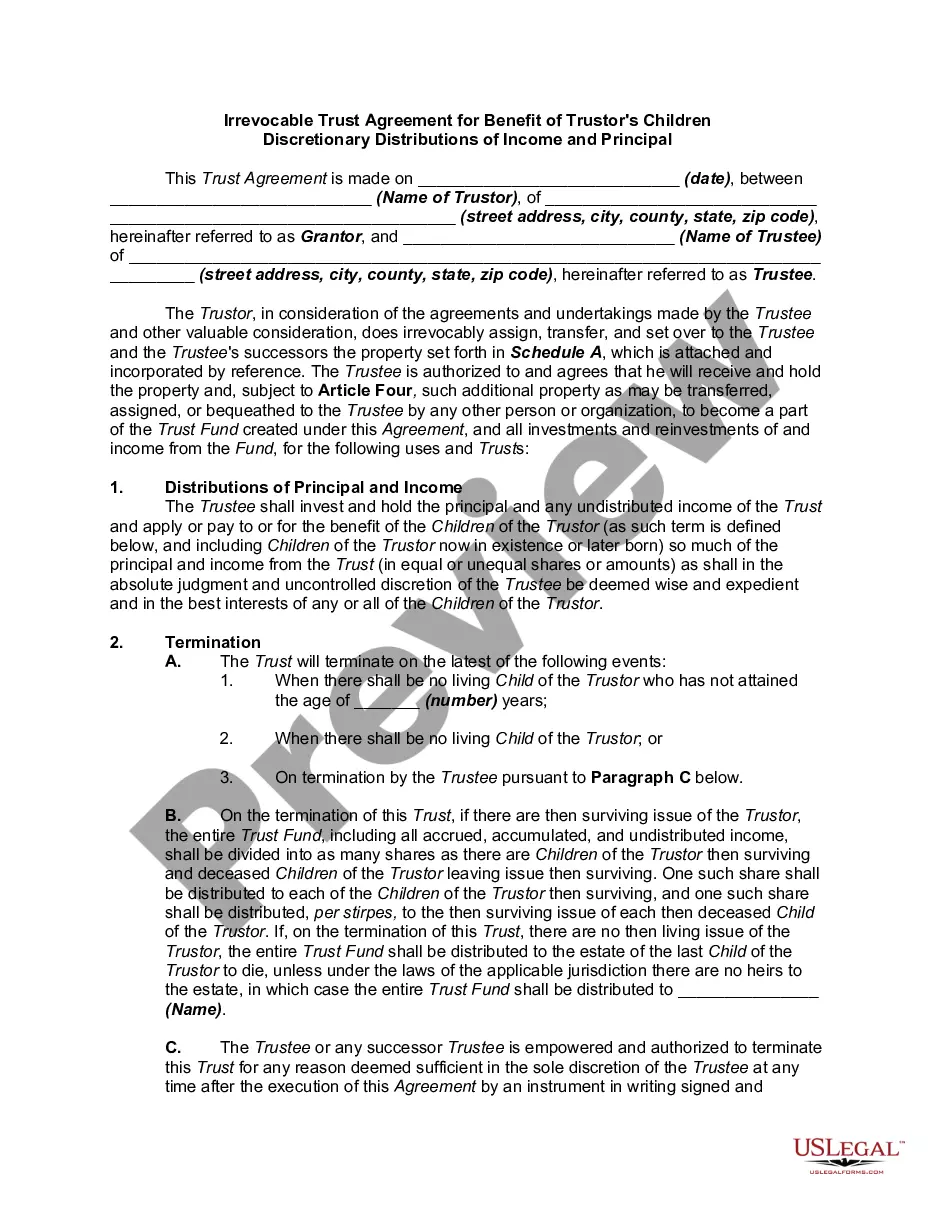
How to fill out Irrevocable Trust Agreement For Benefit Of Trustor's Children And Grandchildren?
- Log into your US Legal Forms account if you're an existing user. If not, create an account to get started.
- Browse through the form options and select the irrevocable trust form. Use the Preview mode to ensure it meets your specific legal requirements.
- If the form isn't quite right, utilize the Search tab to find a more suitable template.
- After confirming your choice, click on the Buy Now button and select the subscription plan that fits your needs.
- Enter your payment information, using either a credit card or PayPal to finalize your purchase.
- Download the completed form and save it on your device. You'll also have access to this document anytime through the 'My Forms' section in your profile.
In conclusion, US Legal Forms makes it easier for individuals and attorneys to navigate legal documentation, offering a robust library and support from professionals. With over 85,000 fillable forms at your fingertips, you can trust that you're getting the best resources.
Start your journey today by visiting US Legal Forms and secure your irrevocable trust form confidently!
Form popularity
FAQ
Filling out an irrevocable trust form for dummies involves several straightforward steps. First, gather basic information about the trust, including the names of the grantor, trustee, and beneficiaries. Next, clearly state the terms and conditions of the trust, including how assets will be managed and distributed. To simplify this process, consider using US Legal Forms; they provide easy-to-follow templates and guidance tailored for all users, making the creation of an irrevocable trust form a breeze.
To establish an irrevocable trust, you typically need to complete a specific trust document that outlines its terms and conditions. Using an irrevocable trust form for dummies can guide you through the necessary elements to include in your filing. Additionally, check with your local government for any additional forms or filings that may be required. Proper documentation helps in ensuring your trust is recognized and effective.
Writing an irrevocable trust document can be simplified by following clear guidelines. Start by gathering all necessary information about the grantors, beneficiaries, and assets involved. To assist you in this process, using an irrevocable trust form for dummies can provide a straightforward template to follow. Ensure you comply with your state’s laws, and consider consulting a legal professional for final review.
A significant downfall of having a trust is the potential for administrative costs associated with managing it. Trusts may require regular maintenance and compliance with regulations, which can lead to ongoing expenses. By referring to an irrevocable trust form for dummies, you can better understand what these costs could entail. Nevertheless, many find that the benefits of protecting assets and easing estate transfer outweigh these costs.
Yes, you can create an irrevocable trust yourself, but it can be complex. Utilizing reliable resources like an irrevocable trust form for dummies can guide you through the necessary steps, ensuring you include all required details. However, seeking professional help might prevent any potential legal missteps and ensure that the trust meets all state laws. Assess your comfort level with legal documents before proceeding independently.
One downside to putting assets in a trust is decreased financial flexibility. The assets you place in an irrevocable trust cannot easily be changed or removed, which may limit your options for personal financial needs. However, using an irrevocable trust form for dummies can help simplify the process and clarify the implications, allowing you to make informed choices about your estate planning. Balancing your future needs with your current situation is essential.
While family trusts offer numerous benefits, one notable disadvantage is the potential loss of control over the assets placed within the trust. Once assets are transferred, your family may not easily modify the terms of the trust or reclaim the assets. For individuals concerned about flexibility, it may be worthwhile to explore details using an irrevocable trust form for dummies to understand this aspect fully. It's vital to weigh these considerations carefully.
It often benefits parents to place their assets in a trust, specifically an irrevocable trust, as it can provide protection from creditors, potential tax advantages, and clear instructions on asset distribution. By using an irrevocable trust form for dummies, families can ensure assets are managed according to their wishes. This helps in avoiding probate and can lead to a smoother transfer of wealth to the next generation. Consider discussing this option with a financial expert for personalized advice.
You can create an irrevocable trust without an attorney, but it requires careful attention to detail. It's essential to ensure that all legal requirements are met and that your trust aligns with your wishes. For a straightforward process, utilizing an irrevocable trust form for dummies can simplify the task. This form offers a clear framework, allowing you to draft your own trust with confidence.
Writing your own irrevocable trust involves several steps. First, you need to identify the trust's purpose and name your beneficiaries clearly. Then, outline terms that are easy to understand and include necessary clauses. To guide you thoroughly, an irrevocable trust form for dummies can be incredibly helpful, providing a structured approach and helping you avoid common mistakes.