Form Irrevocable Trust With Life Insurance
Description


Get your form ready online
Our built-in tools help you complete, sign, share, and store your documents in one place.
Make edits, fill in missing information, and update formatting in US Legal Forms—just like you would in MS Word.
Download a copy, print it, send it by email, or mail it via USPS—whatever works best for your next step.
Sign and collect signatures with our SignNow integration. Send to multiple recipients, set reminders, and more. Go Premium to unlock E-Sign.
If this form requires notarization, complete it online through a secure video call—no need to meet a notary in person or wait for an appointment.
We protect your documents and personal data by following strict security and privacy standards.

Make edits, fill in missing information, and update formatting in US Legal Forms—just like you would in MS Word.

Download a copy, print it, send it by email, or mail it via USPS—whatever works best for your next step.

Sign and collect signatures with our SignNow integration. Send to multiple recipients, set reminders, and more. Go Premium to unlock E-Sign.

If this form requires notarization, complete it online through a secure video call—no need to meet a notary in person or wait for an appointment.

We protect your documents and personal data by following strict security and privacy standards.
Looking for another form?





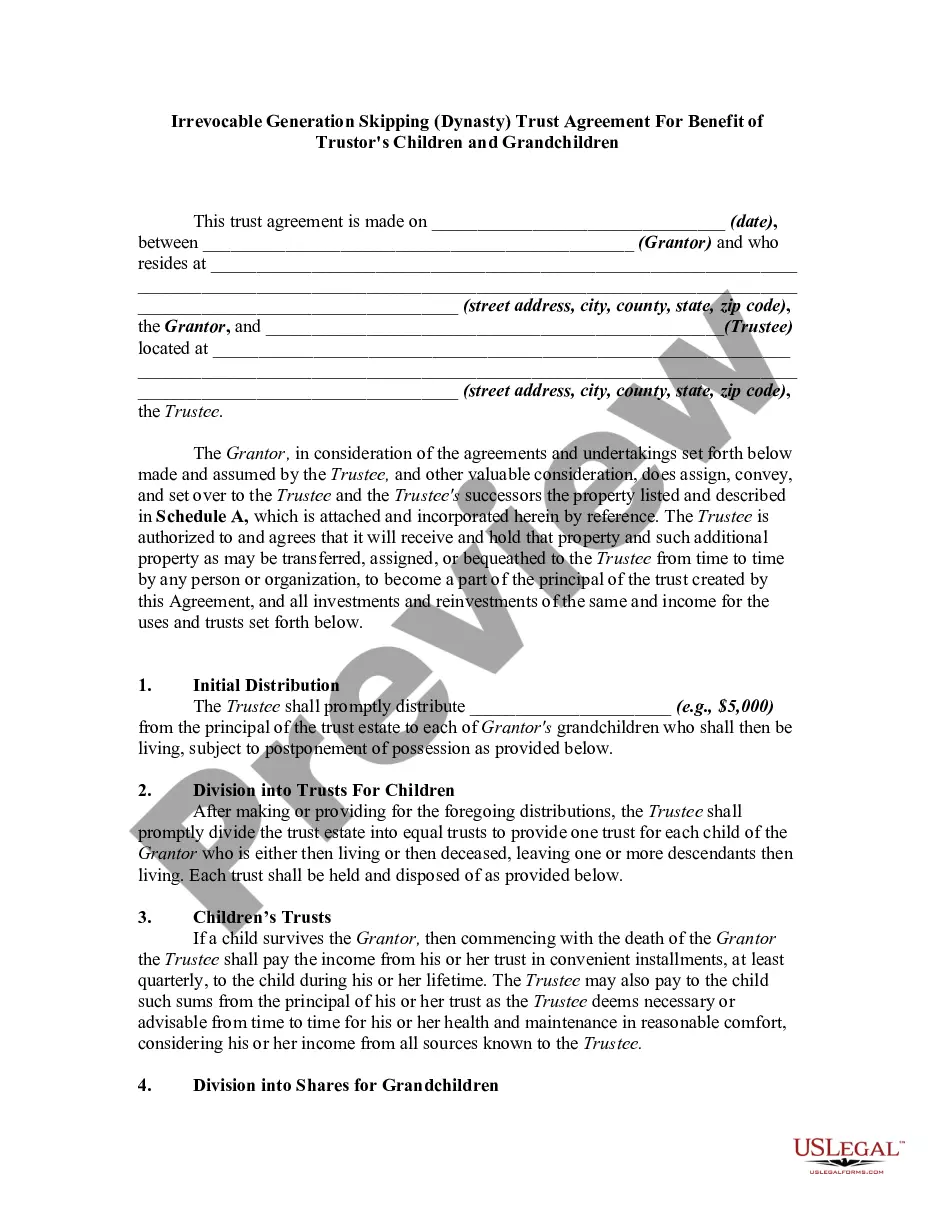
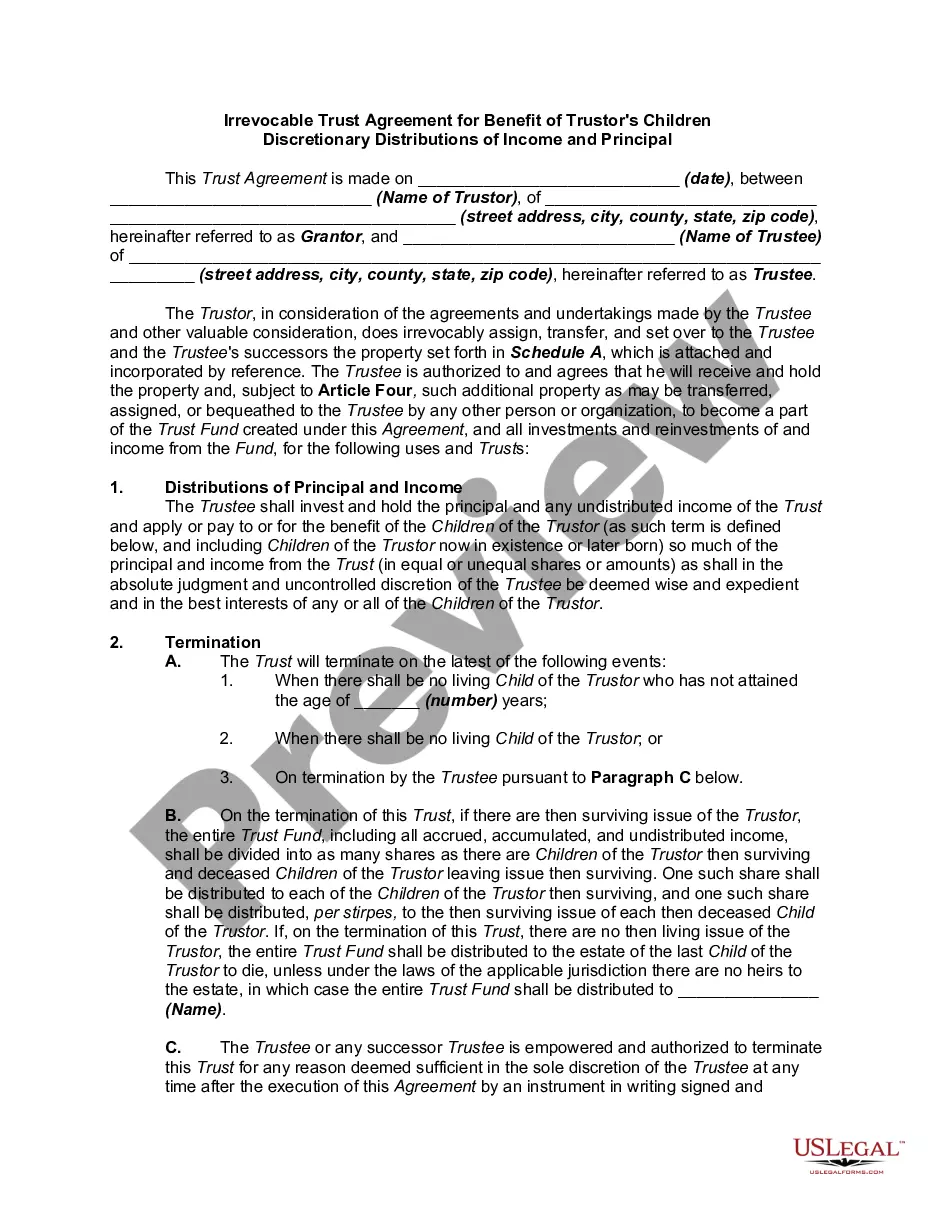
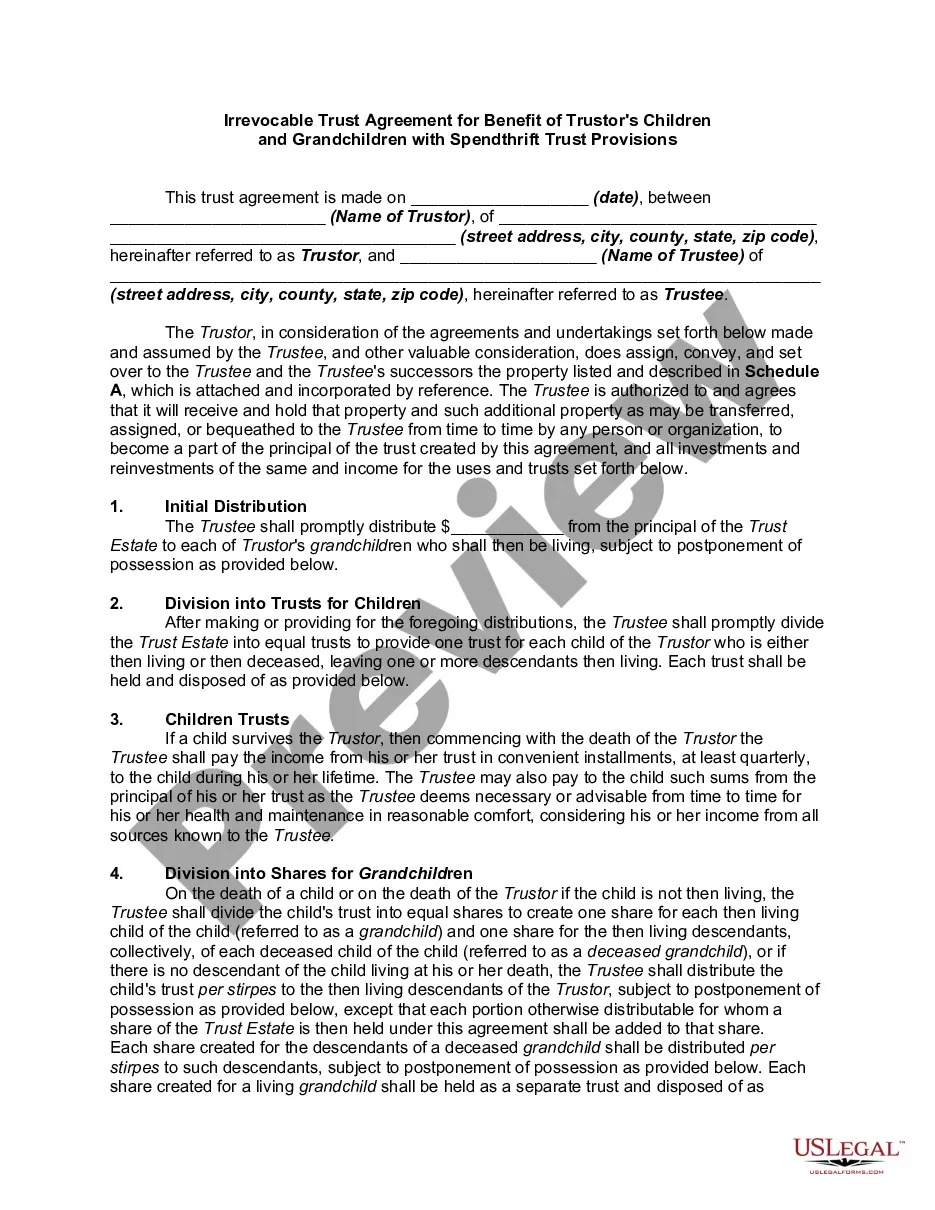
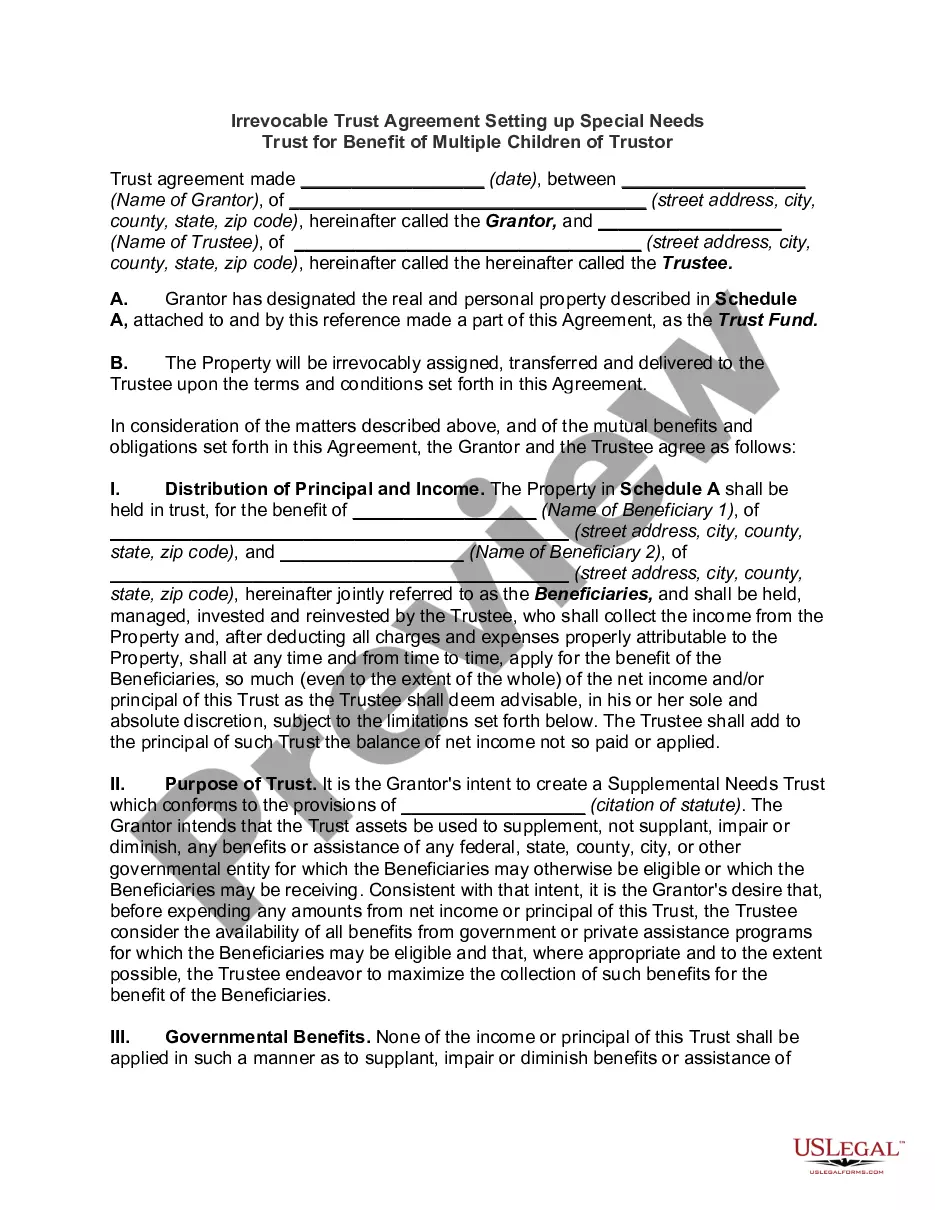
How to fill out Irrevocable Trust Agreement For Benefit Of Trustor's Children And Grandchildren?
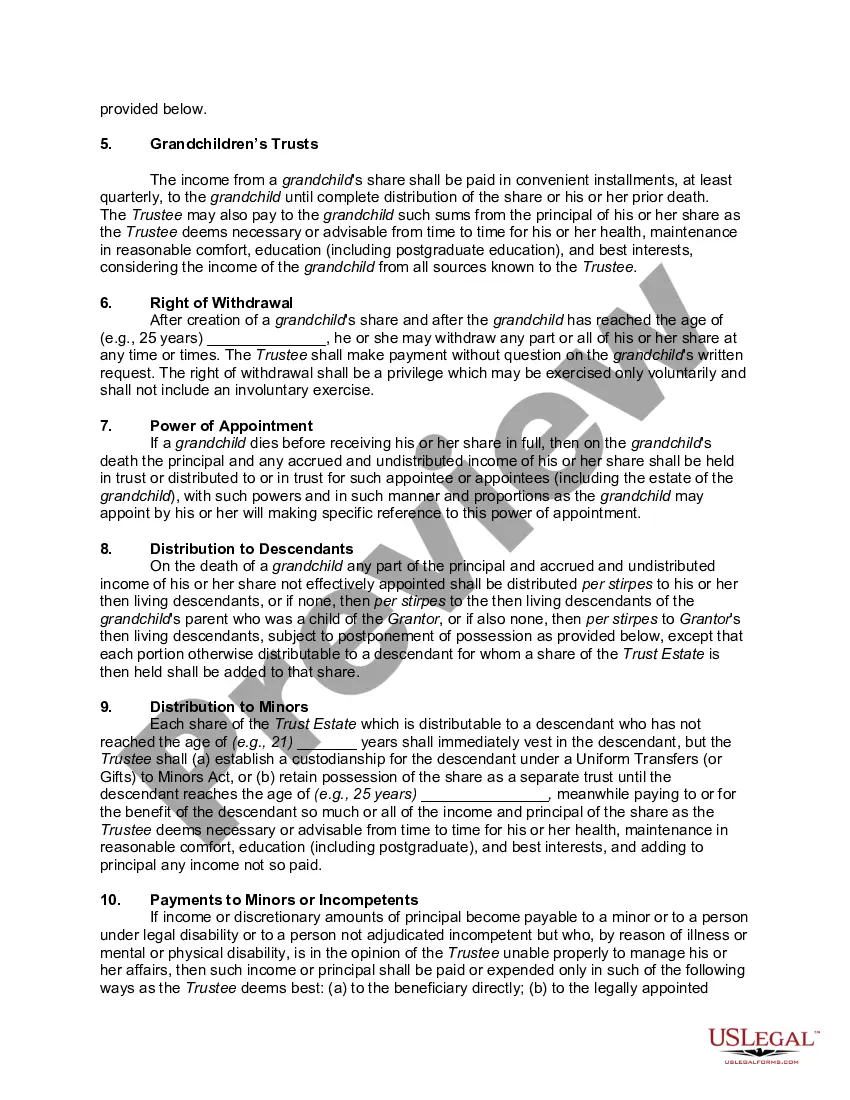
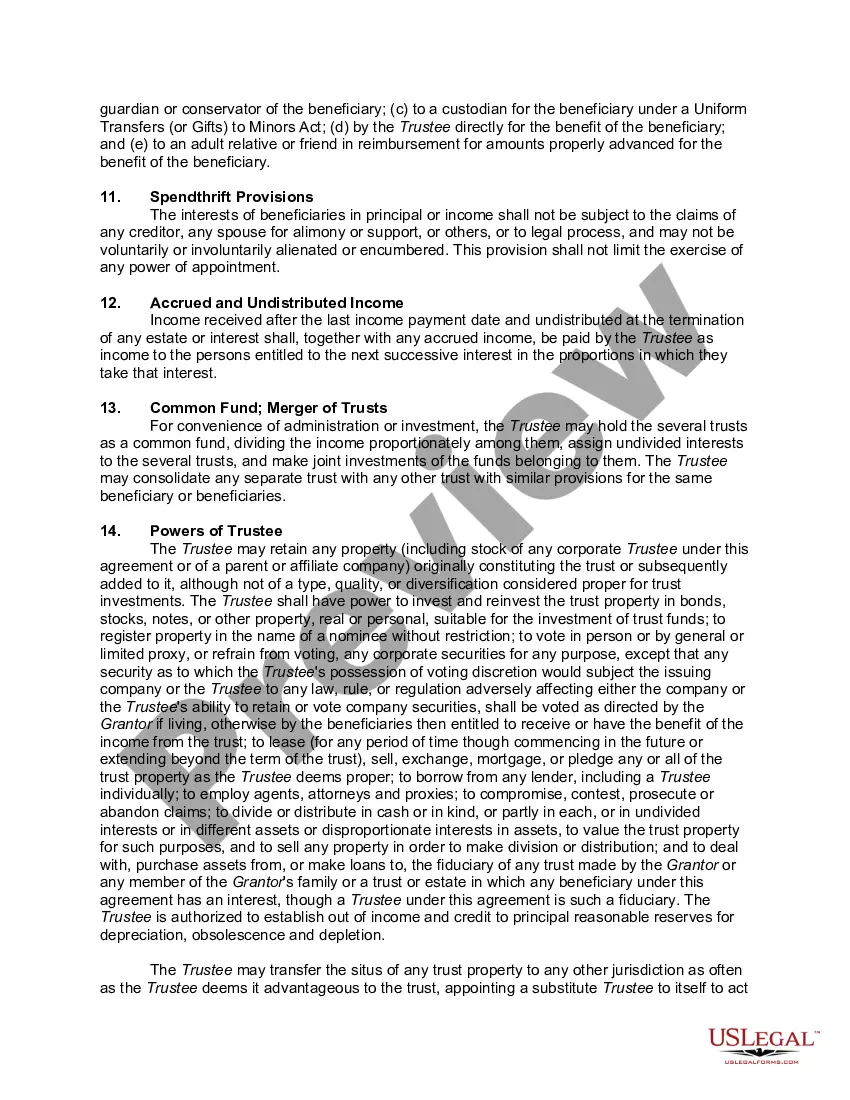
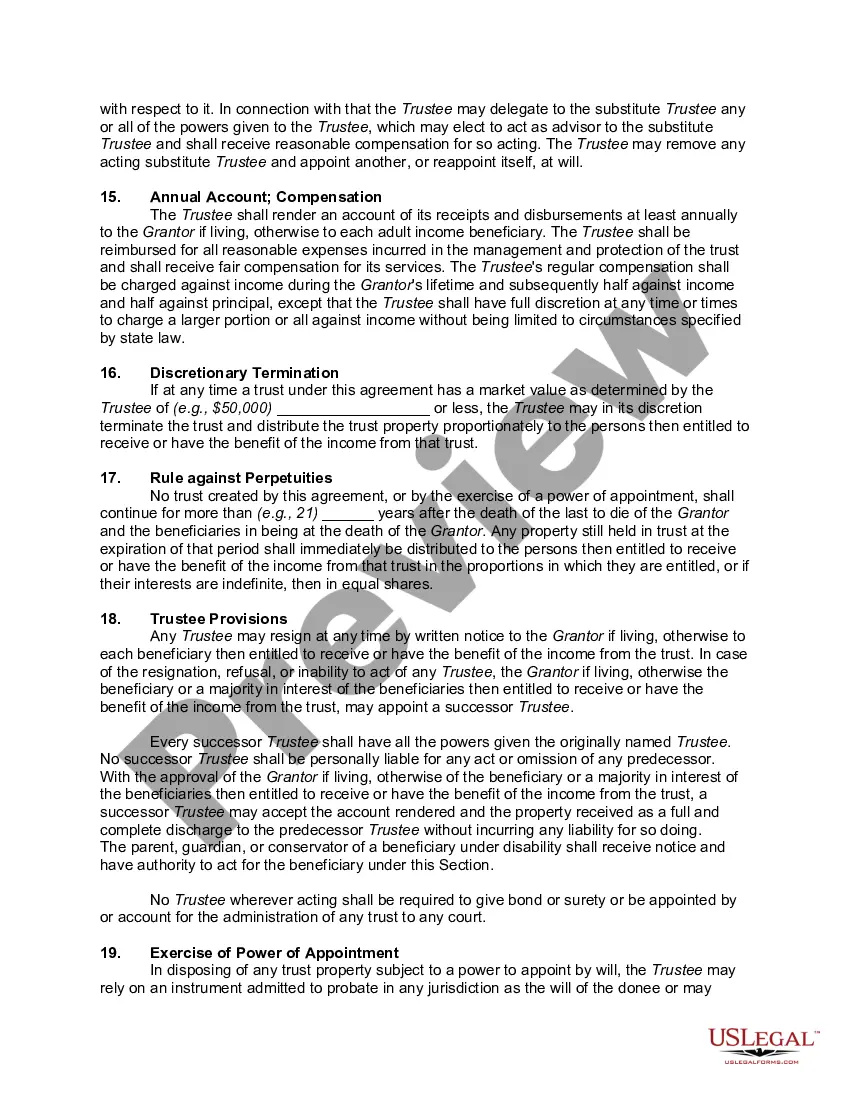
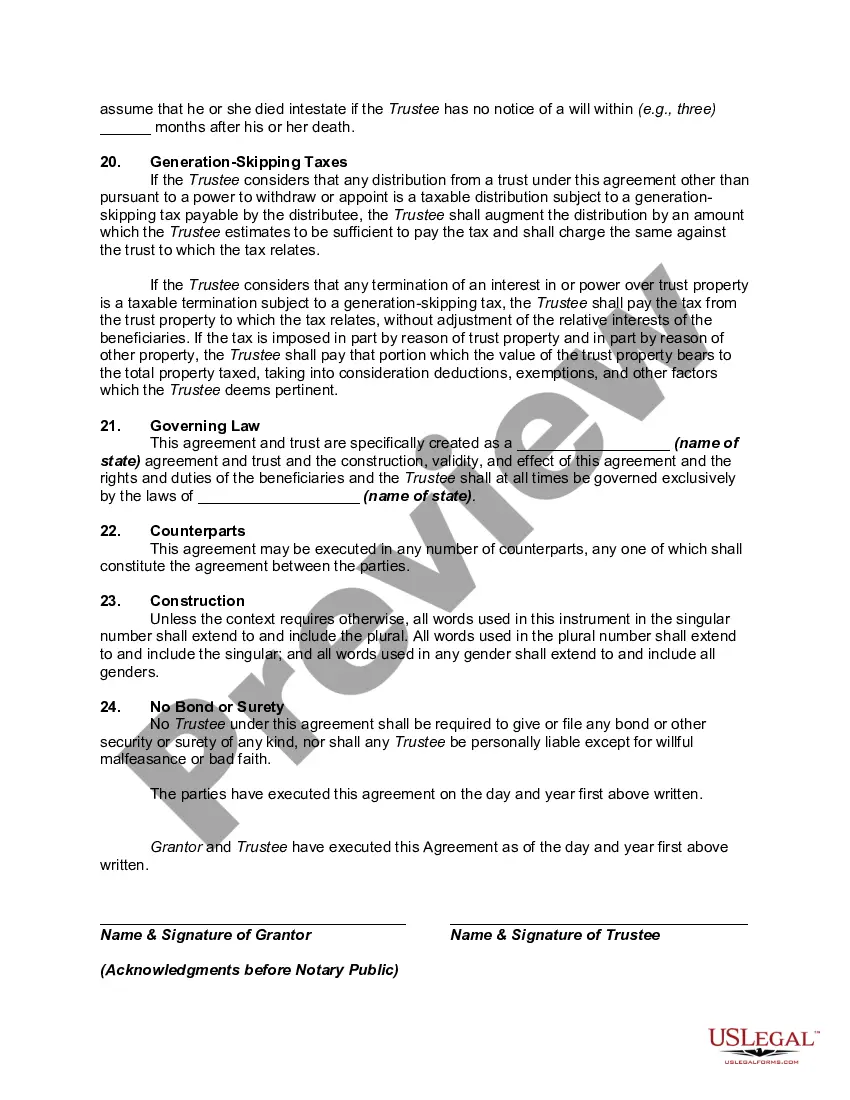
The Form Irrevocable Trust With Life Insurance displayed on this page is a multi-purpose formal template created by professional attorneys in adherence to federal and state laws and regulations.
For over 25 years, US Legal Forms has delivered individuals, enterprises, and legal practitioners with more than 85,000 authenticated, state-specific documents for any business and personal circumstance.
Join US Legal Forms to have authenticated legal templates for every aspect of life readily available.
- Search for the document you require and review it.
- Browse through the file you searched and preview it or check the form description to confirm it meets your requirements. If it doesn't, use the search tool to find the suitable one. Click Buy Now once you have found the template you need.
- Register and Log Into your account.
- Choose the pricing plan that fits you and create an account. Use PayPal or a credit card for a quick payment. If you already own an account, Log In and check your subscription to proceed.
- Obtain the fillable template.
- Select the format you desire for your Form Irrevocable Trust With Life Insurance (PDF, Word, RTF) and download the sample onto your device.
- Finish and sign the documents.
- Print out the template to fill it out manually. Alternatively, utilize an online multi-functional PDF editor to quickly and accurately complete and sign your form with a valid signature.
- Download your documents once again.
- Re-use the same document whenever required. Access the My documents tab in your profile to re-download any previously saved forms.
Form popularity
FAQ
All premiums should be paid by the trustee from a trust owned bank account. The insured usually makes sufficient cash gifts to the trust to allow the trustee to pay the premiums. The gifts should go in the trust checking account, and the trustee should write and sign a trust check for the premium payment.
Alternatively, you could simply transfer an existing insurance policy to an ILIT. It's important to note, however, that should you die within three years of transferring the policy to the trust, the IRS would require that any proceeds be included in your estate for estate tax purposes.
You may choose to place an existing life insurance policy into a trust by transferring its ownership, or you can set up the trust first so that it can purchase the policy. In some cases, you may be able to fill out a simple life insurance trust form with the basic information to begin the process.
An ILIT is usually established by formation of the trust, followed by the contributor (usually the insured) assigning an existing insurance policy to the trust or the trustee of the trust buying a policy directly from an insurance company. The insured retains no benefits in the trust.
Effectively, by creating an ILIT you're separating the value of the assets your trust owns from the value of your taxable estate. The trustee (which can be a friend, relative, or professional independent trustee) coordinates the payment of premiums with the insurance provider to ensure the policy remains in force.