Cleaning The City
Description
Get your form ready online
Our built-in tools help you complete, sign, share, and store your documents in one place.
Make edits, fill in missing information, and update formatting in US Legal Forms—just like you would in MS Word.
Download a copy, print it, send it by email, or mail it via USPS—whatever works best for your next step.
Sign and collect signatures with our SignNow integration. Send to multiple recipients, set reminders, and more. Go Premium to unlock E-Sign.
If this form requires notarization, complete it online through a secure video call—no need to meet a notary in person or wait for an appointment.
We protect your documents and personal data by following strict security and privacy standards.

Make edits, fill in missing information, and update formatting in US Legal Forms—just like you would in MS Word.

Download a copy, print it, send it by email, or mail it via USPS—whatever works best for your next step.

Sign and collect signatures with our SignNow integration. Send to multiple recipients, set reminders, and more. Go Premium to unlock E-Sign.

If this form requires notarization, complete it online through a secure video call—no need to meet a notary in person or wait for an appointment.

We protect your documents and personal data by following strict security and privacy standards.
Looking for another form?

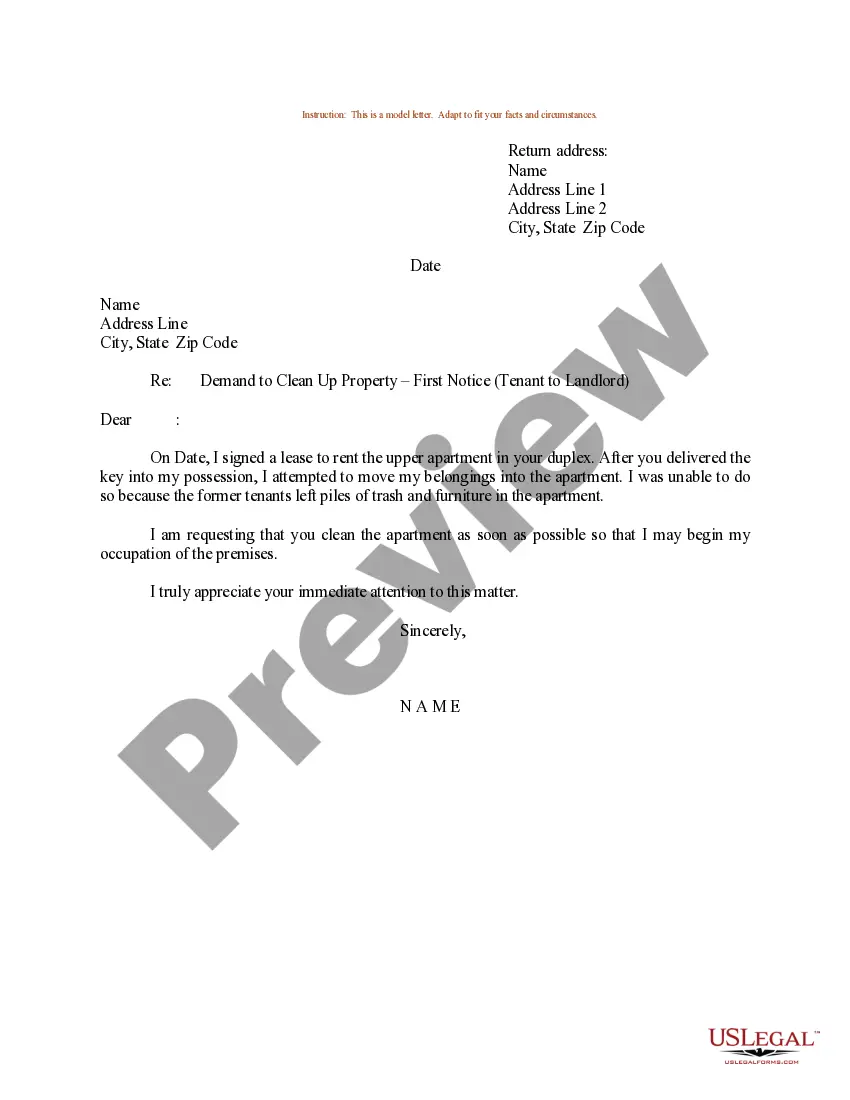
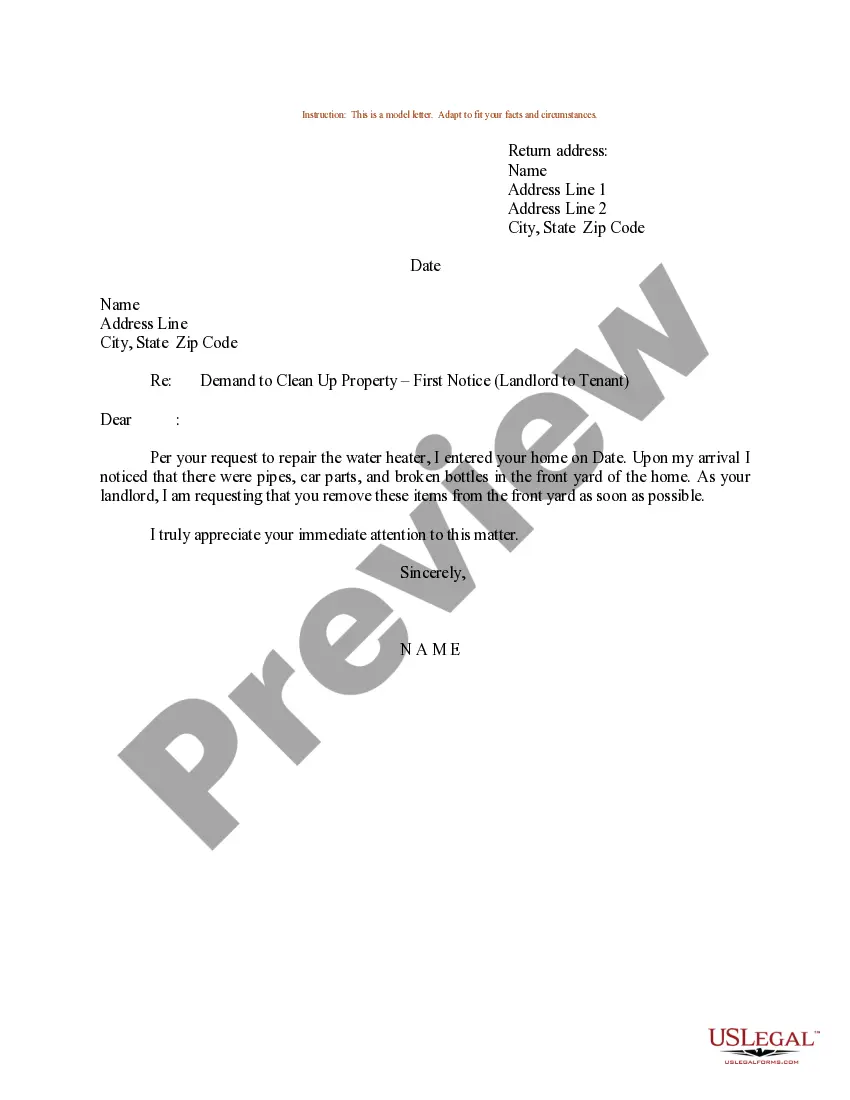
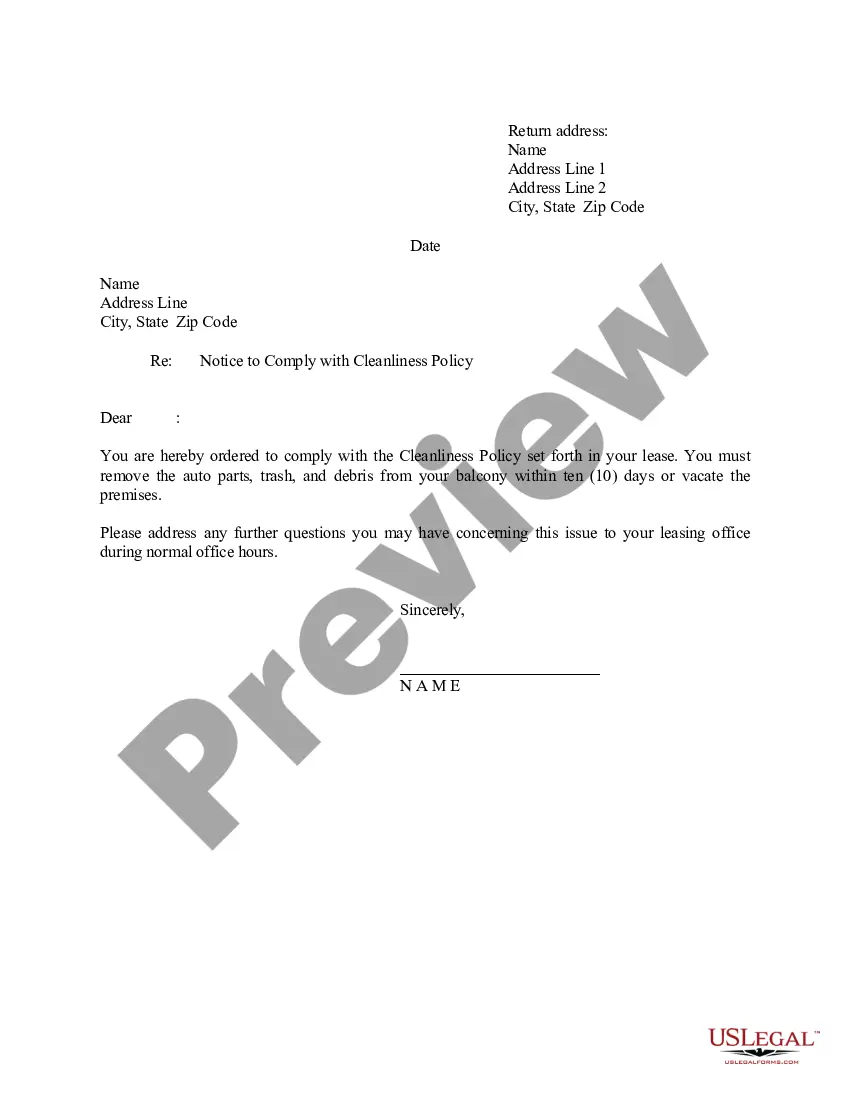
How to fill out Sample Letter Regarding Demand To Clean Up Property - First Notice From Tenant To Landlord?
- Log into your US Legal Forms account if you're a returning user. Make sure your subscription is active to download the required template.
- For first-time users, start by exploring the extensive online library. Preview form descriptions to ensure they align with your needs and local jurisdiction.
- If you don't find what you're looking for, use the search feature to locate additional templates that meet your requirements.
- Once you've found the right document, click 'Buy Now' and choose your preferred subscription plan. Registration is necessary to access the full resources.
- Complete your purchase by entering your credit card details or PayPal account information.
- Finally, download the template to your device. You can also access it later from the 'My Forms' section of your account.
In conclusion, utilizing US Legal Forms is an efficient way to ensure you have all required legal documents for cleaning the city seamlessly. With their extensive library and user-friendly service, you can simplify your legal processes.
Get started today by visiting US Legal Forms and explore the benefits of their robust legal resource collection.
Form popularity
FAQ
Cleaning public areas is often the responsibility of the local government, particularly the department of public works, which oversees maintenance and sanitation services. This includes parks, sidewalks, and communal spaces that require regular upkeep to ensure a healthy environment. Community volunteers and residents also contribute significantly by organizing clean-up events and reporting maintenance needs. Together, these efforts make public spaces inviting and clean.
AP, or Asset Protection, refers to a specific department that may not directly clean the city but plays a vital role in ensuring urban areas remain safe and well-maintained. By implementing policies and overseeing community standards, they help foster a culture of cleanliness and responsibility. Engaging with AP may also provide insights into local initiatives focused on cleaning the city, showcasing the importance of structured oversight.
Cleaning the streets falls primarily under the jurisdiction of local government agencies and public works departments. These agencies schedule regular street cleaning and ensure that roadways remain clear of debris and litter. Residents also play a part by reporting issues and adhering to community guidelines for waste disposal. Together, they help maintain clean streets for all to enjoy.
The city’s cleanliness is maintained by a combination of dedicated municipal workers and engaged citizens. City departments handle regular street cleaning, waste collection, and landfill operations, ensuring public areas stay tidy. Meanwhile, local residents contribute by adhering to waste disposal regulations and participating in volunteer clean-up programs. It's a collaborative effort aimed at preserving our urban spaces.
Keeping the city clean is a shared responsibility among residents, city officials, and waste management services. While local governments typically set regulations and provide resources for cleaning the city, residents play a crucial role by maintaining their properties and participating in community activities. Everyone has a part to play in fostering a cleaner and greener environment.
You can clean your city by actively participating in local clean-up initiatives and encouraging others to join. Simple actions like picking up litter, planting trees, and promoting recycling can make a substantial impact. Additionally, you can collaborate with non-profit organizations focused on cleaning the city to spread awareness and drive community involvement. Every small effort counts towards a cleaner environment.
Cleaning the city involves a combination of community efforts and official programs to ensure a clean environment. Citizens can participate by organizing clean-up events, reporting litter, and using proper disposal methods. Local municipalities also play a significant role by providing waste management services and street cleaning schedules. Together, these actions contribute to a healthier, more enjoyable city for everyone.
Cleaning the city is an essential step towards building a healthier environment. To clean up your community, you can start by organizing neighborhood clean-up events, where residents gather to pick up trash and clear debris. Additionally, you can collaborate with local organizations to implement recycling programs and educate others on the importance of proper waste disposal. By actively engaging with your community, you foster a sense of responsibility and pride in maintaining a clean and beautiful city.
The Clean and Green Initiative in Philadelphia aims to enhance urban cleanliness and promote green spaces throughout the city. This program focuses on waste reduction, community involvement, and the beautification of public areas. It encourages residents to participate in clean-up events and take pride in their neighborhoods. By embracing such initiatives, we contribute significantly to cleaning the city and improving overall community well-being.
Cleaning up a city involves a multifaceted approach, including scheduled street cleaning, waste management, and community engagement programs. Municipalities often collaborate with residents to establish a clean-up agenda that addresses specific local needs. Educating locals about proper disposal methods can greatly aid in reducing litter. Ultimately, cleaning the city requires a partnership between government and citizens.