Motion To Correct Clerical Error
Description
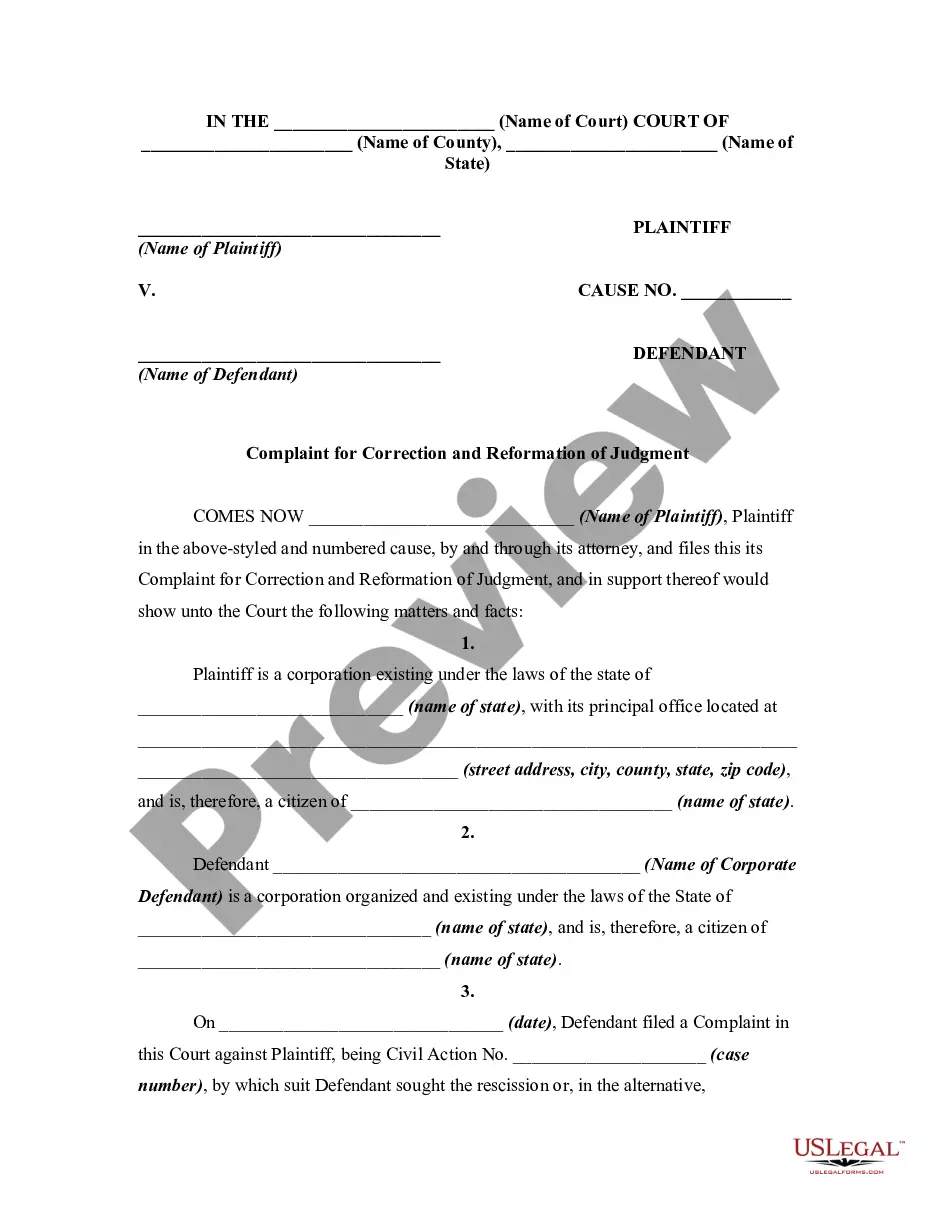
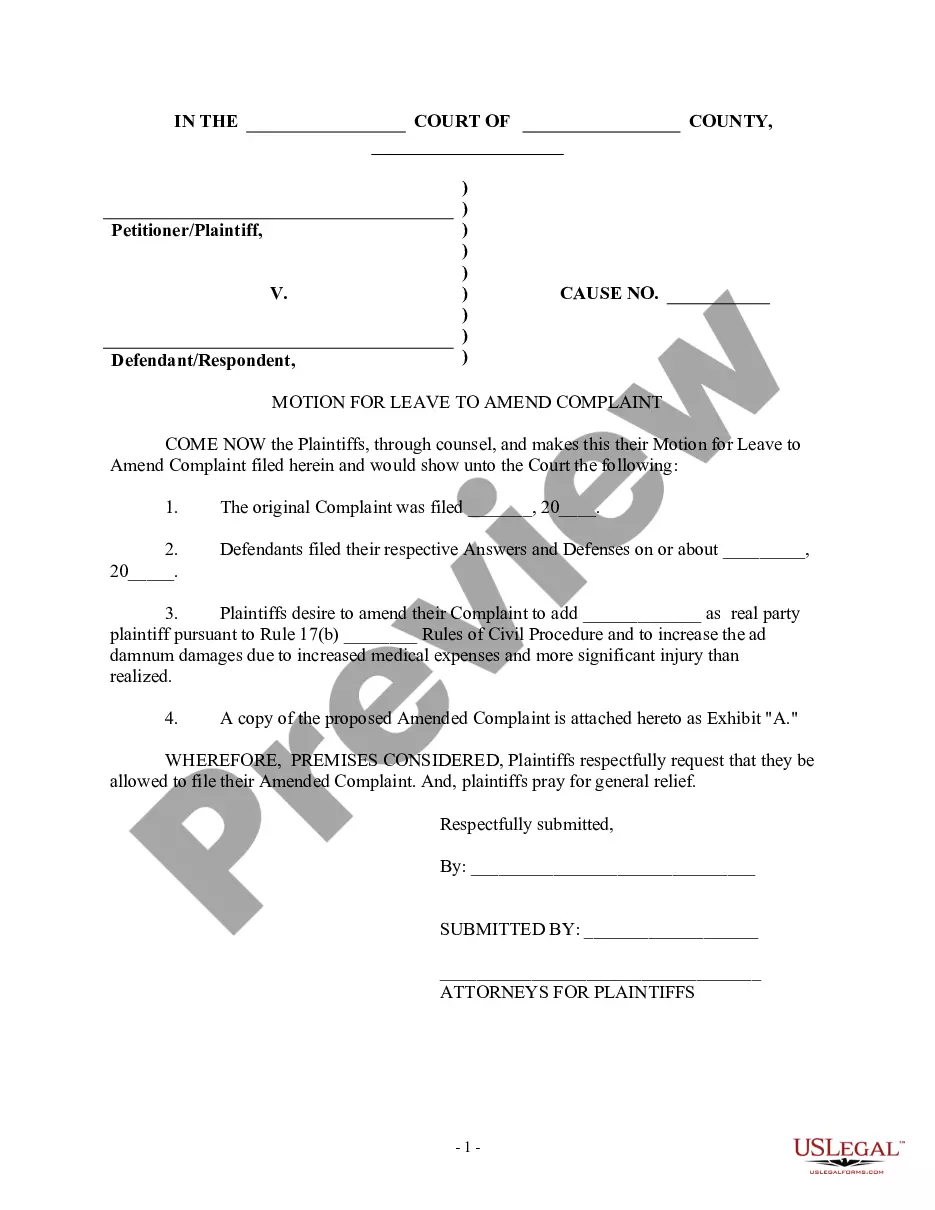
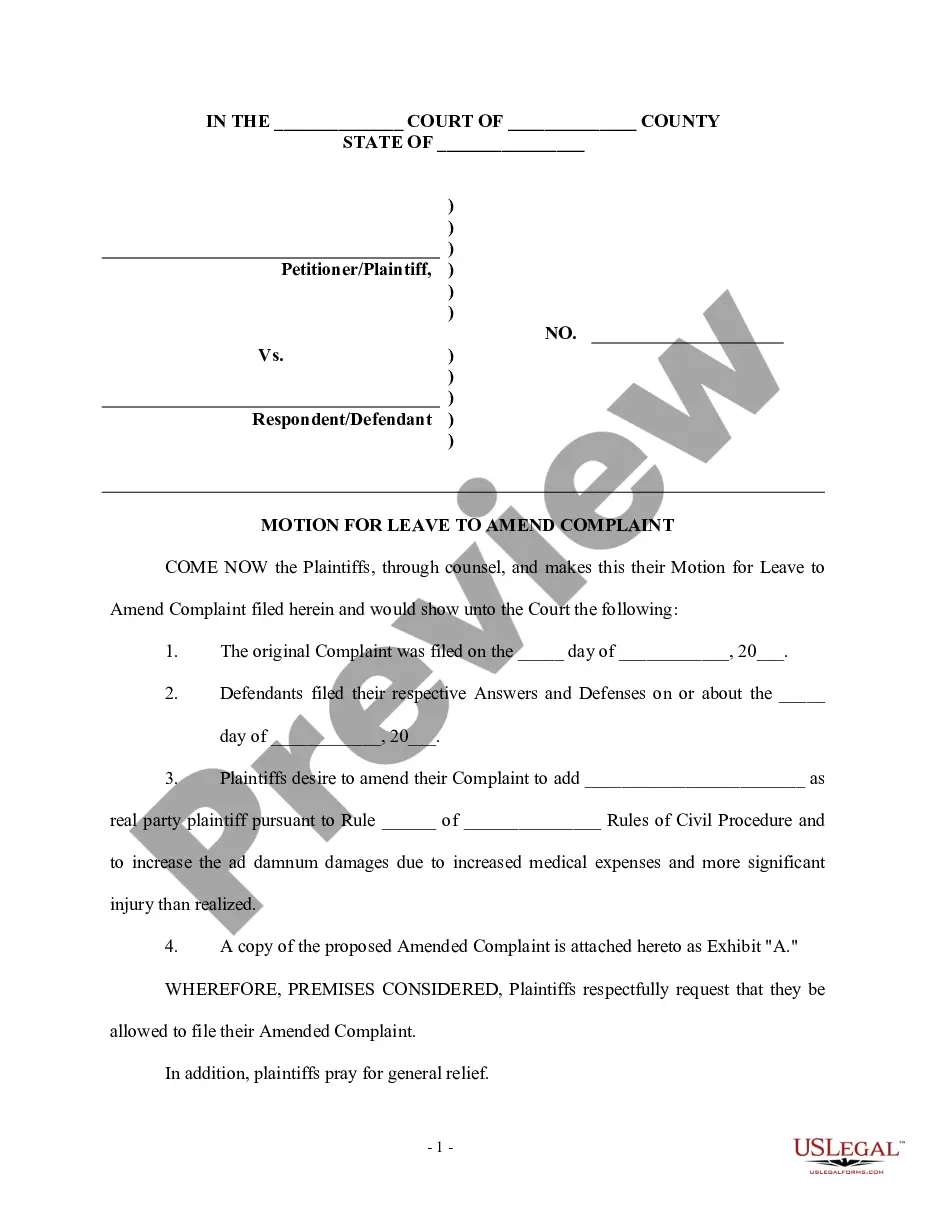
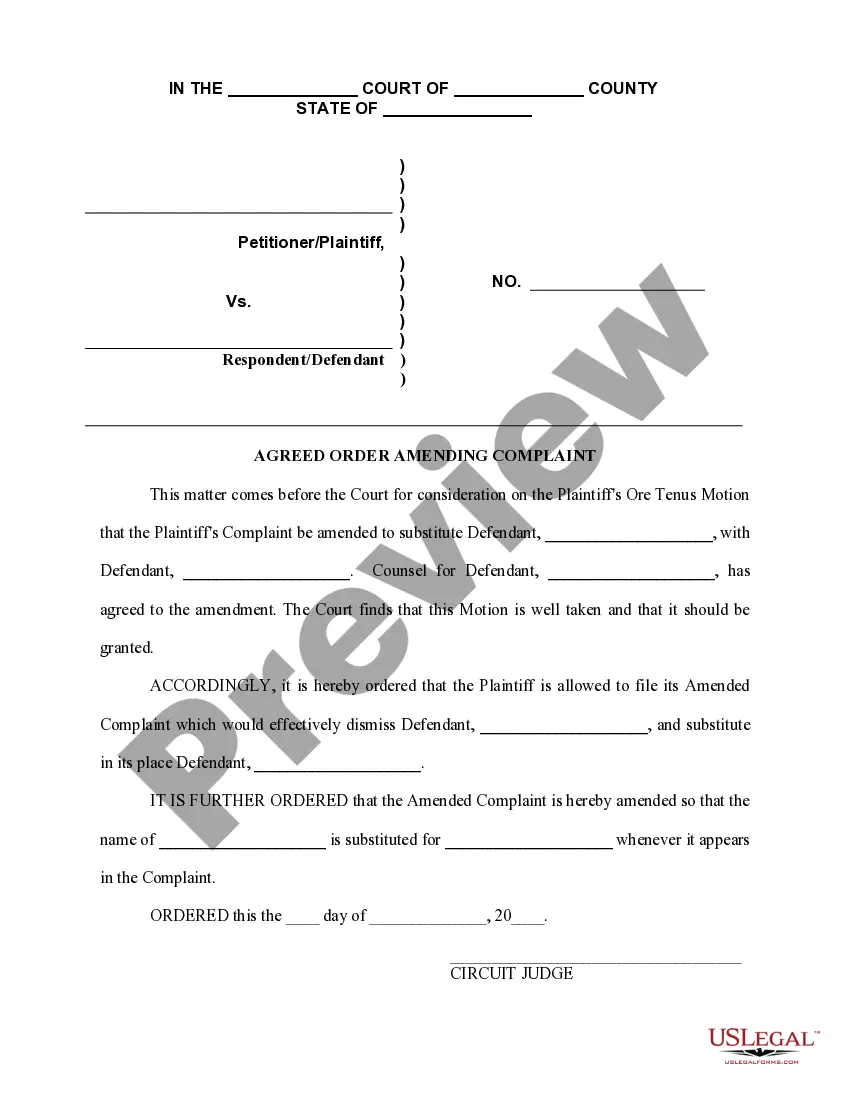
Get your form ready online
Our built-in tools help you complete, sign, share, and store your documents in one place.
Make edits, fill in missing information, and update formatting in US Legal Forms—just like you would in MS Word.
Download a copy, print it, send it by email, or mail it via USPS—whatever works best for your next step.
Sign and collect signatures with our SignNow integration. Send to multiple recipients, set reminders, and more. Go Premium to unlock E-Sign.
If this form requires notarization, complete it online through a secure video call—no need to meet a notary in person or wait for an appointment.
We protect your documents and personal data by following strict security and privacy standards.

Make edits, fill in missing information, and update formatting in US Legal Forms—just like you would in MS Word.

Download a copy, print it, send it by email, or mail it via USPS—whatever works best for your next step.

Sign and collect signatures with our SignNow integration. Send to multiple recipients, set reminders, and more. Go Premium to unlock E-Sign.

If this form requires notarization, complete it online through a secure video call—no need to meet a notary in person or wait for an appointment.

We protect your documents and personal data by following strict security and privacy standards.
Looking for another form?


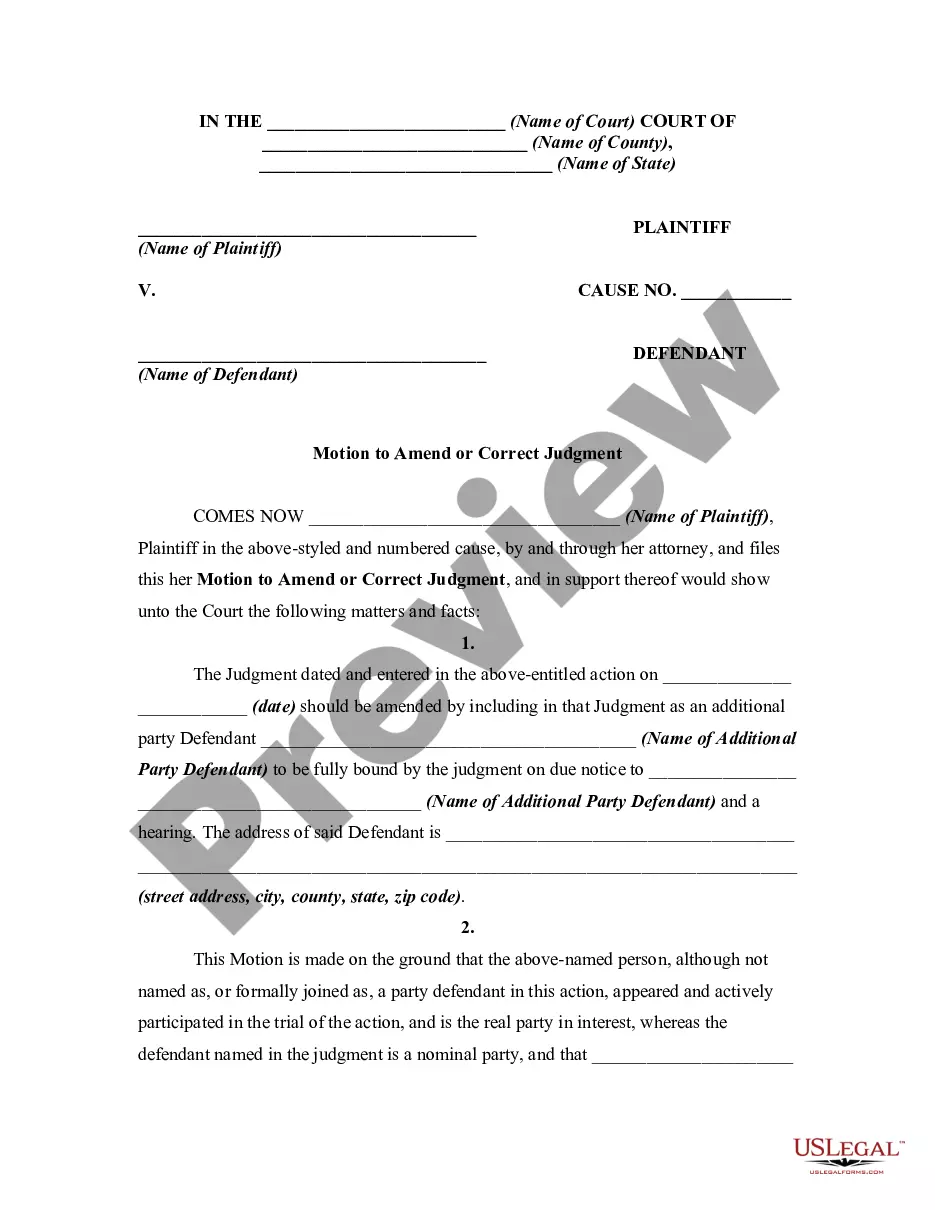
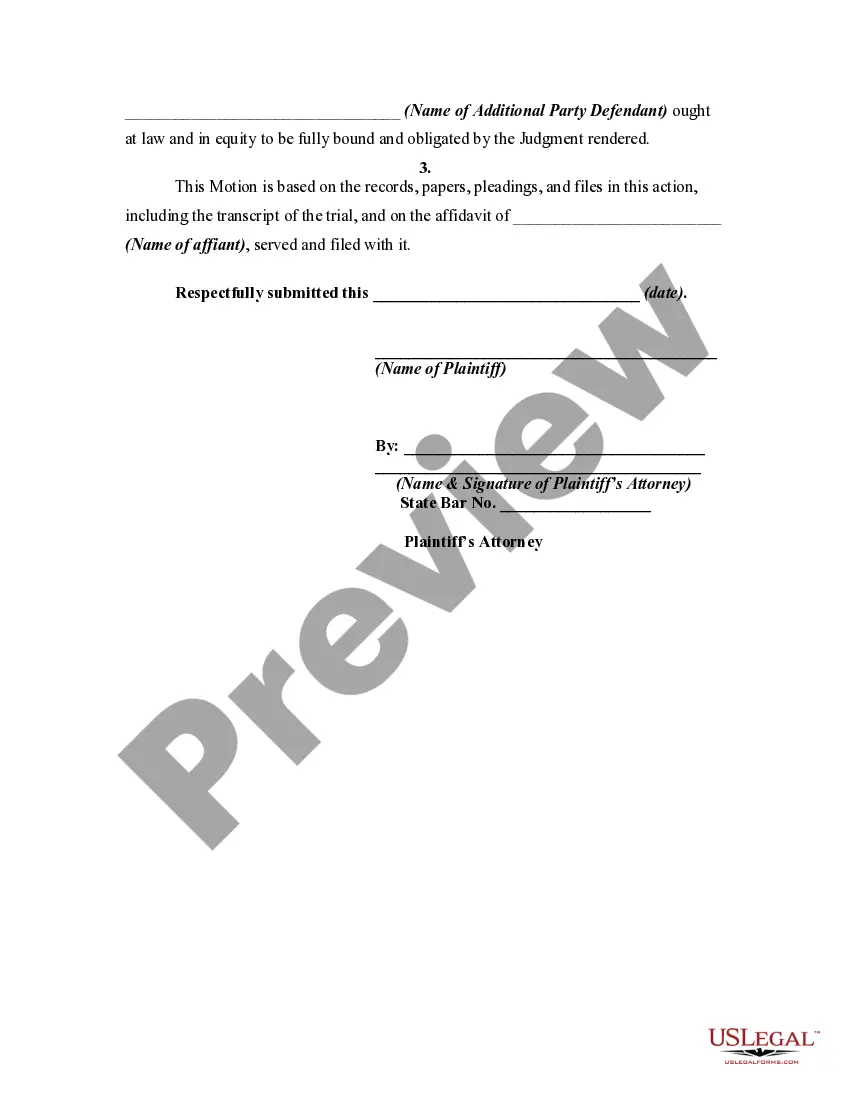
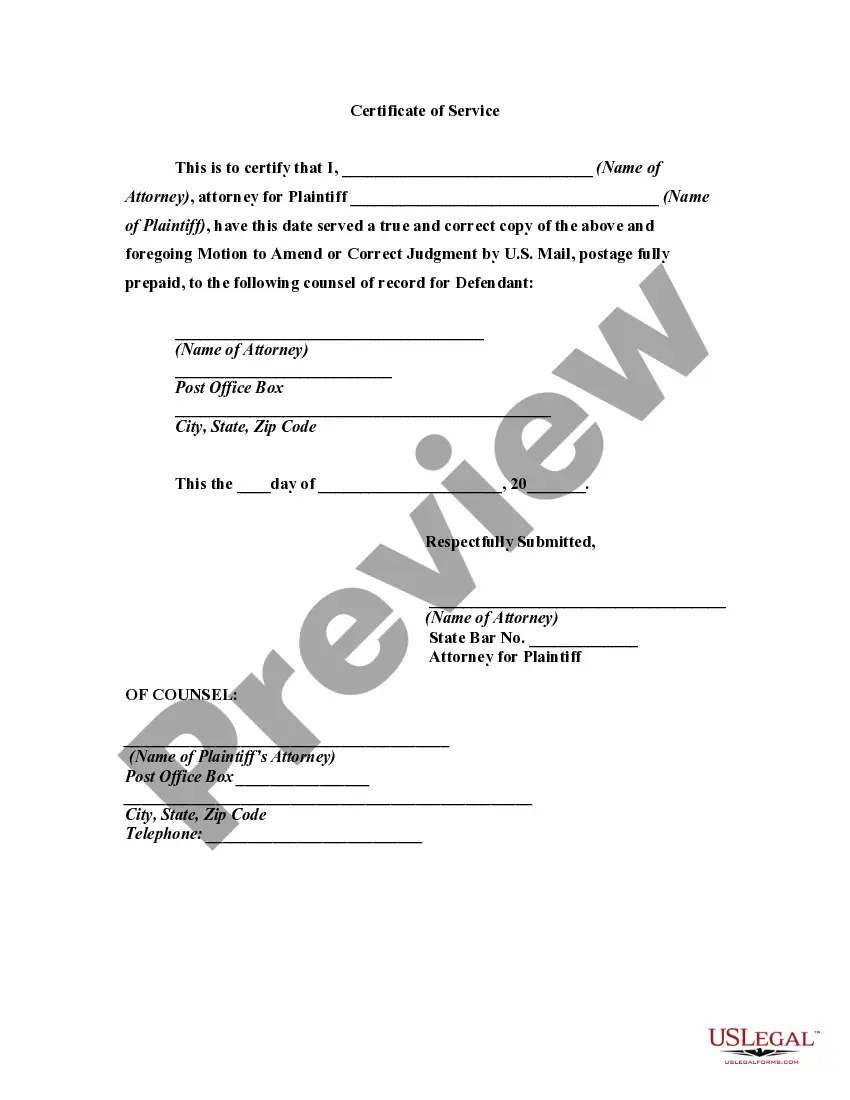
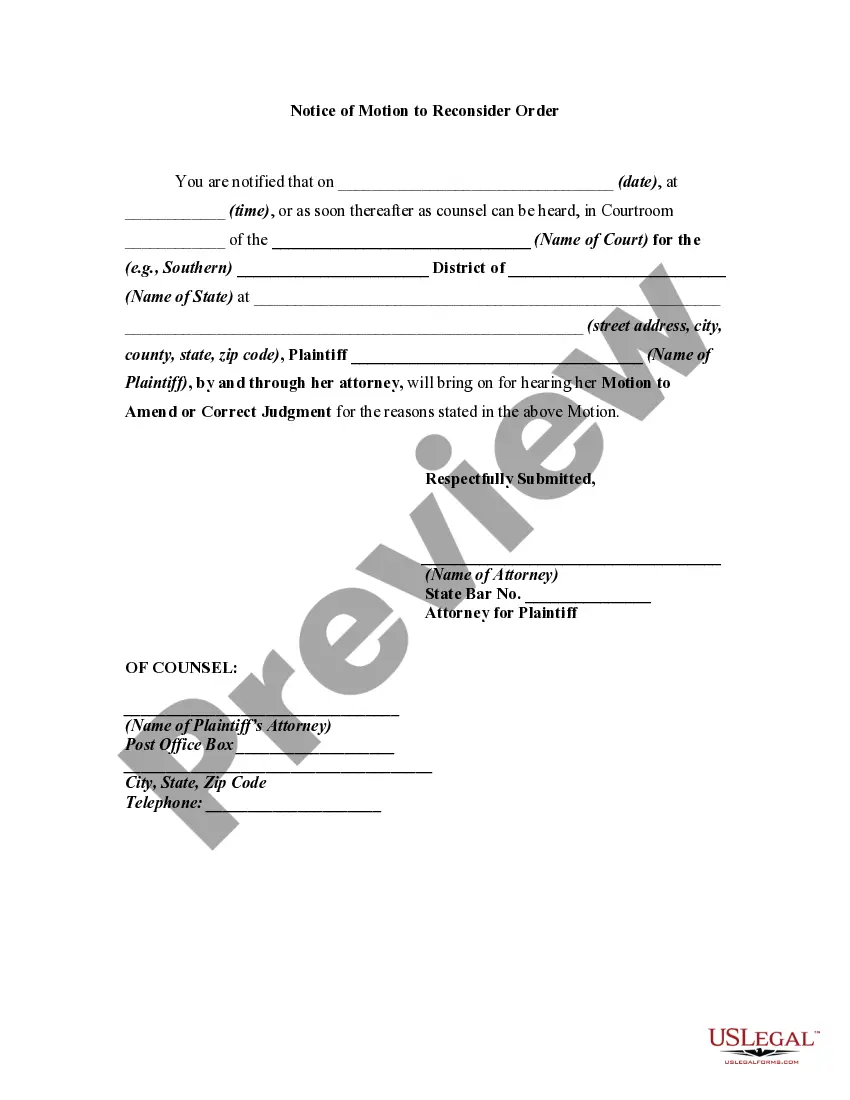
How to fill out Motion To Amend Or Correct Judgment To Include Additional Party Defendant As Real Party In Interest?
It’s clear that you cannot instantly become a legal expert, nor can you learn how to swiftly draft a Motion To Correct Clerical Error without possessing specialized knowledge.
Developing legal documents is a lengthy endeavor that demands specific education and expertise.
So why not entrust the drafting of the Motion To Correct Clerical Error to the experts.
You can re-access your documents from the My documents section at any time. If you’re already a customer, you can simply Log In and retrieve the template from the same section.
Regardless of the intention behind your forms—whether financial, legal, or personal—our website has everything you need. Try US Legal Forms today!
- Find the document you require by utilizing the search function at the top of the webpage.
- Preview it (if this feature is available) and read the accompanying description to determine if Motion To Correct Clerical Error meets your needs.
- Restart your search if you are in need of a different template.
- Create a free account and choose a subscription plan to acquire the form.
- Click Buy now. After the transaction is finalized, you can access the Motion To Correct Clerical Error, fill it out, print it, and send or deliver it to the relevant parties.
Form popularity
FAQ
A clerical error refers to a mistake in writing or filing that does not reflect the true intention of the court's decision. When you submit a motion to correct clerical error, you address discrepancies such as typos or incorrect dates that could impact your case. It is essential to correct these errors promptly to ensure the integrity of the legal documents. Utilizing platforms like US Legal Forms can provide resources and guidance in successfully addressing clerical errors.
A Rule 60 motion is a legal request that allows a party to seek relief from a final judgment or order due to clerical mistakes or procedural errors. When you utilize a motion to correct clerical error, you can resolve issues that may have misrepresented your case. This process is crucial for ensuring that the court's records accurately reflect the intended rulings. Understanding Rule 60 can help you navigate the legal system effectively.
Rule 59 and Rule 60 both address procedural errors but serve different purposes. While Rule 59 allows for requests to alter or amend a judgment based on substantive issues like errors in law, Rule 60 focuses on correcting clerical mistakes or procedural oversights. A motion to correct clerical error typically falls under Rule 60, as it aims to ensure that official records are accurate. Understanding these distinctions helps you choose the right avenue for addressing errors effectively.
A motion under Rule 60 enables a party to request the court to revise or vacate a judgment or order due to clerical mistakes or oversight. This is particularly important for fixing errors that do not affect the substance of the decision but impact its presentation. When you file a motion to correct clerical error, you provide clarity and accuracy to your legal documents. Utilizing this motion can streamline legal processes and enhance document integrity.
Rule 60 of the Federal Rules of Criminal Procedure allows parties to seek relief from a judgment, order, or proceeding based on clerical mistakes, which include inaccuracies in written documents. It values the importance of correcting these errors swiftly to uphold the integrity of the judicial process. Through a motion to correct clerical error, you can identify and rectify such mistakes efficiently. This rule serves to maintain justice by ensuring that court records accurately reflect the intent of the court.
The Rule of 60 refers to the time limit for filing certain motions, including a motion to correct clerical error, under specific circumstances. It sets a framework within which parties can seek to address mistakes in court documents. This rule aims to ensure timely corrections, promoting judicial efficiency and fairness. Understanding this rule can help you act promptly and effectively in your legal matters.
In court, a clerical error refers to a minor mistake in a legal document that does not affect the legal rights or obligations of the parties involved. Such errors might include typos or misprinted figures that stray from the intended content. Courts often allow parties to file a motion to correct clerical error to ensure the accuracy and integrity of legal documents. The uslegalforms platform can provide support in drafting these motions efficiently.
The Supreme Court has addressed clerical mistakes in several cases, emphasizing the need for accurate legal records. The Court has consistently recognized that clerical errors can undermine justice and has upheld the use of motions to correct clerical error as a necessary remedy. These decisions highlight the importance of ensuring that legal documents reflect true and accurate information in all proceedings. For further assistance, consider utilizing resources from the uslegalforms platform.
A clerical mistake refers to an error that occurs in the recording or transcription of information in legal documents. This may include incorrect names, dates, or numerical entries that do not reflect the intended meaning. Such mistakes are typically unintentional and do not alter the substance of a document's content. If you encounter such an issue, pursuing a motion to correct clerical error can effectively resolve it.
To correct a clerical mistake, you can file a motion to correct clerical error with the appropriate court. This motion should clearly outline the mistake, providing relevant details and evidence. It's important to follow local rules and procedures for submitting this motion. Using the uslegalforms platform can simplify this process by offering templates and guidance tailored to your needs.