Safe Deposit Access With Insurance
Description
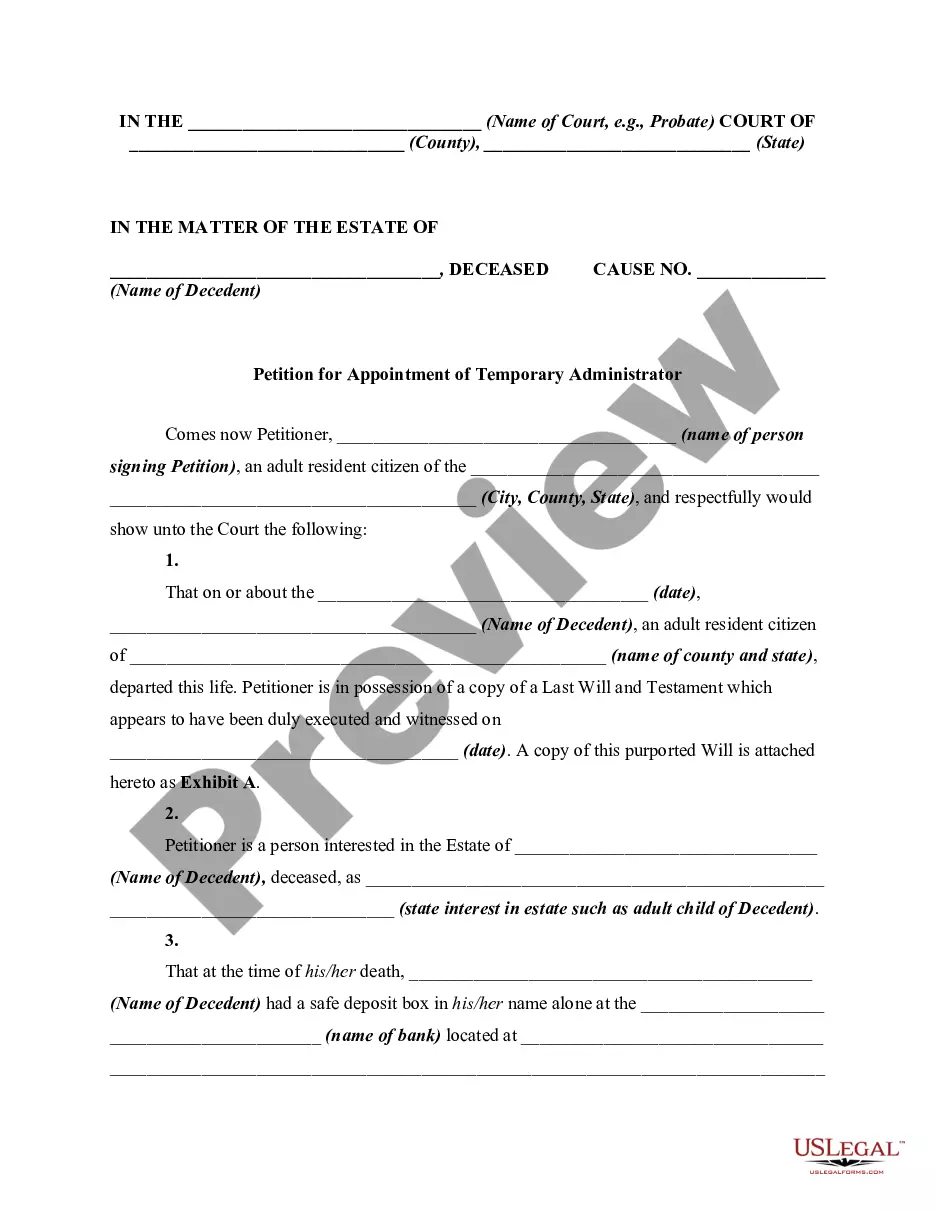
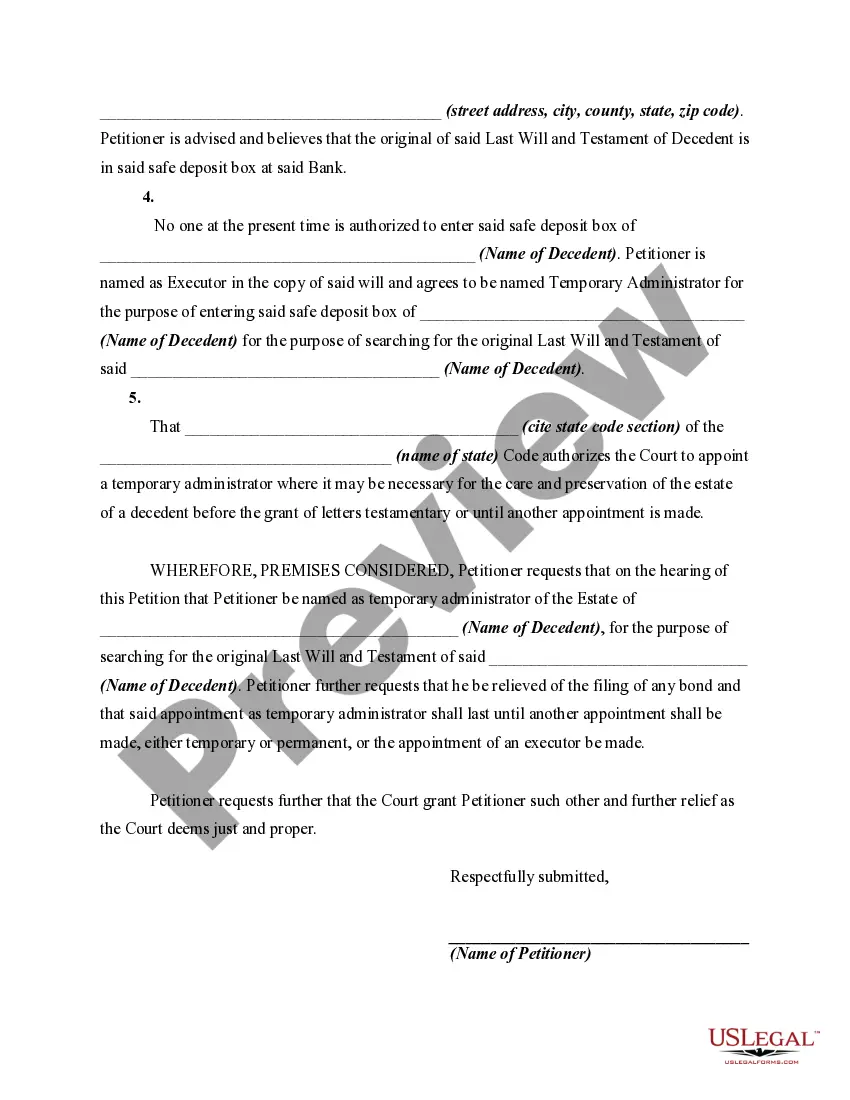
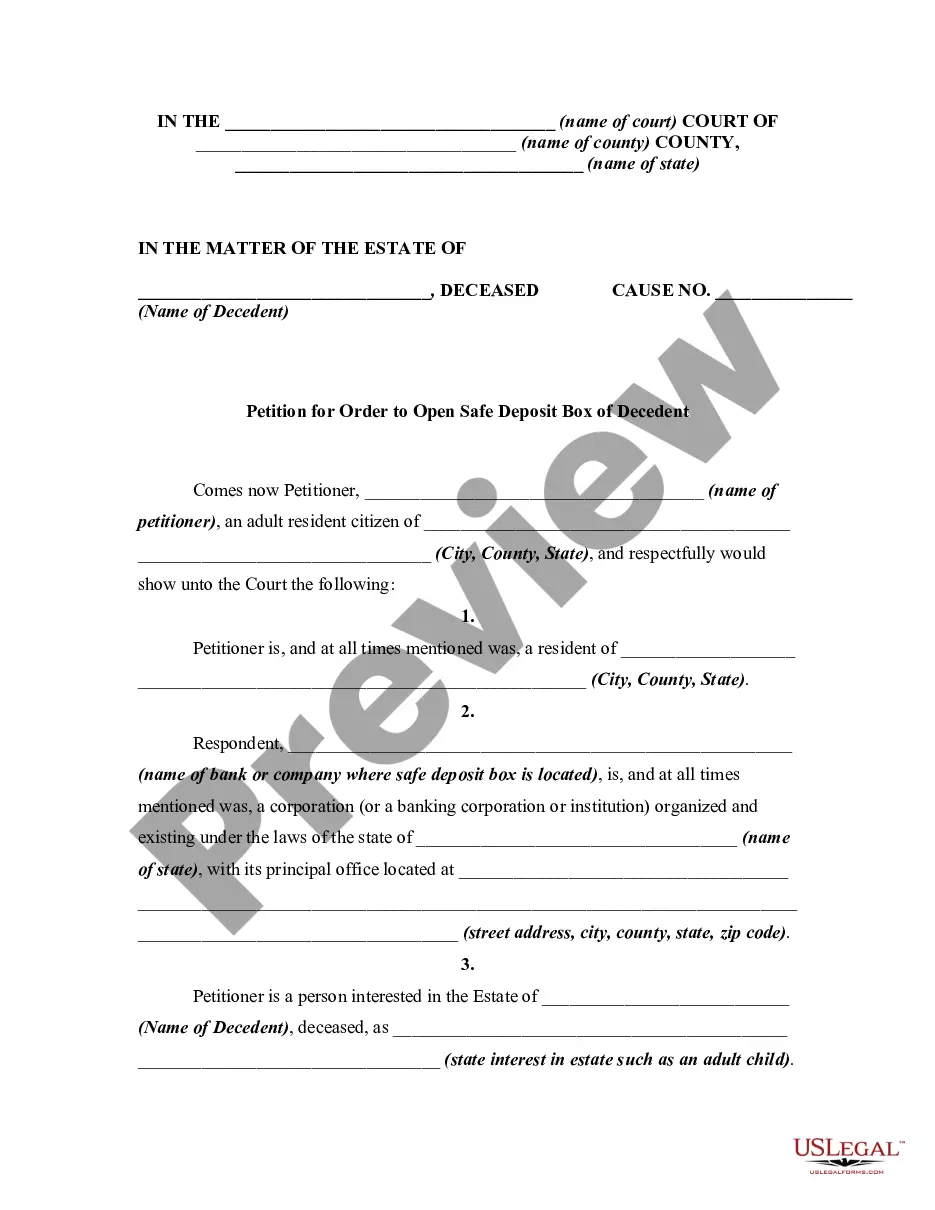
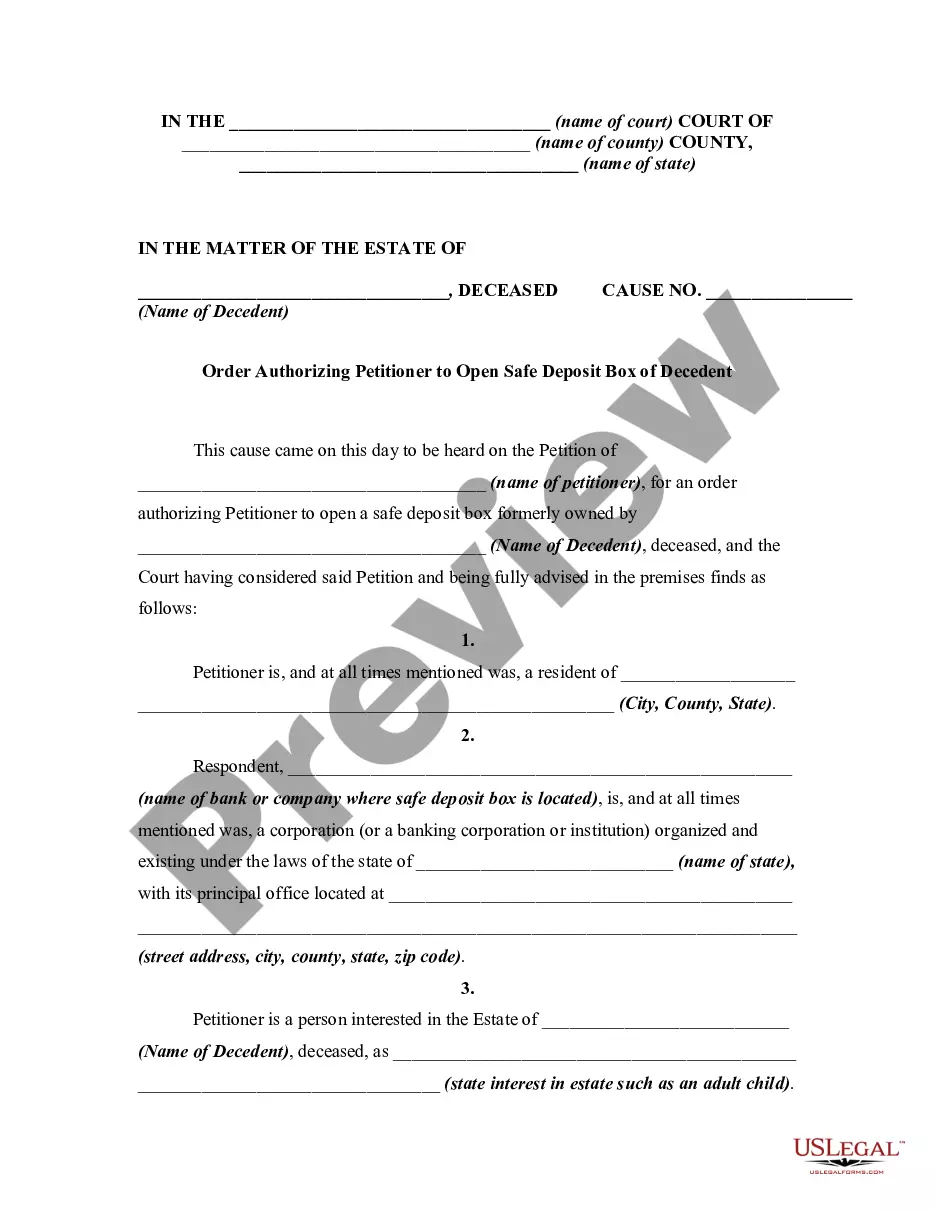




How to fill out Petition For Appointment Of Temporary Administrator In Order To Gain Access To Safe Deposit Box?
The Safe Deposit Access With Insurance displayed on this page is a reusable legal template crafted by skilled attorneys in compliance with federal and state regulations.
For over 25 years, US Legal Forms has supplied individuals, businesses, and lawyers with more than 85,000 validated, state-specific documents for any professional and personal situation. It’s the quickest, simplest, and most trustworthy method to acquire the paperwork you require, as the service ensures the utmost level of data protection and anti-malware safeguards.
Choose the format you desire for your Safe Deposit Access With Insurance (PDF, Word, RTF) and save the sample onto your device.
- Search for the document you require and examine it.
- Browse through the sample you sought and preview it or review the form description to verify it meets your needs. If it doesn’t, use the search feature to find the appropriate one. Click Buy Now when you have found the template you need.
- Select a subscription plan and Log In.
- Pick the pricing option that fits you and set up an account. Use PayPal or a credit card for a quick payment. If you already hold an account, Log In and check your subscription to proceed.
- Download the editable template.
Form popularity
FAQ
A safe deposit box is not a deposit account. It is storage space provided by the bank, so the contents, including cash, checks or other valuables, are not insured by FDIC deposit insurance if damaged or stolen. Also, financial institutions generally do not insure the contents of safe deposit boxes.
However, McGuinn warns, banks do not provide insurance for the contents of your safe deposit box, so you may want to add a scheduled personal property endorsement to your homeowners or renters insurance to make sure you're covered.
Can the IRS get into my box? IRS representatives cannot arbitrarily gain access to your box. However, they can serve a Notice of Levy or Seizure requiring us to freeze your box. The IRS requests that you open the box in the presence of their representatives.
Did you know that the contents of your safe deposit box are not insured by any bank or the Federal Deposit Insurance Corporation (FDIC)? While a safe deposit box is the best solution for storing your most valuable items, they're not immune to disasters like hurricanes, tornadoes, flood events?and even theft.
Pros and Cons Unlike bank accounts, the contents are not ensured. Safes can only be accessed during the bank's business hours. Contents can still be lost due to fire, flood, or other disasters.