Bailment For Mutual Benefit
Description
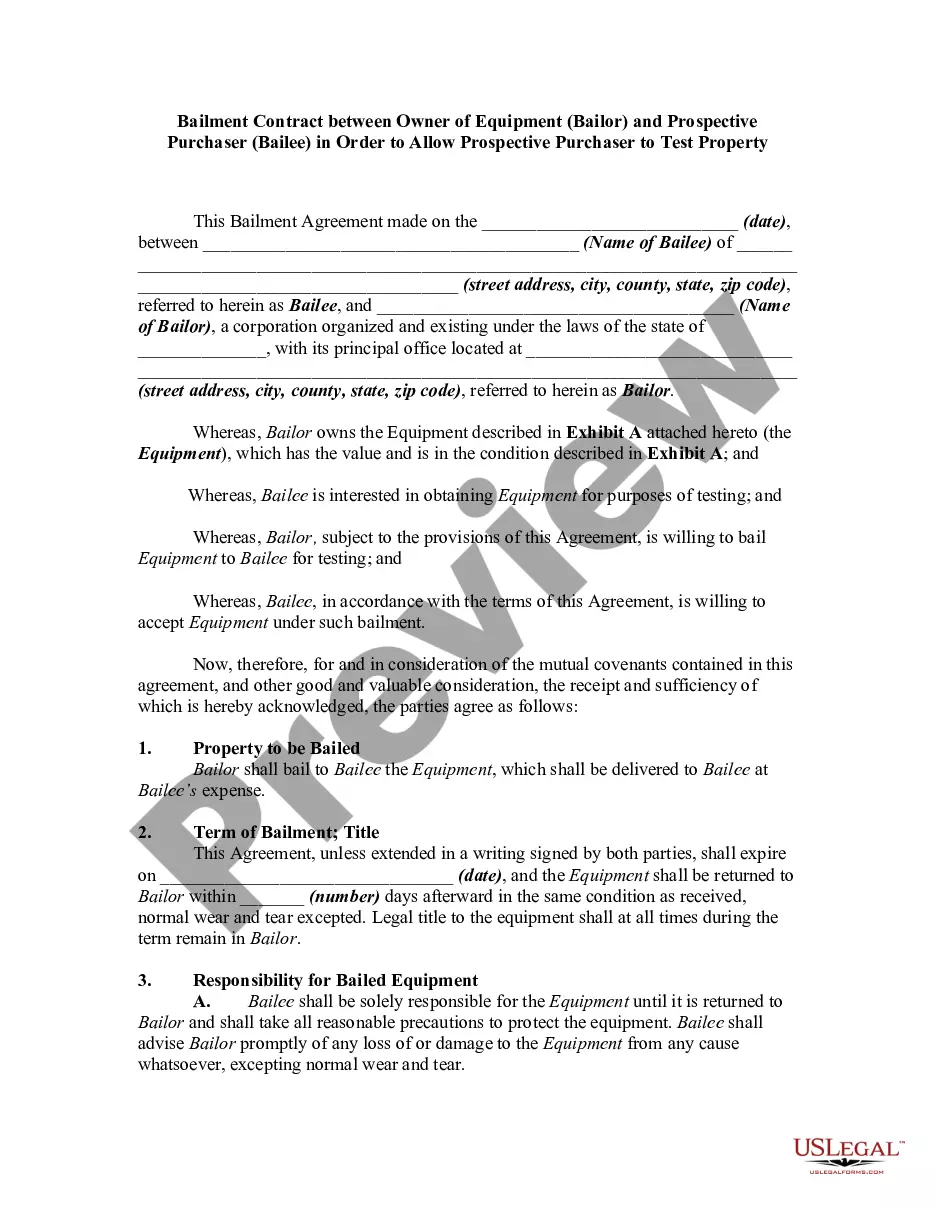
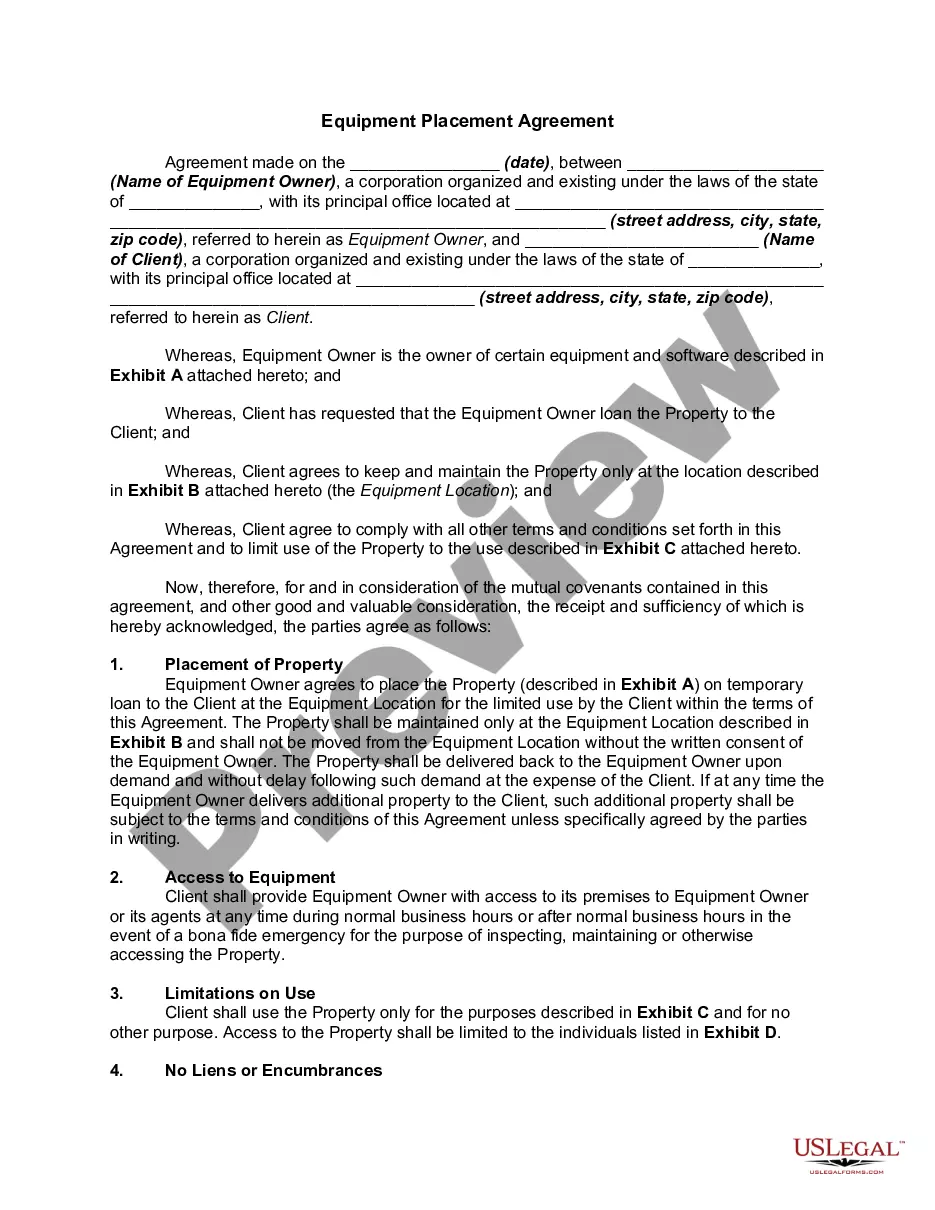
Get your form ready online
Our built-in tools help you complete, sign, share, and store your documents in one place.
Make edits, fill in missing information, and update formatting in US Legal Forms—just like you would in MS Word.
Download a copy, print it, send it by email, or mail it via USPS—whatever works best for your next step.
Sign and collect signatures with our SignNow integration. Send to multiple recipients, set reminders, and more. Go Premium to unlock E-Sign.
If this form requires notarization, complete it online through a secure video call—no need to meet a notary in person or wait for an appointment.
We protect your documents and personal data by following strict security and privacy standards.

Make edits, fill in missing information, and update formatting in US Legal Forms—just like you would in MS Word.

Download a copy, print it, send it by email, or mail it via USPS—whatever works best for your next step.

Sign and collect signatures with our SignNow integration. Send to multiple recipients, set reminders, and more. Go Premium to unlock E-Sign.

If this form requires notarization, complete it online through a secure video call—no need to meet a notary in person or wait for an appointment.

We protect your documents and personal data by following strict security and privacy standards.
Looking for another form?







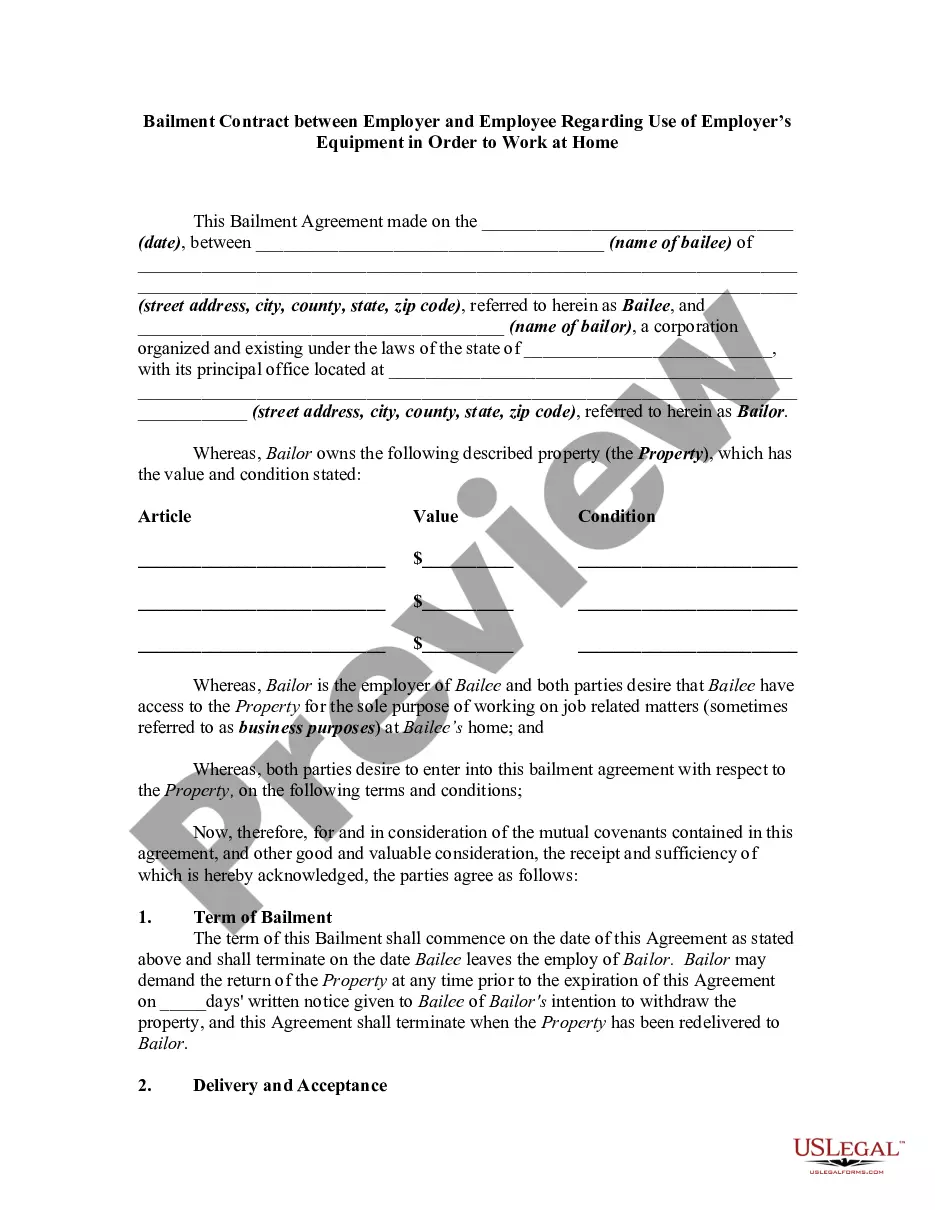
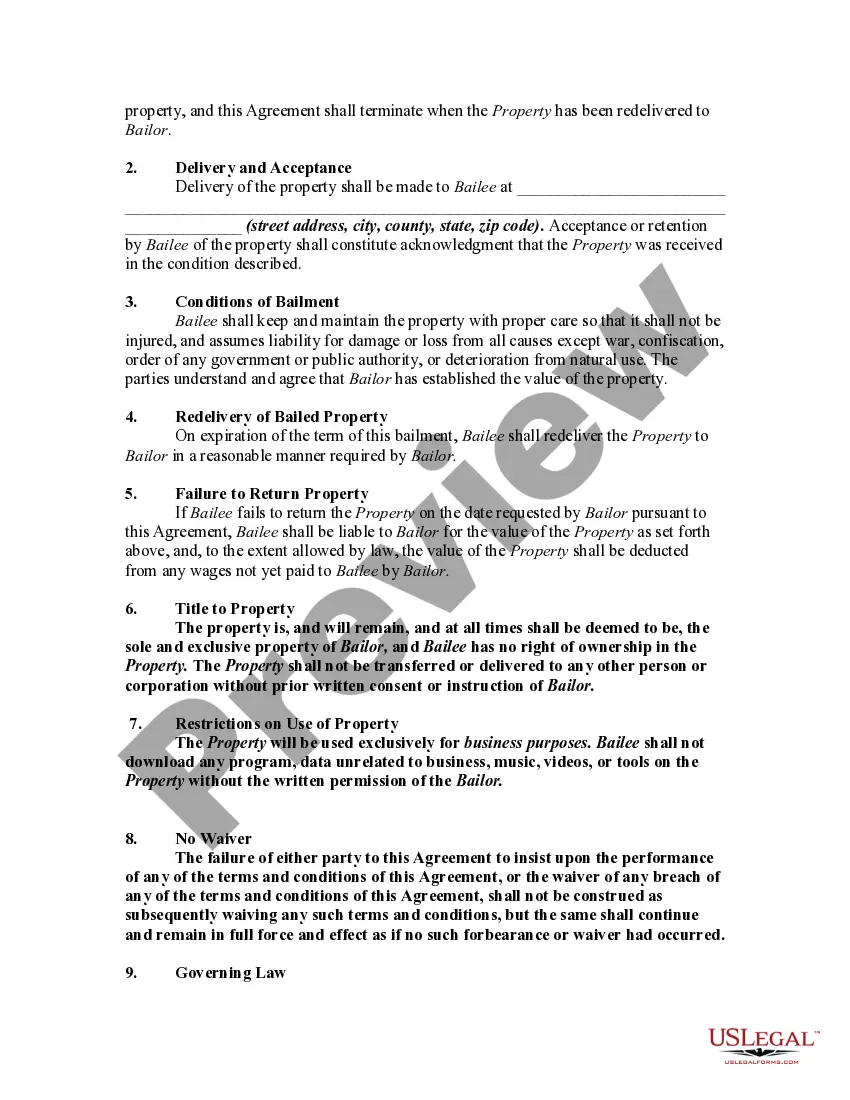
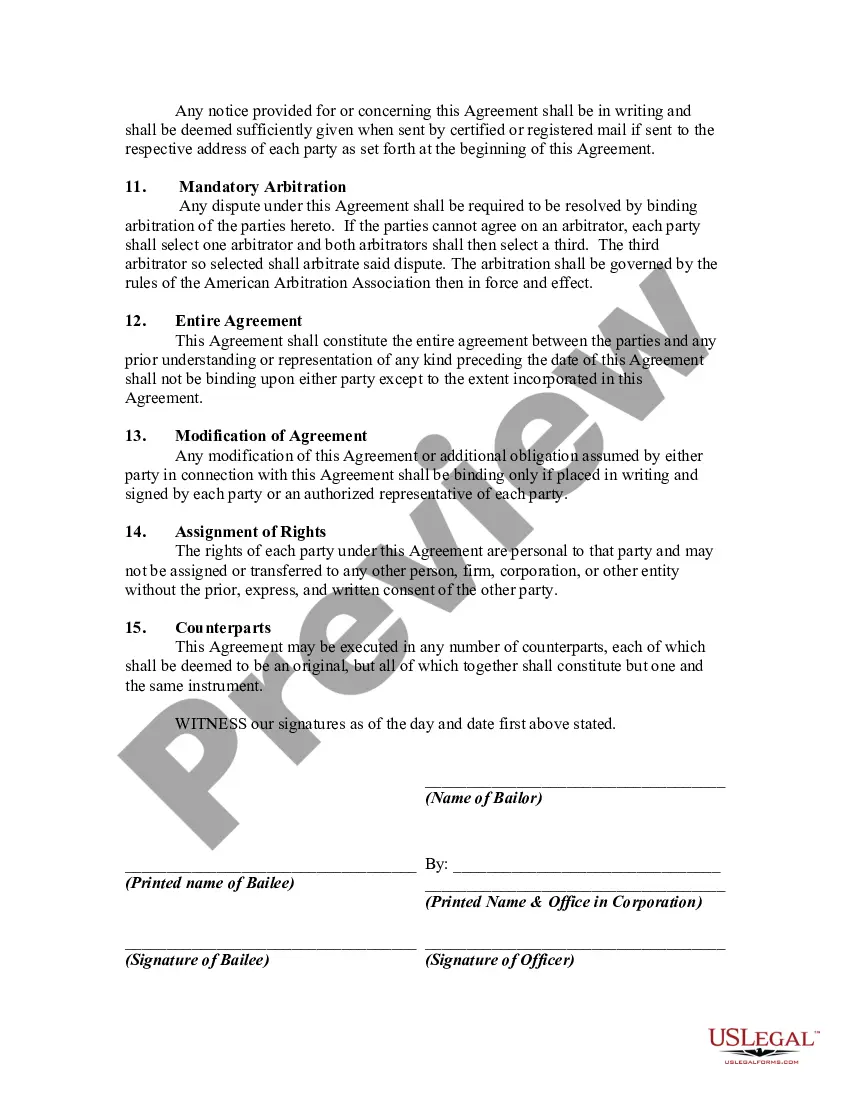
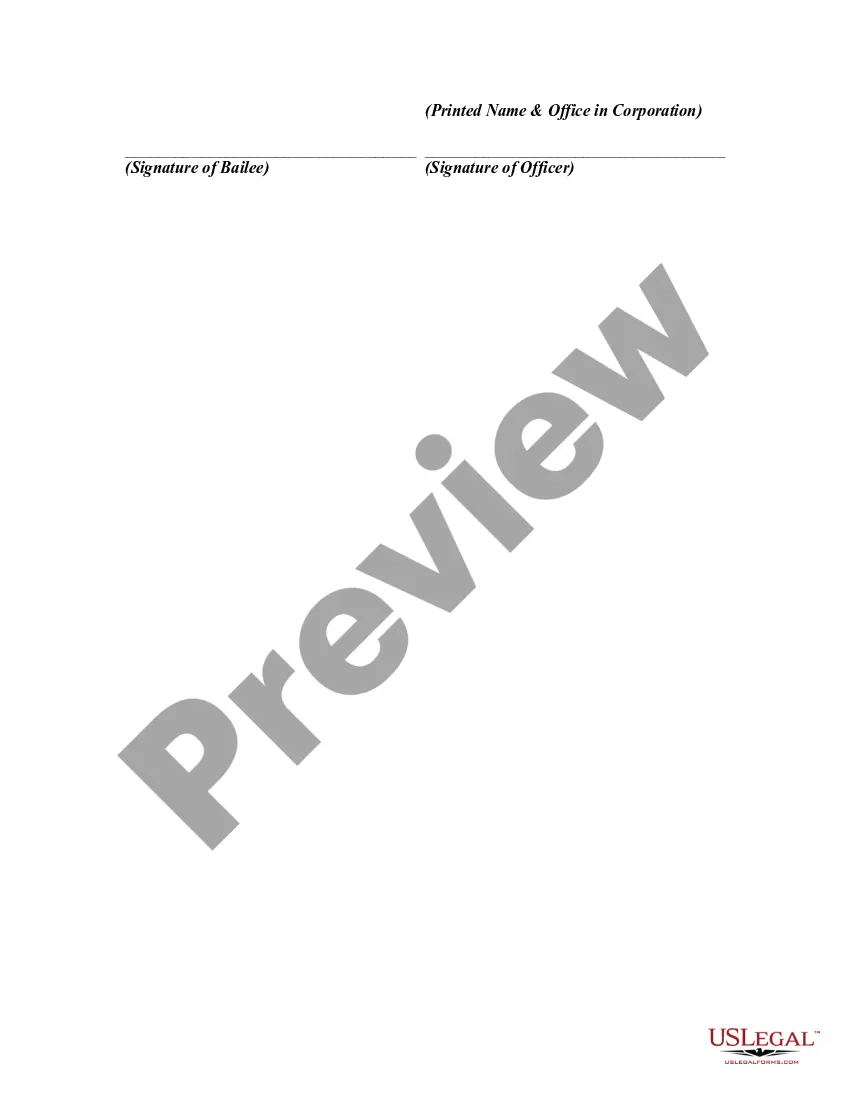
How to fill out Bailment Contract Between Employer And Employee Regarding Use Of Employer's Equipment In Order To Work At Home?
- Log in to your US Legal Forms account if you're a returning user. Verify that your subscription is active; if it's expired, renew it based on your selected plan.
- Explore the available templates relevant to bailment for mutual benefit. Make sure to preview the descriptions and check local jurisdiction compliance.
- If you can't find the right template, utilize the Search tab to locate the perfect form that suits your requirements.
- Once you've identified the accurate document, click the 'Buy Now' button and select a suitable subscription plan while registering for an account if you're a new user.
- Provide your payment details, either through credit card or PayPal, to complete your purchase.
- After successful payment, download the document onto your device. You can access it anytime from the 'My Forms' menu in your profile.
Using US Legal Forms allows you to tap into a robust collection of over 85,000 customizable legal documents. This service empowers both individuals and attorneys to create legally binding documents, ensuring they meet all necessary legal standards.
Now that you're equipped with the knowledge to obtain your forms, start your legal journey confidently with US Legal Forms today!
Form popularity
FAQ
Mutual benefit bailment is an agreement where both parties gain from the arrangement involving property or goods. In this situation, one party (the bailor) entrusts their property to another (the bailee), who has specific responsibilities to care for it. A crucial aspect of mutual benefit bailment is that it legally binds both parties, allowing for claims or obligations if problems arise. Understanding this concept can be essential in various personal and business contexts.
A common example of a mutual benefit bailment is when a person leaves their car at a garage for repairs. The car owner (bailor) benefits from the service while the garage (bailee) benefits from the payment received for the repair work. Both parties hold responsibilities during this arrangement, ensuring a positive outcome. Recognizing such examples helps clarify mutual benefit bailment in everyday situations.
There are three main types of bailment: bailment for the sole benefit of the bailor, bailment for the sole benefit of the bailee, and bailment for mutual benefit. Each type has different responsibilities and levels of care required from the bailee. In mutual benefit bailment, both parties enjoy benefits, making it essential to understand the expectations. Knowing these distinctions can help individuals navigate their legal obligations.
In a bailment for mutual benefit, the bailee must exercise a greater standard of care than in other types of bailment. This means the bailee must act with reasonable care to prevent any damage or loss to the property. If the bailee fails to meet this standard, they may be held liable for any loss or damage. Understanding these responsibilities is crucial for both parties involved.
Mutual benefit bailment occurs when both the bailor and bailee gain from the arrangement. In this situation, the bailor provides a good or property, and the bailee uses it for a specific purpose. The bailee has a duty to take care of the property, ensuring it is returned in good condition. This type of bailment highlights the shared interests and responsibilities between both parties.
To establish a valid bailment for mutual benefit, a few key elements must be present. First, there must be a delivery of possession, which means the property needs to be transferred to the bailee. Next, there should be an agreement, whether expressed or implied, outlining the duties of both parties. Lastly, the property must be identifiable so that both parties recognize what is being bailed.
When exploring bailment for mutual benefit, you'll encounter three main types. These are: bailment for the sole benefit of the bailor, bailment for the sole benefit of the bailee, and bailment for mutual benefit. Each type serves a distinct purpose depending on the needs and agreements between the involved parties. Understanding these differences helps clarify your rights and responsibilities.
The kinds of bailment typically include voluntary bailments, involuntary bailments, and constructive bailments. Voluntary bailments occur when parties agree to transfer possession willingly, while involuntary bailments arise without intent, such as lost property. Constructive bailments happen when the law dictates a bailment obligation, often seen in bailment for mutual benefit where both parties have responsibilities.
Bailment benefits include increased convenience, access to goods or services, and a clear legal framework that supports both the bailor and bailee. Specifically, in a bailment for mutual benefit, both parties gain from the arrangement, fostering trust and cooperation. Whether you are a bailor seeking storage or a bailee offering services, understanding these benefits can enhance your transaction.
A mutual benefit bailment differs from a gratuitous bailment primarily in the intention to benefit both parties involved. In a mutual benefit situation, both the bailor and bailee engage with the understanding that each will gain from the arrangement. In contrast, a gratuitous bailment serves only the interests of the bailee, often without compensation.