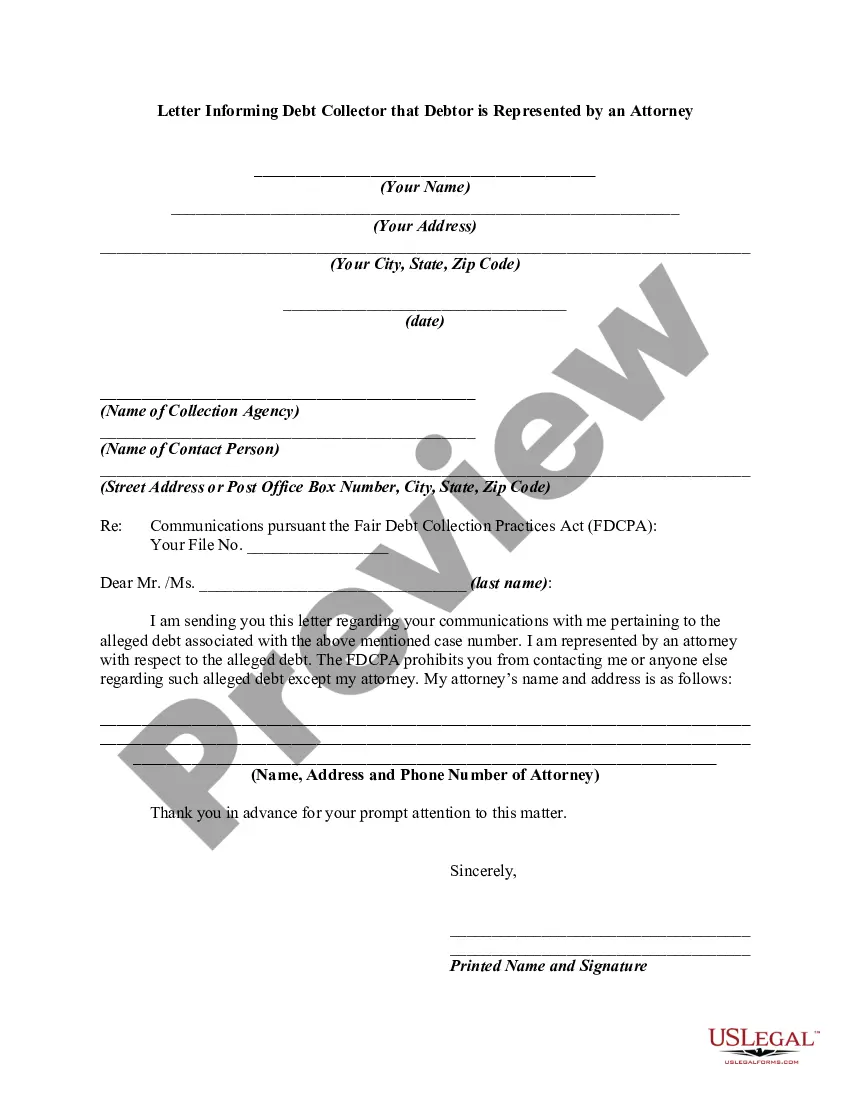
Commercial Debt Forgiveness Debtor
Description
Get your form ready online
Our built-in tools help you complete, sign, share, and store your documents in one place.
Make edits, fill in missing information, and update formatting in US Legal Forms—just like you would in MS Word.
Download a copy, print it, send it by email, or mail it via USPS—whatever works best for your next step.
Sign and collect signatures with our SignNow integration. Send to multiple recipients, set reminders, and more. Go Premium to unlock E-Sign.
If this form requires notarization, complete it online through a secure video call—no need to meet a notary in person or wait for an appointment.
We protect your documents and personal data by following strict security and privacy standards.

Make edits, fill in missing information, and update formatting in US Legal Forms—just like you would in MS Word.

Download a copy, print it, send it by email, or mail it via USPS—whatever works best for your next step.

Sign and collect signatures with our SignNow integration. Send to multiple recipients, set reminders, and more. Go Premium to unlock E-Sign.

If this form requires notarization, complete it online through a secure video call—no need to meet a notary in person or wait for an appointment.

We protect your documents and personal data by following strict security and privacy standards.
Looking for another form?

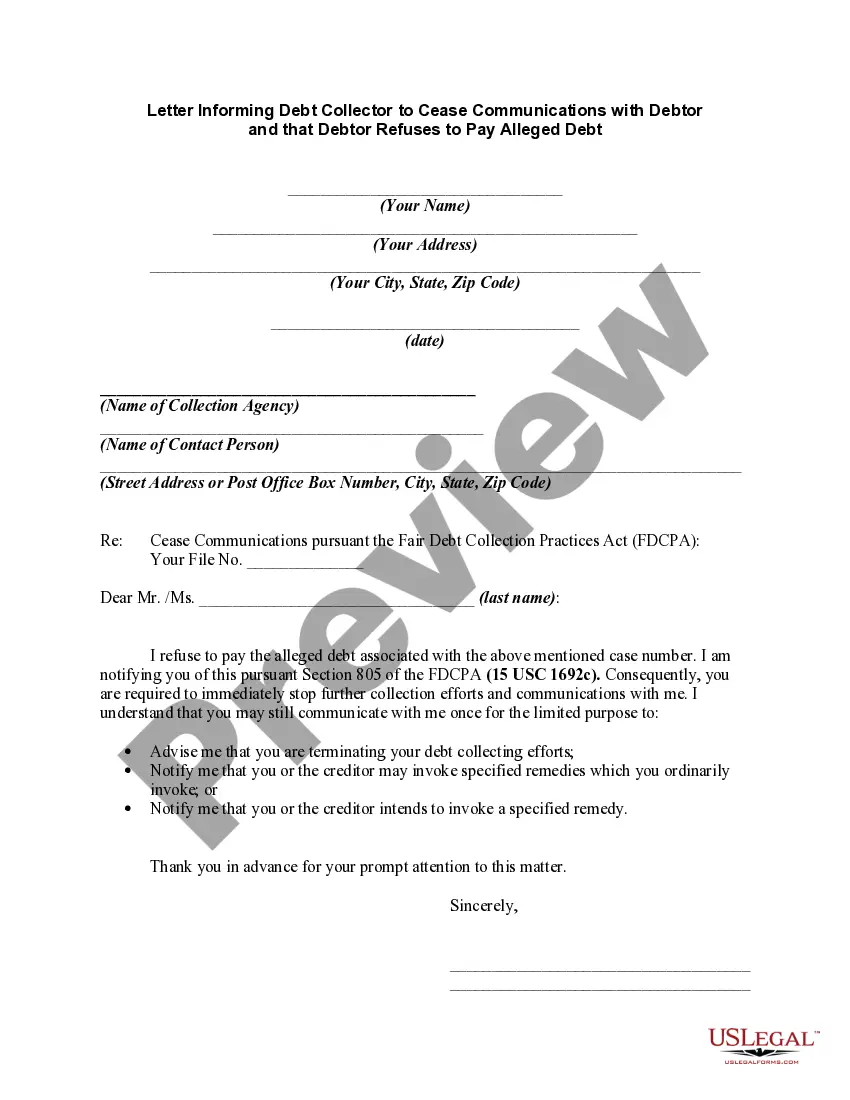
How to fill out Letter Informing Debt Collector That Debtor Is Represented By An Attorney?
The Commercial Debt Forgiveness Debtor displayed on this page is a reusable legal document crafted by expert attorneys in accordance with federal and state laws and regulations.
For over 25 years, US Legal Forms has offered individuals, corporations, and legal practitioners access to more than 85,000 authenticated, state-specific templates for any business and personal needs. It’s the fastest, simplest, and most dependable method to acquire the documents you require, as the service ensures bank-level data protection and anti-malware safety.
Register for US Legal Forms to have confirmed legal templates for all of life's situations readily available.
- Search for the document you require and examine it.
- Browse through the file you looked for and preview it or check the form description to ensure it meets your specifications. If it doesn’t, utilize the search function to find the correct one. Click Buy Now when you have located the template you need.
- Register and Log In.
- Select the pricing option that best fits you and set up an account. Use PayPal or a credit card to make a quick payment. If you already possess an account, Log In and review your subscription to continue.
- Obtain the editable template.
- Choose the format you prefer for your Commercial Debt Forgiveness Debtor (PDF, DOCX, RTF) and download the document onto your device.
- Fill out and sign the document.
- Print the template to complete it manually. Alternatively, use an online multifunctional PDF editor to quickly and accurately fill out and sign your form with an eSignature.
- Download your paperwork again.
- Re-access the same document anytime it is required. Open the My documents tab in your profile to re-download any previously downloaded forms.
Form popularity
FAQ
The debt forgiveness rule allows a debtor to eliminate certain types of debt under specific conditions. This rule often applies to commercial debt, where a lender forgives part or all of the amount owed, providing relief to the borrower. In the context of commercial debt forgiveness, a debtor may benefit from reduced financial stress, allowing the business to focus on growth rather than repayment. By understanding this rule, you can better navigate your options as a commercial debt forgiveness debtor.
Reporting debt forgiveness involves including the forgiven amount on your tax return as income. As a commercial debt forgiveness debtor, you may receive a 1099-C from your creditor, which you should refer to when filling out your tax forms. Make sure to keep this document for your records and acknowledge any exceptions that apply to your situation. If in doubt, work with a tax expert to ensure accurate reporting.
Yes, as a commercial debt forgiveness debtor, you generally need to report debt forgiveness on your tax return. The IRS requires taxpayers to include canceled debt as income, which could impact your overall tax situation. However, if you qualify for certain exemptions, you may not need to report all of it. Consulting with a tax advisor can help you determine your reporting requirements.
Form 982 is for taxpayers who want to exclude canceled debt from their taxable income under certain conditions. As a commercial debt forgiveness debtor, you should consider filing this form if you qualify for insolvency or if your debt was from a bankruptcy case. Specific rules apply, so it's important to understand your eligibility. Seeking guidance from a tax professional can clarify this process.
Debt forgiveness can lead to unintended consequences for a commercial debt forgiveness debtor. Your credit score may decrease after a creditor reports forgiven debt, impacting future borrowing. Additionally, you may face tax obligations on the forgiven amount, which can catch you off guard. It’s vital to weigh these risks against the benefits before proceeding with debt forgiveness.
The process of debt forgiveness typically involves negotiating with your creditor to reduce or eliminate your debt. As a commercial debt forgiveness debtor, you may submit a request outlining your financial situation. If successful, the creditor may agree to write off a portion or all of your debt. Documenting this process is crucial for your records and any potential tax considerations.
When a creditor forgives your debt and issues a 1099-C, it may have tax implications for you as a commercial debt forgiveness debtor. The IRS considers forgiven debt as taxable income, which means you might owe additional taxes. It's essential to understand that this added income can increase your tax liability. Consulting a tax professional can help you navigate this issue effectively.
To determine your qualification for debt forgiveness, evaluate your financial situation against specific program criteria. Factors such as income, type of debt, and overall financial health play a significant role. Utilizing platforms like US Legal Forms can help you navigate the qualifications and find relevant resources tailored to commercial debt forgiveness debtors.
Debt forgiveness operates by reducing or eliminating the remaining balance of a debtor's financial obligations. This process can involve negotiation with creditors, legal proceedings, or enrollment in government programs. For commercial debt forgiveness debtors, understanding how this process works can help you leverage available resources effectively.
Eligibility for debt forgiveness typically depends on several factors, including income level, type of debt, and financial hardship. Commercial debt forgiveness debtors often need to present evidence that they cannot meet their repayment obligations. Carefully reviewing program guidelines can help you assess your eligibility.