Attorney False Representation
Description
Get your form ready online
Our built-in tools help you complete, sign, share, and store your documents in one place.
Make edits, fill in missing information, and update formatting in US Legal Forms—just like you would in MS Word.
Download a copy, print it, send it by email, or mail it via USPS—whatever works best for your next step.
Sign and collect signatures with our SignNow integration. Send to multiple recipients, set reminders, and more. Go Premium to unlock E-Sign.
If this form requires notarization, complete it online through a secure video call—no need to meet a notary in person or wait for an appointment.
We protect your documents and personal data by following strict security and privacy standards.

Make edits, fill in missing information, and update formatting in US Legal Forms—just like you would in MS Word.

Download a copy, print it, send it by email, or mail it via USPS—whatever works best for your next step.

Sign and collect signatures with our SignNow integration. Send to multiple recipients, set reminders, and more. Go Premium to unlock E-Sign.

If this form requires notarization, complete it online through a secure video call—no need to meet a notary in person or wait for an appointment.

We protect your documents and personal data by following strict security and privacy standards.
Looking for another form?








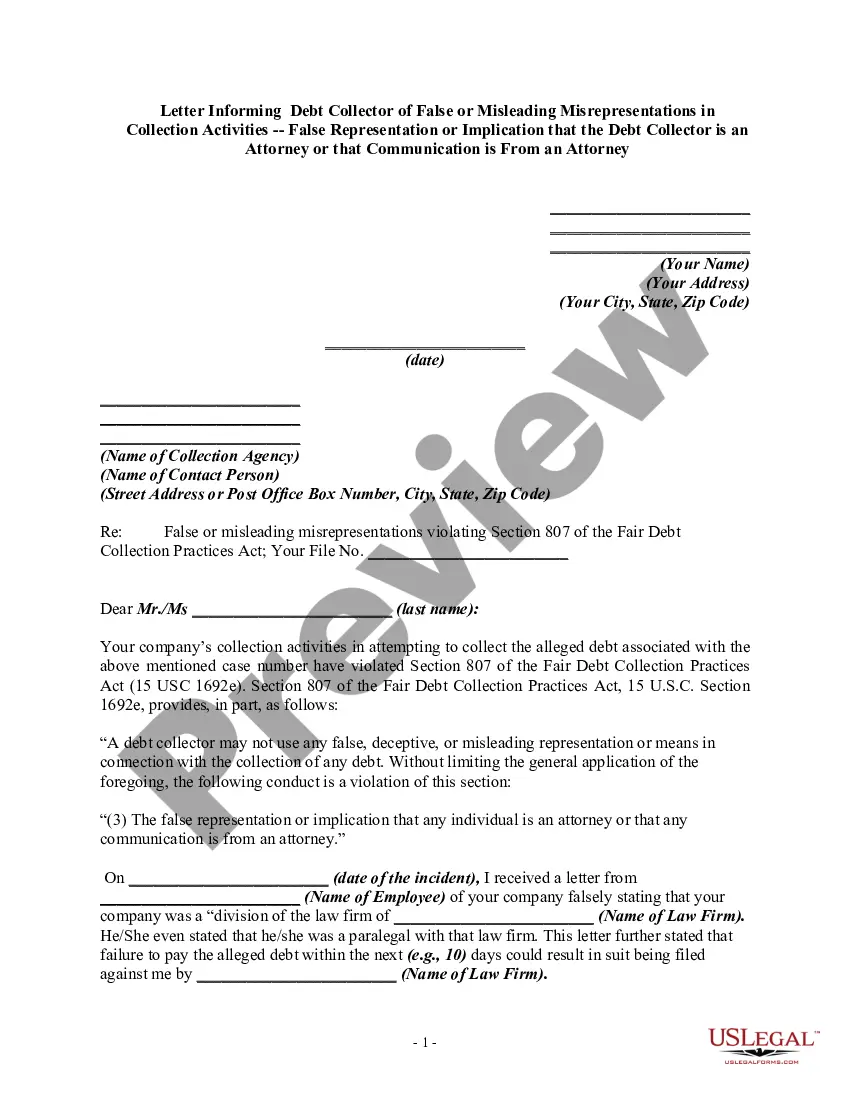
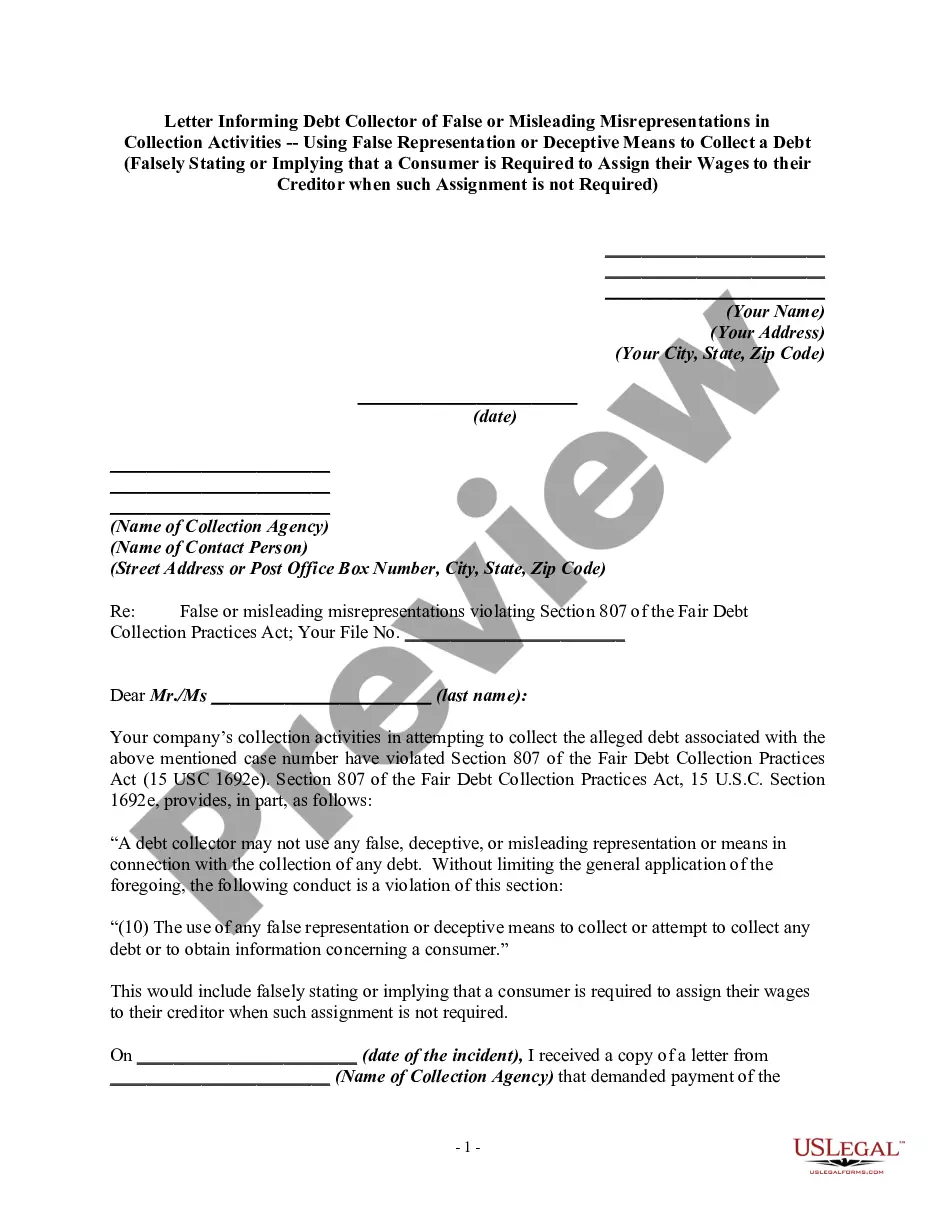
How to fill out Letter Informing Debt Collector Of False Or Misleading Misrepresentations In Collection Activities - False Representation Or Implication That The Debt Collector Is An Attorney Or That Communication Is From An Attorney?
- Check your subscription status: If you're a returning user, log in to your account to ensure your subscription is active. If necessary, renew it based on your chosen plan.
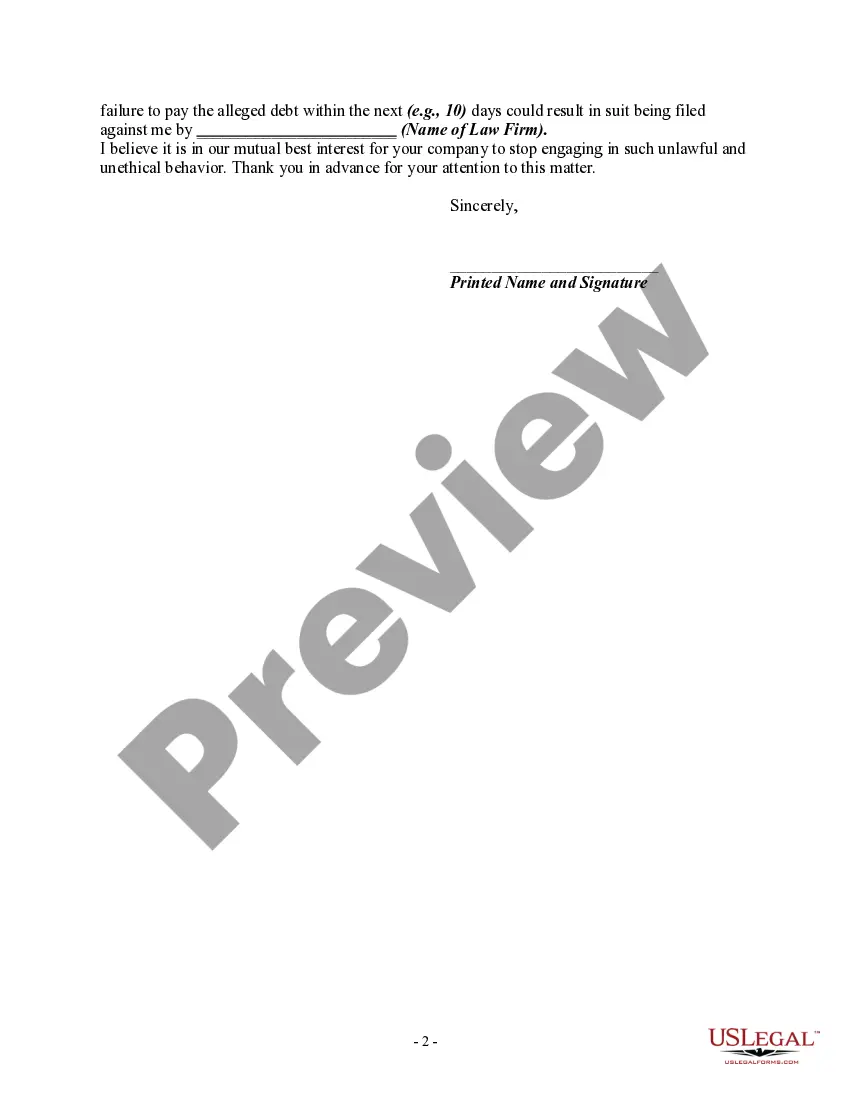
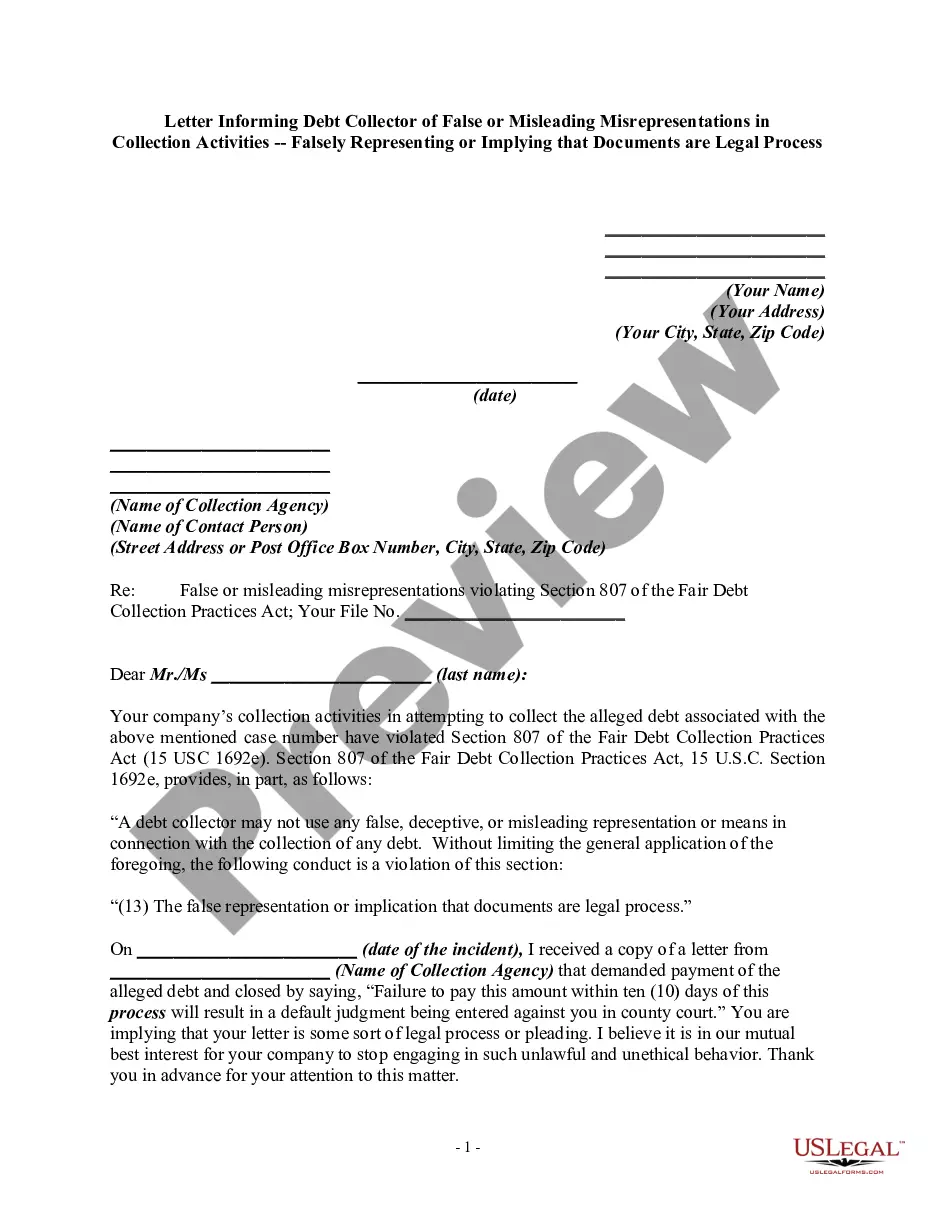
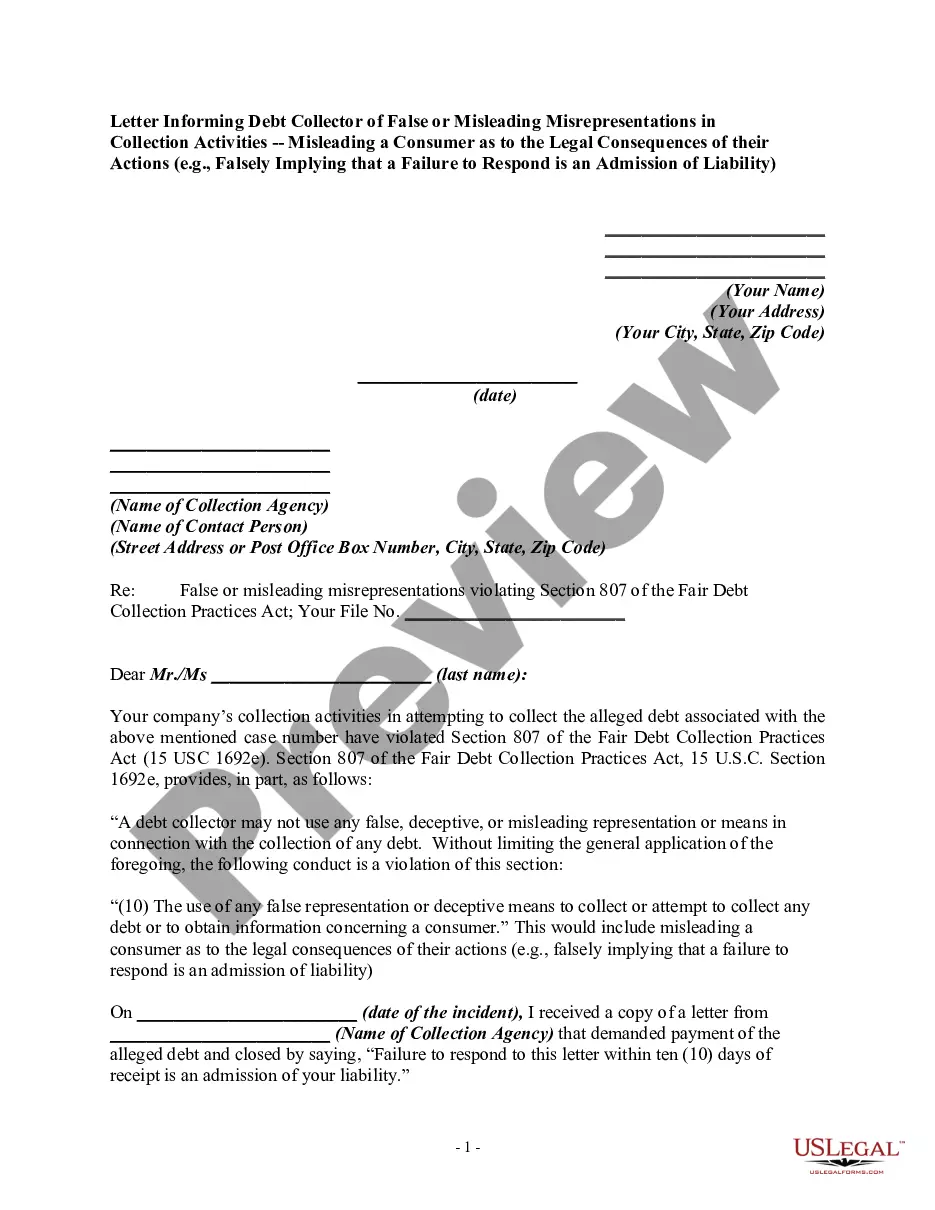
- Preview the document: Review the form description and preview mode to confirm you've selected the correct form that aligns with your local jurisdiction's requirements.
- Search for alternatives: If you don't find what you need, utilize the Search tab to explore more forms that might suit your situation better.
- Make a purchase: Once you've found the right document, click 'Buy Now' and select your preferred subscription plan. You will need to create an account for full access.
- Complete your payment: Enter your payment details, whether via credit card or PayPal, to finalize your subscription.
- Download your document: After your purchase, download the form to your device and access it anytime through the 'My Forms' section of your profile.
By following these steps, you can ensure that you have all the forms necessary to address attorney false representation effectively.
Start taking control of your legal needs today with US Legal Forms and empower yourself with the right documents!
Form popularity
FAQ
To sue an attorney for misrepresentation, also known as filing a malpractice claim, you first need to gather evidence that demonstrates attorney false representation. This includes documentation of communications and any adverse outcomes from their actions. Consulting with another attorney experienced in malpractice cases can help navigate the complexities of this process.
When a lawyer fails to represent you adequately, it may be referred to as legal malpractice or inadequate representation. This occurs when your attorney does not take necessary actions to protect your interests, resulting in potential harm to your case. Recognizing such failures allows you to pursue appropriate actions against the lawyer involved.
When a lawyer misrepresents you, the outcome can be detrimental to your case. You may experience misinformed decisions based on false information, leading to unfavorable legal results. By understanding attorney false representation, you can seek proper recourse and know when to consult a more trustworthy legal professional.
Unethical attorney behavior can include lying to clients, failing to communicate, or taking advantage of a client’s vulnerability. Attorney false representation is a prime example, where lawyers provide misleading information or manipulate facts to benefit themselves. It’s crucial to recognize these behaviors to protect your interests.
When an attorney misrepresents you, it is commonly referred to as attorney false representation. This occurs when a lawyer provides incorrect information or fails to disclose important facts that affect your case. Such misrepresentation can lead to severe consequences, damaging your legal standing and trust in the legal system.
The most common complaint against attorneys often centers on attorney false representation, particularly when clients feel that their lawyer has not performed adequately. Issues may include poor communication, lack of follow-up, or failure to meet deadlines. These complaints highlight the importance of clear communication and setting realistic expectations. If you experience such issues, consider discussing them openly with your attorney or seeking guidance from another legal professional.
Avoid making unrealistic demands or insinuating that your lawyer can guarantee specific outcomes, as this can lead to misunderstandings regarding attorney false representation. It's also unwise to hide information that could impact your case, as transparency is vital for effective representation. Open communication helps build trust and strengthens your case. Your lawyer is there to guide you, so being candid is essential.
Many lawyers fear the consequences of attorney false representation, as it can ruin their reputation and career. They worry about ethical violations that could lead to disciplinary actions or lawsuits from clients. Furthermore, constant changes in laws and regulations can also create anxiety. Staying informed and ethical is crucial for any attorney’s practice.
Yes, you may have grounds to sue an attorney for not properly representing you if they fail to fulfill their duty. This includes situations where they neglect your case or do not follow legal procedures. The key lies in proving that their inaction has caused you harm or violated legal ethics. If you believe your attorney has been negligent, consulting with another legal expert can clarify your next steps.
One of the biggest complaints against attorneys involves false representation regarding their skills or the outcomes of a case. Clients often feel misled when lawyers overpromise results or fail to communicate effectively. This dissatisfaction can lead to a breakdown in the attorney-client relationship. Understanding your rights can empower you to hold your lawyer accountable.