Pet Trust In Estate Planning
Description
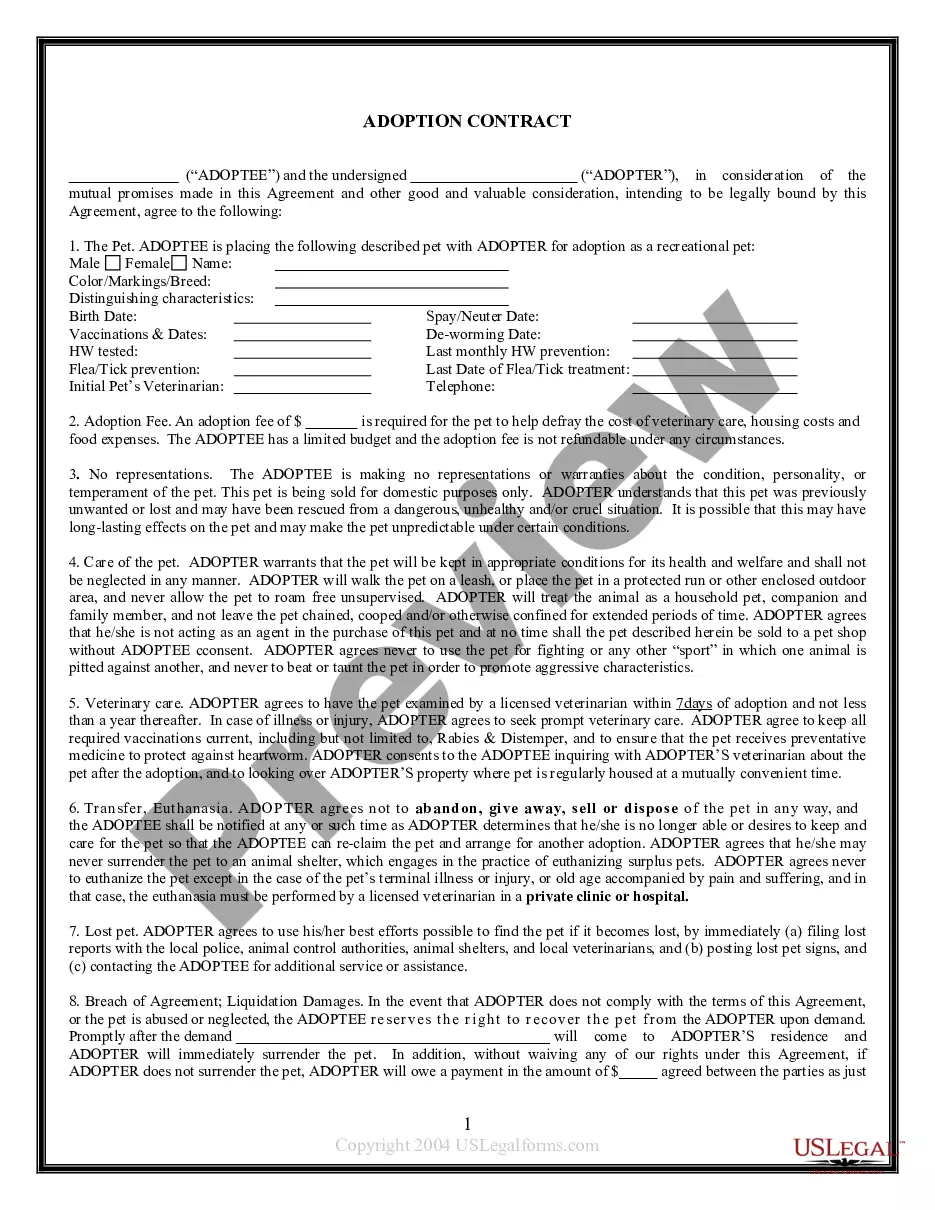
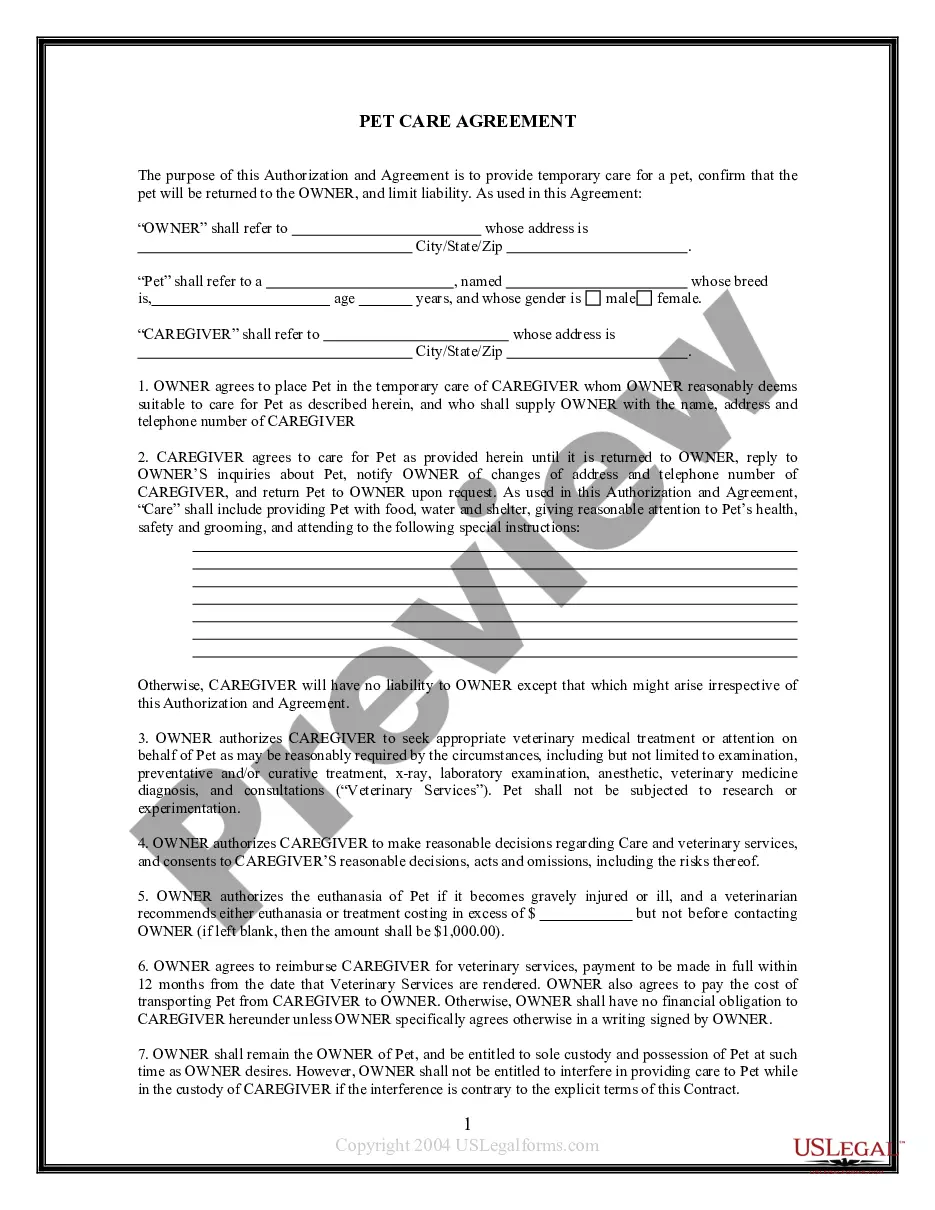
Get your form ready online
Our built-in tools help you complete, sign, share, and store your documents in one place.
Make edits, fill in missing information, and update formatting in US Legal Forms—just like you would in MS Word.
Download a copy, print it, send it by email, or mail it via USPS—whatever works best for your next step.
Sign and collect signatures with our SignNow integration. Send to multiple recipients, set reminders, and more. Go Premium to unlock E-Sign.
If this form requires notarization, complete it online through a secure video call—no need to meet a notary in person or wait for an appointment.
We protect your documents and personal data by following strict security and privacy standards.

Make edits, fill in missing information, and update formatting in US Legal Forms—just like you would in MS Word.

Download a copy, print it, send it by email, or mail it via USPS—whatever works best for your next step.

Sign and collect signatures with our SignNow integration. Send to multiple recipients, set reminders, and more. Go Premium to unlock E-Sign.

If this form requires notarization, complete it online through a secure video call—no need to meet a notary in person or wait for an appointment.

We protect your documents and personal data by following strict security and privacy standards.
Looking for another form?










Form popularity
FAQ
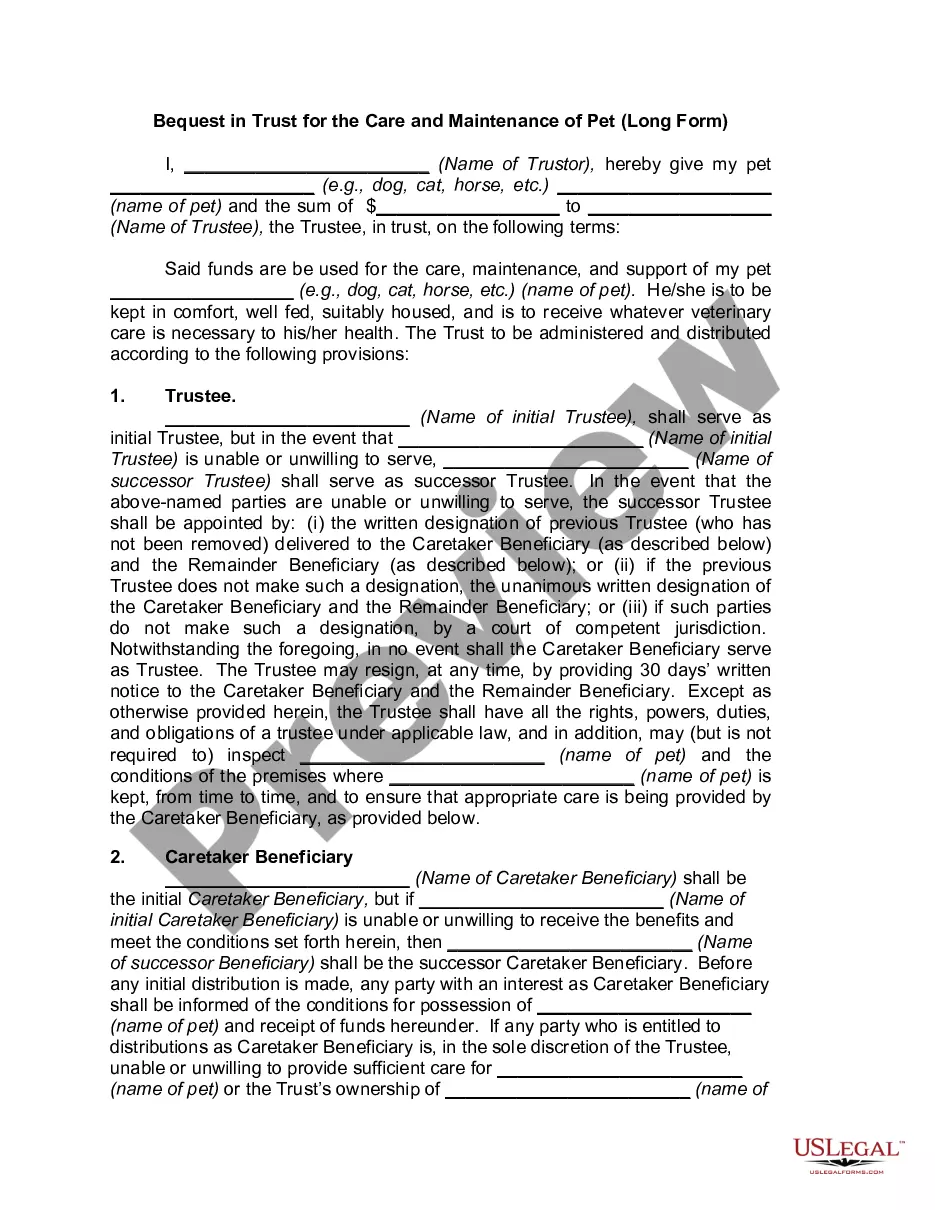
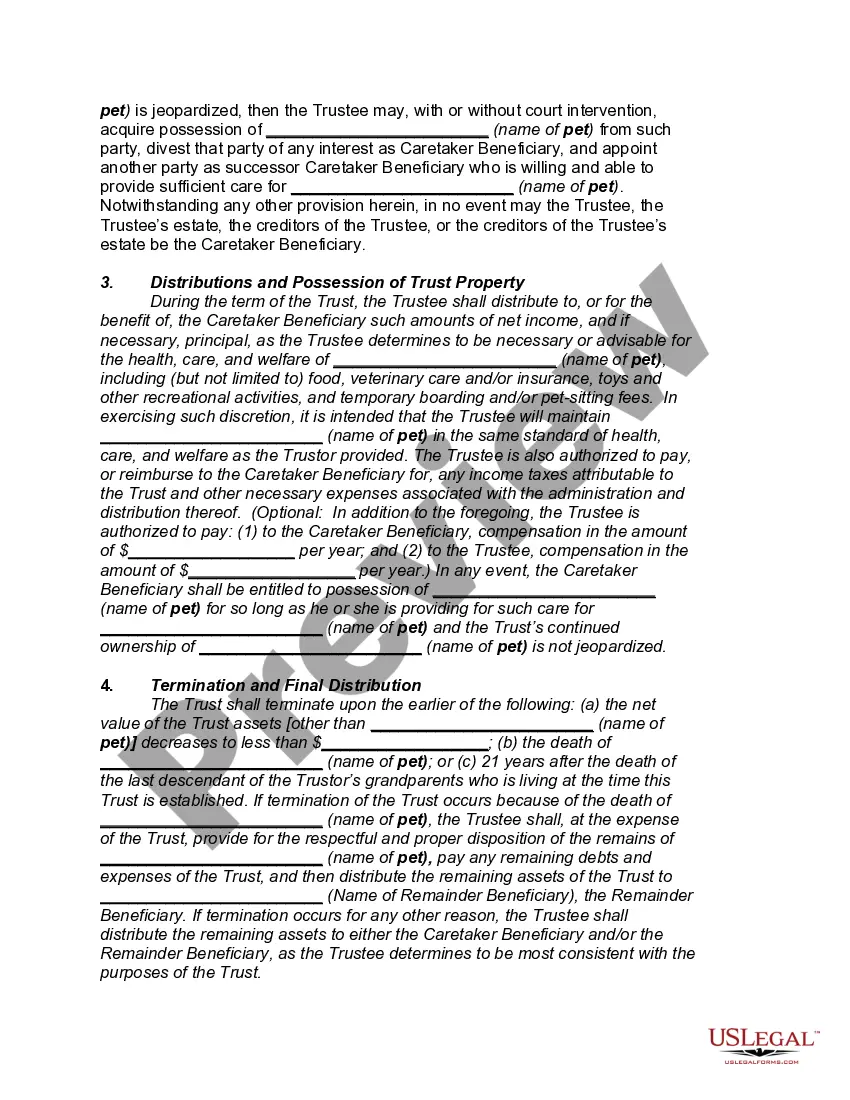
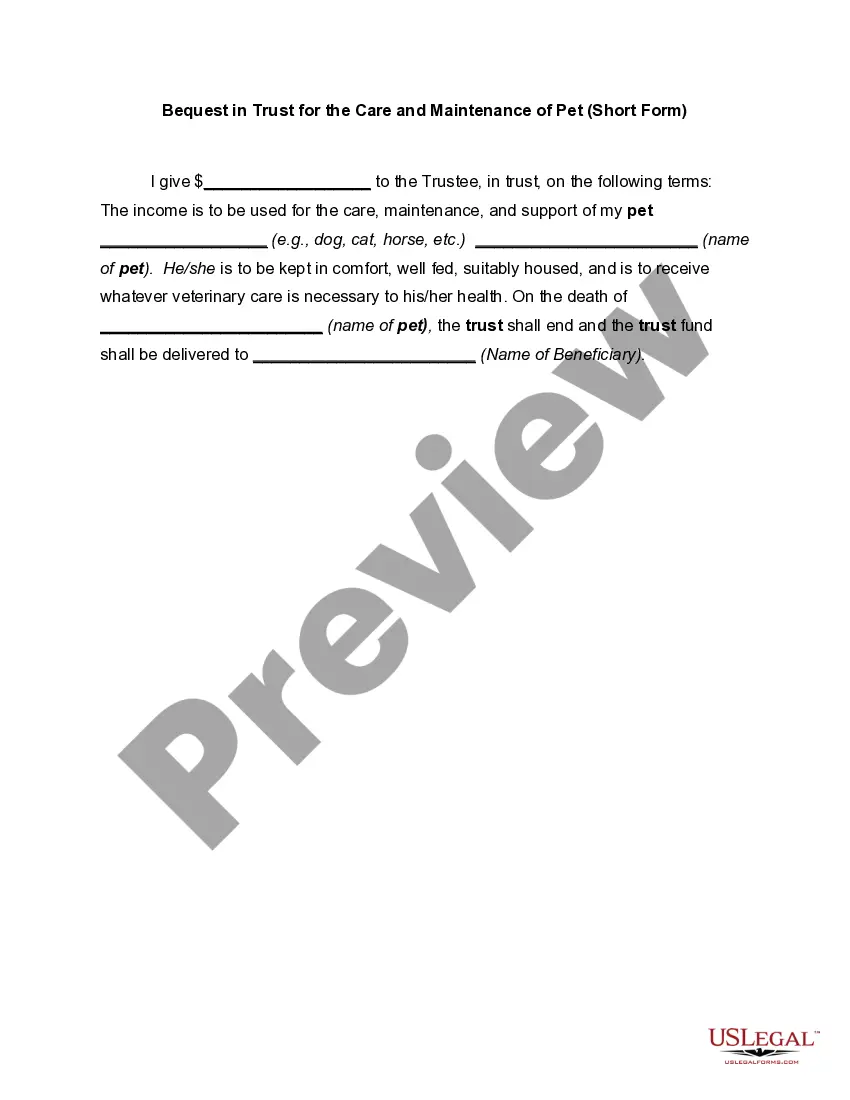
Pet inheritance typically involves creating a pet trust within your estate plan. This allows you to set aside funds specifically for the care of your pet after your death. By detailing the use of these funds and naming a caregiver, you can ensure your pet's needs are met, making pet trust in estate planning an essential consideration for responsible pet owners.
Yes, a pet can indeed be a beneficiary of a trust. In a pet trust, you can outline specific provisions to provide for your pet's needs, such as food, veterinary care, and living arrangements. This arrangement ensures that your beloved animal is well cared for, reflecting your wishes even when you are no longer present.
A trust can have various types of beneficiaries, including individuals, organizations, and even pets. Beneficiaries receive benefits from the trust assets as specified in the trust document. When considering a pet trust in estate planning, it's essential to explicitly name your pets as beneficiaries, ensuring they receive the necessary care and financial support after your passing.
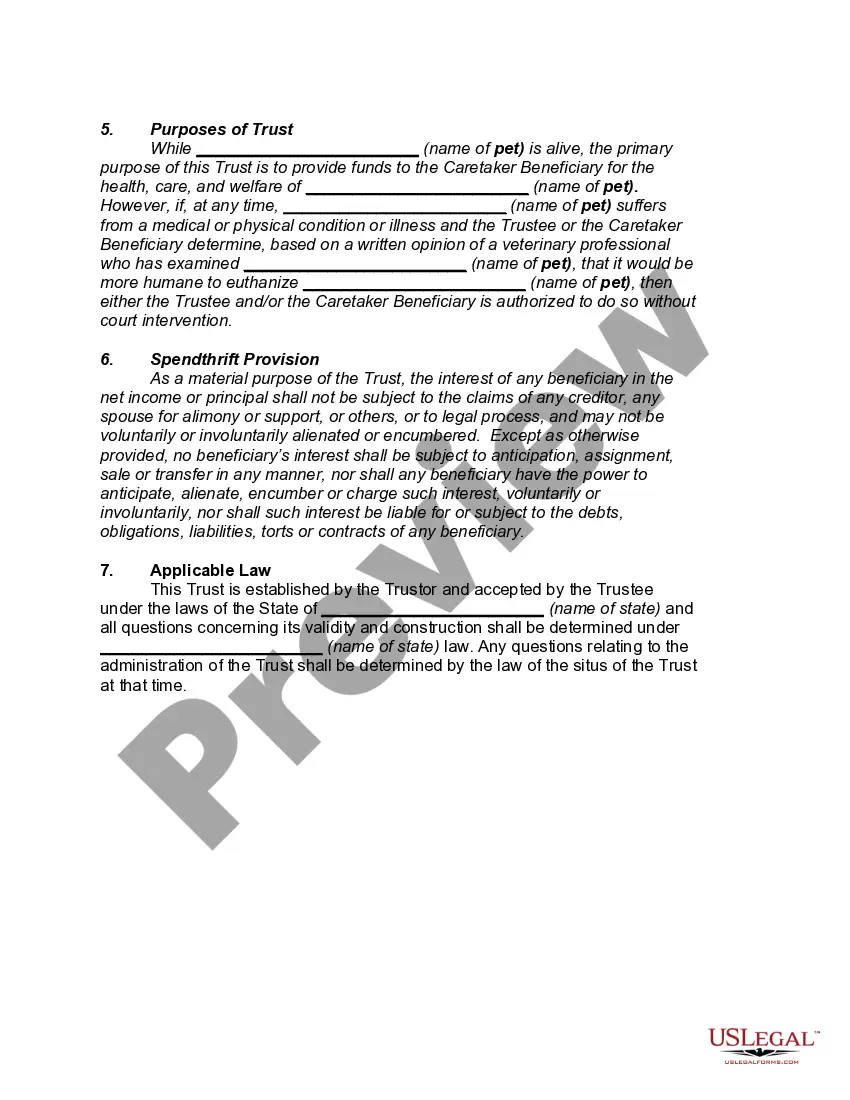
Writing a pet trust involves several key steps. First, define the specific needs of your pet, including care instructions and financial support. Next, choose a trustworthy individual who will act as the trustee and ensure your pet's well-being. Utilizing platforms like US Legal Forms can simplify the process by providing templates and guidance for creating a pet trust in estate planning that fits your unique situation.
A trust is a legal arrangement that allows you to manage your assets during your lifetime and after your death. In estate planning, a trust helps ensure that your assets are distributed according to your wishes. By including a pet trust in estate planning, you can make specific provisions for the care of your pets when you are no longer able to do so, providing peace of mind for you and a secure future for your furry companions.
One of the biggest mistakes in setting up a trust fund is failing to clearly define how the funds should be used. This is especially crucial for a pet trust in estate planning, where specific instructions are essential for the pet’s caregiver. Without clarity, the trustee may struggle to fulfill your intentions, jeopardizing your pet's well-being.
A trust often offers more flexibility than a will, particularly when it comes to managing assets and ensuring care for pets. By using a pet trust in estate planning, you can provide detailed instructions on how funds should be used for your pet’s care without the delays associated with probate. This proactive approach gives you greater control over your loved ones' needs.
Honoring a deceased pet can take many forms, such as creating a memorial or planting a tree in their memory. You might also consider setting up a pet trust in estate planning to ensure your wishes for your pet are respected, even after their passing. Reflecting on the happy moments you shared can also bring comfort and healing.
Using a trust to avoid probate can save time and costs for your loved ones. A pet trust in estate planning ensures that your pet's care and funds are distributed without going through the lengthy probate process. This simplifies the transition for your beneficiaries and provides immediate care for your pet.
To write a will for your pet, you should start by clearly stating your wishes regarding your pet's care. Designate a trusted individual as the caregiver and consider establishing a pet trust in estate planning to allocate funds for your pet's needs. This provides peace of mind, knowing your pet will be cared for by someone you trust.
