Life Insurance Trust For Minors
Description
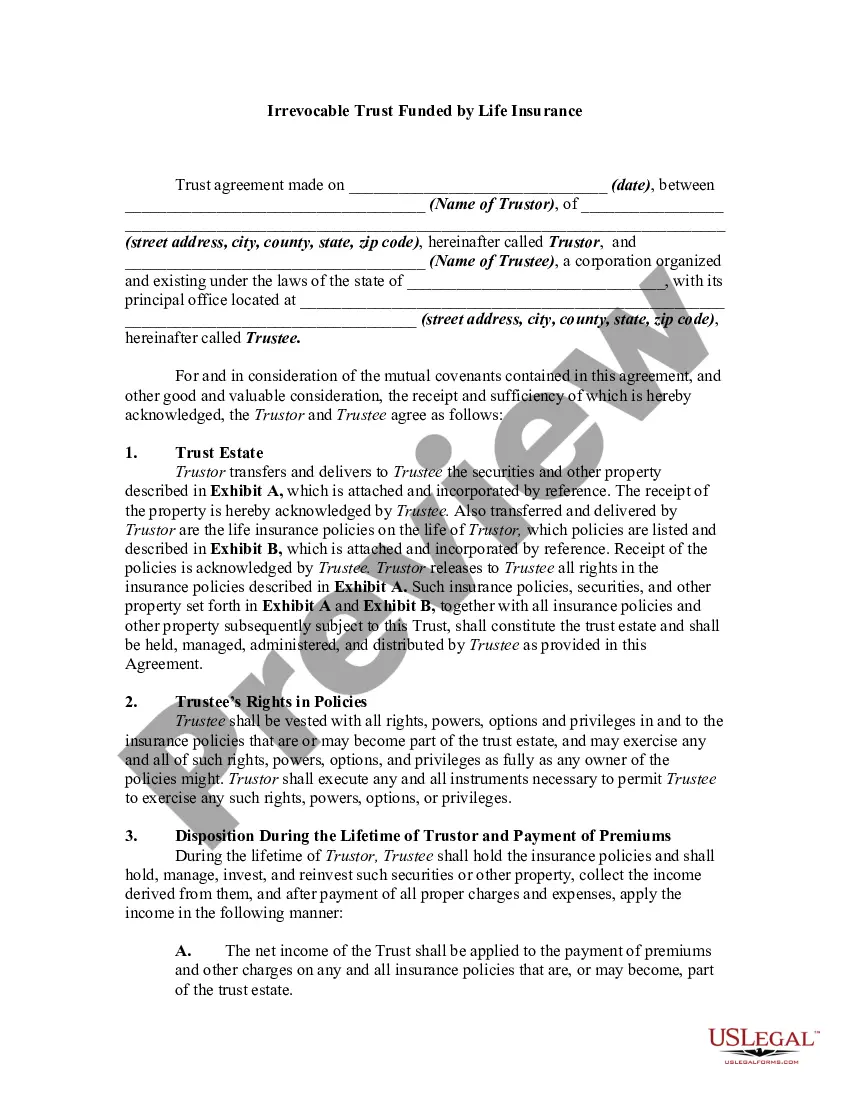
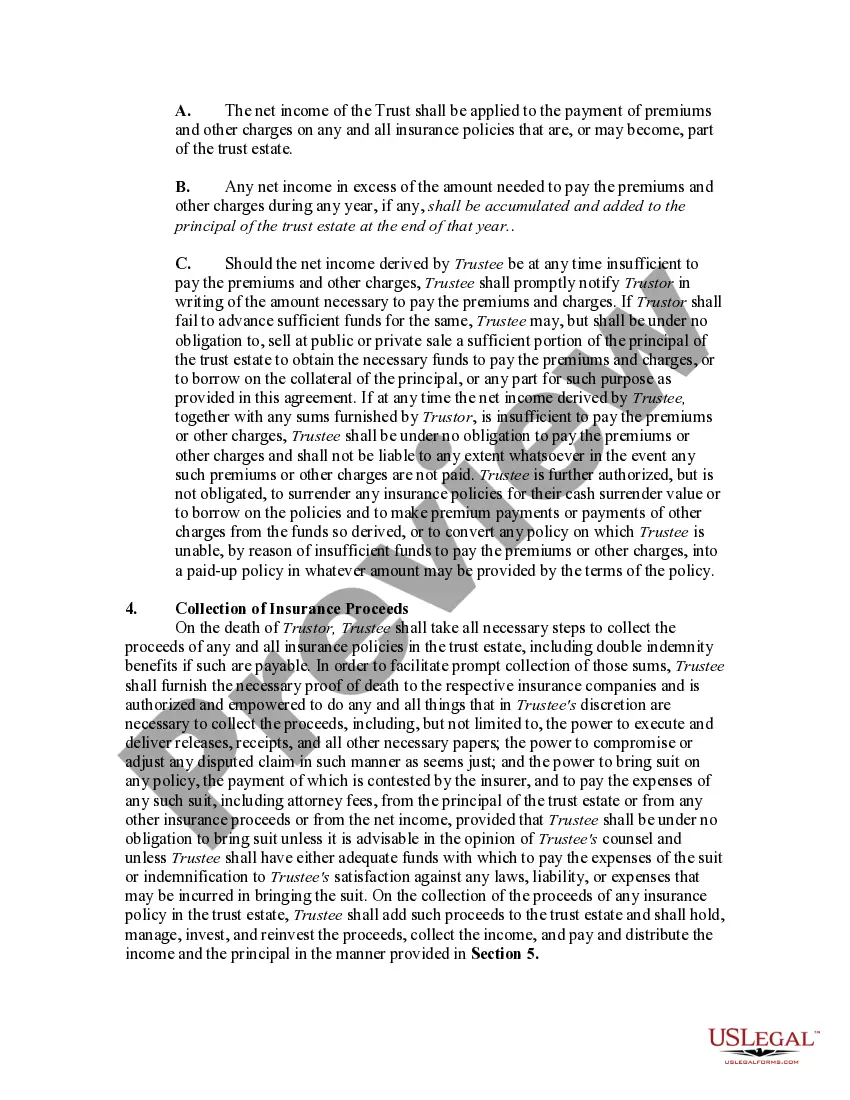
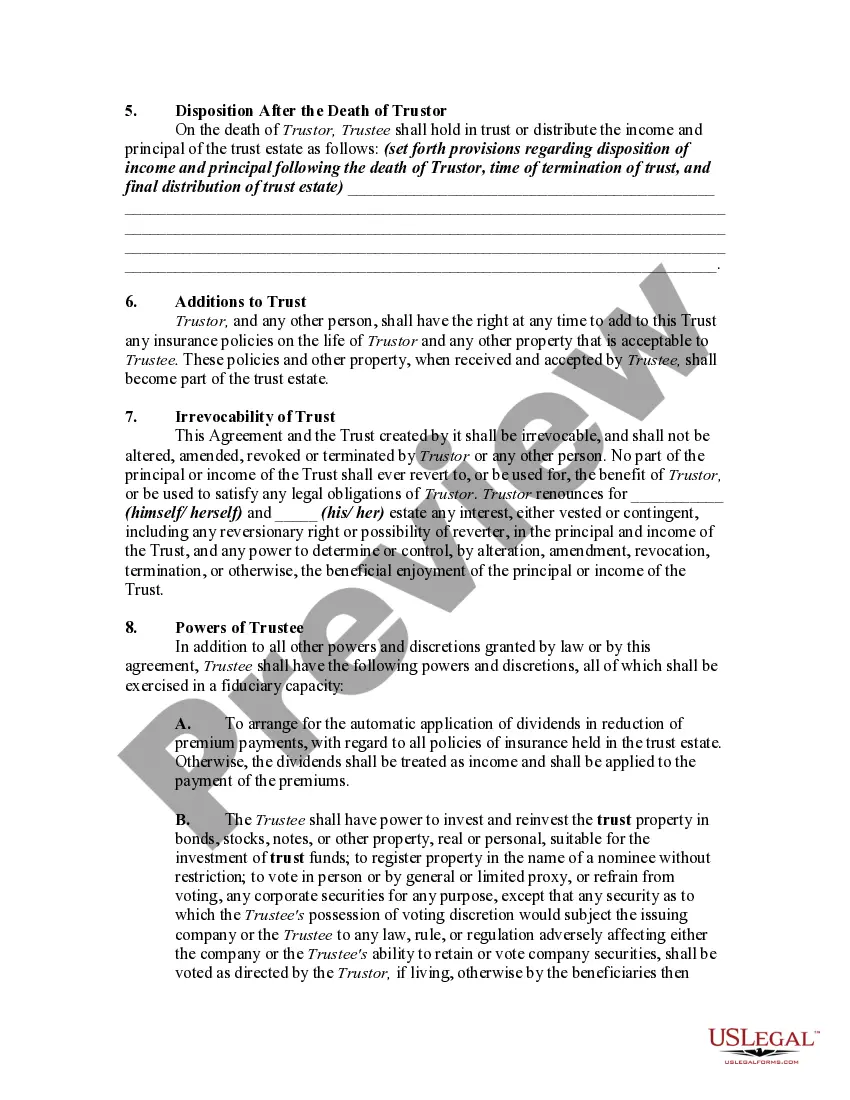
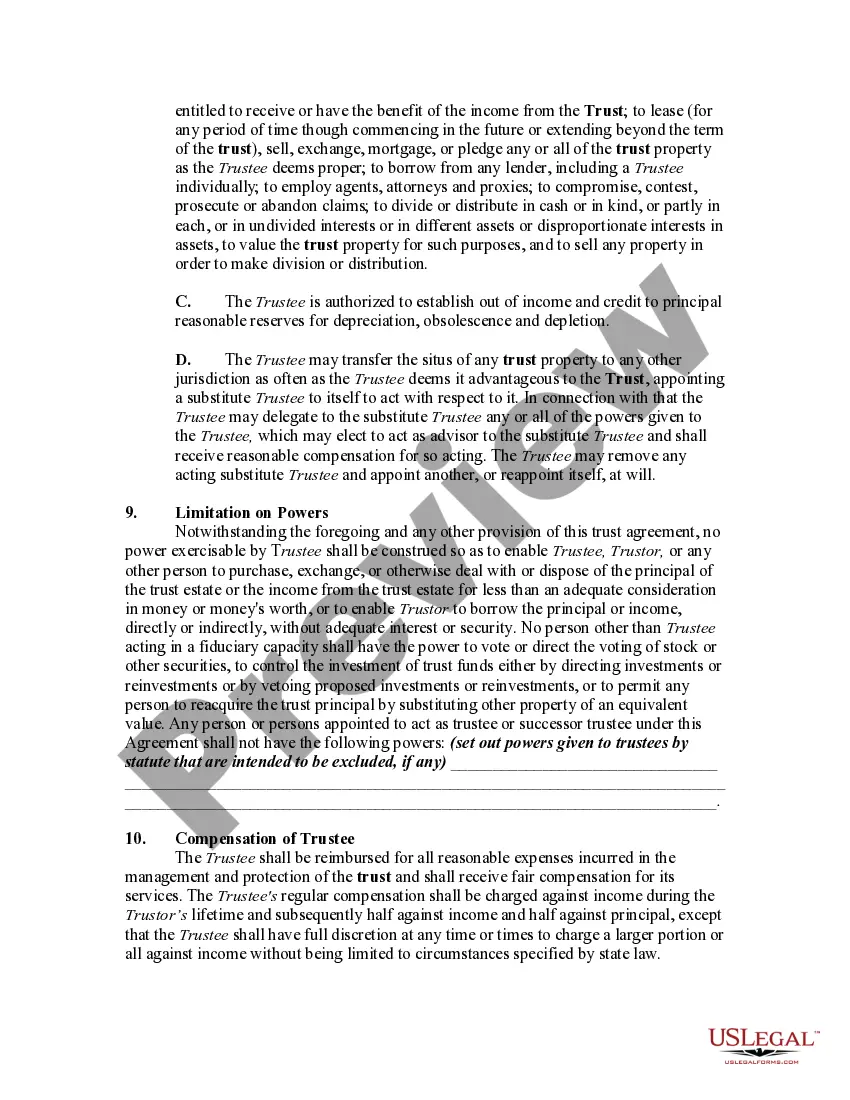



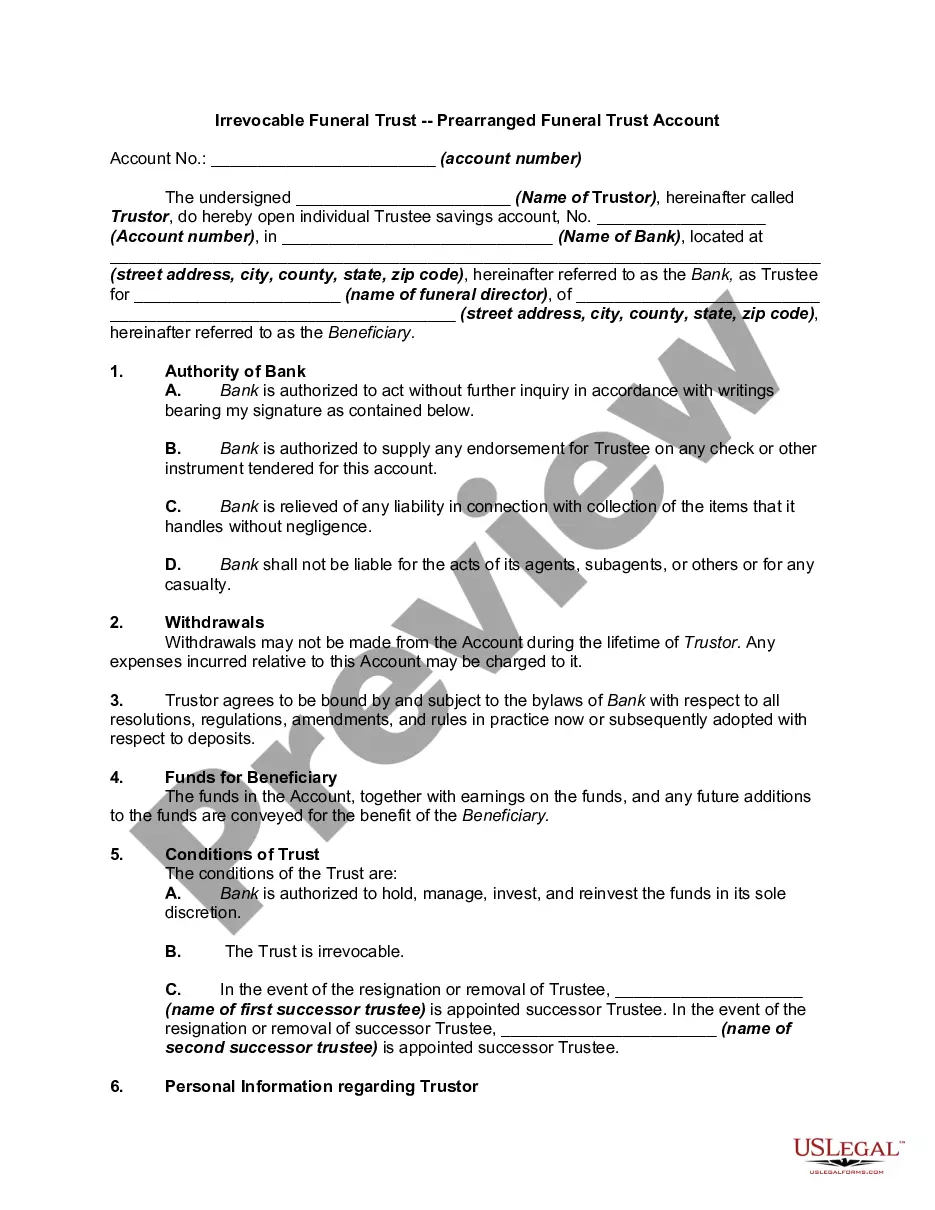
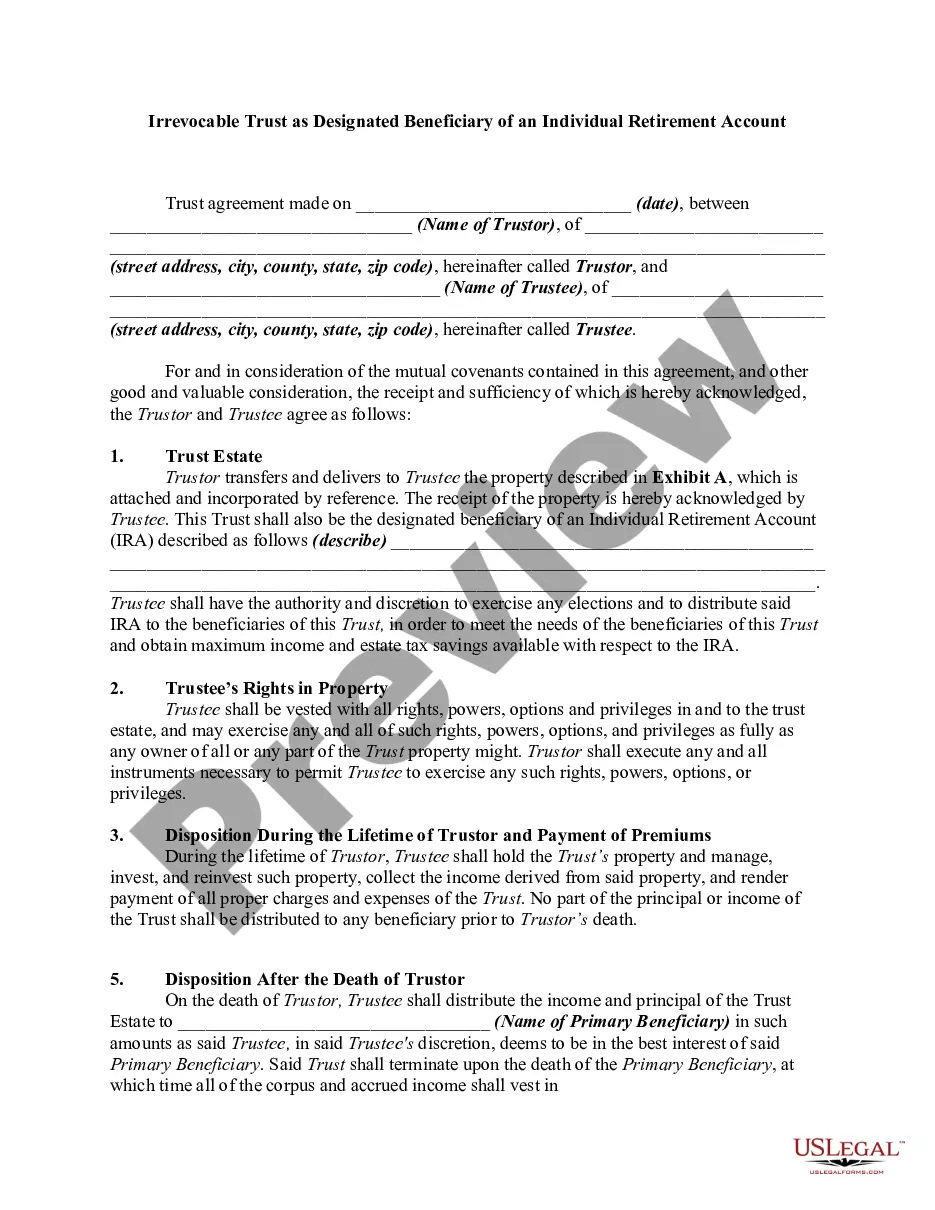

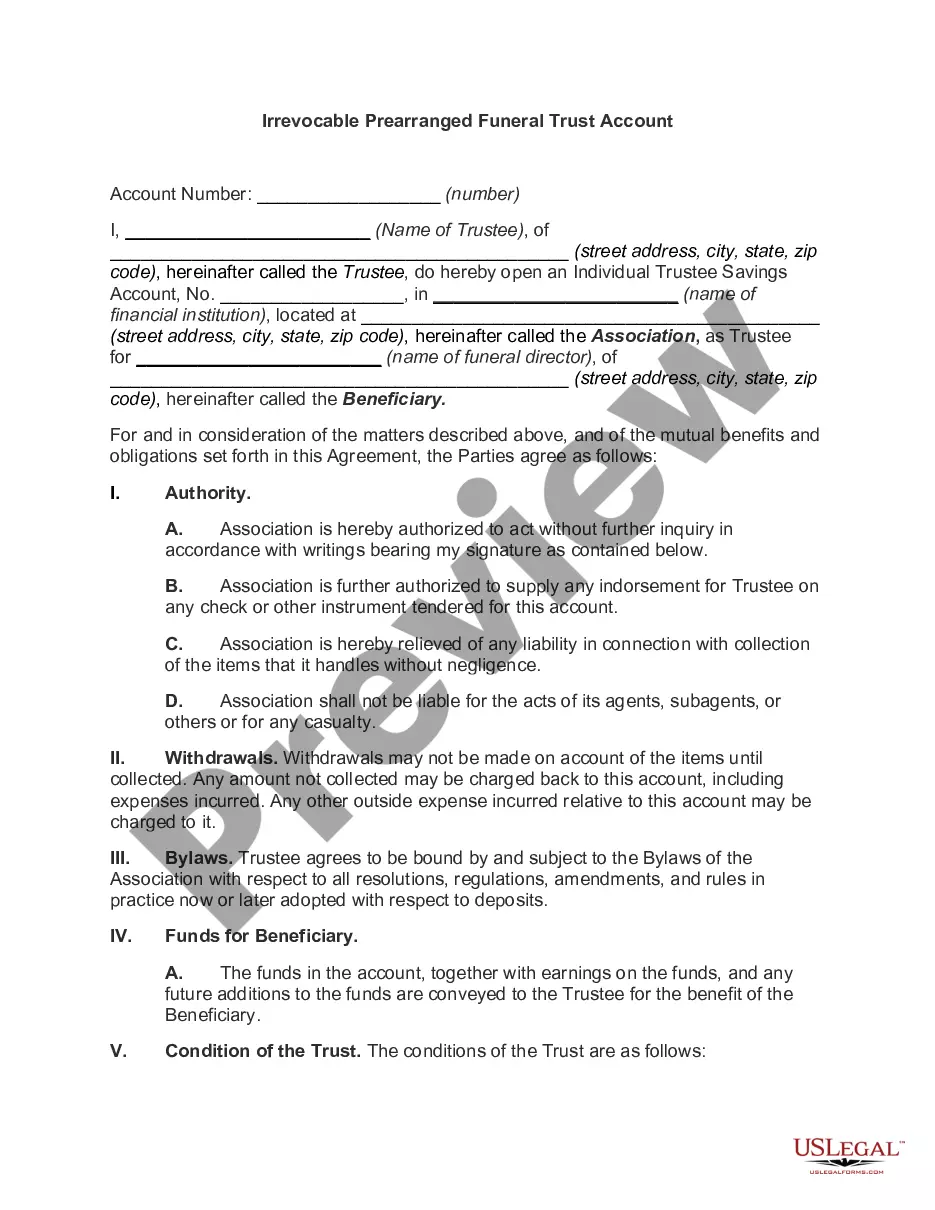
Get your form ready online
Our built-in tools help you complete, sign, share, and store your documents in one place.
Make edits, fill in missing information, and update formatting in US Legal Forms—just like you would in MS Word.
Download a copy, print it, send it by email, or mail it via USPS—whatever works best for your next step.
Sign and collect signatures with our SignNow integration. Send to multiple recipients, set reminders, and more. Go Premium to unlock E-Sign.
If this form requires notarization, complete it online through a secure video call—no need to meet a notary in person or wait for an appointment.
We protect your documents and personal data by following strict security and privacy standards.

Make edits, fill in missing information, and update formatting in US Legal Forms—just like you would in MS Word.

Download a copy, print it, send it by email, or mail it via USPS—whatever works best for your next step.

Sign and collect signatures with our SignNow integration. Send to multiple recipients, set reminders, and more. Go Premium to unlock E-Sign.

If this form requires notarization, complete it online through a secure video call—no need to meet a notary in person or wait for an appointment.

We protect your documents and personal data by following strict security and privacy standards.
Looking for another form?










How to fill out Irrevocable Trust Funded By Life Insurance?
- If you're a returning user, log in to your account and download the required template by clicking the Download button. Ensure your subscription is active; if not, renew it based on your plan.
- For first-time users, start by checking the Preview mode and description to confirm you’ve selected the correct document that aligns with your needs and jurisdiction.
- If necessary, use the Search tab to find an alternative template that fits your criteria. Confirm its suitability before proceeding.
- Purchase the document by clicking the Buy Now button and selecting your preferred subscription plan. Registration is required to access our extensive library.
- Complete your purchase by entering your credit card information or utilizing PayPal for subscription payment.
- Download your form to save it on your device. You can also access it anytime through the My Forms section of your profile.
US Legal Forms offers a robust collection of over 85,000 legal templates, more than our competitors, ensuring you find exactly what you need. Our platform allows users to access expert assistance for form completion, guaranteeing accuracy and compliance.
In conclusion, securing a life insurance trust for minors is essential for prudent financial planning. Take advantage of US Legal Forms today to create your trust with ease and confidence. Start your journey with us now!
Form popularity
FAQ
Setting up a trust for your minor child, specifically a life insurance trust for minors, involves several steps. First, you need to decide the terms of the trust, including how funds will be managed and distributed. Next, work with a legal professional to draft the trust documents. Finally, ensure the life insurance policy designates the trust as the beneficiary, which guarantees that funds will go directly to your child when needed.
Deciding whether your parents should place their assets in a trust depends on their financial situation and goals. For instance, establishing a life insurance trust for minors can ensure that funds are specifically allocated for your children’s needs. However, it’s essential to weigh both the benefits and the drawbacks. Consulting with a financial advisor or legal expert can provide clarity on the best path forward.
One downfall of having a trust, like a life insurance trust for minors, is the potential for complications in administration. Trusts require careful management and adherence to regulations, which can sometimes lead to legal disputes among beneficiaries. If the terms of the trust are not followed correctly, this can result in delays or even legal challenges. Ensuring proper setup and ongoing management is vital to avoid these issues.
A significant disadvantage of a family trust is the ongoing management requirement. The trustee must keep accurate records, manage investments, and comply with tax obligations. This ongoing responsibility can become burdensome, especially if there are multiple family members involved. Moreover, a family trust might not offer the specific benefits of a life insurance trust for minors, which is designed to protect and provide for your children directly.
The biggest mistake parents often make when establishing a trust fund, especially a life insurance trust for minors, is not clearly outlining the distribution rules. Ambiguities can lead to misunderstandings among beneficiaries. Additionally, failing to communicate about the trust's purpose and terms can leave minors confused about their financial future. It’s crucial to discuss the intentions behind the trust with all parties involved.
One downside of placing assets in a trust, like a life insurance trust for minors, is the potential loss of control over those assets. Once you transfer assets into the trust, they are managed by the trustee according to the trust's terms. This can sometimes limit your ability to change how the assets are distributed in the future. Additionally, setting up a trust can involve legal and administrative costs.
Certain individuals cannot be named as beneficiaries on a life insurance policy, including those who are legally declared incompetent or estates lacking legal representation. Additionally, if the beneficiary cannot be located, issues may arise. Setting up a life insurance trust for minors can help avoid complications, ensuring that the benefits are properly allocated to your children or dependents.
A minor child can indeed be a beneficiary of a life insurance policy. Although this is allowable, the payout will usually be held until the child reaches the age of majority. A life insurance trust for minors offers a solution to handle payouts responsibly, safeguarding the funds until your child is ready to manage them.
You can name your minor child as a beneficiary of your life insurance policy. That said, doing so means you need to plan for how the insurance proceeds will be managed until your child comes of age. Creating a life insurance trust for minors can effectively manage these funds, ensuring they are used for your child's needs.
Yes, a minor child can be named as a beneficiary on a life insurance policy. However, if the insured passes away, the minor may not receive the benefits directly until they reach a legal age. To ensure proper management of the funds for your child's benefit, consider establishing a life insurance trust for minors, which allows for careful distribution of the assets.