Surrogacy Artificial Between Within 20
Description
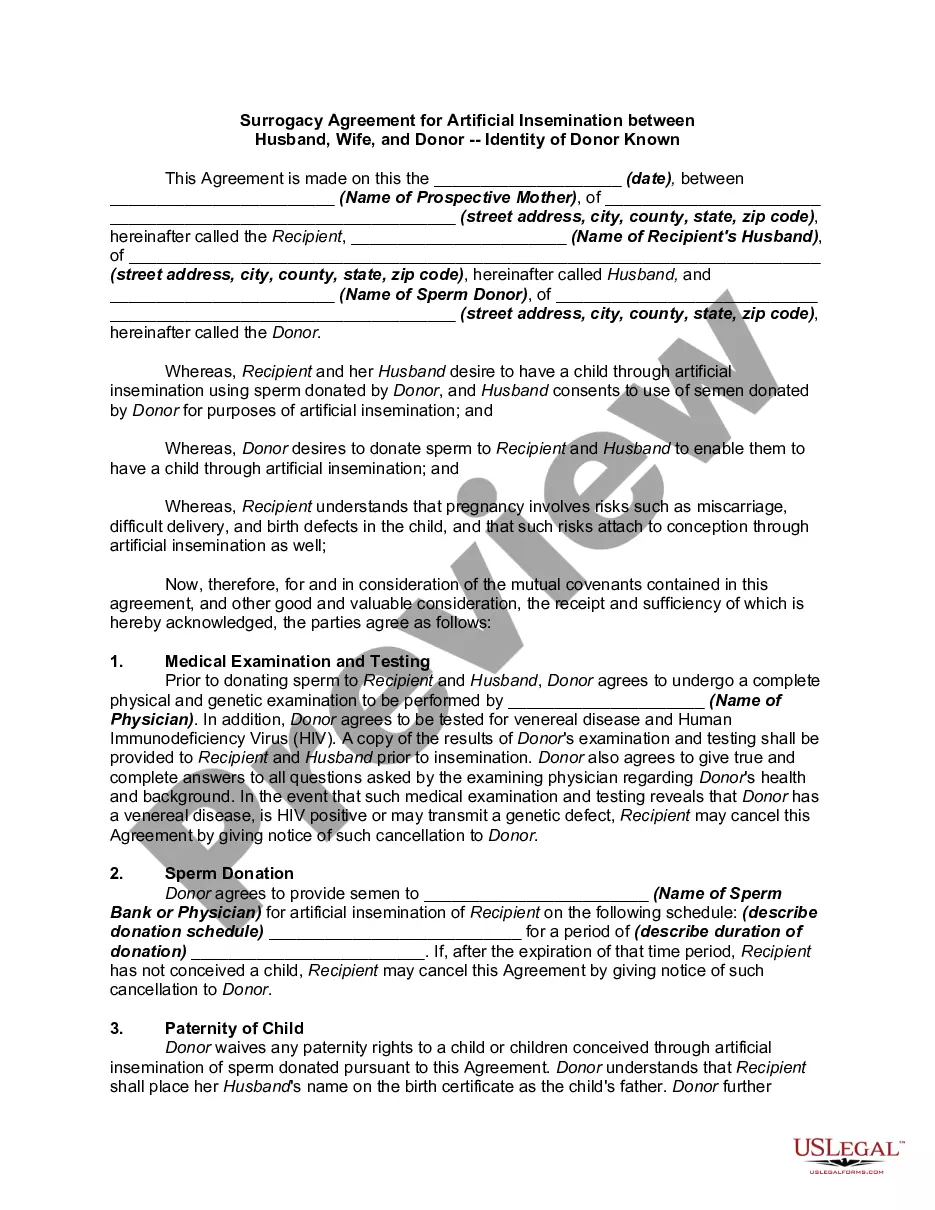


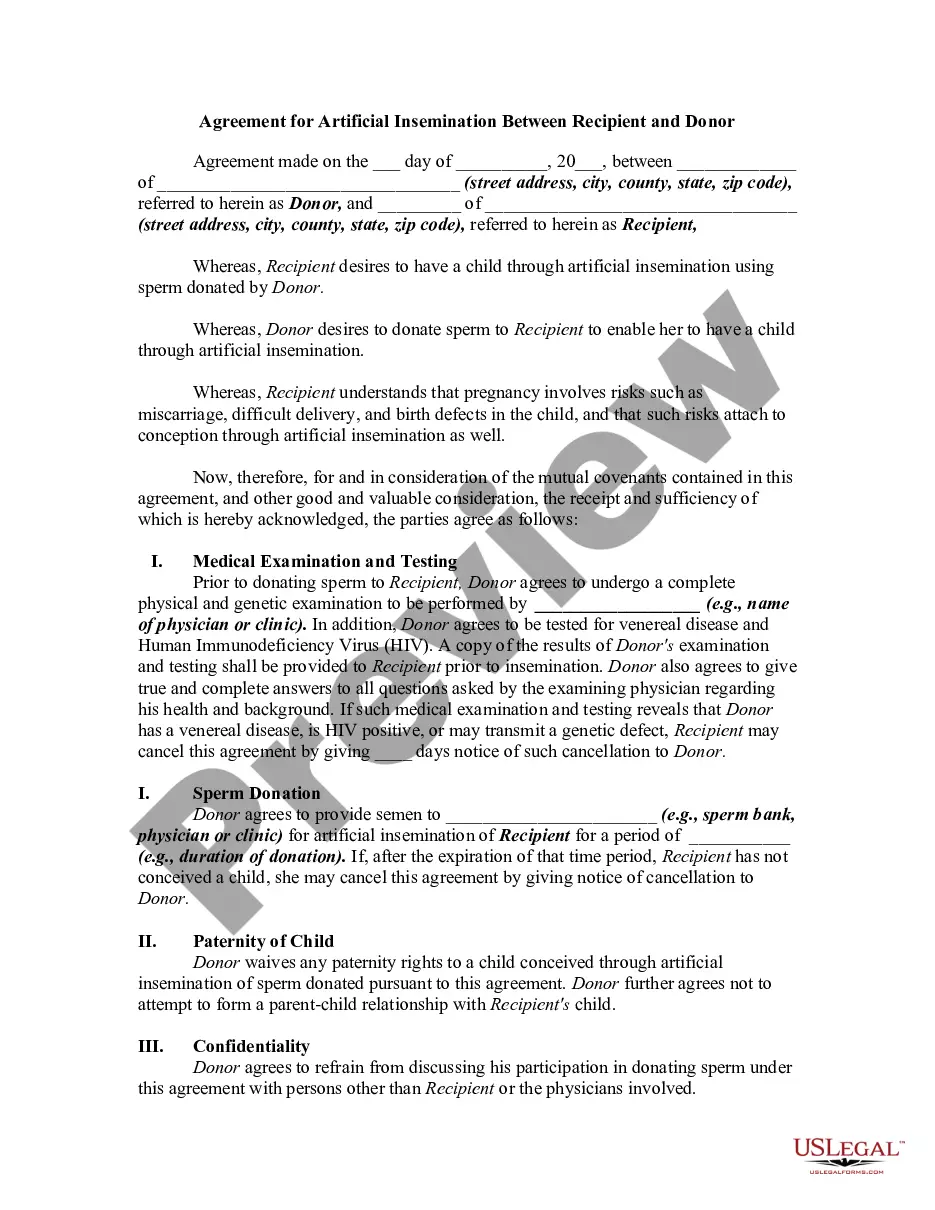

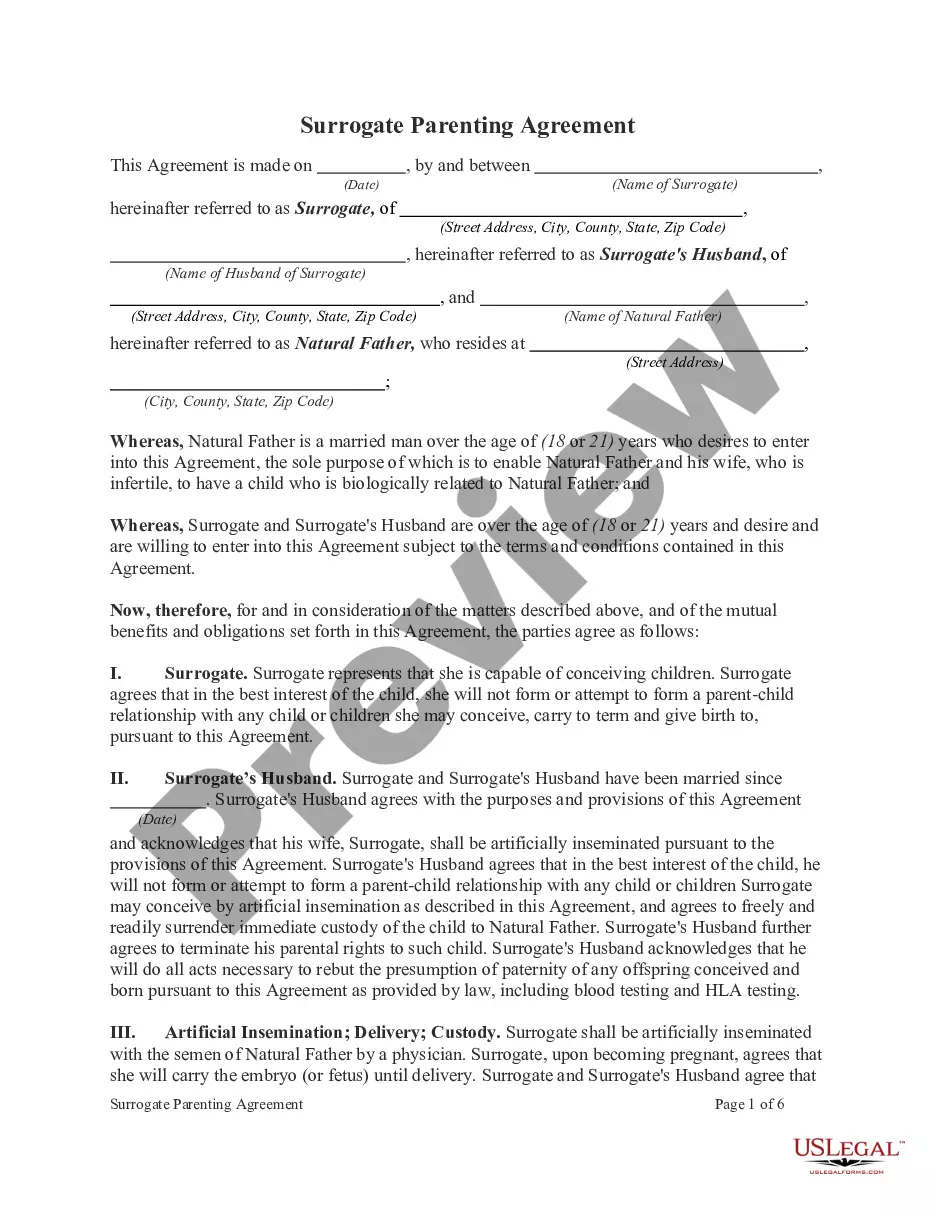









How to fill out Surrogate Or Surrogacy Agreement For Artificial Insemination Between Husband, Wife, And Donor - Identity Of Donor Known?
Legal administration can be exasperating, even for the most seasoned professionals.
When you are seeking a Surrogacy Artificial Between Within 20 and lack the time to devote to finding the correct and current version, the procedures can become stressful.
US Legal Forms addresses all your requirements, from personal to business documentation, in a single location.
Employ superior tools to complete and oversee your Surrogacy Artificial Between Within 20.
Outlined below are the steps to follow after accessing the form you need: Verify this is the correct form by previewing it and reviewing its description. Confirm that the sample is recognized in your state or county. Select Buy Now when you are ready. Choose a monthly subscription plan. Select the format you require, and Download, complete, sign, print and send your document. Take advantage of the US Legal Forms online catalogue, backed by 25 years of experience and reliability. Simplify your daily document management into an easy and user-friendly process today.
- Access a repository of articles, manuals, and resources highly pertinent to your situation and requirements.
- Conserve time and energy searching for the documents you require, and utilize US Legal Forms’ advanced search and Preview tool to obtain Surrogacy Artificial Between Within 20.
- If you hold a membership, Log In to your US Legal Forms account, locate the form, and retrieve it.
- Check the My documents tab to discover the documents you have previously downloaded and to organize your folders as you prefer.
- For first-time users of US Legal Forms, create a free account to enjoy unlimited access to all advantages of the library.
- A comprehensive web form directory could be a transformative solution for anyone wishing to navigate these circumstances efficiently.
- US Legal Forms is a leader in online legal documents, offering over 85,000 state-specific legal forms at your convenience.
- With US Legal Forms, it is feasible to access state- or county-specific legal and business documents.
Form popularity
FAQ
The father's sperm and the mother's egg create the embryo in a lab. The fertilized egg is implanted into the surrogate's uterus. The surrogate carries the pregnancy to full term. Compared to traditional surrogacies, gestational surrogacies are much more time-consuming and expensive.
There are many forms your surrogacy can take: gestational or traditional, compensated or altruistic, independent or agency-assisted, domestic or international.
Every prospective surrogate must be at least 21 years old before she can be approved for surrogacy. This minimum age requirement is set by the American Society for Reproductive Medicine, based on what experts have identified as the best indicators of success for a gestational carrier.
In most cases, when dealing with a surrogate pregnancy, the parents of the child will cover the costs not taken care of by insurance. It is common for many health insurance companies to cover the cost of the pregnancy, but covering the fertility treatments will be the responsibility of the surrogate or the donor.
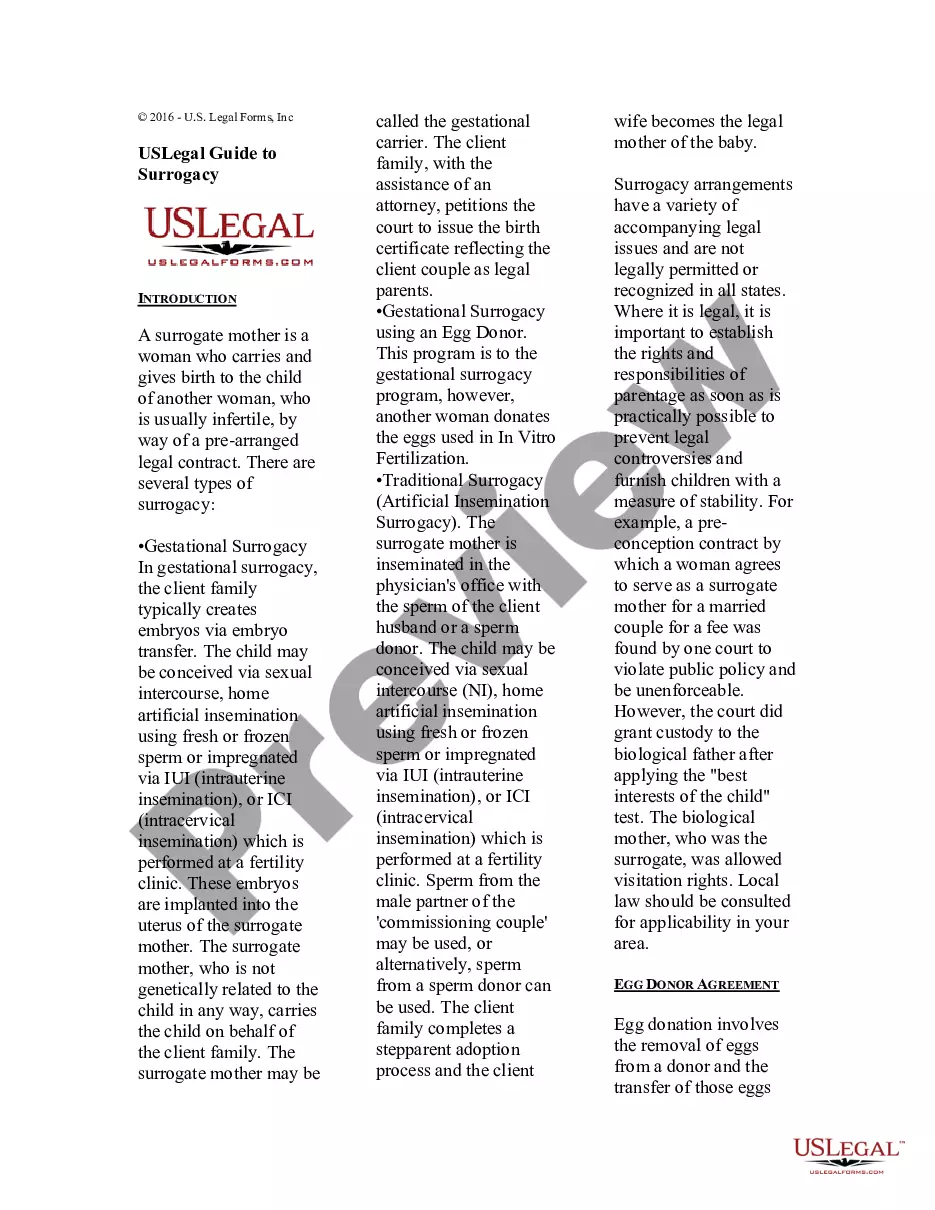
Surrogacy is of two types: traditional and gestational. Traditional (genetic/partial/straight) surrogacy is the result of artificial insemination of the surrogate mother with the intended father's sperm, making her a genetic parent along with the intended father.