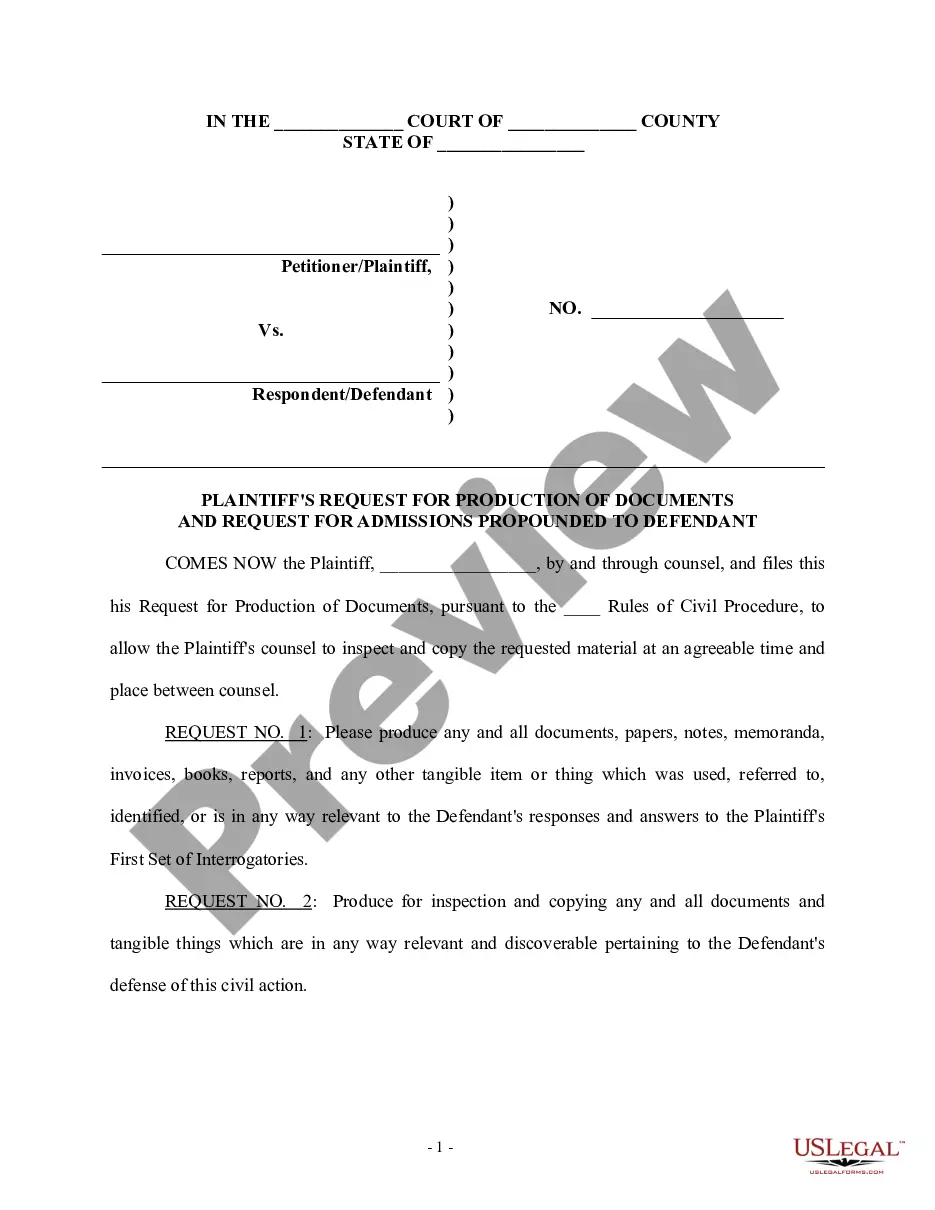
Request For Production Of Documents Sample
Description

Get your form ready online
Our built-in tools help you complete, sign, share, and store your documents in one place.
Make edits, fill in missing information, and update formatting in US Legal Forms—just like you would in MS Word.
Download a copy, print it, send it by email, or mail it via USPS—whatever works best for your next step.
Sign and collect signatures with our SignNow integration. Send to multiple recipients, set reminders, and more. Go Premium to unlock E-Sign.
If this form requires notarization, complete it online through a secure video call—no need to meet a notary in person or wait for an appointment.
We protect your documents and personal data by following strict security and privacy standards.

Make edits, fill in missing information, and update formatting in US Legal Forms—just like you would in MS Word.

Download a copy, print it, send it by email, or mail it via USPS—whatever works best for your next step.

Sign and collect signatures with our SignNow integration. Send to multiple recipients, set reminders, and more. Go Premium to unlock E-Sign.

If this form requires notarization, complete it online through a secure video call—no need to meet a notary in person or wait for an appointment.

We protect your documents and personal data by following strict security and privacy standards.
Looking for another form?

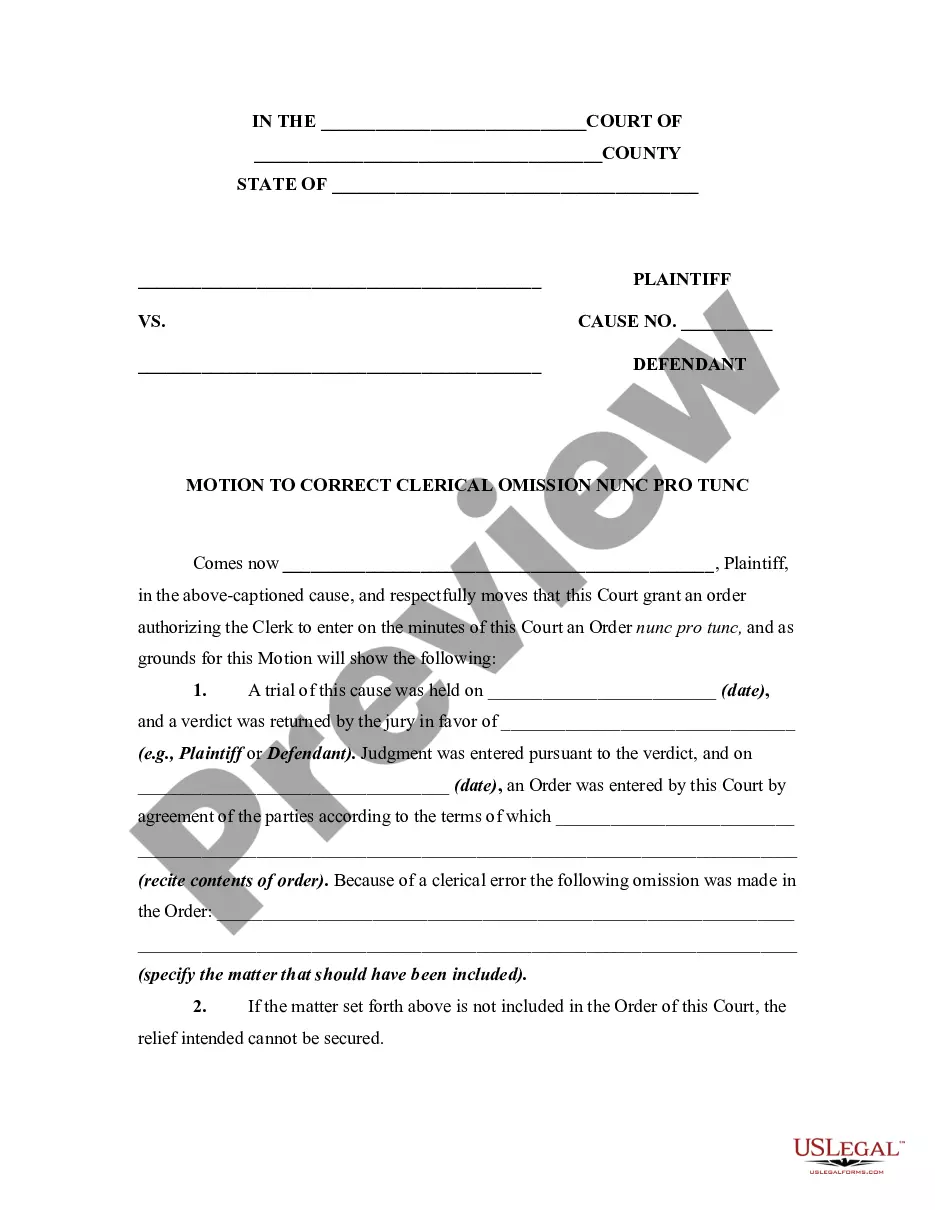
How to fill out Request For Production Of Documents?
Regardless of whether for commercial reasons or personal issues, everyone must confront legal circumstances eventually in their lives. Completing legal documentation demands meticulous care, starting from selecting the correct form template. For example, if you choose an incorrect version of the Request For Production Of Documents Sample, it will be rejected once submitted. Thus, it is crucial to have a reliable source of legal documents like US Legal Forms.
If you need to obtain a Request For Production Of Documents Sample template, adhere to these straightforward steps: Find the template you need using the search box or catalog navigation. Review the form’s details to ensure it aligns with your circumstances, state, and area. Click on the form’s preview to examine it. If it is the incorrect document, return to the search feature to locate the Request For Production Of Documents Sample that you require. Download the template if it meets your specifications. If you already possess a US Legal Forms account, simply click Log in to access previously saved templates in My documents. Should you not have an account yet, you may download the form by clicking Buy now. Select the suitable pricing option. Complete the account registration form. Choose your payment method: use a credit card or PayPal account. Select the document format you prefer and download the Request For Production Of Documents Sample. Once it is downloaded, you can complete the form using editing software or print it and finish it manually.
- With a vast US Legal Forms catalog available, you do not need to waste time searching for the suitable template across the internet.
- Utilize the library’s intuitive navigation to find the right form for any circumstance.
Form popularity
FAQ
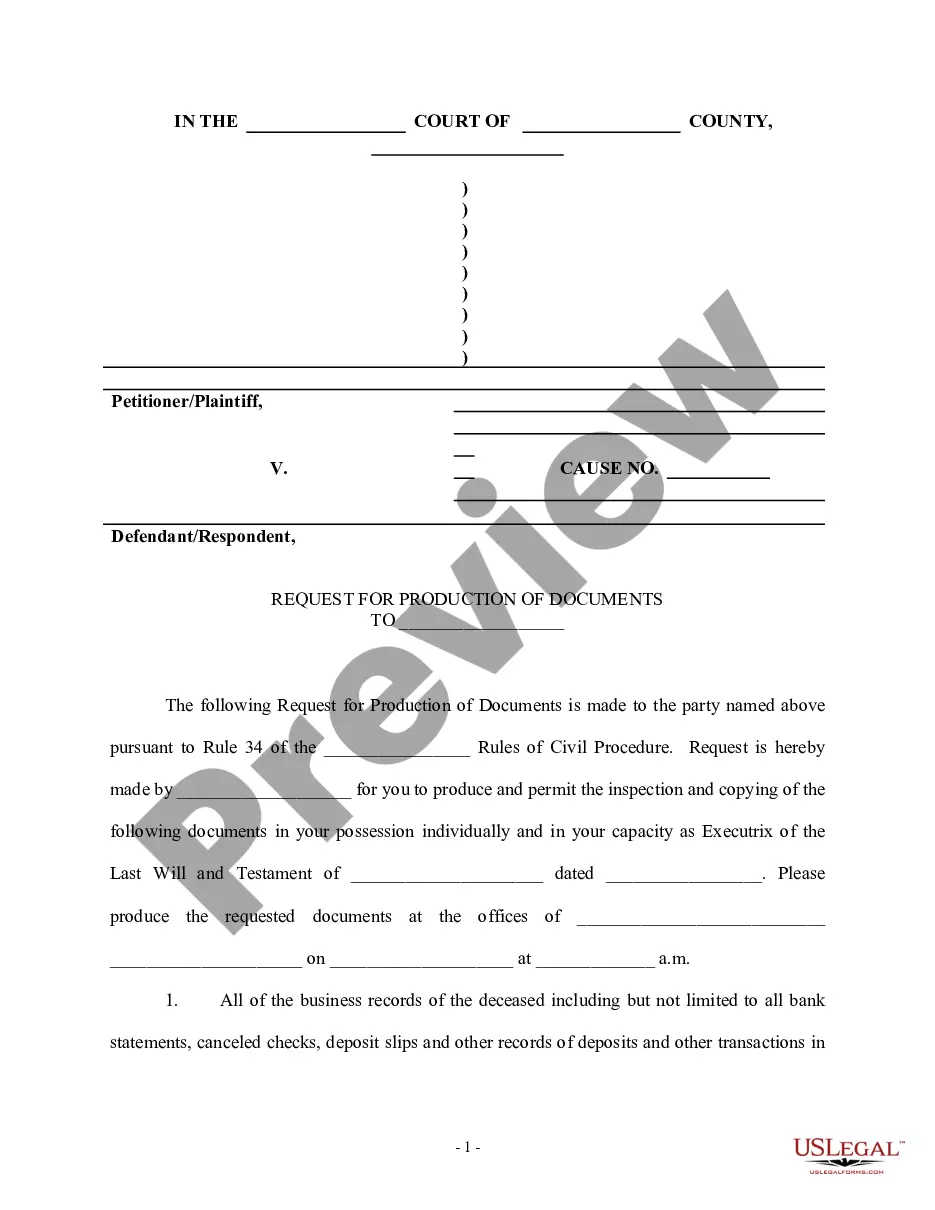
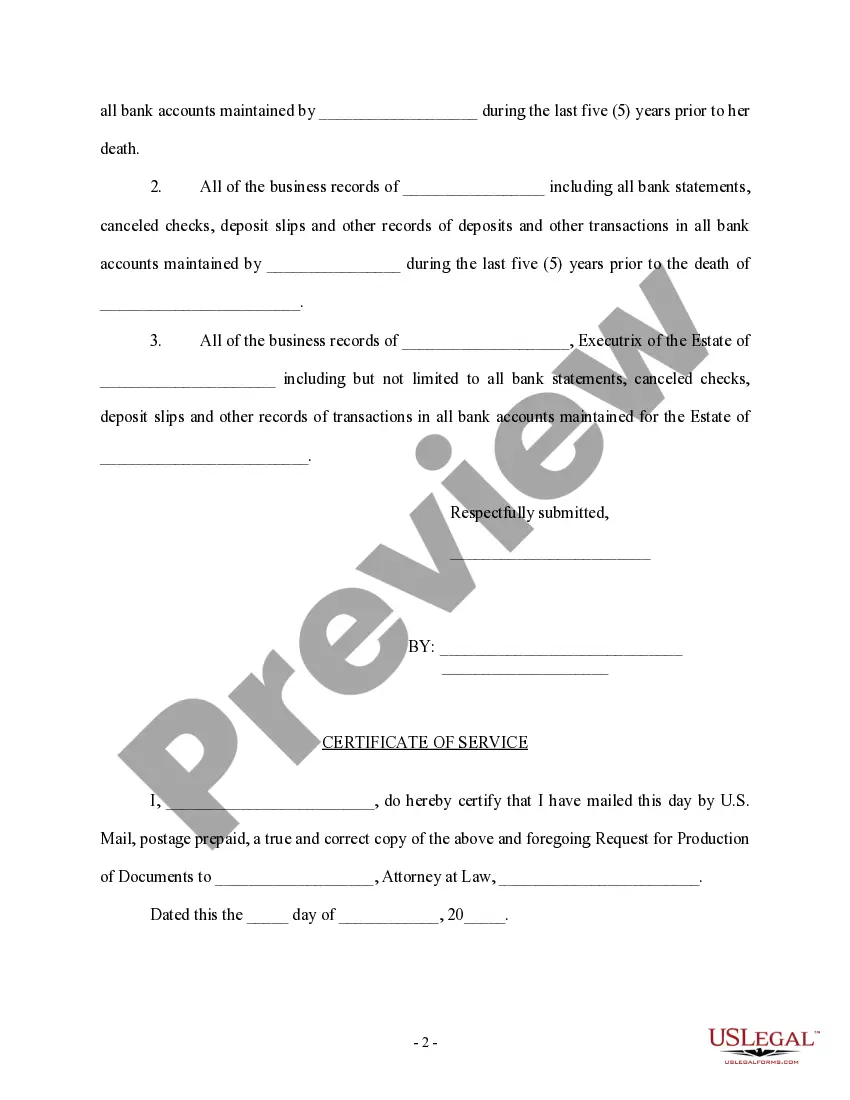
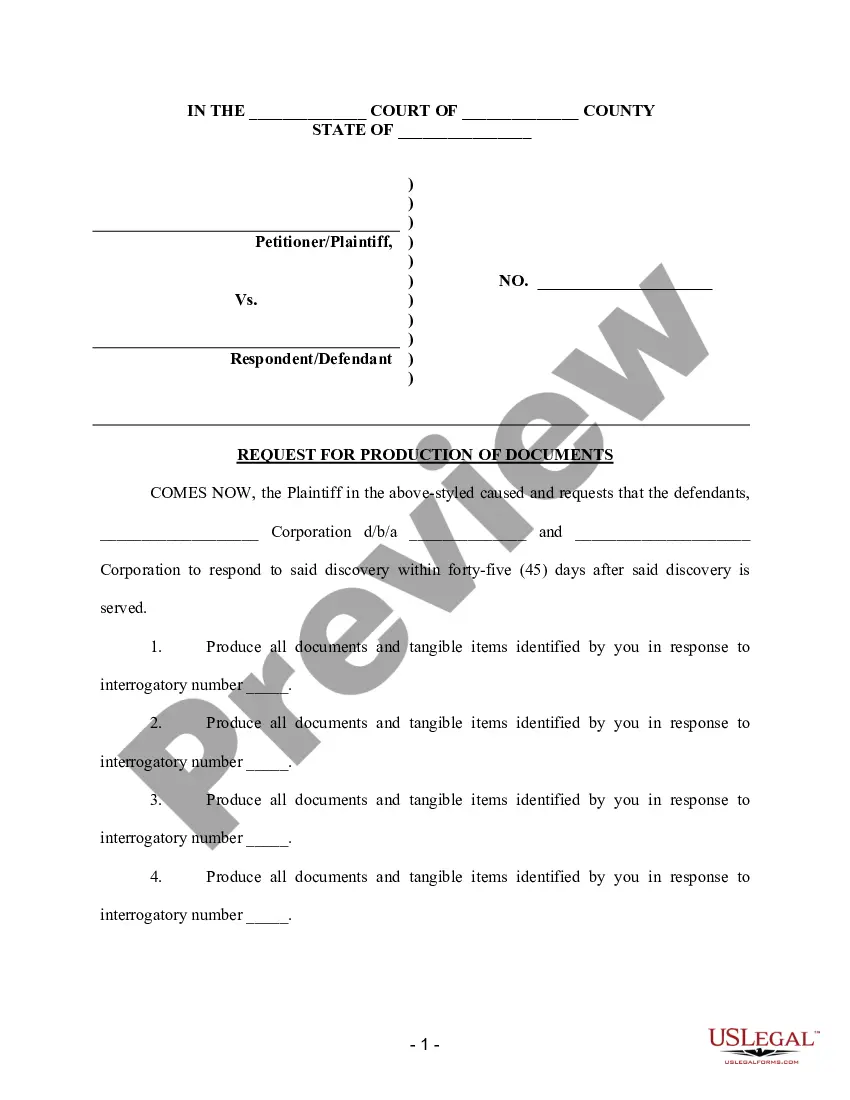
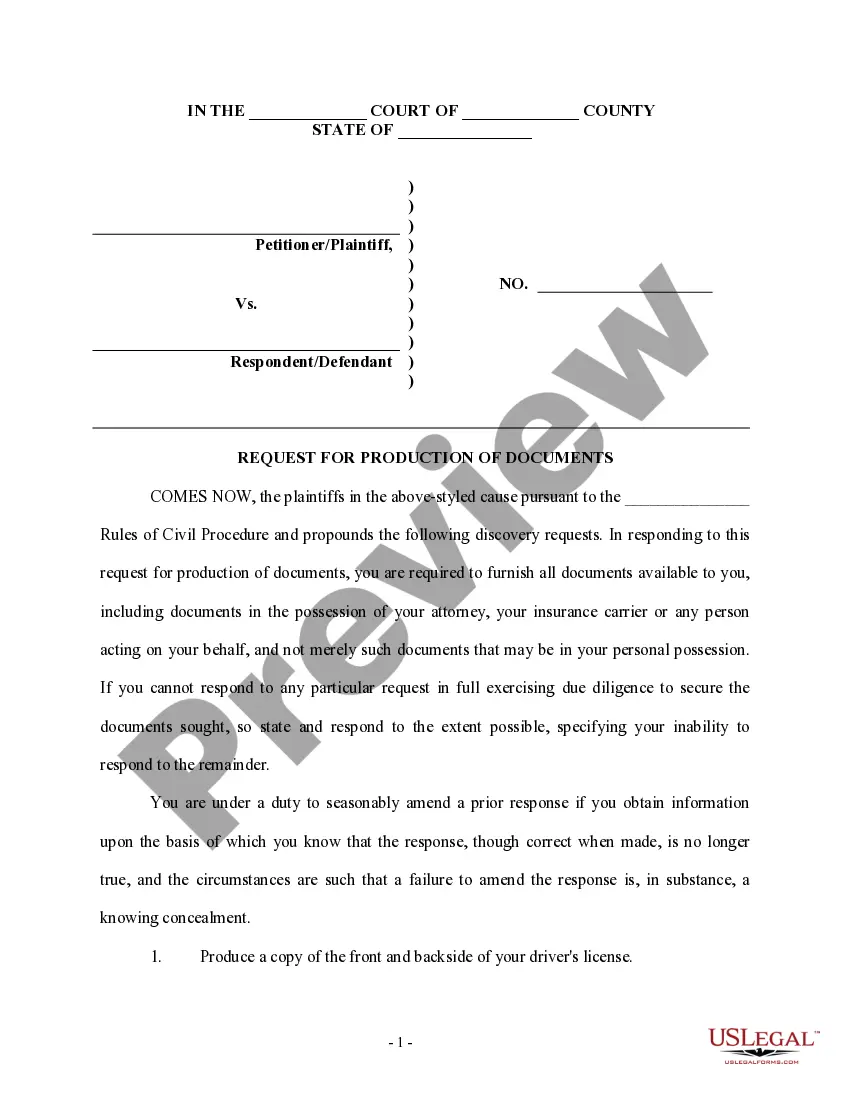
To write a request for documents, start by clearly stating your intent and specifying the documents you seek. Use straightforward language and ensure that your request is concise yet comprehensive. Follow relevant legal formats and guidelines to enhance clarity and compliance. A request for production of documents sample could provide a helpful framework, making it easier for you to draft an effective request.
A Rule 34 request for production of documents refers to a procedure under the Federal Rules of Civil Procedure, allowing a party to request documents from another party. This rule is pivotal in the discovery phase of litigation, enabling parties to gather evidence. Understanding Rule 34 can enhance your legal strategy, and consulting a request for production of documents sample may clarify how to effectively utilize this rule.
Filing a request for production of documents involves drafting the request according to court rules and the specific case requirements. Ensure you clearly identify the documents you seek and provide a timeframe for compliance. After preparing your request, file it with the appropriate court and serve it to the opposing party. Using a request for production of documents sample can streamline this process and help you avoid common pitfalls.
To answer a request for production of documents, first review the specific documents sought. Determine if you possess the requested items or if they exist in another form. Next, gather the documents that are relevant and prepare a written response outlining what you will provide. Utilizing a request for production of documents sample can help ensure your response is complete and compliant with legal standards.
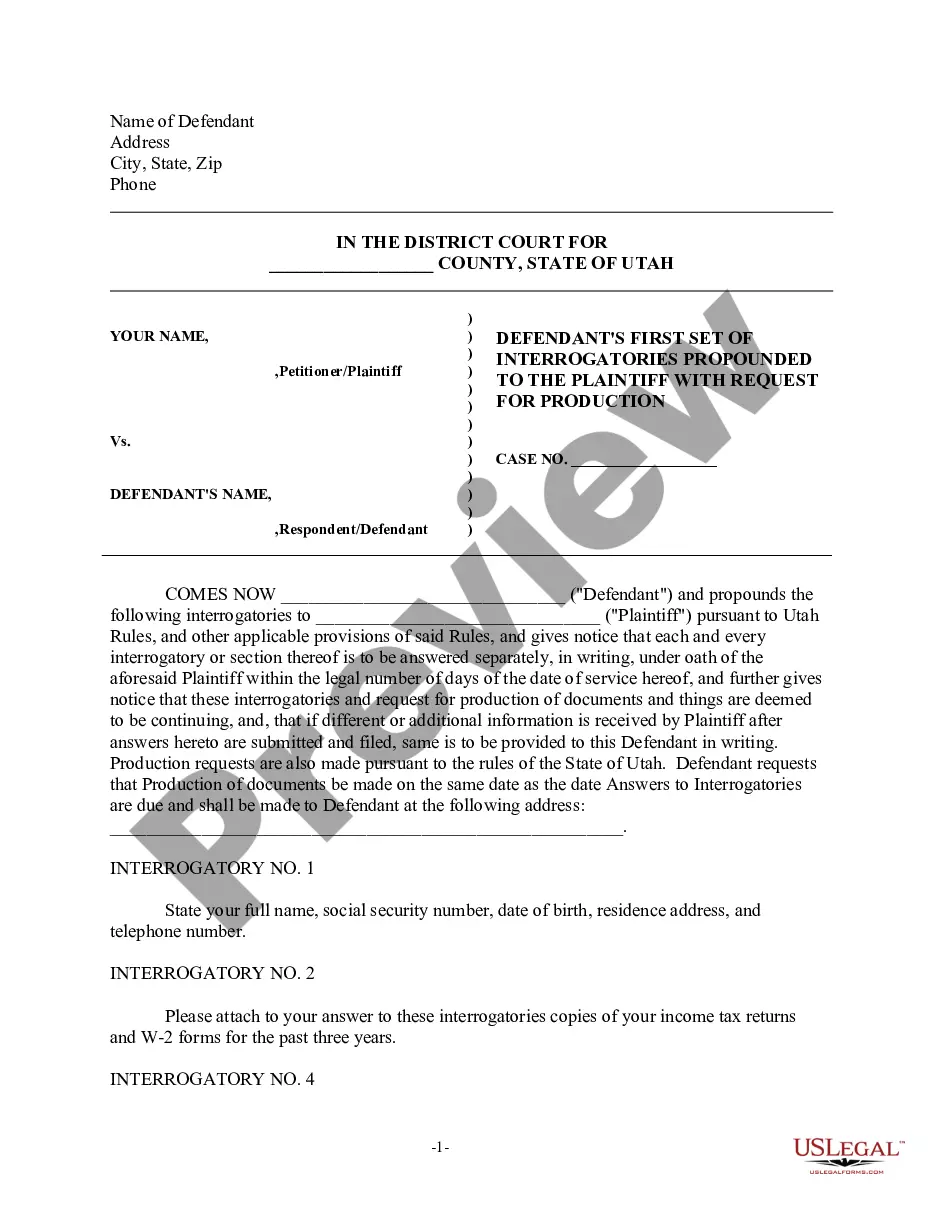
Answer. Requests for the Production of Documents. Definition: A written list of documents, electronic files, and audio and video recordings or physical things, submitted to a party from his or her adversary to inspect and copy the requested items and that have relevance to the issues in a lawsuit.
How to Request Production of Documents and Things Download the template for Request for Production. ... Fill out basic information at the top. ... Choose a location for the other side to bring the documents. ... Add your own definitions (if useful) ... Write your requests for production. ... Sign and date the document. ... Make copies.
The request is vague, ambiguous, or unintelligible. Sometimes, it is impossible to determine what the propounding party is asking you to produce. In these situations, you may object to the request on the grounds that it is vague, ambiguous, or unintelligible.
A request for production occurs when one party asks another to procure ESI or physical evidence. For example, this may include emails, photographs, text messages, charts, or graphs. On the other hand, physical evidence may encompass items like paper and gifted objects.
The process of delivering, or making available for review, documents produced during litigation or in response to a request for documents from a regulatory or other body. Discoverable documents in litigation may include both paper (hard copy) documents and electronically stored information (ESI).