Consent Letter For Llc With Irs
Description
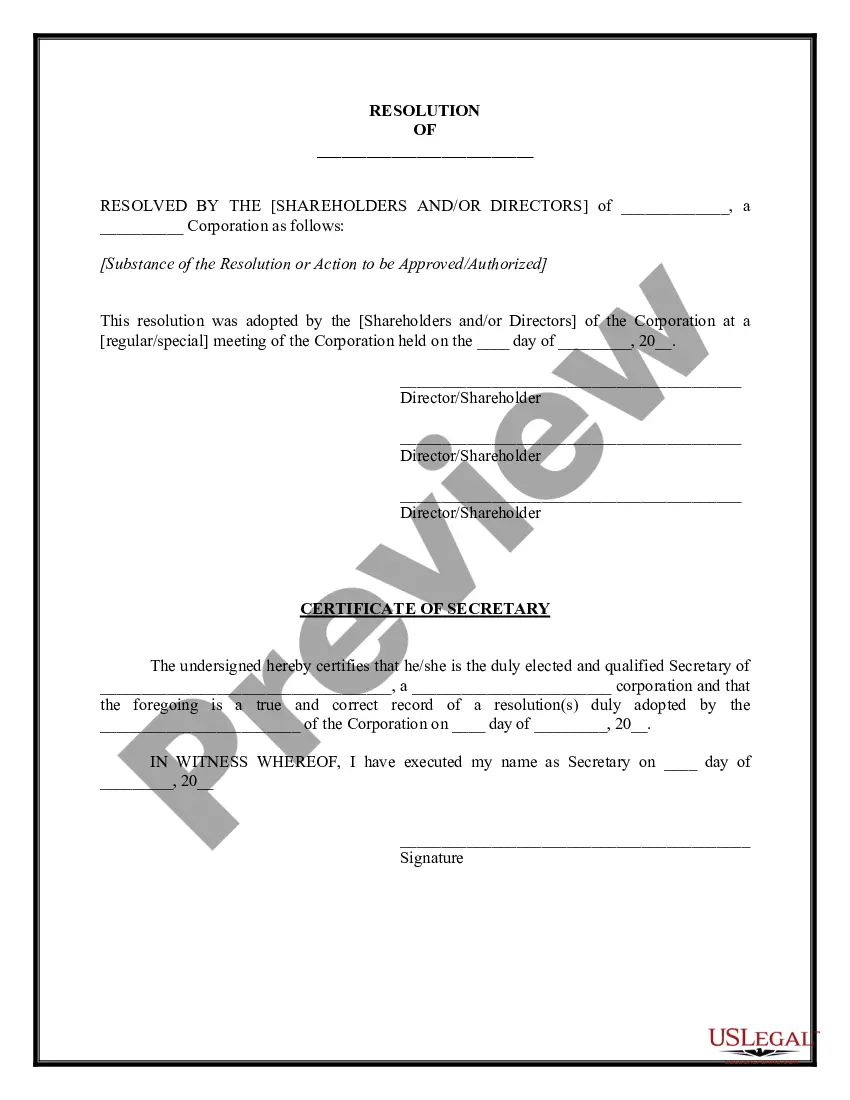
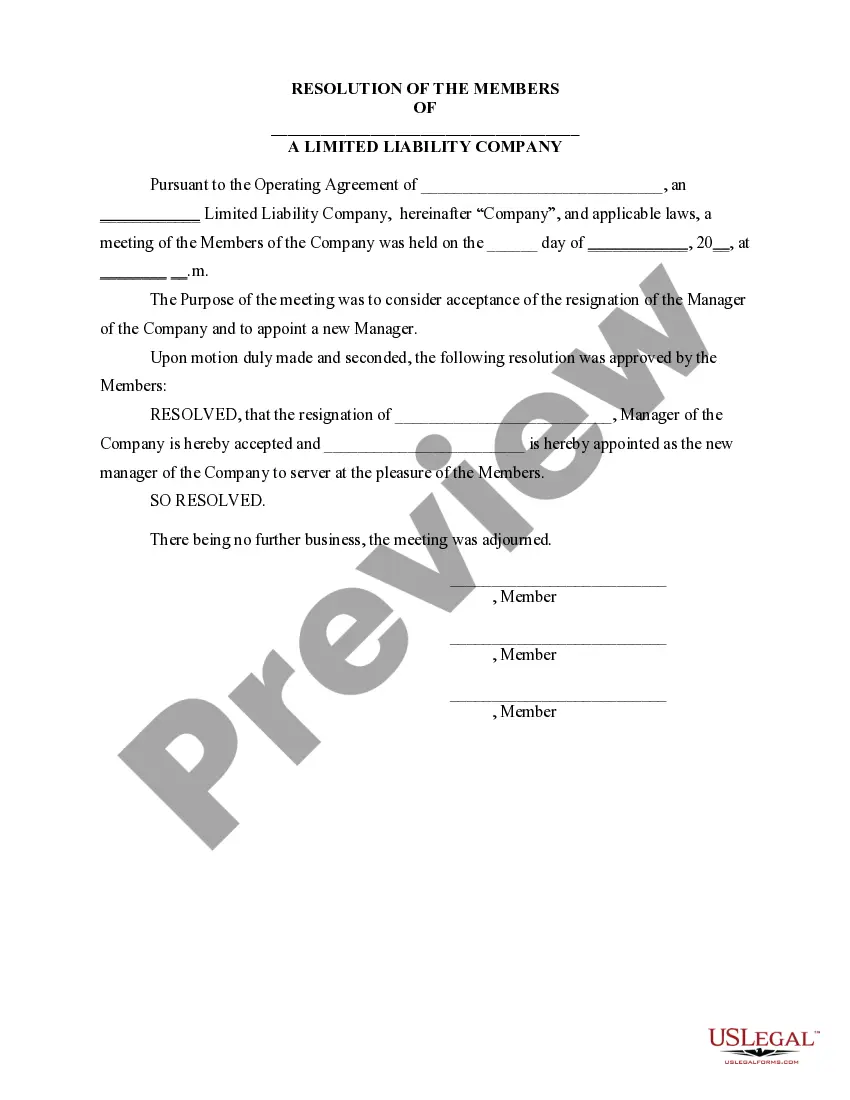



How to fill out Unanimous Consent To Action By Sole Member Of A Limited Liability Company, In Lieu Of A Meeting, Accepting And Appointing A New Member?
It’s widely known that one cannot transform into a legal expert in a day, nor can one swiftly learn how to draft a Consent Letter For Llc With Irs without a specific educational background.
Drafting legal documents is a lengthy process that demands certain knowledge and expertise. So why not entrust the drafting of the Consent Letter For Llc With Irs to the professionals.
With US Legal Forms, which boasts one of the most comprehensive libraries of legal templates, you can find everything from court documents to templates for corporate internal communication.
If you need a different form, restart your search.
Create a free account and choose a subscription plan to purchase the template. Select Buy now. After payment is finalized, you can access the Consent Letter For Llc With Irs, complete it, print it, and send it via post to the appropriate individuals or organizations.
- We recognize how crucial compliance with federal and state regulations is.
- That’s why all templates on our platform are tailored to specific locations and kept current.
- To get started with our platform and obtain the form you need in just a few minutes.
- Locate the document you require using the search bar at the top of the page.
- If available, preview it and review the accompanying description to determine if the Consent Letter For Llc With Irs meets your needs.
Form popularity
FAQ
Write to explain why you disagree and include any information and documents you want the IRS to consider. Mail your reply to the address shown in the letter along with the bottom tear-off portion of the letter, if provided. Keep copies of any correspondence with your tax records.
Use Form 4506-C to request tax return information through an authorized IVES participant. You will designate an IVES participant to receive the information on line 5a. Note: If you are unsure of which type of transcript you need, check with the party requesting your tax information.
File Form 8821 to: Authorize any individual, corporation, firm, organization, or partnership you designate to inspect and/or receive your confidential information verbally or in writing for the type of tax and the years or periods listed on the form. Delete or revoke prior tax information authorizations.
Instead, you should try to be polite and professional. You should also include your name, contact information, and the reason for writing. You can also include any relevant documents that support your request such as transcripts or income tax filings.
Tax Information Authorization You can use Form 8821 to allow the IRS to discuss your tax matters with designated third parties and, where necessary, to disclose your confidential tax return information to those designated third parties on matters other than just the processing of your current tax return.