Trust Beneficiary For 401k
Description
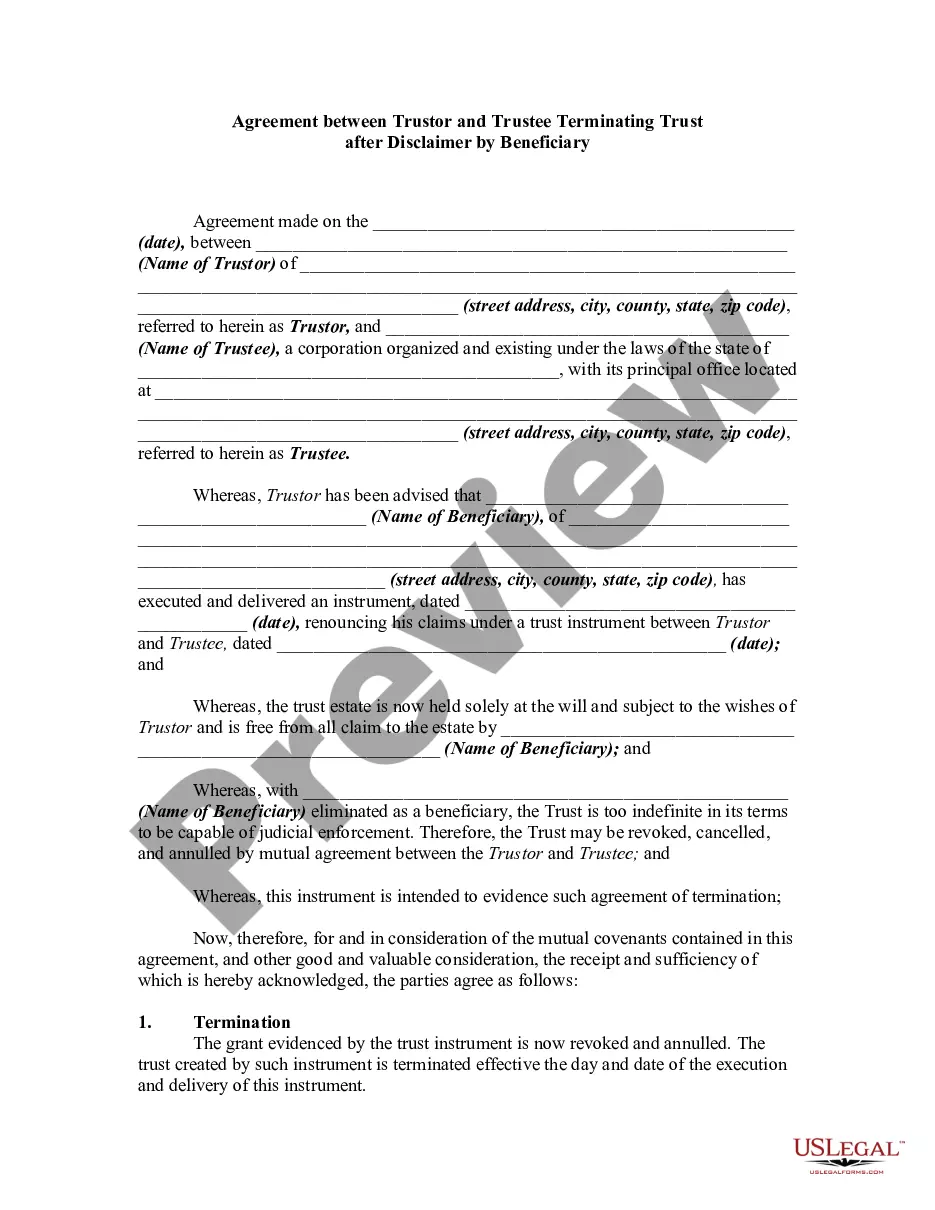
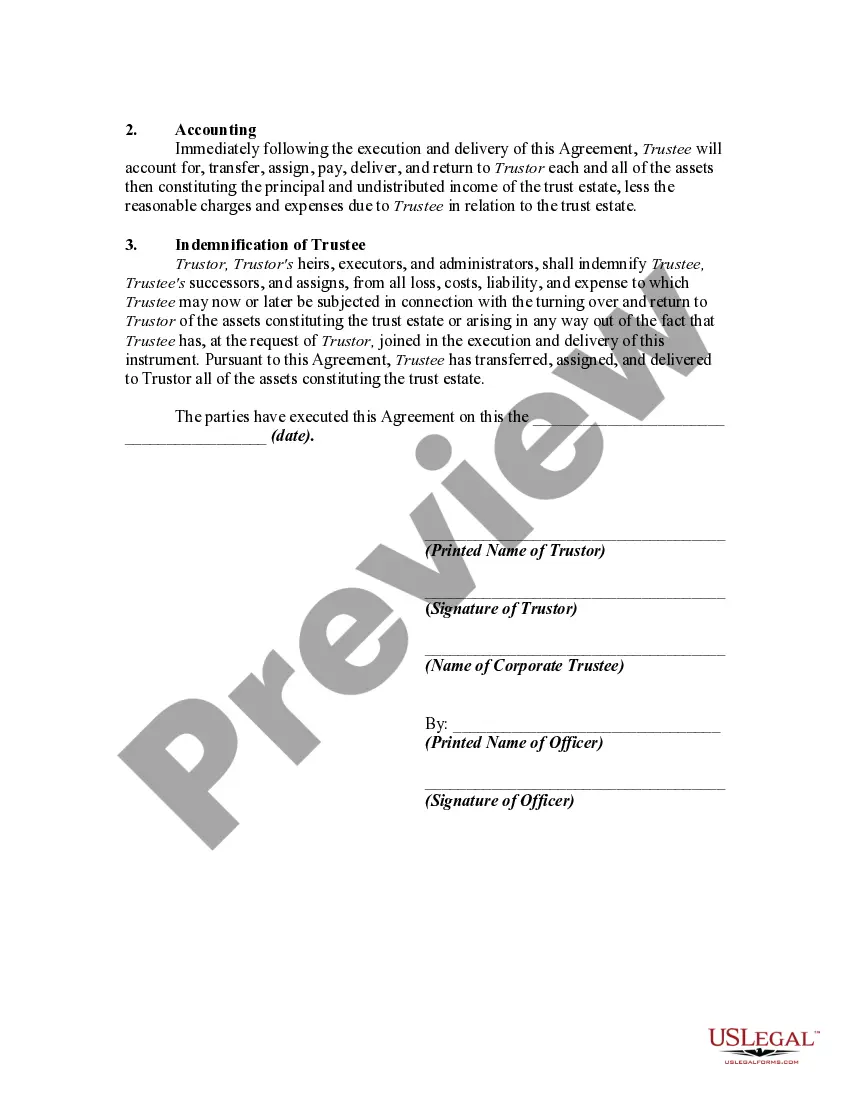
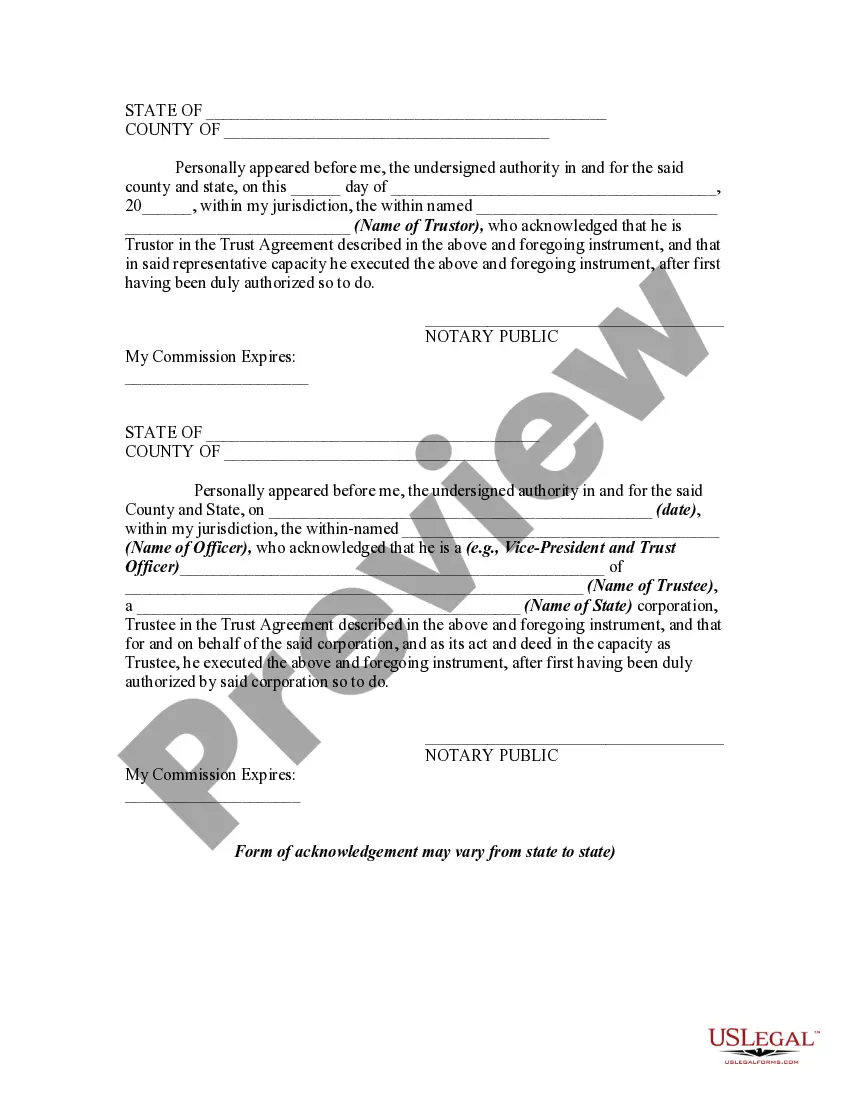
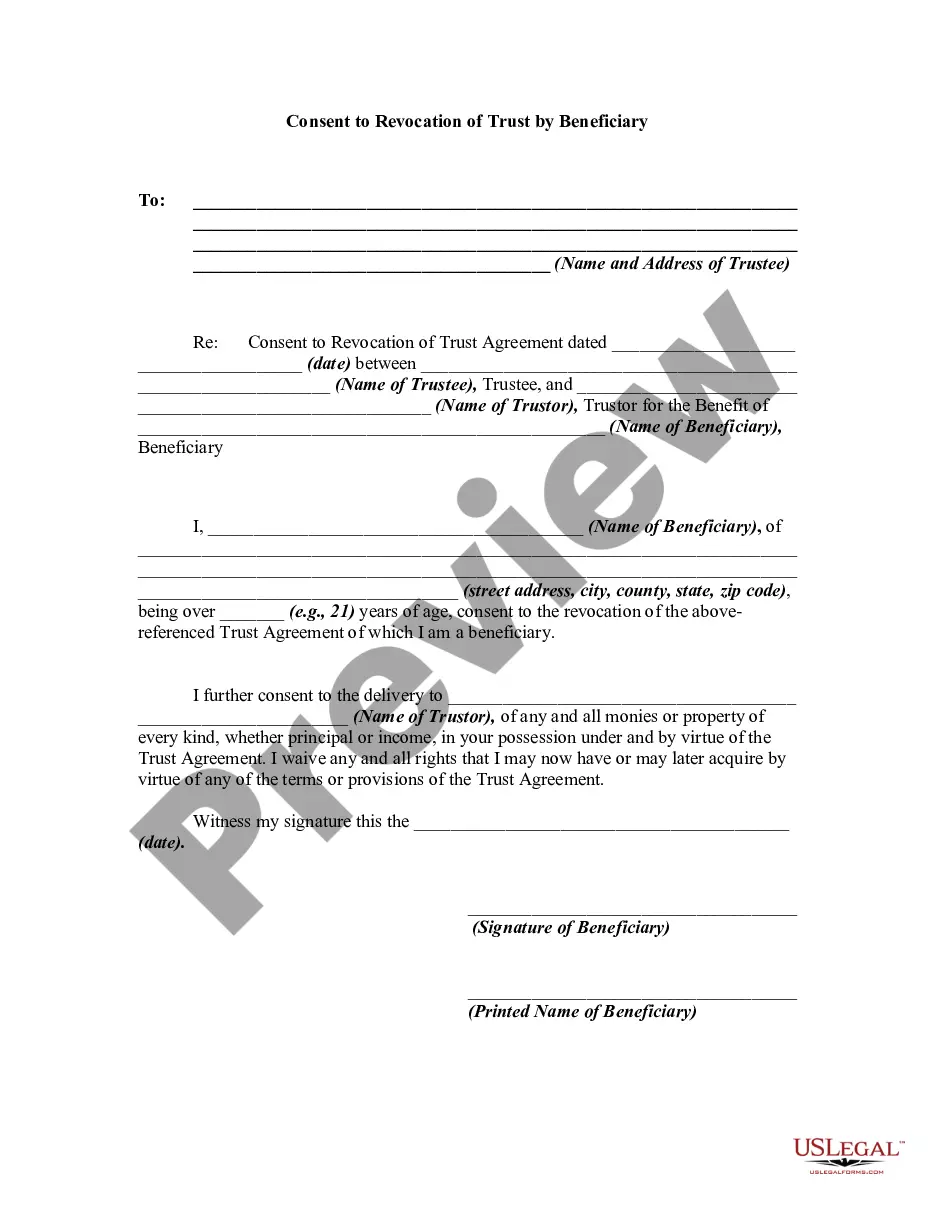
Get your form ready online
Our built-in tools help you complete, sign, share, and store your documents in one place.
Make edits, fill in missing information, and update formatting in US Legal Forms—just like you would in MS Word.
Download a copy, print it, send it by email, or mail it via USPS—whatever works best for your next step.
Sign and collect signatures with our SignNow integration. Send to multiple recipients, set reminders, and more. Go Premium to unlock E-Sign.
If this form requires notarization, complete it online through a secure video call—no need to meet a notary in person or wait for an appointment.
We protect your documents and personal data by following strict security and privacy standards.

Make edits, fill in missing information, and update formatting in US Legal Forms—just like you would in MS Word.

Download a copy, print it, send it by email, or mail it via USPS—whatever works best for your next step.

Sign and collect signatures with our SignNow integration. Send to multiple recipients, set reminders, and more. Go Premium to unlock E-Sign.

If this form requires notarization, complete it online through a secure video call—no need to meet a notary in person or wait for an appointment.

We protect your documents and personal data by following strict security and privacy standards.
Looking for another form?










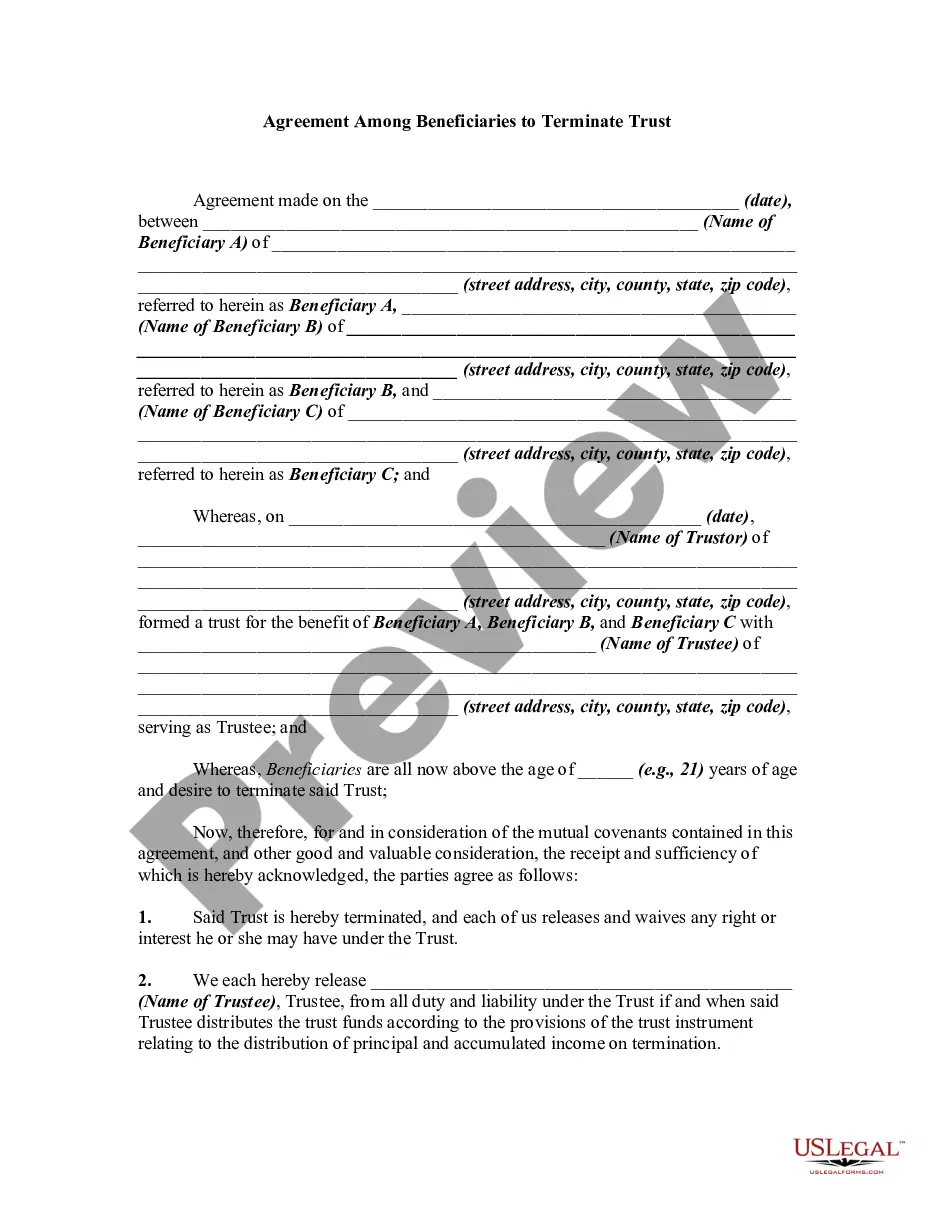
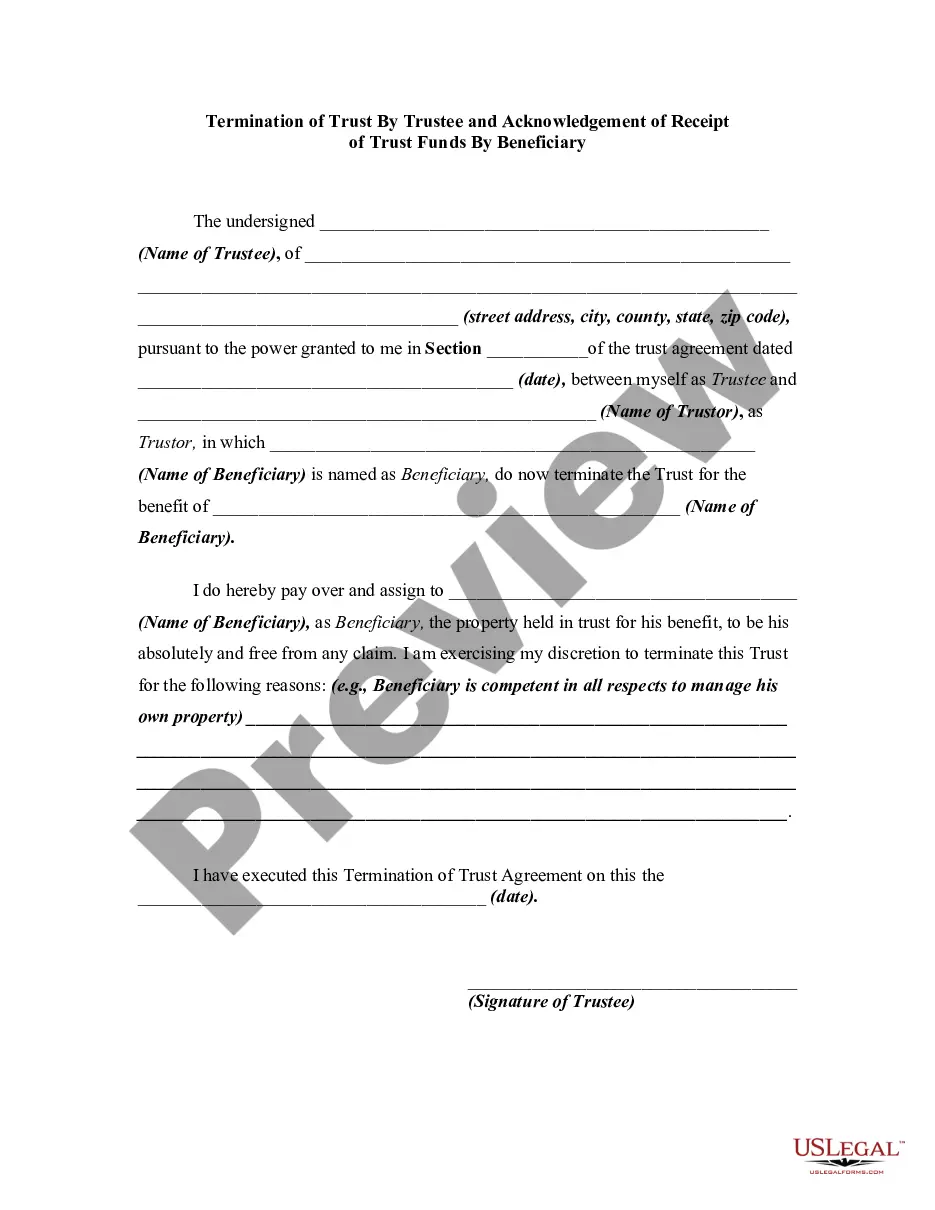
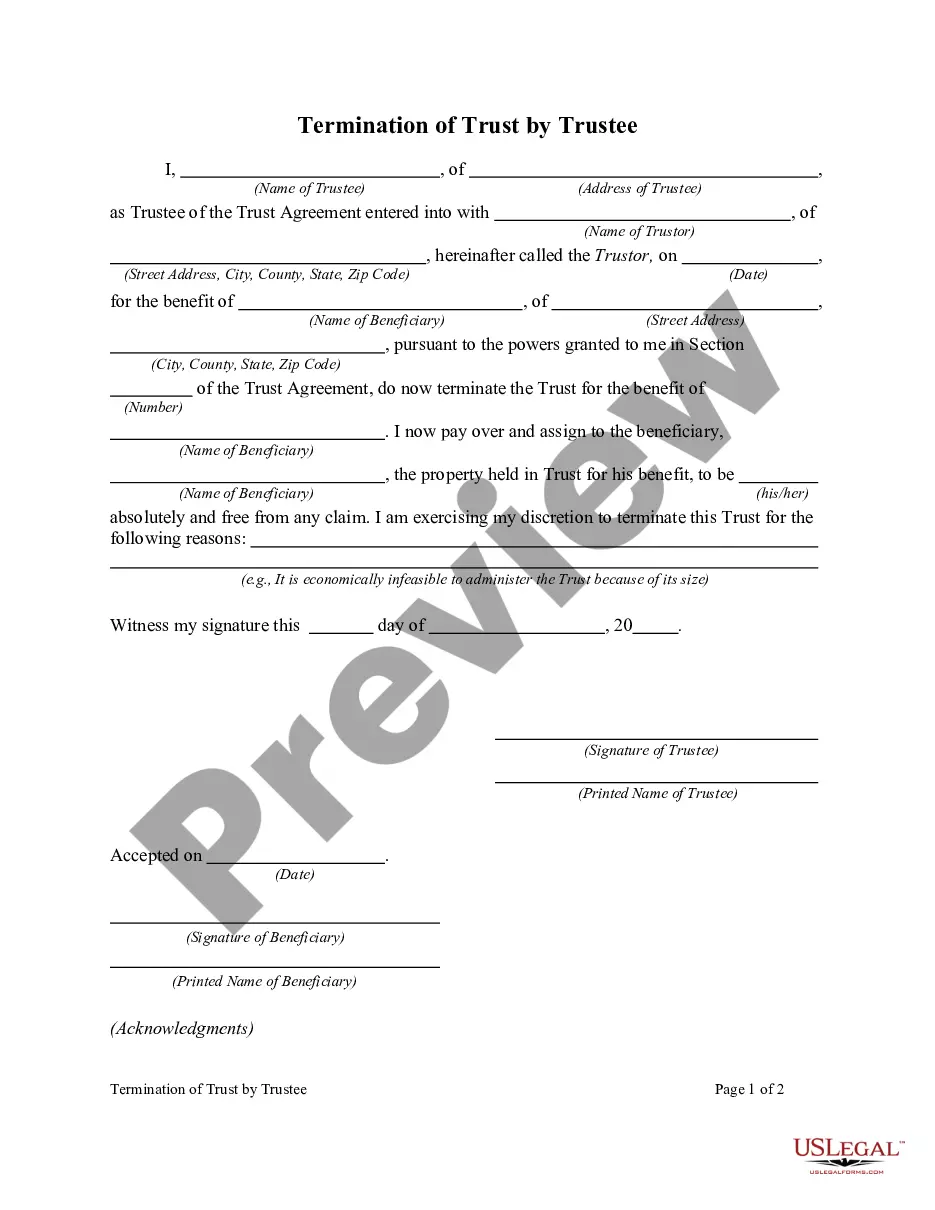
How to fill out Agreement Between Trustor And Trustee Terminating Trust After Disclaimer By Beneficiary?
The Trust Beneficiary For 401k you see on this page is a reusable legal template created by expert attorneys in accordance with federal and local laws.
For over 25 years, US Legal Forms has supplied individuals, companies, and legal practitioners with more than 85,000 confirmed, state-specific forms for any commercial and personal circumstance. It’s the fastest, easiest, and most reliable method to acquire the documents you require, as the service assures the utmost level of data protection and anti-malware safeguards.
Register for US Legal Forms to have authenticated legal templates for all of life’s circumstances readily available.
- Browse for the document you require and examine it.
- Select the pricing plan that fits you and set up an account. Use PayPal or a credit card for swift payment. If you already possess an account, Log In and review your subscription to continue.
- Acquire the editable template.
- Fill out and endorse the documentation.
- Re-download your documents as needed.
Form popularity
FAQ
Filling out a beneficiary form involves providing your personal details alongside the beneficiary's information, like their name and relationship to you. Clarify whether you want to designate an individual or a trust. Completing this form accurately ensures that your assets, including those in a 401k, go to the intended parties without complications. Consider using uslegalforms for step-by-step guidance throughout this process.
Filling out a 401k beneficiary form requires some basic personal information, including your name, address, and Social Security number. Next, indicate your beneficiary's relationship to you and their information. If you choose to list a trust, ensure you include its complete name and necessary details. This clarity is essential for proper fund disbursement later.
To fill out a beneficiary form for a trust, you will need to provide specific details such as the trust's name and its tax identification number. Be sure to include the date the trust was established and mention your role within the trust. This information will clarify the trust’s intention in managing 401k funds, making the process smoother. Utilizing platforms like uslegalforms can simplify filling out these forms accurately.
Listing your trust as a beneficiary of your 401k can be a smart move for many individuals. It ensures that the assets in your 401k are managed according to your desires after your passing. However, it's essential to understand the implications, including how the trust could affect taxation and distribution of funds. Consulting with a professional to navigate these complexities is advisable.
Naming a trust as a beneficiary may have downsides, such as increased administrative complexity and potential delays in distributing funds. Additionally, the trust may incur certain tax implications that could affect the overall value of your 401k. It's essential to weigh these factors carefully, and consulting with professionals can help you understand how best to navigate the process.
Absolutely, you can make a trust the beneficiary of your 401k. This option offers flexibility in how your assets are distributed while potentially minimizing estate taxes. It is vital to ensure that the trust is properly drafted, and you might consider using US Legal Forms to create a legally sound document that serves your intentions.
Yes, putting your 401k in a trust can provide a structured way to manage your retirement funds. A trust can help ensure that your assets are distributed according to your wishes after your passing. Additionally, designating a trust as the trust beneficiary for 401k can provide potential tax benefits and greater control over how the funds are used.
Whether your trust should be the beneficiary of your 401K depends on your individual circumstances and goals. Utilizing a trust can provide benefits such as asset protection and controlled distribution for heirs. However, you should weigh these advantages against potential tax consequences and administrative burdens. Consider seeking guidance from a financial advisor to evaluate your options.
When a 401K is inherited by a trust, the funds become part of the trust's assets and are subject to the trust's terms. This may allow for a more strategic distribution aligned with your wishes. Beneficiaries of the trust will receive funds according to the trust's guidelines, which can help manage how and when they access these assets. Consulting an expert can help clarify implications for tax and distribution.
Making your trust the beneficiary of your 401K can bring both benefits and complexities. A trust can provide more control over the distribution of funds and help avoid probate. However, it may also involve additional tax implications and administrative steps. Always consult a financial advisor or legal expert to determine if this strategy aligns with your goals.