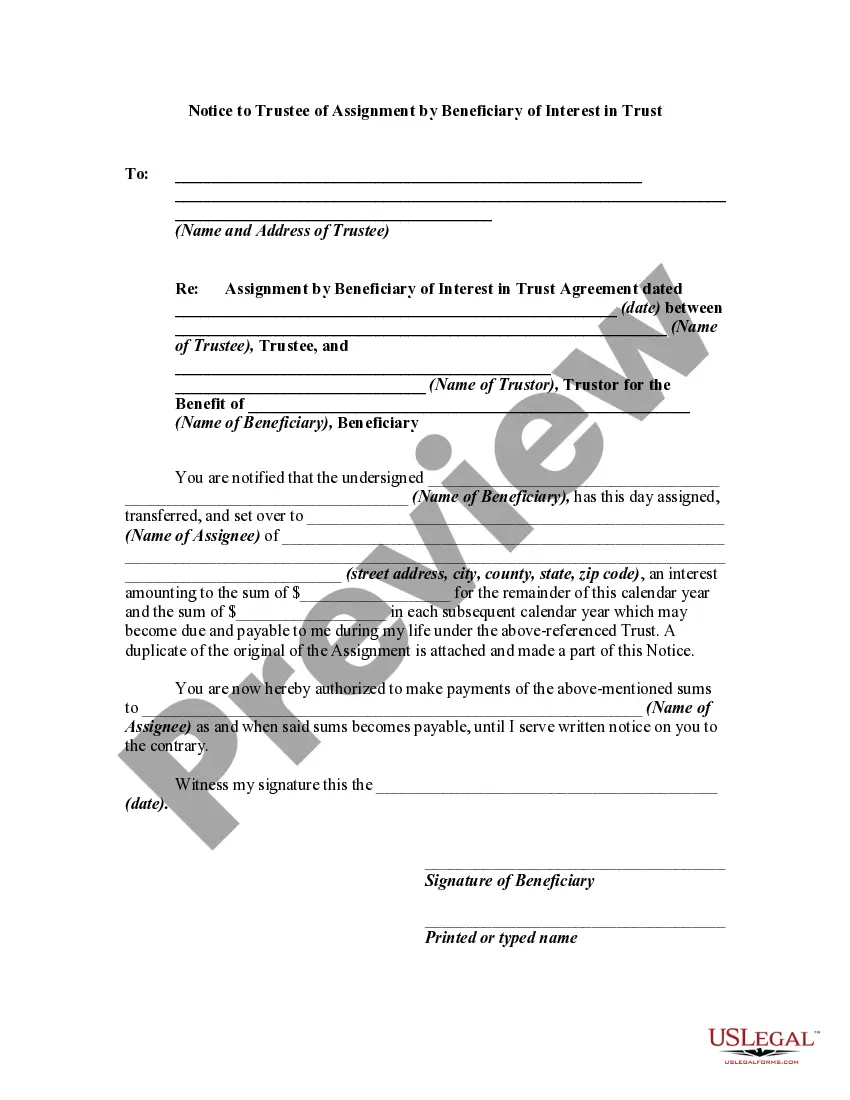
Trust Notice To Beneficiary Withholding
Description
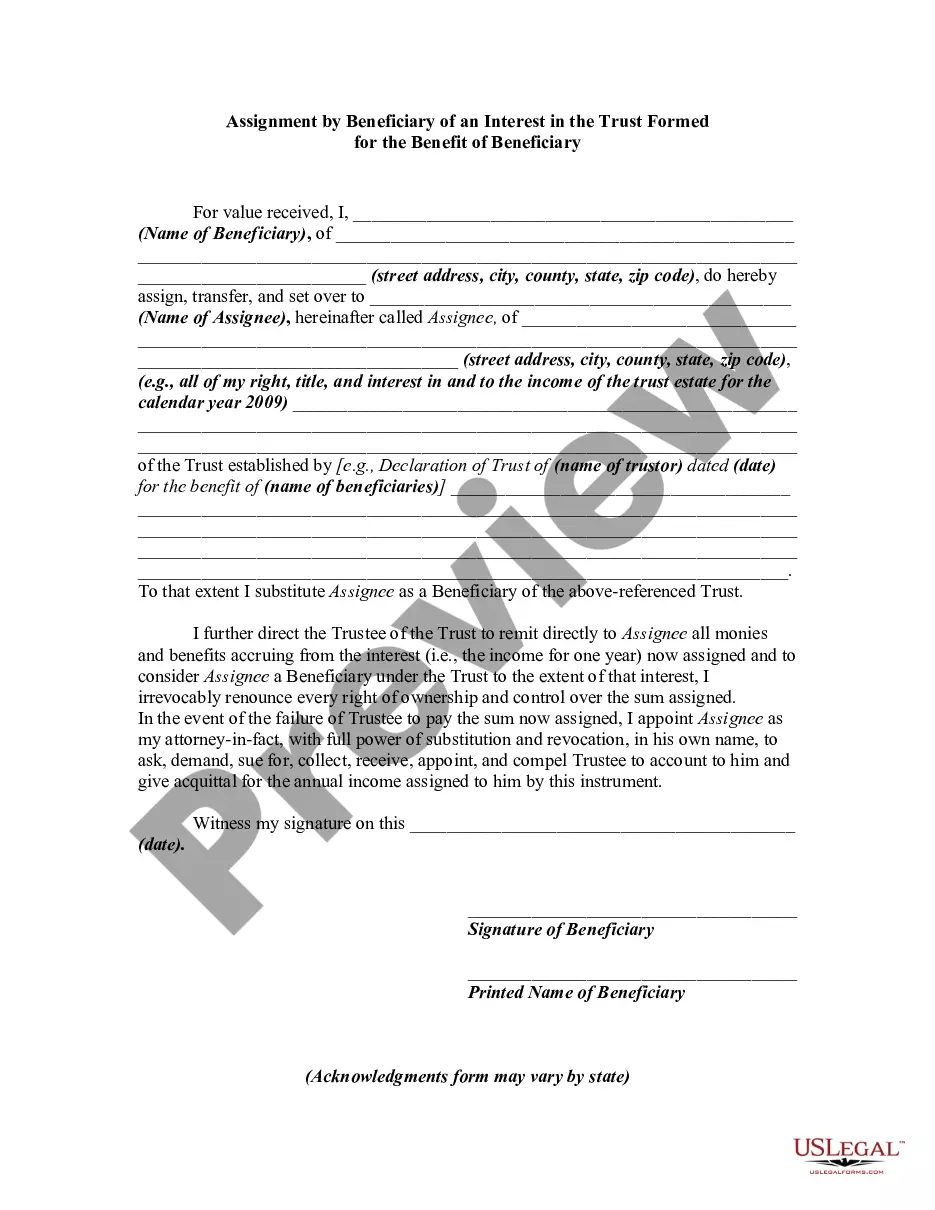
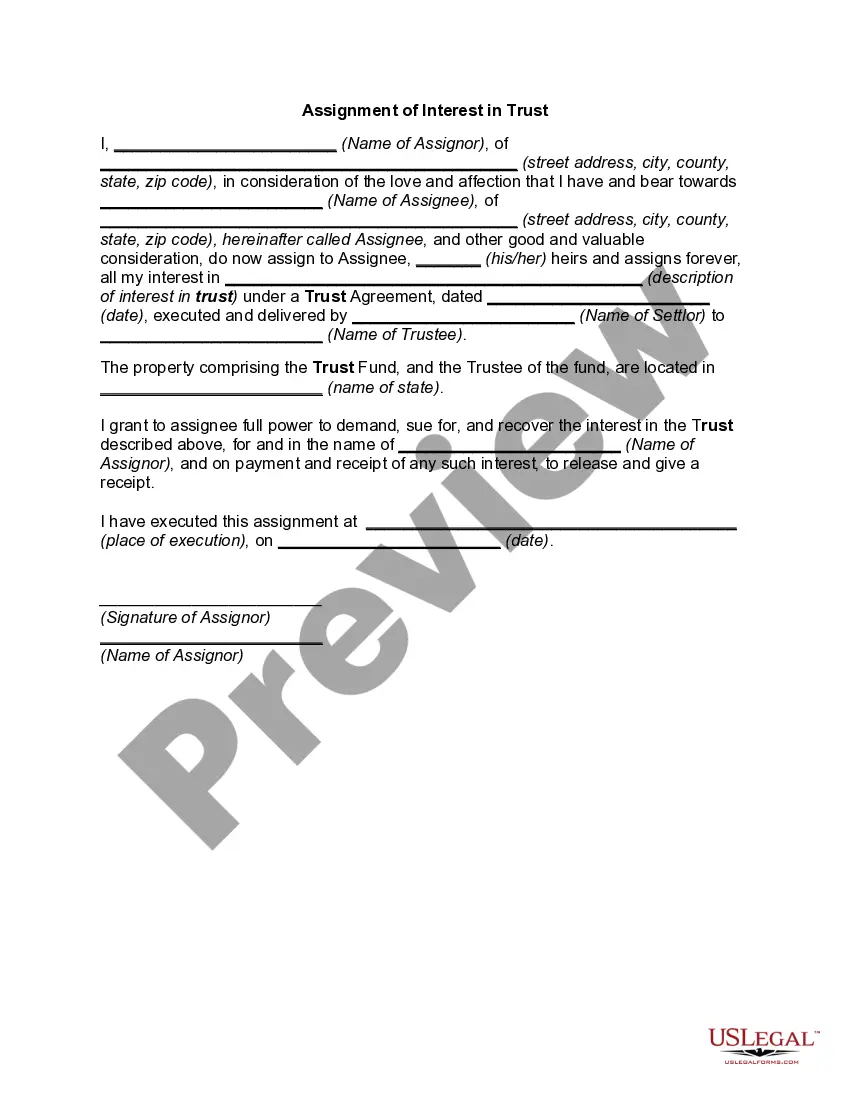




How to fill out Notice To Trustee Of Assignment By Beneficiary Of Interest In Trust?
The Trust Notification To Beneficiary Withholding displayed on this page is a reusable official blueprint composed by expert attorneys in accordance with federal and local regulations.
For over 25 years, US Legal Forms has been offering individuals, organizations, and lawyers more than 85,000 validated, state-specific documents for any business and personal situation.
Choose the format you prefer for your Trust Notification To Beneficiary Withholding (PDF, Word, RTF) and download the example to your device.
- Search for the document you require and evaluate it.
- Browse through the example you searched for and view it or examine the form description to ensure it meets your requirements. If it doesn’t, utilize the search feature to locate the appropriate one. Click Buy Now when you've identified the template you want.
- Register and Log In.
- Select the payment plan that fits your needs and establish an account. Use PayPal or a credit card to make a quick payment. If you already possess an account, Log In and verify your subscription to proceed.
- Obtain the fillable template.
Form popularity
FAQ
Filling out a beneficiary form for a trust involves providing accurate personal details and knowing the specifics of the trust. Take the time to review any instructions accompanying the form, and ensure you address issues like trust notice to beneficiary withholding. Additionally, using platforms like USLegalForms can simplify this process by providing clear guidelines and templates tailored to your needs.
The power dynamics between a trustee and a beneficiary often depend on the terms of the trust. Generally, the trustee has more authority to manage trust assets, but beneficiaries hold significant rights, especially regarding trust notice to beneficiary withholding. If you feel that your rights as a beneficiary are being ignored, you might consider seeking legal advice to understand your options.
Yes, a beneficiary can sue a trustee to compel distribution of trust assets if the trustee is withholding them. When you encounter trust notice to beneficiary withholding issues, you can take legal action to enforce your rights under the trust document. It's important to gather all relevant information and consult with a legal expert to ensure your best interests are protected.
The 16061.7 notice is typically sent to beneficiaries of a trust, informing them about the existence of the trust and their respective interests. This trust notice to beneficiary withholding is crucial for ensuring that all parties are aware of their rights and responsibilities. Anyone named as a beneficiary is entitled to receive this notice, providing them access to vital information. Utilizing resources like US Legal Forms can assist in generating this notice accurately and efficiently.
A letter to notify beneficiaries of a trust serves as an official communication that informs them about their rights and entitlements under the trust. This trust notice to beneficiary withholding outlines important details, such as the trust's assets and the distribution process. It ensures beneficiaries understand their position and provides clarity on what they can expect moving forward. Using a trusted platform like US Legal Forms can simplify the creation of this letter, ensuring compliance with legal requirements.
Beneficiaries of a trust typically pay taxes on the distributions they receive from a trust's income rather than the trust paying the tax. However, beneficiaries aren't subject to taxes on distributions from the trust's principal, the original sum of money put into the trust.
Whether or not the trustee can withhold funds from you depends on the terms of the trust itself. If the trust requires withholding distributions under certain circumstances, such as the beneficiary reaching a specific age, the trustee must follow those stipulations.
Here are the essentials, in most states: Explain that the trust exists. ... Provide your name and contact information. ... Tell beneficiaries that they have the right to see a copy of the trust document and that you will send them one if they request it. ... Give the deadline for court challenges.
Trust beneficiaries and heirs are entitled to receive a notice by mail called the ?Statutory Notification by Trustee.? The Trustee must send a Statutory Notification by mail, along with copies of the Trust document, to all Trust beneficiaries and heirs of the deceased Grantor.
A trust or, for its final tax year, a decedent's estate may elect under section 643(g) to have any part of its estimated tax payments (but not income tax withheld) treated as made by a beneficiary or beneficiaries.