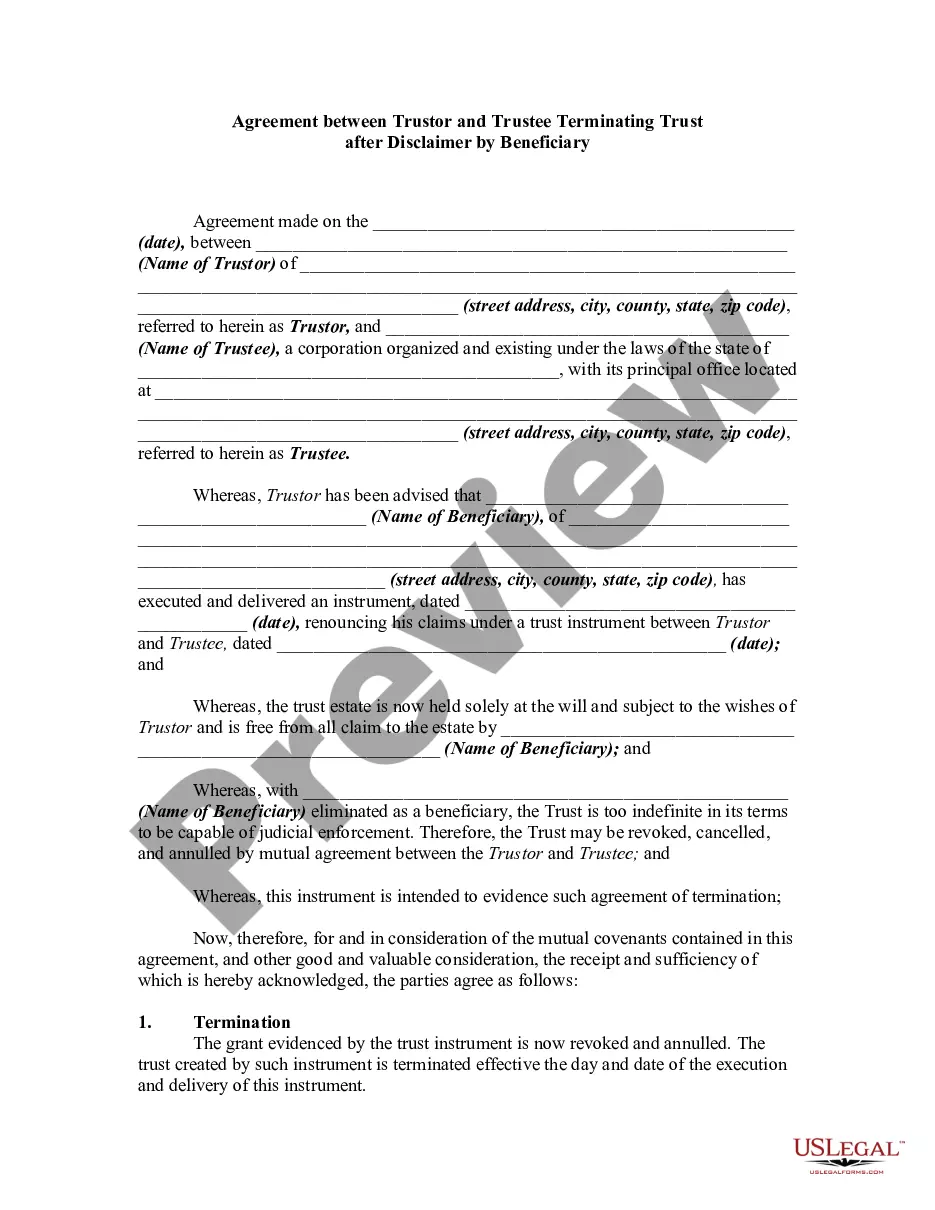
Terminate Trust Agreement Format
Description
Get your form ready online
Our built-in tools help you complete, sign, share, and store your documents in one place.
Make edits, fill in missing information, and update formatting in US Legal Forms—just like you would in MS Word.
Download a copy, print it, send it by email, or mail it via USPS—whatever works best for your next step.
Sign and collect signatures with our SignNow integration. Send to multiple recipients, set reminders, and more. Go Premium to unlock E-Sign.
If this form requires notarization, complete it online through a secure video call—no need to meet a notary in person or wait for an appointment.
We protect your documents and personal data by following strict security and privacy standards.

Make edits, fill in missing information, and update formatting in US Legal Forms—just like you would in MS Word.

Download a copy, print it, send it by email, or mail it via USPS—whatever works best for your next step.

Sign and collect signatures with our SignNow integration. Send to multiple recipients, set reminders, and more. Go Premium to unlock E-Sign.

If this form requires notarization, complete it online through a secure video call—no need to meet a notary in person or wait for an appointment.

We protect your documents and personal data by following strict security and privacy standards.
Looking for another form?








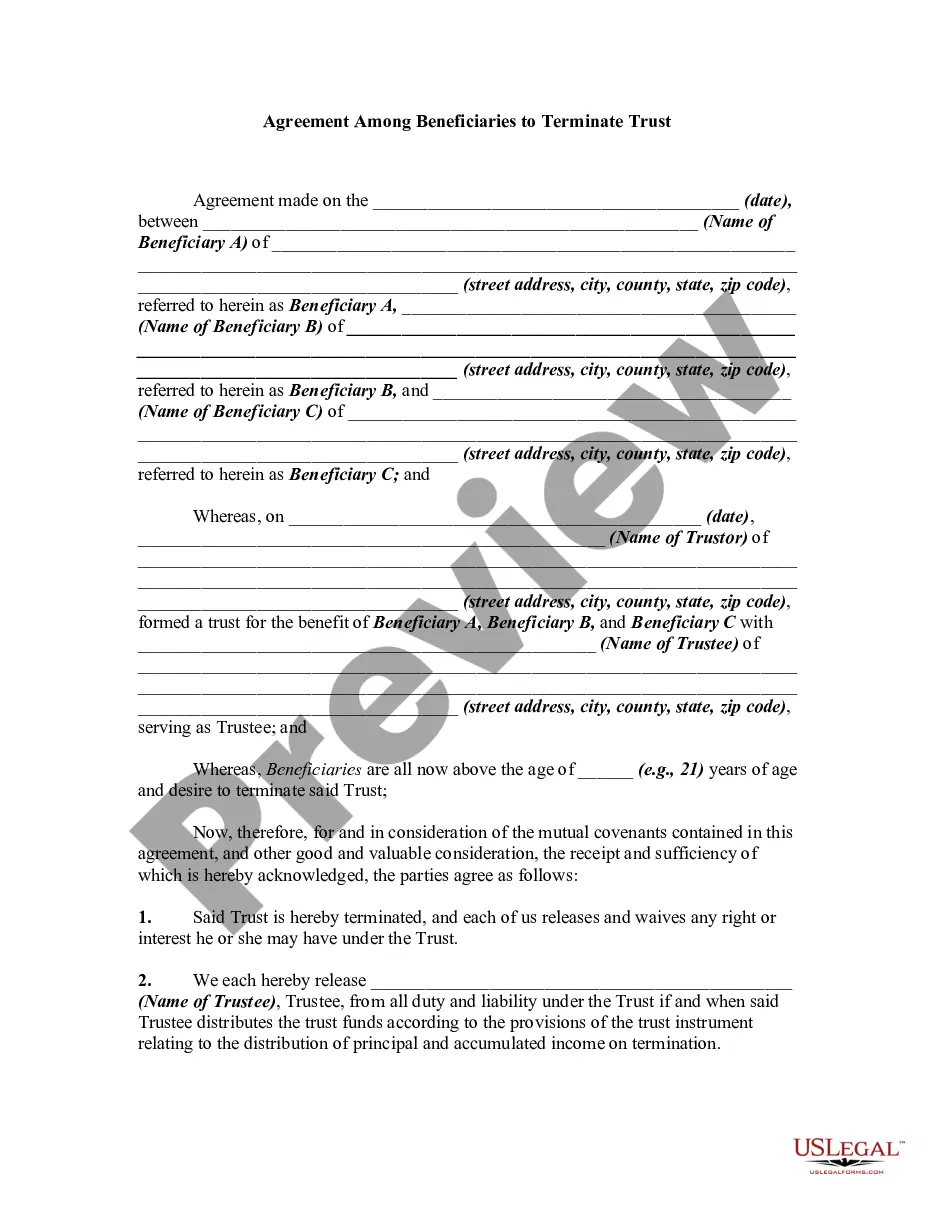
How to fill out Agreement Among Beneficiaries To Terminate Trust?
It’s clear that you cannot transform into a legal expert instantly, nor can you swiftly master how to draft a Terminate Trust Agreement Format without possessing a distinct skill set.
Drafting legal documents is a lengthy endeavor that demands specific education and expertise. So why not entrust the creation of the Terminate Trust Agreement Format to the professionals.
With US Legal Forms, one of the most extensive legal document repositories, you can find everything from court documents to templates for office communications. We understand how vital it is to comply with federal and state regulations. That’s why, on our site, all templates are region-specific and current.
You can regain access to your forms from the My documents tab at any moment. If you’re a current client, you can easily Log In and find and download the template from the same section.
Regardless of the intent of your forms—be it financial and legal, or personal—our platform caters to your needs. Experience US Legal Forms today!
- Begin by locating the form you need using the search bar at the top of the page.
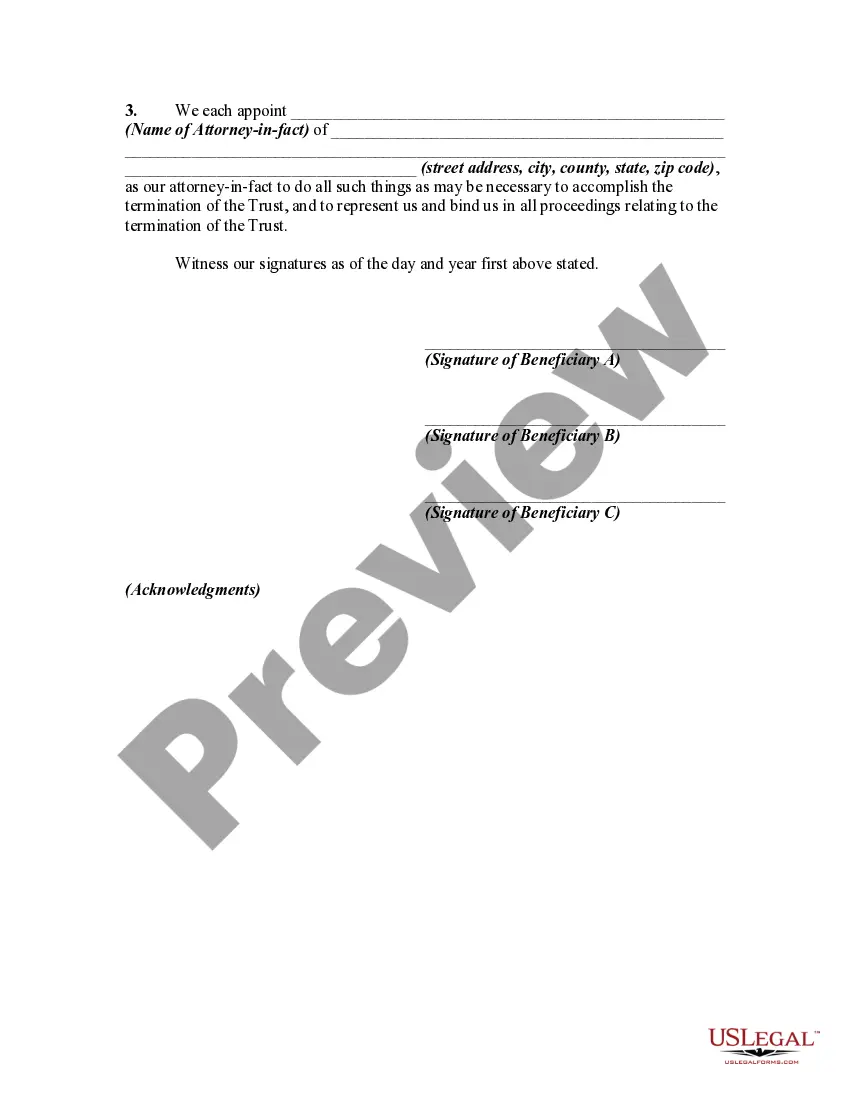
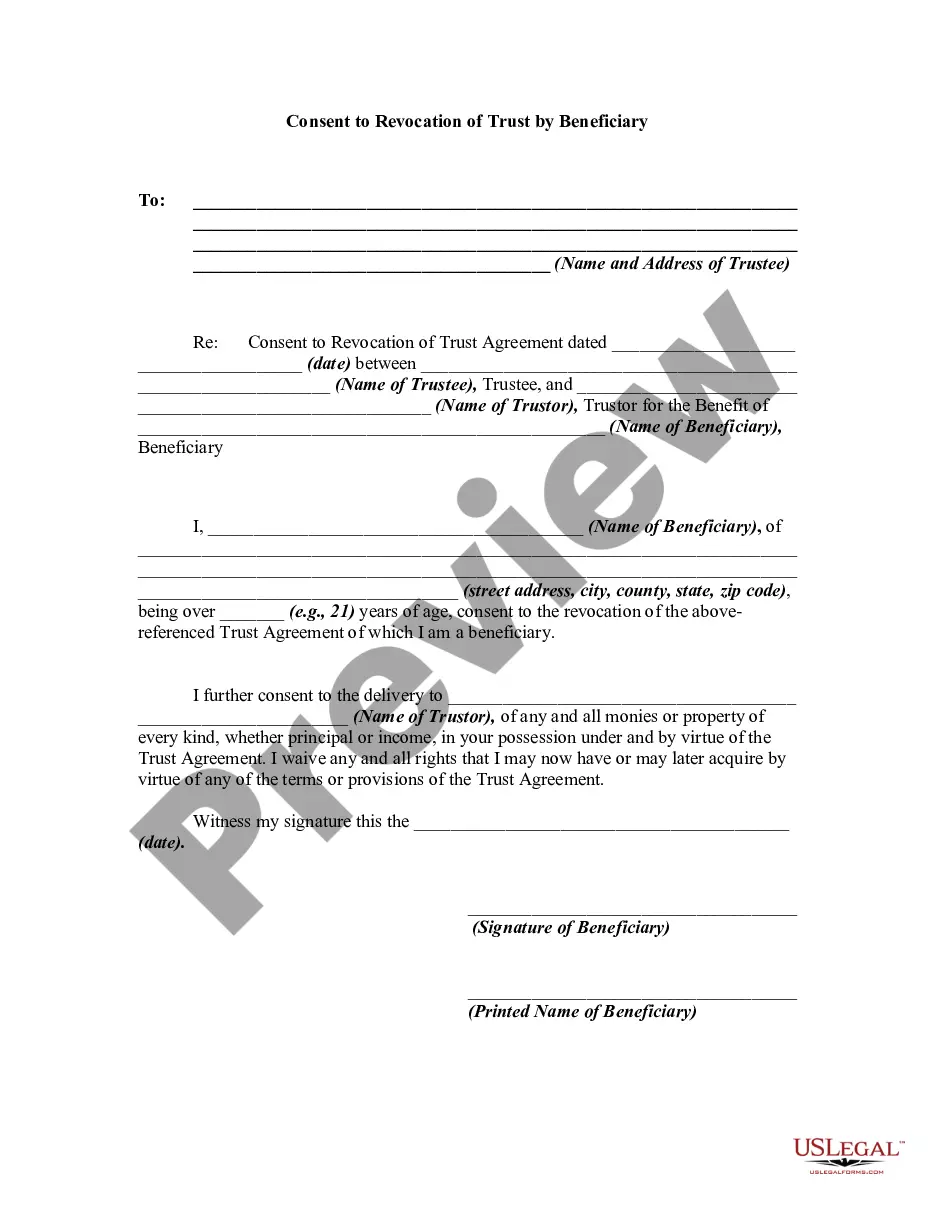
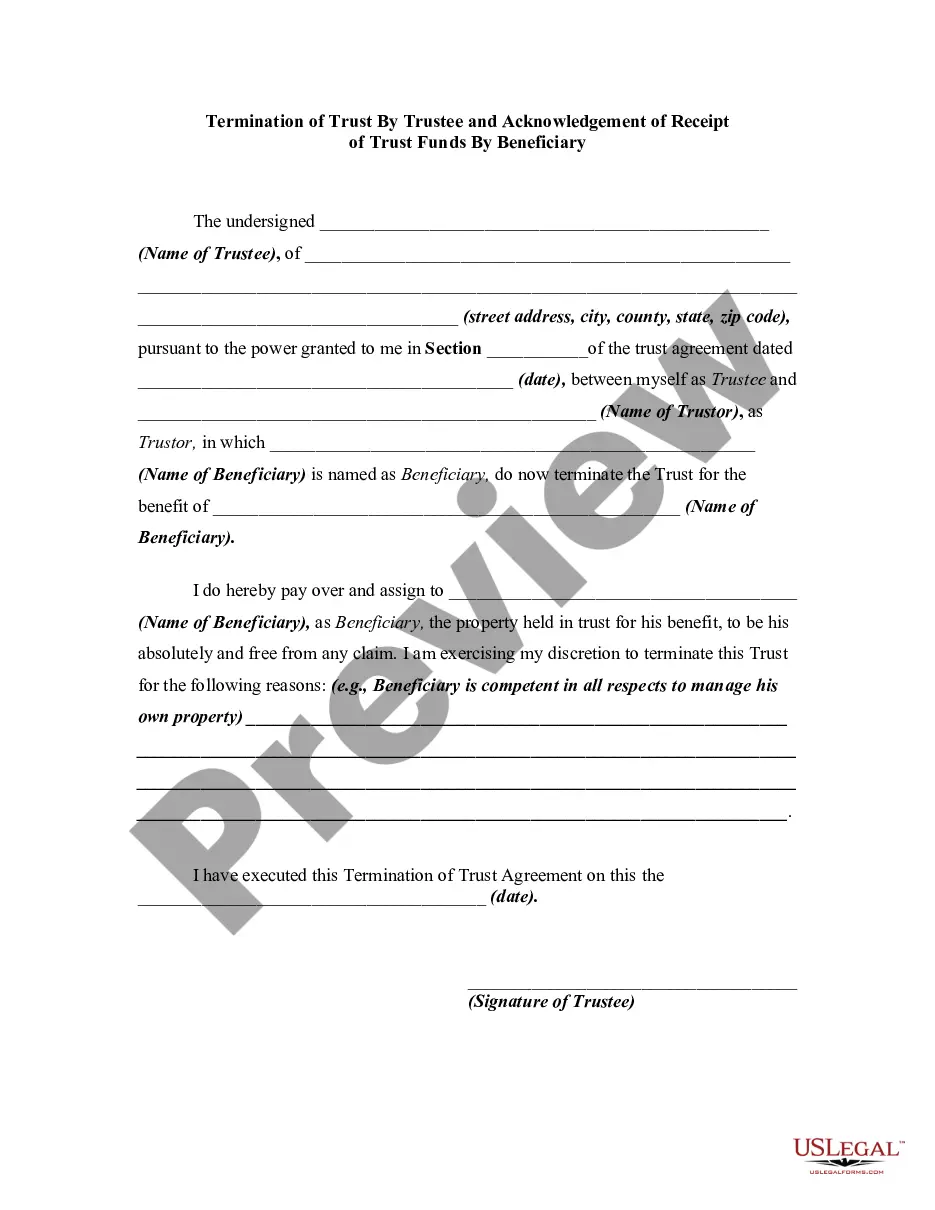
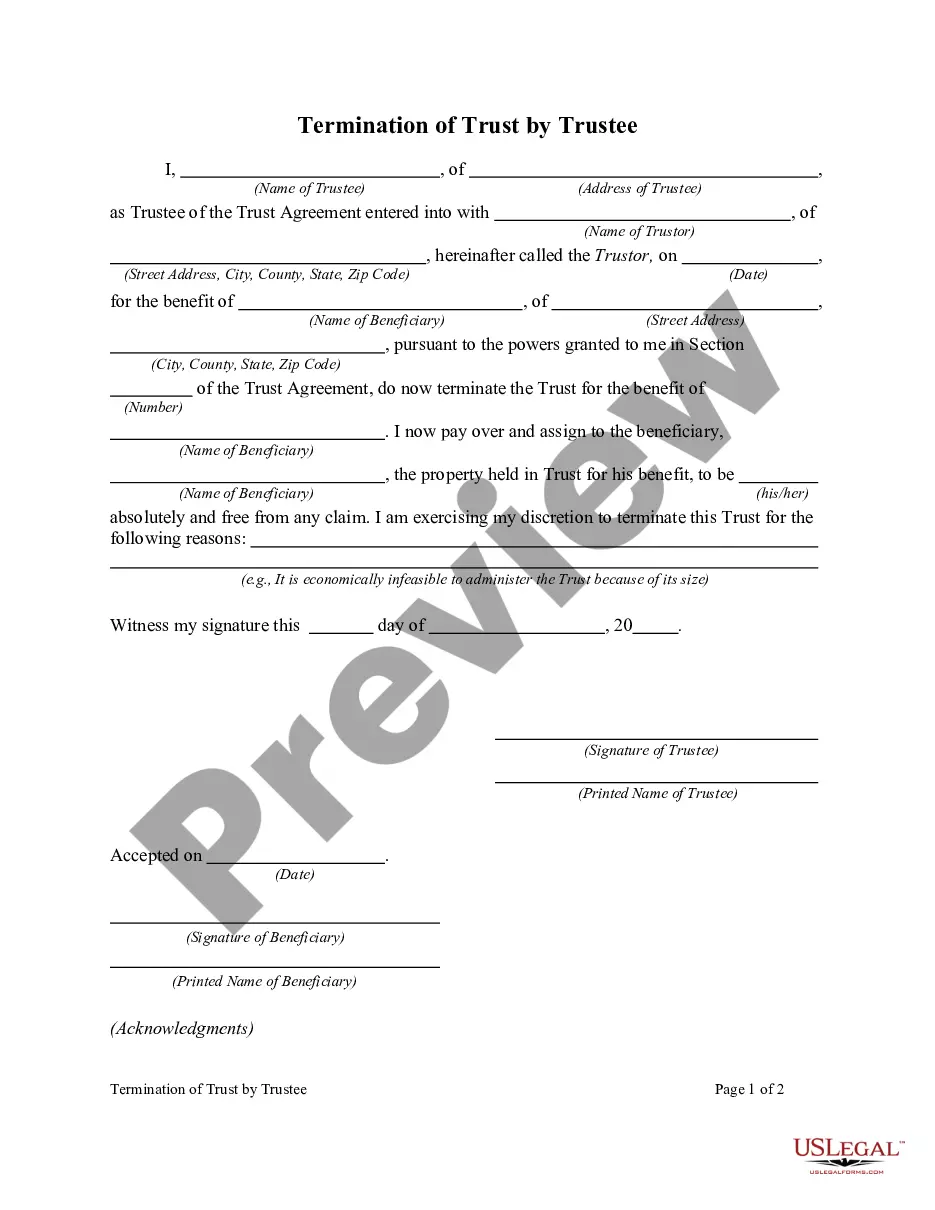
- Preview it (if this option is available) and read the accompanying description to see if the Terminate Trust Agreement Format is what you need.
- If you require a different template, restart your search.
- Sign up for a free account and select a subscription plan to purchase the form.
- Click Buy now. Once the transaction is finalized, you can download the Terminate Trust Agreement Format, fill it out, print it, and send or mail it to the appropriate individuals or organizations.
Form popularity
FAQ
A trust agreement is a legal document containing, terms, conditions and provisions that allows the trustor to transfer the ownership of assets to the trustee to be held for the trustor's beneficiaries.
An irrevocable trust can get revoked with the consent of both the settlor/trustor and the beneficiary. If the trustor/settlor dies, the beneficiary's consent is required, which should be done in the court of law.
A trust agreement is a document that allows you (the trustor) to legally transfer the ownership of specific assets to another person (trustee) to be held for the trustor's beneficiaries.
Exercise of power of advancement: The trustees exercising a power of advancement or a power of appointment to terminate the trust either in whole or part. fulfillment of purpose: When the purpose is completely fulfilled, e.g., a settlor can stipulate that the trust shall last until the marriage of the beneficiary.
The main methods of terminating a trust are by revocation, setting aside, passing of time, distribution of the trust fund or termination by the beneficiaries under the rule in Saunders v Vautier.