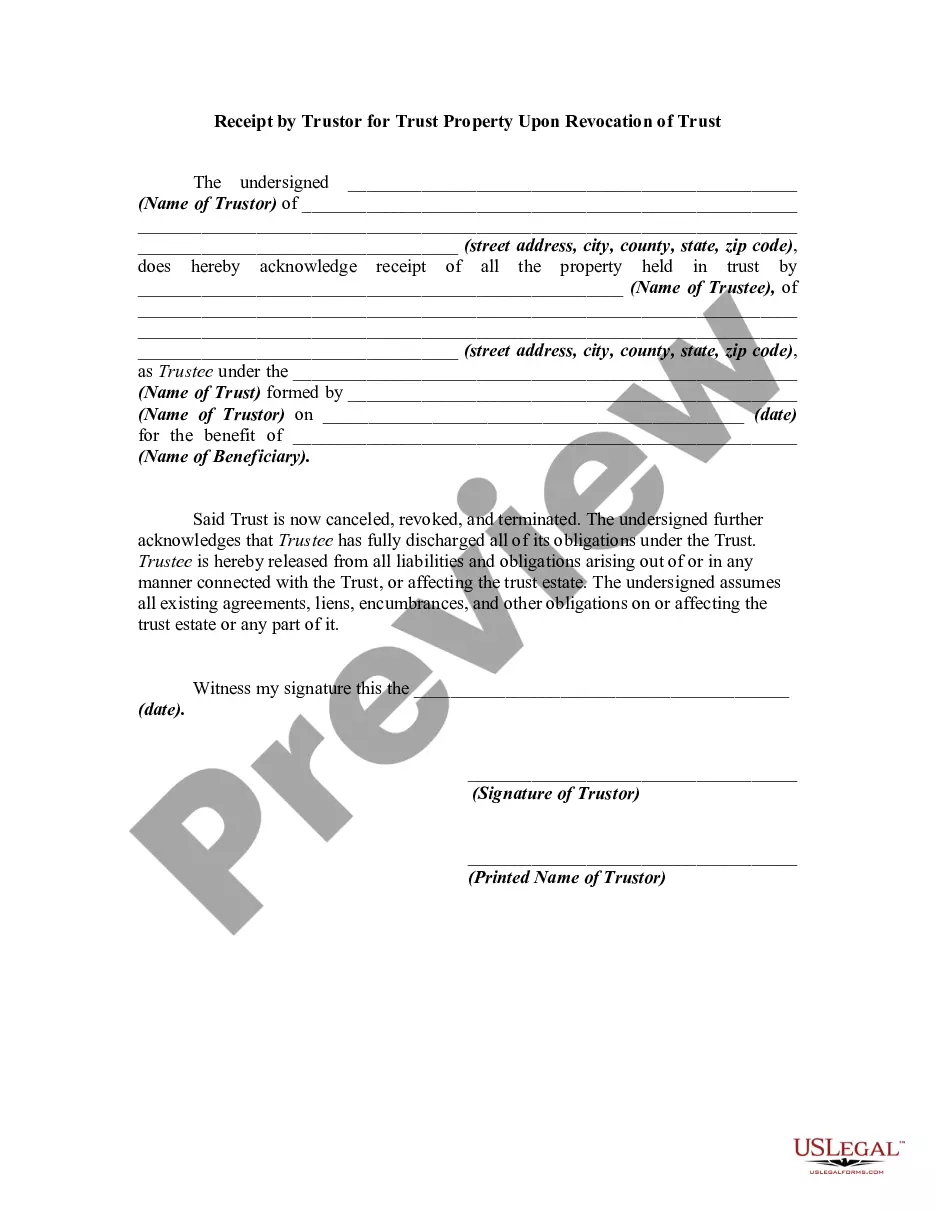
Revocation Acknowledgment Trustee With Trust
Description
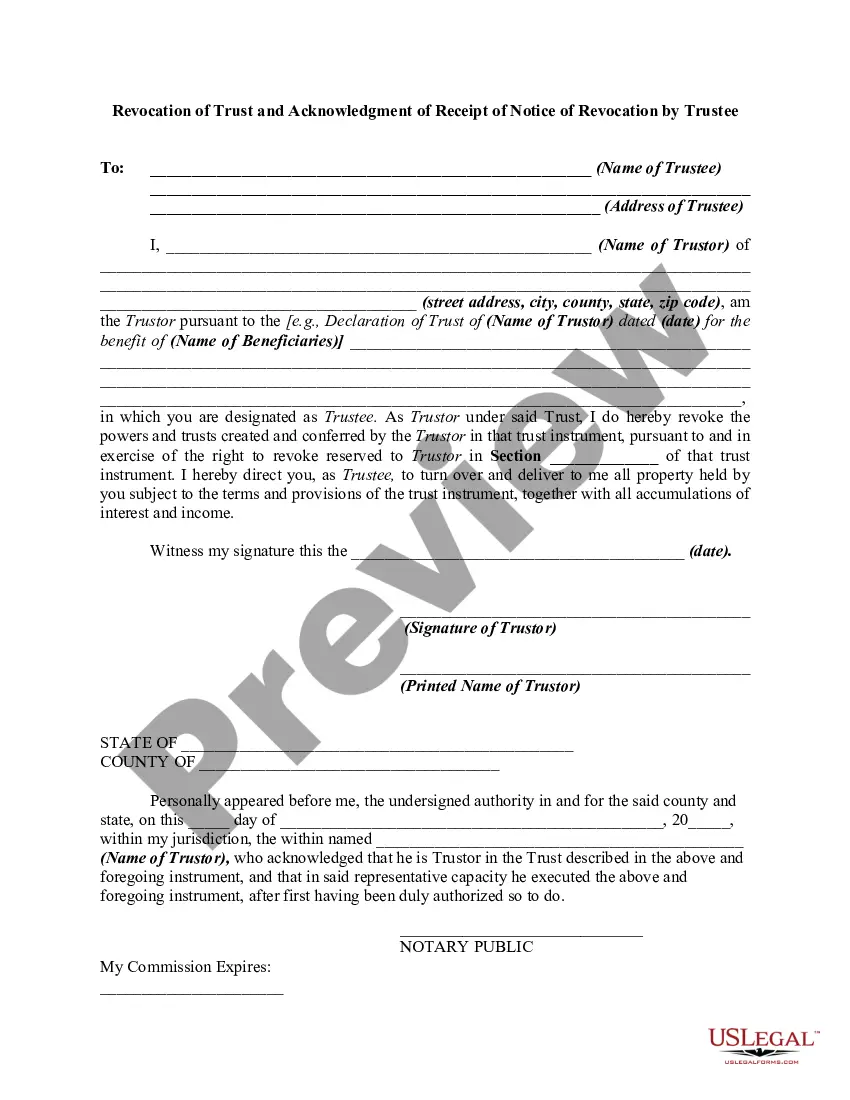
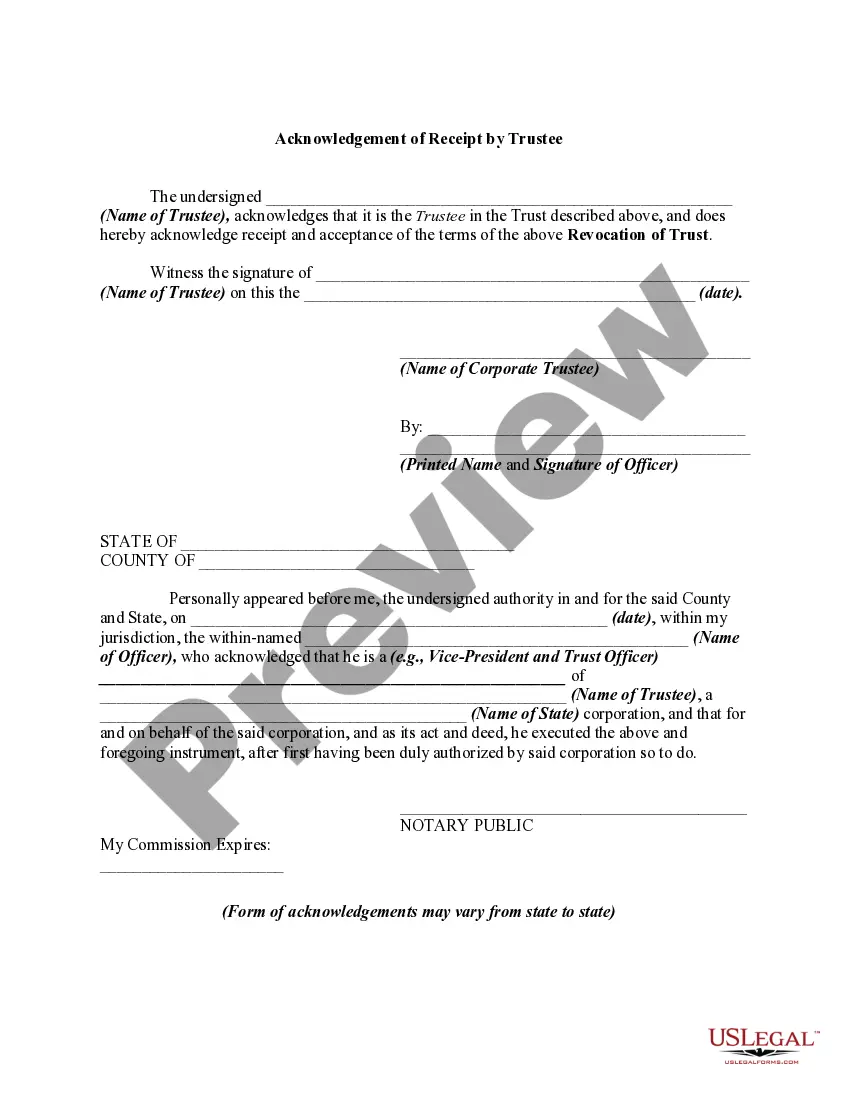
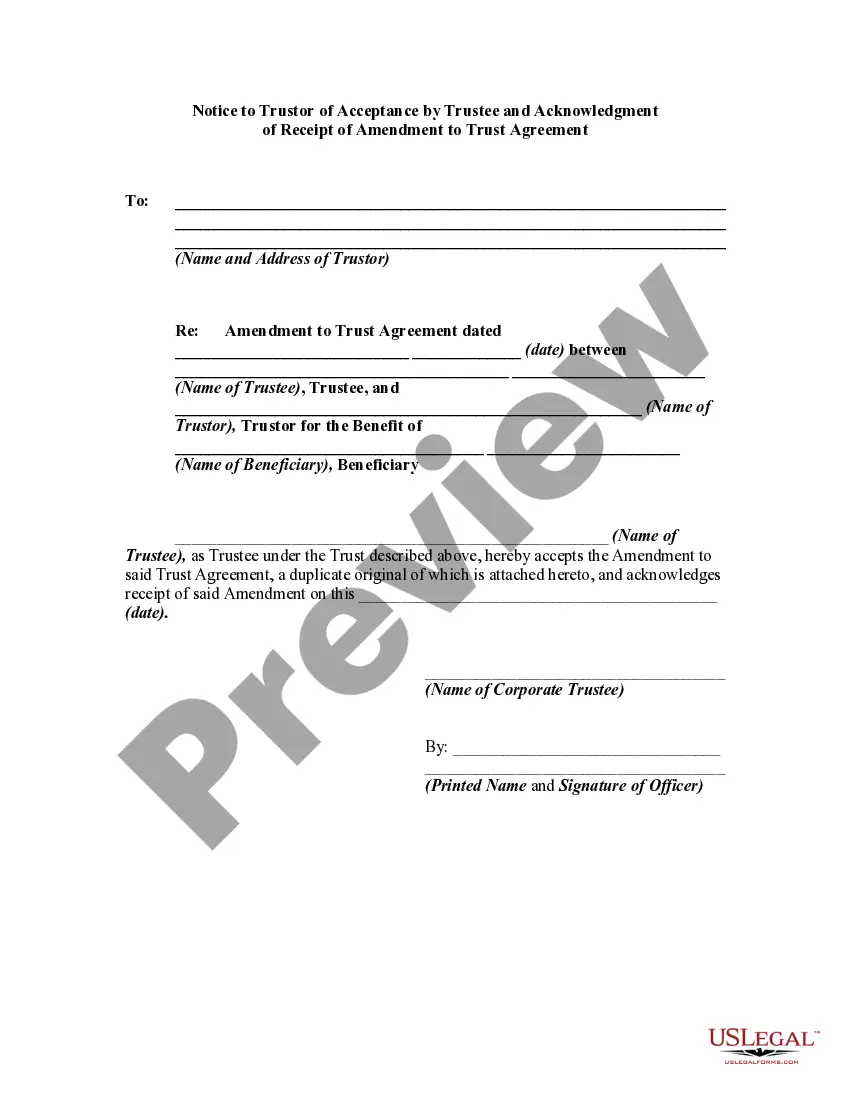
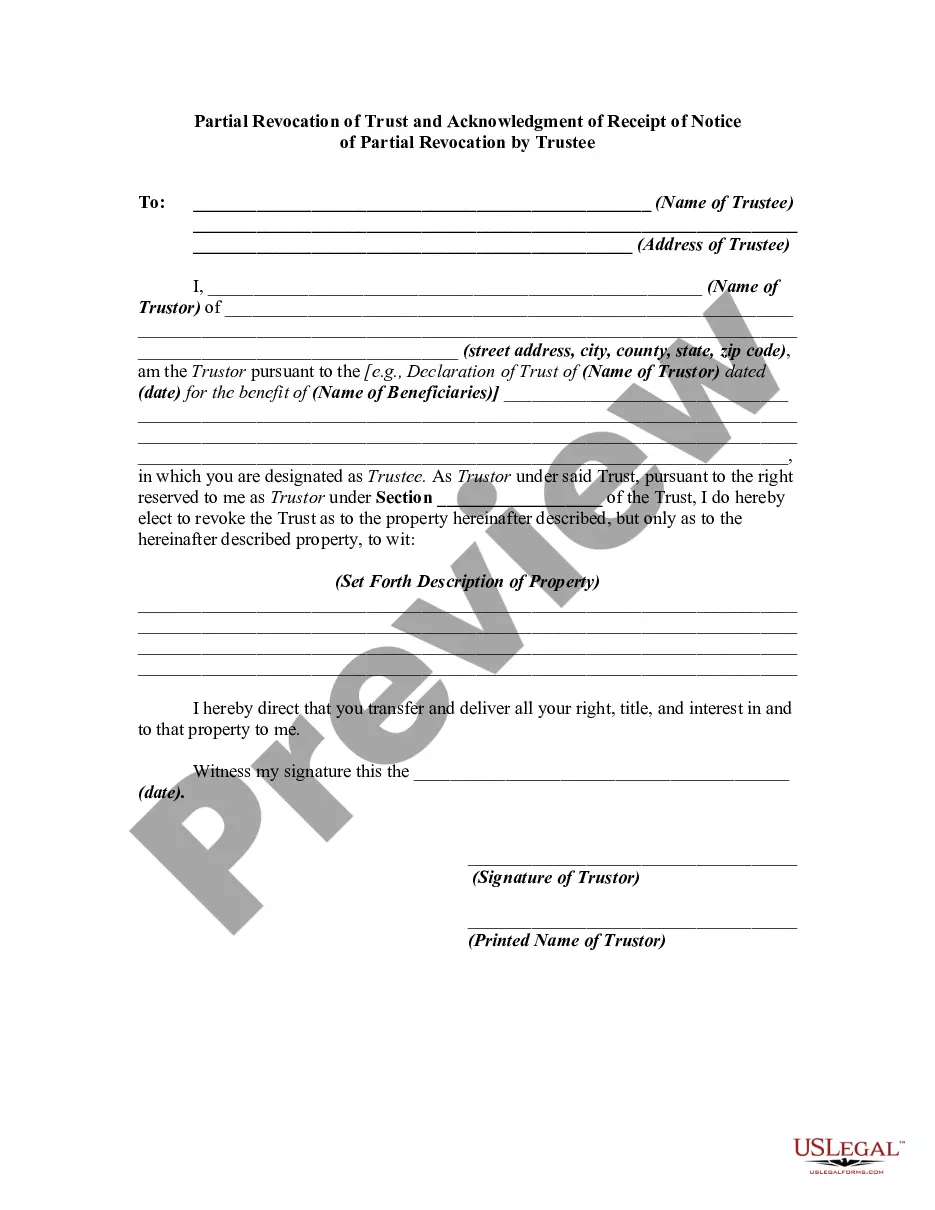
Get your form ready online
Our built-in tools help you complete, sign, share, and store your documents in one place.
Make edits, fill in missing information, and update formatting in US Legal Forms—just like you would in MS Word.
Download a copy, print it, send it by email, or mail it via USPS—whatever works best for your next step.
Sign and collect signatures with our SignNow integration. Send to multiple recipients, set reminders, and more. Go Premium to unlock E-Sign.
If this form requires notarization, complete it online through a secure video call—no need to meet a notary in person or wait for an appointment.
We protect your documents and personal data by following strict security and privacy standards.

Make edits, fill in missing information, and update formatting in US Legal Forms—just like you would in MS Word.

Download a copy, print it, send it by email, or mail it via USPS—whatever works best for your next step.

Sign and collect signatures with our SignNow integration. Send to multiple recipients, set reminders, and more. Go Premium to unlock E-Sign.

If this form requires notarization, complete it online through a secure video call—no need to meet a notary in person or wait for an appointment.

We protect your documents and personal data by following strict security and privacy standards.
Looking for another form?



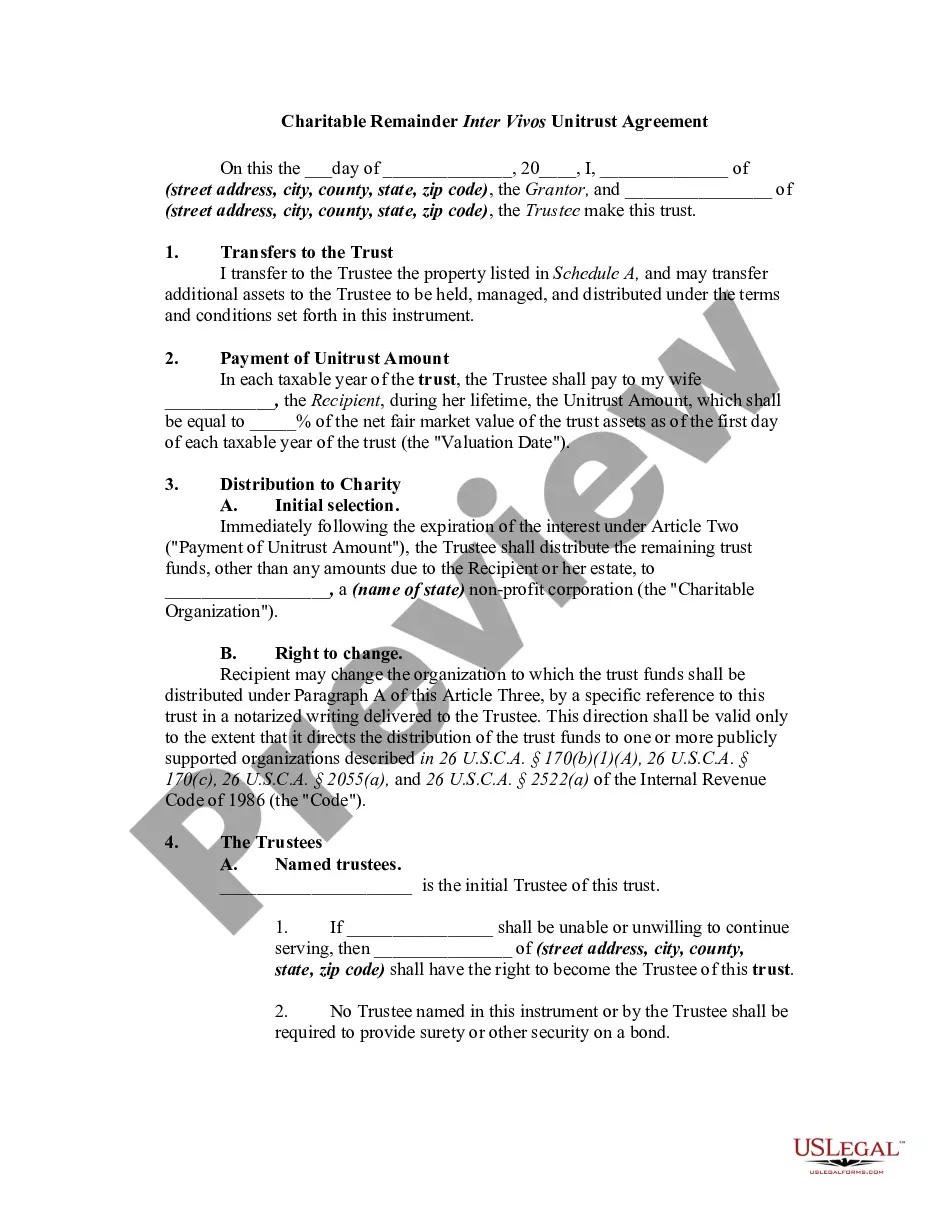




How to fill out Revocation Of Trust And Acknowledgment Of Receipt Of Notice Of Revocation By Trustee?
- Login to your US Legal Forms account. If you are a first-time user, register for an account to access the form library.
- Search for the Revocation acknowledgment trustee with trust template and review its preview and description to ensure it meets your needs.
- If you need another template, utilize the search feature to find the correct document that aligns with your local jurisdiction.
- Once you find the appropriate form, proceed to buy the document by clicking the Buy Now button and selecting your subscription plan.
- Complete your purchase using your credit card or PayPal, making sure to confirm your subscription is active.
- Download your form directly to your device, ensuring you can access it whenever you need by visiting your profile's My Forms menu.
With access to over 85,000 legal forms, US Legal Forms empowers users to execute documents with confidence. Their extensive library and expert assistance make form completion straightforward and legally sound.
Ready to efficiently secure your legal documents? Visit US Legal Forms today and start navigating your legal needs with ease.
Form popularity
FAQ
A trust can be terminated in several ways, such as by reaching its specified purpose, by a court ruling, or through consent by all beneficiaries. Additionally, if a trustee is deemed unable to fulfill their duties, this can also lead to termination. Understanding these options allows you to manage your trust effectively. For clarity, using US Legal Forms can provide templates and resources to assist in this process.
Revoking a trust typically requires a clear statement of intent by the trustee, alongside compliance with the trust’s own terms. In some cases, the trustee might also need to notify the beneficiaries and potentially file documents with the court. Documenting the revocation ensures clarity and prevents misunderstandings. Seeking guidance on revocation acknowledgment for trustees with trust can streamline this process.
A trust can become null and void for several reasons. Factors such as lack of capacity, improper execution, or failure to meet legal requirements can lead to invalidation. Additionally, a trust may be dismissed if it contravenes public policy. It’s essential to ensure that all legal standards are met when creating a trust.
A trustee holds significant power over the trust's assets and administration, which includes making decisions about distributions and investments. However, this power must be exercised in accordance with the trust's terms and with the beneficiaries' best interests in mind. Review the trust document for specific provisions about the authority of the trustee. Utilizing resources like US Legal Forms can clarify these responsibilities.
Removing a trustee from an irrevocable trust can be challenging. It typically requires a legal process, which may involve court approval. The specific steps depend on the trust's terms and state laws. Consulting with a legal expert can help you navigate this process effectively.
To resign as a trustee of a revocable trust, you typically need to provide a written resignation notice to the trustor and other beneficiaries. This notice should outline your intent to step down and may include a revocation acknowledgment to finalize your release from the trustee obligations. If you need guidance, uslegalforms offers resources to help you navigate this process smoothly.
A revocation clause within a trust might state that any previous trusts or amendments are null and void. This clause clarifies that the current version of the trust is the only valid document and helps avoid confusion. Including a clear revocation acknowledgment ensures that the trustee understands their roles and responsibilities moving forward.
One of the biggest mistakes parents make is failing to update their trust fund as their circumstances change. Life events such as marriage, divorce, or the birth of a new child may necessitate adjustments to the trust. It's essential to regularly review the revocation acknowledgment trustee with trust to ensure that all provisions align with the family’s current situation.
To remove assets from a trust, the trustee must follow the steps outlined in the trust document. Generally, the trustee completes a revocation acknowledgment that specifies which assets are being removed and documents the change. If you are unsure how to proceed, using a service like uslegalforms can guide you through the process and ensure that all necessary legal protocols are followed.
An example of trust revocation is when a parent decides to cancel a trust set up for their children after significant changes in family circumstances. For instance, if the financial situation or familial relationships change dramatically, the parent can issue a revocation acknowledgment. This action allows the parent to redistribute assets as needed without being bound by the original trust agreement.