Successor Trustee
Description

Get your form ready online
Our built-in tools help you complete, sign, share, and store your documents in one place.
Make edits, fill in missing information, and update formatting in US Legal Forms—just like you would in MS Word.
Download a copy, print it, send it by email, or mail it via USPS—whatever works best for your next step.
Sign and collect signatures with our SignNow integration. Send to multiple recipients, set reminders, and more. Go Premium to unlock E-Sign.
If this form requires notarization, complete it online through a secure video call—no need to meet a notary in person or wait for an appointment.
We protect your documents and personal data by following strict security and privacy standards.

Make edits, fill in missing information, and update formatting in US Legal Forms—just like you would in MS Word.

Download a copy, print it, send it by email, or mail it via USPS—whatever works best for your next step.

Sign and collect signatures with our SignNow integration. Send to multiple recipients, set reminders, and more. Go Premium to unlock E-Sign.

If this form requires notarization, complete it online through a secure video call—no need to meet a notary in person or wait for an appointment.

We protect your documents and personal data by following strict security and privacy standards.
Looking for another form?






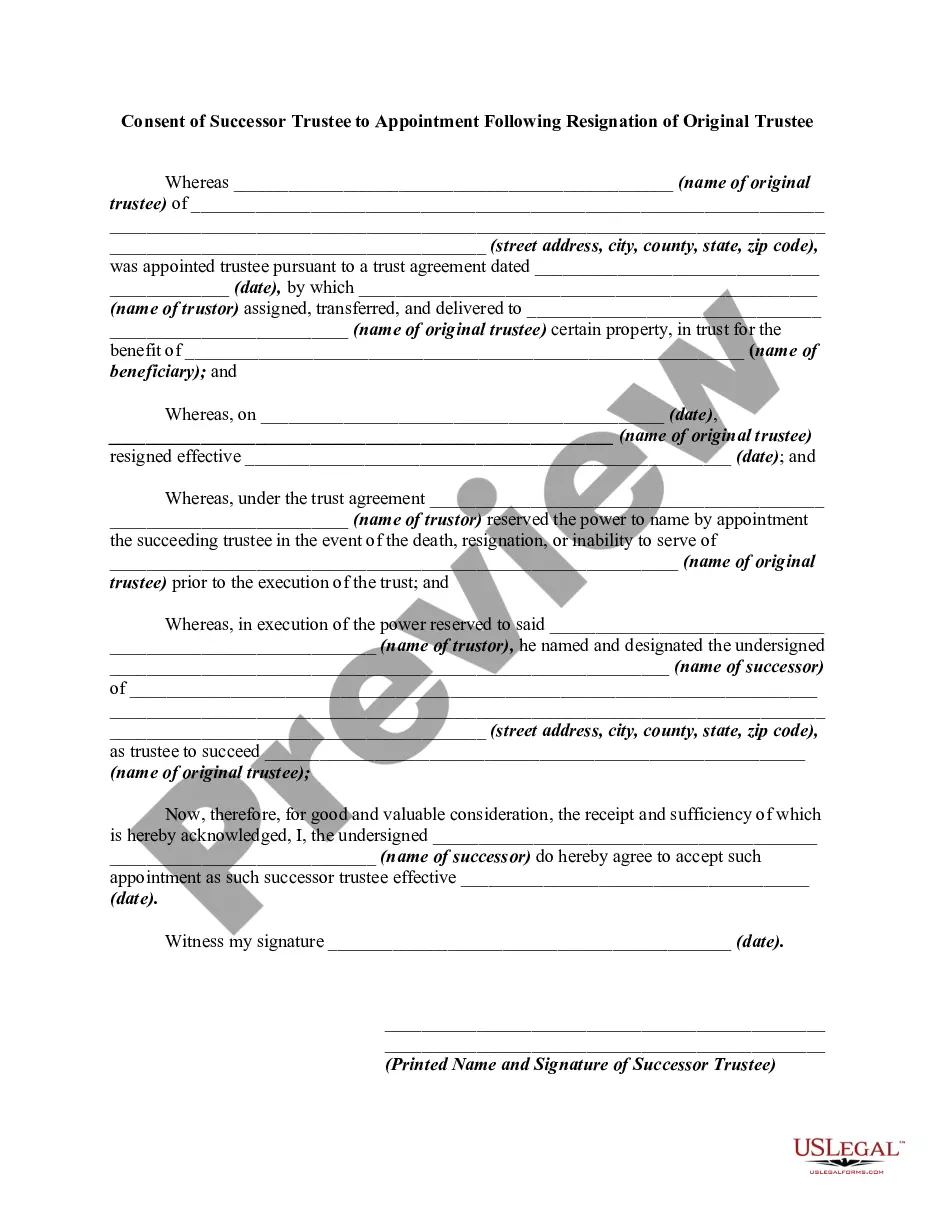
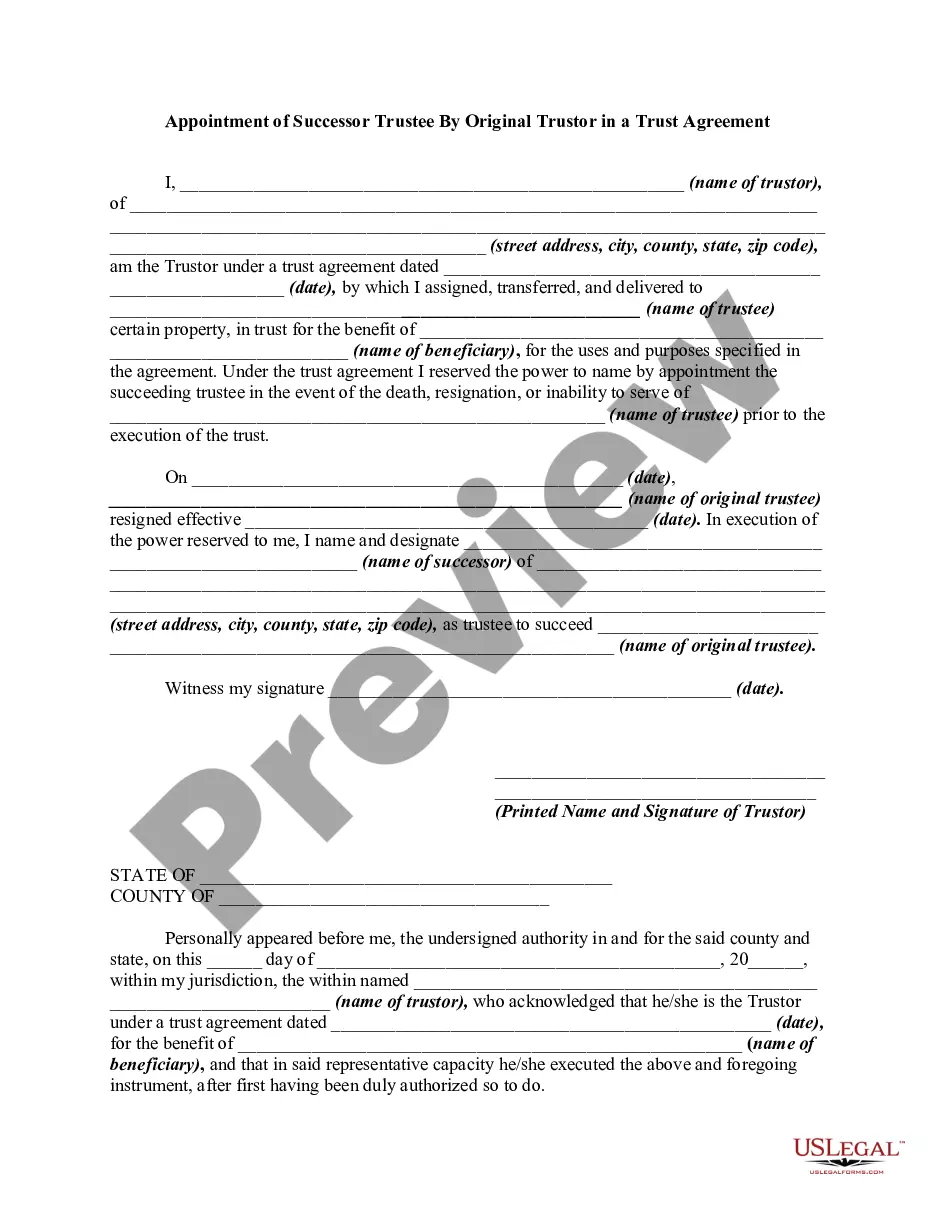
How to fill out Consent Of Successor Trustee To Appointment Following Resignation Of Original Trustee?
- Log in to your account at US Legal Forms. If you don't have an account, create one to access the extensive library.
- Once logged in, browse the selection of successor trustee forms. Use the preview mode to confirm that the document meets your specific needs and complies with local laws.
- If the document isn't quite right, utilize the search feature to find the appropriate template that aligns with your requirements.
- Select the form and click the 'Buy Now' button. Choose the subscription plan that best fits your needs to access all available resources.
- Complete your purchase by entering your payment details, whether via credit card or PayPal, ensuring that your subscription remains valid.
- After purchase, download your chosen form to your device. You can always revisit it through the 'My Forms' section in your profile for future reference.
Following these steps will streamline the process of obtaining essential legal documents. US Legal Forms empowers users to navigate legal needs with convenience and efficiency.
Get started today and experience the benefits of having legal forms at your fingertips!
Form popularity
FAQ
Yes, a successor trustee generally has access to the bank accounts tied to the trust. This access is crucial for the trustee to manage the trust’s finances, including covering expenses and making distributions. Following the guidelines in the trust document is essential to ensure responsible management and adherence to the wishes of the trust creator.
A successor trustee possesses various rights designed to facilitate their responsibilities. They have the authority to make decisions regarding the distribution of trust assets and can manage the trust’s investments. Additionally, they can access necessary records and accounts to perform their duties effectively, ensuring that beneficiaries receive their entitled shares.
The role of a successor trustee is vital in ensuring the smooth continuation of the trust's operations. This person is responsible for managing trust assets, paying debts, and distributing property to beneficiaries according to the trust's terms. Furthermore, effective communication with beneficiaries helps maintain trust and clarity during this process.
The primary difference between a trustee and a successor trustee lies in their roles and timing. A trustee is the one who initially manages assets in a trust, while a successor trustee steps in when the original trustee is unable, often due to death or incapacity. It's essential for everyone involved to know who assumes responsibility during these transitions to ensure smooth management of the trust.
A successor trustee has significant authority when managing trust assets. This individual can make decisions about investment strategies, property management, and the distribution of assets to beneficiaries. Importantly, the level of power granted is typically outlined in the trust document itself. Thus, understanding these details is crucial for both the successor trustee and the beneficiaries.
If there is no successor trustee named, the trust may not function as intended, leading to potential disputes and a delay in distribution. The court may need to appoint someone, which can be a lengthy process and may not reflect your wishes. This situation can place an unnecessary burden on your beneficiaries. To prevent this, it’s wise to utilize US Legal Forms to specify a successor trustee in your trust.
Finding a successor trustee involves evaluating trustworthy individuals or professionals who can fulfill the role. Start by considering family members and friends who understand your values and can make decisions according to your wishes. Additionally, you may explore professional trustees if you prefer someone with experience in managing trusts. US Legal Forms provides templates that can help you designate your successor trustee clearly.
To determine who your trustee is, you should first review your trust documents, as they clearly state the name of the trustee. If you can’t locate the documents, contact the law firm or financial institution that helped you set up the trust. It’s crucial to identify your trustee, as they will manage the trust when the time comes. If you need assistance organizing your trust documents, US Legal Forms offers resources to help you navigate this process.
A successor trustee is generally a trusted individual, such as a family member or close friend, who is willing to assume the responsibilities of managing the trust. Additionally, it can also be a professional, like an attorney or financial advisor, who specializes in trust administration. The choice should be someone who understands your wishes and can effectively manage the trust assets. Considering professional help through US Legal Forms ensures your selection aligns with legal requirements.
If no successor trustee is named in the trust document, you may face uncertainty in managing the trust's assets. Typically, this situation requires the court to appoint a trustee to take over the duties. This situation can complicate the administration of the trust. Utilizing US Legal Forms can help you draft your trust clearly, ensuring a successor trustee is specified.