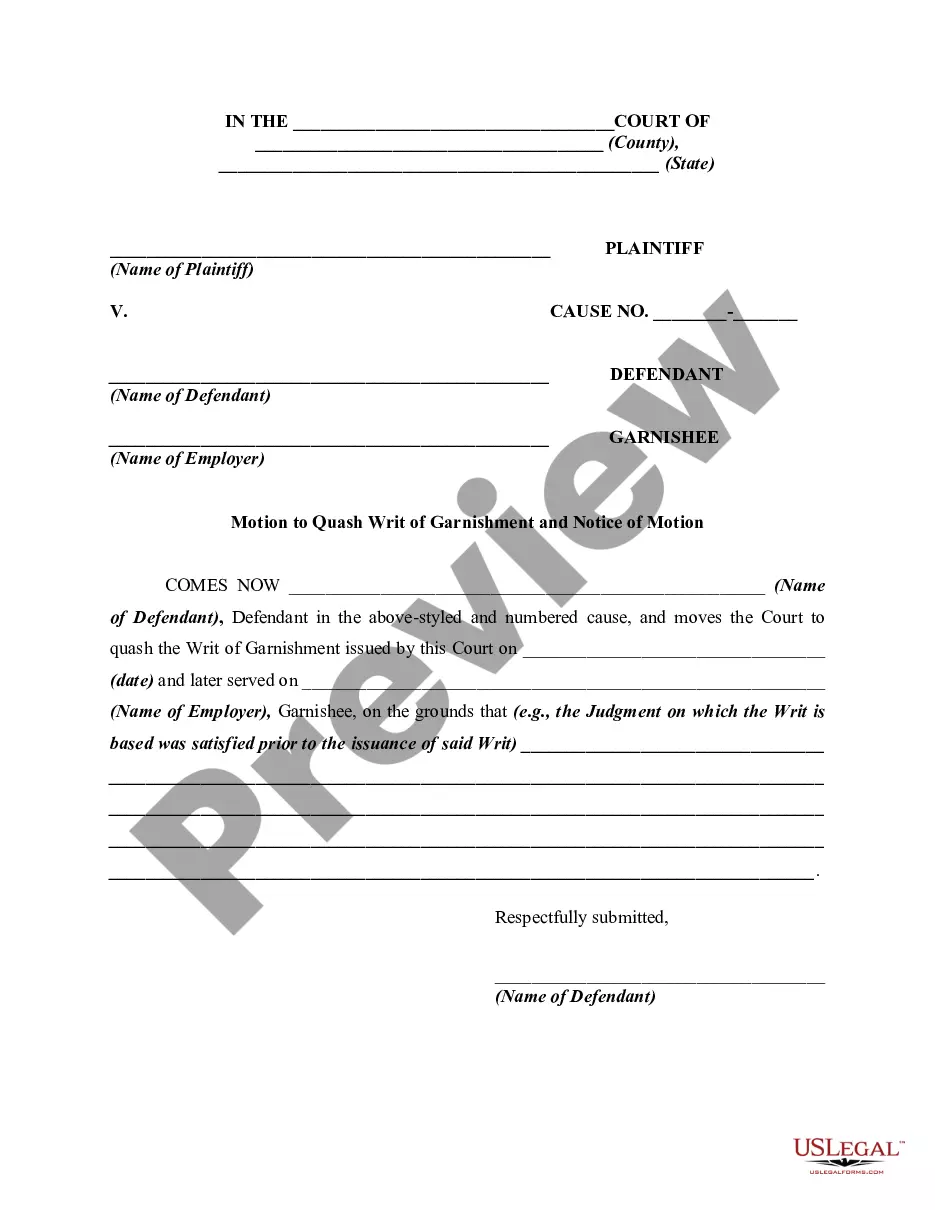
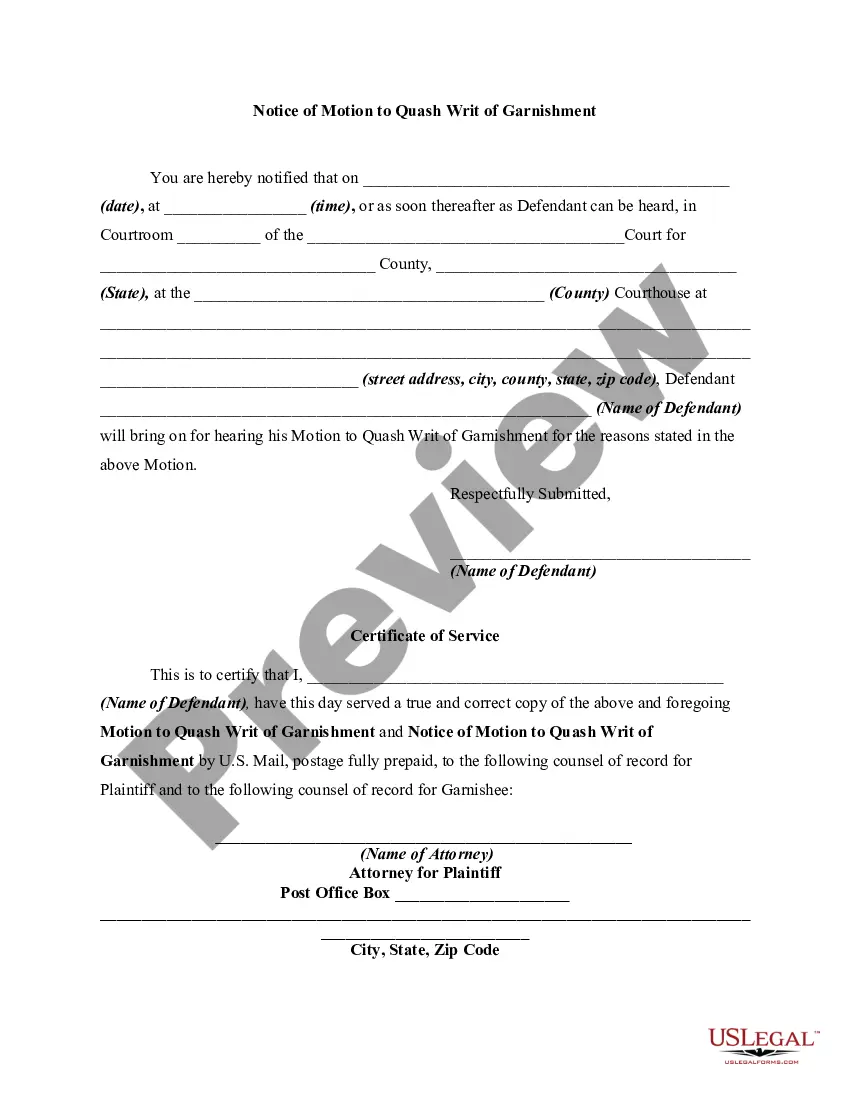
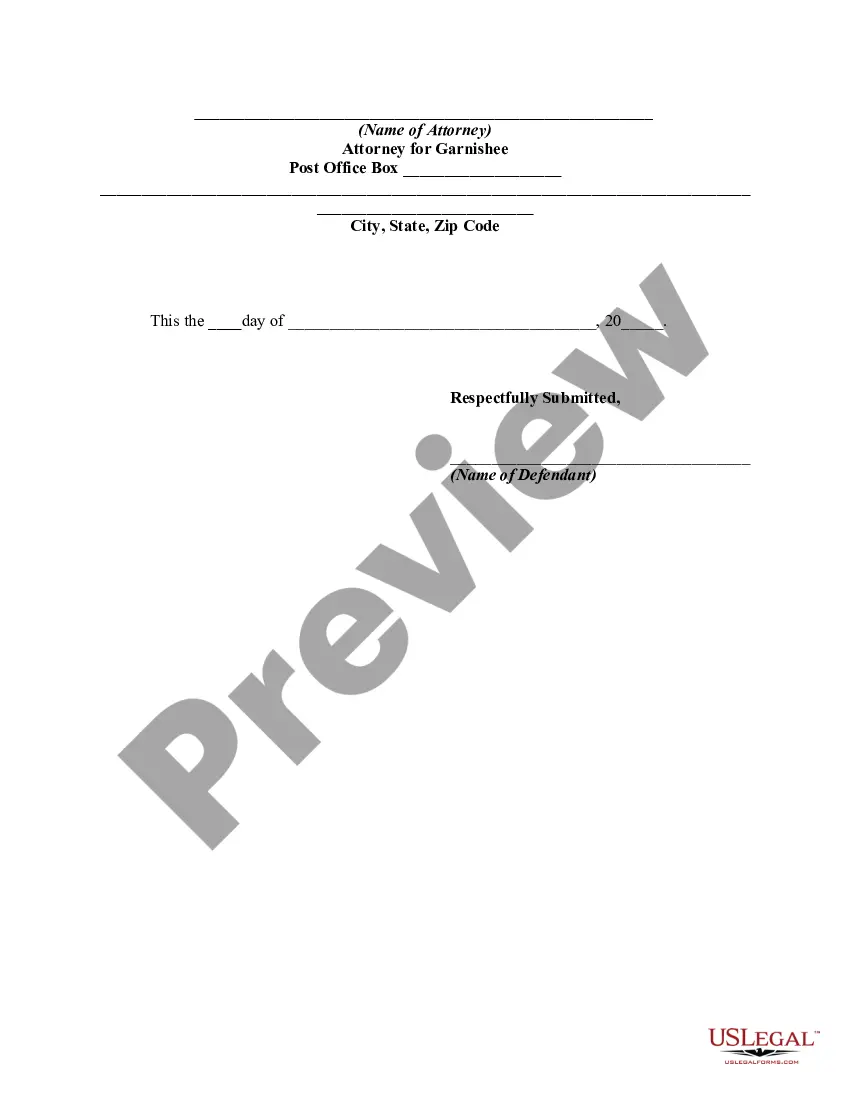
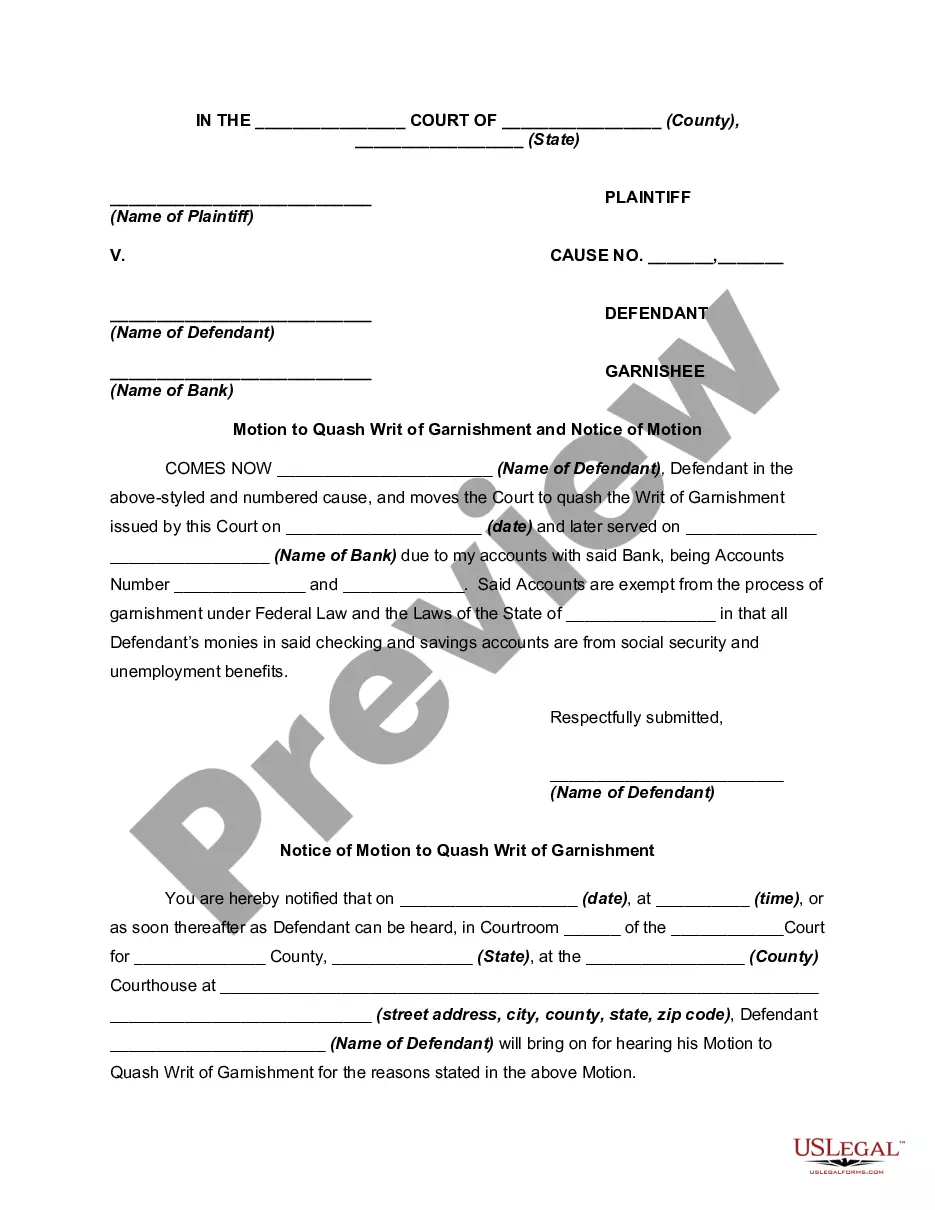
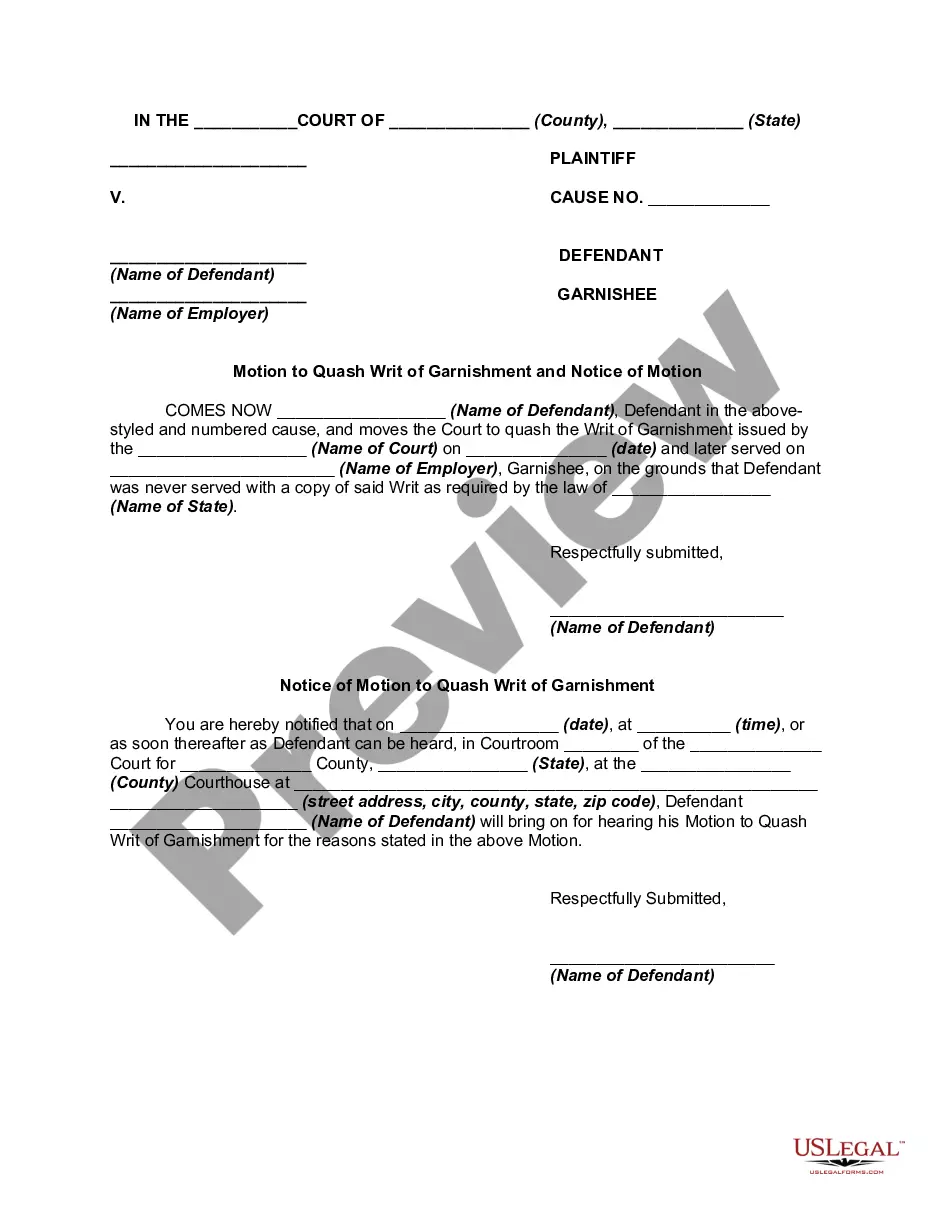
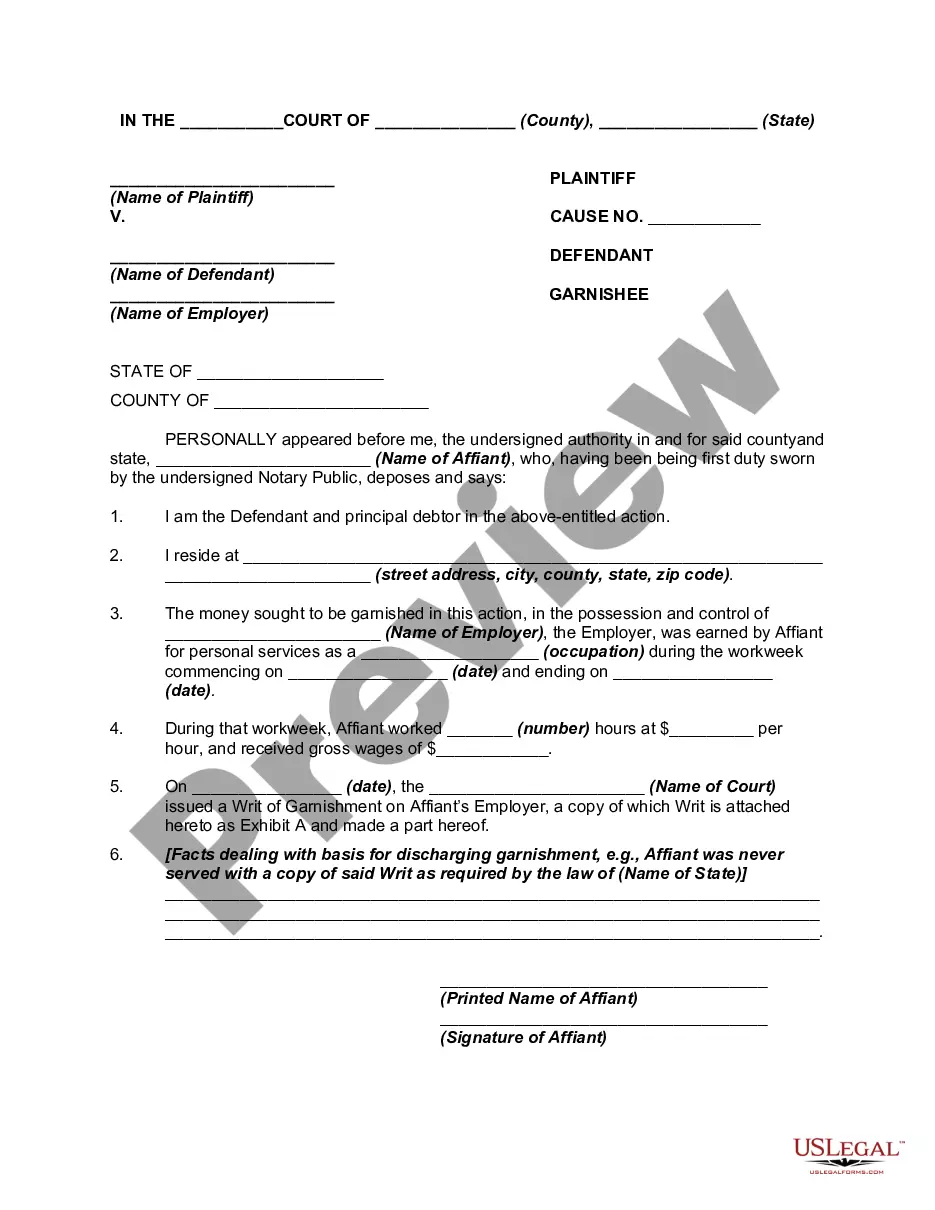
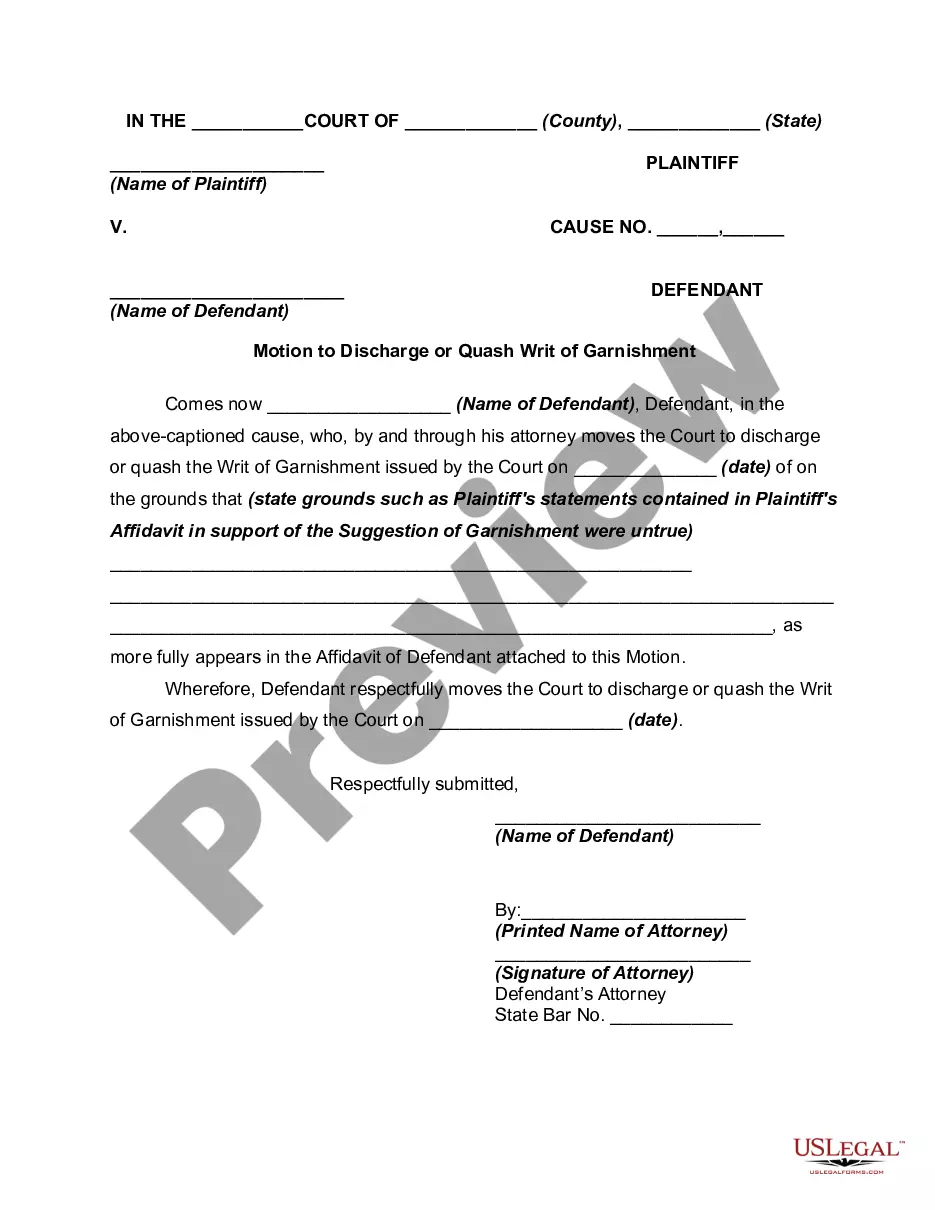
Motion State Garnishment Format
Description
Get your form ready online
Our built-in tools help you complete, sign, share, and store your documents in one place.
Make edits, fill in missing information, and update formatting in US Legal Forms—just like you would in MS Word.
Download a copy, print it, send it by email, or mail it via USPS—whatever works best for your next step.
Sign and collect signatures with our SignNow integration. Send to multiple recipients, set reminders, and more. Go Premium to unlock E-Sign.
If this form requires notarization, complete it online through a secure video call—no need to meet a notary in person or wait for an appointment.
We protect your documents and personal data by following strict security and privacy standards.

Make edits, fill in missing information, and update formatting in US Legal Forms—just like you would in MS Word.

Download a copy, print it, send it by email, or mail it via USPS—whatever works best for your next step.

Sign and collect signatures with our SignNow integration. Send to multiple recipients, set reminders, and more. Go Premium to unlock E-Sign.

If this form requires notarization, complete it online through a secure video call—no need to meet a notary in person or wait for an appointment.

We protect your documents and personal data by following strict security and privacy standards.
Looking for another form?




How to fill out Motion Of Defendant To Discharge Or Quash Writ Of Garnishment And Notice Of Motion?
Creating legal documents from the ground up can occasionally feel overwhelming.
Certain situations may require extensive research and substantial financial investment.
If you’re seeking a more straightforward and budget-friendly approach to preparing Motion State Garnishment Format or any other paperwork without unnecessary complications, US Legal Forms is always accessible.
Our digital library of over 85,000 current legal forms covers nearly every facet of your financial, legal, and personal matters. With just a few clicks, you can swiftly access state- and county-specific forms meticulously assembled for you by our legal professionals.
Scrutinize the form preview and descriptions to confirm that you are retrieving the document you need.
- Utilize our platform whenever you require reliable and trustworthy services through which you can effortlessly find and download the Motion State Garnishment Format.
- If you’re familiar with our site and have set up an account with us before, simply Log In to your account, choose the form, and download it instantly or re-download it at any moment in the My documents section.
- Don’t have an account? No issue. It takes just a few minutes to register and browse the catalog.
- However, before diving straight into downloading Motion State Garnishment Format, adhere to these guidelines.
Form popularity
FAQ
Garnishment rules in Minnesota involve specific legal procedures that must be followed for the process to be valid. Creditors must give you notice before garnishment begins, and you have the right to contest it in court. Utilizing the motion state garnishment format can clarify your situation and ensure you adhere to legal expectations. If you need to file or respond to a garnishment, USLegalForms offers the tools and templates to simplify your experience.
The maximum amount that can be garnished from your paycheck in Minnesota is determined by state and federal laws. Typically, creditors can only take up to 25% of your disposable earnings or the amount by which your earnings exceed 30 times the federal minimum wage, whichever is lower. Understanding the motion state garnishment format can help you negotiate better. For assistance, consider using USLegalForms to access templates that can help protect your income.
In Minnesota, wage garnishment is subject to certain rules that protect your earnings. Generally, creditors must file a court order to garnish wages, and the amount deducted cannot exceed a certain percentage of your disposable income. It’s important to understand the specifics of the motion state garnishment format to ensure you comply with state laws. If you need guidance, USLegalForms provides resources to help you navigate these requirements effectively.
Writing a letter to stop wage garnishment requires clarity and professionalism. Begin your letter with your details, state the issue clearly, and provide valid reasons for your request. Be sure to follow the Motion state garnishment format to present your case effectively, demonstrating your efforts to address the debt responsibly.
Typically, you cannot write off wage garnishments as they are legal obligations. However, under certain circumstances, like declaring bankruptcy, you may be able to eliminate associated debts. To explore your options, consulting legal resources or professionals who can guide you through the Motion state garnishment format can be beneficial for understanding your rights better.
To request a payment plan, contact the creditor or the court responsible for the garnishment promptly. Clearly explain your financial situation and propose a reasonable payment plan that you can maintain. Make sure to document this request formally, using the Motion state garnishment format to enhance your chances of success. This structured approach shows your commitment to resolving the issue.
When you receive a wage garnishment letter, it's essential to act quickly. First, review the letter carefully and understand the details, including the amount owed and the creditor involved. You can then respond by either agreeing to the garnishment or contesting it if you believe it is unjust. Using the Motion state garnishment format can help you structure your response effectively.
When writing a letter to a judge regarding garnishment, begin by clearly stating your case and the reasons for your request. Include relevant details, like case numbers and any previous communications with creditors. For assistance in crafting this letter using the correct motion state garnishment format, consider accessing resources on the US Legal Forms platform.
A release of garnishment letter is a formal document stating that a debt has been settled, and that the garnishment on your wages or assets is no longer valid. This letter is crucial for clearing your credit history related to the debt. To generate a properly formatted release letter, look into templates available on the US Legal Forms platform, which often includes guidance on the motion state garnishment format.
To remove a garnishment from your record, you must usually file a motion with the appropriate court, demonstrating that the debt has been settled. This process may require legal documentation and adherence to established procedures. The US Legal Forms platform can provide you with the necessary templates and insights into the motion state garnishment format to streamline your filing.