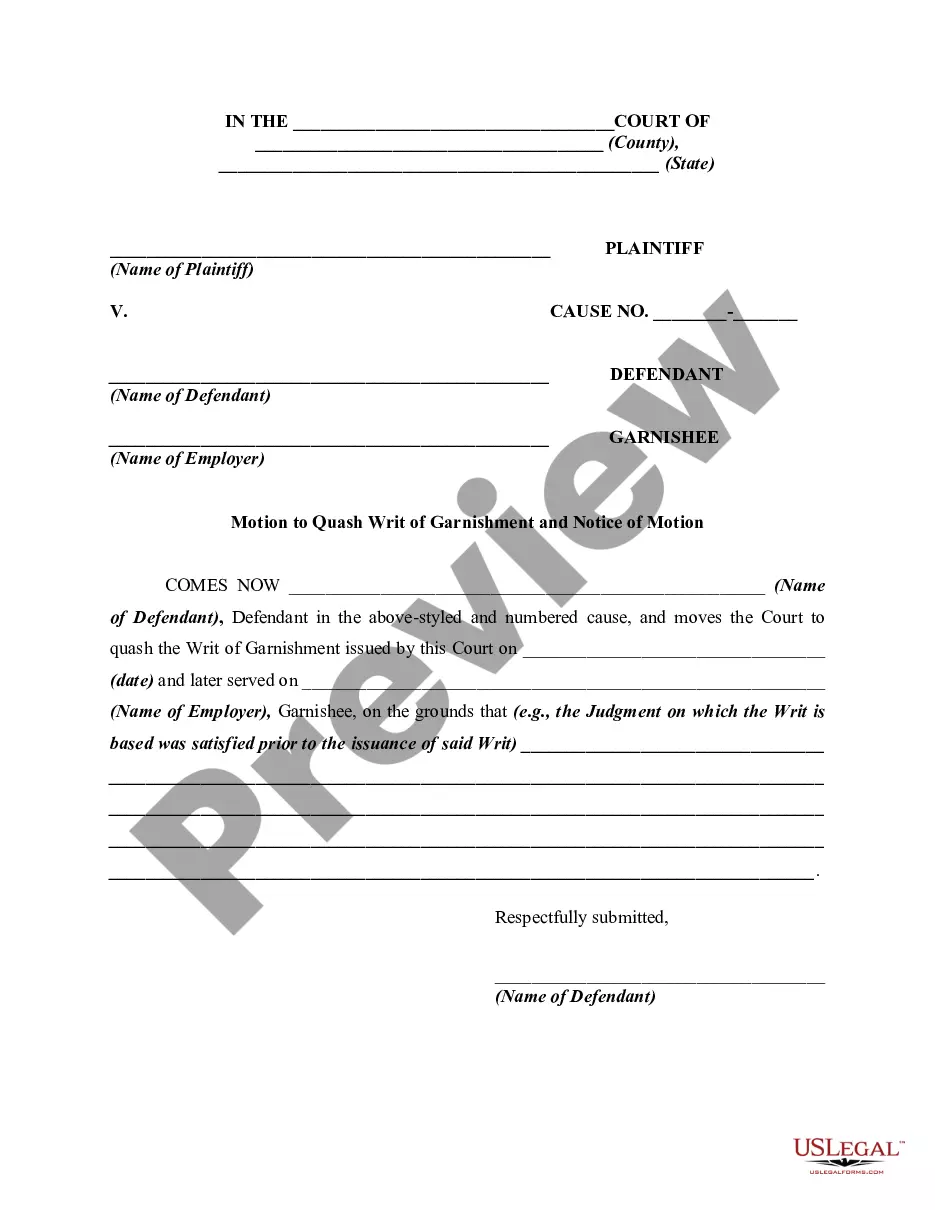
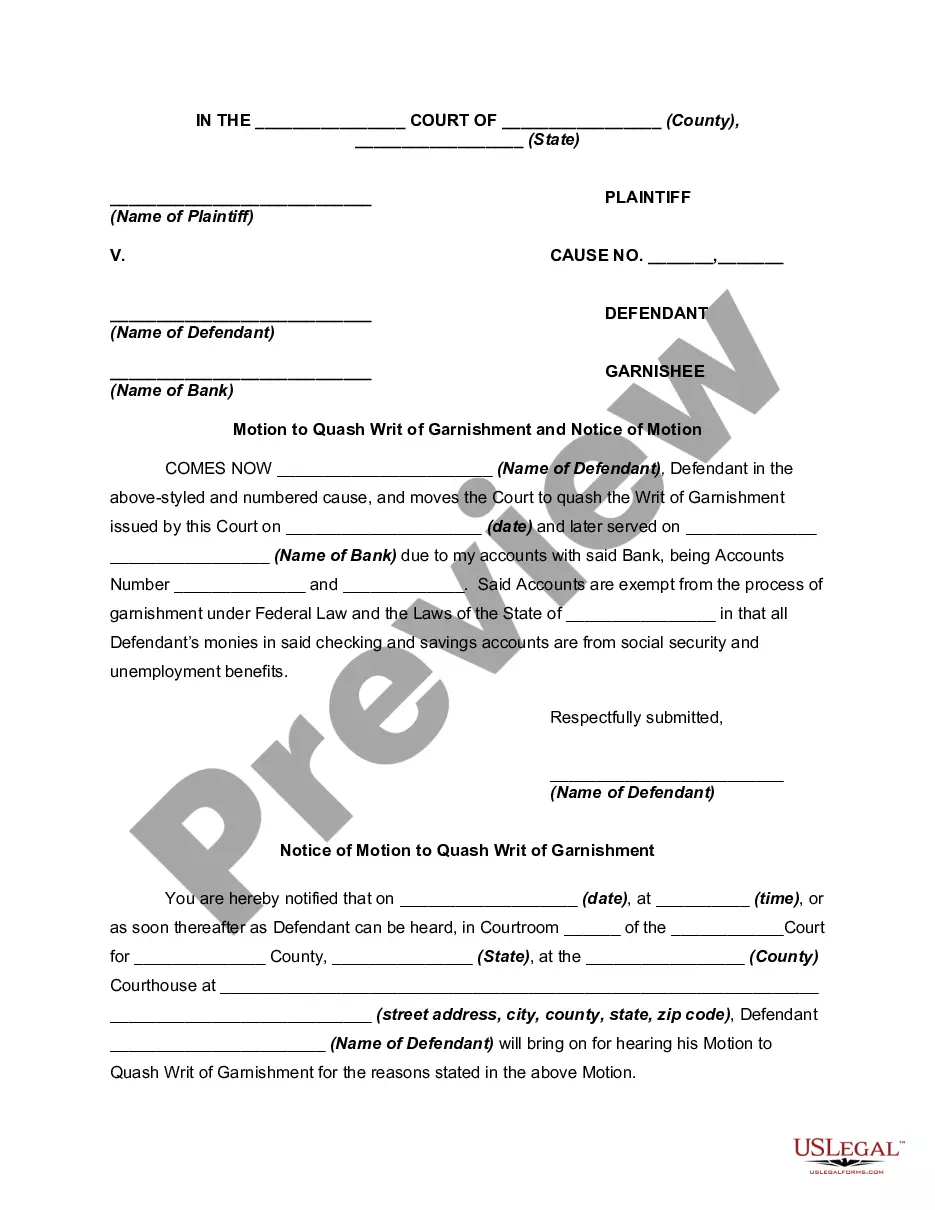
Motion State Garnishment For State Taxes
Description
Get your form ready online
Our built-in tools help you complete, sign, share, and store your documents in one place.
Make edits, fill in missing information, and update formatting in US Legal Forms—just like you would in MS Word.
Download a copy, print it, send it by email, or mail it via USPS—whatever works best for your next step.
Sign and collect signatures with our SignNow integration. Send to multiple recipients, set reminders, and more. Go Premium to unlock E-Sign.
If this form requires notarization, complete it online through a secure video call—no need to meet a notary in person or wait for an appointment.
We protect your documents and personal data by following strict security and privacy standards.

Make edits, fill in missing information, and update formatting in US Legal Forms—just like you would in MS Word.

Download a copy, print it, send it by email, or mail it via USPS—whatever works best for your next step.

Sign and collect signatures with our SignNow integration. Send to multiple recipients, set reminders, and more. Go Premium to unlock E-Sign.

If this form requires notarization, complete it online through a secure video call—no need to meet a notary in person or wait for an appointment.

We protect your documents and personal data by following strict security and privacy standards.
Looking for another form?







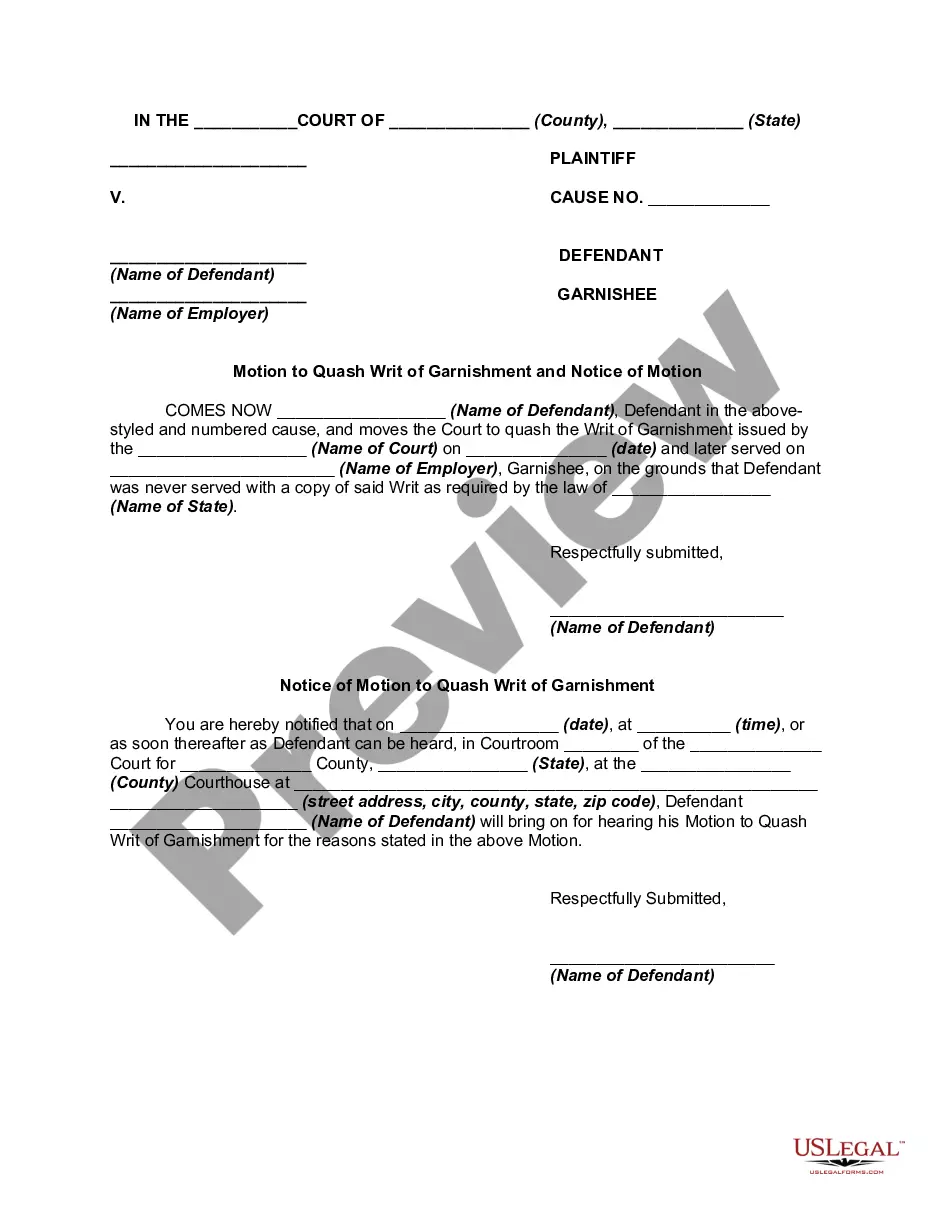
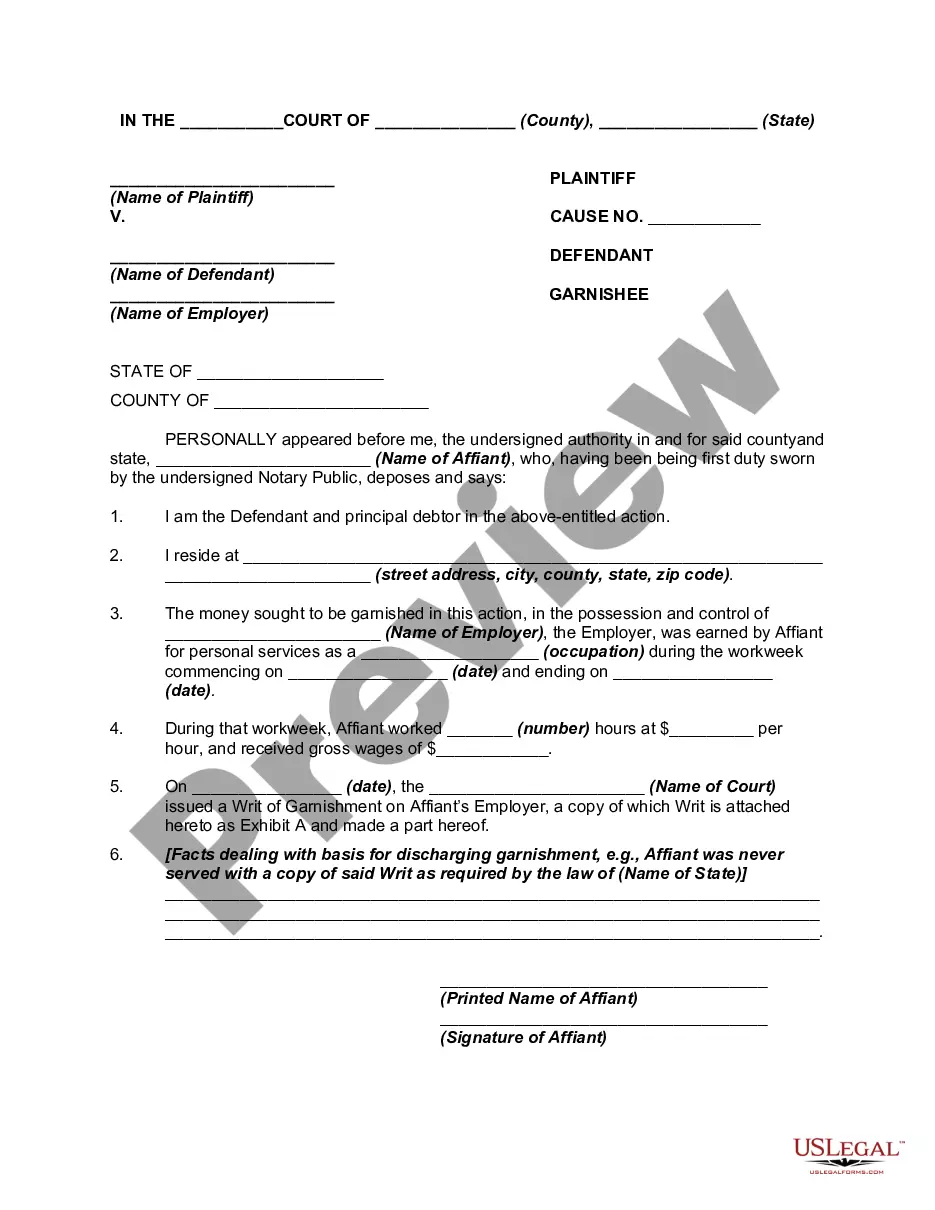
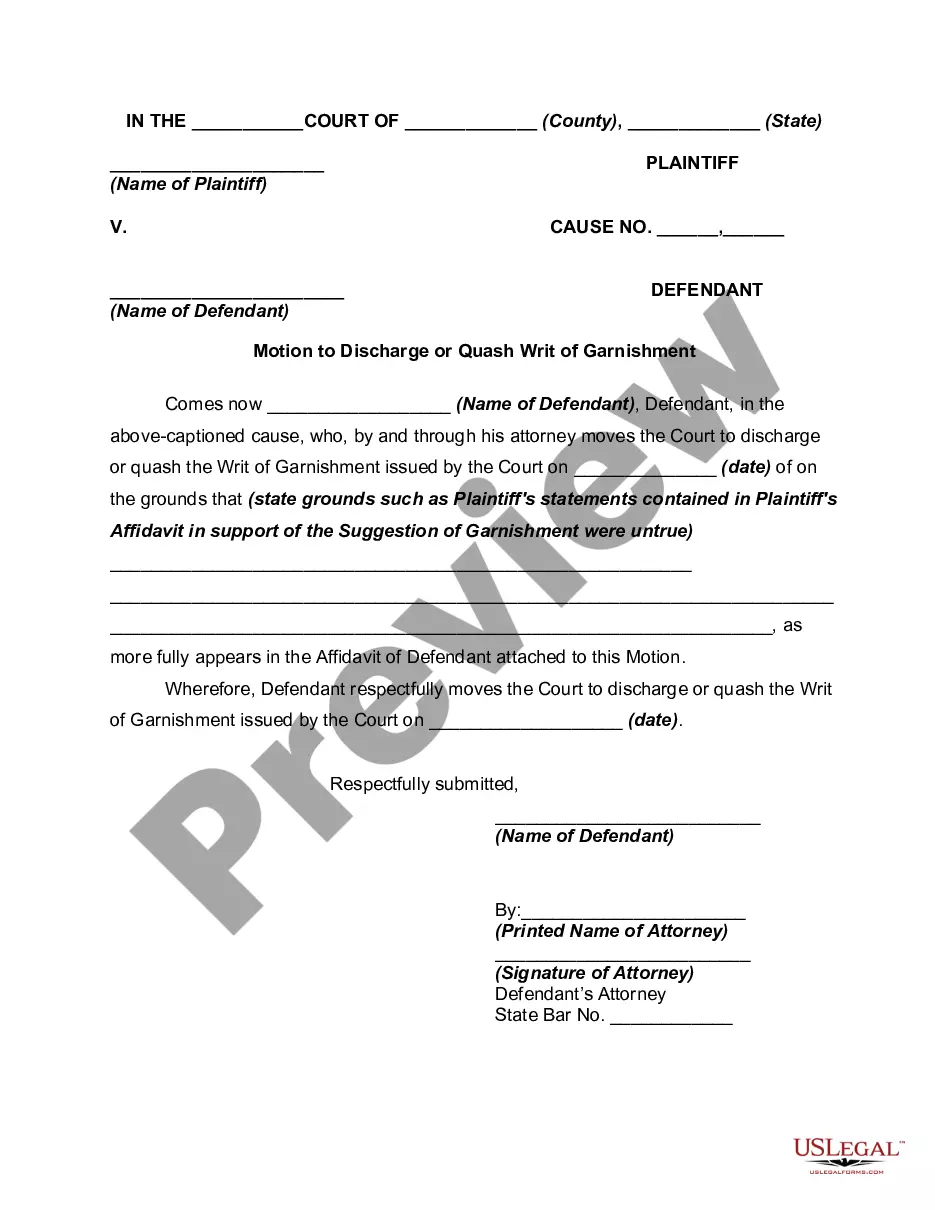
How to fill out Motion Of Defendant To Discharge Or Quash Writ Of Garnishment And Notice Of Motion?
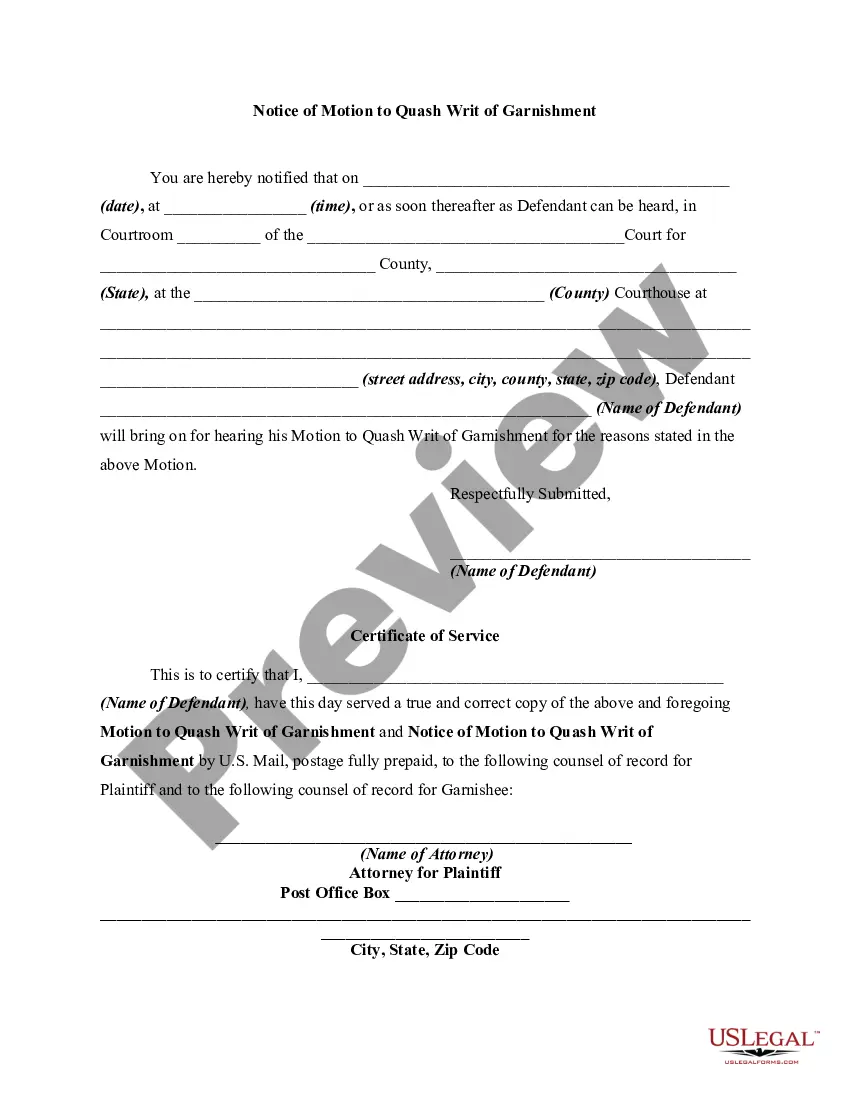
The Motion State Garnishment For State Taxes displayed here is a reusable legal document created by qualified attorneys in accordance with national and local laws and regulations.
For over 25 years, US Legal Forms has offered individuals, businesses, and lawyers more than 85,000 authenticated, state-specific forms for various business and personal situations. It’s the quickest, easiest, and most reliable method to access the documents you require, as the service ensures the utmost level of data security and malware protection.
Take advantage of the same document again whenever necessary. Access the My documents section in your account to redownload any previously acquired forms. Subscribe to US Legal Forms to have verified legal templates available for all of life's situations.
- Search for the document you need and review it.
- Browse through the sample you found and preview it or read the form description to confirm it meets your needs. If it doesn’t, use the search feature to find the correct one. Click Buy Now once you have found the template you need.
- Select a subscription plan that fits your needs and create an account. Use PayPal or a credit card to make a quick payment. If you already have an account, Log In and verify your subscription to continue.
- Choose the format you desire for your Motion State Garnishment For State Taxes (PDF, Word, RTF) and download the template onto your device.
- Print the template to fill it out by hand. Alternatively, utilize an online versatile PDF editor to efficiently and accurately complete and sign your form with an electronic signature.
Form popularity
FAQ
Garnishment payments for state taxes are typically not deductible from your taxable income. However, the garnished funds directly relate to your tax liabilities, which might affect your overall financial situation. If you have questions about how motion state garnishment for state taxes interacts with your tax filings, consulting with a tax professional or using platforms like US Legal Forms can provide clarity on these complex matters. This ensures you adhere to tax regulations while optimizing your financial strategies.
In Minnesota, the rules regarding motion state garnishment for state taxes involve specific procedures that creditors must follow. They typically require a court order to initiate garnishment against your wages or bank account. It is essential to understand that only a portion of your income can be garnished, protecting some of your earnings. Staying informed about these rules can help you manage your finances more effectively.
Yes, the IRS can take action to collect unpaid federal taxes, which may include garnishing state tax refunds. When your federal tax liability is outstanding, the IRS has the authority to intercept state funds as a way to settle your debts. This underscores the importance of addressing both state and federal tax obligations promptly. Platforms like US Legal Forms can aid you in understanding the complexity of motion state garnishment for state taxes.
To determine if your tax refund will be garnished, you should check for any outstanding debts you owe to the state or IRS. States often garnish refunds to settle unpaid taxes or debts, and you usually receive a notification if this occurs. Staying informed about your outstanding obligations can help you anticipate potential garnishments. For assistance, consider using US Legal Forms which provides templates and resources related to motion state garnishment for state taxes.
In Missouri, garnishment laws allow the state to collect unpaid taxes by seizing funds from your wages or bank accounts. The process begins with the state issuing a garnishment order, and it typically requires notifying you before taking action. Understanding this process can help you prepare and respond correctly. Utilizing tools like US Legal Forms can guide you through the motion state garnishment for state taxes in Missouri.
Yes, your state taxes can be garnished under certain conditions. When you owe back taxes, states may pursue garnishment actions to collect what you owe. This process often occurs after you receive a notice or demand for payment. To manage this effectively, you can use resources like US Legal Forms to navigate the steps involved in a motion state garnishment for state taxes.
You can find out if your tax return will be garnished by checking with your state tax agency or reviewing any outstanding debts. If you have received notices from creditors or have legal obligations, garnishment may be on the horizon. Being proactive about the motion state garnishment for state taxes can help you stay ahead of potential issues.
Your state taxes may be taken for various reasons, including unpaid debts, child support obligations, or outstanding loans. If your financial obligations are not met, agencies may initiate garnishment proceedings. Familiarizing yourself with the motion state garnishment for state taxes can help you manage your obligations more effectively.
Yes, your state tax return can be garnished under certain circumstances, such as unpaid debts or taxes. If a creditor obtains a judgment against you, they may seek to garnish your refund. Understanding the implications of the motion state garnishment for state taxes can prepare you for potential financial outcomes.
Generally, garnishments are taken out before taxes are calculated. This means that the withheld amount will not be included in your taxable income. Knowing the details of the motion state garnishment for state taxes can help you understand how your earnings are affected.