Adverse Possetion
Description

Get your form ready online
Our built-in tools help you complete, sign, share, and store your documents in one place.
Make edits, fill in missing information, and update formatting in US Legal Forms—just like you would in MS Word.
Download a copy, print it, send it by email, or mail it via USPS—whatever works best for your next step.
Sign and collect signatures with our SignNow integration. Send to multiple recipients, set reminders, and more. Go Premium to unlock E-Sign.
If this form requires notarization, complete it online through a secure video call—no need to meet a notary in person or wait for an appointment.
We protect your documents and personal data by following strict security and privacy standards.

Make edits, fill in missing information, and update formatting in US Legal Forms—just like you would in MS Word.

Download a copy, print it, send it by email, or mail it via USPS—whatever works best for your next step.

Sign and collect signatures with our SignNow integration. Send to multiple recipients, set reminders, and more. Go Premium to unlock E-Sign.

If this form requires notarization, complete it online through a secure video call—no need to meet a notary in person or wait for an appointment.

We protect your documents and personal data by following strict security and privacy standards.
Looking for another form?
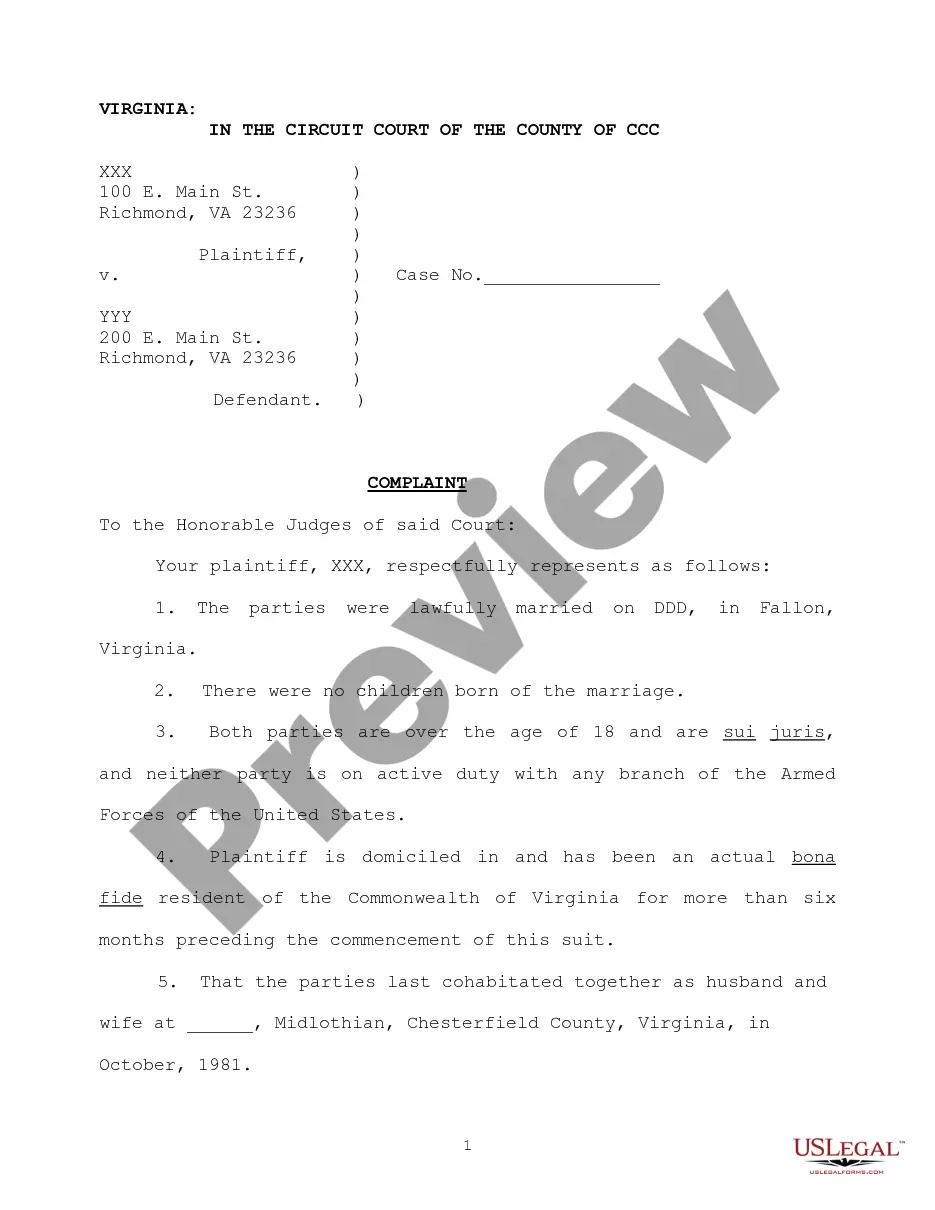


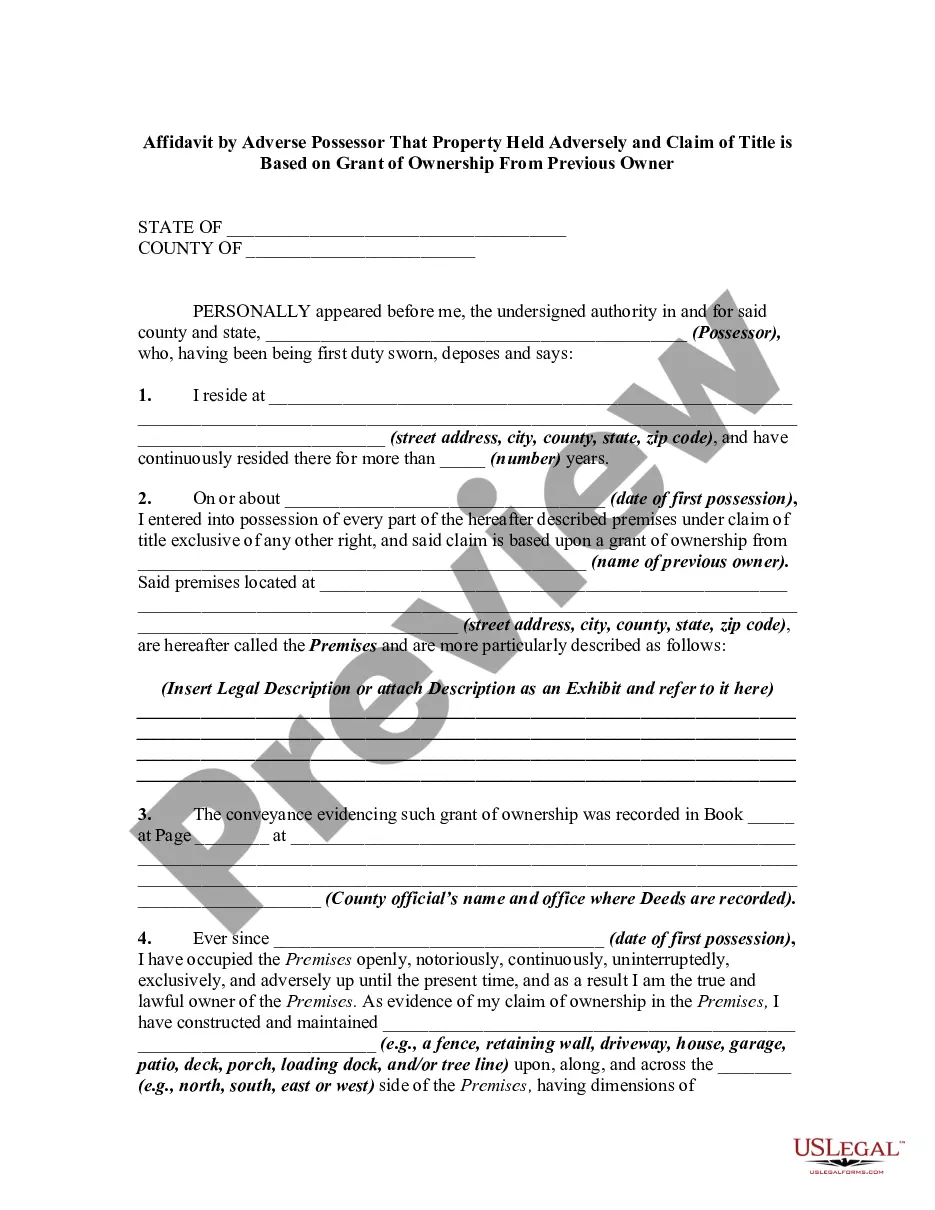
How to fill out Affidavit By Adverse Possessor That Property Held Adversely And Claim Of Title Is Based On Grant Of Ownership From Previous Owner - Squatters Rights?
- If you're a returning user, log into your account to download your needed adverse possession form by selecting the Download option. Ensure your subscription remains active; if it has expired, renew it as per your payment plan.
- For first-time users, start by reviewing the form descriptions and preview modes. Verify that you've selected the correct form aligned with your jurisdiction.
- If the initial template doesn't fit your needs, use the Search bar on our site to find an alternative. Once you've identified the right one, proceed to the next step.
- Purchase your document by clicking the Buy Now button and choosing your preferred subscription plan. An account registration may be required to access the comprehensive library.
- Complete your transaction by entering your credit card or PayPal details to finalize your subscription.
- Download the adverse possession form directly to your device, ensuring it’s accessible via the My Forms section of your profile whenever required.
Utilizing US Legal Forms not only provides access to over 85,000 editable legal templates but also connects you with premium experts to assist in form completion, ensuring that your documents are precise and legally robust.
Take advantage of the benefits available through US Legal Forms and ensure your legal needs are met efficiently. Start your journey towards securing your property rights today!
Form popularity
FAQ
Yes, adverse possession can transfer to a new owner if the property is sold. Once the original possessor establishes their claim, subsequent owners inherit the title and the rights associated with adverse possession. This means that any new owner will also have to respect the established rights. It is crucial for buyers to conduct thorough research on property histories to ensure they are aware of any adverse possession claims.
To record adverse possession, you need to file a claim in the local county clerk's office. You must provide proof of your continuous and exclusive use of the property for the required duration. It is wise to consult with a legal professional or use services like US Legal Forms to ensure that your claim is properly documented and filed. Proper recording is crucial to protecting your rights in adverse possession cases.
In Illinois, adverse possession typically requires continuous and exclusive use of the property for at least 20 years. This time frame is essential for establishing your claim to the property. During this period, you must also occupy the land openly, meaning no secret possession. Understanding these requirements can help you navigate the process of adverse possession effectively.
To claim land that no one owns, you typically need to establish adverse possession. This involves occupying the property openly and continuously for the required time set by state law. Additionally, your claim must demonstrate that you are using the property as if you own it. Utilizing resources like USLegalForms can help clarify the necessary steps and legal requirements involved in this process.
In Pennsylvania, the period for claiming adverse possession is generally 21 years. This time frame allows the possessor to use and maintain the property openly, continuously, and without dispute. After this duration, the possessor can potentially establish legal ownership through adverse possession. If you’re considering this route, be sure to document your use of the property thoroughly.
Claiming unclaimed land is not as straightforward as it may seem. To legally obtain ownership, one typically needs to satisfy the requirements of adverse possession, which include occupying the land openly, continuously, and without permission for a specific period. Furthermore, the process may vary from state to state. It's crucial to consult legal resources or platforms like USLegalForms to guide you through the necessary steps.
In general, nearly all land in the US has an owner, whether private or government. However, there are instances of unclaimed land, often due to abandonment or a lack of documentation. In such cases, adverse possession might allow individuals to take legal ownership of these properties after fulfilling the necessary conditions. It’s worthwhile to explore this option if you find such land.
When no one owns a piece of land, it is often referred to as 'vacant land' or 'abandoned property.' Understanding the concept of adverse possession can be essential in such situations. By meeting certain criteria established by state law, an individual may claim ownership of this land after a specified period of time. Consequently, adverse possession can provide a pathway to ownership.
In Minnesota, the standard period for claiming adverse possession is 15 years. During this time, you must demonstrate uninterrupted and open use of the property. Additionally, you must show that your possession was exclusive, meaning no one else claimed ownership. If you meet these criteria, you may successfully claim the property through adverse possession.
Mowing your land by a neighbor does not automatically grant them rights to claim ownership through adverse possession in Minnesota. For a claim to be valid, the neighbor must possess the land openly and continuously for a 15-year period without your permission. However, consistently maintaining the property could be seen as a step toward an adverse possession claim if other legal requirements are met. It is advisable to consult resources from uslegalforms to understand your rights and protect your property.