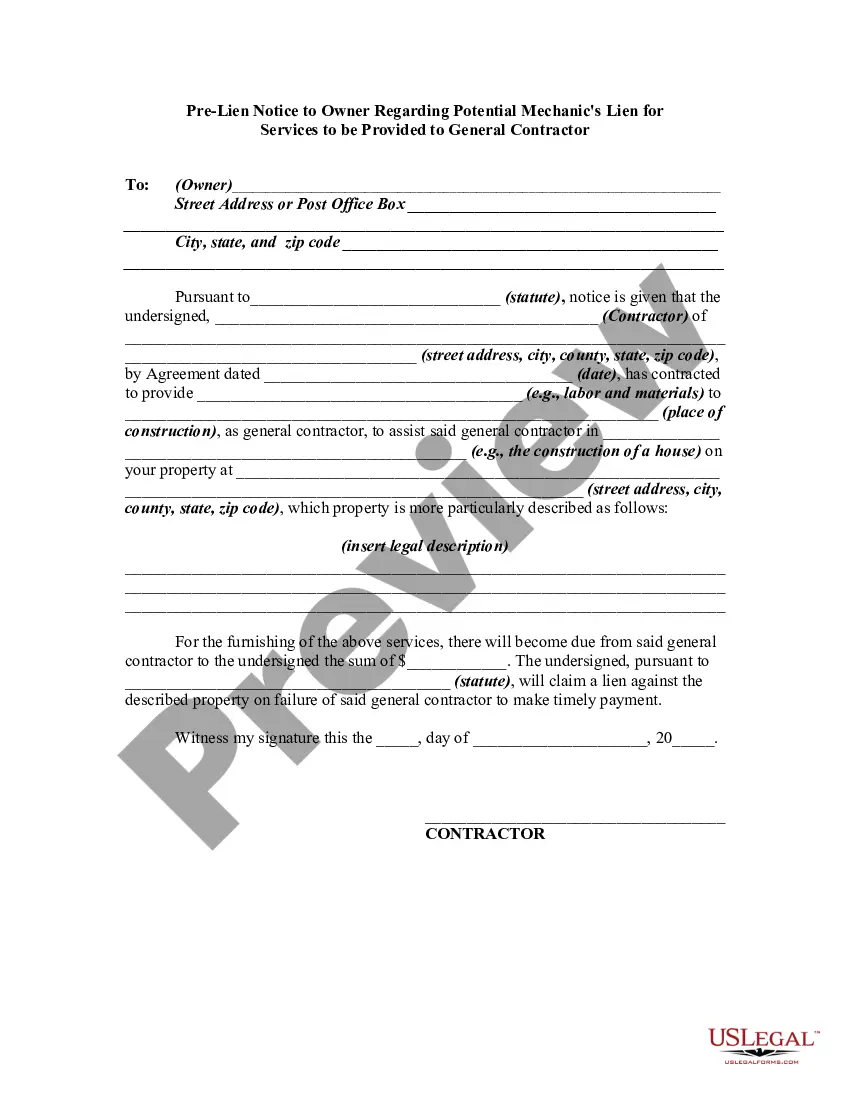
Notice Potential Lien For Nonpayment
Description
Get your form ready online
Our built-in tools help you complete, sign, share, and store your documents in one place.
Make edits, fill in missing information, and update formatting in US Legal Forms—just like you would in MS Word.
Download a copy, print it, send it by email, or mail it via USPS—whatever works best for your next step.
Sign and collect signatures with our SignNow integration. Send to multiple recipients, set reminders, and more. Go Premium to unlock E-Sign.
If this form requires notarization, complete it online through a secure video call—no need to meet a notary in person or wait for an appointment.
We protect your documents and personal data by following strict security and privacy standards.

Make edits, fill in missing information, and update formatting in US Legal Forms—just like you would in MS Word.

Download a copy, print it, send it by email, or mail it via USPS—whatever works best for your next step.

Sign and collect signatures with our SignNow integration. Send to multiple recipients, set reminders, and more. Go Premium to unlock E-Sign.

If this form requires notarization, complete it online through a secure video call—no need to meet a notary in person or wait for an appointment.

We protect your documents and personal data by following strict security and privacy standards.
Looking for another form?

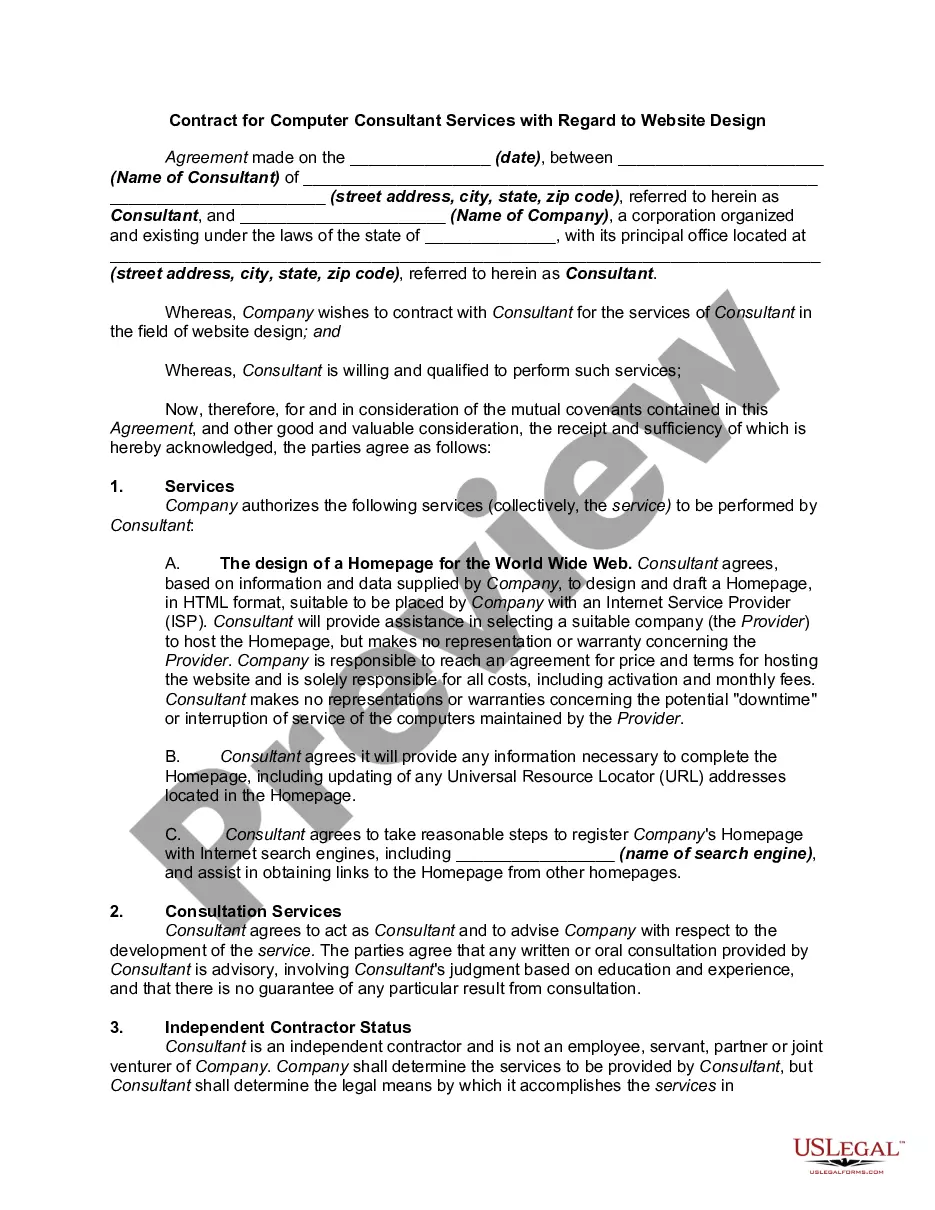



How to fill out Pre-Lien Notice To Owner Regarding Potential Mechanic's Lien For Services To Be Provided To General Contractor?
- If you're a returning user, log in to your account and access the form template you need by clicking the Download button; make sure your subscription is active.
- For first-time users, start by reviewing the form details in Preview mode to confirm it aligns with your specific needs and local regulations.
- If you need a different template, utilize the Search tab above to find the appropriate one, ensuring it fulfills your requirements.
- Make your purchase by selecting the Buy Now button and choosing your preferred subscription plan; create an account for full access to resources.
- Complete your payment using your credit card or PayPal account, securing your access to high-quality legal documents.
- Download the completed form to your device, and easily access it anytime from the My Forms section of your profile.
Utilizing US Legal Forms not only simplifies the process of obtaining legal documentation but also guarantees precision and compliance with legal standards.
Start streamlining your legal tasks today—visit US Legal Forms to get started!
Form popularity
FAQ
Yes, a lien can be placed on your house even if there is no formal contract. For instance, unpaid taxes or court judgments can lead to a notice potential lien for nonpayment without a direct agreement. Understanding your financial obligations and maintaining transparency with creditors is vital. For assistance in navigating these situations, consider using uslegalforms to explore your options.
If a lien has been placed on your property, it’s crucial to act quickly. First, review the lien documents to understand the details and the amount owed. Next, consider negotiating with the creditor to resolve the debt and possibly remove the lien. You can also reach out to uslegalforms for guidance on handling and resolving the notice potential lien for nonpayment.
Creditors access public records to file a lien against your home. They may do this due to unpaid bills or loans, and you might receive no direct communication about the lien initially. The notice potential lien for nonpayment can often be filed without notifying homeowners in advance. Regularly reviewing your credit report and property records can help you stay informed.
Yes, a lien can be placed on your property without your knowledge. This often happens when unpaid debts lead a creditor to file a notice potential lien for nonpayment. You may not be informed until you receive a formal notice or attempt to sell your property. It's essential to regularly check public records to avoid surprises regarding your property.
It is possible for someone to place a lien on your car without your prior knowledge. Similar to property liens, this can happen if a creditor has a legal claim against you. Check your vehicle title and local DMV records to stay informed. To ensure you're covered, consider utilizing US Legal Forms to stay updated on your rights.
The conditions for placing a lien typically involve a debt that remains unpaid. Creditors must have legal justification, such as a contract, to establish a lien. Furthermore, compliance with state laws is crucial in filing the lien correctly. For full clarity on these conditions, refer to the resources available at US Legal Forms.
Yes, someone can place a lien on your property without notifying you beforehand. This often occurs if a creditor has a legal claim against you for unpaid debts. However, you will be informed of the lien through legal proceedings or when you seek to sell the property. US Legal Forms can assist you in understanding the implications of such situations.
To determine if a title has a lien, you can conduct a title search through your local county recorder's office. Many states also offer online searches where you can enter the property details. Additionally, US Legal Forms provides access to forms and resources that can guide you through the title search process.
Generally, a lien can be placed without prior notification. However, laws regarding notification can vary by state. It's critical to check your state's regulations to understand your rights. For additional clarity, consult resources at US Legal Forms, which can help you navigate these legal nuances.
To write a letter to release a lien, include essential information such as the original lien details, the date of release, and a clear statement confirming the release. This letter acts as a formal acknowledgment that the debt has been settled. Consider using USLegalForms for streamlined templates, ensuring your Notice potential lien for nonpayment is correctly lifted.