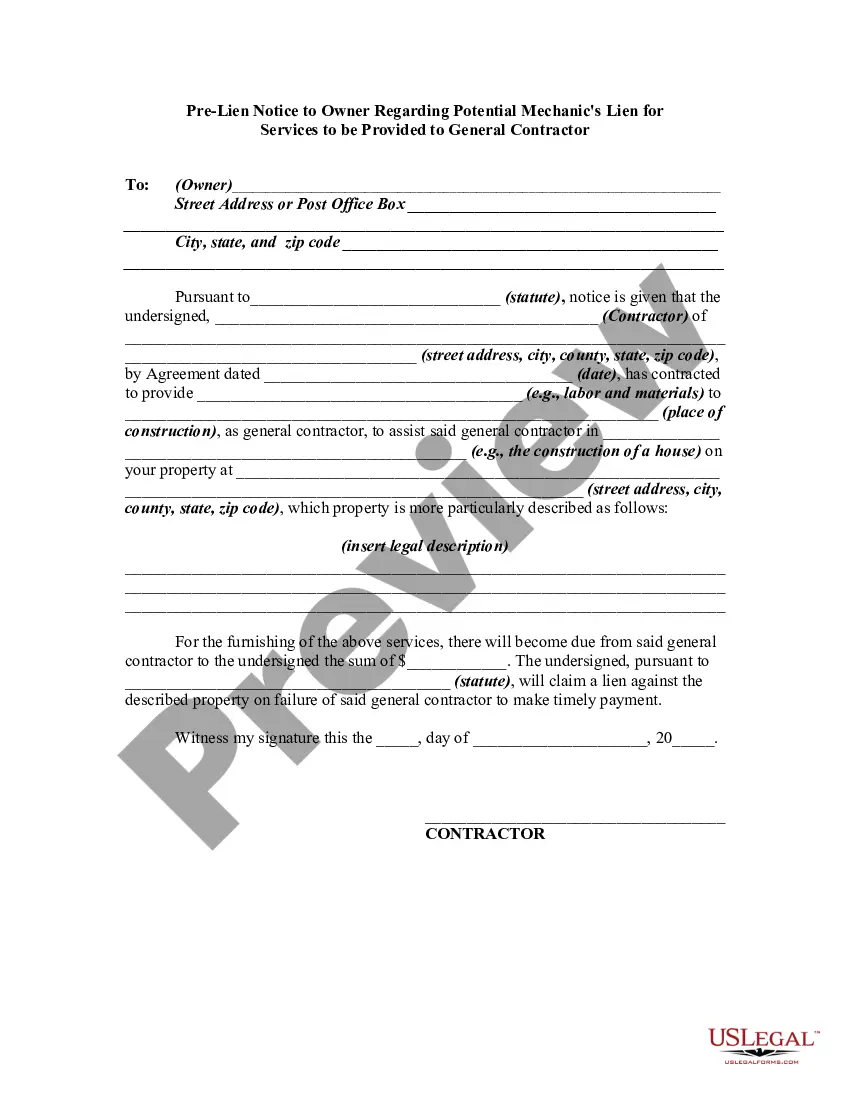
Lien Provided Contractor For Contractors
Description
Get your form ready online
Our built-in tools help you complete, sign, share, and store your documents in one place.
Make edits, fill in missing information, and update formatting in US Legal Forms—just like you would in MS Word.
Download a copy, print it, send it by email, or mail it via USPS—whatever works best for your next step.
Sign and collect signatures with our SignNow integration. Send to multiple recipients, set reminders, and more. Go Premium to unlock E-Sign.
If this form requires notarization, complete it online through a secure video call—no need to meet a notary in person or wait for an appointment.
We protect your documents and personal data by following strict security and privacy standards.

Make edits, fill in missing information, and update formatting in US Legal Forms—just like you would in MS Word.

Download a copy, print it, send it by email, or mail it via USPS—whatever works best for your next step.

Sign and collect signatures with our SignNow integration. Send to multiple recipients, set reminders, and more. Go Premium to unlock E-Sign.

If this form requires notarization, complete it online through a secure video call—no need to meet a notary in person or wait for an appointment.

We protect your documents and personal data by following strict security and privacy standards.
Looking for another form?





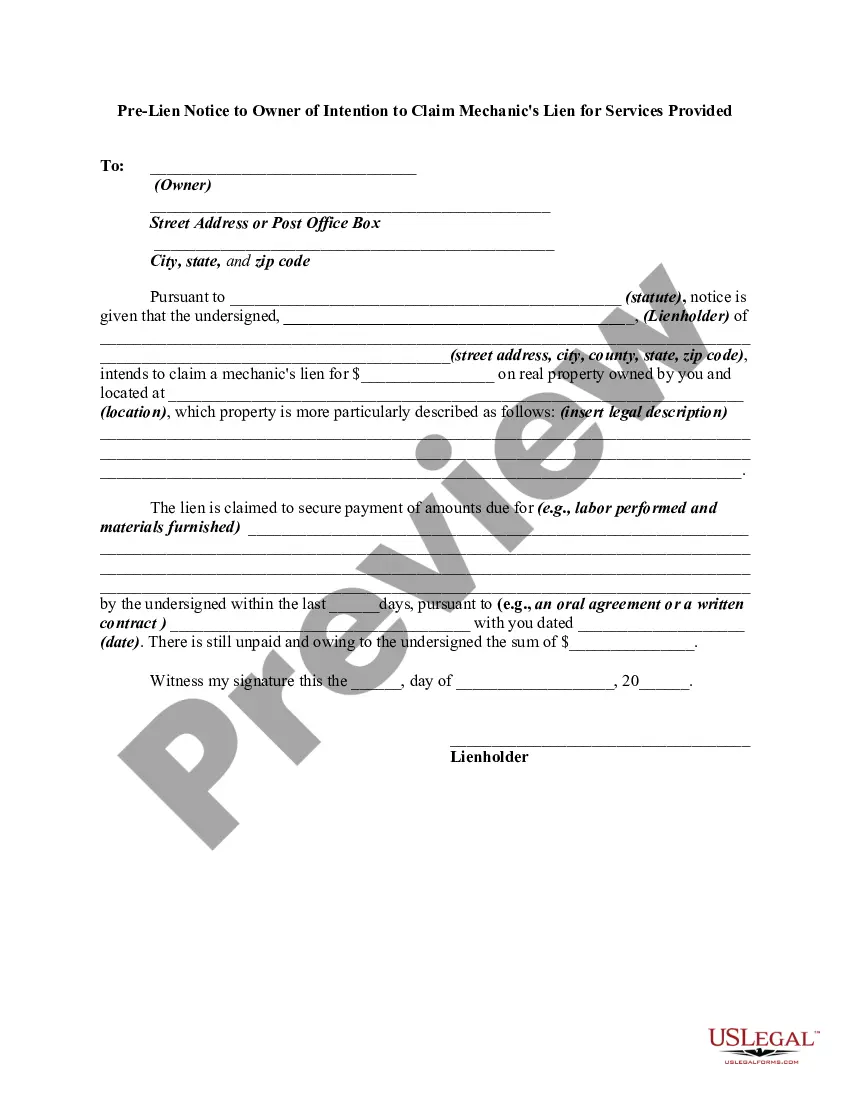
How to fill out Pre-Lien Notice To Owner Regarding Potential Mechanic's Lien For Services To Be Provided To General Contractor?
- Log into your existing US Legal Forms account to access your documents. Ensure your subscription is active; if it's expired, renew it based on your chosen plan.
- Check the Preview mode and read the form description thoroughly to confirm its suitability for your local jurisdiction requirements.
- If the chosen document doesn't meet your needs, utilize the search function at the top to find a more appropriate template.
- Once you find the right form, click on the 'Buy Now' button and select your preferred subscription plan. You'll need to create an account to access all resources.
- Complete your purchase by entering your payment information. You can use a credit card or PayPal for convenience.
- Finally, download your completed form and save it to your device. You can easily access it later from the 'My Forms' section in your profile.
By using US Legal Forms, you can confidently execute all required legal documents with ease. Our extensive collection not only meets diverse needs but also connects you with experts for precise form completion.
Start your journey with US Legal Forms today and ensure your legal documents are in order. Visit our website to learn more!
Form popularity
FAQ
Lien Law 21 in New York focuses on the notification requirements regarding lien filings. Contractors must notify property owners about intent to file a lien, providing transparency in the process. This law helps uphold fair business practices in contracting. Using a lien provided contractor for contractors can help ensure you comply with these regulations and avoid costly misunderstandings.
Lien Law 17 in New York addresses the rights of subcontractors to file liens. This law strengthens the ability of subcontractors to secure payment for their work, even when they have no direct contract with the property owner. Ensuring contractual clarity can prevent disputes over payments. For contractors, a lien provided contractor can assist in navigating these legal intricacies.
Lien Law 4 in New York pertains specifically to property owners and how they must handle payments to contractors. It requires property owners to ensure that contractors receive payment for the work completed. If a contractor files a lien, it is often due to non-payment, making it vital for contractors to understand these rights. Using legal resources can help clarify these processes for contractors facing payment issues.
In New York, you typically have eight months to file a lien for residential projects. For commercial projects, the timeframe extends to four months. It is crucial for contractors to act promptly to protect their financial interests. Using a lien provided contractor for contractors can streamline the filing process and ensure you meet all necessary deadlines.
Yes, a contractor can file a lien without notifying the homeowner, but they must follow legal procedures for the lien to be valid. While this might seem unfair, the law allows contractors to secure their payment rights under certain conditions. It's important for homeowners to be vigilant about any work done on their property to avoid unexpected claims.
To file a contractor's lien in Texas, start by gathering the necessary information, including the property owner's details and the specifics of the work completed. Next, complete the appropriate lien form and file it with the local county clerk's office. Make sure to adhere to Texas's timelines and legal requirements to ensure the lien is legitimate.
A lien is a general term that refers to a legal claim on property to secure payment. A mechanic's lien, on the other hand, is a specific type of lien used by contractors and suppliers to enforce payment for construction-related services. Understanding this distinction is essential for contractors to protect their rights effectively.
In Texas, a contractor must file a lien by completing a specific form and submitting it to the county clerk's office where the property is located. The contractor should include details like the property's description, the amount owed, and the nature of the work performed. Following the correct process ensures that the lien is valid and enforceable.
In Texas, a contractor generally needs a written contract to file a lien on your house. However, there are exceptions, especially if the contractor provided materials or labor that improved the property. It's advisable to consult a legal expert to understand the specific circumstances if this situation arises.
A contractor in Florida has 90 days to file a lien against a property from the last day labor or materials were supplied. This timeframe is critical for ensuring you do not lose your rights to secure payment. Understanding this timeline allows a Lien provided contractor for contractors to take appropriate legal action when needed. Remaining proactive can lead to better financial outcomes for your projects.