Answer Debt Collection Lawsuit Without Prejudice
Description
Get your form ready online
Our built-in tools help you complete, sign, share, and store your documents in one place.
Make edits, fill in missing information, and update formatting in US Legal Forms—just like you would in MS Word.
Download a copy, print it, send it by email, or mail it via USPS—whatever works best for your next step.
Sign and collect signatures with our SignNow integration. Send to multiple recipients, set reminders, and more. Go Premium to unlock E-Sign.
If this form requires notarization, complete it online through a secure video call—no need to meet a notary in person or wait for an appointment.
We protect your documents and personal data by following strict security and privacy standards.

Make edits, fill in missing information, and update formatting in US Legal Forms—just like you would in MS Word.

Download a copy, print it, send it by email, or mail it via USPS—whatever works best for your next step.

Sign and collect signatures with our SignNow integration. Send to multiple recipients, set reminders, and more. Go Premium to unlock E-Sign.

If this form requires notarization, complete it online through a secure video call—no need to meet a notary in person or wait for an appointment.

We protect your documents and personal data by following strict security and privacy standards.
Looking for another form?


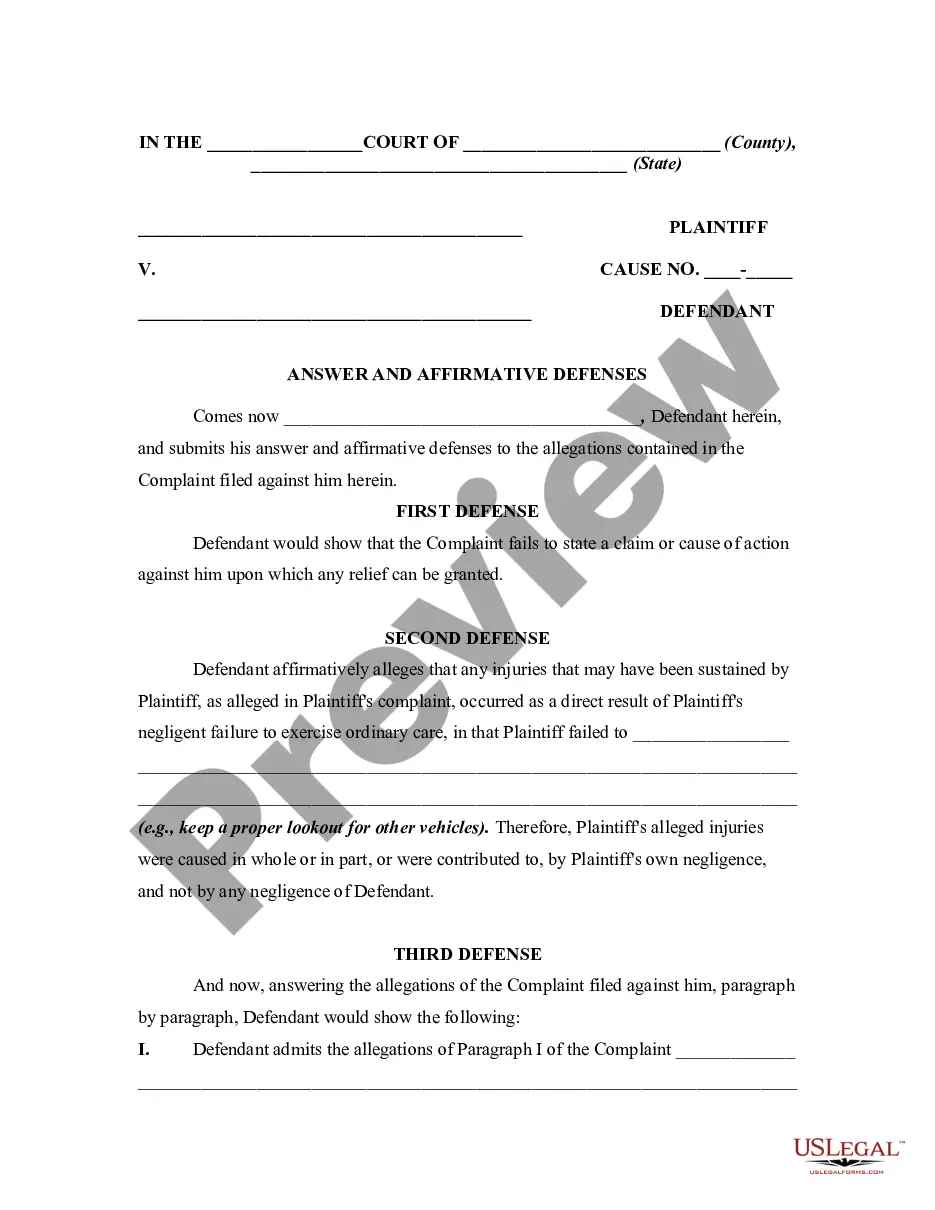
How to fill out Answer By Defendant In A Civil Lawsuit Alleging The Affirmative Defense Of Contributory Negligence?
It’s well-known that you cannot instantly become a legal authority, nor can you comprehend how to promptly prepare Answer Debt Collection Lawsuit Without Prejudice without possessing a specialized foundation.
Formulating legal documents is a lengthy endeavor that necessitates specific education and expertise.
So why not entrust the preparation of the Answer Debt Collection Lawsuit Without Prejudice to professionals.
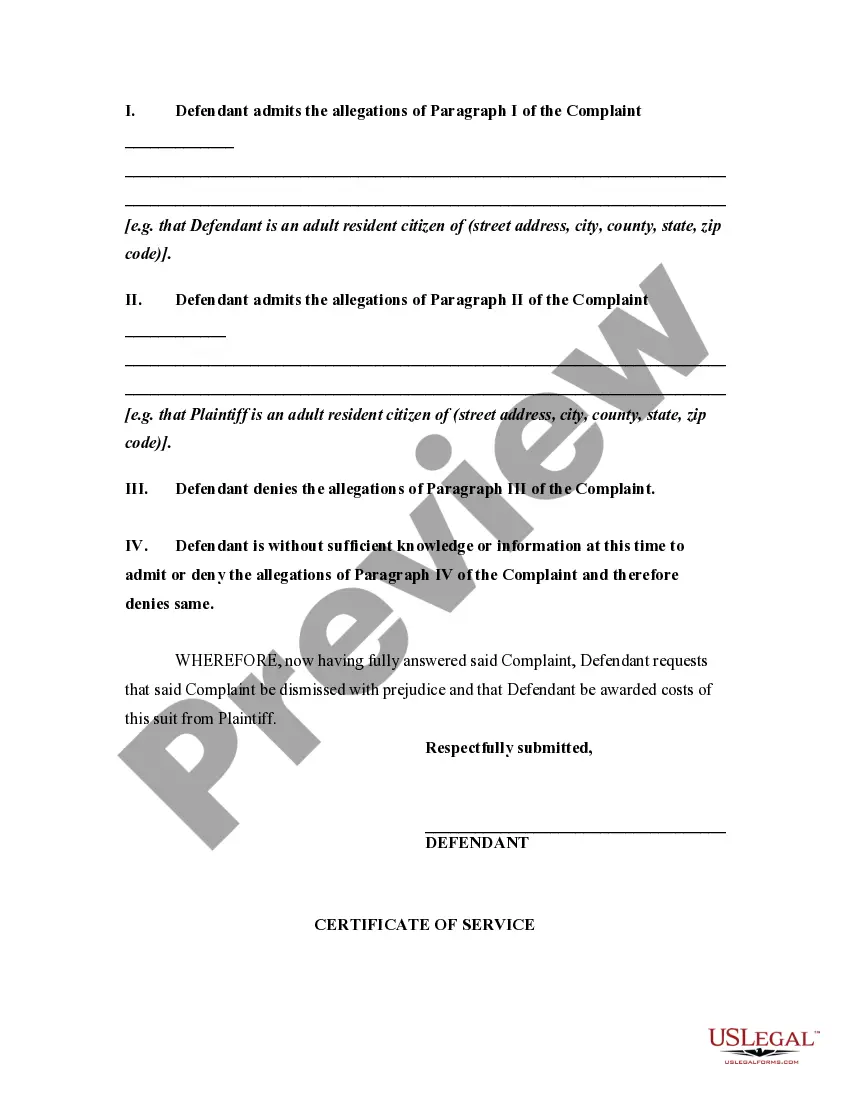
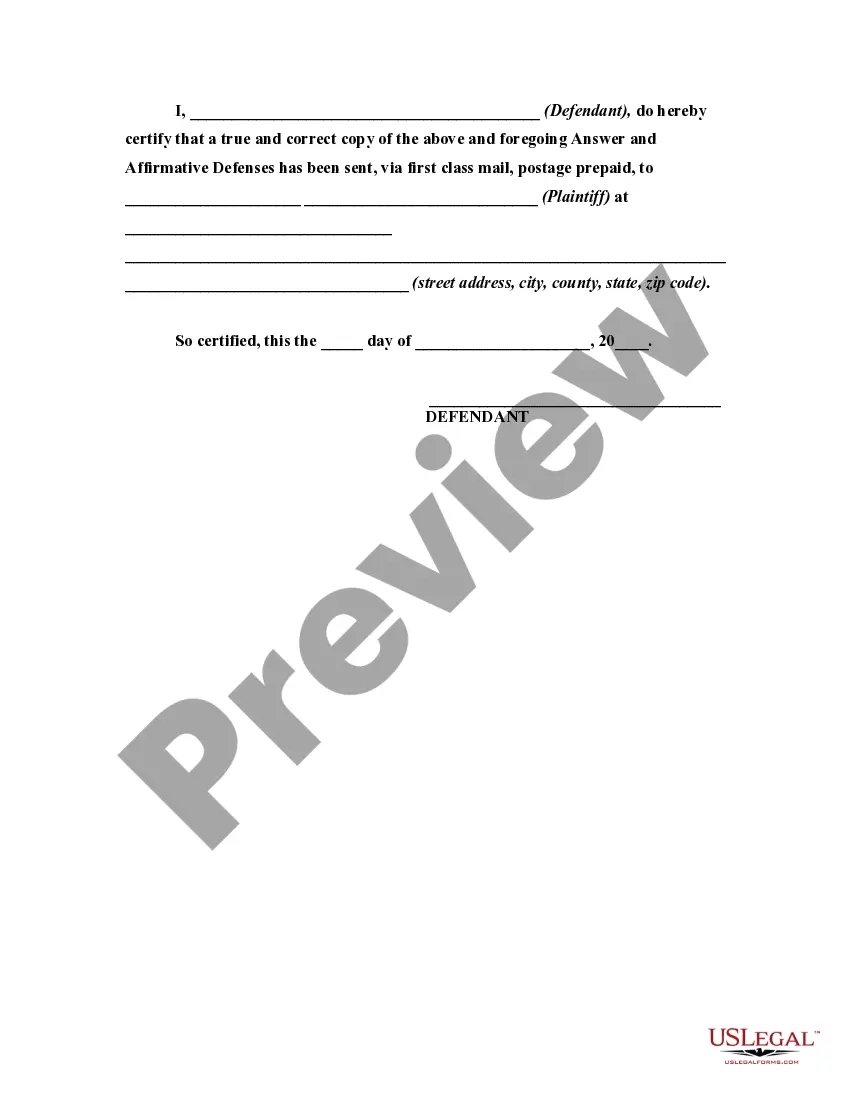
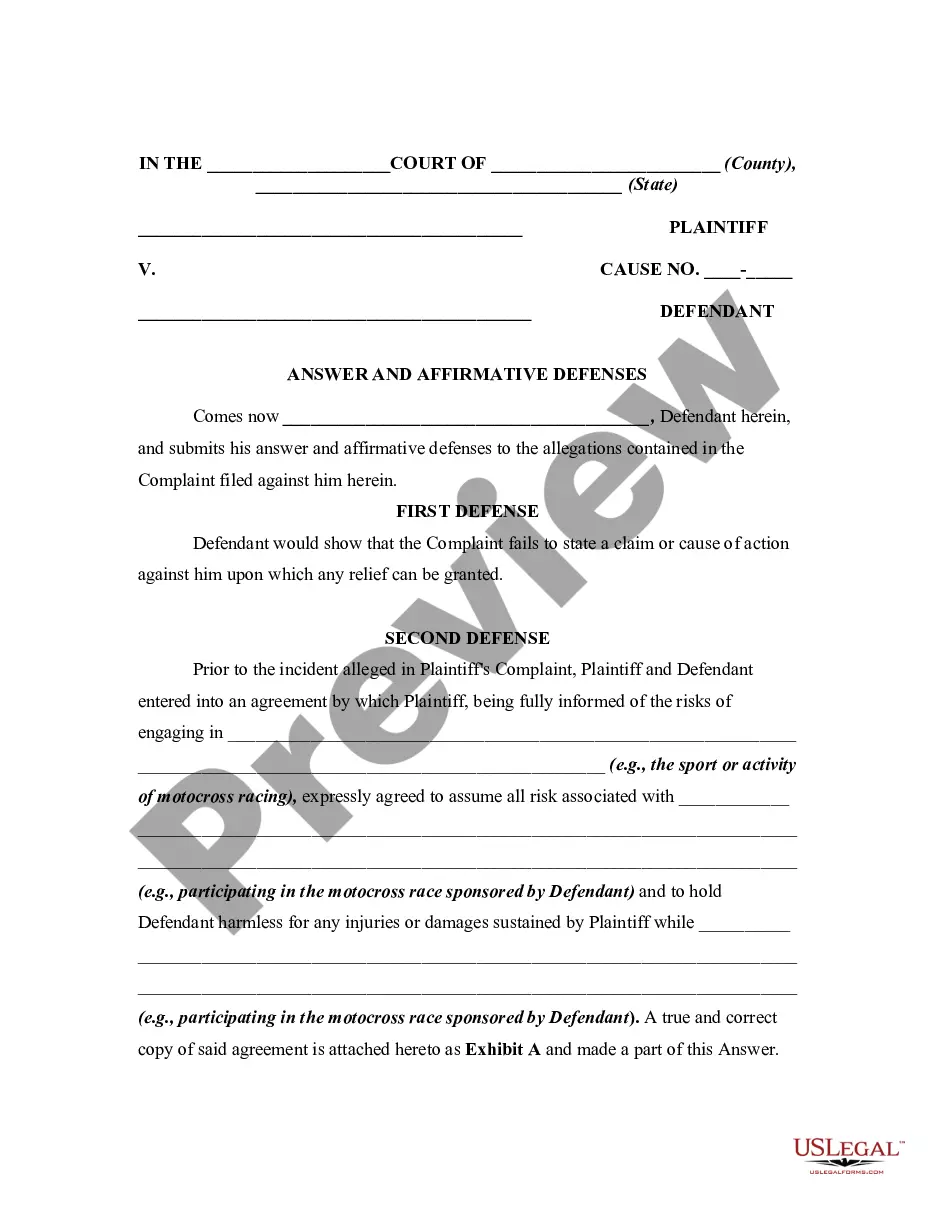
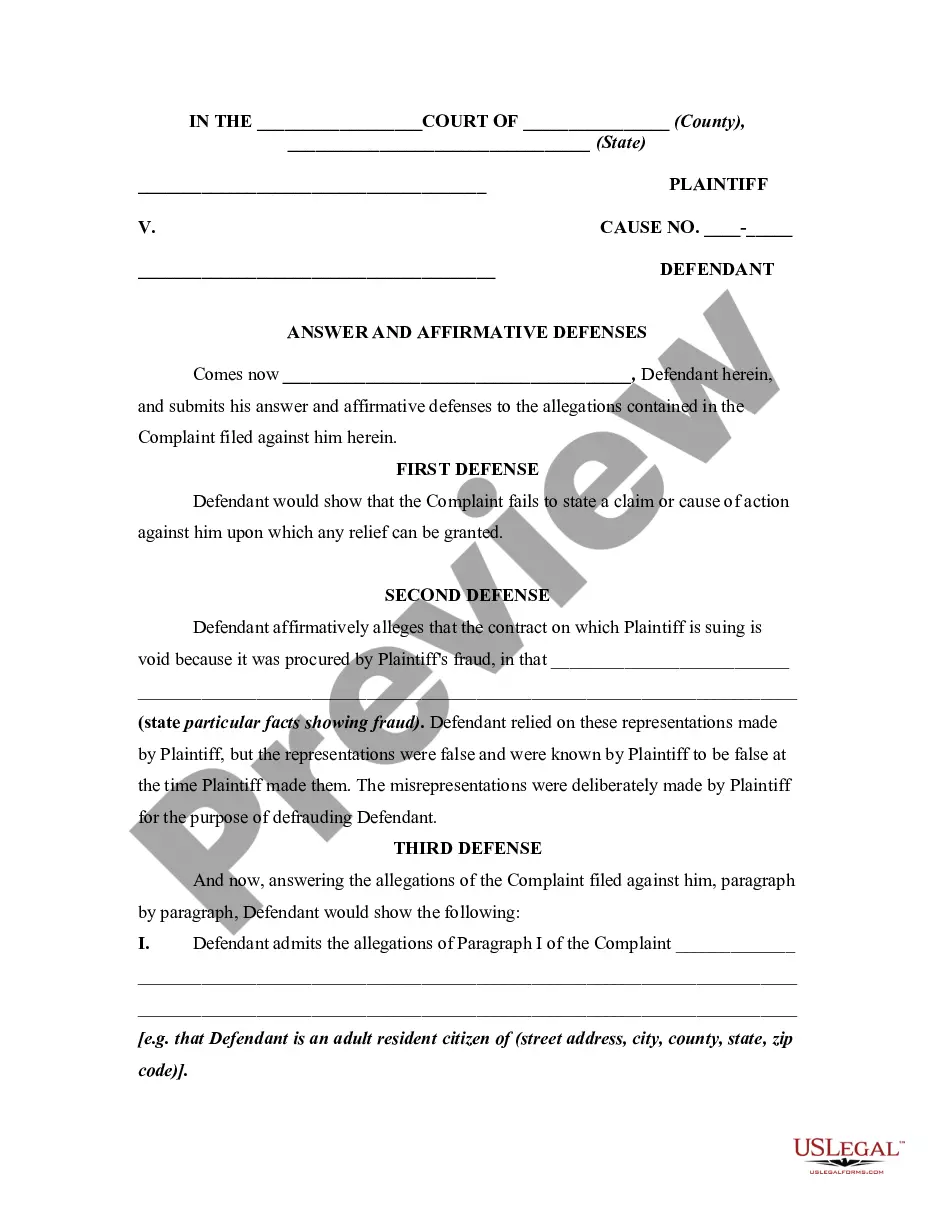
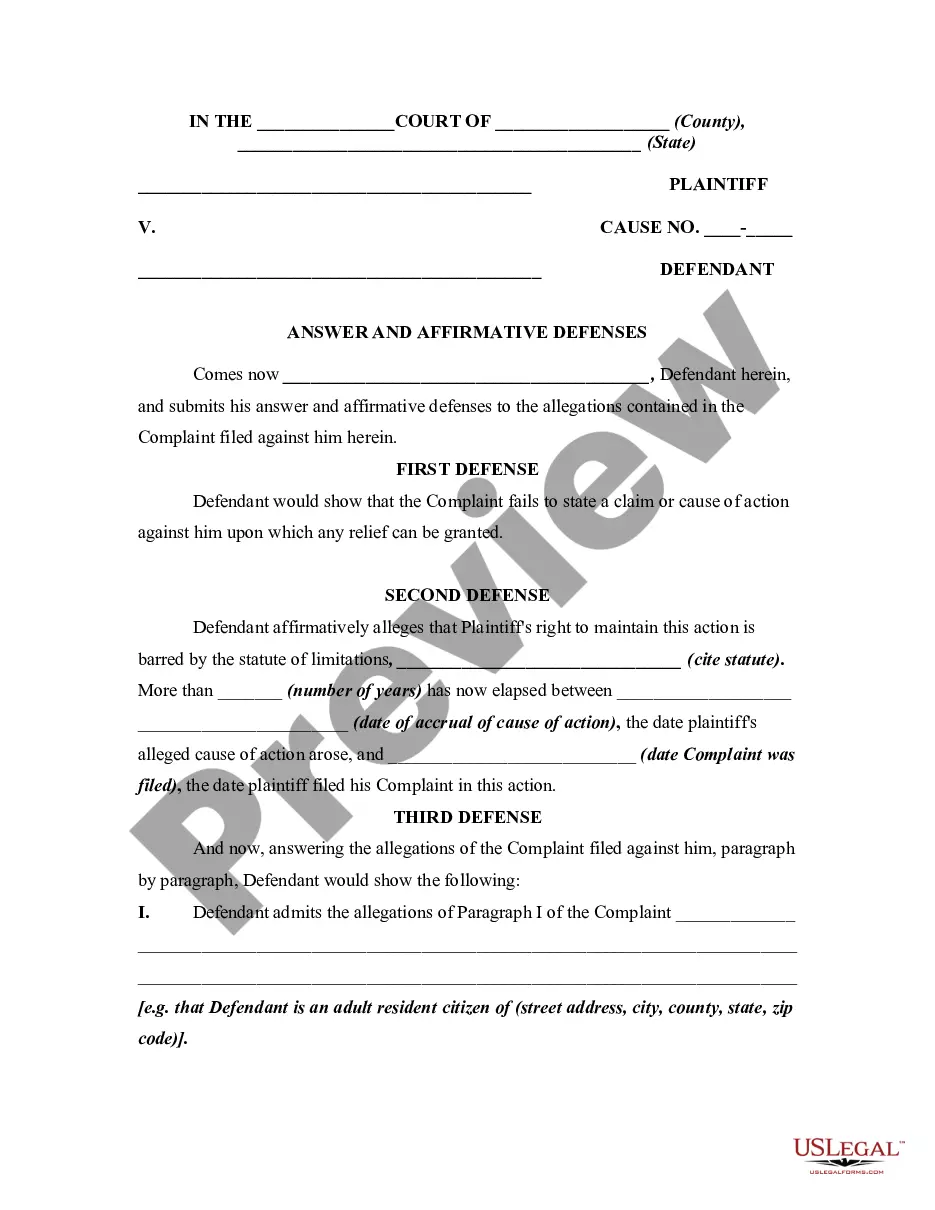
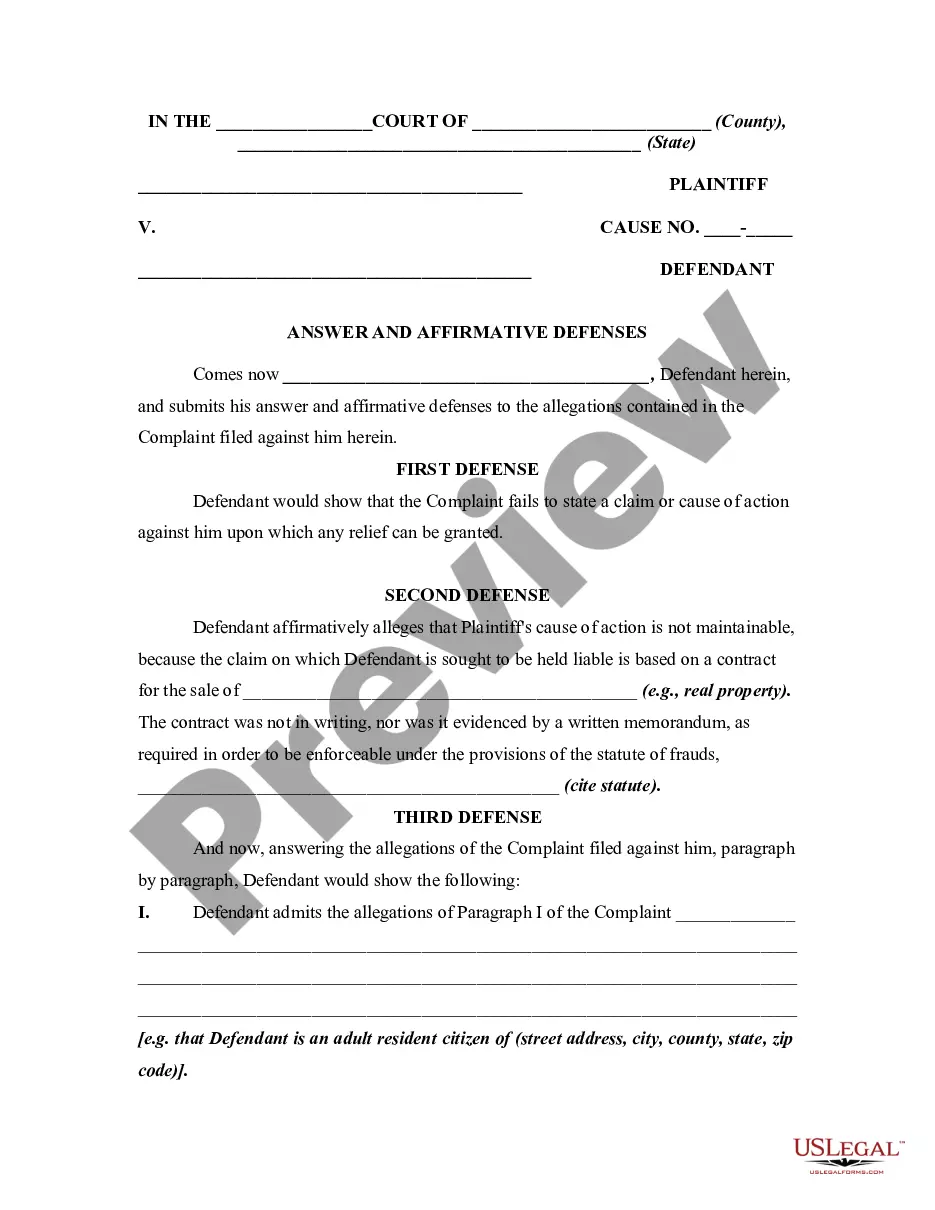
Preview it (if this feature is available) and review the supporting description to determine if Answer Debt Collection Lawsuit Without Prejudice is what you need.
Begin your search anew if you require another form.
- With US Legal Forms, one of the most comprehensive collections of legal templates, you can access everything from court documents to templates for office communication.
- We understand how critical compliance and observance of federal and state laws and regulations are.
- That’s why, on our site, all forms are jurisdiction-specific and current.
- Here’s start off with our website and obtain the document you need in just moments.
- Find the document you require by utilizing the search bar at the top of the page.
Form popularity
FAQ
You must fill out an Answer, serve the other side's attorney, and file your Answer form with the court within 30 days. If you don't, the creditor can ask for a default. If there's a default, the court won't let you file an Answer and can decide the case without you.
For someone charged with a crime, a case dismissed with prejudice is the best news. It means the judge has made a final ruling, the case is dismissed, the prosecution can't reopen it, and the defendant (the person charged with the crime) is free to go.
A dismissal with prejudice means that the ruling is the final judgment in the case. The dismissal prohibits the prosecutor from refiling the charges. In a dismissal without prejudice, the prosecutor can refile the charges (or file new charges based on the same circumstances) at some future time.
?With prejudice? means that you cannot re-file your case ever. ?Without prejudice? means that you can re-file your case at a later date (as long as you are still within the statute of limitations).
When a court dismisses an action, they can either do so ?with prejudice? or ?without prejudice.? Dismissal with prejudice means that the plaintiff cannot refile the same claim again in that court.