Random Drug Testing Laws By State
Description
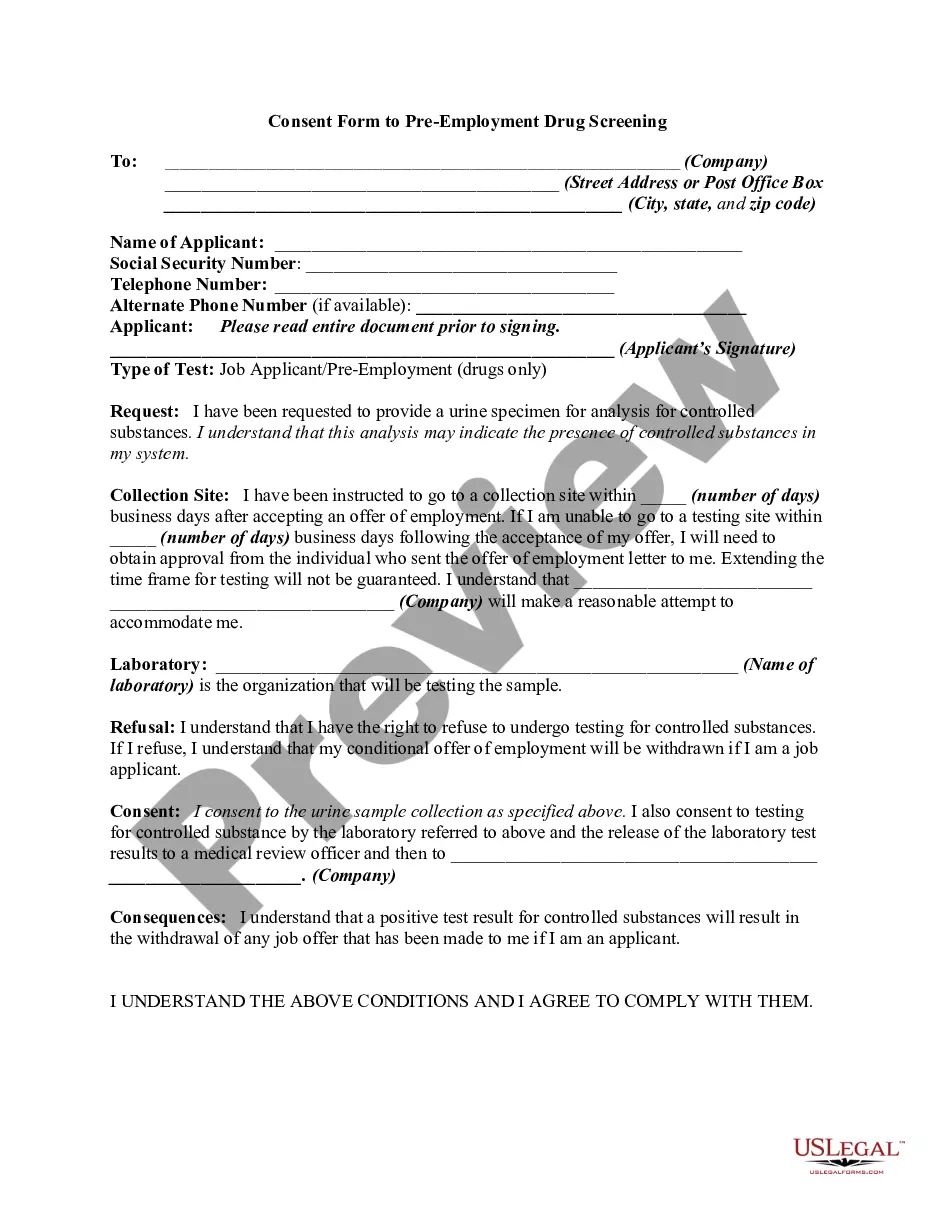
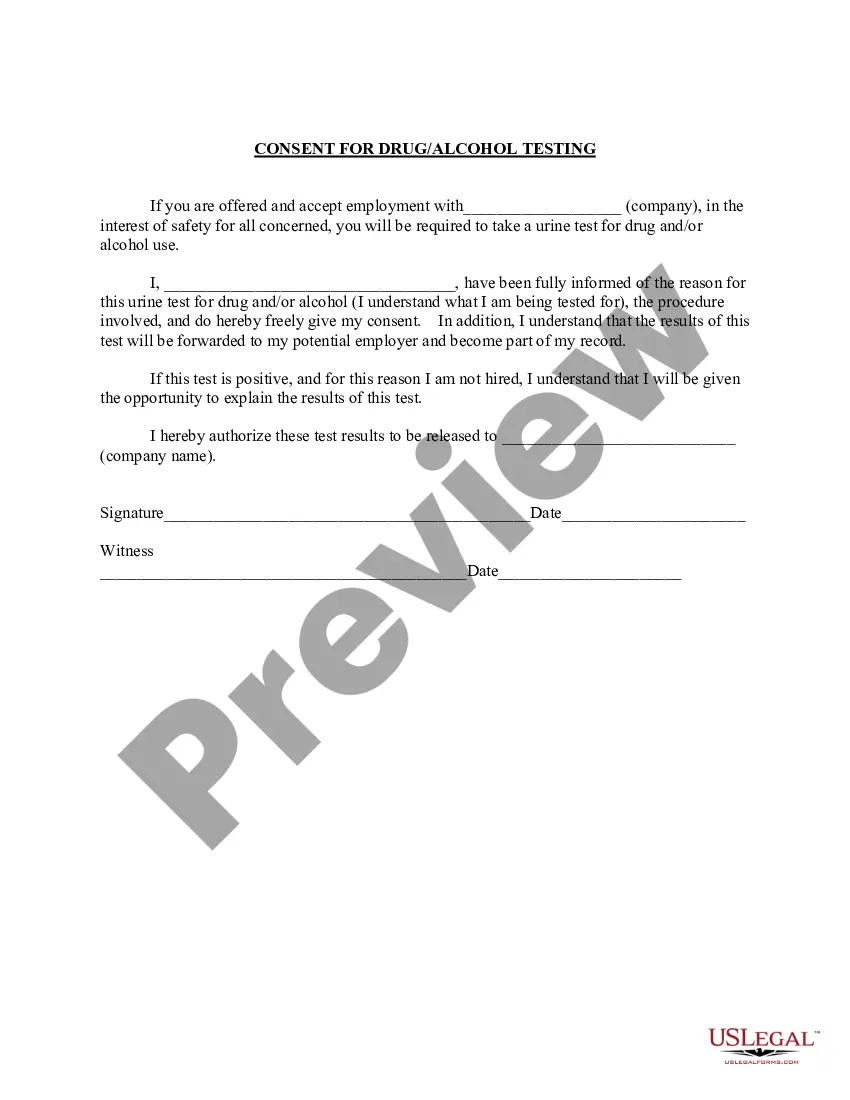
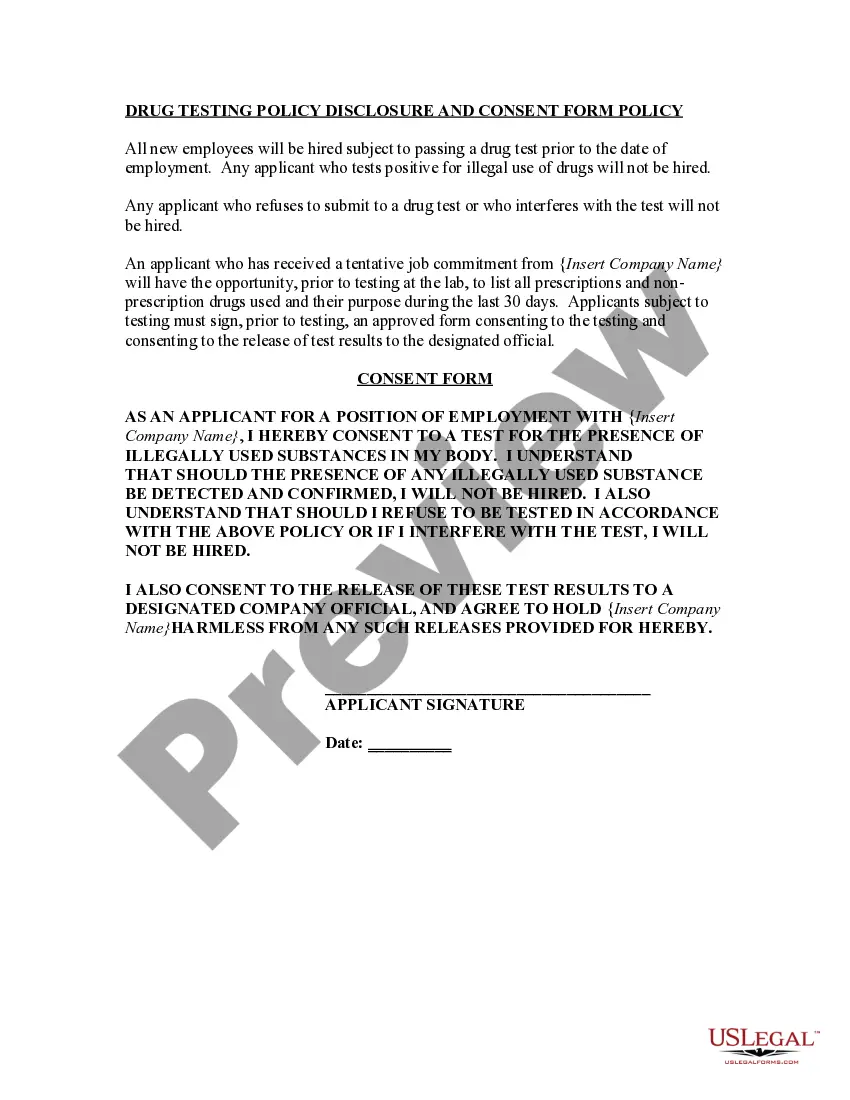
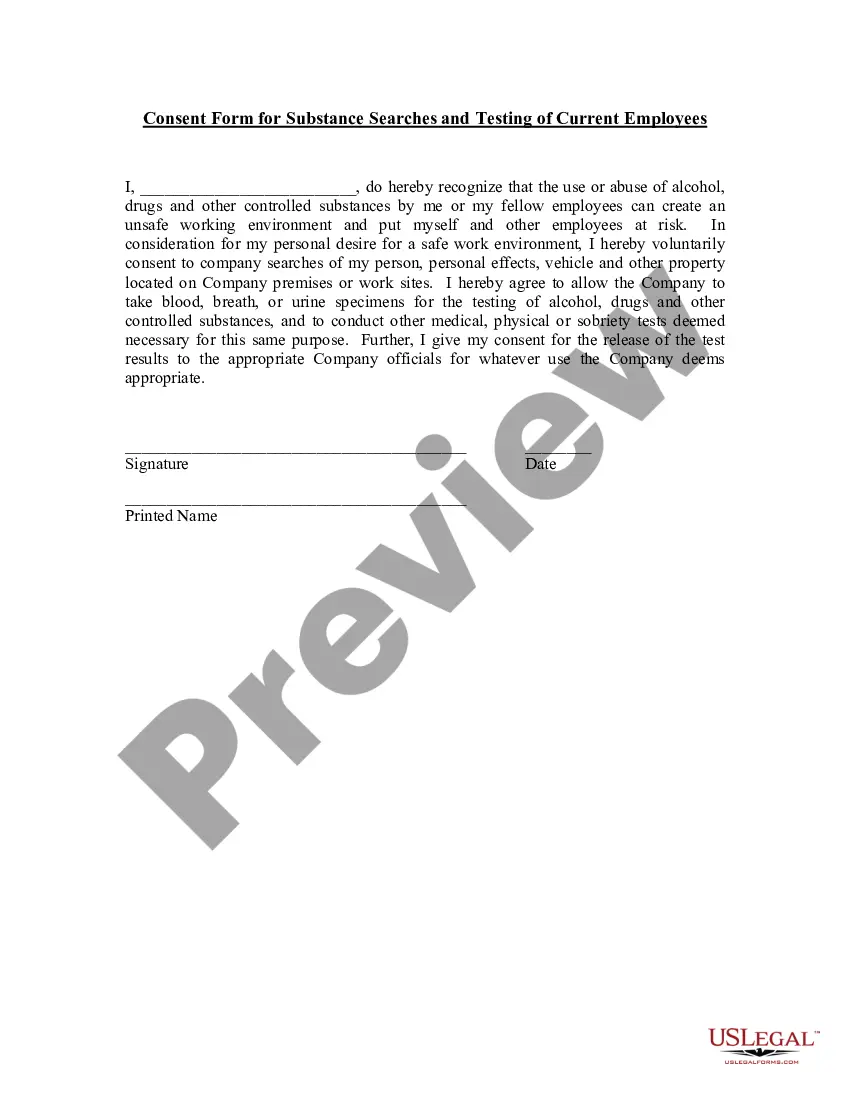



How to fill out General Consent Form For Drug Testing?
The Random Drug Testing Regulations By State presented on this site is a reusable legal framework developed by expert attorneys adhering to federal and local laws and guidelines.
For over 25 years, US Legal Forms has supplied individuals, organizations, and legal professionals with more than 85,000 authenticated, state-specific documents for any business and personal needs. It's the quickest, simplest, and most trustworthy method to procure the paperwork you require, as the service ensures maximum data security and anti-malware measures.
Enroll in US Legal Forms to have authenticated legal templates for all of life's circumstances readily available.
- Search for the document you require and examine it.
- Browse the file you looked for and preview it or read the form details to confirm it meets your needs. If it does not, utilize the search bar to find the correct one. Click Buy Now after you have found the template you need.
- Register and sign in.
- Select the pricing option that fits you and sign up for an account. Use PayPal or a credit card for immediate payment. If you already possess an account, Log In and verify your subscription to proceed.
- Obtain the fillable template.
- Choose the format you prefer for your Random Drug Testing Regulations By State (PDF, DOCX, RTF) and download the document to your device.
- Complete and endorse the document.
- Print the template to fill it out manually. Alternatively, use an online versatile PDF editor to swiftly and accurately complete and endorse your form with a legally-binding electronic signature.
- Download your document again.
- Reuse the same file whenever required. Access the My documents tab in your profile to redownload any forms previously acquired.
Form popularity
FAQ
Most states in the U.S. allow random drug testing, but the specific regulations vary significantly. Random drug testing laws by state include guidelines on how tests can be administered and under what circumstances. Employers need to familiarize themselves with their state’s requirements to avoid legal repercussions. US Legal Forms offers tools and resources to help you understand these state-specific laws and ensure your programs are compliant.
Denying a random drug test often depends on the random drug testing laws by state and the company's policies. In general, refusal to take a test can lead to disciplinary action, as it may be seen as a violation of company policy. It's essential to remain informed about your rights and obligations under state-specific regulations. Consult with legal resources or services like US Legal Forms for guidance on this issue.
To set up a random drug test program, start by reviewing the random drug testing laws by state to ensure compliance. You will need to develop clear policies that describe the purpose, procedures, and consequences of drug testing. Next, choose a reliable testing service that can maintain confidentiality and integrity throughout the process. Finally, communicate the program's details to your employees, ensuring they understand how it will be implemented.
Not all jobs require random drug tests, but many industries with safety-sensitive positions, like aviation and construction, commonly implement these tests. Random drug testing laws by state vary, affecting whether an employer can adopt such policies. Additionally, other sectors may choose to conduct random tests based on their company culture or federal regulations. Always check your specific industry guidelines to know what applies to you.
Typically, you do not need to be on duty at the time of a random drug test. Employers may conduct these tests during working hours or at any time designated by their policy. Random drug testing laws by state allow this flexibility to maintain workplace safety and compliance. It's advisable to be familiar with your employer's policy on testing to ensure you are prepared.
Some states have restrictions on random drug testing, often limiting when and how employers can implement these tests. For instance, Montana and New Hampshire do not generally allow random testing, whereas others have specific criteria that employers must meet. Understanding random drug testing laws by state is crucial for both employers and employees to ensure compliance. Always check local laws or consult with a legal expert for accurate information.
You generally cannot refuse a random drug test at work, as most companies have policies supporting random drug testing laws by state. These laws permit employers to conduct testing as long as they notify employees in advance and have a clear policy. Refusal may lead to disciplinary actions, including termination. It's essential to review your company's handbook for specific procedures.
Some states have restrictions or specific conditions under which random drug testing can occur, while others allow it freely. Random drug testing laws by state outline these regulations, which can vary significantly. It's crucial to know your state’s guidelines regarding drug testing to understand your rights fully. If you're unsure, consulting platforms like US Legal Forms can provide clarity on your state's specific laws.
Refusing a random drug test may have repercussions depending on your employer's policies and state laws. Random drug testing laws by state often protect employers' rights to enforce testing as part of their protocols. If you refuse a test, it could lead to disciplinary action, including termination. Understanding your rights and the implications of refusal can help you make an informed decision.
Yes, your boss can randomly test you for drugs, but they must adhere to the random drug testing laws by state that apply to your workplace. Understanding these laws helps clarify the conditions under which testing can occur. Employers do this to promote safety and compliance within the workplace. If you have questions about your specific situation, consider seeking advice through resources like US Legal Forms.