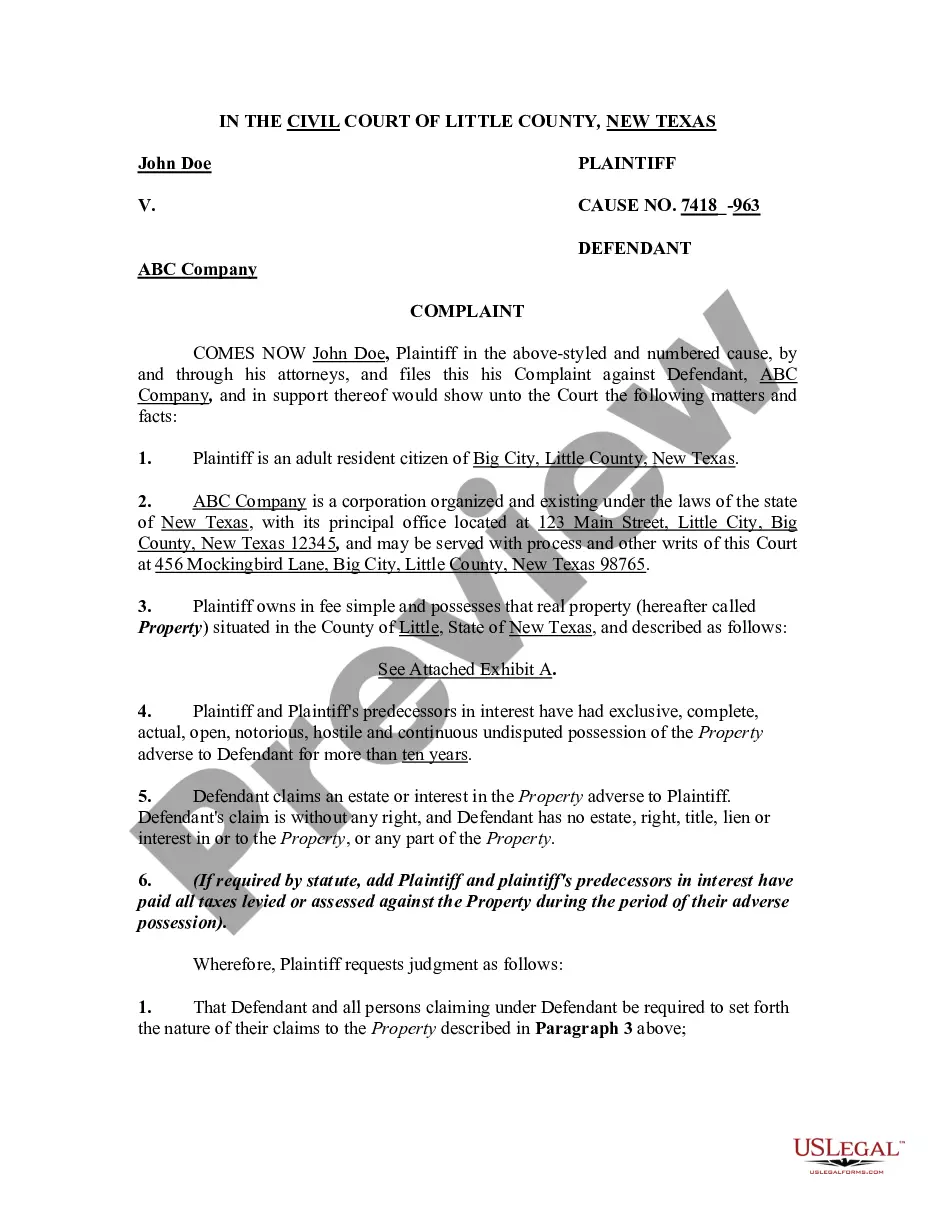
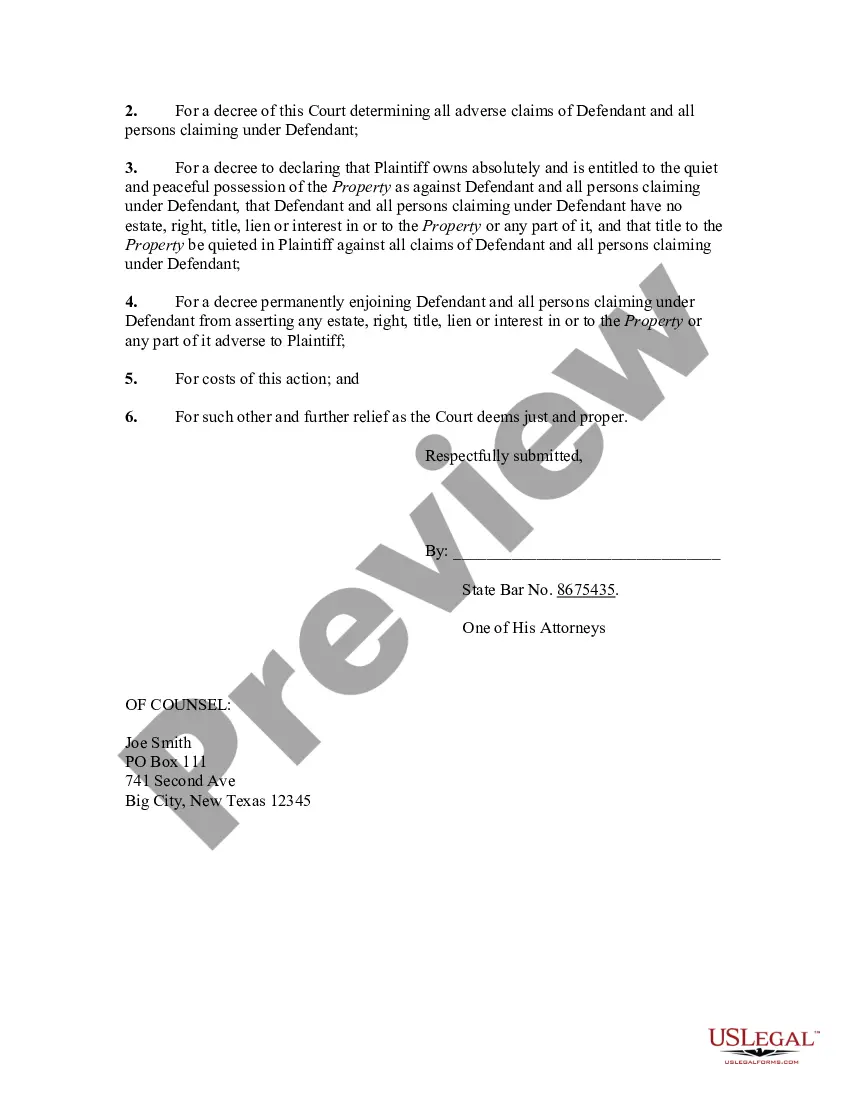
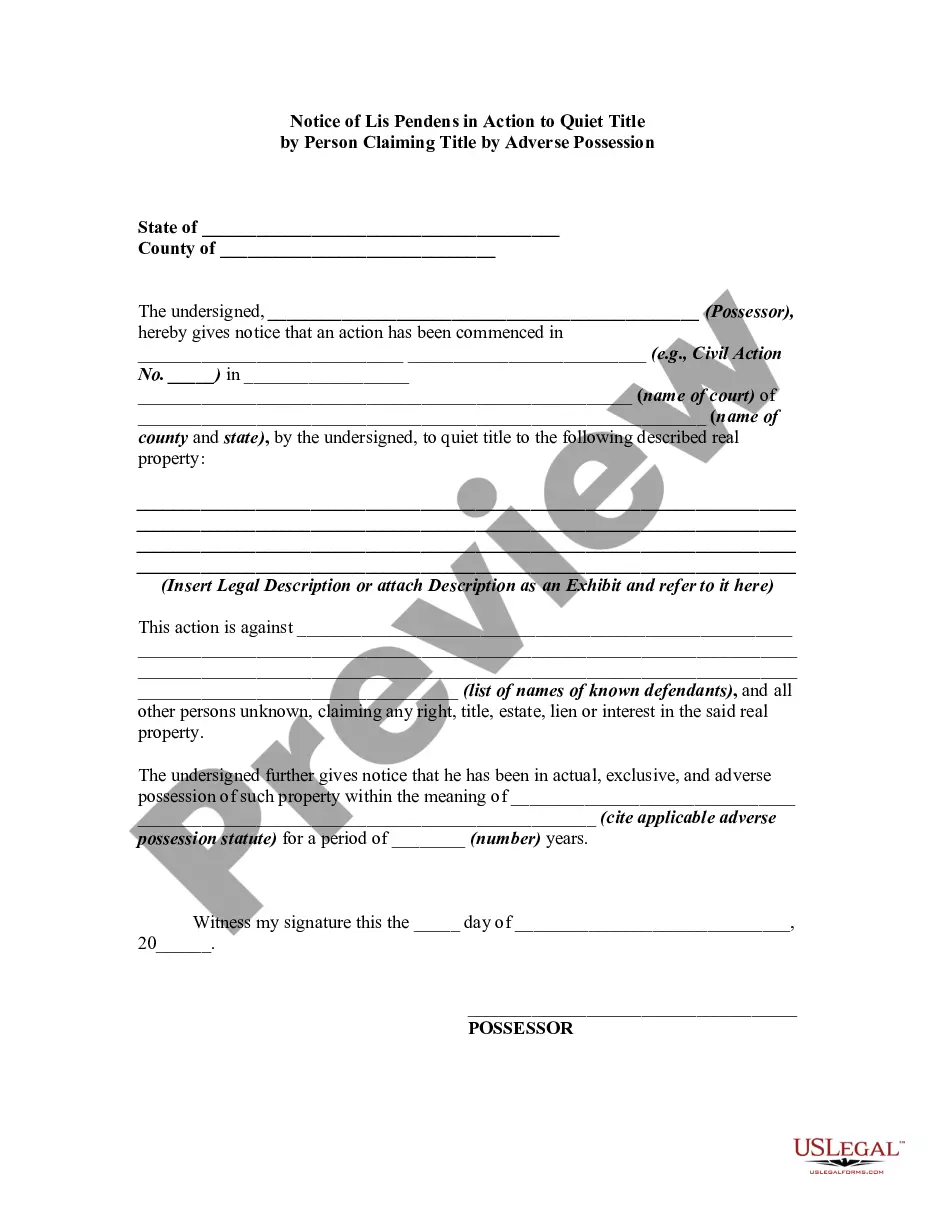
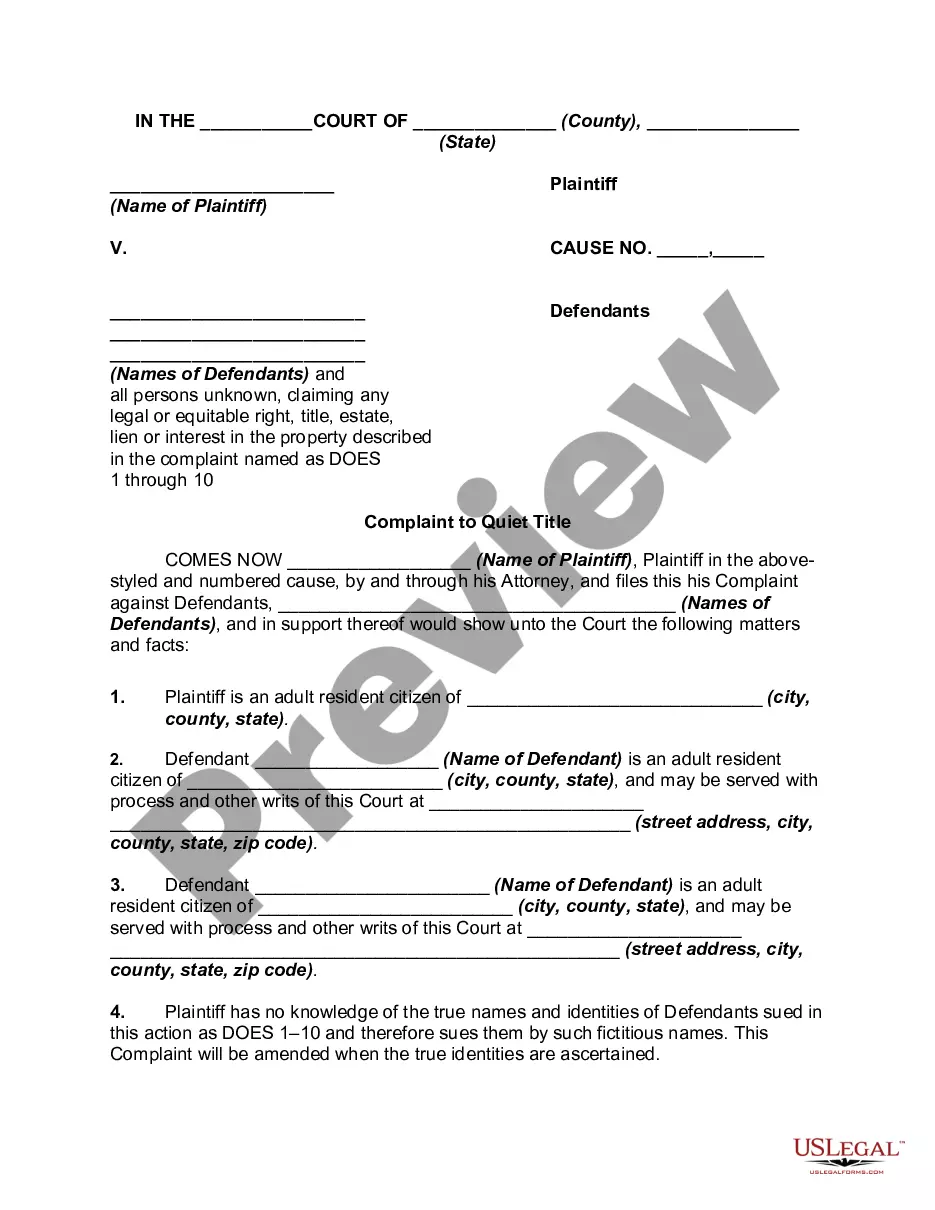
Petition For Quiet Title
Description
Get your form ready online
Our built-in tools help you complete, sign, share, and store your documents in one place.
Make edits, fill in missing information, and update formatting in US Legal Forms—just like you would in MS Word.
Download a copy, print it, send it by email, or mail it via USPS—whatever works best for your next step.
Sign and collect signatures with our SignNow integration. Send to multiple recipients, set reminders, and more. Go Premium to unlock E-Sign.
If this form requires notarization, complete it online through a secure video call—no need to meet a notary in person or wait for an appointment.
We protect your documents and personal data by following strict security and privacy standards.

Make edits, fill in missing information, and update formatting in US Legal Forms—just like you would in MS Word.

Download a copy, print it, send it by email, or mail it via USPS—whatever works best for your next step.

Sign and collect signatures with our SignNow integration. Send to multiple recipients, set reminders, and more. Go Premium to unlock E-Sign.

If this form requires notarization, complete it online through a secure video call—no need to meet a notary in person or wait for an appointment.

We protect your documents and personal data by following strict security and privacy standards.
Looking for another form?
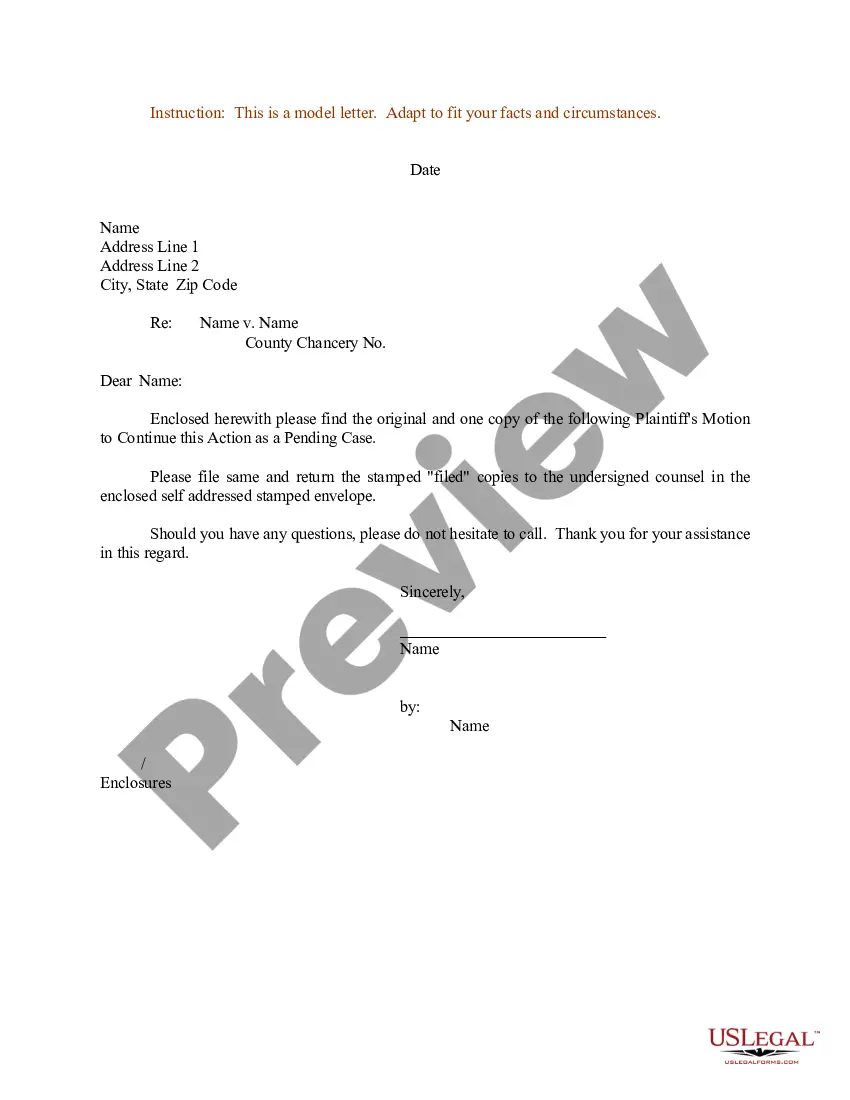
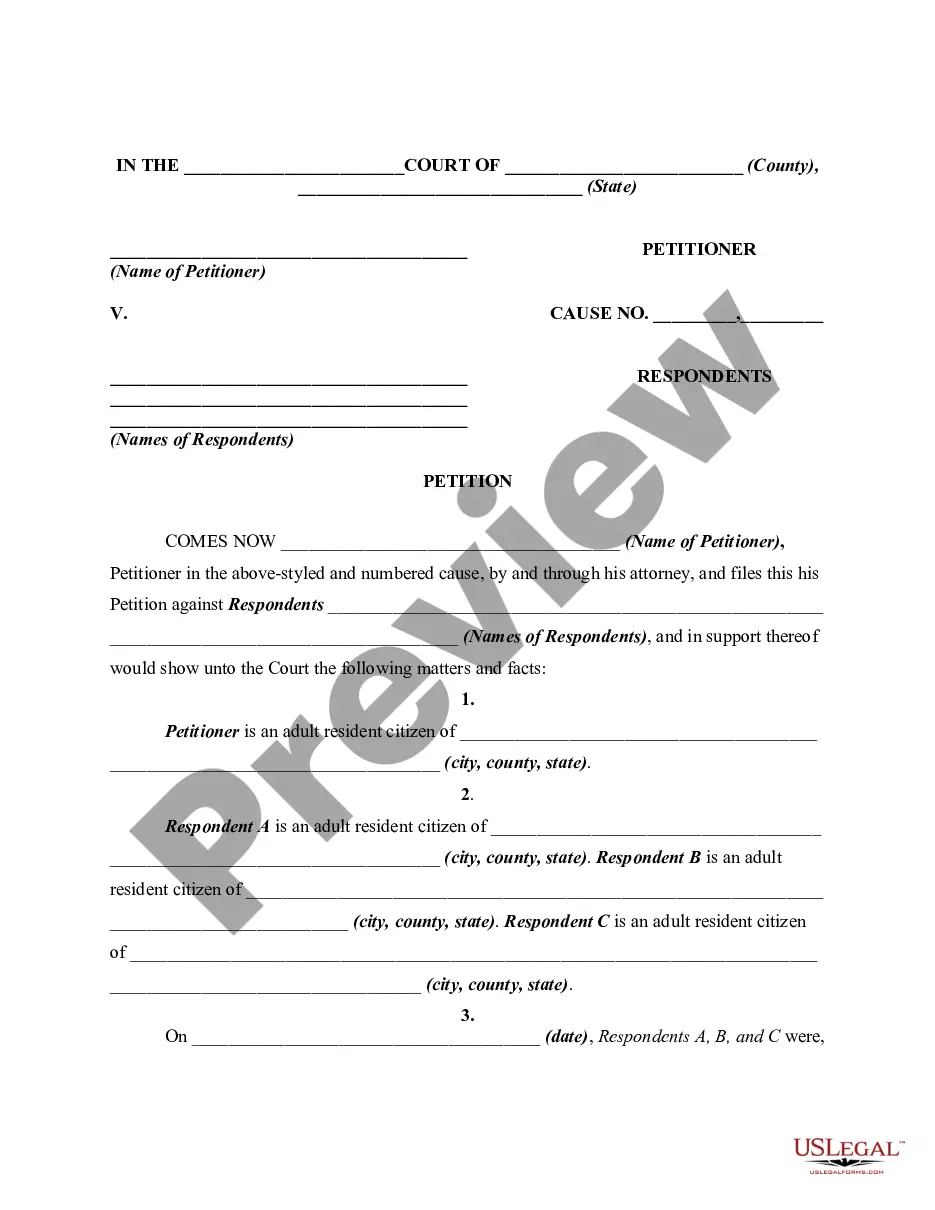
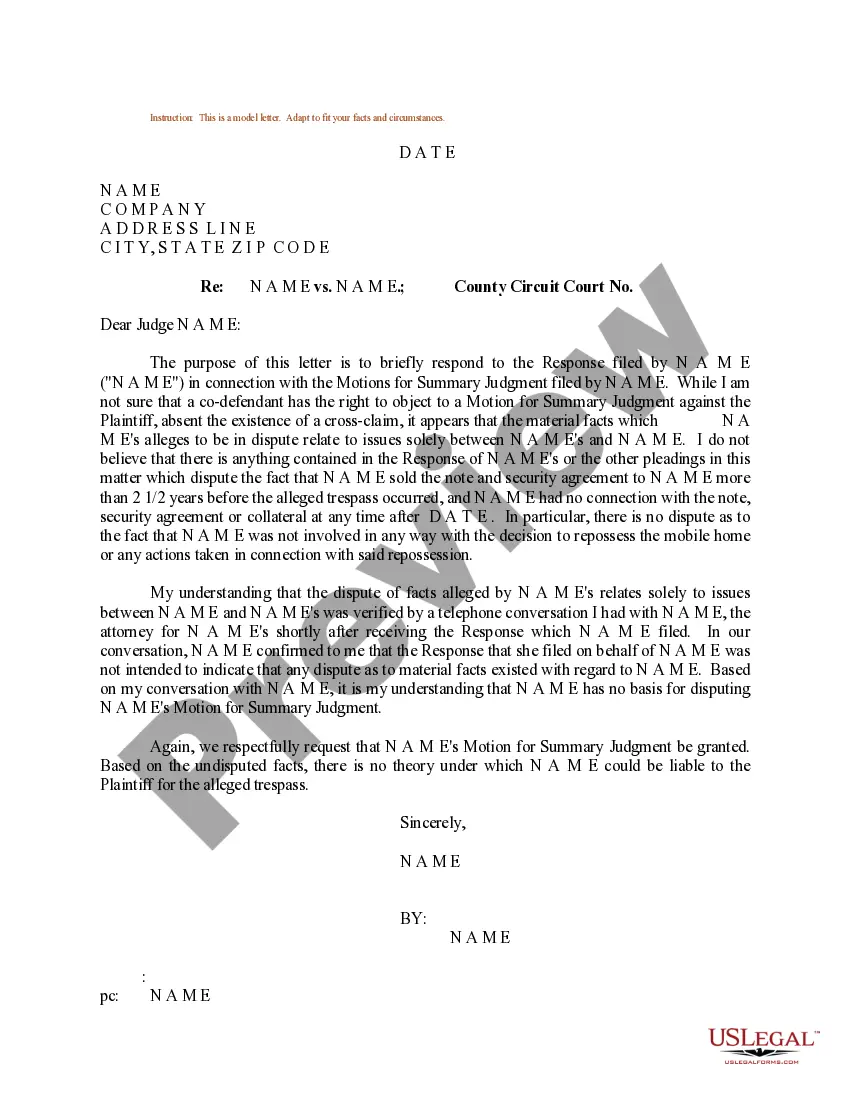
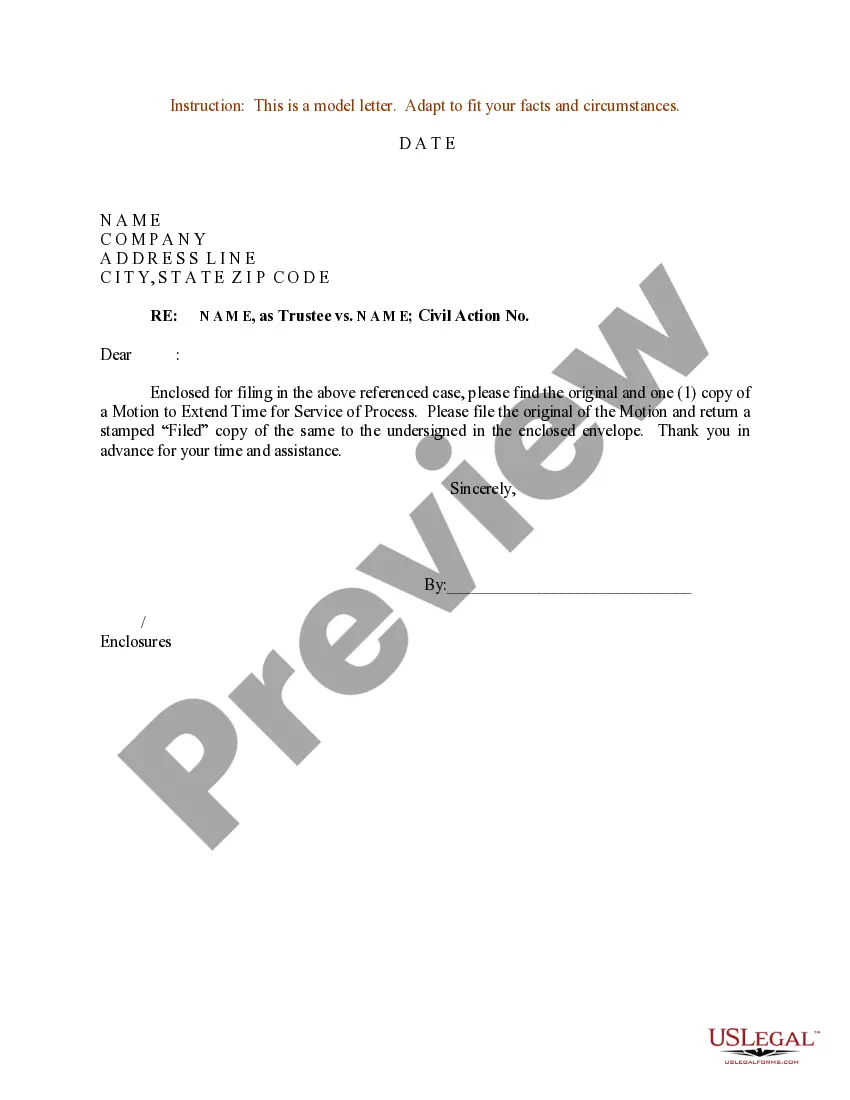
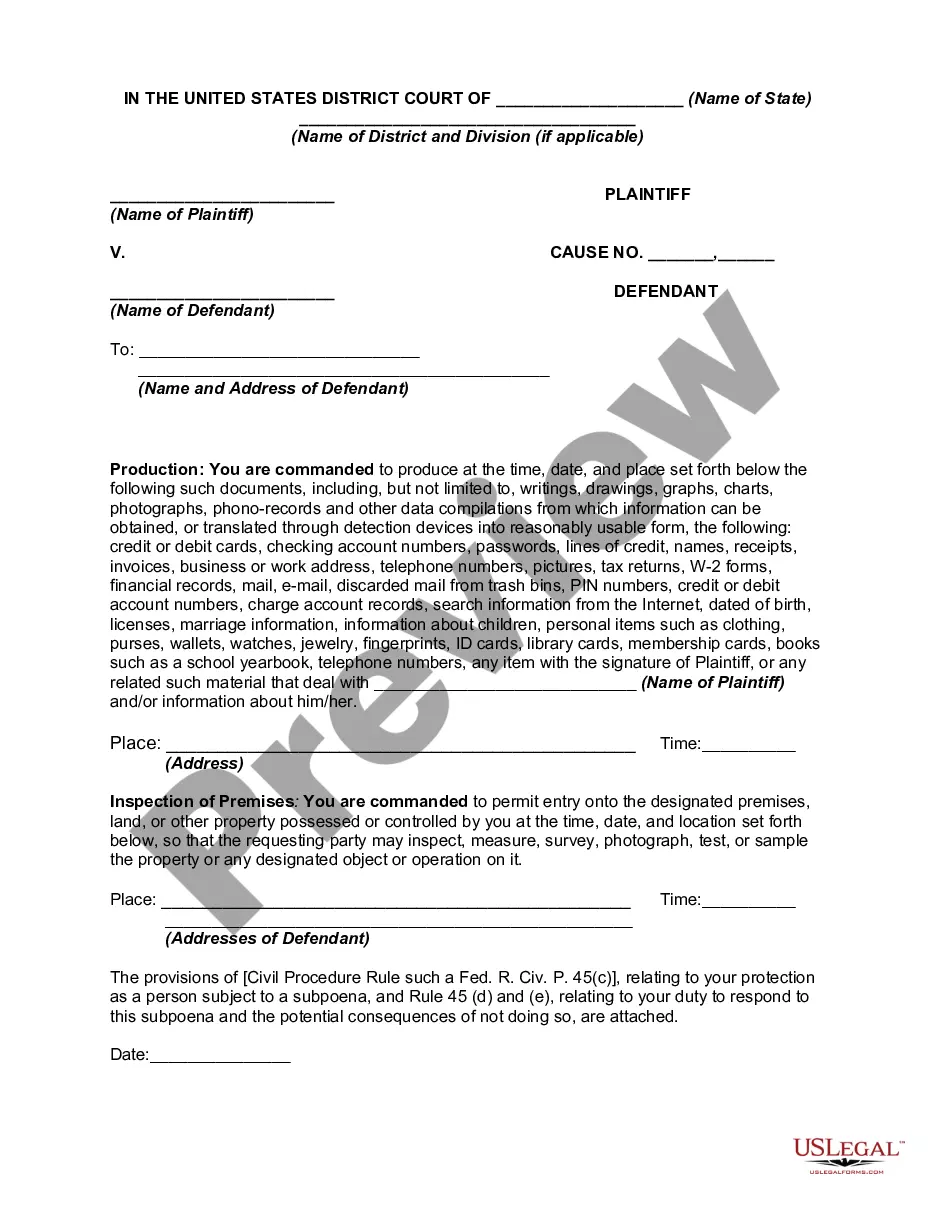
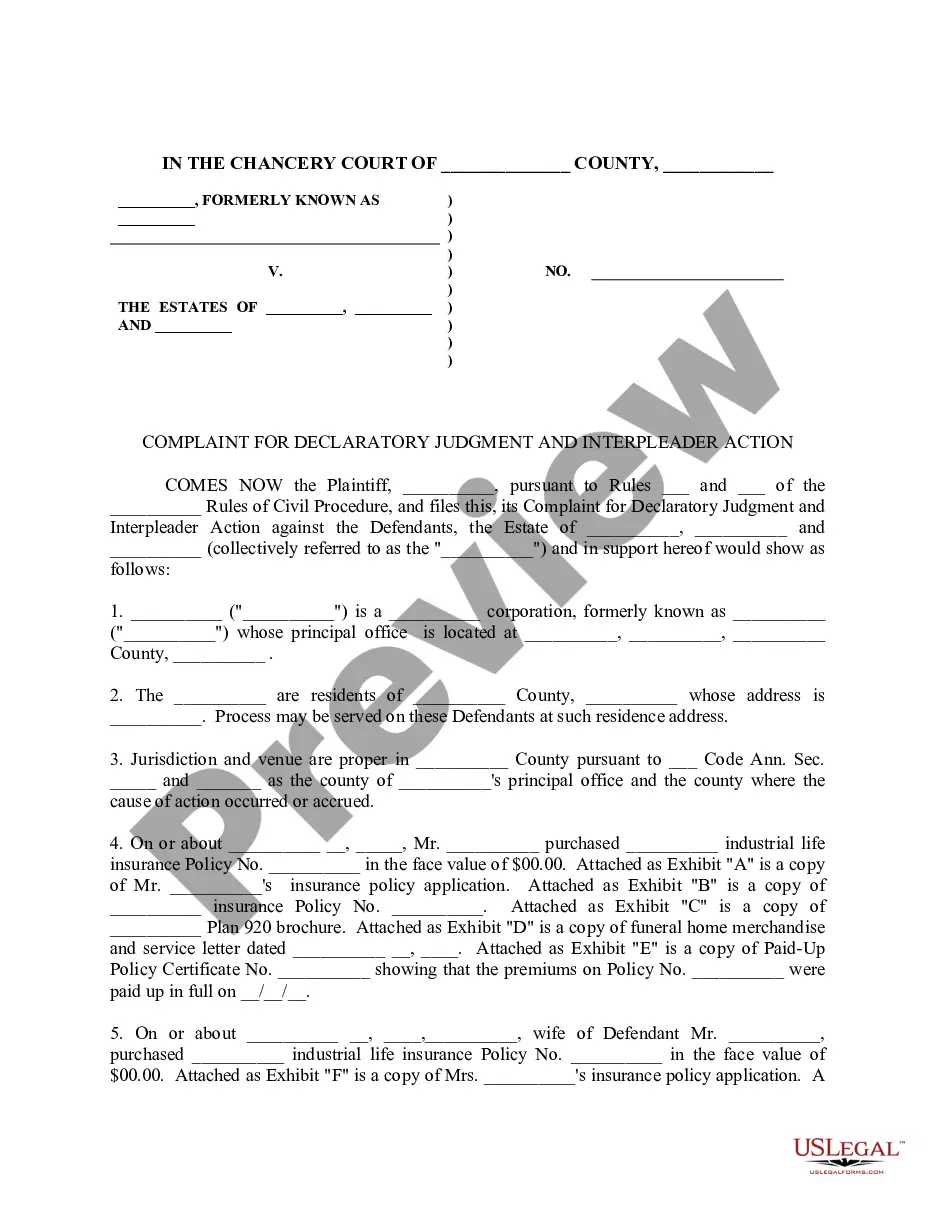
How to fill out Complaint To Quiet Title By Person Claiming Adverse Possession - Squatters Rights?
Managing legal documents and processes can often add significant time to your daily routine.
Petition For Quiet Title and similar forms typically necessitate that you locate and comprehend how to fill them out correctly.
Thus, whether you are dealing with financial, legal, or personal issues, utilizing a comprehensive and user-friendly online directory of forms when required will be beneficial.
US Legal Forms is the premier online platform for legal documents, featuring over 85,000 state-specific templates and a range of resources to help you complete your paperwork efficiently.
Simply Log In to your account, locate the Petition For Quiet Title, and obtain it instantly from the My documents section. You can also access forms you’ve saved previously.
- Explore the collection of relevant documents accessible to you with just one click.
- US Legal Forms provides you with state- and county-specific documents available for download at any time.
- Safeguard your document management processes with high-quality services that enable you to assemble any form within minutes without incurring additional or hidden fees.
Form popularity
FAQ
As stated above, a Section 9 is an application to renew the trademark registration. Section 9 of the Trademark Act, 15 U.S.C. 1059, provides trademark owners with the opportunity to renew their trademark registrations before they expire at the end of the 10-year period from the date of registration.
A trade name is the name a business chooses to do business under. It is commonly known as the ?doing business as? (DBA) name and can differ from the company's business name. If you produce goods, you would be applying for a trademark. If you ?produce? or provide a service, you would be applying for a service mark.
A Section 8 declaration is a signed statement filed by the trademark owner that either: (1) the trademark is in use in commerce with the goods or services listed in the registration; or (2) the trademark is not in use in commerce due to special circumstances that excuse nonuse.
As stated above, a Section 9 is an application to renew the trademark registration. Section 9 of the Trademark Act, 15 U.S.C. 1059, provides trademark owners with the opportunity to renew their trademark registrations before they expire at the end of the 10-year period from the date of registration.
If the registrant fails to file, before the end of the sixth year following registration, a Section 8 affidavit or declaration that sets forth goods and services in connection with which the mark is in use, the registration will be cancelled.
How Do I Amend a Trademark Registration? If your trademark registration is not the subject of a cancellation proceeding, then you can amend your trademark registration by filing a Section 7 Request for Amendment with the USPTO. The Section 7 is an online form that is available on the USPTO's website.
You must file a Section 8 declaration, specimen, and fee on a date that falls on or between the fifth (5th) and sixth (6th) anniversaries of the registration (or, for an extra fee of $100.00 per class, you may file within the six-month grace period following the sixth (6th) anniversary date).
Section 8 declarations require the owner to submit a specimen as evidence of the trademark's use. Without this filing, your trademark will be canceled at the conclusion of its renewal period. On the other hand, Section 15 filings are a request that can be made alongside the Section 8 filing.