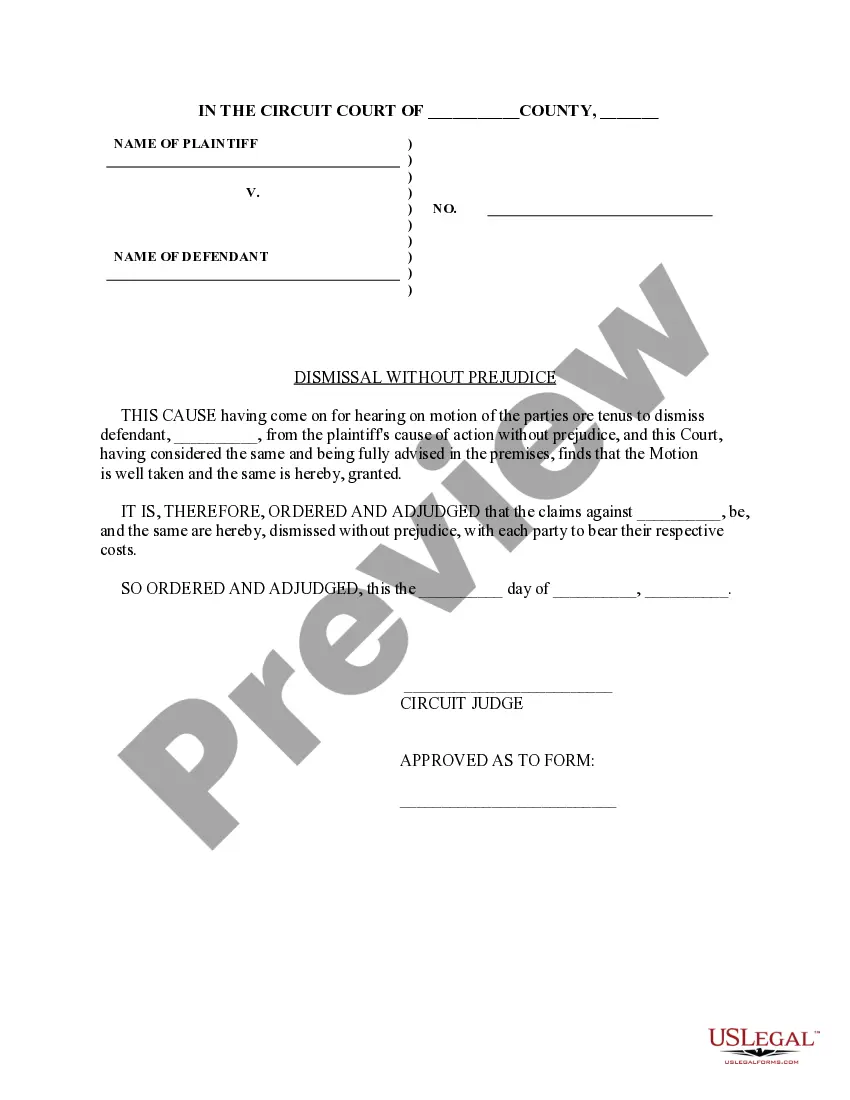
Court Dismissal With Prejudice
Description
Get your form ready online
Our built-in tools help you complete, sign, share, and store your documents in one place.
Make edits, fill in missing information, and update formatting in US Legal Forms—just like you would in MS Word.
Download a copy, print it, send it by email, or mail it via USPS—whatever works best for your next step.
Sign and collect signatures with our SignNow integration. Send to multiple recipients, set reminders, and more. Go Premium to unlock E-Sign.
If this form requires notarization, complete it online through a secure video call—no need to meet a notary in person or wait for an appointment.
We protect your documents and personal data by following strict security and privacy standards.

Make edits, fill in missing information, and update formatting in US Legal Forms—just like you would in MS Word.

Download a copy, print it, send it by email, or mail it via USPS—whatever works best for your next step.

Sign and collect signatures with our SignNow integration. Send to multiple recipients, set reminders, and more. Go Premium to unlock E-Sign.

If this form requires notarization, complete it online through a secure video call—no need to meet a notary in person or wait for an appointment.

We protect your documents and personal data by following strict security and privacy standards.
Looking for another form?









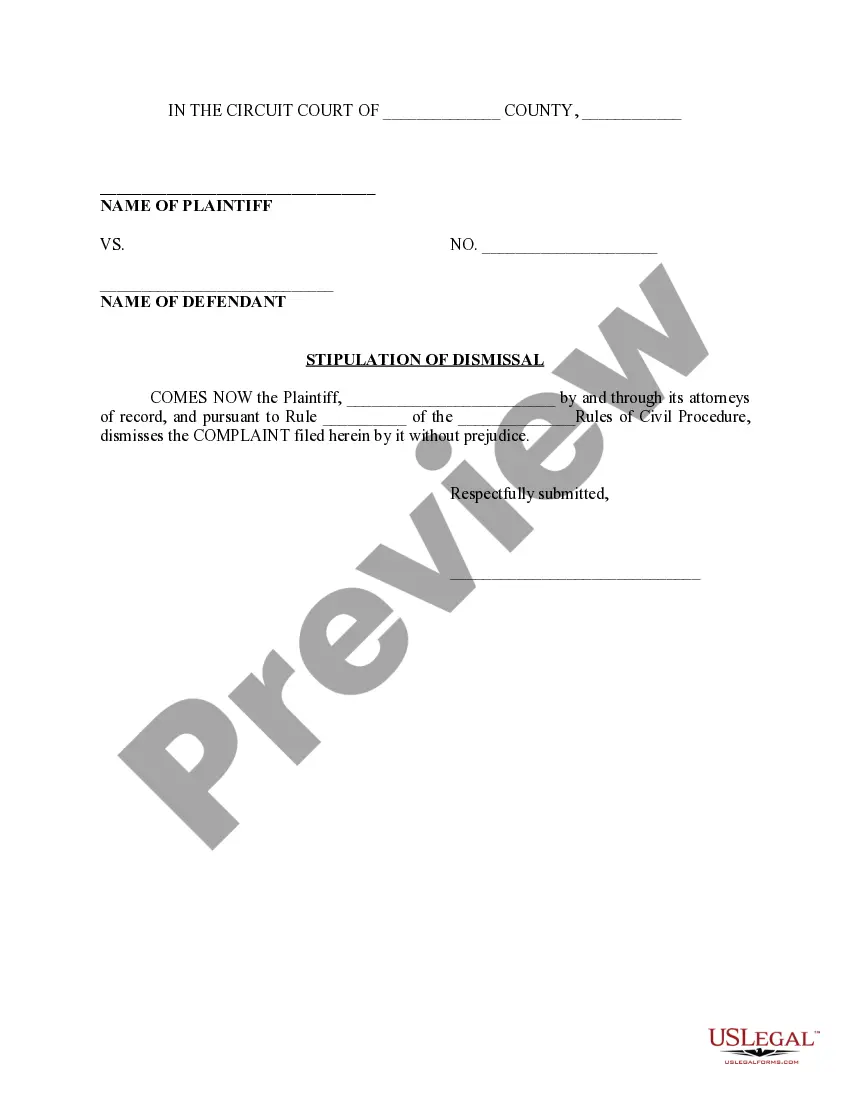
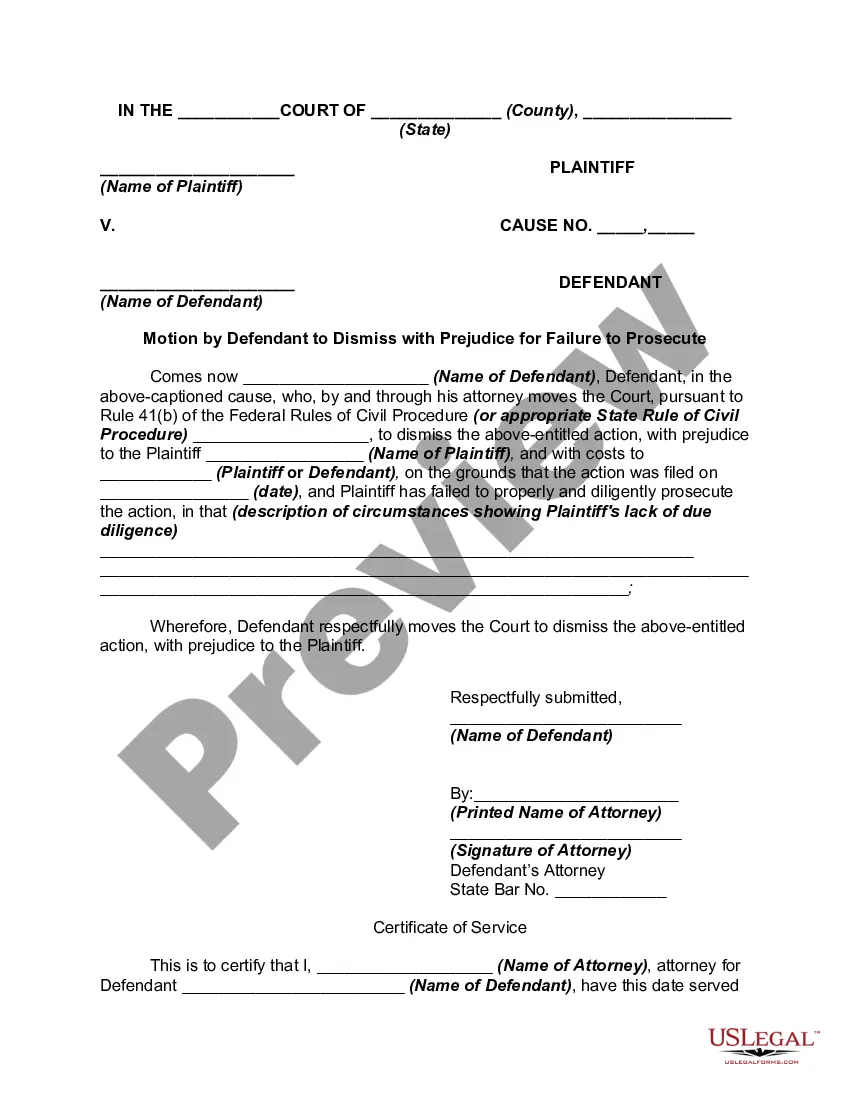
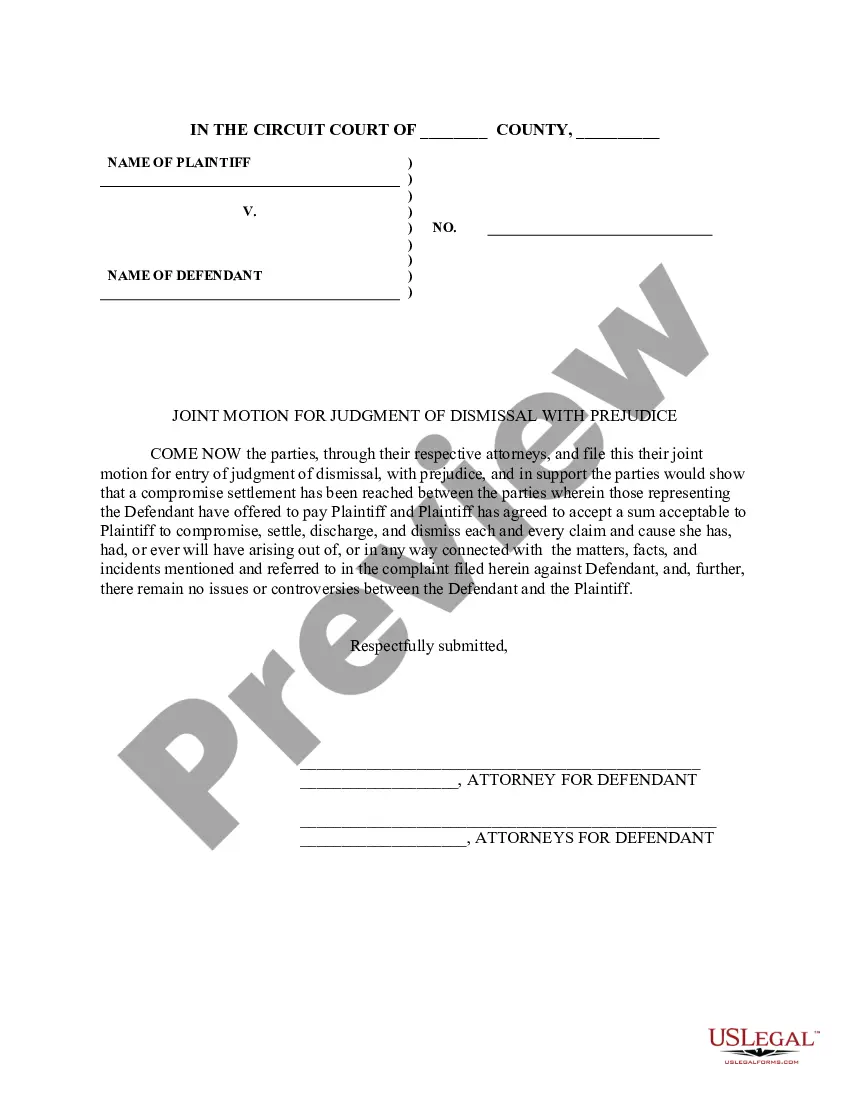
How to fill out Dismissal Without Prejudice?
Managing legal paperwork and processes can be a lengthy addition to your daily routine.
Court Dismissal With Prejudice and similar forms often require you to search for them and comprehend the most effective way to fill them out correctly.
Therefore, if you are dealing with financial, legal, or personal affairs, utilizing a comprehensive and user-friendly online directory of forms at your disposal will greatly assist you.
US Legal Forms is the premier online resource for legal templates, offering over 85,000 state-specific documents and various tools that will enable you to complete your paperwork with ease.
Is this your first time using US Legal Forms? Register and create an account in minutes and gain access to the form collection and Court Dismissal With Prejudice. Then, follow the steps below to complete your document: Ensure you have found the correct form using the Preview feature and reviewing the form description. Select Buy Now when ready, and choose the monthly subscription plan that suits your requirements. Click Download and then fill out, sign, and print the form. US Legal Forms has 25 years of experience assisting individuals with their legal paperwork. Find the form you need today and simplify any process without hassle.
- Explore the collection of relevant documents available to you with just one click.
- US Legal Forms supplies you with state- and county-specific forms available for download at any time.
- Safeguard your document management processes with exceptional support that allows you to create any form within minutes without any additional or hidden charges.
- Simply Log In to your account, search for Court Dismissal With Prejudice and obtain it immediately from the My documents section.
- You can also access previously downloaded documents.
Form popularity
FAQ
An example of dismissal with prejudice is when a court dismisses a case due to a settlement agreement between parties. In this situation, the court rules that the case cannot be brought back to court in the future, effectively closing the matter permanently. Another example is when a plaintiff fails to follow court orders or deadlines, leading the court to dismiss the case with prejudice. Understanding these examples is crucial, and US Legal Forms offers helpful guides to navigate such legal processes.
To write a court dismissal letter, start by clearly stating your intent to dismiss the case, including the case number and your contact information. Make sure to specify that this dismissal is with prejudice, meaning the case cannot be refiled in the future. You should also include the reasons for your dismissal, if applicable, and sign the letter. For assistance, you can use resources from US Legal Forms to ensure your letter meets all necessary legal requirements.
A dismissal without prejudice allows the plaintiff to refile the case in the future, which can be advantageous if new evidence arises or if circumstances change. This type of dismissal is often seen as a temporary setback rather than a complete loss. However, it can also lead to uncertainty and prolonged legal battles. Evaluating your unique circumstances can help you determine how this dismissal impacts your case.
A dismissal does not necessarily equate to losing the case, especially if it is dismissed with prejudice. It indicates that the case will not continue, but it does not imply a judgment against you. Understanding the nature of the dismissal is essential. If you find yourself in this situation, analyzing the outcome with a legal expert can clarify your position and options.
A case may be dismissed with prejudice for several reasons, including a lack of evidence, failure to prosecute, or settlement between parties. Courts may also dismiss cases if they find that the legal issues cannot be resolved or if the plaintiff has engaged in misconduct. Knowing the reasons behind these dismissals can help you better prepare for your legal journey. If you're unsure about your situation, consider seeking guidance from resources like uslegalforms.
Whether a court dismissal with prejudice is good or bad depends on your perspective and situation. For defendants, it offers finality and prevents future litigation on the same matter, which can be seen as a positive outcome. However, for plaintiffs, it may represent a lost opportunity to seek justice. Assessing your specific context is key to understanding the implications of this type of dismissal.
A dismissal and a not guilty verdict serve different purposes in legal proceedings. A dismissal with prejudice means the case is closed forever, while a not guilty verdict indicates that the defendant was acquitted of the charges. It's important to recognize that a dismissal might provide closure for both parties. If you're facing legal challenges, knowing these distinctions can help guide your next steps.
When a court case is dismissed with prejudice, it means the court has decided to terminate the case permanently. This dismissal prevents the plaintiff from bringing the same claim or issue back to court in the future. Essentially, the case is resolved, and the ruling is final. Understanding this concept is crucial, especially if you are navigating legal situations.
To dismiss a case with prejudice, you typically need to file a motion with the court requesting this specific outcome. A court dismissal with prejudice indicates that the case cannot be refiled in the future. It is crucial to include supporting reasons for your request and follow the court’s procedures. USLegalForms offers resources and templates that can streamline this process, ensuring you meet all legal requirements.
Yes, you can file your own motion to dismiss, but it is important to understand the process. A court dismissal with prejudice means you are asking the court to end the case permanently, preventing it from being filed again. Make sure to gather all necessary documents and adhere to local court rules. Utilizing a platform like USLegalForms can provide you with the templates and guidance needed to properly file your motion.