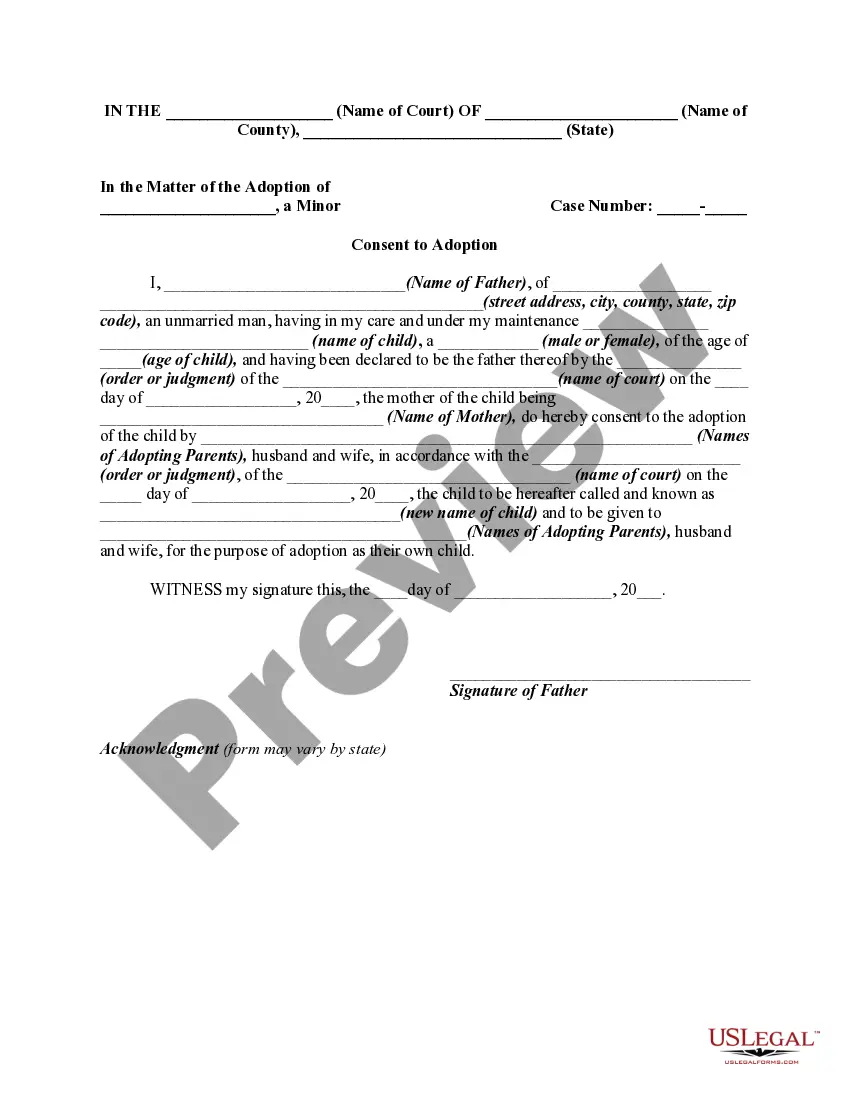
Child With Unmarried Parents
Description

Get your form ready online
Our built-in tools help you complete, sign, share, and store your documents in one place.
Make edits, fill in missing information, and update formatting in US Legal Forms—just like you would in MS Word.
Download a copy, print it, send it by email, or mail it via USPS—whatever works best for your next step.
Sign and collect signatures with our SignNow integration. Send to multiple recipients, set reminders, and more. Go Premium to unlock E-Sign.
If this form requires notarization, complete it online through a secure video call—no need to meet a notary in person or wait for an appointment.
We protect your documents and personal data by following strict security and privacy standards.

Make edits, fill in missing information, and update formatting in US Legal Forms—just like you would in MS Word.

Download a copy, print it, send it by email, or mail it via USPS—whatever works best for your next step.

Sign and collect signatures with our SignNow integration. Send to multiple recipients, set reminders, and more. Go Premium to unlock E-Sign.

If this form requires notarization, complete it online through a secure video call—no need to meet a notary in person or wait for an appointment.

We protect your documents and personal data by following strict security and privacy standards.
Looking for another form?





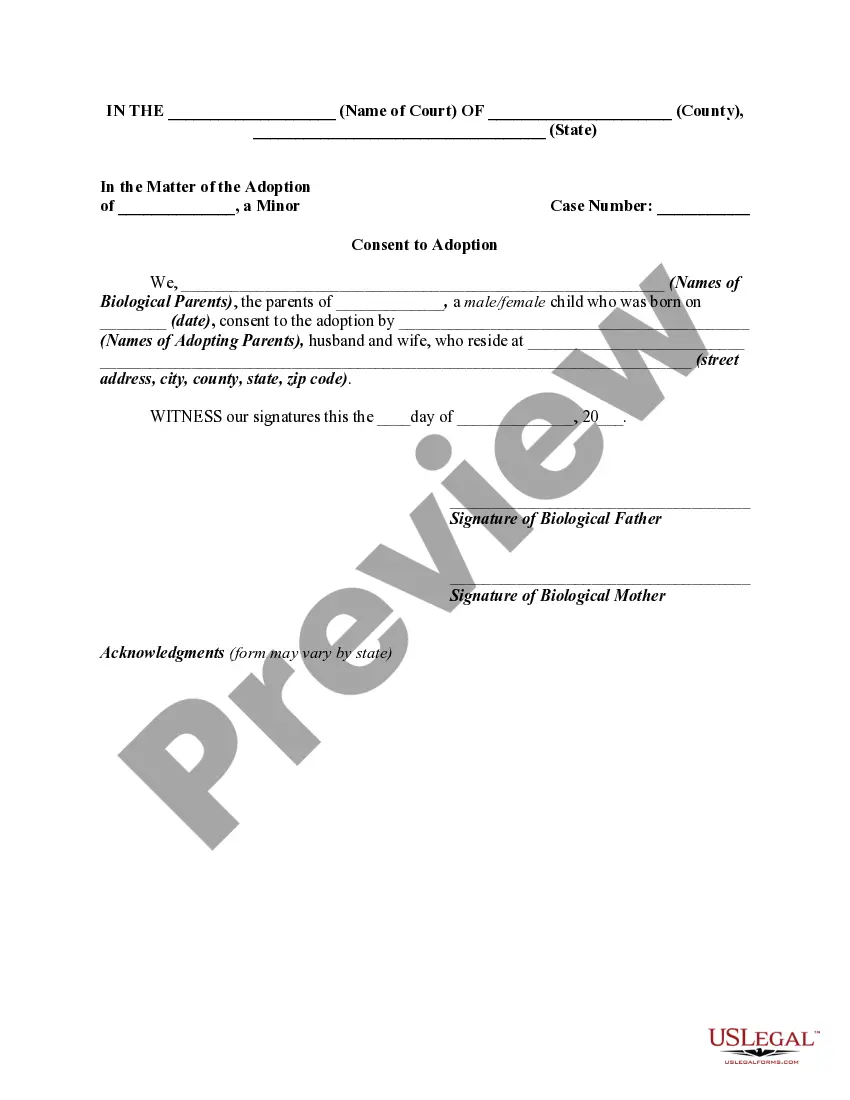
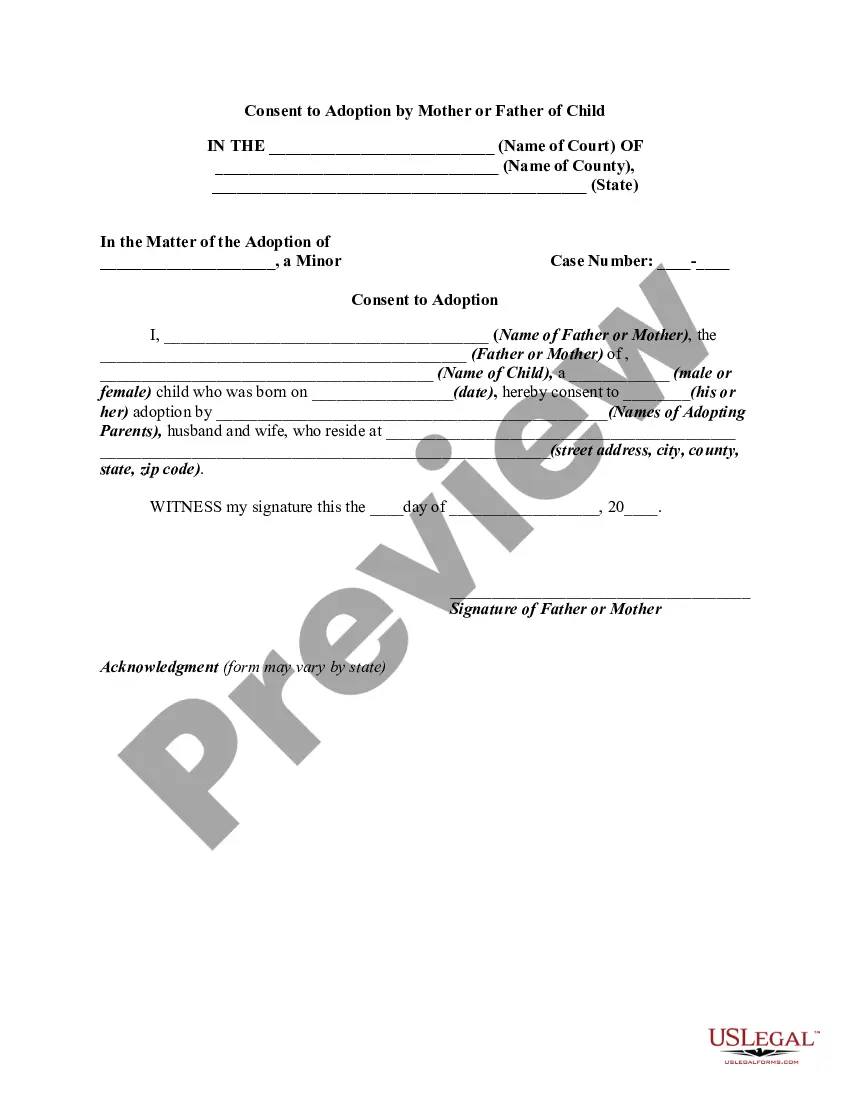
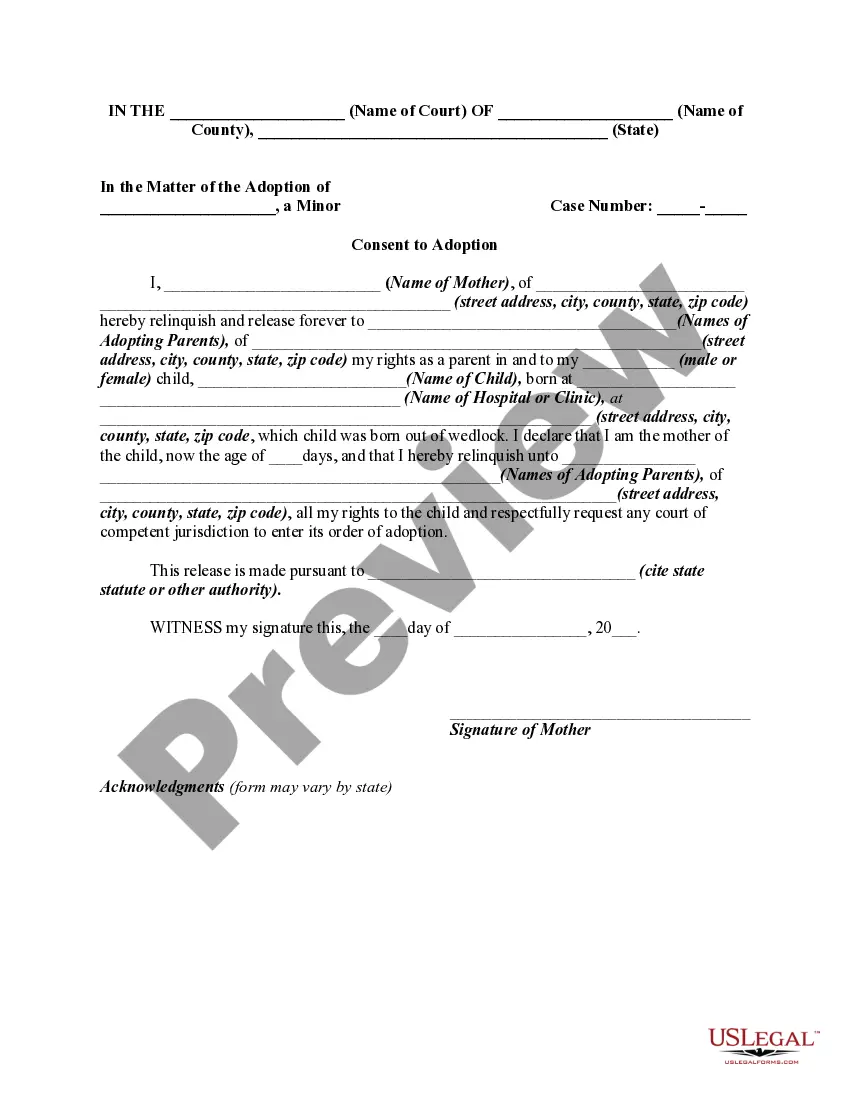
How to fill out Consent To Adoption By Unmarried Father Of Child?
- If you are an existing user, log in to your account at US Legal Forms and select the form template you require. Verify your subscription status to ensure you can access the document.
- If you are new to the service, start by reviewing the form preview and description to confirm that it matches your specific requirements.
- In case the selected form doesn’t meet your needs, utilize the search function to find the appropriate template that aligns with your local jurisdiction.
- Once you find the correct form, click on the 'Buy Now' button and choose the subscription plan that best suits you. You'll need to create an account to access the full library.
- Proceed to payment by entering your credit card information or using PayPal to finalize your purchase.
- After completing the transaction, download the form to your device. You can also access it anytime through the 'My documents' section in your profile.
By following these steps, you will be equipped with the necessary legal documents to manage matters concerning your child effectively.
Take advantage of US Legal Forms’ extensive library today and ensure that your legal documents are accurate and compliant. Visit us now to get started!
Form popularity
FAQ
The term commonly used for a child with unmarried parents is 'illegitimate child,' although this term is considered outdated and can carry a stigma. Many now prefer using 'child of unmarried parents' to eliminate the negative connotation. Understanding these terms can help foster a supportive environment for children in these situations. You can explore resources that educate and empower families on navigating this area.
When it comes to a child with unmarried parents, typically, the parent who has custody for most of the year claims the child on their taxes. This can be an important benefit, as it may provide tax credits. If both parents share custody, they can agree to alternate years for claiming the child. Consulting a tax professional can help you navigate these situations clearly.
In the case of a child with unmarried parents, the child may take the mother's last name by default. However, parents can agree to give the child the father's last name. It is essential to communicate and reach a mutual decision on this matter. Remember, you can formalize your child's name on important documents later if needed.
When parents are unmarried, the mother typically has the primary legal rights to claim the child. However, the father can establish paternity to secure his rights and obligations. Both parents should be proactive in discussing their roles and responsibilities in raising the child with unmarried parents. Utilizing resources from uslegalforms can simplify the process of laying out legal claims and agreements.
If you have a baby and you are not married, legal considerations will arise regarding custody, child support, and parental rights. Courts generally prioritize the best interests of the child with unmarried parents, which can lead to various arrangements. It is crucial to understand your rights and responsibilities, and seeking assistance from platforms like uslegalforms can help you navigate the necessary legal documents.
Yes, it is perfectly acceptable to have kids without getting married. Many families thrive and create positive environments without marriage as a foundation. It is essential to focus on the well-being of your child with unmarried parents, rather than your marital status. Ultimately, what matters most is the loving and supportive environment you provide.
No, it is not illegal to have a child before marriage in the United States. Many people have children while being unmarried, and this situation is quite common. Laws regarding custody and child support apply, but your relationship status does not affect your ability to become a parent. You can still provide a loving environment for your child with unmarried parents.
Yes, a child born out of wedlock is considered legitimate in the eyes of the law, especially after the establishment of paternity. The child has the same rights as any other child, including access to support and inheritance. It is vital for parents to understand these legal rights to ensure they provide the best for their child. Consulting legal resources can facilitate this process and clarify any misconceptions.
The legal term for a child born out of wedlock is often referred to as a 'non-marital child.' This term indicates that the parents were not married at the time of birth while affirming the child’s legal standing. Understanding this terminology can help parents make informed decisions regarding custody and support. Resources like US Legal Forms can provide necessary documents to address these matters legally.
A child with unmarried parents is typically called a 'child of unmarried parents.' This label does not diminish the child's legitimacy or rights. It is crucial for parents to recognize that their child's status does not affect their entitlement to love, care, and other legal protections. Clarifying these terms can lessen the stigma and ensure that the child's needs are met.