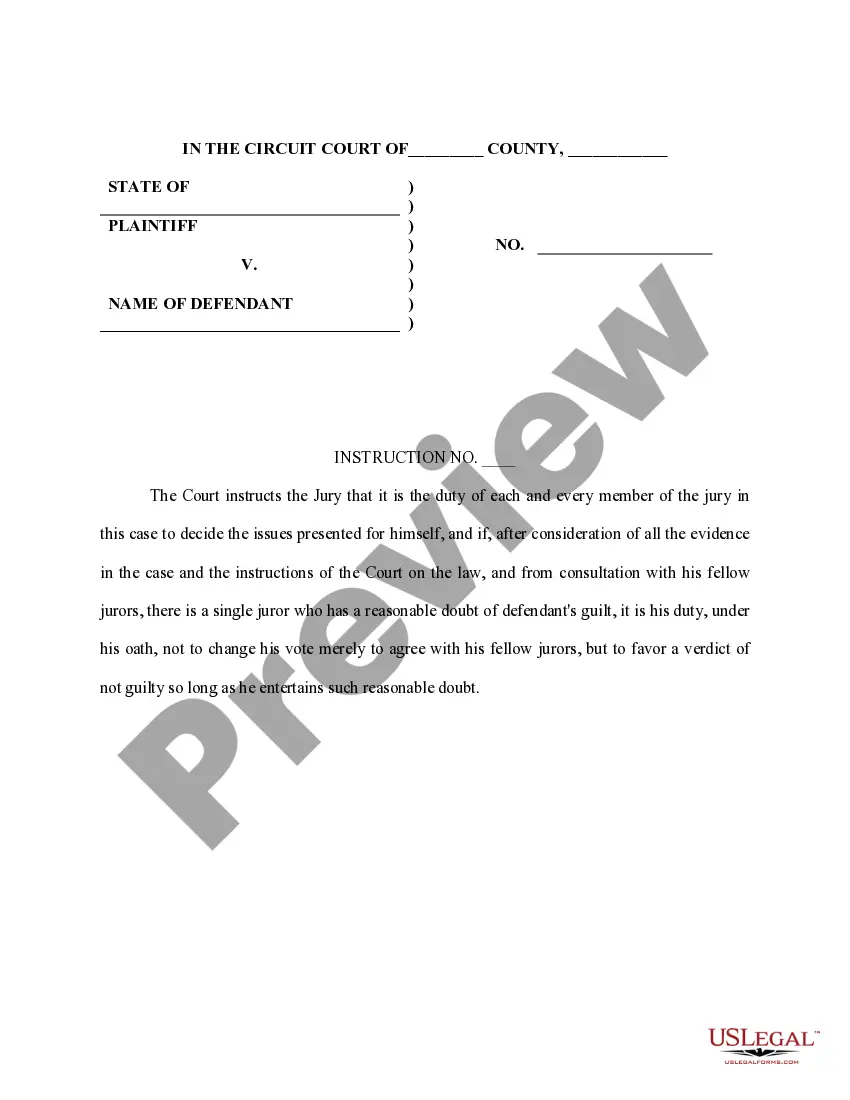
Jury Juror Difference
Description




How to fill out Reasonable Doubt By Single Juror?
- If you're a returning user, simply log in to your account and download the required form by clicking the Download button. Ensure your subscription remains active; if it has expired, consider renewing it based on your payment plan.
- For newcomers, begin by reviewing the Preview mode and form description. Confirm that you have selected a template that aligns with your needs and complies with your local jurisdiction's requirements.
- If no suitable template is found, utilize the Search tab to find a more applicable form. Once identified, proceed to the next step.
- Purchase the document by clicking on the Buy Now button. Select the subscription plan that best fits your requirements, and you will need to create an account to unlock full access.
- Complete the payment process by entering your credit card information or using your PayPal account to finalize your subscription.
- Download your selected form to your device, allowing for its completion at your convenience. You can always revisit it via the My documents section in your profile.
US Legal Forms is a powerful tool that empowers both individuals and attorneys to swiftly execute legal documents, featuring a robust library of over 85,000 fillable forms.
In conclusion, understanding the jury juror difference is vital for anyone involved in legal processes, and US Legal Forms is here to support you every step of the way. Start simplifying your legal document needs today!
Form popularity
FAQ
The juror qualification questionnaire serves to determine whether potential jurors meet the legal requirements to serve. This document gathers basic information about your background, residency, and any disqualifying factors. It is integral to ensuring that the court selects a fair and unbiased jury. Familiarity with the jury juror difference can help you see the value of this process.
To increase your chances of being dismissed from jury duty, respond to questions honestly but emphasize any strong biases, conflicts of interest, or personal reasons that may impede your ability to serve fairly. It's crucial to be sincere, as jurors must impartially evaluate the evidence. Understanding the jury juror difference will help you communicate your position clearly.
During jury selection, you will face various questions from the attorneys involved. Answer truthfully and thoughtfully, as your responses will influence whether you are selected. They may ask about your background, experiences, and opinions related to the case. Keeping in mind the jury juror difference can help you articulate your views effectively.
Answering the juror qualification questionnaire requires honesty and careful attention. You should fill out each section accurately, ensuring that your personal information and opinions reflect your true beliefs. This helps the court assess your suitability as a juror and identify any potential biases. Remember, a clear grasp of the jury juror difference can aid in this process.
If you don't fill out your jury duty questionnaire, you may face legal consequences. Courts rely on this information to determine your eligibility and to select jurors for trials. Ignoring the questionnaire can lead to a failure to appear notice, fines, or even a bench warrant for your arrest. Understanding the jury juror difference is crucial to fulfilling your civic duty.
If one jury member does not agree with the rest, it can lead to a hung jury, where no unanimous decision is reached. This situation often results in a mistrial, prompting the court to reconsider how to proceed, which may include a retrial. Recognizing the jury juror difference is important, as it showcases how individual opinions can affect the majority and ultimately the case's resolution.
A juror is an individual member of the jury, while a jury is a collective group of jurors responsible for making legal decisions in a trial. Jurors work together to assess evidence and reach a verdict based on the case. Understanding the jury juror difference helps clarify how each person's opinion contributes to the final outcome of a trial, making both roles essential in the judicial system.
When one juror disagrees with the other jurors, it is typically referred to as a dissenting juror. This term highlights the unique role this juror plays in the deliberation process. The jury's ability to work toward consensus can be affected by dissent, which emphasizes the jury juror difference. Thorough understanding of this can help parties involved in trials navigate complex legal waters.
When one juror disagrees with the majority, it can create a situation known as a hung jury. This means the jury cannot reach a unanimous decision, which is required in many cases. The court may then declare a mistrial, leading to potential retries. Understanding the jury juror difference is crucial, as the individual opinions of jurors can significantly impact the trial's outcome.
Judges generally do not overrule jurors on matters of fact, as jurors interpret evidence and reach verdicts. However, judges can set aside a jury's verdict if it contradicts the weight of evidence or legal standards. Understanding this aspect reinforces the jury juror difference and clarifies the roles each party plays in the courtroom.