Habeas Corpus Writ In India
Description

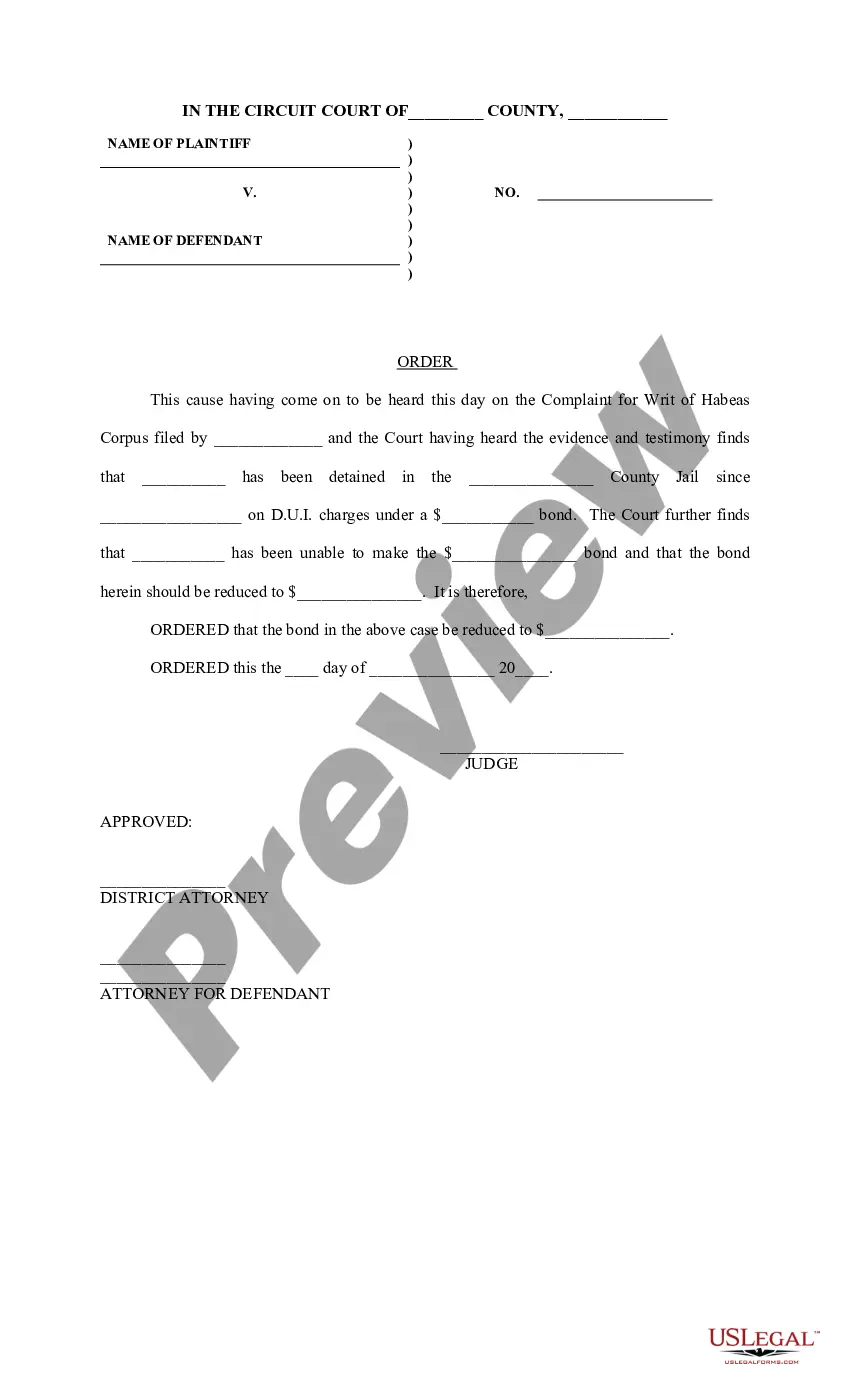
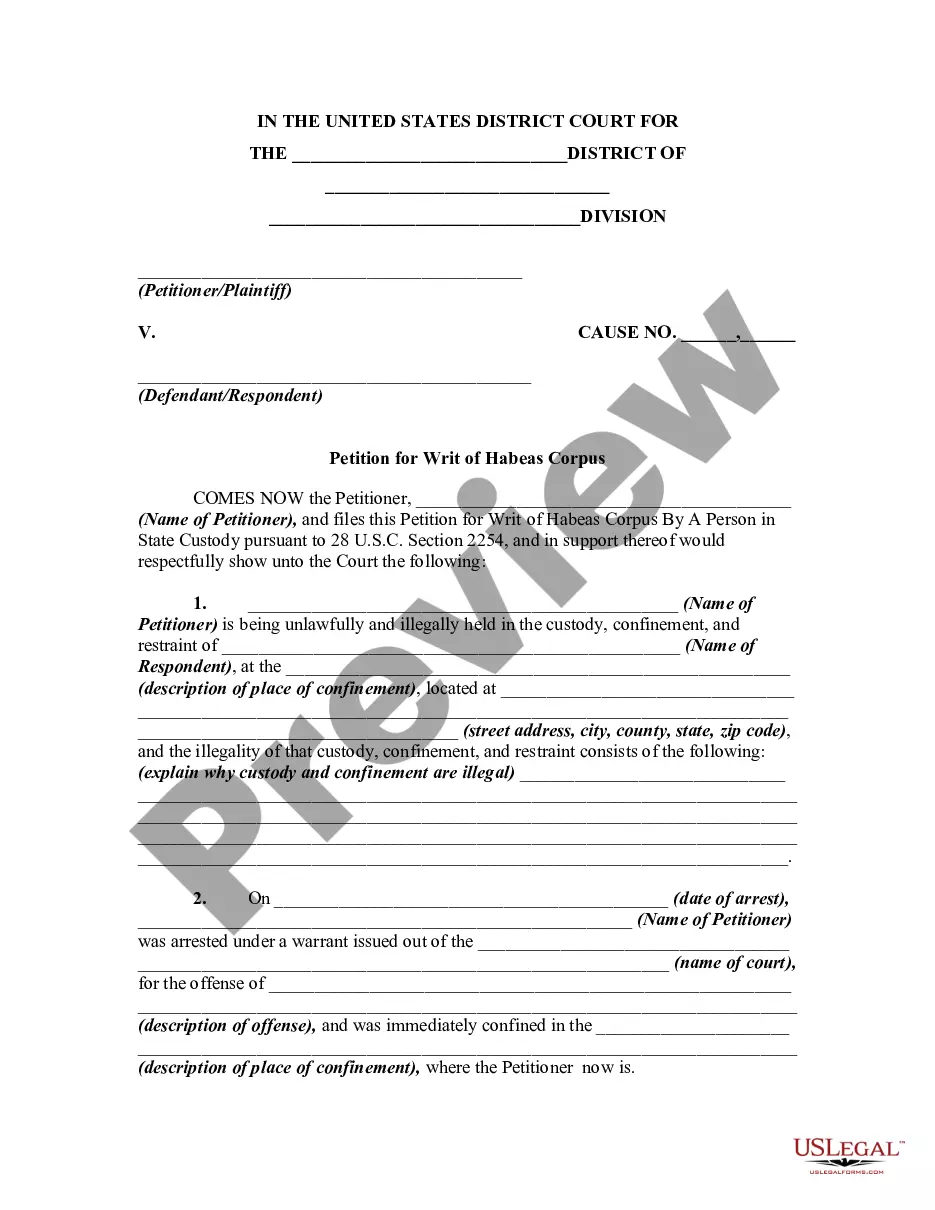




How to fill out Complaint For Writ Of Habeas Corpus?
Locating a reliable source to obtain the most up-to-date and pertinent legal documents is a significant part of navigating bureaucracy.
Finding the appropriate legal documents requires accuracy and careful attention, which is why sourcing Habeas Corpus Writ In India exclusively from reputable providers, such as US Legal Forms, is crucial. A flawed template could consume your time and prolong your situation. With US Legal Forms, you have minimal worries.
Eliminate the stress that comes with your legal documentation. Discover the extensive US Legal Forms library, where you can find legal templates, assess their relevance to your situation, and download them without delay.
- Utilize the library navigation or search box to locate your document.
- Review the form’s details to verify its compliance with your state and locality.
- If available, preview the form to ensure it matches what you're seeking.
- If the Habeas Corpus Writ In India does not meet your criteria, return to your search to find the correct template.
- Once you're confident in the form’s appropriateness, download it.
- If you're a registered member, click Log in to verify and access your chosen documents in My documents.
- If you don't yet have an account, click Buy now to acquire the document.
- Choose the pricing option that meets your requirements.
- Proceed with registration to complete your acquisition.
- Finalize your transaction by selecting a payment method (credit card or PayPal).
- Select the file format for downloading the Habeas Corpus Writ In India.
- After obtaining the form on your device, you can edit it with the editor or print it for manual completion.
Form popularity
FAQ
A significant writ of habeas corpus case in India is the case of Maneka Gandhi vs. Union of India. In this landmark decision, the Supreme Court expanded the interpretation of personal liberty under Article 21. The Court reaffirmed that a habeas corpus writ in India must ensure due process and safeguard individual freedoms against arbitrary detention.
One notable example of a habeas corpus writ in India occurred in the case of Kanu Sanyal vs. District Magistrate, Darjeeling. In this instance, the petitioner challenged the legality of his detention without trial. The Supreme Court of India upheld the principle of personal liberty, emphasizing that a habeas corpus writ serves as a powerful tool to protect individuals from unlawful confinement.
To file a habeas corpus petition in India, you need to present grounds that justify the legality of your detention. The petition must clearly show how the individual's fundamental rights are being violated. Essential details, such as the facts of the case and the status of the detained person, are critical for a successful application. Utilizing resources from UsLegalForms can help streamline your petition preparation.
Yes, you can file a case without a lawyer in India, as the legal system allows individuals to represent themselves. However, navigating the complexities of law, including the habeas corpus writ in India, can be challenging. If you choose to proceed without legal assistance, ensure that you gather all necessary information and documents to support your case. For more guidance, platforms like UsLegalForms can provide resources to help you understand the process.
The habeas corpus writ in India is a legal remedy that protects an individual's right to personal liberty. This writ allows a person to challenge the legality of their detention or imprisonment. By filing a habeas corpus petition, you can seek relief from unlawful confinement, ensuring that your freedoms are upheld by the court. It is a powerful tool in safeguarding individual rights in the justice system.
The process of a habeas corpus writ in India involves filing a petition in the appropriate court and outlining your case regarding unlawful detention. After filing, the court typically reviews the petition and may issue a notice to the authorities holding the individual. A hearing is then scheduled to assess the legality of the detention. It’s beneficial to engage with expert services like USLegalForms to navigate this intricate legal journey smoothly.
To file a habeas corpus writ in India, you must draft a petition that clearly states the facts of the unlawful detention. This includes presenting the individual's details, reasons for believing the detention is illegal, and the relief sought. Once prepared, submit the petition to the relevant court. Professional assistance from USLegalForms can enhance your filing quality and increase your chances of a favorable outcome.
Yes, many High Courts in India allow for online filing of a habeas corpus writ. You can visit the official website of your respective High Court to access the online filing system. This digital approach simplifies the process, making it more accessible for petitioners. USLegalForms can guide you through the online filing process, ensuring compliance with all requirements.
Filing a habeas corpus writ in India requires preparing a formal petition that includes essential details such as the grounds for the detention. You must submit this petition to the appropriate High Court or Supreme Court, depending on jurisdiction. It is crucial to gather supporting documents that substantiate your claims. Legal assistance from USLegalForms can streamline this process and improve your chances of success.
In India, any person who believes that another individual is unlawfully detained can file a habeas corpus writ. This includes family members, close friends, or any concerned third party. The key requirement is that the petitioner must have a genuine interest in the case. Engaging with platforms like USLegalForms can help you navigate this process effectively.
