Setting Aside A Default Judgment In Florida
Description
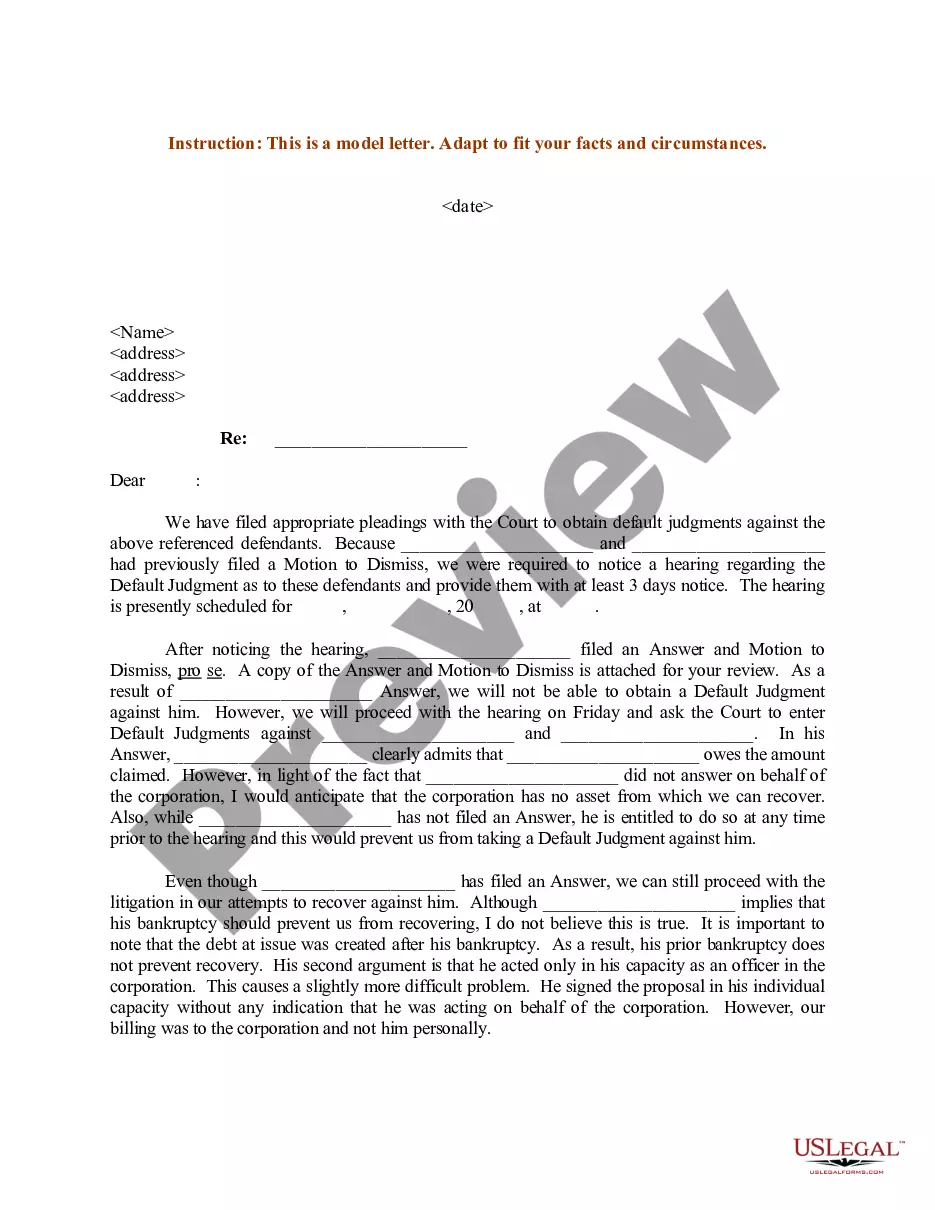
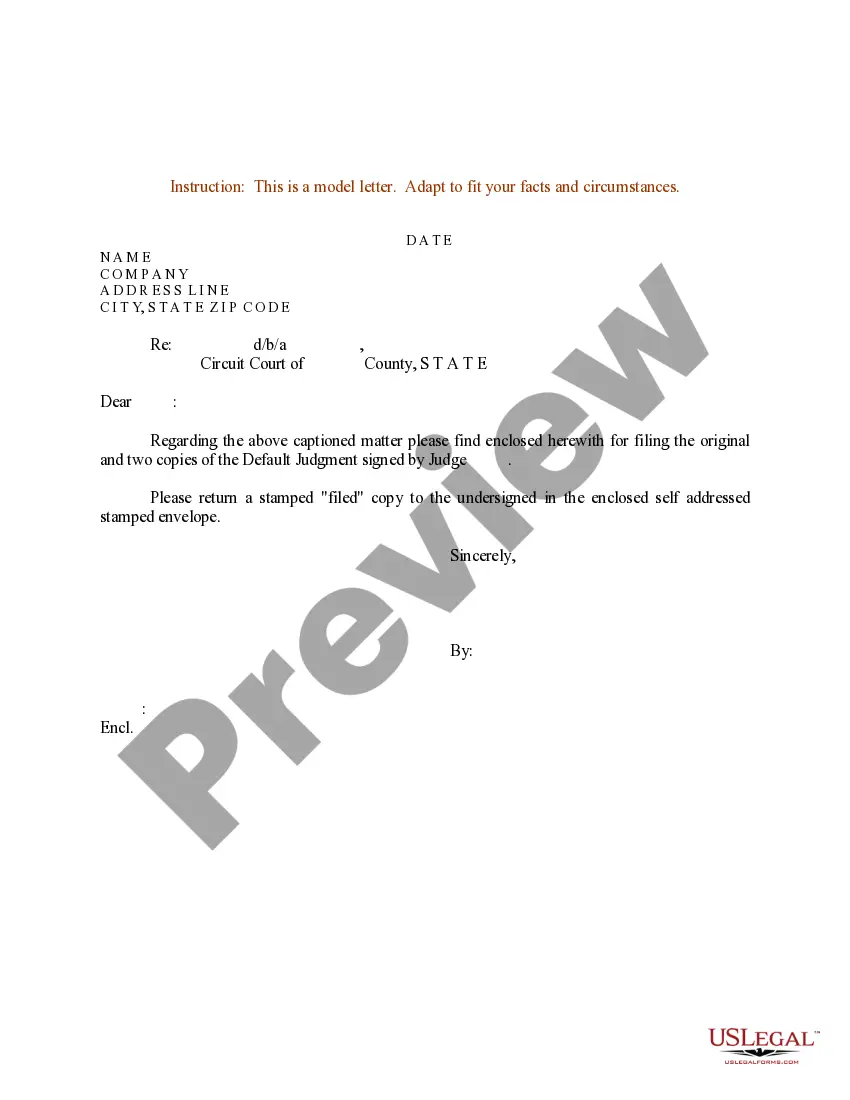
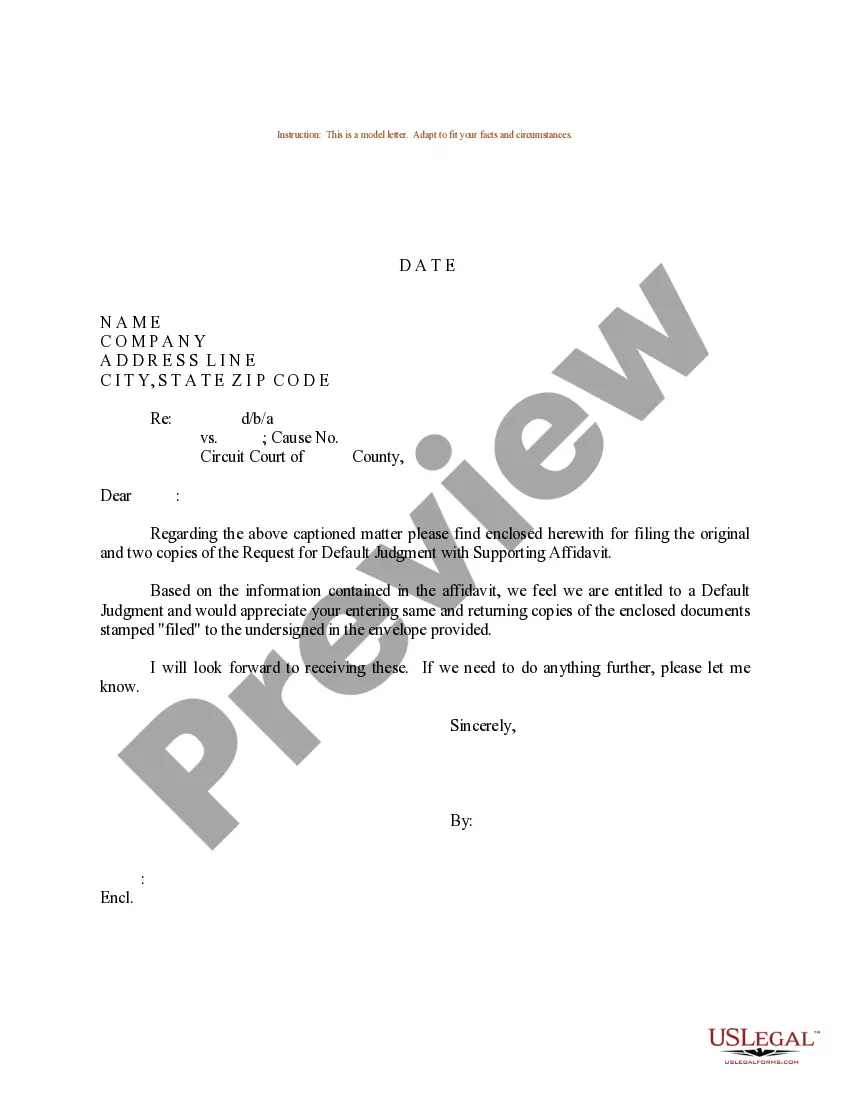


How to fill out Sample Letter To Judge Submitting Default Judgment?
The Setting Aside A Default Judgment In Florida featured on this page is a reusable legal document crafted by professional legal experts in alignment with federal and state laws and regulations.
For over 25 years, US Legal Forms has offered individuals, organizations, and lawyers more than 85,000 authenticated, state-specific documents for any personal or professional need. It’s the fastest, simplest, and most trustworthy method to acquire the essential paperwork, as the service ensures bank-level data protection and anti-malware security.
Subscribe to US Legal Forms to have authenticated legal templates for all aspects of life readily available.
- Search for the document you require and examine it.
- Browse the sample you looked for and view it or check the form description to ensure it meets your needs. If it does not, utilize the search function to find the appropriate one. Click Buy Now once you have found the document you need.
- Choose and Log Into your account.
- Pick the subscription plan that fits you and set up an account. Make a swift payment using PayPal or a credit card. If you already possess an account, Log In and verify your subscription to continue.
- Obtain the editable template.
- Select the format you prefer for your Setting Aside A Default Judgment In Florida (PDF, Word, RTF) and save the document on your device.
- Fill out and sign the paperwork.
- Print the document to fill it out by hand. Alternatively, utilize an online multi-functional PDF editor to efficiently and accurately complete and sign your form with an eSignature.
- Download your documents again.
- You can access the same document again whenever necessary. Open the My documents tab in your profile to redownload any previously saved forms.
Form popularity
FAQ
Yes, you can appeal a default judgment in Florida, but it's important to act quickly. You typically have a limited time frame in which to file your appeal, usually 30 days from the date the judgment was entered. Appeals focus on legal errors made during the trial process, not on the merits of the case itself. If you are looking to challenge a judgment, consider exploring resources from US Legal Forms, which can assist in understanding the appeal process related to setting aside a default judgment in Florida.
To vacate a default judgment in Florida, you must file a motion with the court that issued the judgment. In your motion, you should provide valid reasons for why the judgment should be set aside, such as excusable neglect or a meritorious defense. This process often involves gathering supporting documents and sometimes a hearing. Utilizing platforms like US Legal Forms can streamline the preparation of necessary documents for setting aside a default judgment in Florida.
Setting aside a default judgment involves filing a motion in court and presenting a valid reason for your failure to respond. This could include arguments of due process violations, procedural errors, or evidence of a legitimate defense. Engaging with experienced professionals can be instrumental in effectively setting aside a default judgment in Florida and ensuring your rights are protected.
To vacate a default judgment in Florida, file a motion and provide the court with valid reasons for your failure to respond. This motion must include details about why the judgment should not stand and any evidence supporting your position. Engaging legal expertise can help streamline the process of successfully vacating a default judgment in Florida.
In Florida, a default judgment remains enforceable until it is either satisfied, vacated, or set aside. Generally, it won't expire unless the creditor takes specific legal actions or the judgment is contested successfully. If you find yourself facing a default judgment, it is wise to seek help to set aside a default judgment in Florida to avoid long-lasting consequences.
To remove a default judgment, you must file a motion in the appropriate court. This motion should explain why you missed the court date and provide any evidence to support your claim. It's essential to act quickly, as delays can hinder your ability to set aside a default judgment in Florida. Legal assistance can be beneficial in navigating this process.
On motion and upon such terms as are just, the court may relieve a party or a party's legal representative from a final judgment, decree, order, or proceeding for the following reasons: (1) mistake, inadvertence, surprise, or excusable neglect; (2) newly discovered evidence which by due diligence could not have been ...
Final judgments issued in Florida are the culmination of a lawsuit. They can come at the end of the process from a trial or beforehand through certain procedural mechanisms like default or summary judgment or from an unperformed settlement agreement.
A common summary of the rules for setting aside (excusing) a default is frequently quoted by Florida appellate courts: A party attempting to set aside a clerk's default must demonstrate excusable neglect, a meritorious defense, and due diligence in order for the trial court to vacate the default.
Rule 1.500(d) of the Florida Rules of Civil Procedure provides: ?The Court may set aside a default, and if a final judgment consequent thereon has been entered, the Court may set it aside in ance with Rule 1.540(b) of the Florida Rules of Civil Procedure.?