Liability Disclaimer For Injury
Description
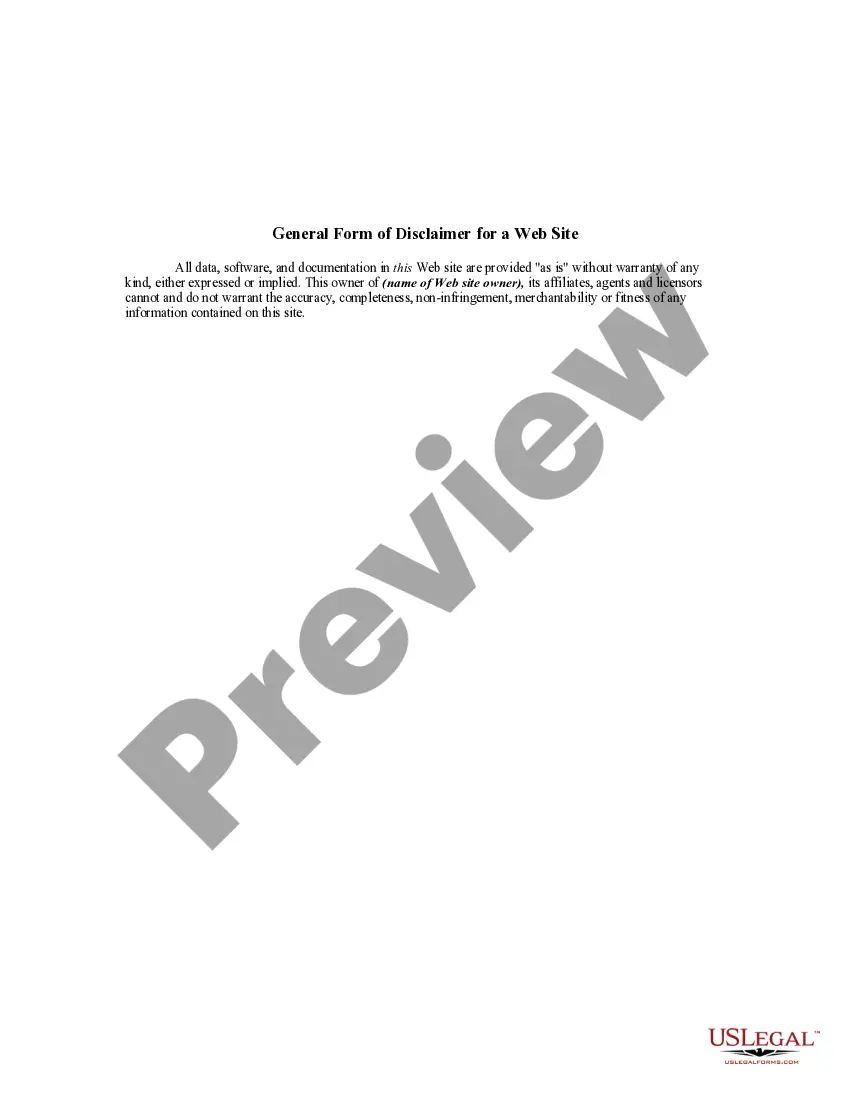
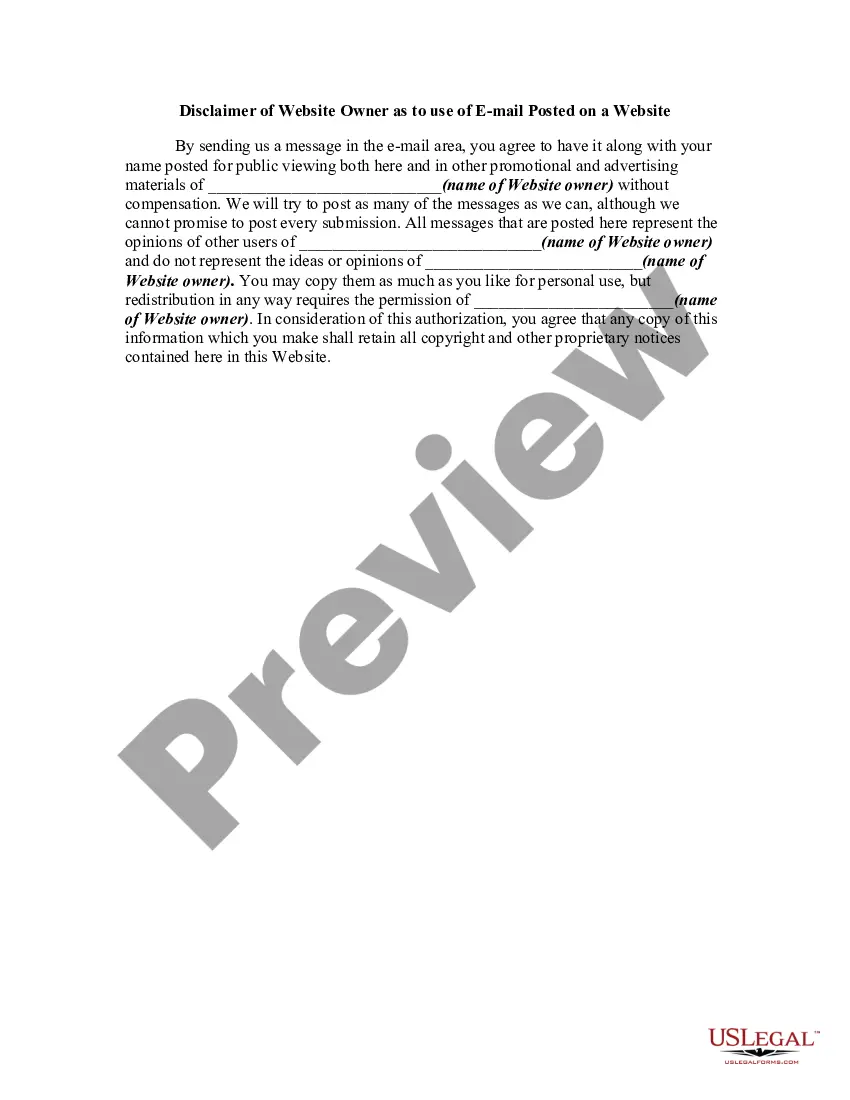
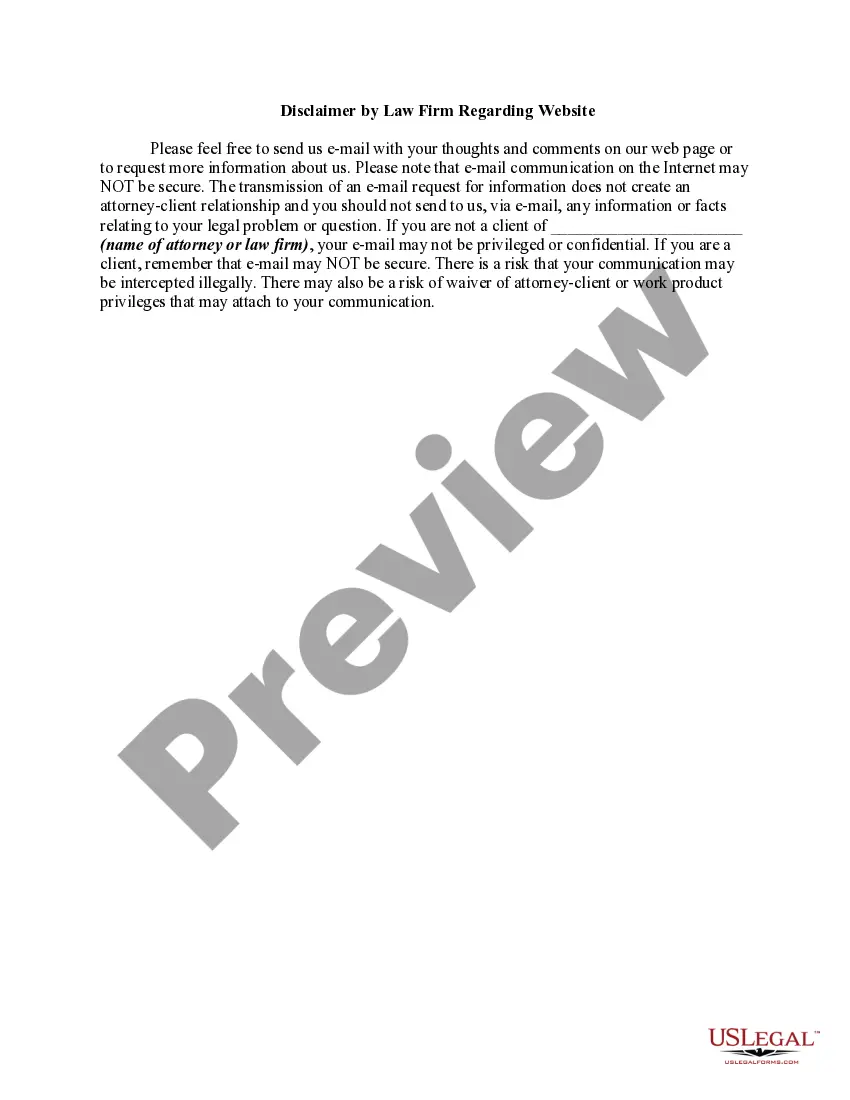



How to fill out Disclaimer Of Liability From Postings On A Website?
- Log in to your US Legal Forms account if you are a returning user. Verify that your subscription is active, and renew if necessary.
- For first-time users, begin by exploring the extensive online library of legal forms. Utilize the preview mode to verify you've selected the appropriate liability disclaimer that meets your local jurisdiction requirements.
- If the selected form is not suitable, leverage the search feature to find alternative templates that fit your needs.
- Proceed to purchase by clicking the 'Buy Now' button. Choose the subscription plan that works for you and create an account to access the full range of documents.
- After completing your purchase, enter your payment details to finalize the transaction.
- Once your payment is successful, download your liability disclaimer form directly to your device. You can find it later in the 'My Forms' section of your account.
By following these steps, you can efficiently create a legally sound liability disclaimer for injury. US Legal Forms provides the support and variety necessary to ensure you're protected in any situation.
Start your journey today and explore how easy it is to manage your legal needs with US Legal Forms.
Form popularity
FAQ
An injury liability waiver is a legal document that protects a business or organization from being held responsible for injuries that may occur during an activity. By signing this waiver, individuals agree that they understand the risks and waive their right to claim damages. This type of liability disclaimer for injury serves as a vital tool for businesses, ensuring they can operate without the fear of legal repercussions from accidents.
To write a liability release, start by clearly stating the parties involved. Specify the activity or event for which you are disclaiming liability. Include a statement where the signer acknowledges the risks associated with the activity, then have the party sign and date the document. Properly drafted liability disclaimers for injury can protect you in case of unforeseen circumstances.
An example of a personal injury disclaimer would be a statement that reads, 'Participants assume all risks of injury and agree to release the organizers from all liability.' This type of language clearly articulates the intent to limit legal responsibility. To create effective disclaimers, you can utilize platforms like USLegalForms to help you develop compliant and understandable liability disclaimers for injury.
Liability waivers can work effectively to limit exposure to lawsuits when they are properly drafted. They must be clear, specific, and signed voluntarily for enforceability. Consequently, a well-prepared liability disclaimer for injury can be a powerful tool for organizations to minimize their legal risks. Always consult a legal professional to ensure you have robust protection.
Yes, insurance can deny a personal injury claim based on various reasons, such as lack of coverage or insufficient evidence. If your liability disclaimer for injury is well-crafted, it could influence the insurer's decision. It is crucial to present a strong case that aligns with the terms agreed upon in any disclaimers or waivers.
A disclaimer provides notice that limits or excludes liability, while a liability waiver is a formal agreement where participants agree to relinquish their right to sue for injuries. Both serve to protect against claims, but they are used in different contexts. Understanding the nuances between these two can help you better draft a liability disclaimer for injury.
Yes, you can exclude liability for personal injury through a liability disclaimer for injury. However, the effectiveness depends on the laws in your state. Generally, courts may enforce these disclaimers when they are clear and conspicuous. Always consult legal advice to ensure your disclaimer meets all requirements.
When writing a liability waiver, clearly outline the activity involved, the risks participants are assuming, and state that they are releasing you from liability. Use precise language to ensure that the waiver is understandable and comprehensive. On platforms like USLegalForms, you can find useful templates that guide you through creating an effective liability disclaimer for injury, helping you maintain proper legal protections.
The limitation of liability injury clause restricts the amount of damages one party can recover for injuries sustained. This means that parties agree to limit their financial responsibility under certain circumstances. By including this clause in your liability disclaimer for injury, you can set clear boundaries on potential claims.
To write a disclaimer of liability, start by clearly stating the purpose of the disclaimer and identify the specific risks involved. Use straightforward language to describe what you are disclaiming liability for, and include information about the context in which this applies. Resources like USLegalForms provide templates that can streamline this process for your liability disclaimer for injury.