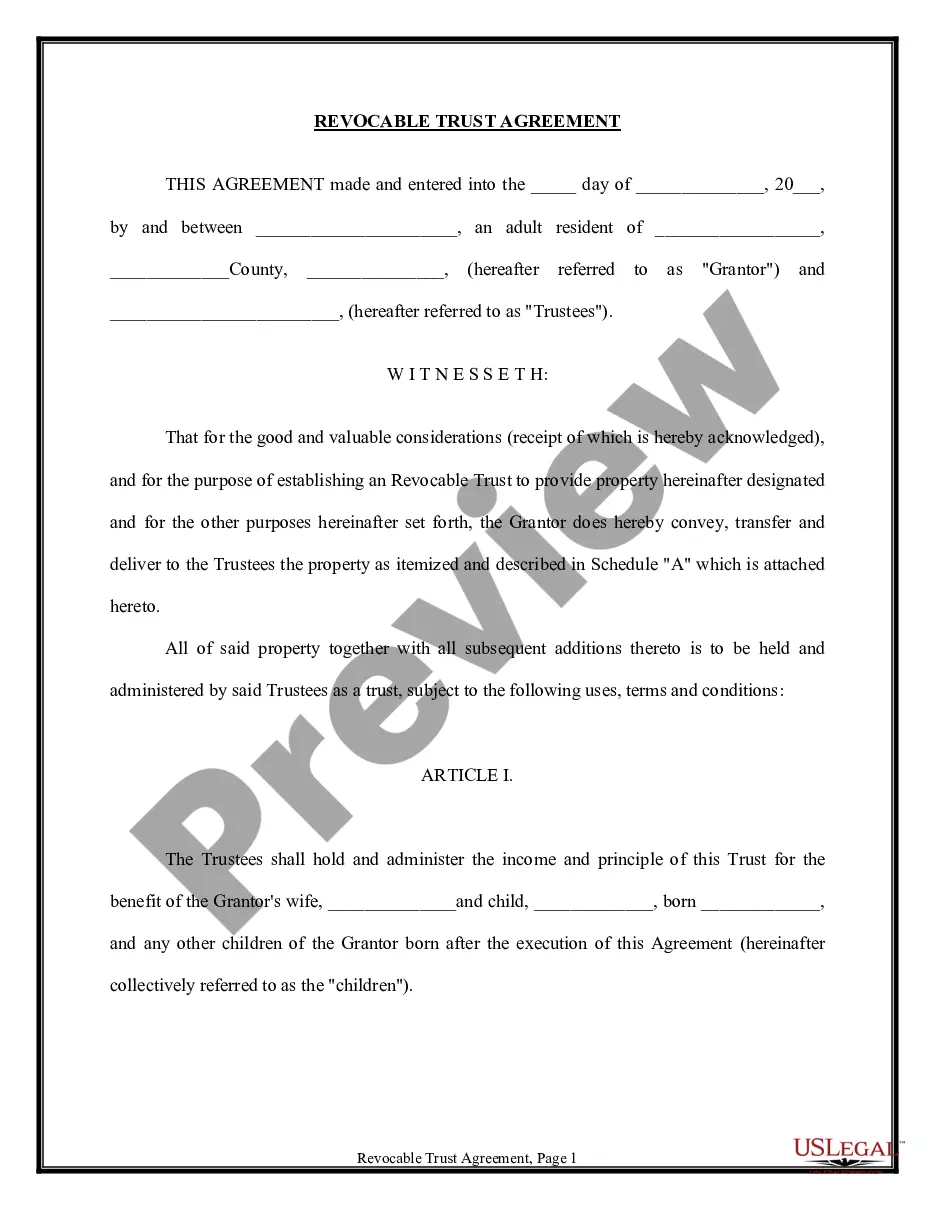
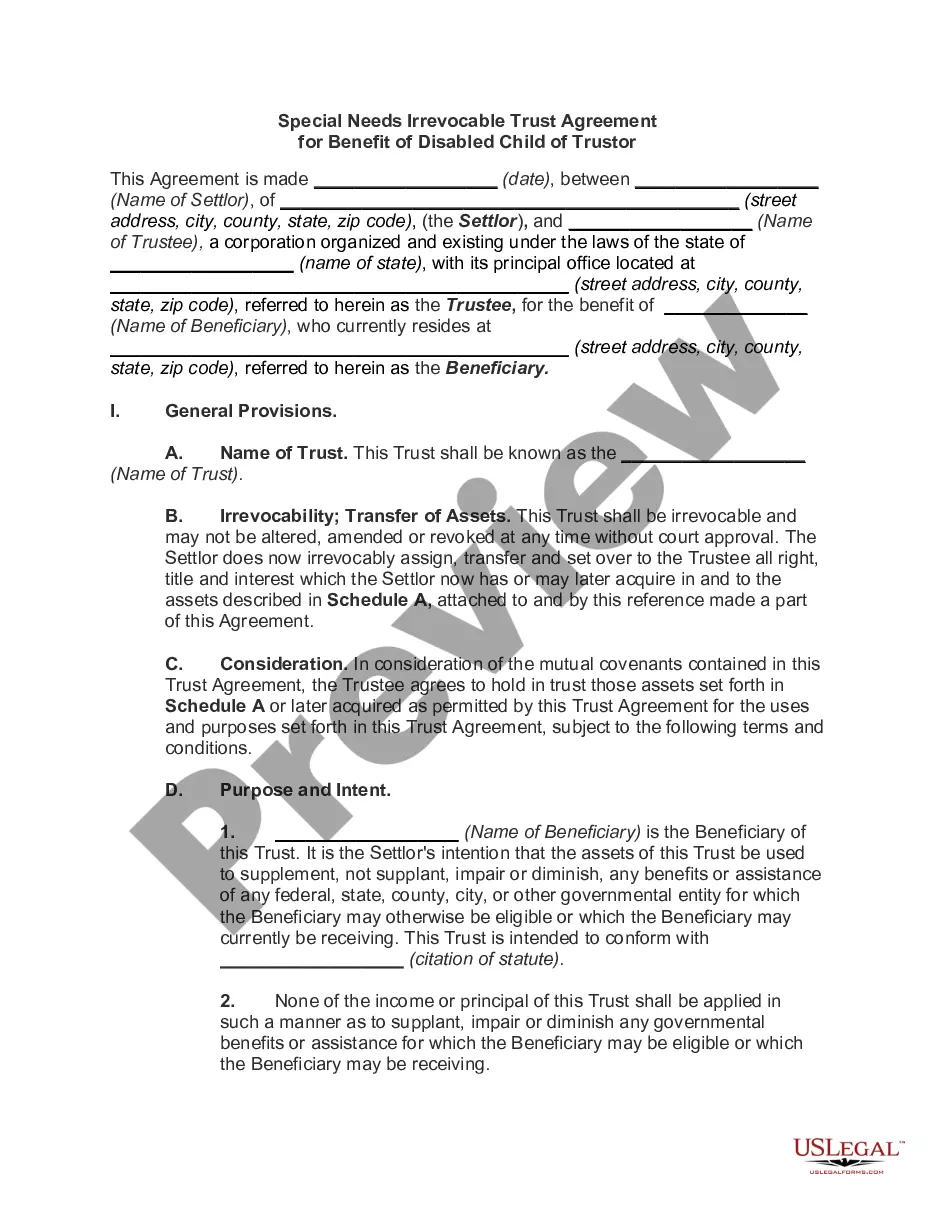
Trust For Special Needs Child
Description
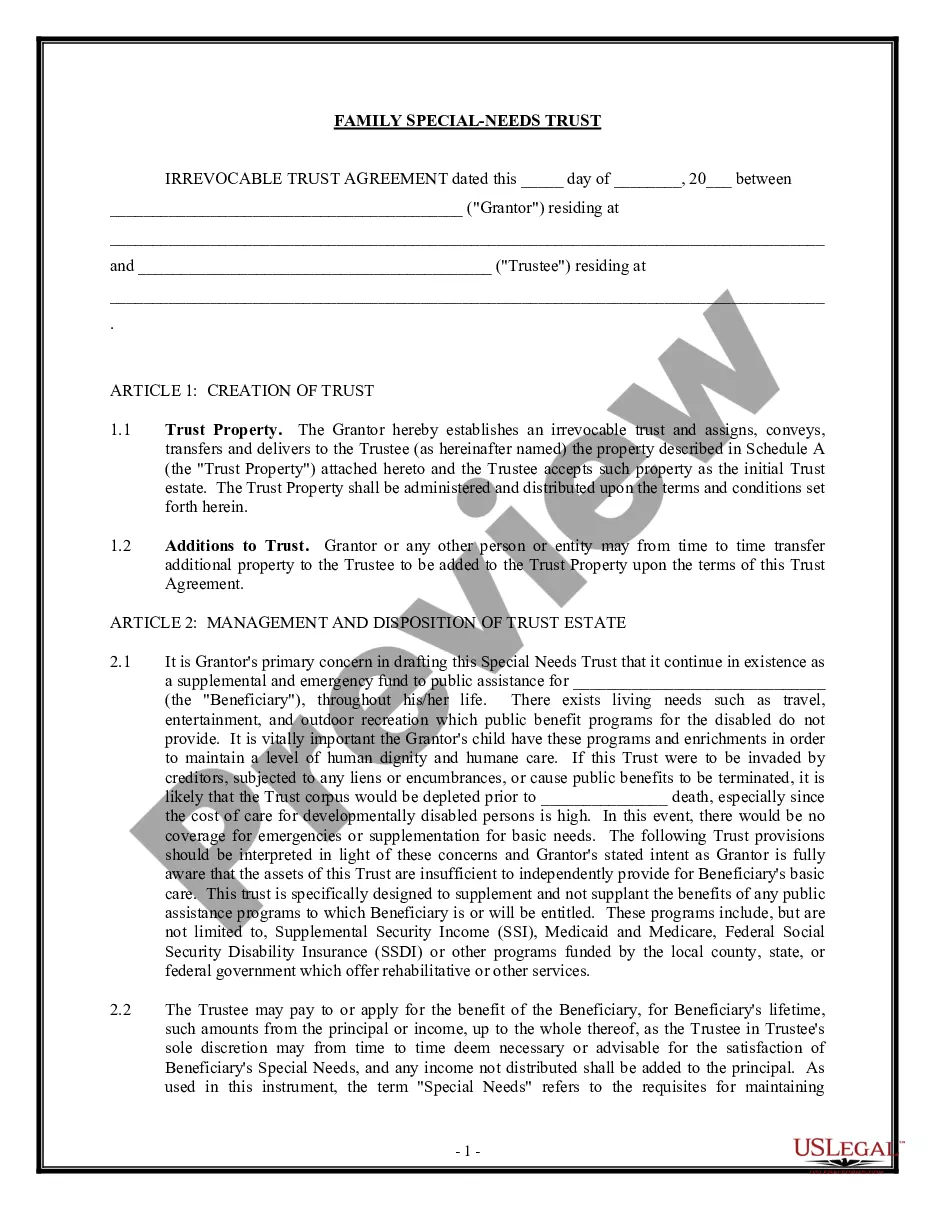
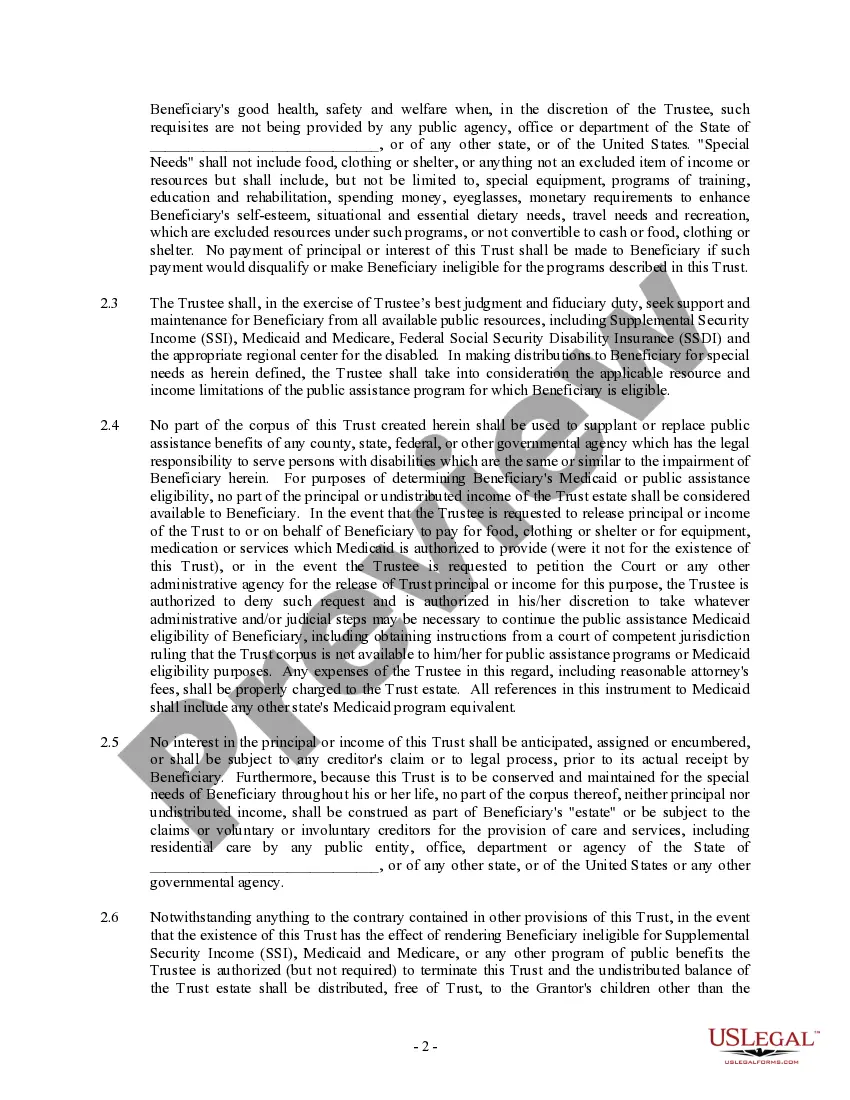
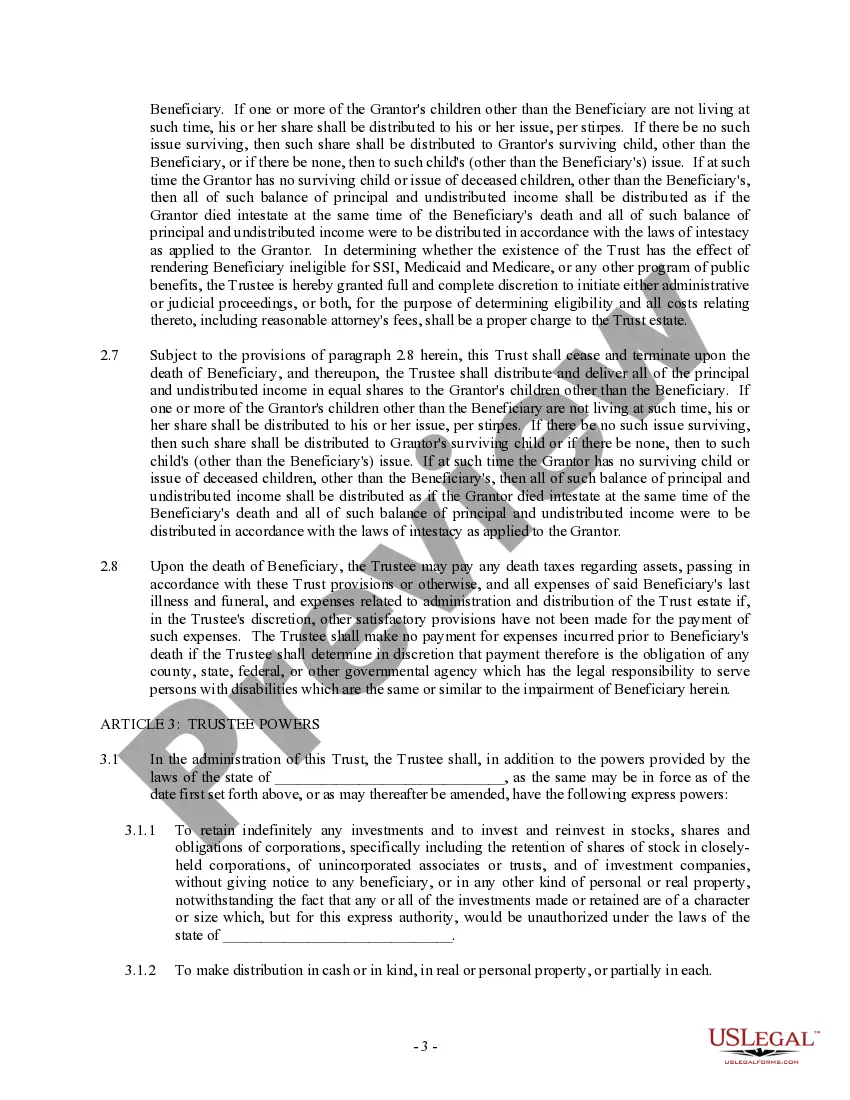
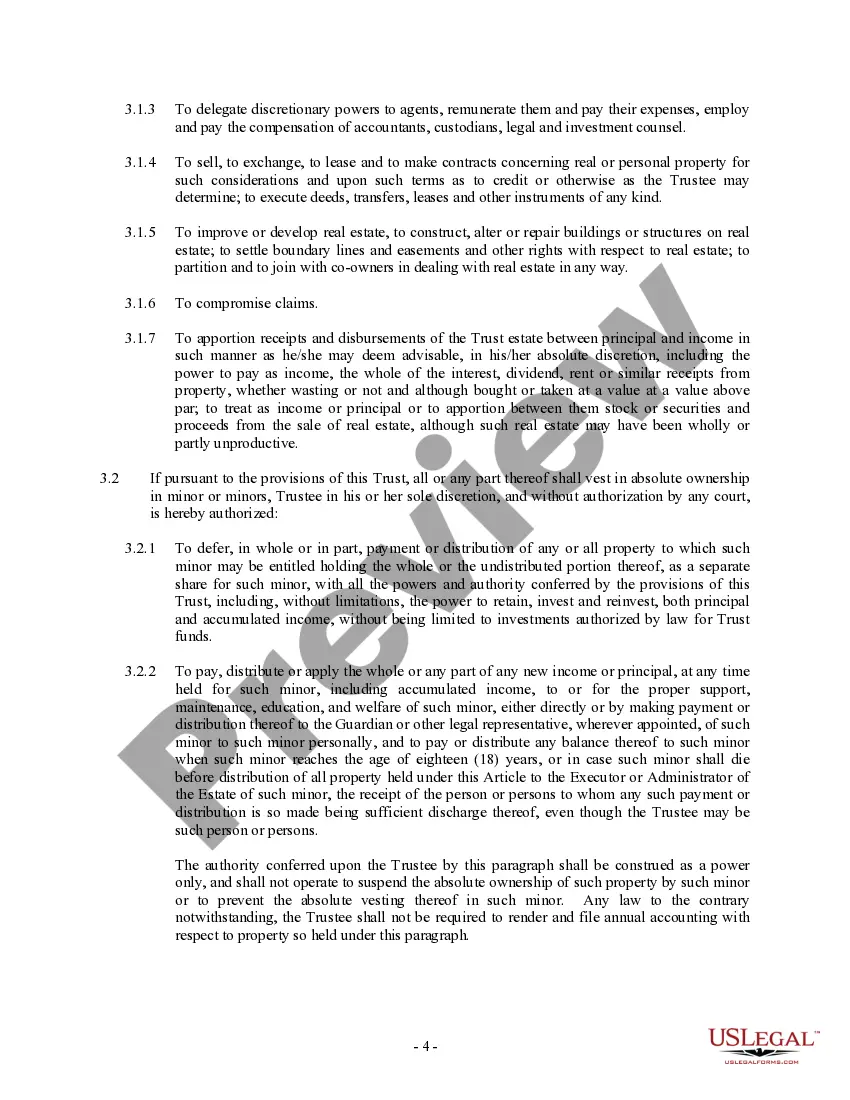


Get your form ready online
Our built-in tools help you complete, sign, share, and store your documents in one place.
Make edits, fill in missing information, and update formatting in US Legal Forms—just like you would in MS Word.
Download a copy, print it, send it by email, or mail it via USPS—whatever works best for your next step.
Sign and collect signatures with our SignNow integration. Send to multiple recipients, set reminders, and more. Go Premium to unlock E-Sign.
If this form requires notarization, complete it online through a secure video call—no need to meet a notary in person or wait for an appointment.
We protect your documents and personal data by following strict security and privacy standards.

Make edits, fill in missing information, and update formatting in US Legal Forms—just like you would in MS Word.

Download a copy, print it, send it by email, or mail it via USPS—whatever works best for your next step.

Sign and collect signatures with our SignNow integration. Send to multiple recipients, set reminders, and more. Go Premium to unlock E-Sign.

If this form requires notarization, complete it online through a secure video call—no need to meet a notary in person or wait for an appointment.

We protect your documents and personal data by following strict security and privacy standards.
Looking for another form?








How to fill out Trust Agreement - Family Special Needs?
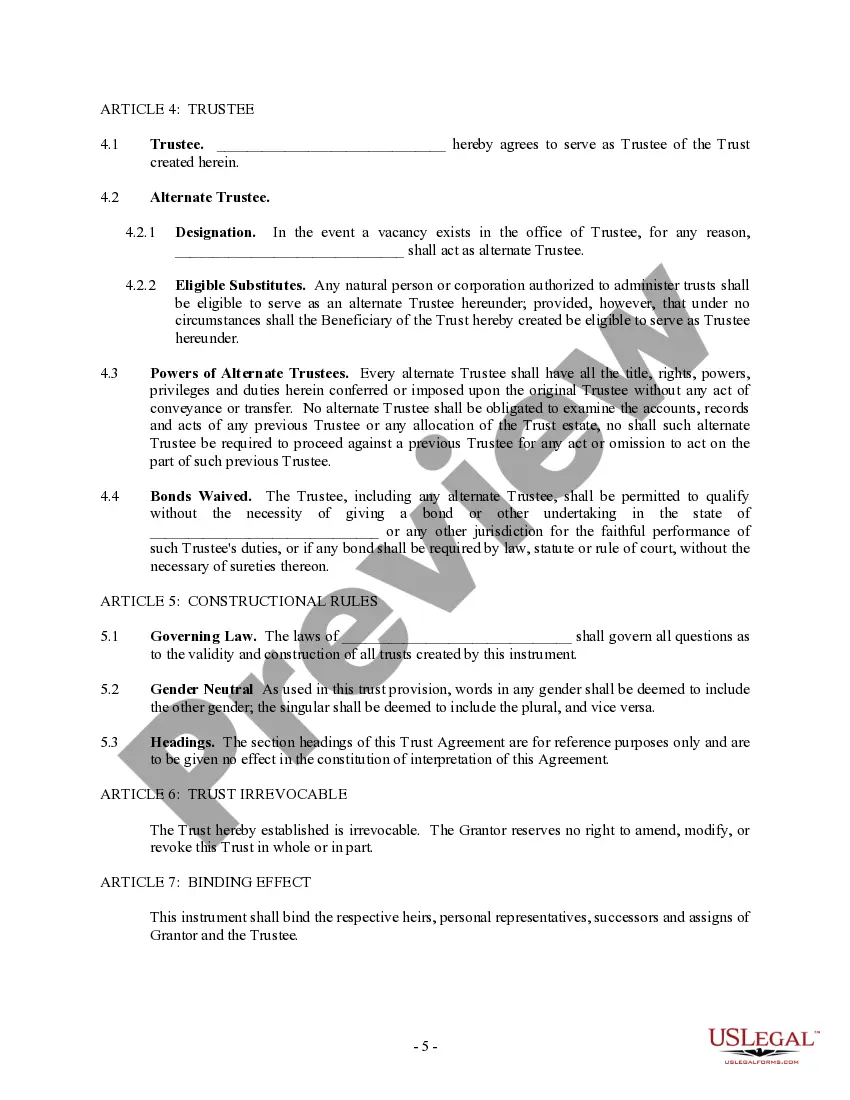
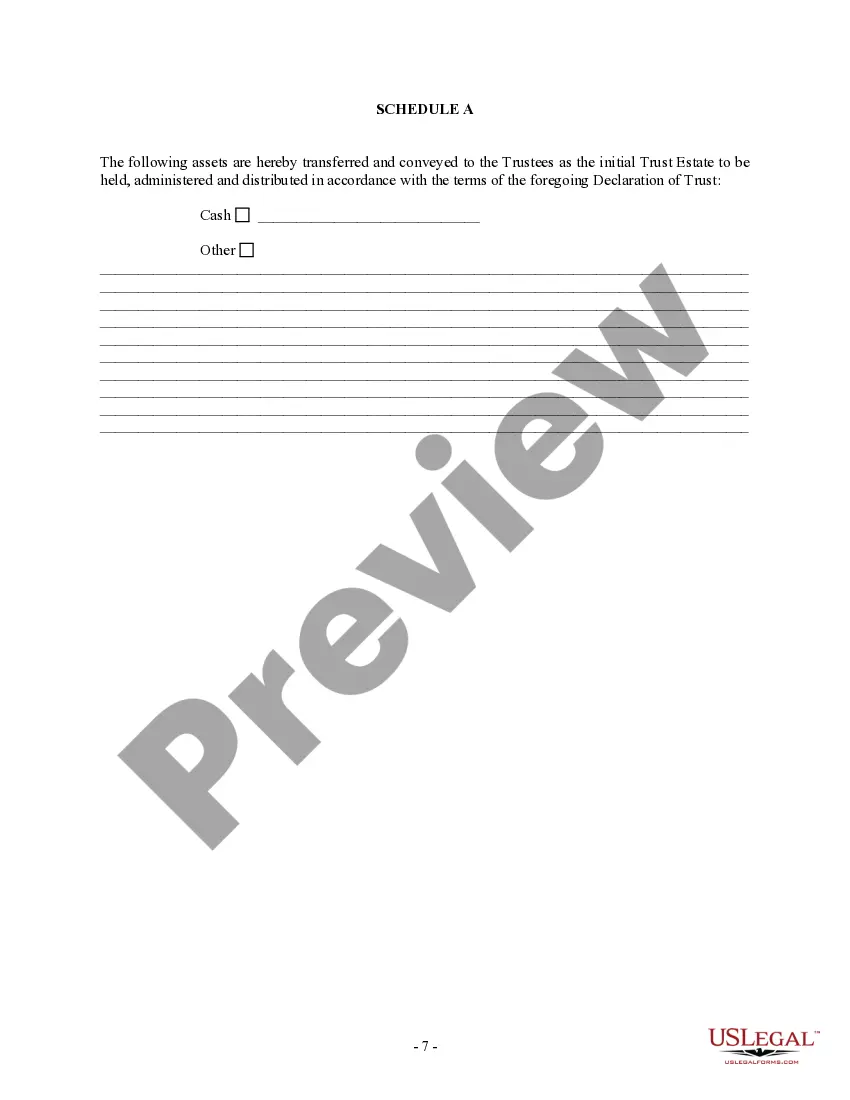
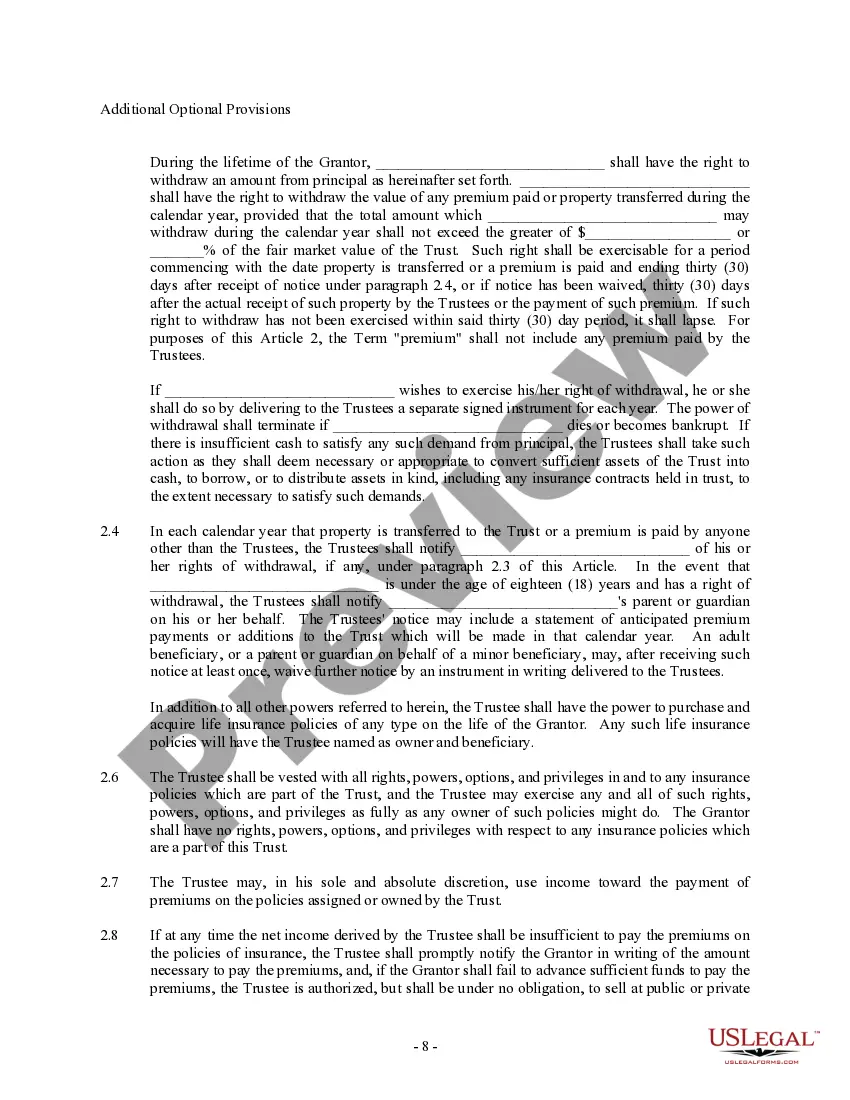
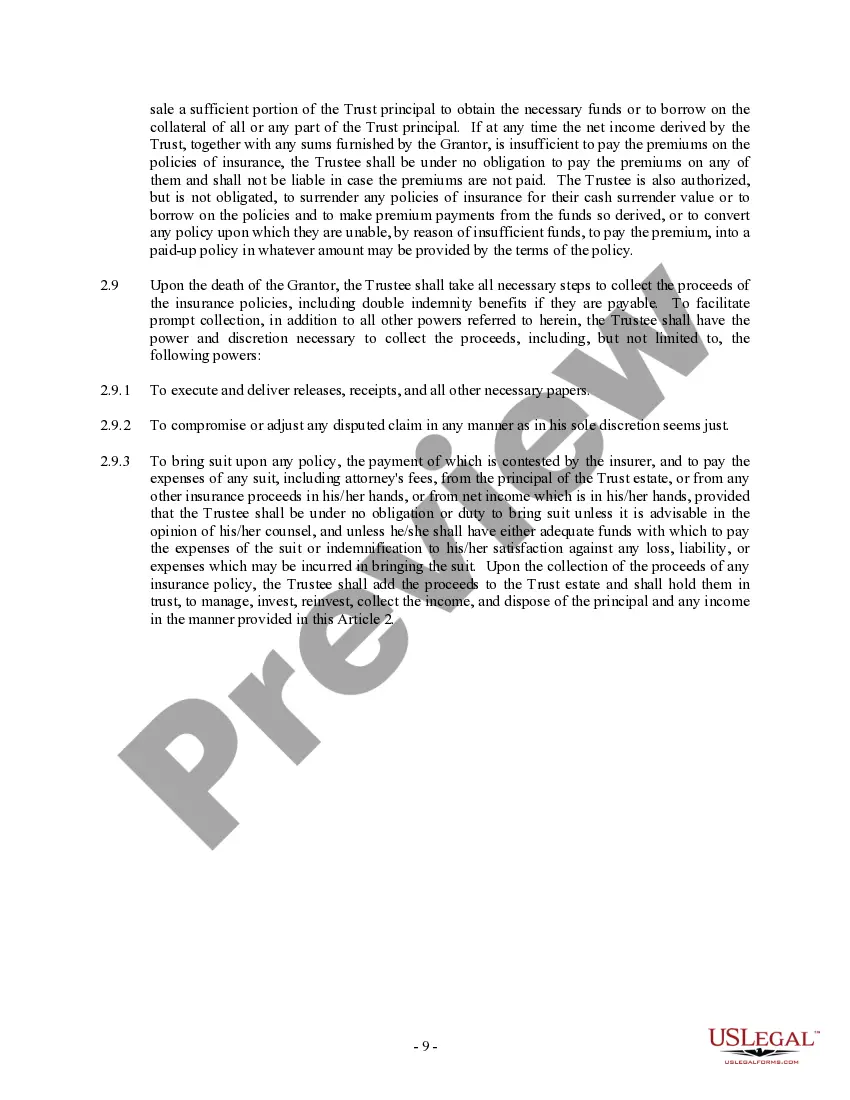
The Trust For Special Needs Child displayed on this page is a reusable formal template crafted by legal professionals in compliance with federal and local regulations.
For over 25 years, US Legal Forms has supplied individuals, organizations, and lawyers with more than 85,000 authenticated, state-specific documents for any business or personal scenario.
Download your documentation one more time. Access the same document again whenever needed. Open the My documents tab in your profile to redownload any forms you previously obtained. Subscribe to US Legal Forms to have verified legal templates for all of life’s situations at your fingertips.
- Search for the document you require and examine it.
- Browse the sample you found and preview it or read the form description to confirm it meets your requirements. If it doesn't, utilize the search feature to find the appropriate one. Click Buy Now when you've located the template you need.
- Choose a subscription plan that fits your needs and create an account. Use PayPal or a credit card to make a swift payment. If you already have an account, Log In and check your subscription to proceed.
- Obtain the fillable template. Choose the format you desire for your Trust For Special Needs Child (PDF, Word, RTF) and save the document on your device.
- Complete and sign the documentation. Print the template to fill it out manually or use an online multifunctional PDF editor to quickly and accurately complete and sign your form with a legally-binding electronic signature.
Form popularity
FAQ
Taxes on a trust for a special needs child depend on how the trust is structured. Typically, the trust itself is responsible for the taxes on income it generates. However, if the income is distributed to the beneficiary, then the beneficiary pays those taxes. Understanding these tax implications is crucial, and seeking guidance from professionals or using resources from USLegalForms can simplify this process.
The three types of special needs trusts include the First-Party Trust, funded with the beneficiary's assets, the Third-Party Trust, created and funded by someone else, and the Pooled Trust, which combines resources from multiple beneficiaries. Each type has unique benefits and limitations, so understanding their nuances is vital for effective planning. Consulting professionals can help you make an informed decision suited to your child's needs.
The best trust for a special needs child often depends on individual circumstances, but a Supplemental Needs Trust is commonly favored. This type of trust allows beneficiaries to receive necessary benefits without compromising their eligibility for government assistance. It’s essential to evaluate your child's specific needs and consult with a legal expert to choose the ideal trust structure.
Setting up a special needs trust typically takes a few weeks to several months, depending on the complexity of your situation. Factors include legal documentation, the choice of trustee, and coordination with financial advisors. Working with platforms like uslegalforms can expedite the process, helping you create a comprehensive trust efficiently.
The downsides of a special needs trust include potential high setup and administrative costs, which can be a burden for some families. Another consideration is the strict regulations around disbursements, which can limit your child’s access to funds. Ensuring the trust is managed properly requires ongoing attention, which some families may find challenging.
Filing requirements for a special needs trust can vary by state, but generally, you will need to provide documentation showing proof of the trust's existence and its purpose. This documentation often includes the trust agreement and any necessary tax identification numbers. Consulting with legal advisors is advisable to ensure compliance with local regulations.
One downside of a special needs trust is the complexity involved in its creation and management. Additionally, specific rules govern the use of trust funds, which may limit some financial choices. It is crucial to work with a legal professional to navigate these constraints and ensure your child benefits maximally from the trust.
To set up a trust for a special needs child, begin by gathering essential documents that outline your child’s needs and preferred care. Choose a trustee who understands special needs and can manage the trust effectively. You will also need to determine the type of trust that best serves your child's long-term interests, ensuring that the trust complies with relevant laws to protect government benefits.
The best trust for special needs child often depends on individual circumstances and state laws. A special needs trust is typically recommended, as it can provide financial support without jeopardizing government benefits. Consider using a specialized platform like uslegalforms to create a tailored trust that meets your child's unique requirements and ensures their future well-being.
Setting up a trust for special needs child involves several steps. Start by evaluating your child's specific needs and financial circumstances. Next, consult with a qualified attorney who specializes in special needs law to draft the trust document, ensuring it complies with state laws. Finally, work with a trustee to manage the trust assets and distributions effectively for your child's benefit.