Testamentary Special Needs Trust For Minor Child
Description
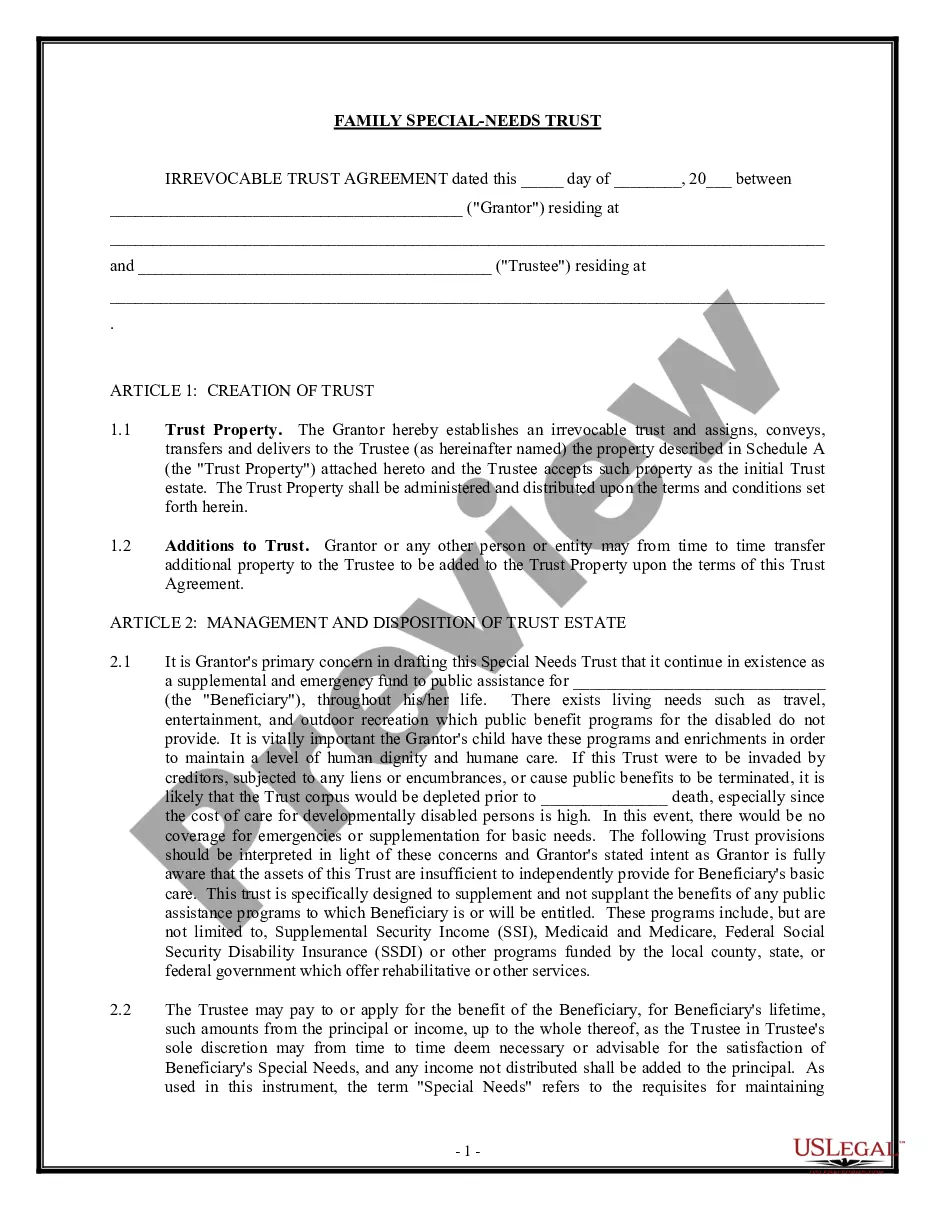
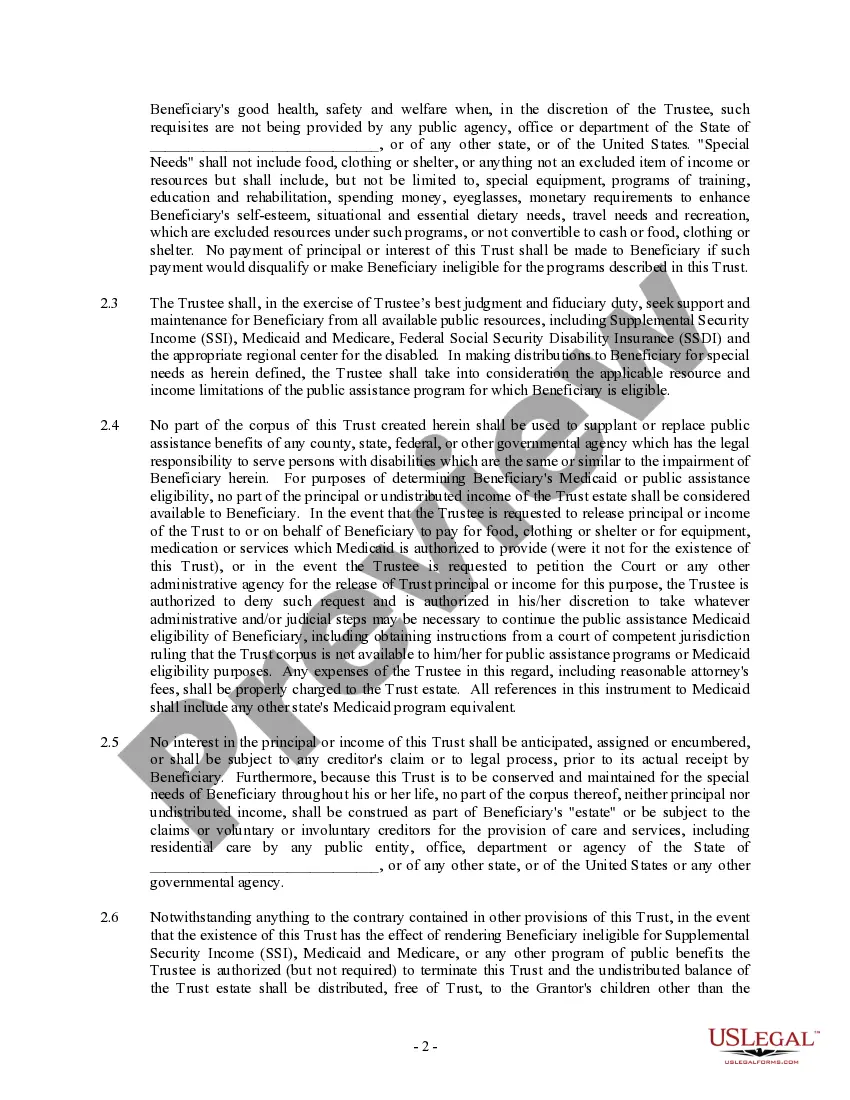
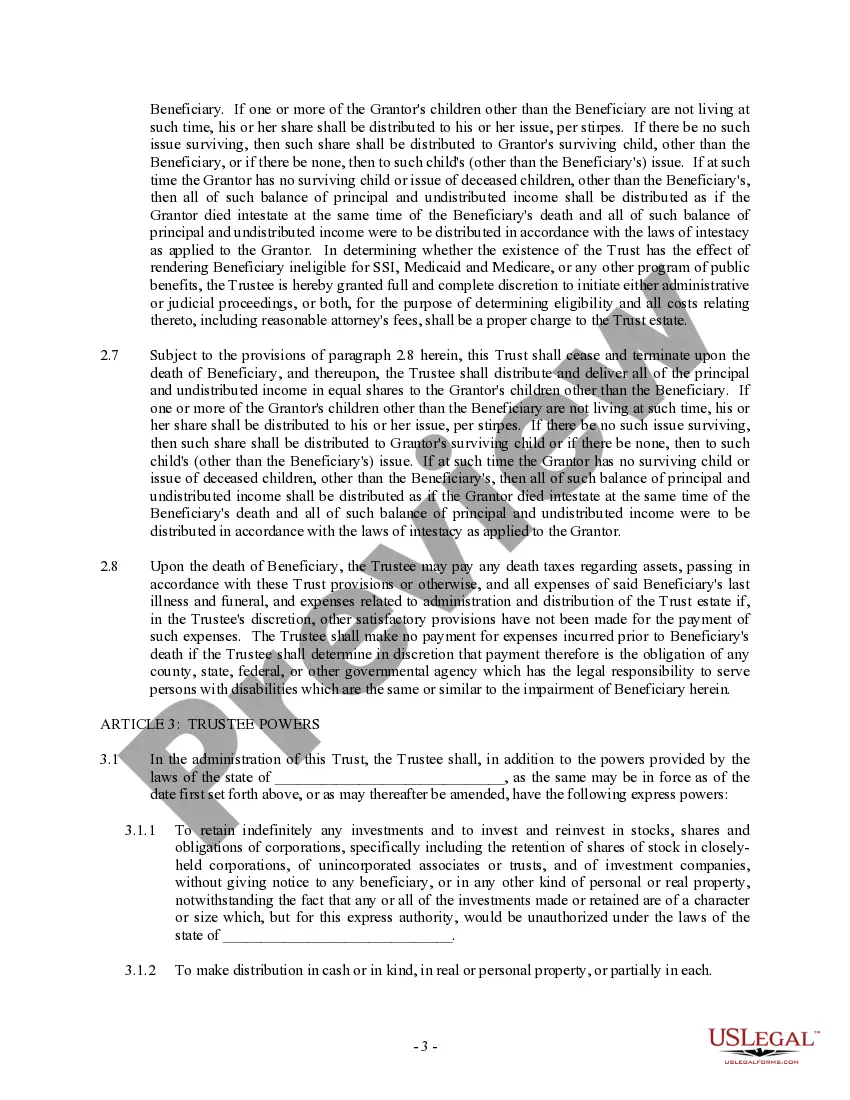
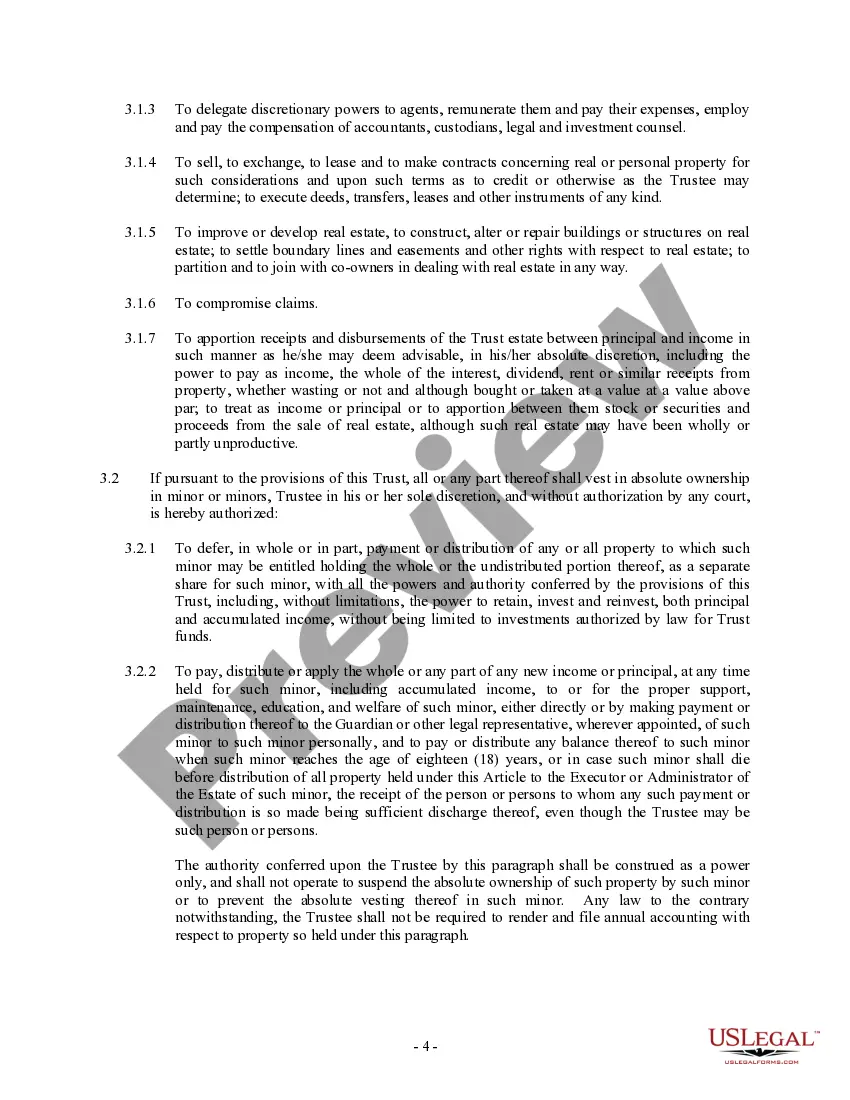
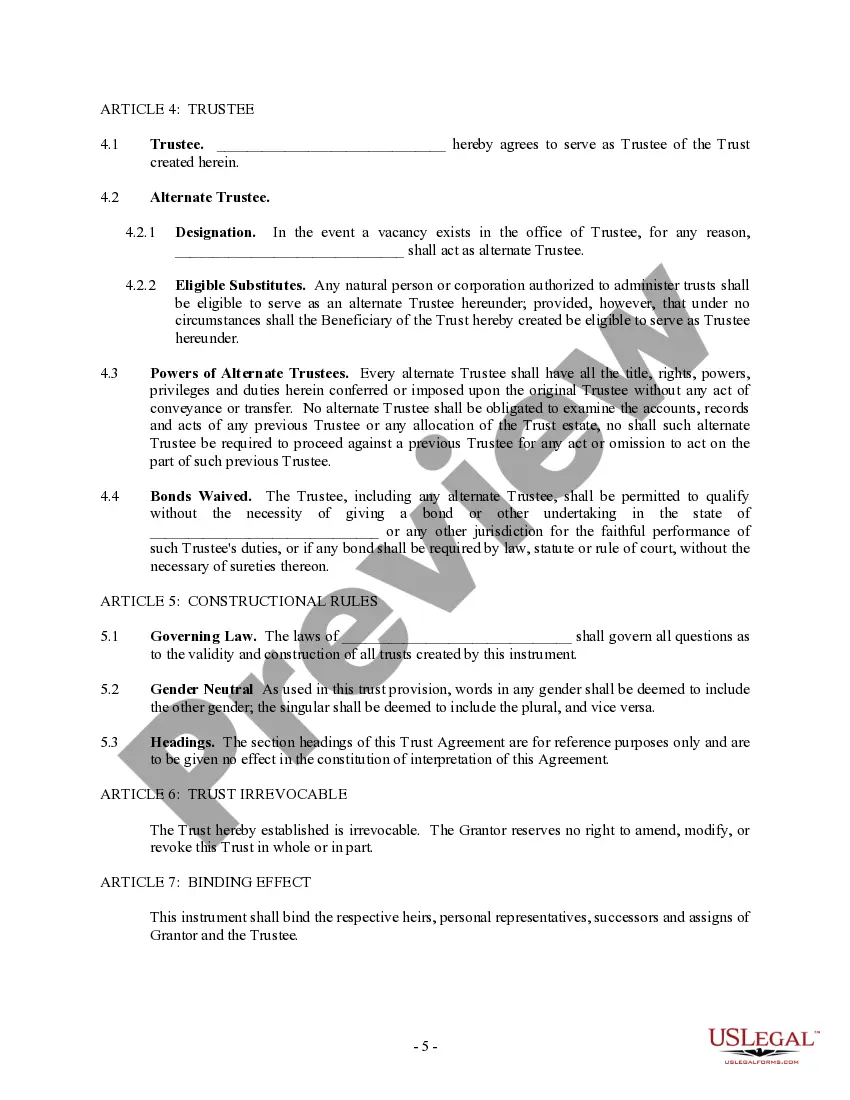
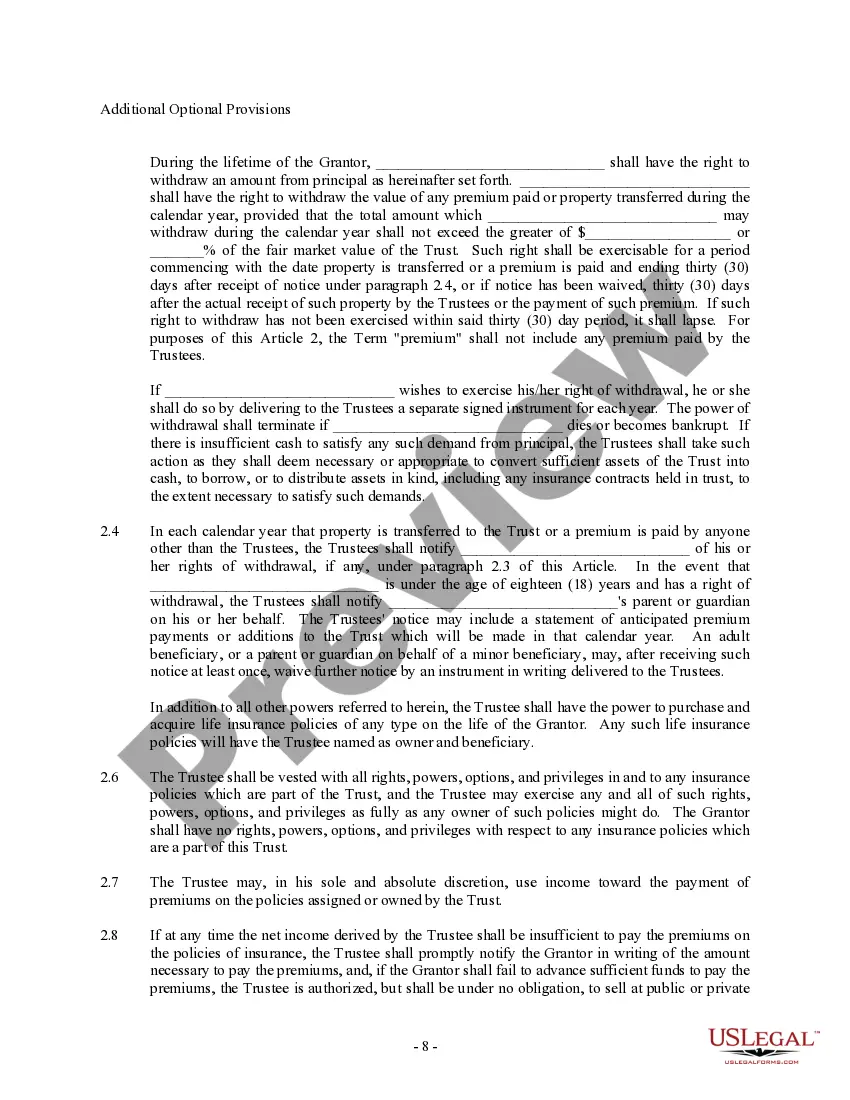
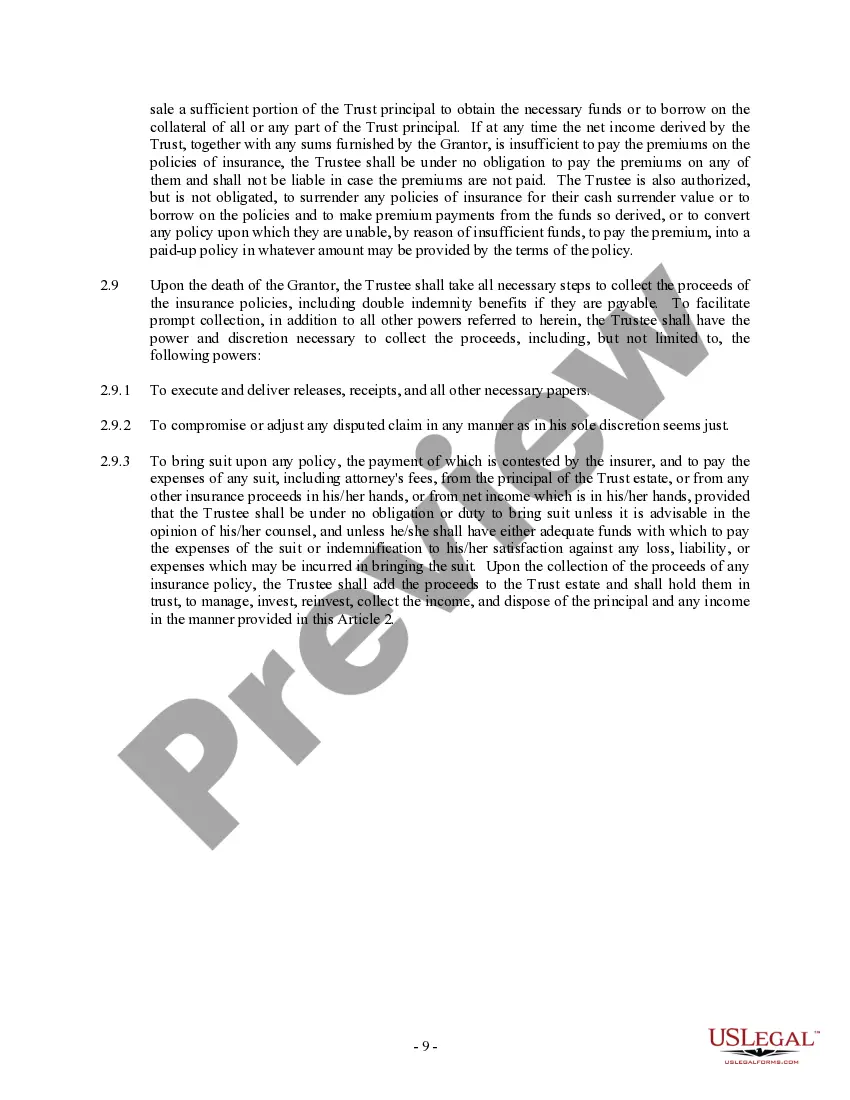
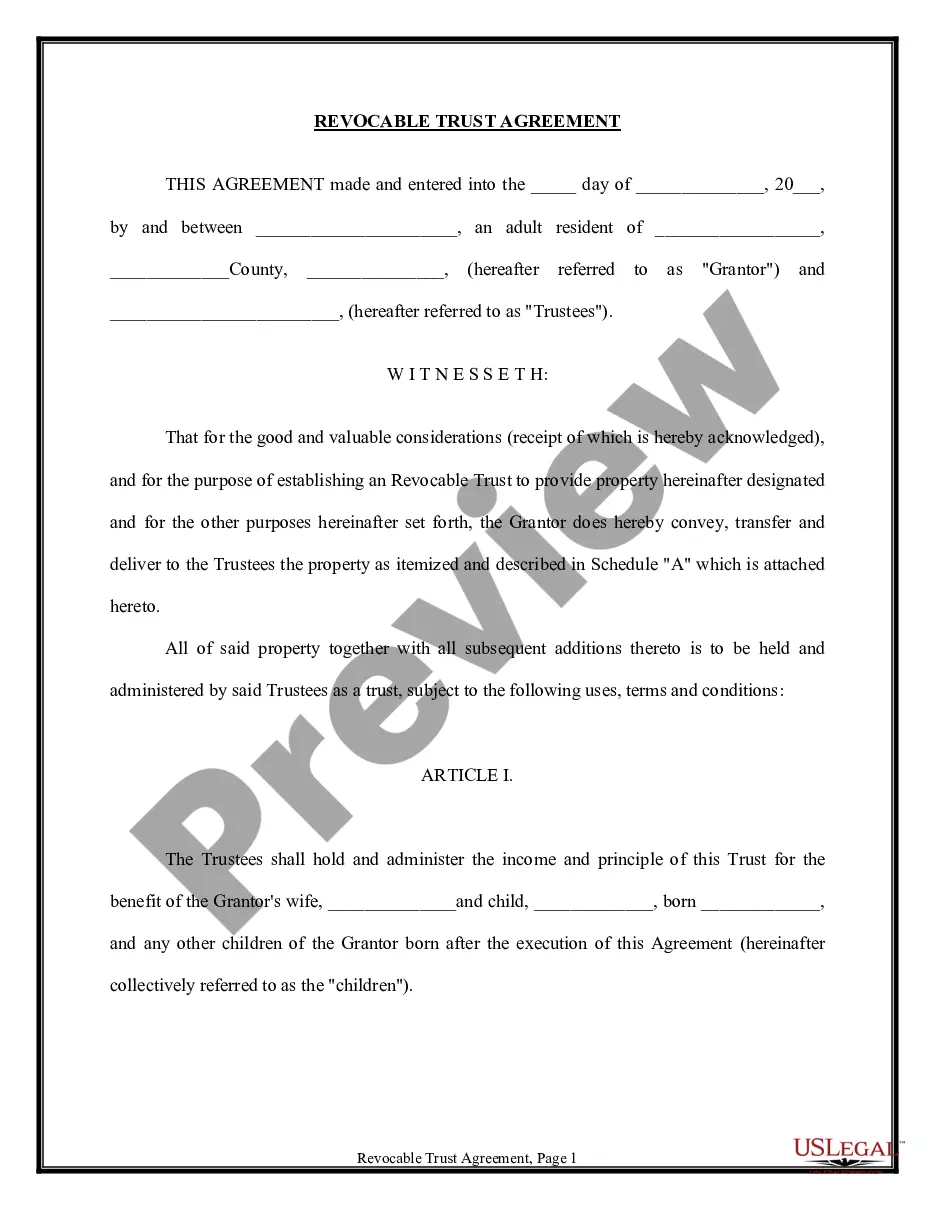
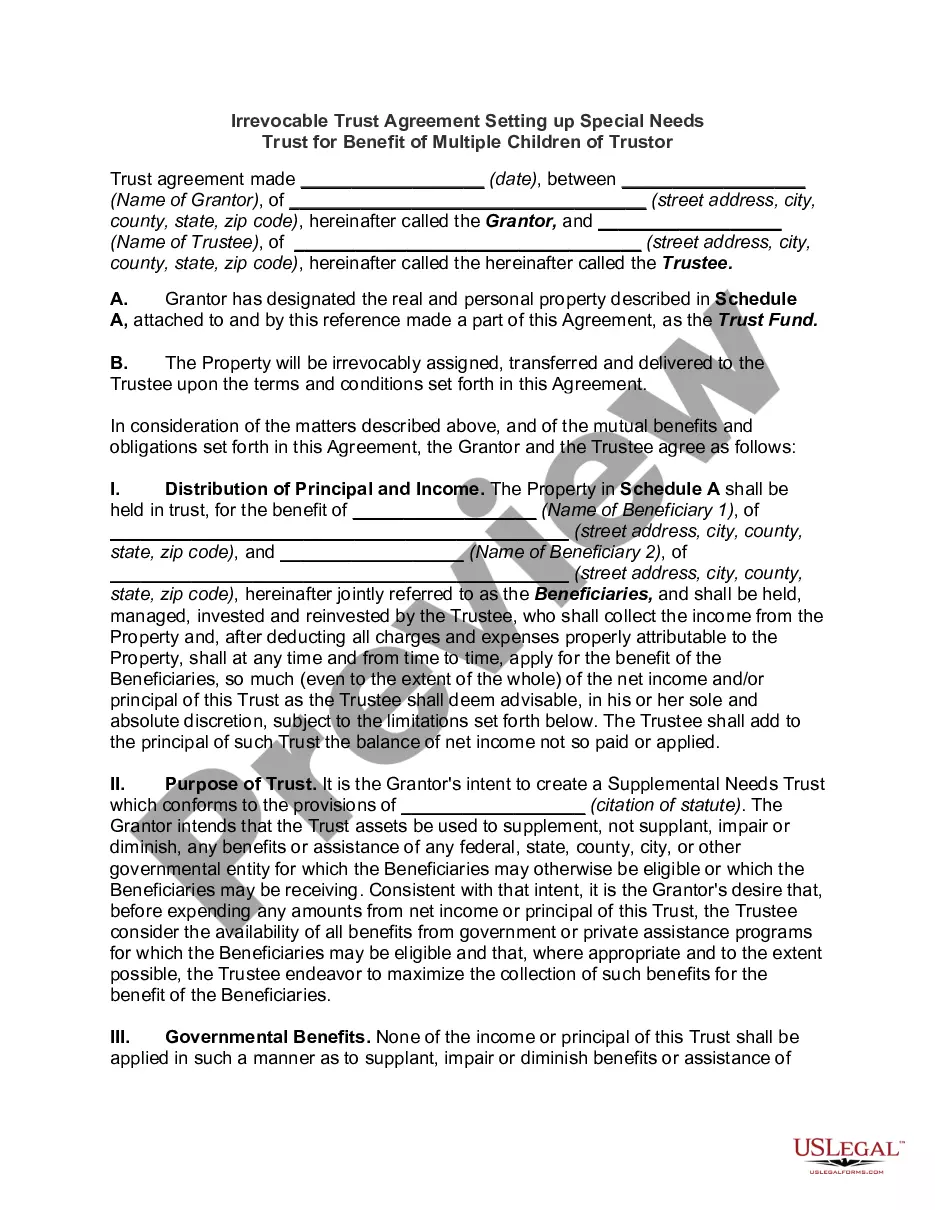

Get your form ready online
Our built-in tools help you complete, sign, share, and store your documents in one place.
Make edits, fill in missing information, and update formatting in US Legal Forms—just like you would in MS Word.
Download a copy, print it, send it by email, or mail it via USPS—whatever works best for your next step.
Sign and collect signatures with our SignNow integration. Send to multiple recipients, set reminders, and more. Go Premium to unlock E-Sign.
If this form requires notarization, complete it online through a secure video call—no need to meet a notary in person or wait for an appointment.
We protect your documents and personal data by following strict security and privacy standards.

Make edits, fill in missing information, and update formatting in US Legal Forms—just like you would in MS Word.

Download a copy, print it, send it by email, or mail it via USPS—whatever works best for your next step.

Sign and collect signatures with our SignNow integration. Send to multiple recipients, set reminders, and more. Go Premium to unlock E-Sign.

If this form requires notarization, complete it online through a secure video call—no need to meet a notary in person or wait for an appointment.

We protect your documents and personal data by following strict security and privacy standards.
Looking for another form?


How to fill out Trust Agreement - Family Special Needs?
Locating a reliable source for acquiring the most up-to-date and pertinent legal templates constitutes a significant part of dealing with bureaucracy. Selecting the appropriate legal documentation demands accuracy and careful consideration, which underscores the necessity of obtaining samples of Testamentary Special Needs Trust For Minor Child solely from reputable providers, such as US Legal Forms. Utilizing an incorrect template can squander your time and prolong your predicament. With US Legal Forms, your concerns are minimized. You can access and review all the information regarding the document’s application and relevance for your circumstances and in your region.
Follow these steps to complete your Testamentary Special Needs Trust For Minor Child.
Eliminate the complications associated with your legal documentation. Explore the extensive US Legal Forms catalog where you can find legal templates, review their suitability for your situation, and download them immediately.
- Utilize the catalog navigation or search feature to locate your template.
- Examine the form’s description to confirm its alignment with the specifications of your state and locality.
- View the form preview, if available, to verify that the template is the one you are seeking.
- Return to the search to find the appropriate template if the Testamentary Special Needs Trust For Minor Child does not meet your requirements.
- Once you are confident about the form’s applicability, download it.
- If you are a registered user, click Log in to verify and access your selected templates in My documents.
- If you do not possess an account yet, click Buy now to acquire the form.
- Select the pricing option that aligns with your needs.
- Continue to registration to finalize your purchase.
- Complete your transaction by choosing a payment method (credit card or PayPal).
- Choose the file format for downloading Testamentary Special Needs Trust For Minor Child.
- After obtaining the form on your device, you can edit it using the editor or print it and fill it out by hand.
Form popularity
FAQ
South Dakota state unemployment insurance (SUI) If you're a new employer, you will pay 1.2%. New construction employers will have to pay 6%. Remember, be sure to pay your SUI in full and on time so you can be eligible for the FUTA tax credit!
A state constitutional amendment passed in 1946 prohibits any person's right to work from being ?denied or abridged on account of membership or nonmembership in any labor union, or labor organization.? Currently, South Dakota is one of the twenty-five states in the country to enact right to work laws.
South Dakota child labor laws They may not work more than 4 hours per school day or 20 hours per school week, later than 10 p.m. on a school night, more than 8 hours per non-school day or 40 hours per non-school week, ing to the SD Department of Labor and Regulation.
For adult employees, there is no legal limit to the number of hours that one can work per week, but the Fair Labor Standards Act dictates standards for overtime pay in both the private and public sector.
Overtime. South Dakota has no general provision governing overtime pay, but most employees would be subject to the federal Fair Labor Standards Act, which requires that all nonexempt employees be paid at a rate of 1.5 times their regular rate of pay for all hours worked over 40 in a week.
Federal Law for Rest Periods The FLSA does not mandate any type of rest period for breaks or meals, which means an employee can be required to work an eight-hour workday without so much as a restroom break. But that's virtually unheard of among U.S. workers.
Under California wage and hour laws, there is no limit to the number of hours an employee can work in a single workday. They can work the full 24-hour period, if they want to. However, workers who do so are entitled to overtime pay and potentially other benefits, as well.
Nonexempt Status - The Fair Labor Standards Act requires that all employees that are not exempt be entitled to overtime pay (compensatory time off - public employers) of at least one-and-one-half times (1 ½) his/her regular rate for hours worked in excess of 40 in any workweek.