Special Needs Trust Distribution To Able Account
Description
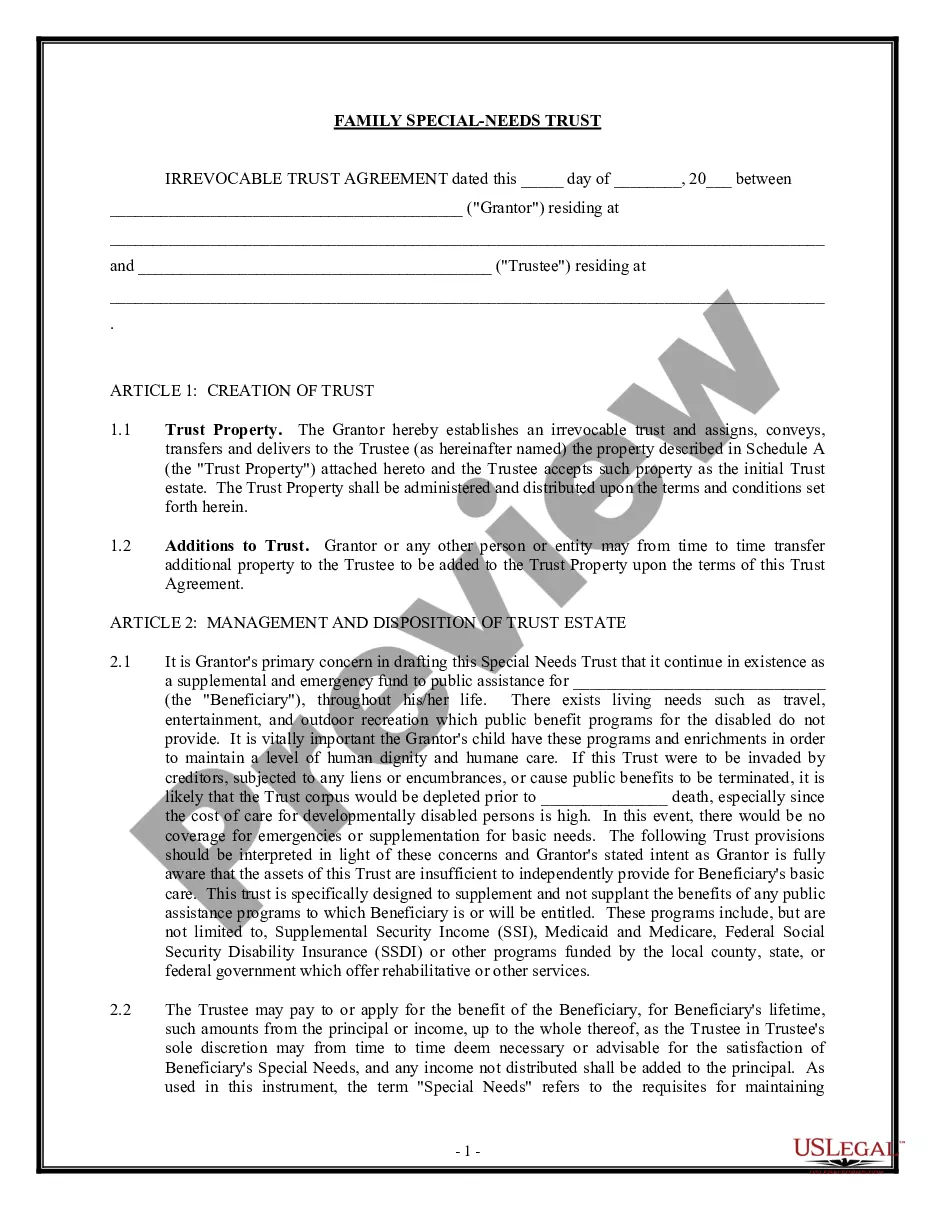
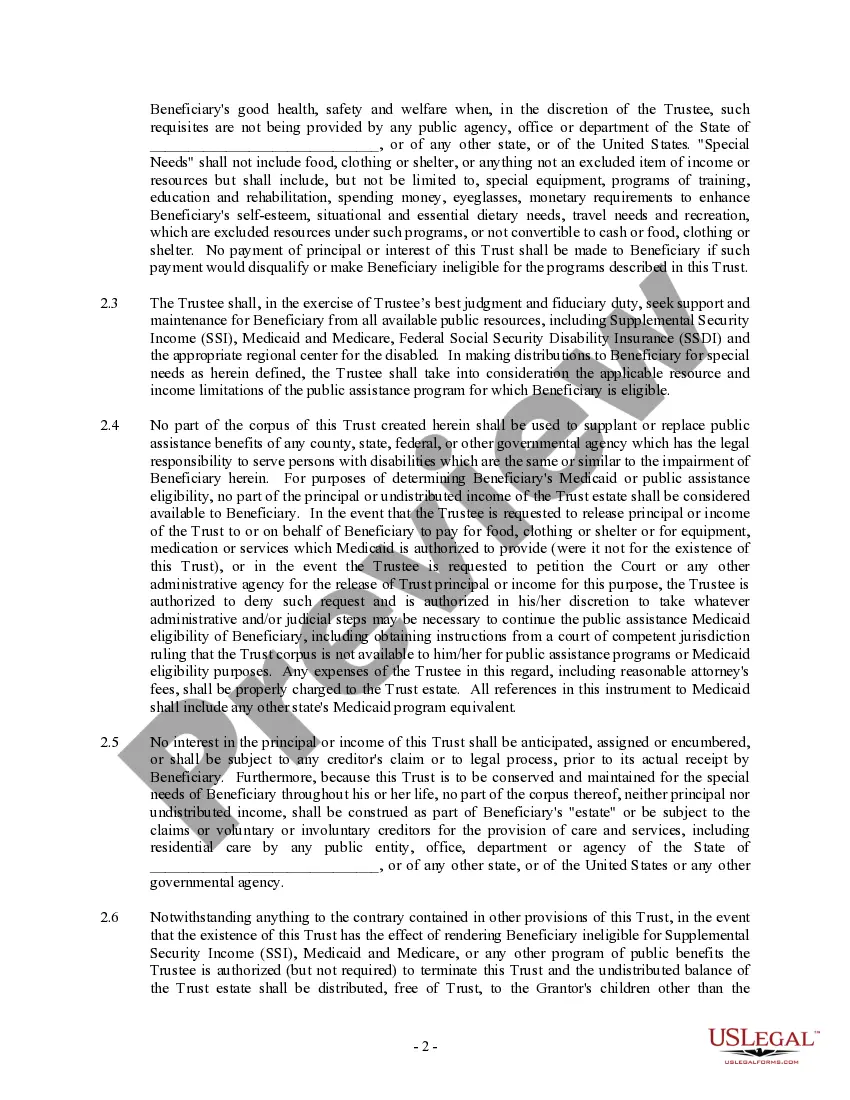
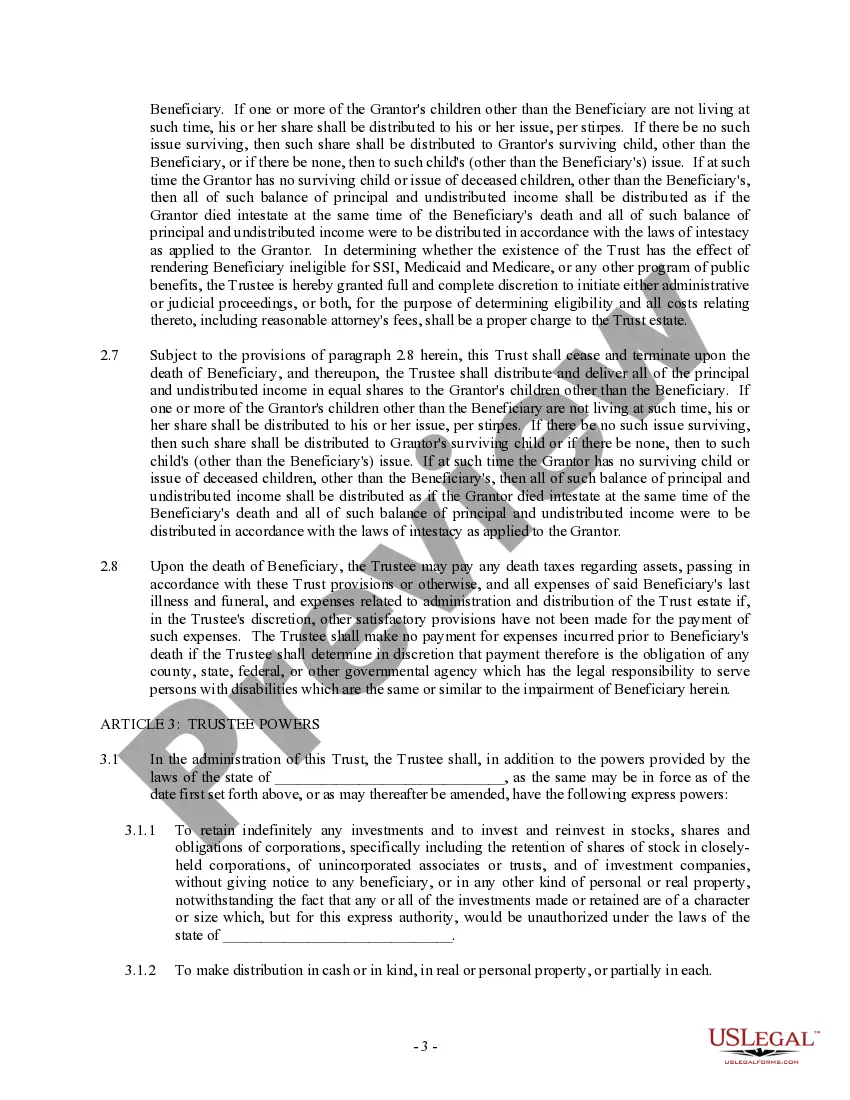
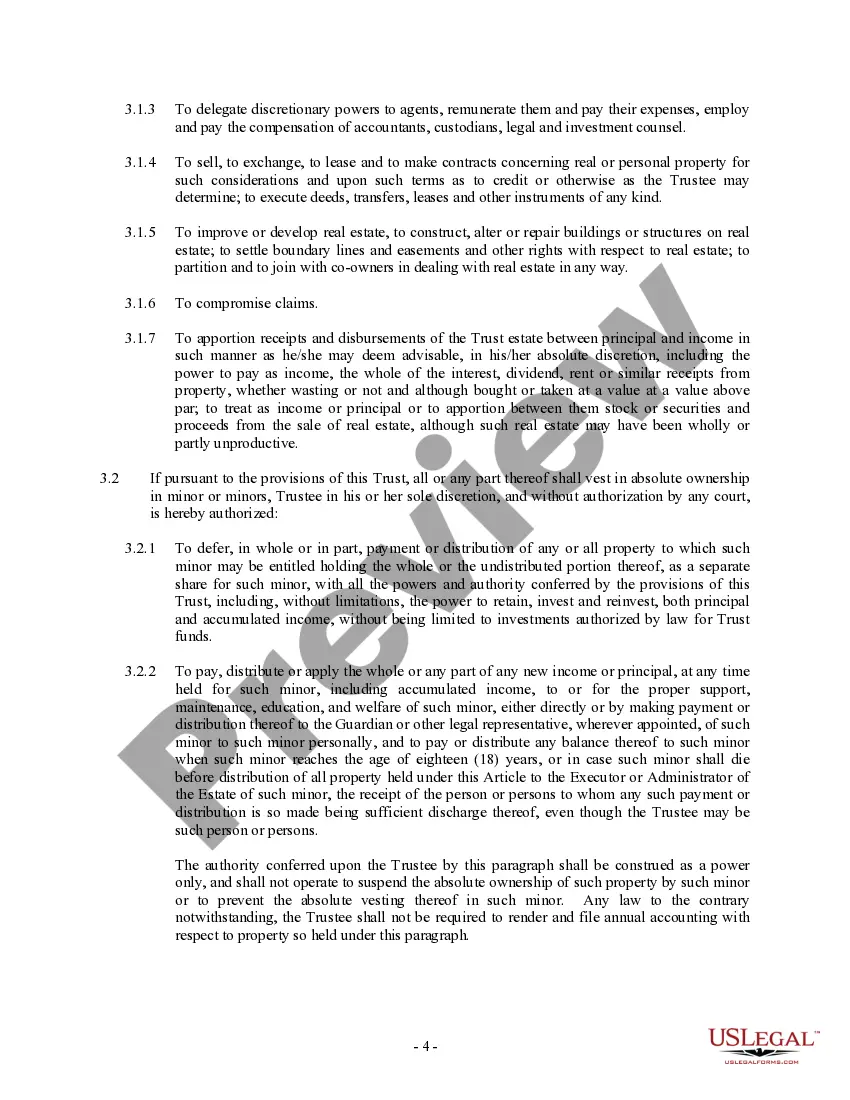
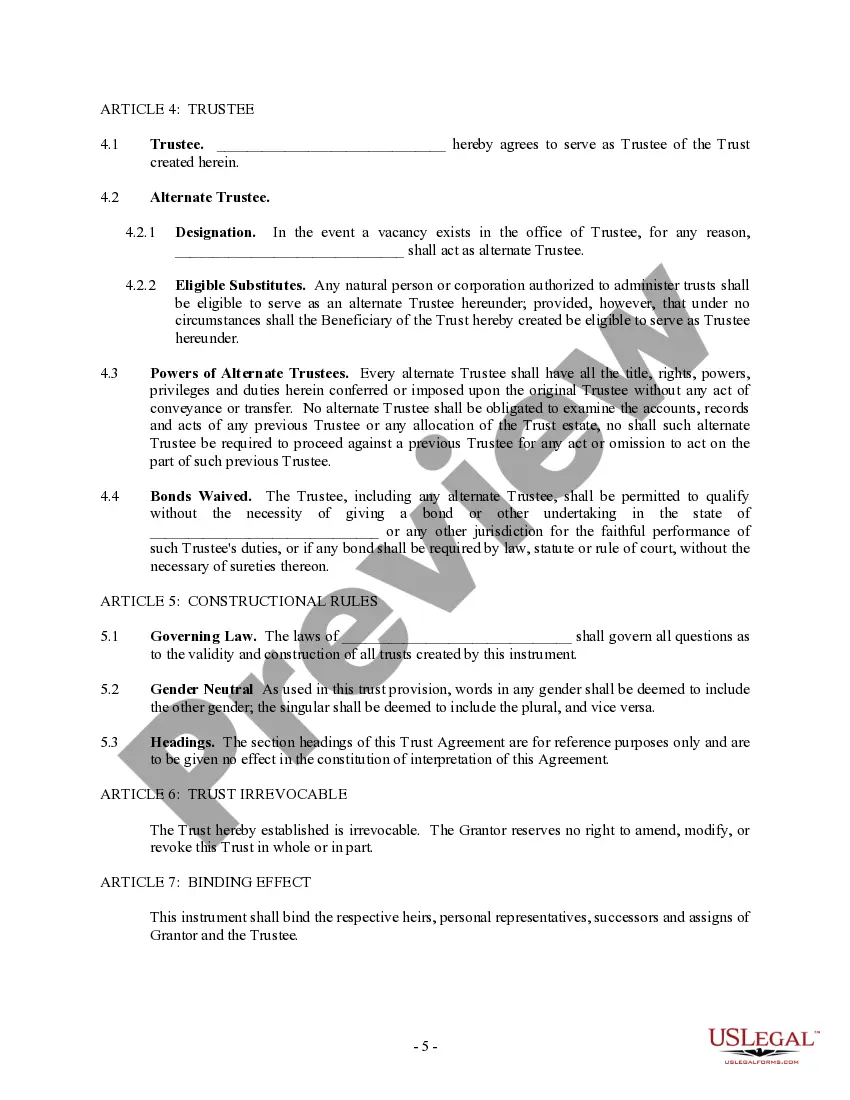
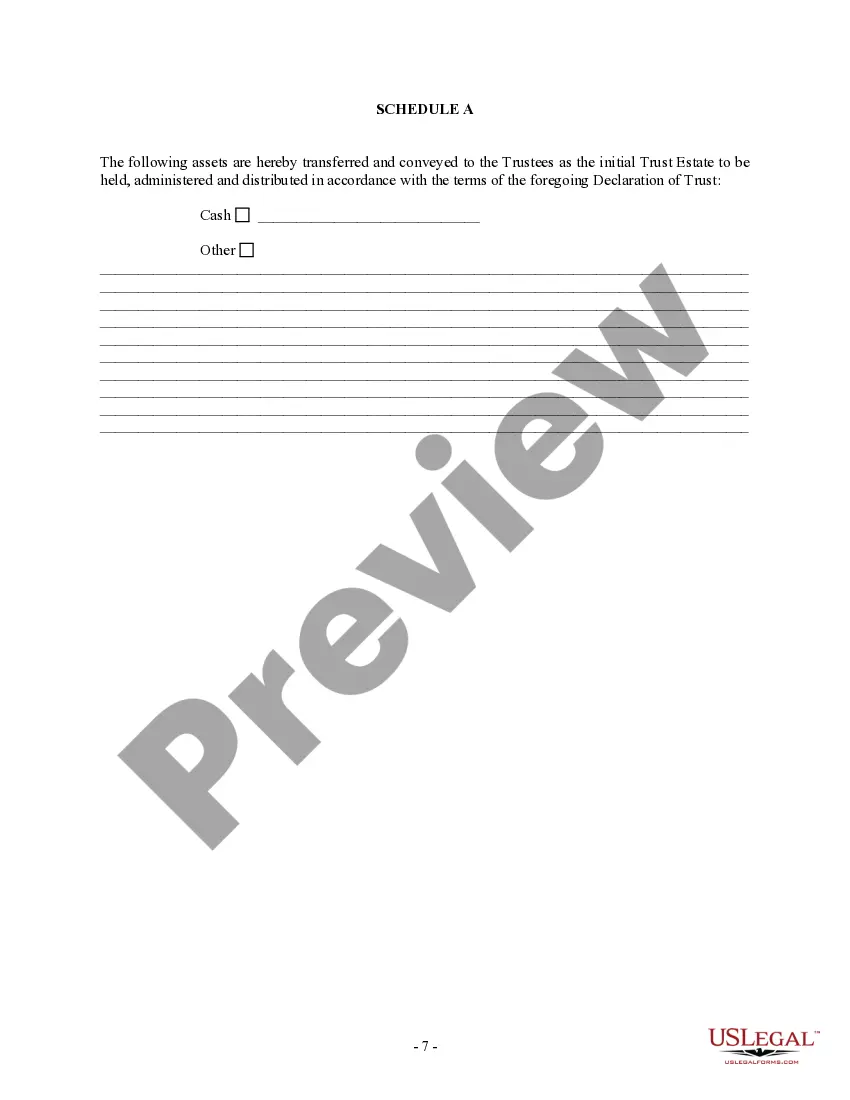
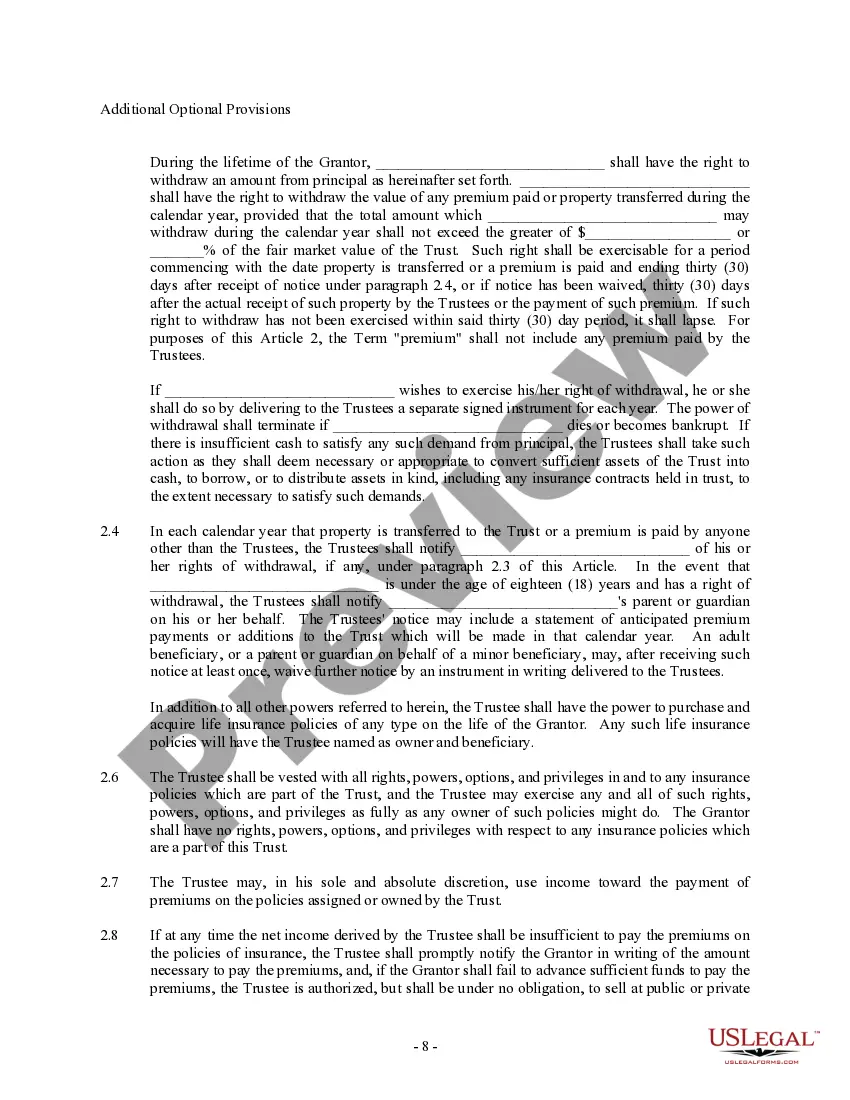
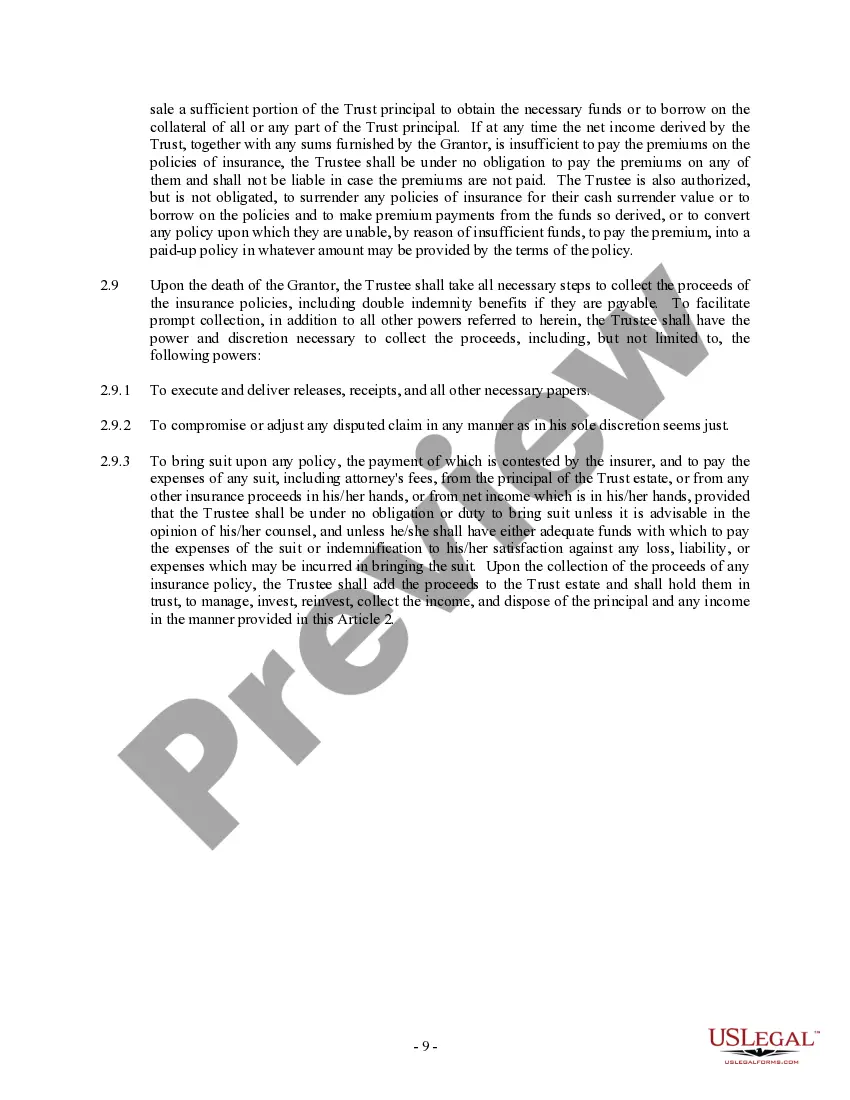
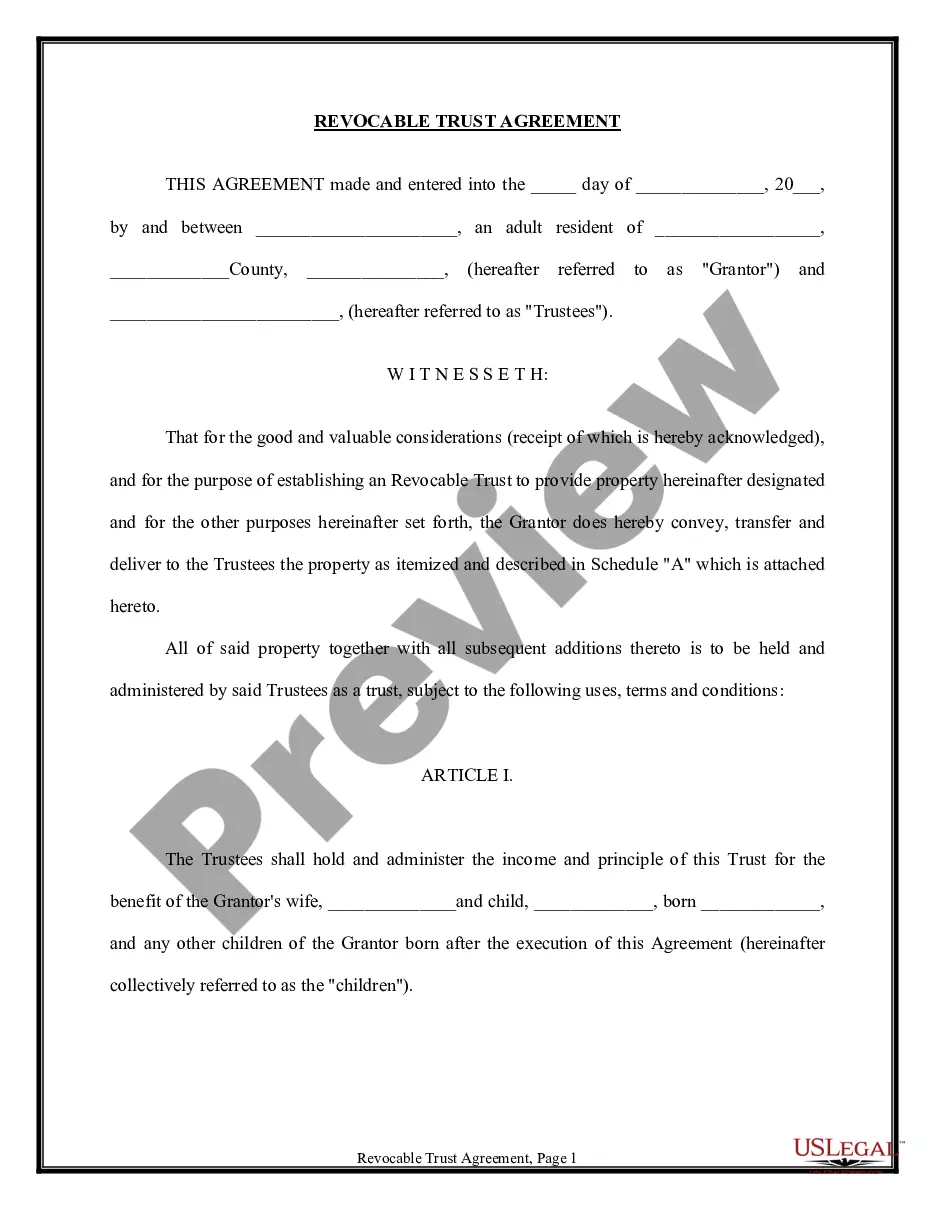

Get your form ready online
Our built-in tools help you complete, sign, share, and store your documents in one place.
Make edits, fill in missing information, and update formatting in US Legal Forms—just like you would in MS Word.
Download a copy, print it, send it by email, or mail it via USPS—whatever works best for your next step.
Sign and collect signatures with our SignNow integration. Send to multiple recipients, set reminders, and more. Go Premium to unlock E-Sign.
If this form requires notarization, complete it online through a secure video call—no need to meet a notary in person or wait for an appointment.
We protect your documents and personal data by following strict security and privacy standards.

Make edits, fill in missing information, and update formatting in US Legal Forms—just like you would in MS Word.

Download a copy, print it, send it by email, or mail it via USPS—whatever works best for your next step.

Sign and collect signatures with our SignNow integration. Send to multiple recipients, set reminders, and more. Go Premium to unlock E-Sign.

If this form requires notarization, complete it online through a secure video call—no need to meet a notary in person or wait for an appointment.

We protect your documents and personal data by following strict security and privacy standards.
Looking for another form?







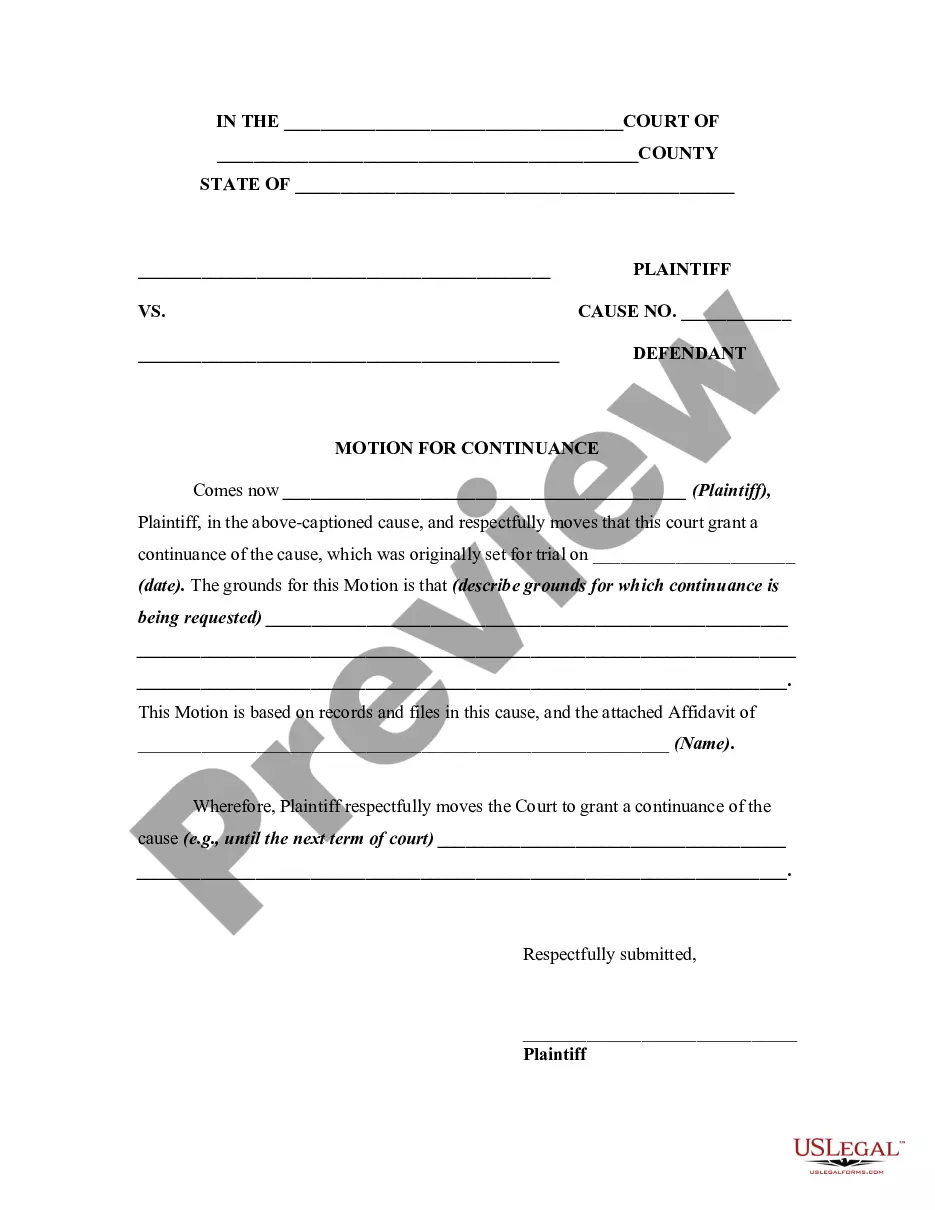

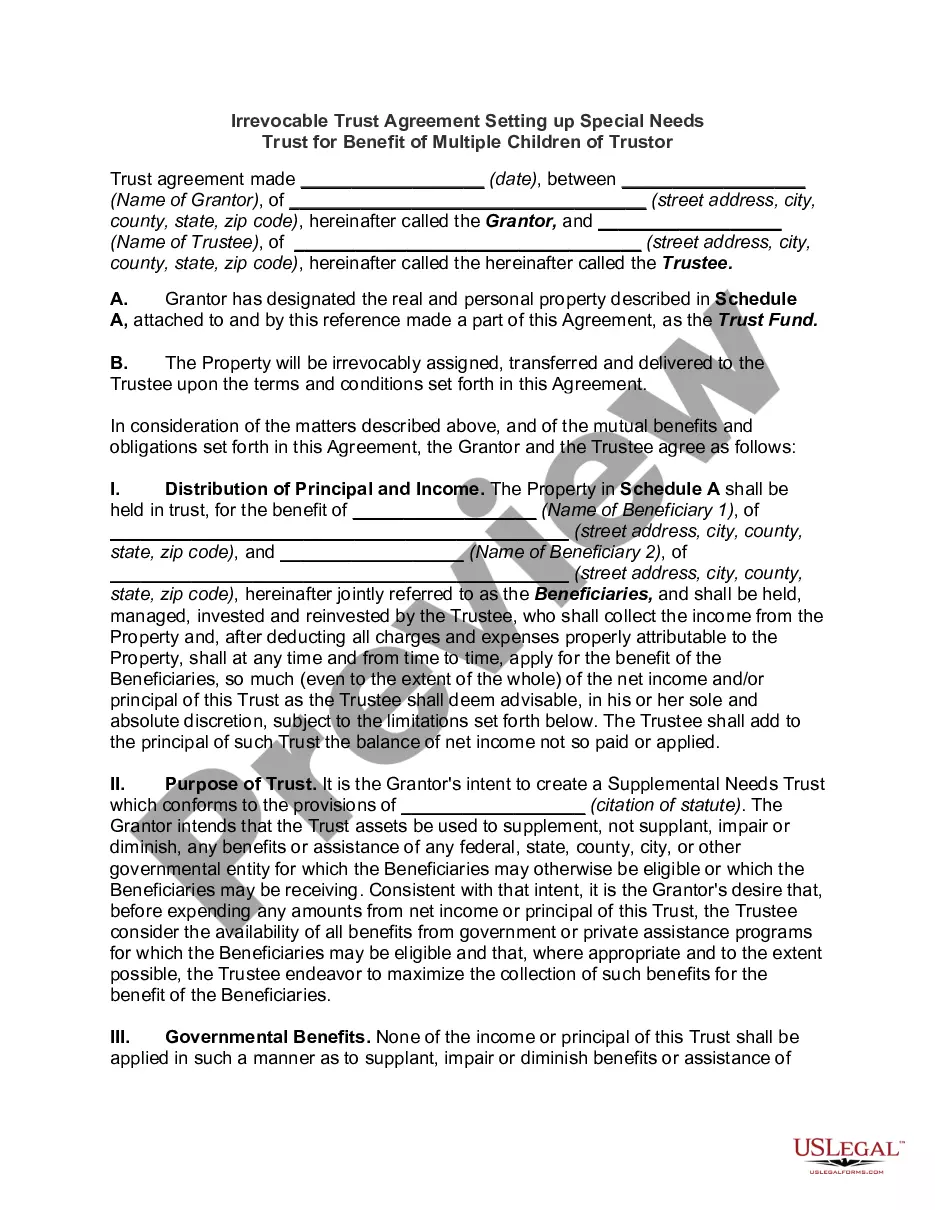
How to fill out Trust Agreement - Family Special Needs?
Identifying a reliable venue for acquiring the latest and suitable legal templates is a significant part of navigating bureaucracy.
Selecting the correct legal documents requires precision and careful consideration, which is why it is crucial to obtain examples of Special Needs Trust Distribution To Able Account strictly from reputable sources, such as US Legal Forms.
Eliminate the stress associated with your legal documents. Explore the extensive US Legal Forms catalog to locate legal templates, assess their relevance to your situation, and download them instantly.
- Utilize the catalog navigation or search feature to find your template.
- Examine the document’s details to confirm its compliance with your state and county’s requirements.
- Review the document preview, if available, to ensure the template is indeed the one you seek.
- Continue searching and find the appropriate template if the Special Needs Trust Distribution To Able Account does not meet your needs.
- Once you are confident about the document’s applicability, download it.
- If you are a registered user, click Log in to verify your identity and access your chosen forms in My documents.
- If you do not have an account yet, click Buy now to acquire the form.
- Choose the pricing plan that aligns with your needs.
- Proceed to registration to complete your purchase.
- Conclude your transaction by selecting a payment option (credit card or PayPal).
- Pick the file format for downloading Special Needs Trust Distribution To Able Account.
- After acquiring the form, you may edit it using the editor or print it to fill out manually.
Form popularity
FAQ
Anyone may contribute to a beneficiary's account, but only cash assets may be placed in an ABLE account. A special needs trust, on the other hand, may hold non-cash assets such as land or stock. ABLE account contributions are limited to a maximum annual contribution equal to the annual gift tax exclusion.
That limit for all contributions into an ABLE account, including account owner contributions, is $17,000 for 2023. (Note: a working beneficiary may have a higher contribution limit).
Any Person Can Make Contributions: Any person can contribute to an ABLE account. (?Person,? as defined by the Internal Revenue Code, includes an individual, trust, estate, partnership, association, company, or corporation.)
If an inheritance or settlement is deposited directly into an ABLE account, it would not count as a resource. Worker's compensation settlements are subject to SSDI and SSI income rules.
Yes. Account owners can roll over 529 College and Career Savings accounts to ABLE plans, up to the ABLE annual contribution limit (currently $17,000).