Difference Between Simple Trust And Special Trust
Description



Get your form ready online
Our built-in tools help you complete, sign, share, and store your documents in one place.
Make edits, fill in missing information, and update formatting in US Legal Forms—just like you would in MS Word.
Download a copy, print it, send it by email, or mail it via USPS—whatever works best for your next step.
Sign and collect signatures with our SignNow integration. Send to multiple recipients, set reminders, and more. Go Premium to unlock E-Sign.
If this form requires notarization, complete it online through a secure video call—no need to meet a notary in person or wait for an appointment.
We protect your documents and personal data by following strict security and privacy standards.

Make edits, fill in missing information, and update formatting in US Legal Forms—just like you would in MS Word.

Download a copy, print it, send it by email, or mail it via USPS—whatever works best for your next step.

Sign and collect signatures with our SignNow integration. Send to multiple recipients, set reminders, and more. Go Premium to unlock E-Sign.

If this form requires notarization, complete it online through a secure video call—no need to meet a notary in person or wait for an appointment.

We protect your documents and personal data by following strict security and privacy standards.
Looking for another form?





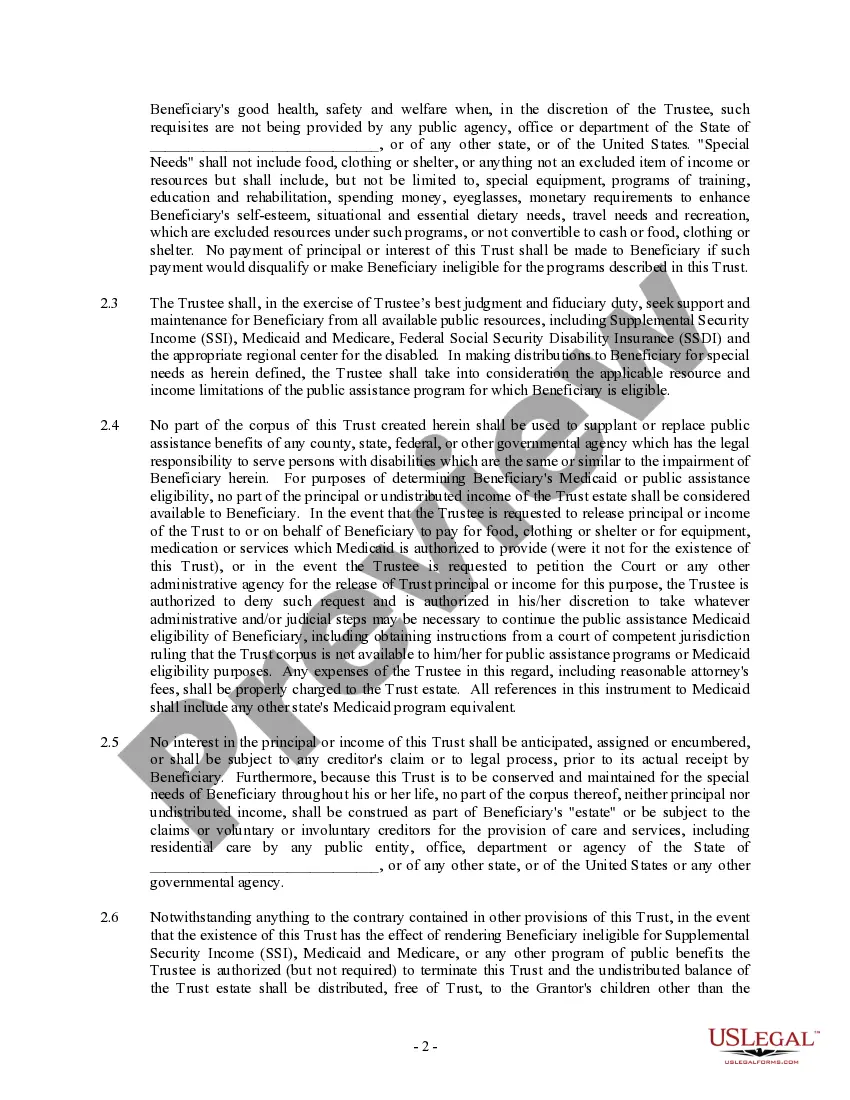
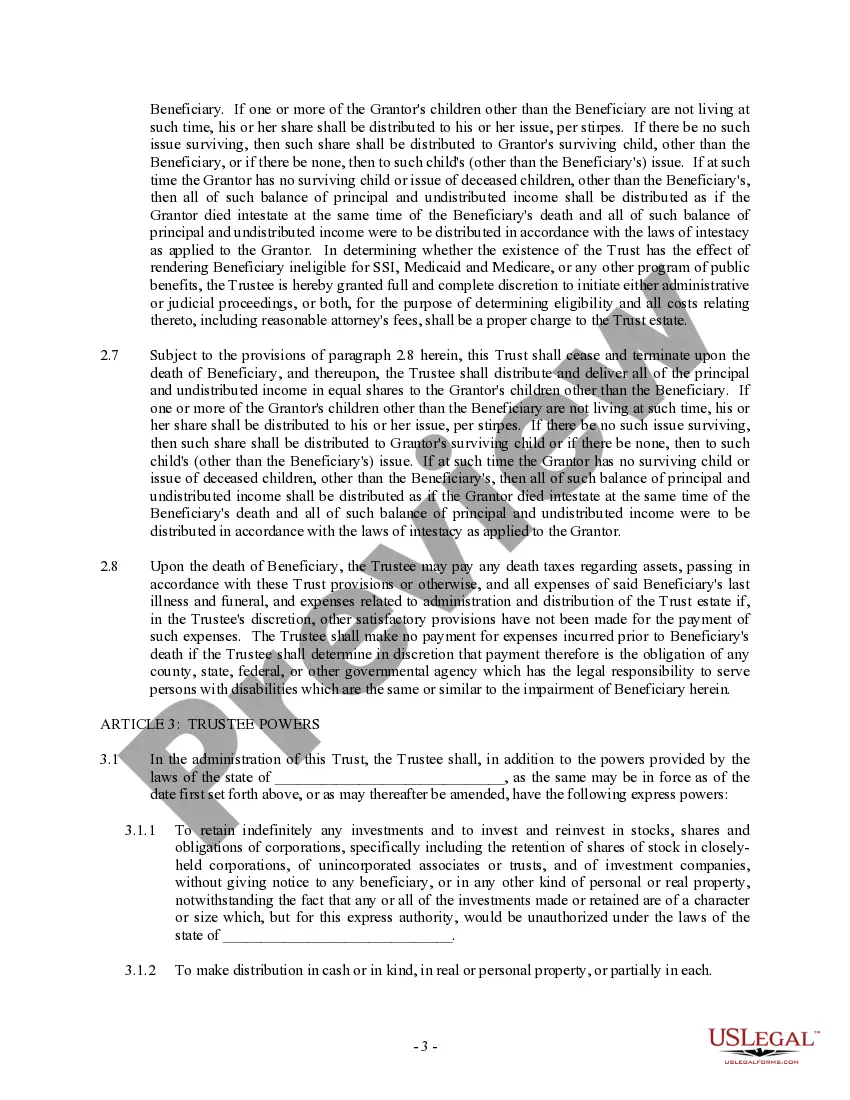
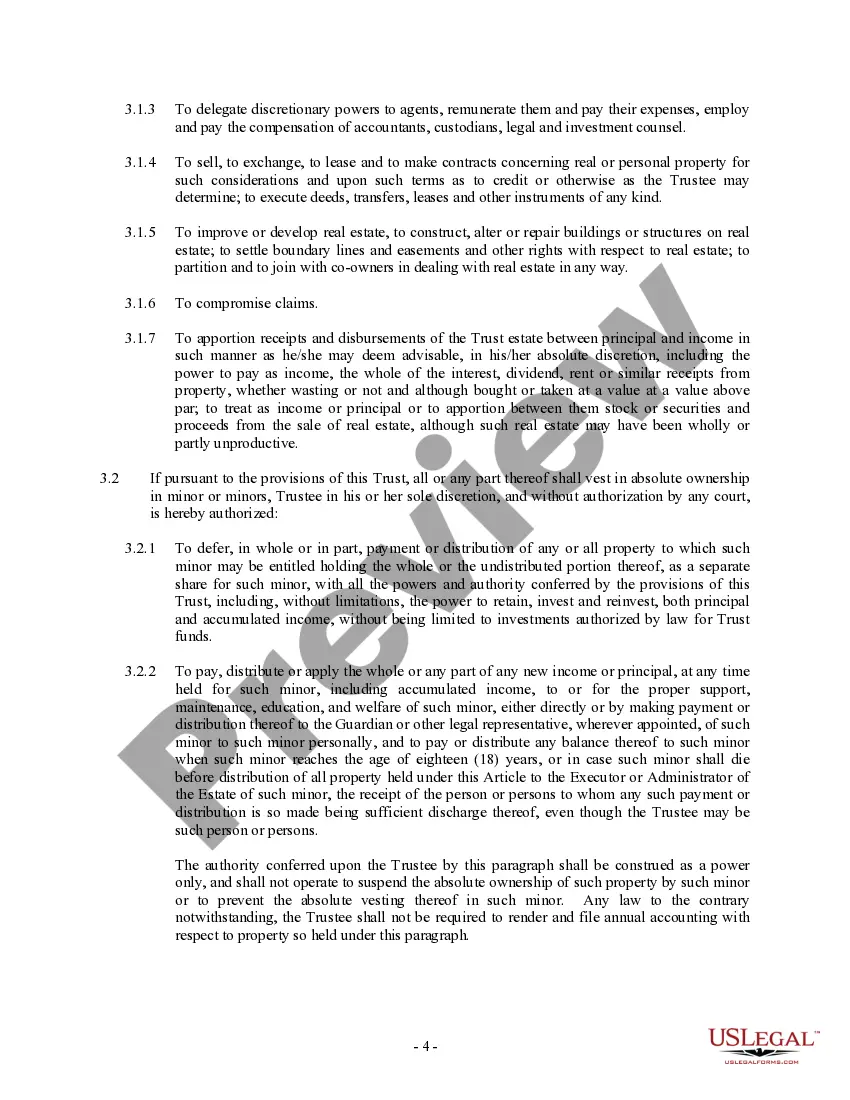
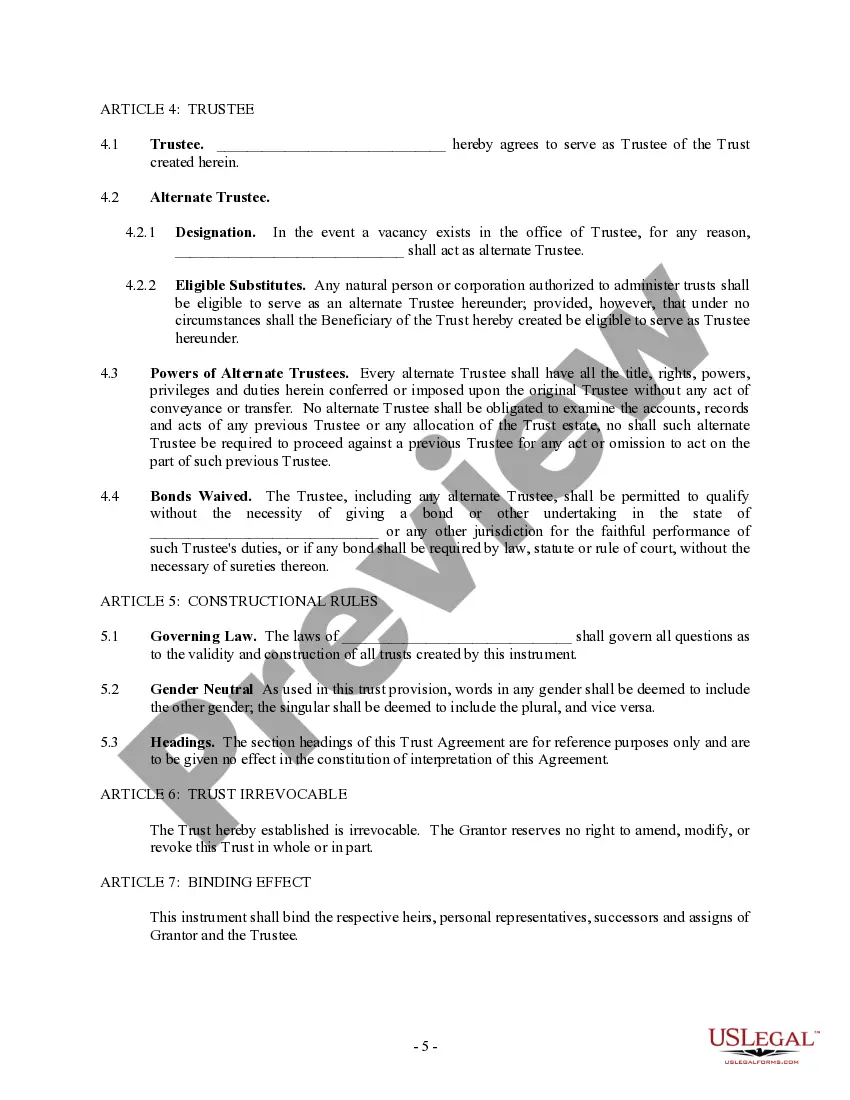
How to fill out Trust Agreement - Family Special Needs?
Legal administration can be overwhelming, even for seasoned professionals.
When you're curious about the Distinction Between Simple Trust And Special Trust and lack the time to invest in searching for the accurate and current edition, the processes may be challenging.
Take advantage of innovative tools to complete and oversee your Distinction Between Simple Trust And Special Trust.
Tap into a resource hub of articles, guides, and manuals related to your situation and needs.
Inspect that this is the correct form by previewing it and reviewing its information.
- Save time and energy searching for the paperwork you need, and use US Legal Forms’ advanced search and Preview feature to find Distinction Between Simple Trust And Special Trust and obtain it.
- If you have a subscription, Log In to your US Legal Forms account, look for the form, and obtain it.
- Check your My documents section to view the forms you downloaded earlier and manage your folders as desired.
- If it’s your first time using US Legal Forms, create a free account and gain unlimited access to all the benefits of the library.
- After obtaining the needed form, follow these steps.
- Utilize a robust online form catalog, which can be transformative for anyone looking to manage these cases effectively.
- US Legal Forms stands as a frontrunner in online legal documentation, offering over 85,000 state-specific legal forms readily available at any moment.
- Access state- or county-specific legal and business documents. US Legal Forms addresses all your needs, from personal to commercial paperwork, in a single location.
Form popularity
FAQ
The main difference between a special needs trust and a regular trust is their purpose and functionality. A regular trust can serve various financial and estate planning goals, while a special needs trust explicitly provides for individuals with disabilities and protects their eligibility for government benefits. Special needs trusts are crafted to ensure funds are used for supplemental care and expenses, avoiding jeopardizing public assistance. Understanding these differences can significantly influence your estate planning, making consultation with experts beneficial.
One disadvantage of a special needs trust is that it may require careful management and specific legal knowledge to set up correctly. Additionally, funds in this type of trust must be used solely for the beneficiary’s supplemental needs, which can be restrictive. Furthermore, the costs associated with establishing and maintaining a special needs trust can be significant. Considerations like the difference between simple trust and special trust are essential to understanding its limitations.
A special needs trust is specifically designed to benefit individuals with disabilities without disqualifying them from government assistance programs. Unlike standard trusts, which may distribute funds at the discretion of the trustee, the special needs trust focuses on enhancing the quality of life for the beneficiary while adhering to eligibility requirements. This distinction is crucial for ensuring that financial support does not negatively impact vital services. The difference between simple trust and special trust highlights the targeted nature of special needs trusts.
To determine whether you have a simple trust or a complex trust, you can examine its distribution structure. A simple trust distributes all income to beneficiaries and cannot accumulate it, while a complex trust may retain income or make distributions at its discretion. It is important to review the trust documents or consult with a legal advisor for clarity. Understanding the difference between simple trust and special trust may also require professional guidance.
A simple trust is defined by its requirement to distribute all of its income to beneficiaries each year, lacking the capacity to retain earnings. Additionally, it generally does not engage in charitable donations, focusing solely on individual beneficiaries. When you understand the difference between simple trust and special trust, you'll find it easier to assess which structure aligns more closely with your estate planning needs.
To qualify as a simple trust, the trust must meet specific requirements, such as making distributions to beneficiaries annually and not accumulating income. Furthermore, it must not allow for charitable contributions or retain any income for future use. By grasping the difference between simple trust and special trust, you can decide whether a simple trust serves your financial goals and needs effectively.
The classification of a trust as simple or complex primarily hinges on how it manages and distributes its income. If a trust retains any income or has the discretion to accumulate it, it typically qualifies as complex. Simple trusts, in contrast, distribute all income annually, leading to straightforward filing processes and tax implications. Understanding the difference between simple trust and special trust can aid greatly in evaluating your options for asset management.
The term 'simple trust' refers to a trust that mandates the distribution of all its income to the beneficiaries, ensuring that no income is retained within the trust itself. This designation significantly impacts the trust's tax treatment, as the beneficiaries are required to report the income on their personal tax returns. Gaining clarity on the difference between simple trust and special trust can greatly influence your estate planning decisions.
A standard trust serves to hold and manage assets on behalf of beneficiaries, while a special needs trust is specifically designed to benefit individuals with disabilities. The key difference lies in how the assets are managed to avoid disqualifying the beneficiary from government assistance programs. By recognizing the difference between simple trust and special trust, you can better navigate the legal landscape and ensure the protection of vulnerable individuals in your care.
A trust is classified as a simple trust when it meets specific criteria, primarily that it is required to distribute all its income to beneficiaries each year. Unlike complex trusts, simple trusts do not accumulate income and are straightforward in terms of tax implications. This structure often allows for easier management and clarity regarding the distribution of assets. Understanding the difference between simple trust and special trust will help you make informed choices about your estate planning options.