3rd Party Special Needs Trust Form For California

Description
Get your form ready online
Our built-in tools help you complete, sign, share, and store your documents in one place.
Make edits, fill in missing information, and update formatting in US Legal Forms—just like you would in MS Word.
Download a copy, print it, send it by email, or mail it via USPS—whatever works best for your next step.
Sign and collect signatures with our SignNow integration. Send to multiple recipients, set reminders, and more. Go Premium to unlock E-Sign.
If this form requires notarization, complete it online through a secure video call—no need to meet a notary in person or wait for an appointment.
We protect your documents and personal data by following strict security and privacy standards.

Make edits, fill in missing information, and update formatting in US Legal Forms—just like you would in MS Word.

Download a copy, print it, send it by email, or mail it via USPS—whatever works best for your next step.

Sign and collect signatures with our SignNow integration. Send to multiple recipients, set reminders, and more. Go Premium to unlock E-Sign.

If this form requires notarization, complete it online through a secure video call—no need to meet a notary in person or wait for an appointment.

We protect your documents and personal data by following strict security and privacy standards.
Looking for another form?


How to fill out Trust Agreement - Family Special Needs?
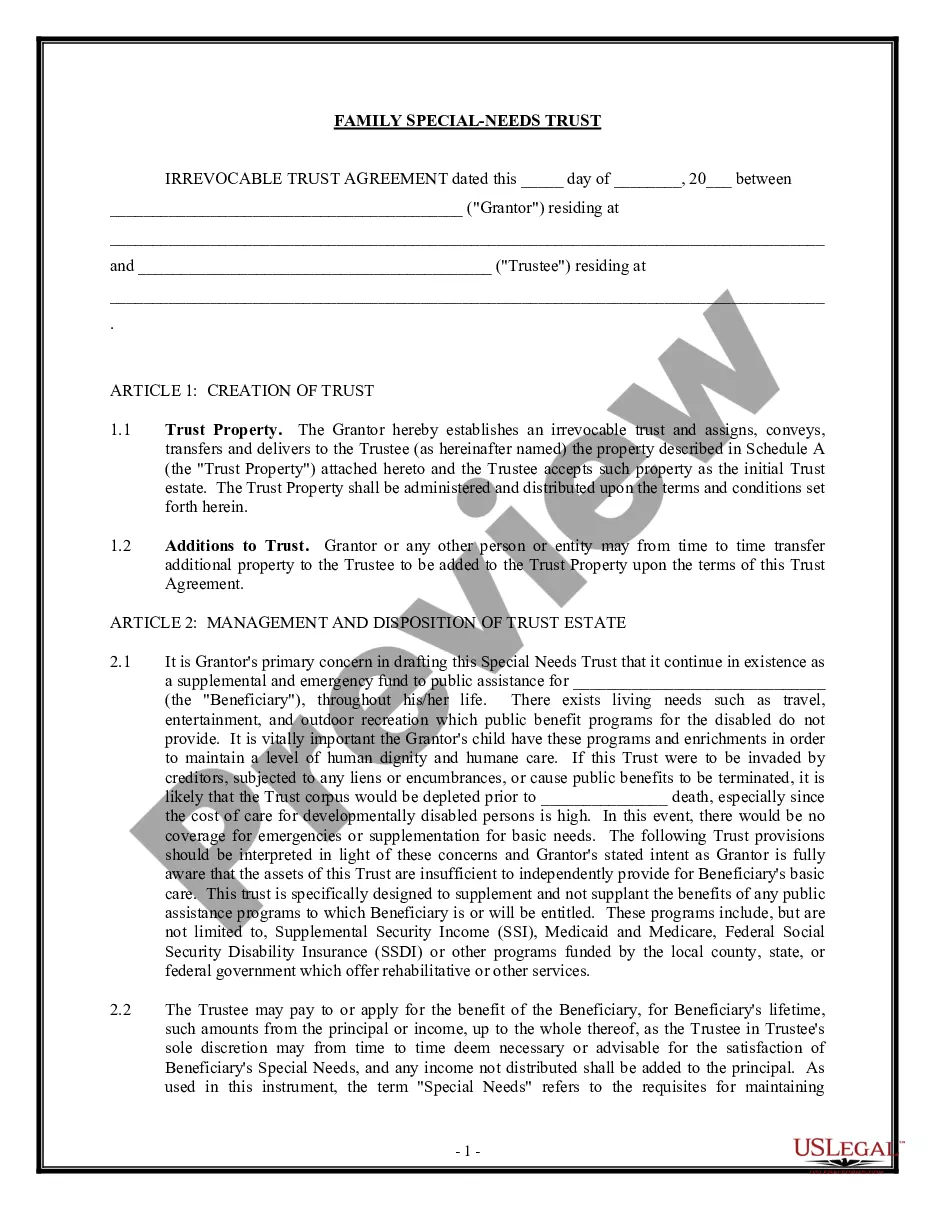
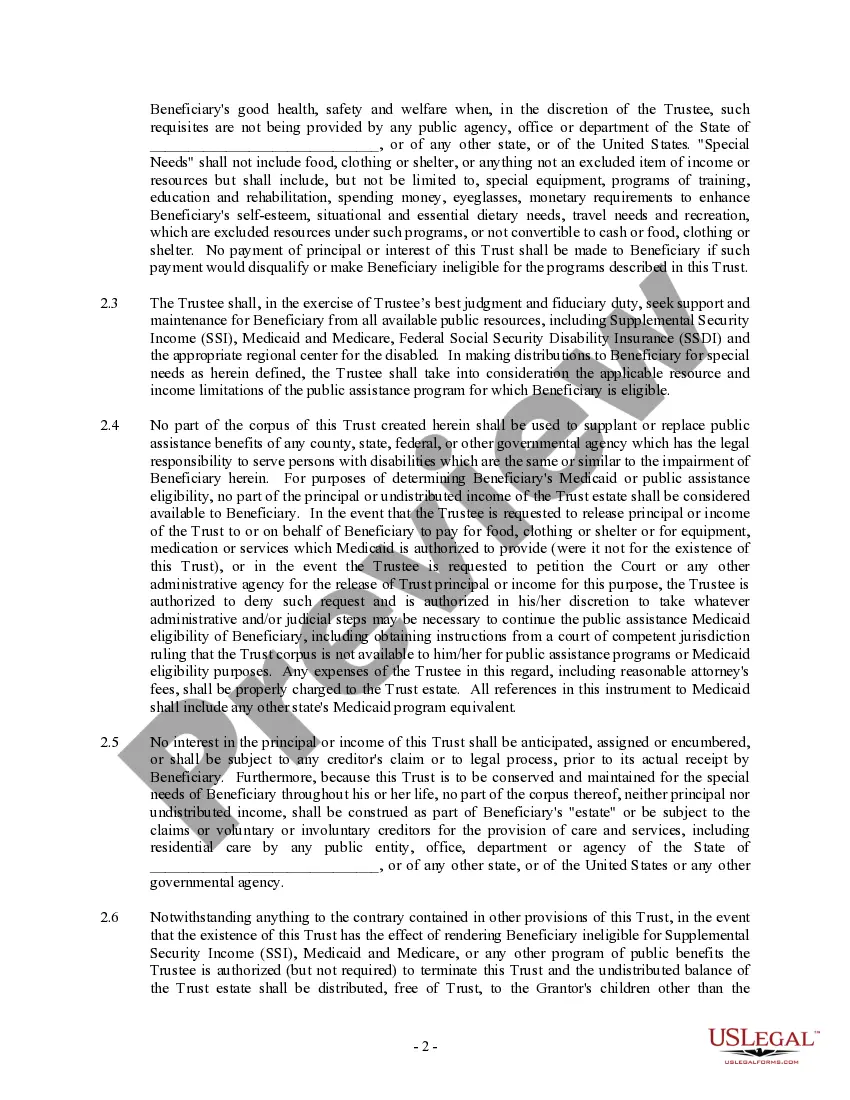
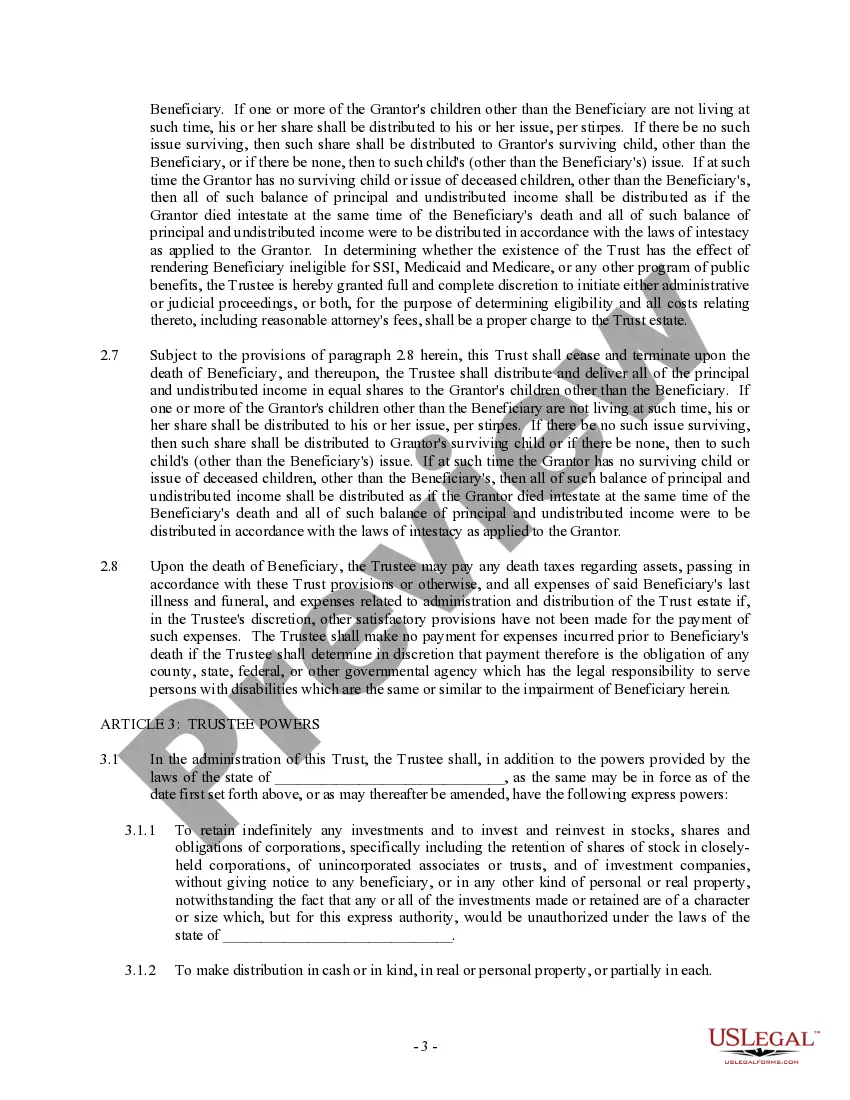
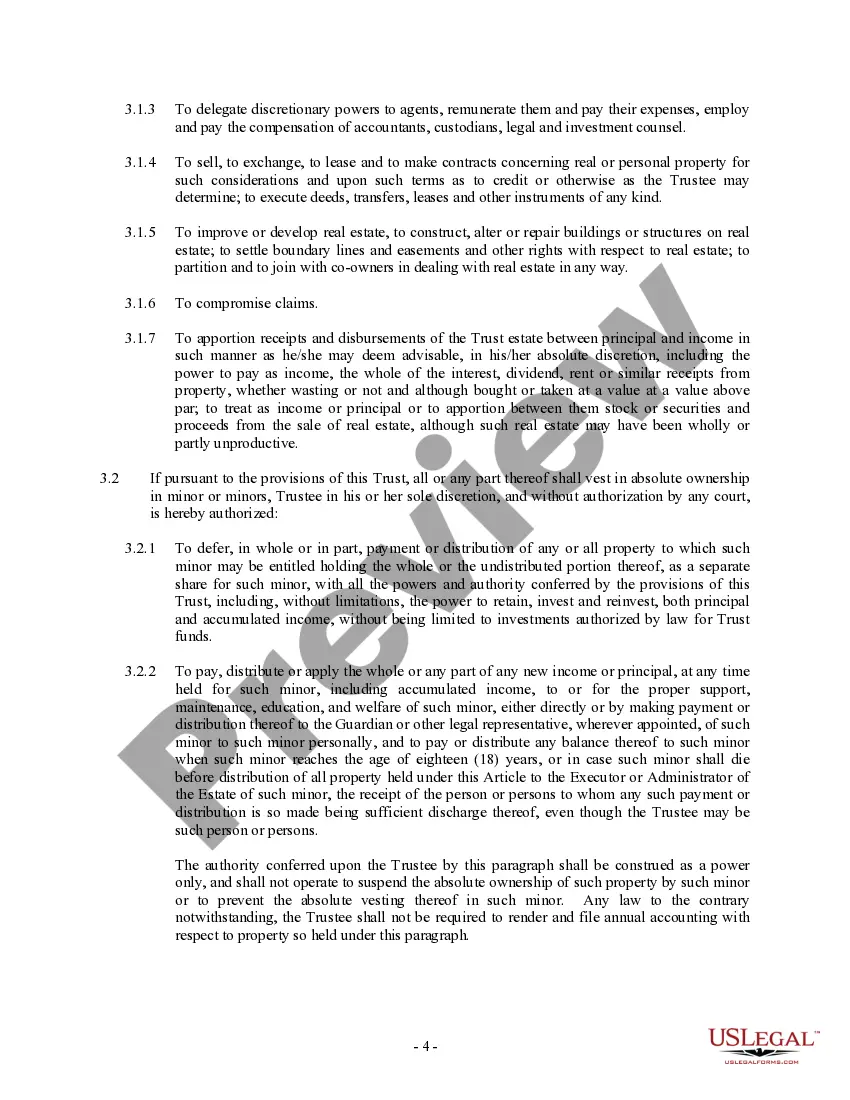
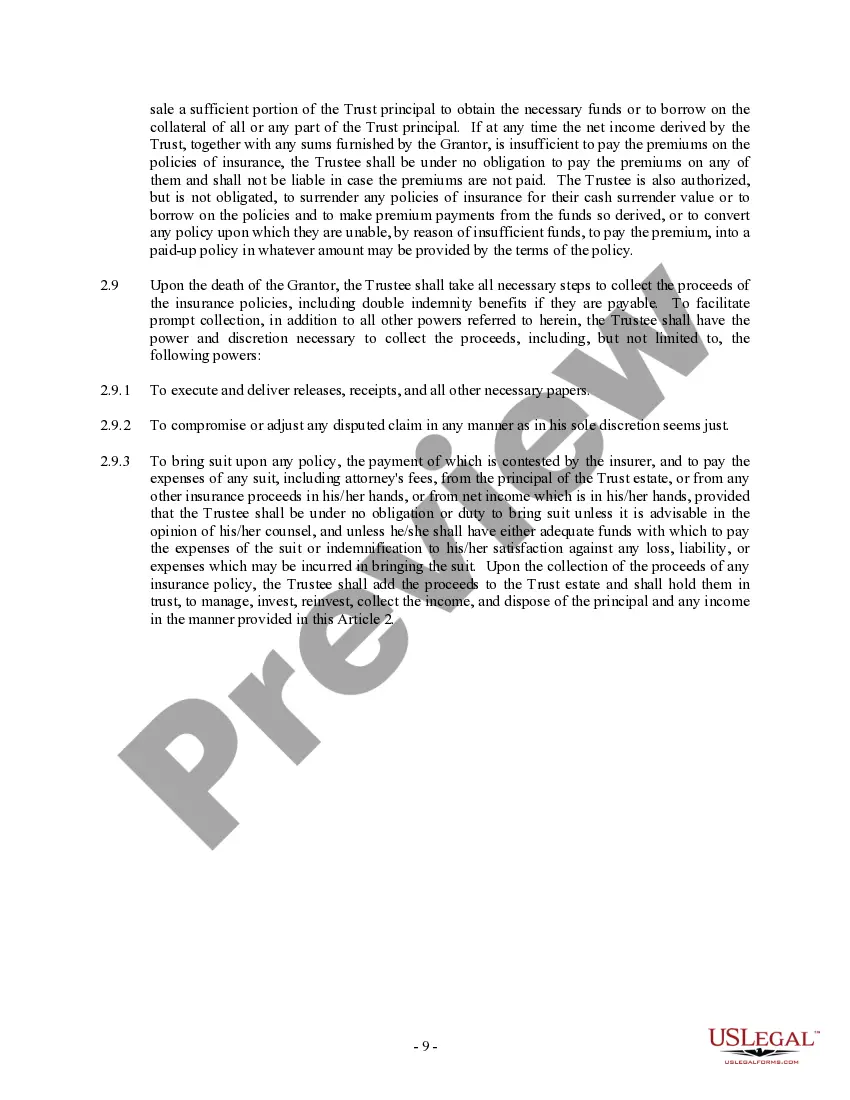
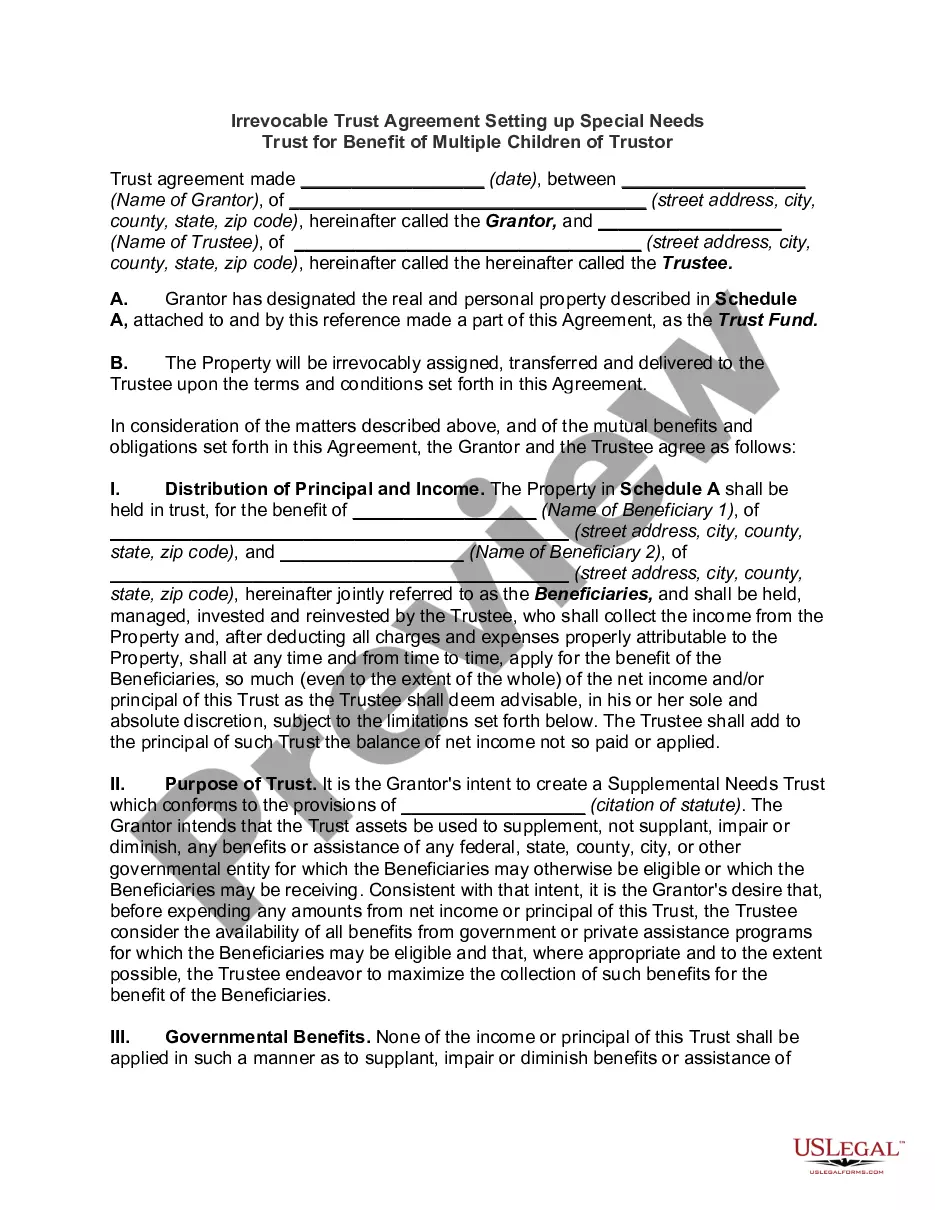
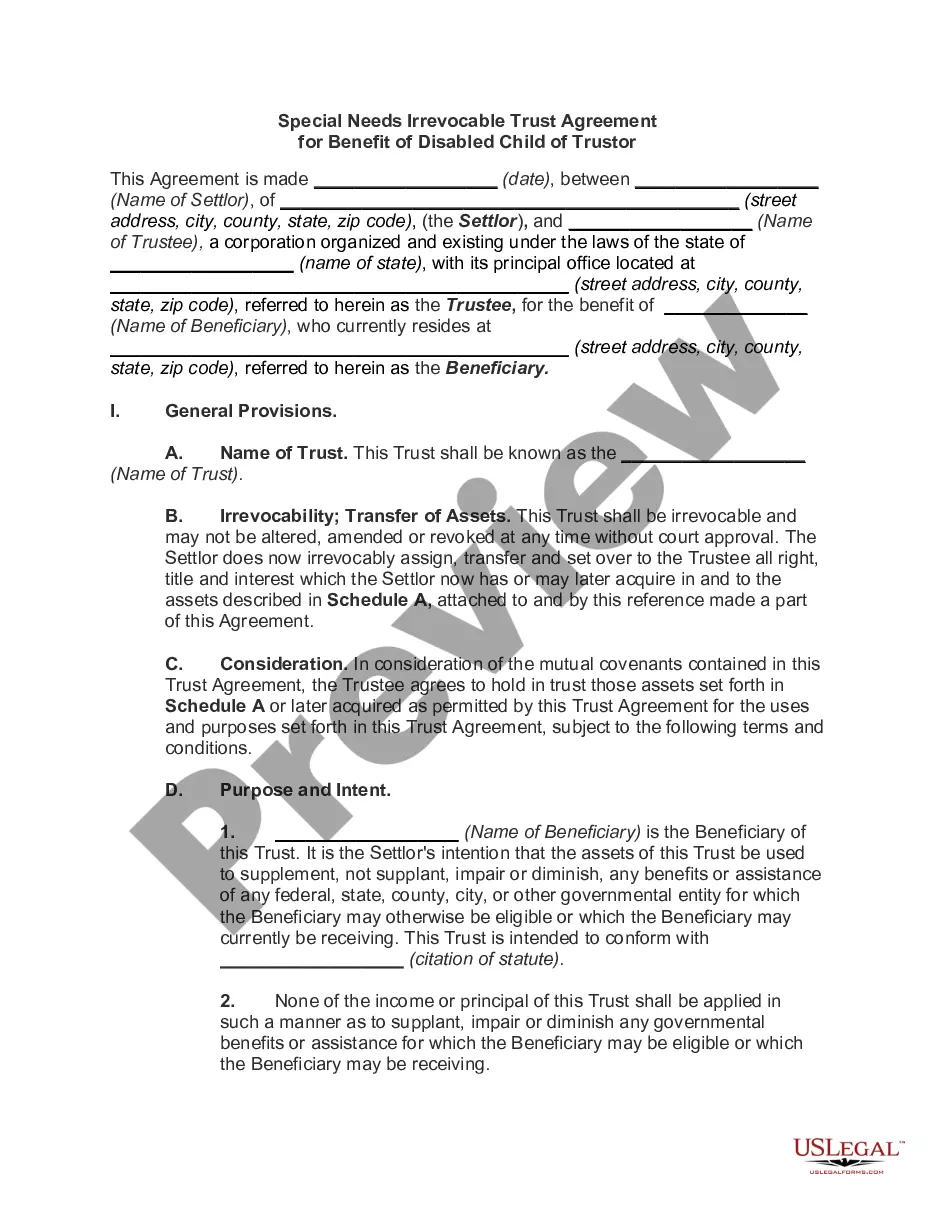
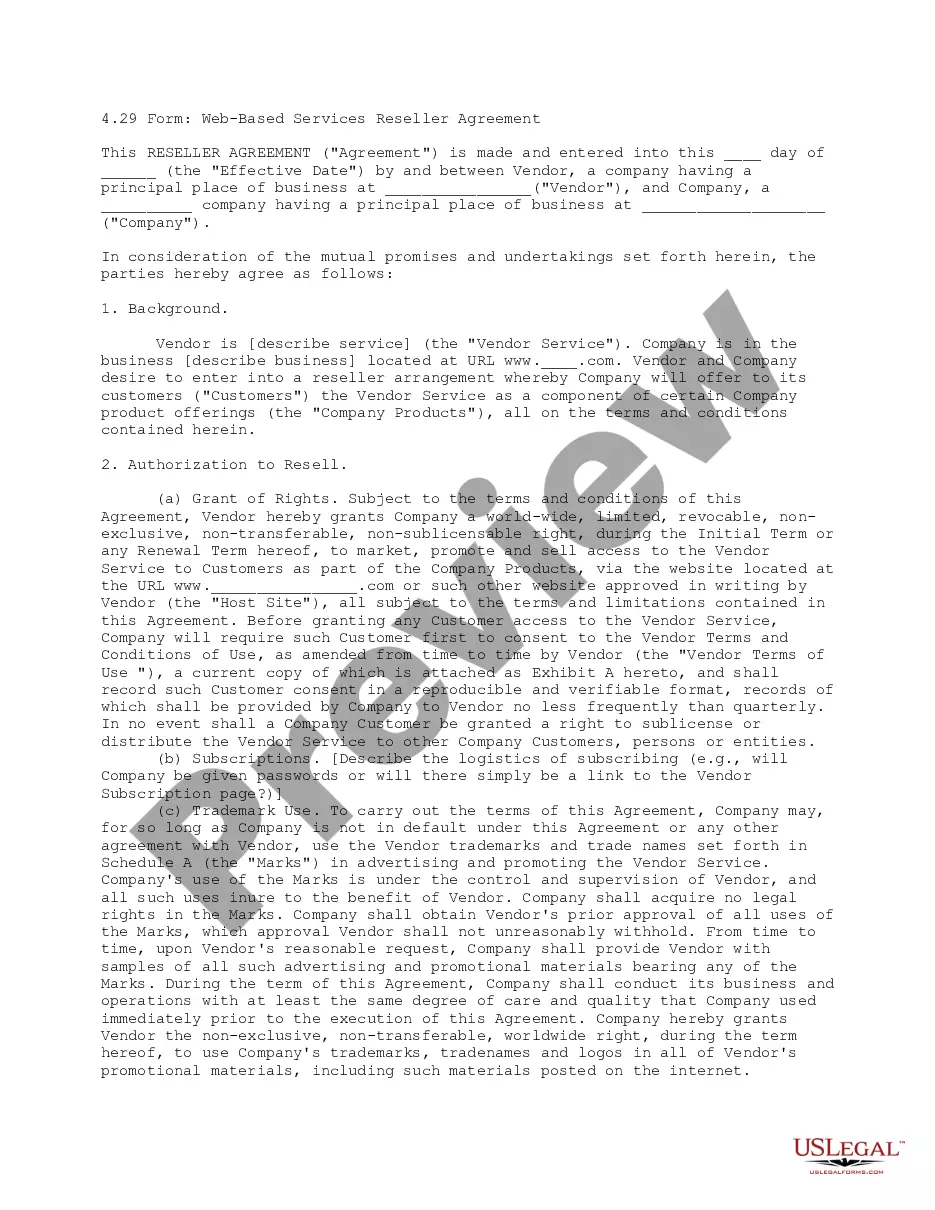
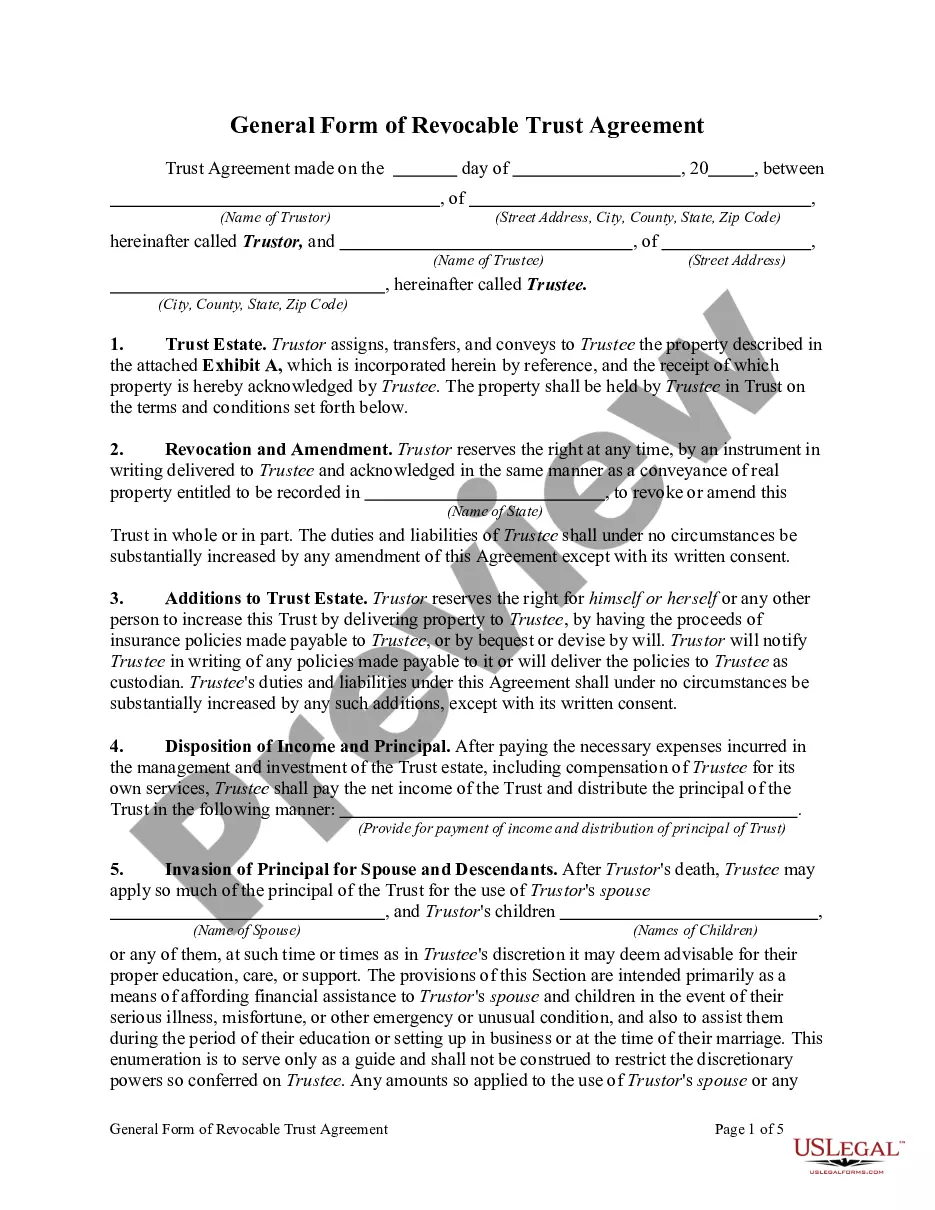
The 3rd Party Special Needs Trust Document For California you find on this page is a reusable official template created by experienced attorneys in accordance with federal and state regulations.
For over 25 years, US Legal Forms has supplied individuals, entities, and lawyers with more than 85,000 validated, state-specific documents for any business and personal event. It’s the quickest, easiest, and most dependable method to acquire the forms you require, as the service ensures the utmost level of data security and anti-virus protection.
Subscribe to US Legal Forms to access verified legal documents for every aspect of life.
- Search for the document you need and review it.
- Choose the pricing plan that works for you and create an account.
- Select the format you prefer for your 3rd Party Special Needs Trust Document For California (PDF, Word, RTF) and store the template on your device.
- Print the template to fill it out by hand or utilize an online multi-functional PDF editor to swiftly and accurately complete and sign your form with an electronic signature.
- Use the same document again whenever required. Access the My documents tab in your profile to re-download any previously acquired forms.
Form popularity
FAQ
Commonly, family members will create a SNT and leave money and property to that trust through their estate plan (their will, trust, life insurance, or other beneficiary designation). The trustee of that trust then uses trust funds to support the person with special needs.
The manager of a trust is called a ?trustee.? The trustee can be any person over eighteen years of age, a family or friend, bank, pooled trust or a professional fiduciary.
In these circumstances, the Form 1041 is very simple to complete. The trustee will check the box on Form 1041 indicating that the trust is a grantor trust and provide some general information about the trust (name, address, tax identification number, and the date the trust was established).
Special needs trusts are typically created in conjunction with a special needs attorney, which can cost anywhere from $2,000?$5,000 (you may consider asking the attorney you choose if they will consider setting up a payment plan).
Third party special needs trusts are generally either considered ?complex trusts? or ?qualified disability trusts? for income tax purposes and the trust itself is responsible for reporting its own items of income, deduction, and credit.