Charitable Remainder Trust
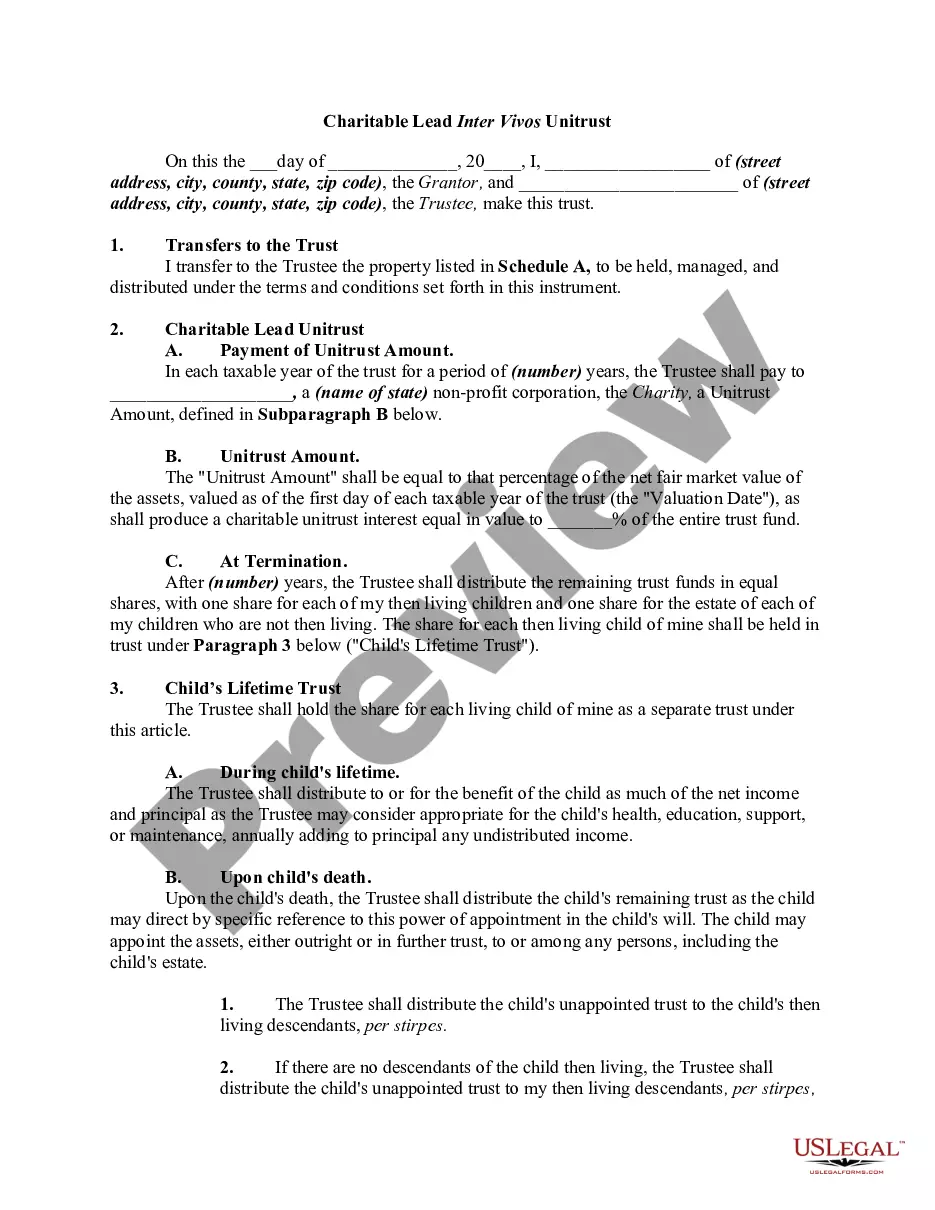
Description
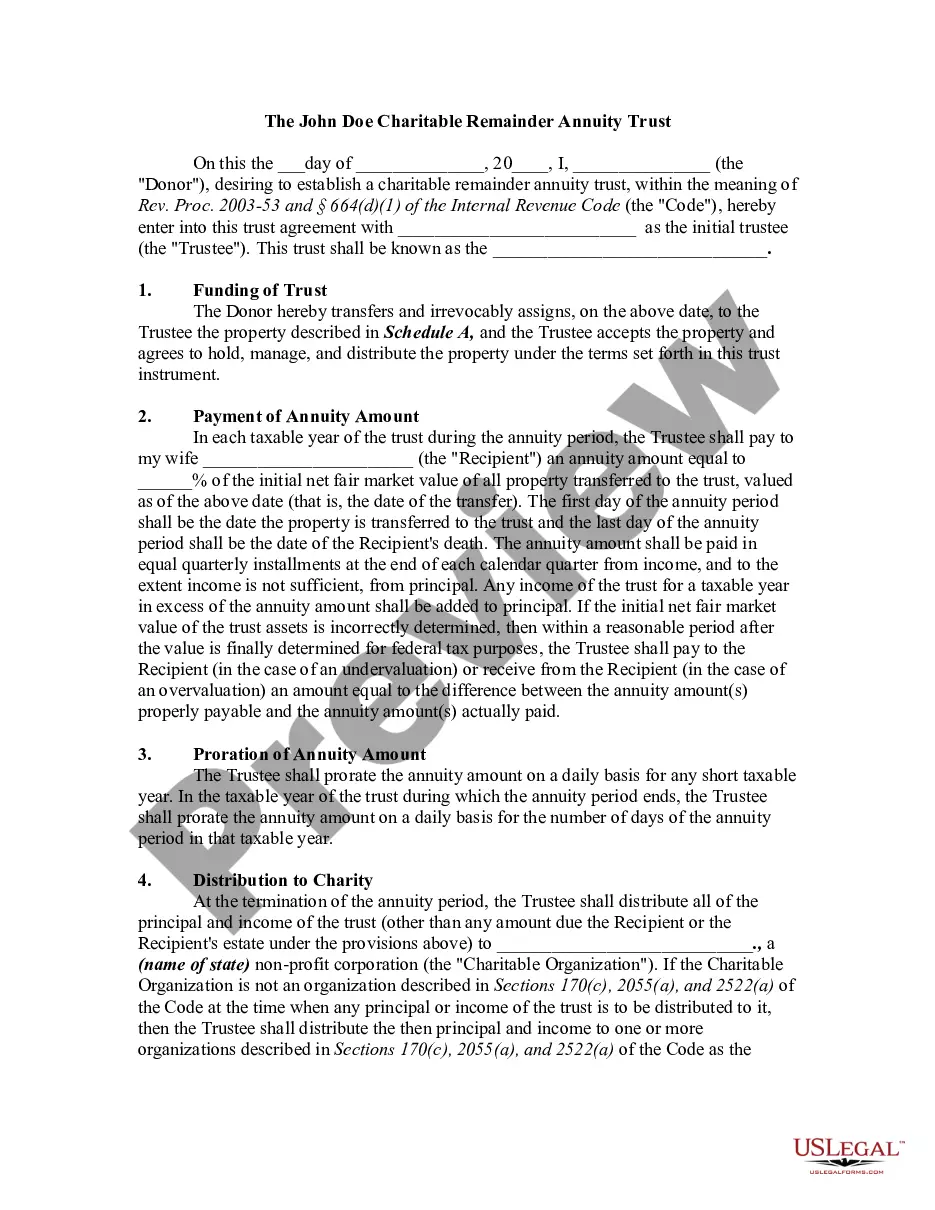
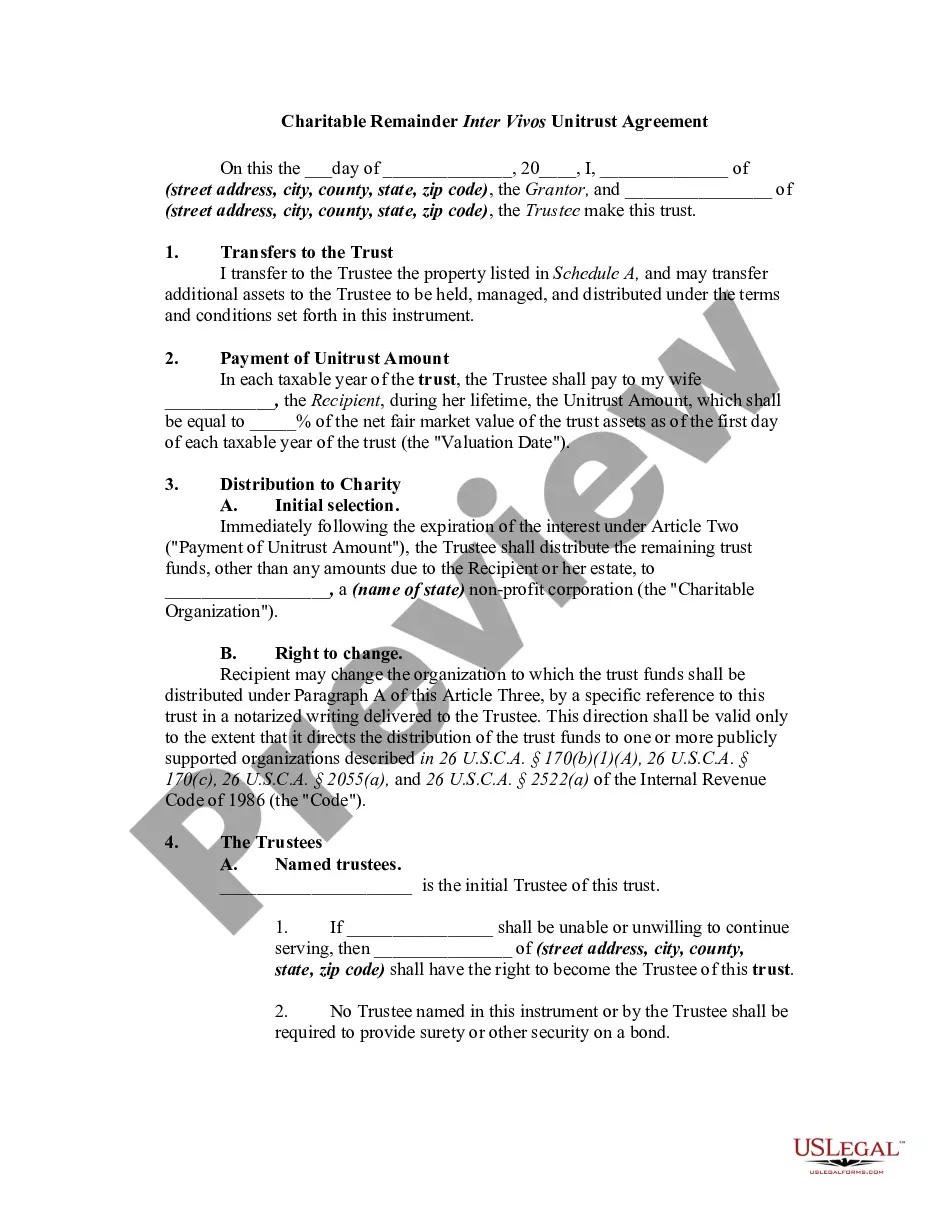
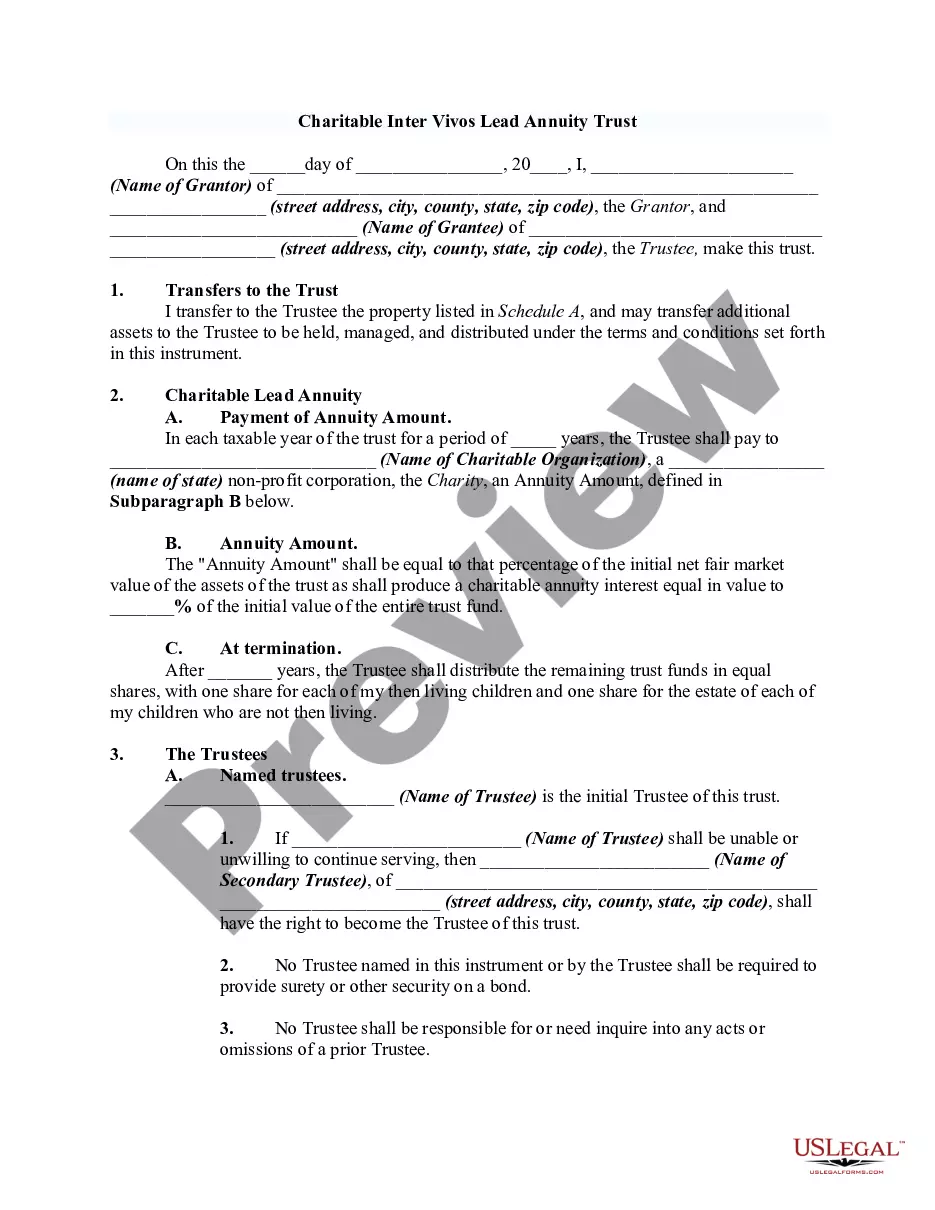
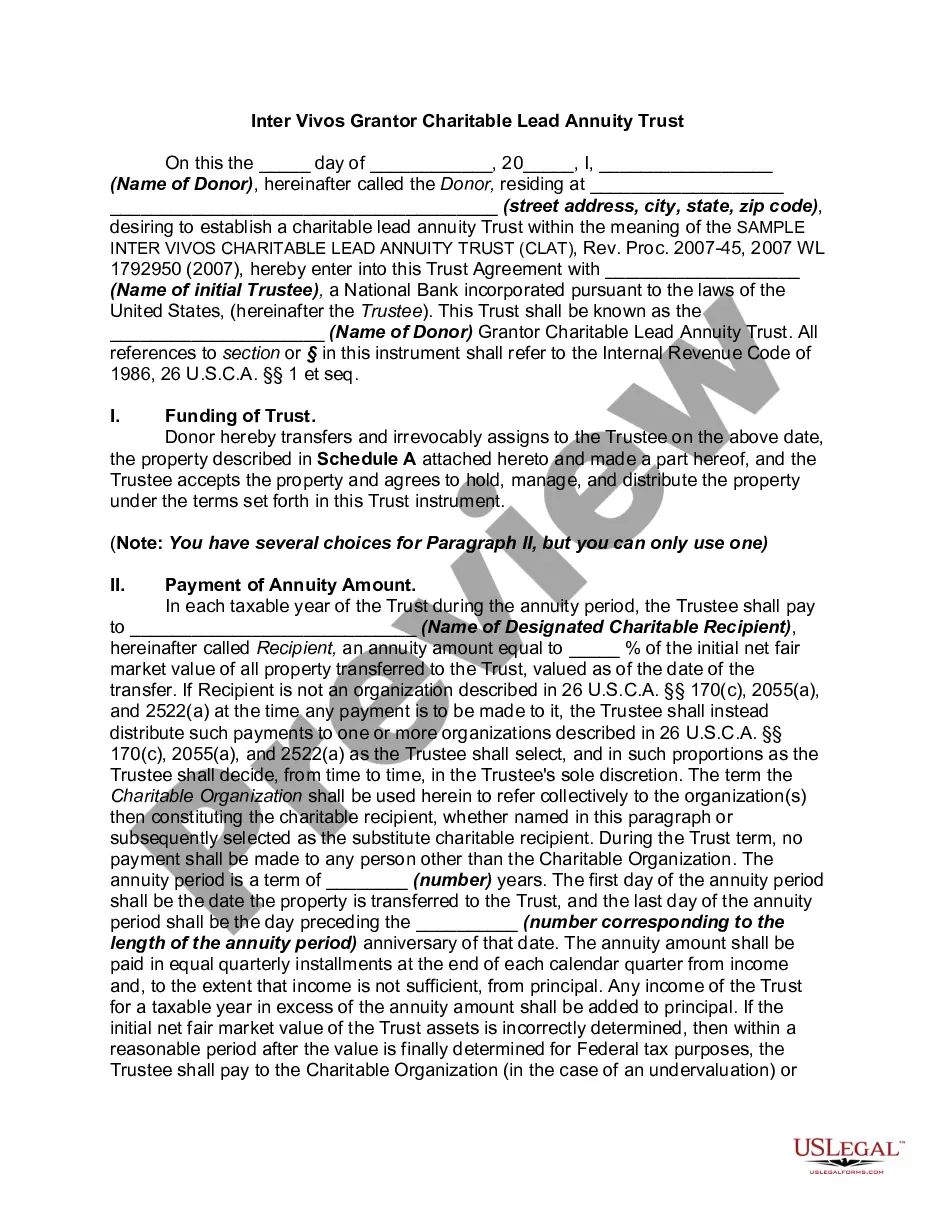
Get your form ready online
Our built-in tools help you complete, sign, share, and store your documents in one place.
Make edits, fill in missing information, and update formatting in US Legal Forms—just like you would in MS Word.
Download a copy, print it, send it by email, or mail it via USPS—whatever works best for your next step.
Sign and collect signatures with our SignNow integration. Send to multiple recipients, set reminders, and more. Go Premium to unlock E-Sign.
If this form requires notarization, complete it online through a secure video call—no need to meet a notary in person or wait for an appointment.
We protect your documents and personal data by following strict security and privacy standards.

Make edits, fill in missing information, and update formatting in US Legal Forms—just like you would in MS Word.

Download a copy, print it, send it by email, or mail it via USPS—whatever works best for your next step.

Sign and collect signatures with our SignNow integration. Send to multiple recipients, set reminders, and more. Go Premium to unlock E-Sign.

If this form requires notarization, complete it online through a secure video call—no need to meet a notary in person or wait for an appointment.

We protect your documents and personal data by following strict security and privacy standards.
Looking for another form?







How to fill out Charitable Lead Inter Vivos Unitrust?
- Log in to your existing US Legal Forms account and ensure your subscription is active. If it's expired, renew your plan to continue accessing resources.
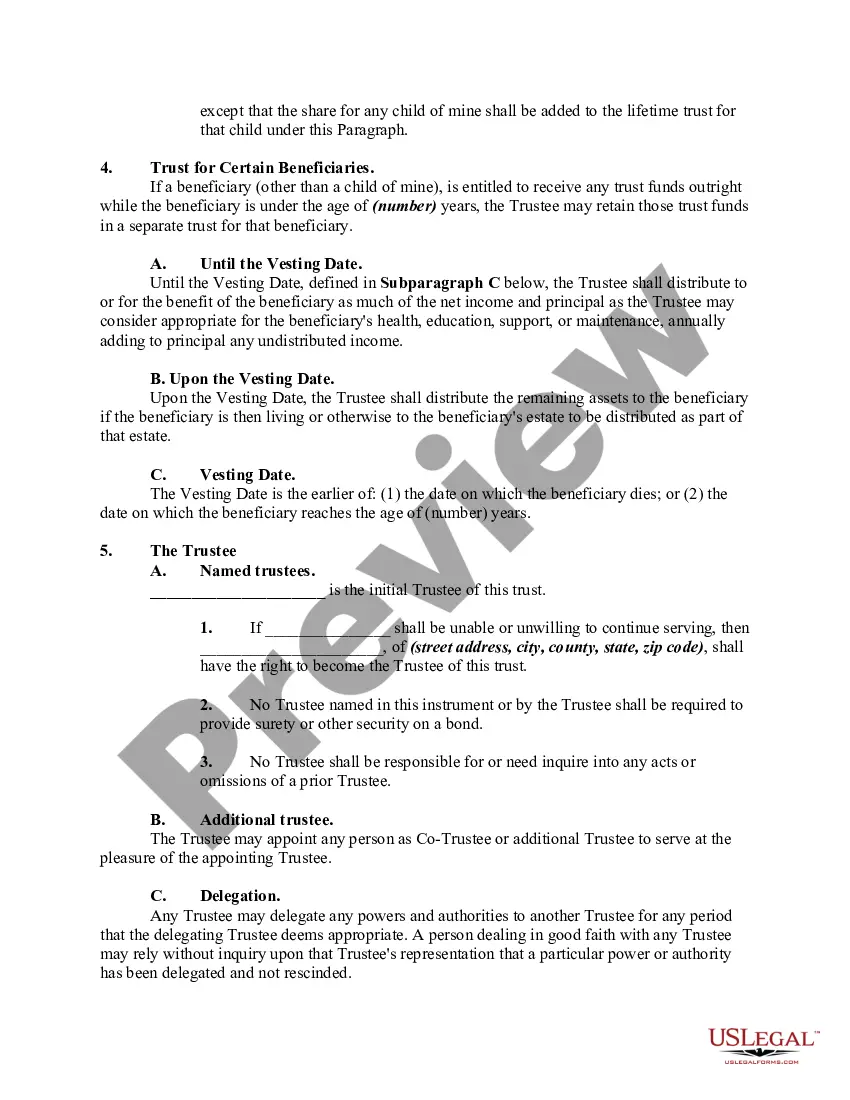
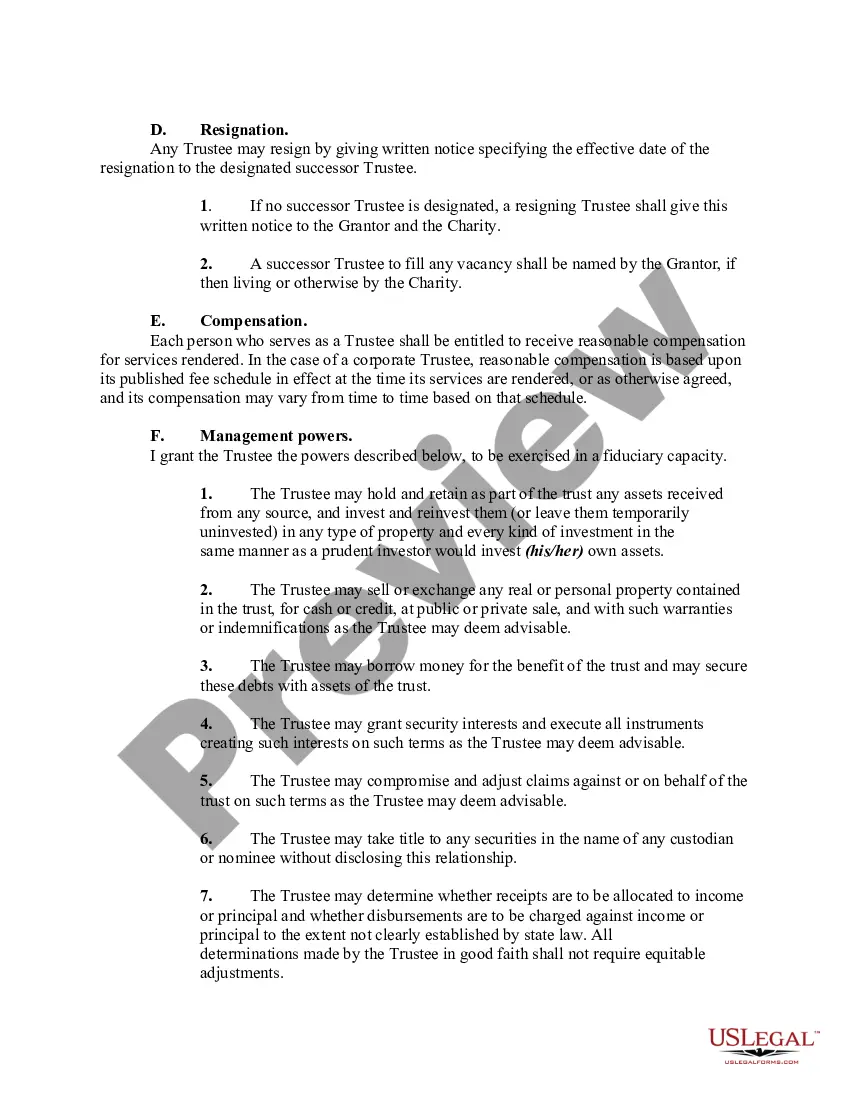
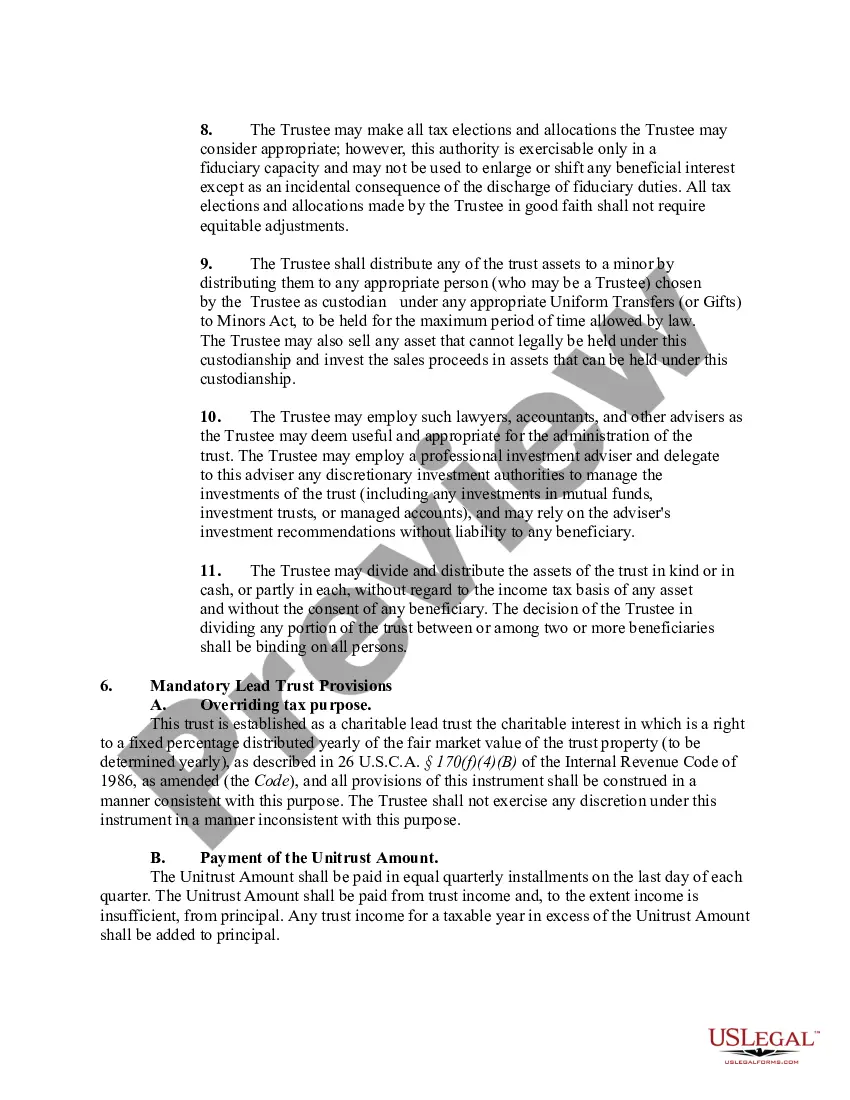
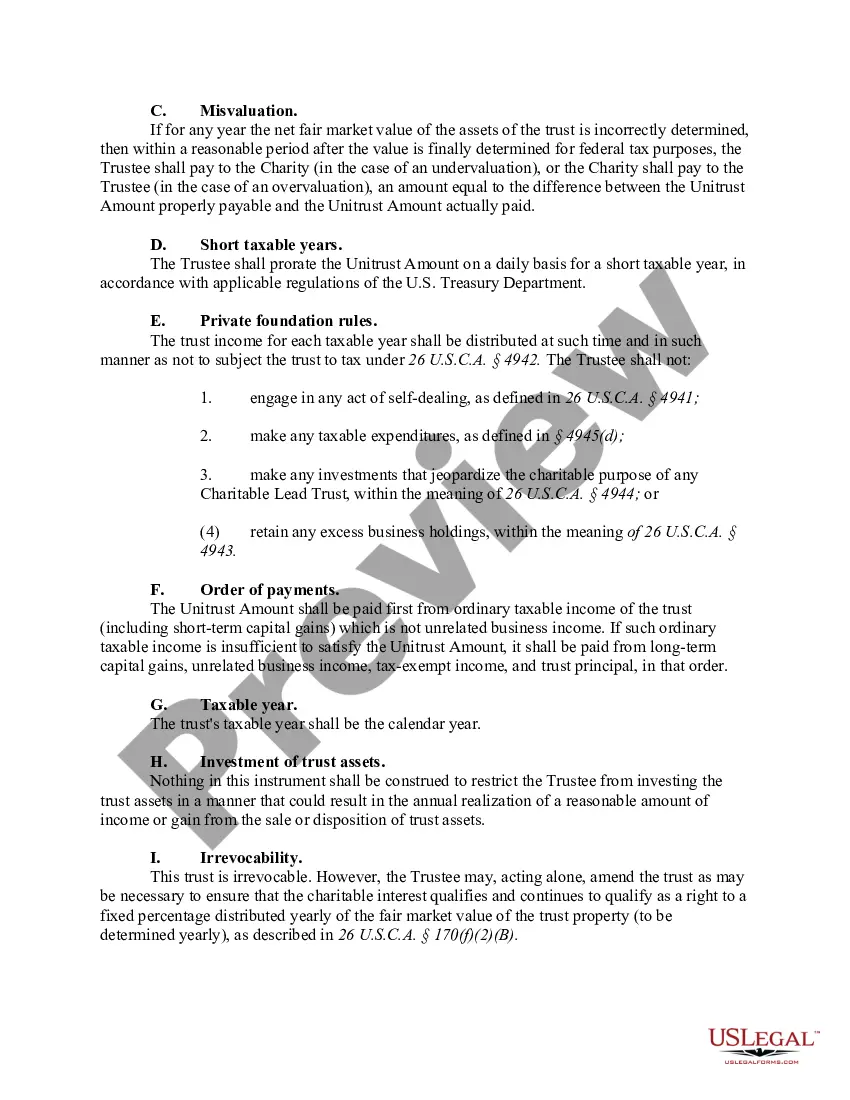
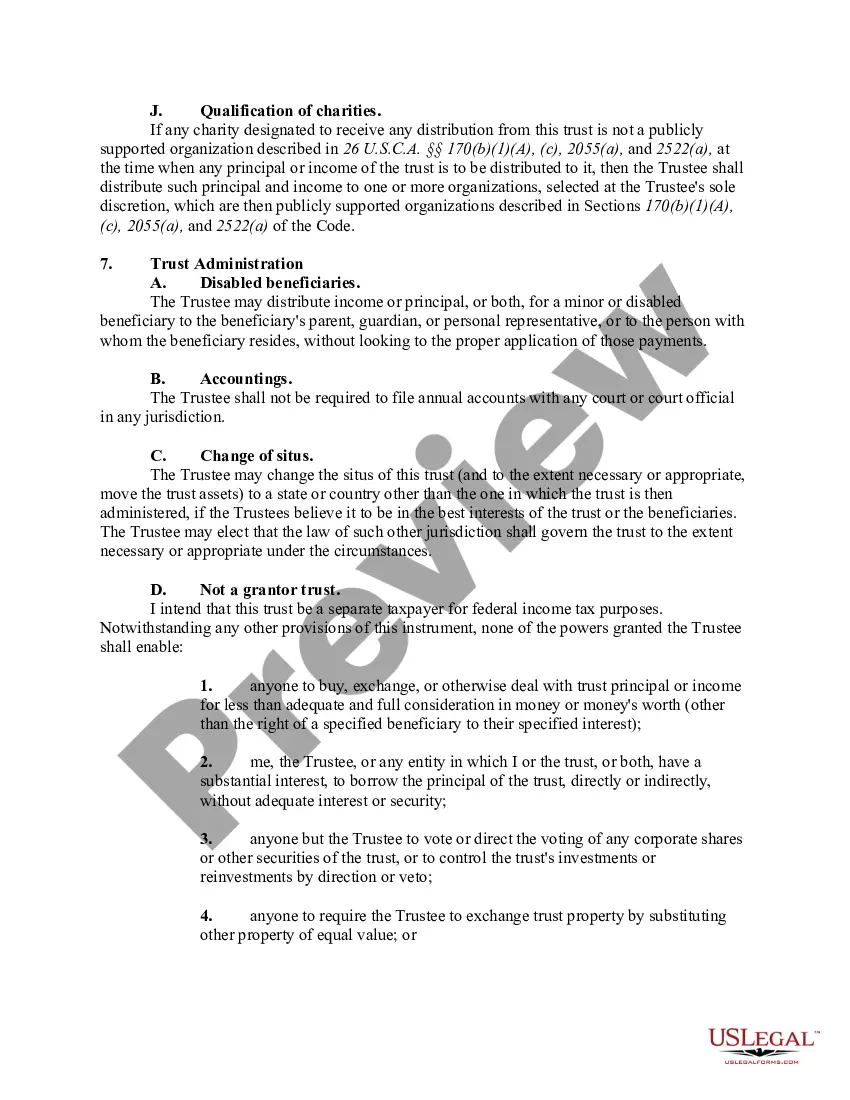
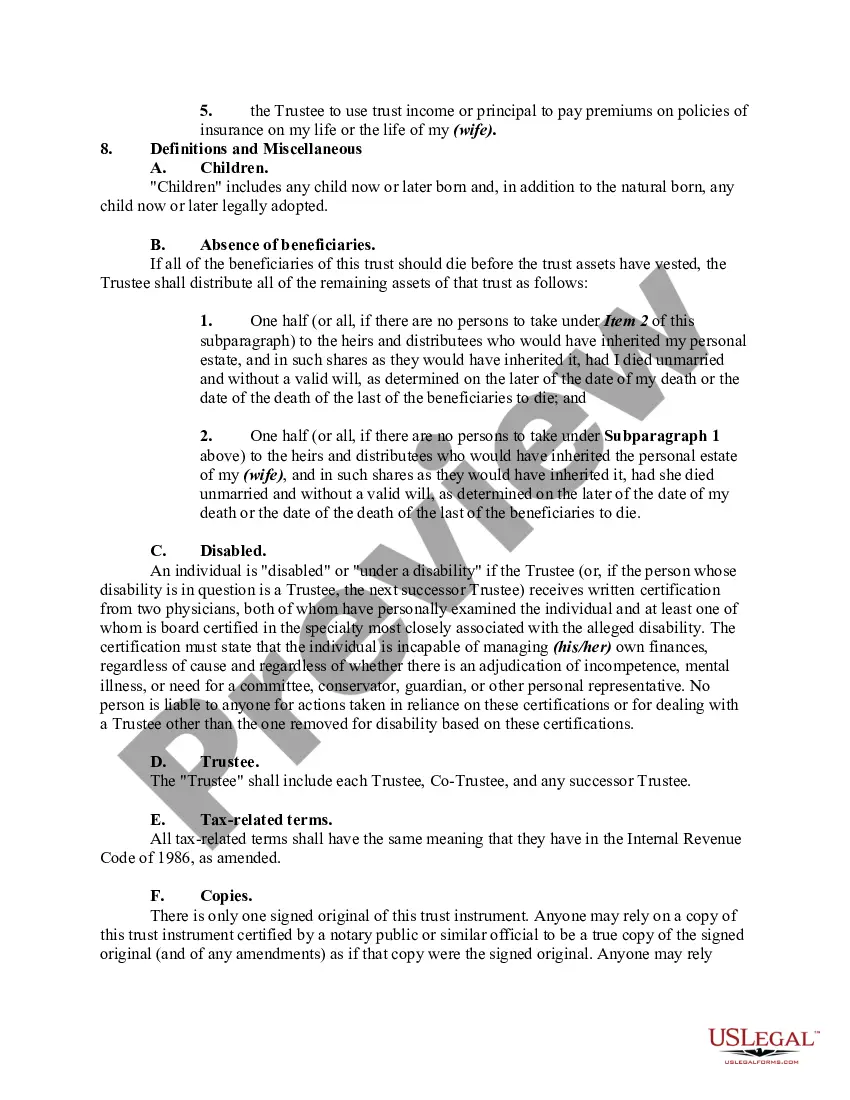
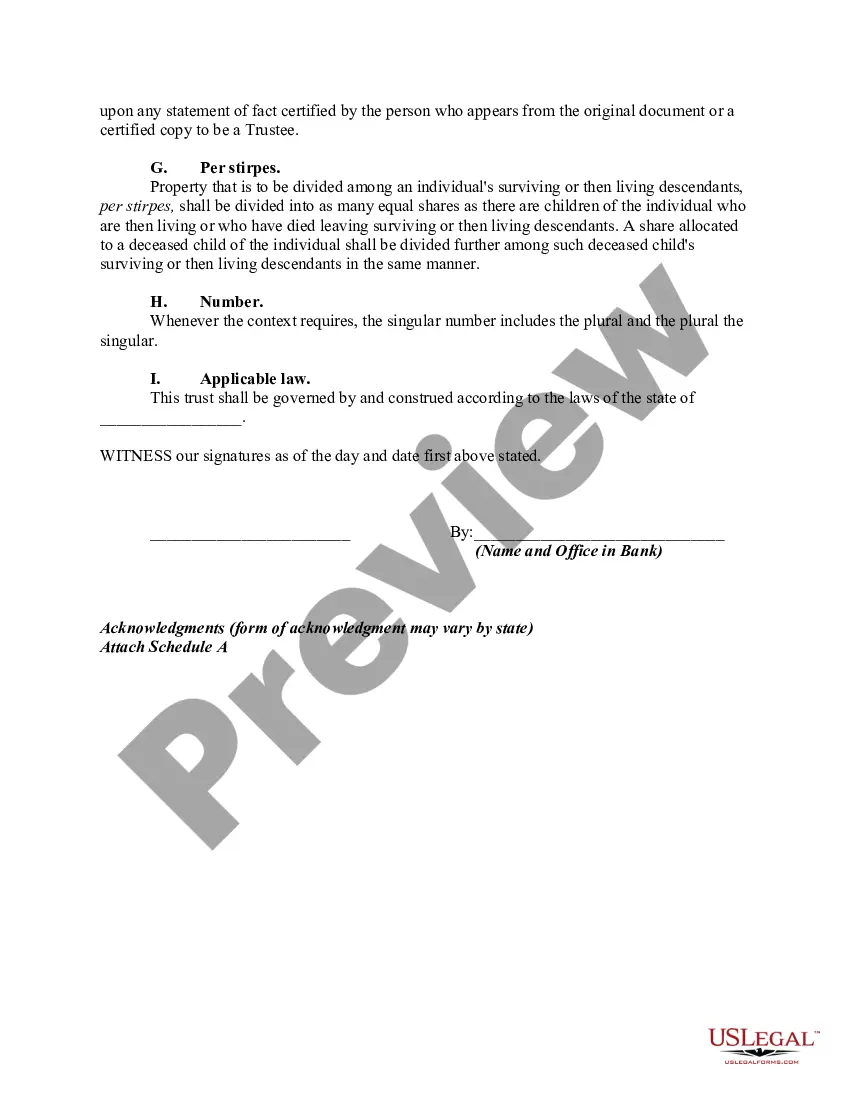
- Review the preview mode and description of the charitable remainder trust template. Verify that it meets your legal needs and aligns with local requirements.
- If the selected form doesn't fit your needs, utilize the Search tab to explore additional templates until you find the perfect match.
- Once you've found the appropriate document, click the Buy Now button and select your preferred subscription plan. Registration is required to unlock the library.
- Complete your purchase by entering your payment information, either via credit card or PayPal, to secure your subscription.
- Finally, download your selected forms directly to your device, and access them anytime via the 'My Forms' menu in your account.
Following these steps will allow you to efficiently create your charitable remainder trust using US Legal Forms' extensive legal library. The platform not only simplifies the document acquisition process but also gives you access to premium support for assistance.
Start your journey towards a successful charitable remainder trust today. Visit US Legal Forms to take advantage of their resources!
Form popularity
FAQ
The 5% rule refers to the minimum payout requirement of a charitable remainder trust. According to IRS guidelines, the trust must distribute at least 5% of its assets annually to beneficiaries. This rule ensures that both income beneficiaries and charitable organizations benefit from the trust’s assets.
A charitable remainder trust can offer significant benefits, making it worth considering. It provides a way to support a charitable cause while receiving tax benefits and income from the trust during your lifetime. Evaluating your financial situation and philanthropic goals can help determine if a charitable remainder trust aligns with your needs.
Yes, you can create your own charitable remainder trust, but it's essential to follow legal guidelines. You may choose to work with a financial advisor or legal professional to ensure that your charitable remainder trust meets all requirements. This support helps you choose the correct structure and properly allocate assets within the trust.
Whether a charitable remainder trust is a good idea depends on your financial goals and personal situation. For many, it serves as an effective way to minimize taxes while supporting a cause they care about. Furthermore, these trusts provide a reliable income source during retirement, making them a worthwhile consideration. If you are unsure, you might want to explore options with platforms like uslegalforms to guide you through the process.
While a charitable remainder trust offers benefits, it also comes with drawbacks. One major disadvantage is that once you place assets into the trust, you generally cannot change your mind about the charitable beneficiary. Additionally, setting up a charitable remainder trust can involve complex legal paperwork and ongoing administrative costs, which may be challenging for some individuals.
A charitable remainder trust allows you to give a portion of your assets to charity while retaining the right to an income stream during your lifetime. For instance, imagine you set up a charitable remainder unitrust, where you donate stocks to the trust. Each year, the trust pays you a percentage of its value back as income, while the remaining balance eventually goes to your chosen charity after your passing.
A person may set up a charitable trust to leave a lasting legacy while also reaping financial benefits. This option allows you to support charitable causes and enjoy potential tax deductions during your lifetime. Additionally, a charitable remainder trust can provide a steady income stream, making it a strategic choice for individuals looking to balance philanthropy with personal financial needs.
One key disadvantage of a charitable remainder trust is that it requires a long-term commitment, as the assets are tied up until the trust term ends. Also, once you place assets in a charitable remainder trust, you generally cannot change the beneficiaries or access the principal. It is essential to carefully consider these factors, along with any administrative costs involved, before establishing such a trust.
People set up charitable trusts for various reasons, including philanthropy, tax benefits, and financial security. A charitable remainder trust allows you to support a cause you care about while still enjoying an income stream from your assets. Additionally, the potential tax deductions can greatly enhance your financial strategy, making charitable trusts an attractive option for many.
In a charitable remainder trust, the trust itself becomes the owner of the assets. You, as the donor, transfer ownership of your assets to the trust, and the trust then manages them. While you can receive income from these assets during your lifetime, the ultimate ownership passes to the charitable organization after the trust term ends.