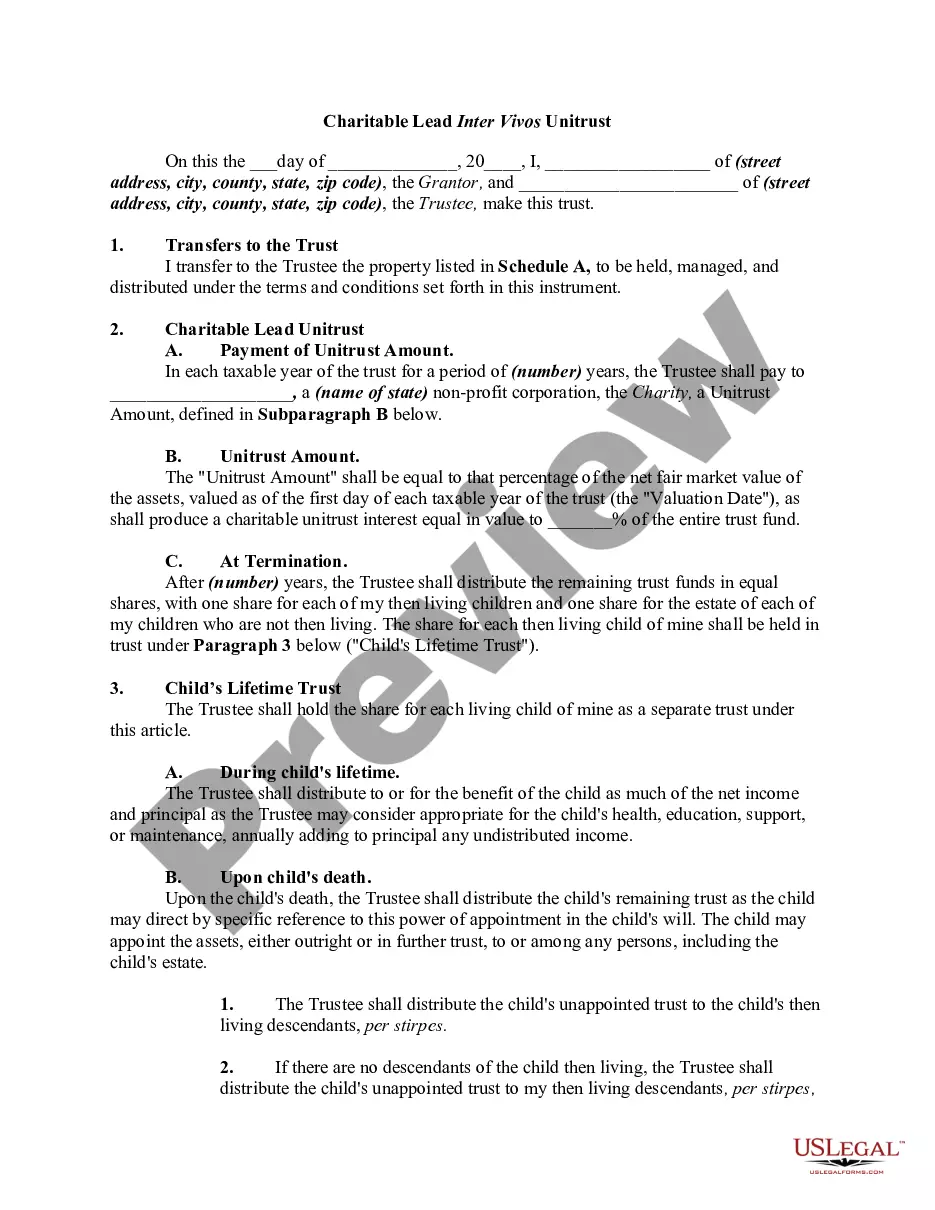
Charitable Remainder Trust With Ira
Description
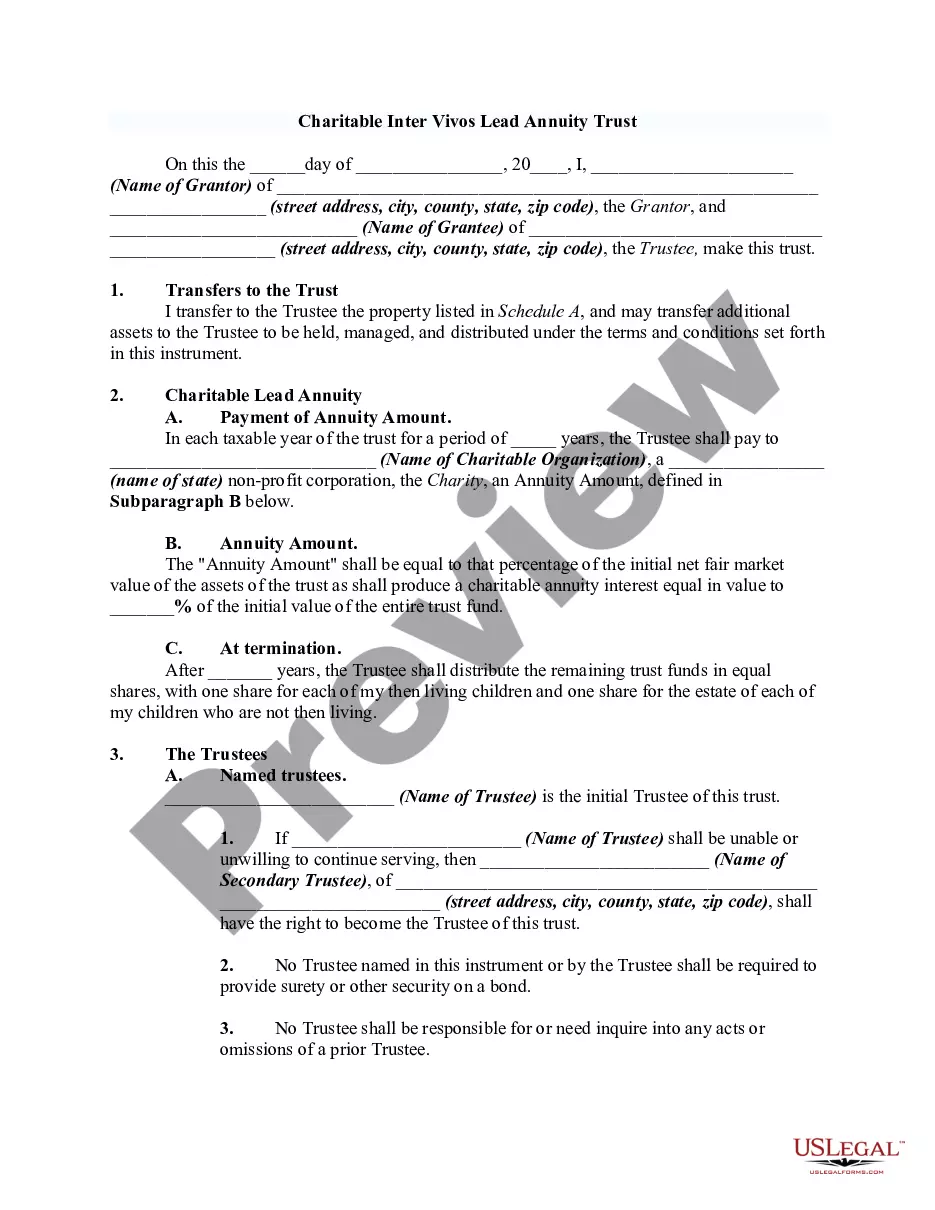
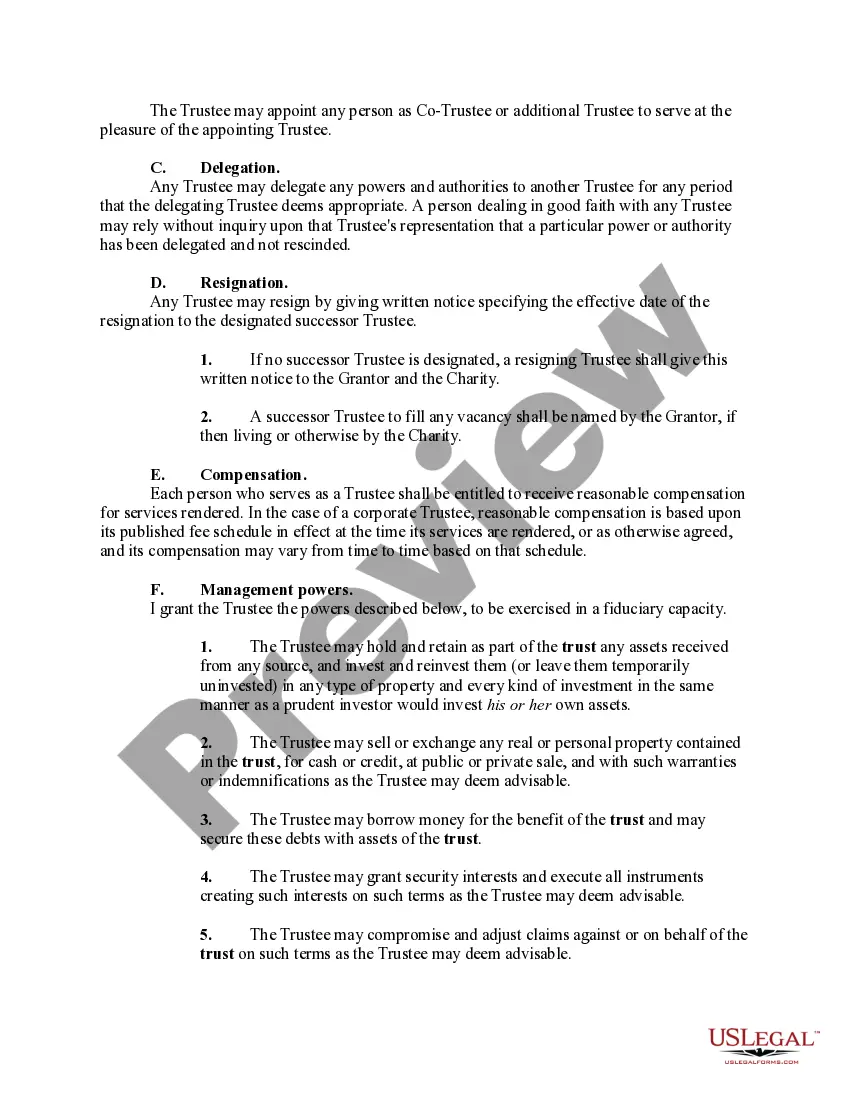
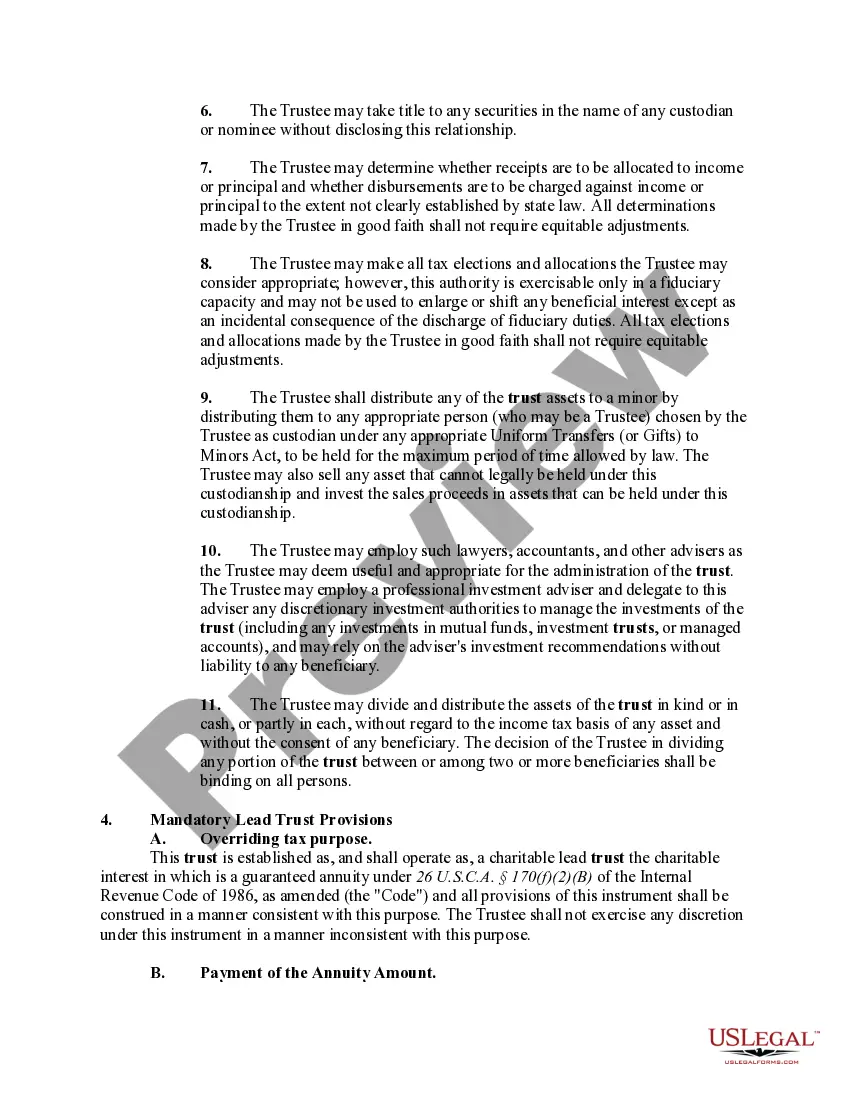
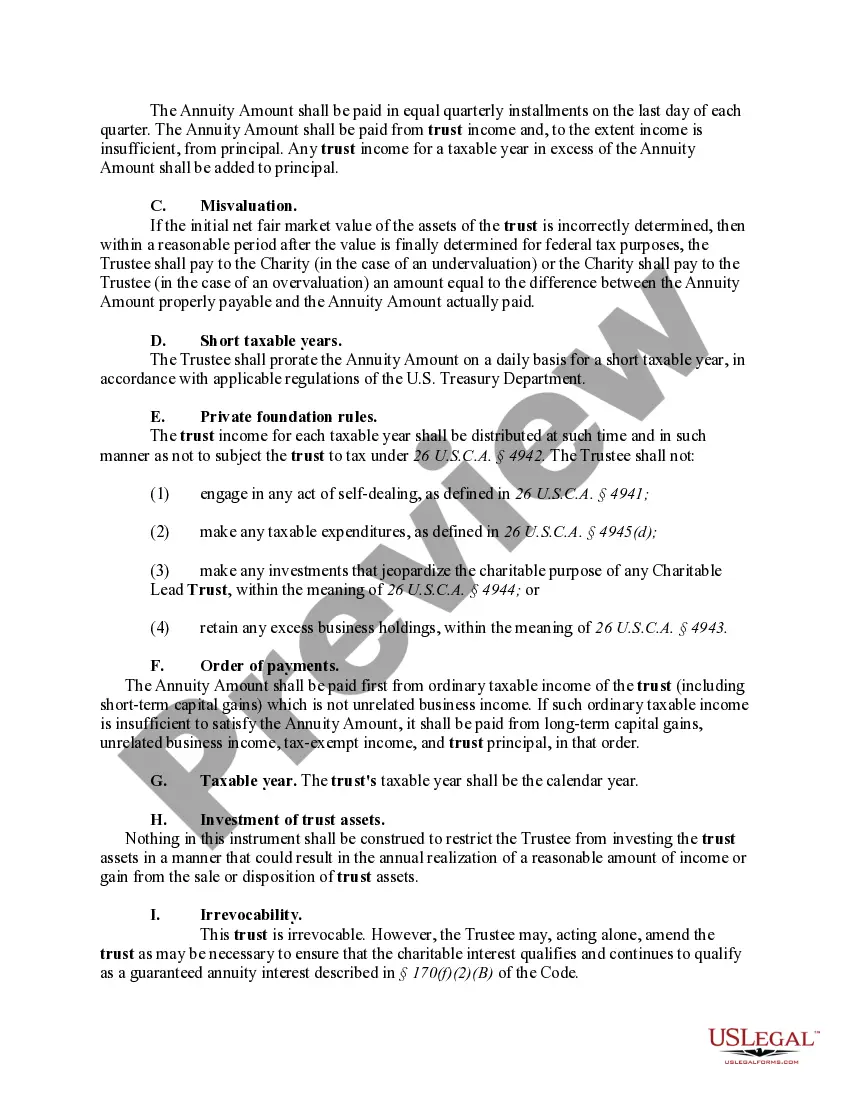
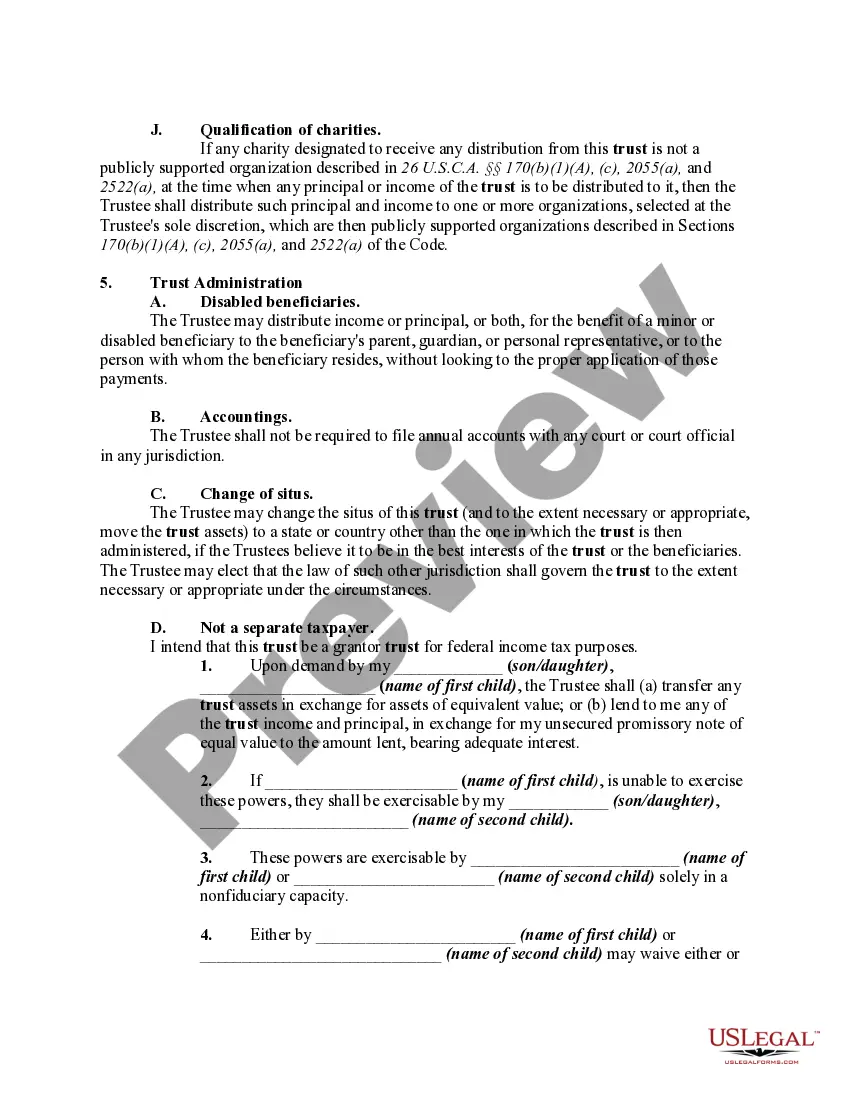
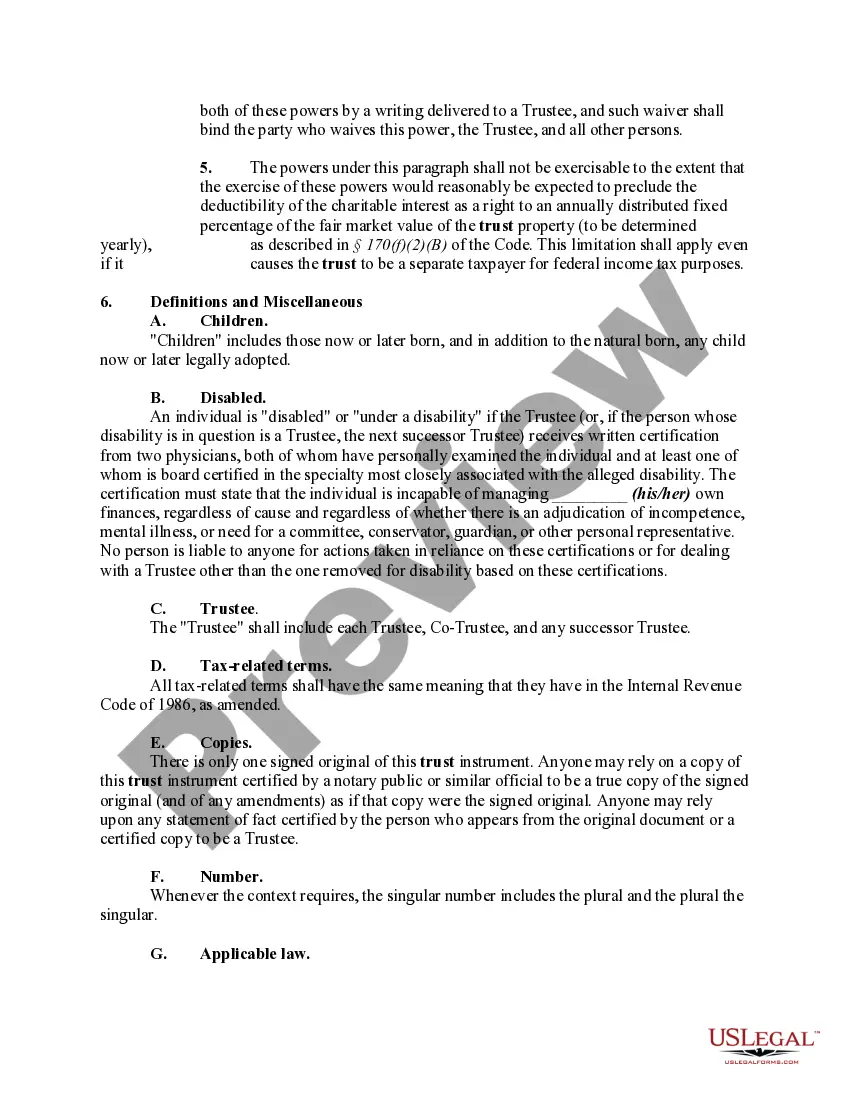
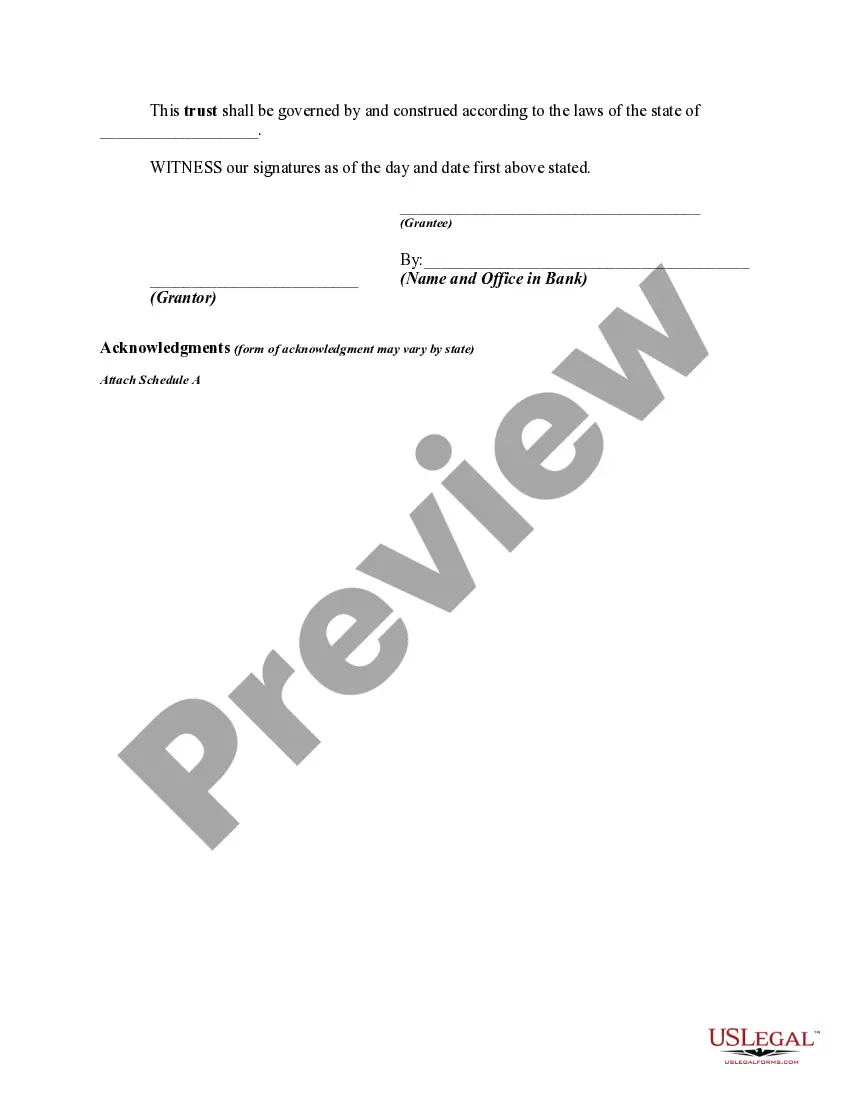
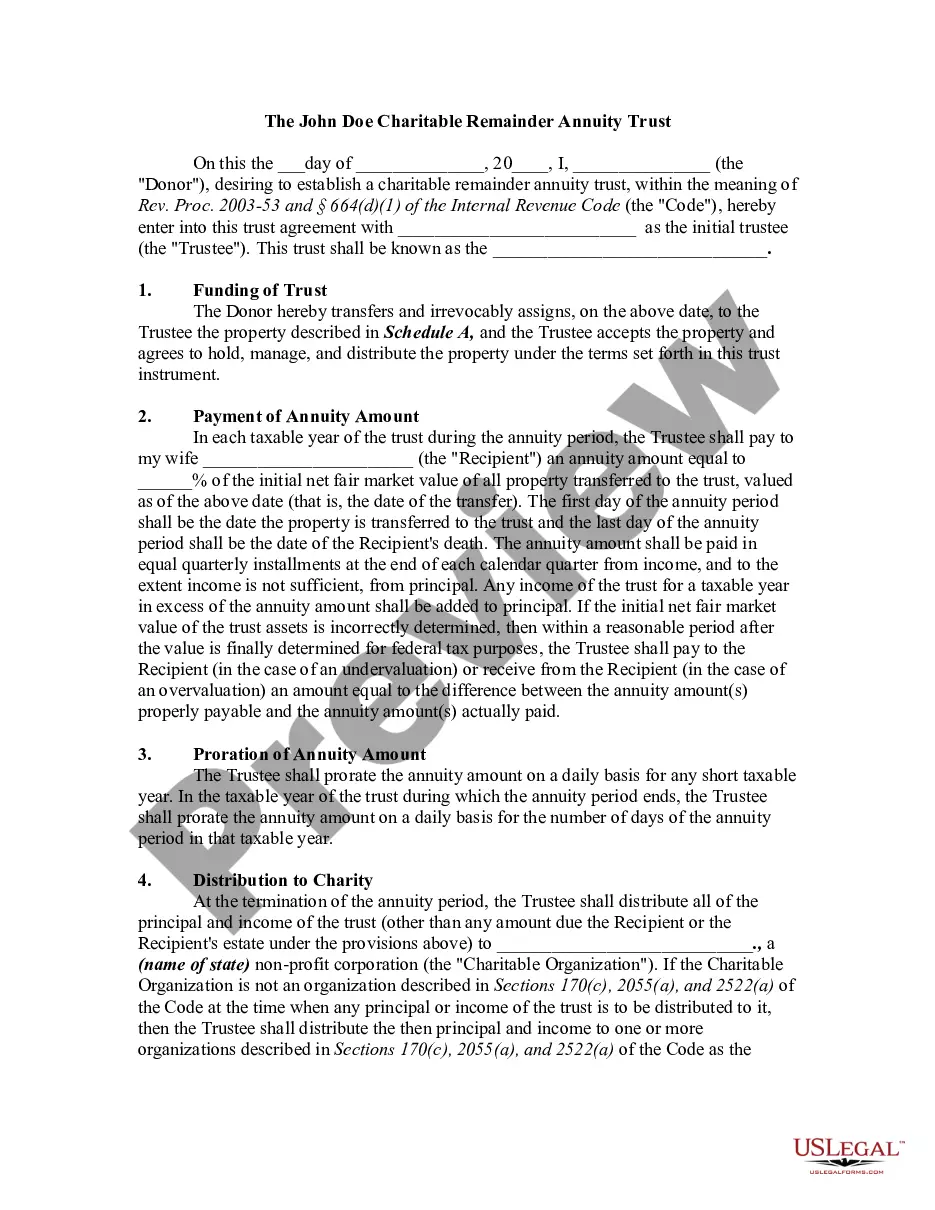
Get your form ready online
Our built-in tools help you complete, sign, share, and store your documents in one place.
Make edits, fill in missing information, and update formatting in US Legal Forms—just like you would in MS Word.
Download a copy, print it, send it by email, or mail it via USPS—whatever works best for your next step.
Sign and collect signatures with our SignNow integration. Send to multiple recipients, set reminders, and more. Go Premium to unlock E-Sign.
If this form requires notarization, complete it online through a secure video call—no need to meet a notary in person or wait for an appointment.
We protect your documents and personal data by following strict security and privacy standards.

Make edits, fill in missing information, and update formatting in US Legal Forms—just like you would in MS Word.

Download a copy, print it, send it by email, or mail it via USPS—whatever works best for your next step.

Sign and collect signatures with our SignNow integration. Send to multiple recipients, set reminders, and more. Go Premium to unlock E-Sign.

If this form requires notarization, complete it online through a secure video call—no need to meet a notary in person or wait for an appointment.

We protect your documents and personal data by following strict security and privacy standards.
Looking for another form?








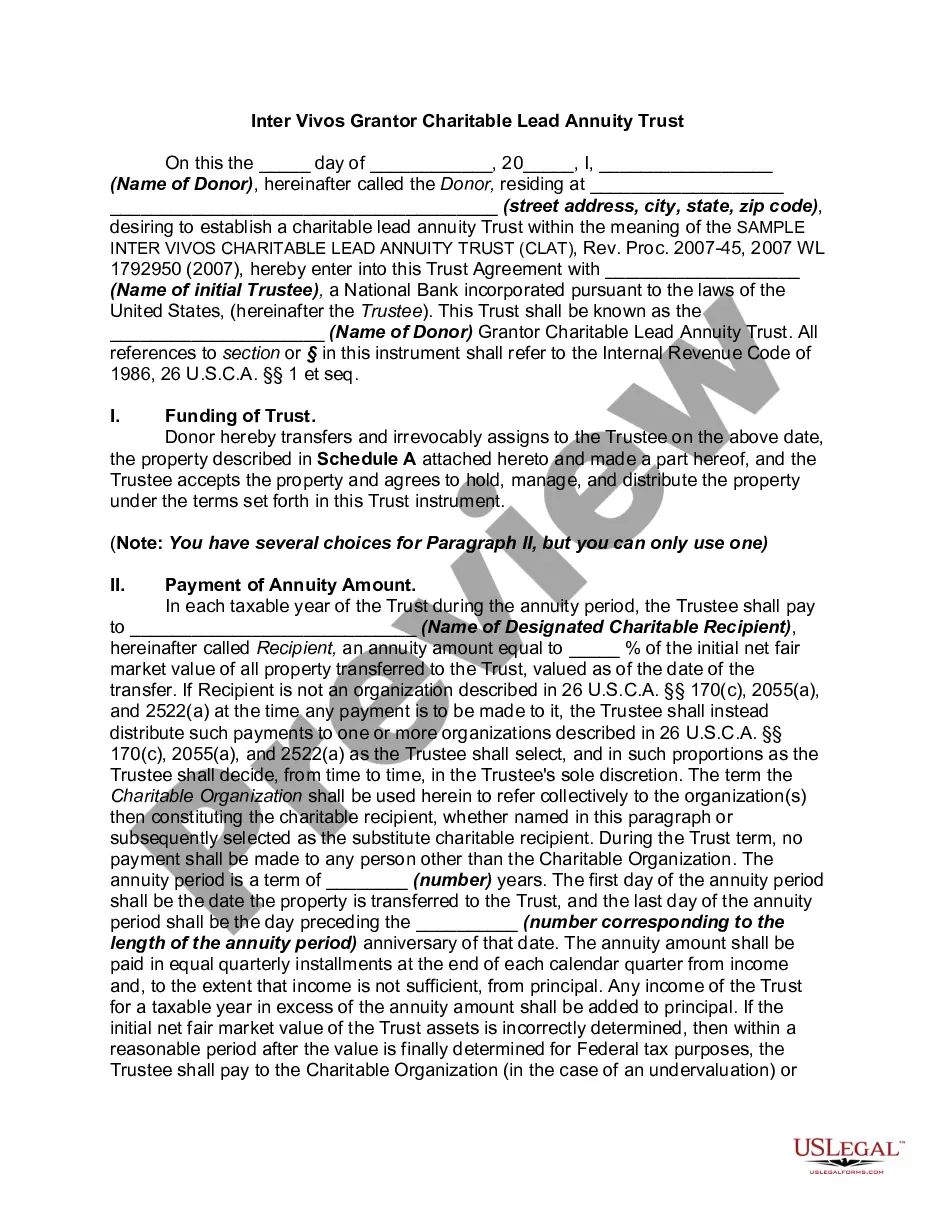
How to fill out Charitable Inter Vivos Lead Annuity Trust?
- Login to your US Legal Forms account if you're already a user, or create an account for first-time users.
- Browse through the extensive library of legal forms and select the appropriate charitable remainder trust template that aligns with your needs.
- Preview the chosen form to ensure it meets your jurisdiction requirements and accurately represents your intent.
- If necessary, utilize the search function to discover alternative forms that better suit your situation.
- Purchase the selected document by clicking the Buy Now button and choosing your subscription plan, which grants access to the library.
- Complete the transaction by entering your payment details or using PayPal to finalize your purchase.
- Download the completed form to your device, and access it anytime through the My Forms section of your account for future use.
In conclusion, setting up a charitable remainder trust with an IRA via US Legal Forms simplifies a complex legal process. With a robust collection of forms and expert support, you can create the necessary documents confidently.
Start your journey today by visiting US Legal Forms and explore the diverse resources available to assist you in creating effective and precise legal documents.
Form popularity
FAQ
Putting your IRA in a trust can be a beneficial strategy, depending on your financial goals and family situation. It can help control distributions to heirs and protect assets from creditors. However, the complexity of tax obligations must be understood. To explore this option thoroughly, consider a charitable remainder trust with IRA integration to achieve both charitable goals and financial advantages.
To put your IRA into a trust, you will need to establish the trust first and then designate it as the beneficiary of the IRA. Consult with a financial advisor or attorney to ensure compliance with IRS guidelines. This process requires careful attention to detail to maximize tax efficiency. Consider integrating strategies like a charitable remainder trust with IRA benefits for a beneficial approach.
To report a charitable distribution to your IRA, fill out Form 1040 during your tax filing. Ensure that you indicate the amount distributed to charity and keep receipts for your records. This distribution may not be included in your taxable income, providing a valuable advantage. Remember, using a charitable remainder trust with IRA funds can simplify future reporting.
The downside of naming a trust as an IRA beneficiary includes potential tax implications that could diminish the account's value. Trusts also may not enjoy the same distribution flexibility as individual beneficiaries. Complicated tax requirements can lead to decreased benefits. Thus, a charitable remainder trust with IRA considerations often offers advantages worth examining.
Yes, you can fund a charitable remainder trust with an IRA. This strategy not only allows for tax benefits but also supports charitable giving. However, direct transfers have specific rules and implications that require careful planning. Utilizing resources, like US Legal Forms, could guide you through establishing a charitable remainder trust with IRA funding.
When a trust is named as an IRA beneficiary, the IRS treats the trust as the account holder. This means the distributions from the IRA are subject to different tax rules compared to individual beneficiaries. The IRS requires that the trust must meet specific requirements to receive favorable tax treatments. Exploring a charitable remainder trust with IRA options might provide a more advantageous outcome.
Name a trust as an IRA beneficiary can complicate your estate planning. When a trust is the beneficiary, the IRA may not qualify for the stretch provisions, which allows for tax-deferred growth over the beneficiary's life expectancy. Instead, the IRA could trigger immediate tax consequences. For a streamlined option, consider using a charitable remainder trust with IRA benefits.
Leaving an IRA to a trust can complicate the management of distributions and may subject the funds to higher taxes. Beneficiaries may not enjoy the same flexibility and tax advantages as they would if the IRA were distributed directly. To avoid pitfalls, consider alternative strategies like using a charitable remainder trust with IRA for better outcomes.
Certain accounts, such as retirement accounts and health savings accounts, are typically not ideal for trust inclusion. This is largely due to tax implications and the requirements surrounding minimum distributions. It's essential to evaluate your options carefully, and a charitable remainder trust with IRA can often provide a more beneficial route.
Placing an IRA in a trust might complicate distributions and increase tax burdens on the beneficiaries. Trusts do not receive the same tax breaks as individuals, often resulting in higher taxes on the IRA balance. Instead, explore using a charitable remainder trust with IRA, which can provide benefits and simplify the transfer while supporting a charitable cause.