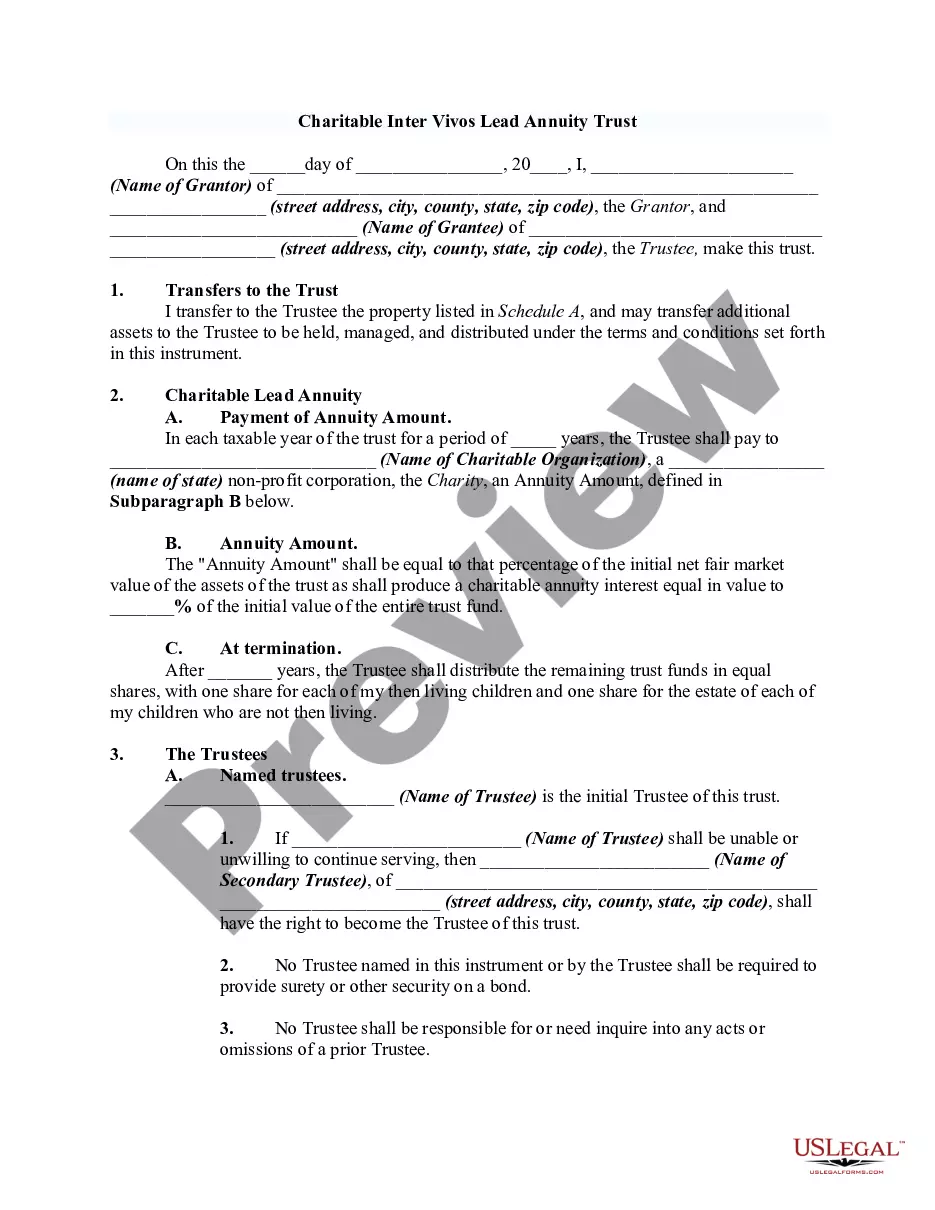
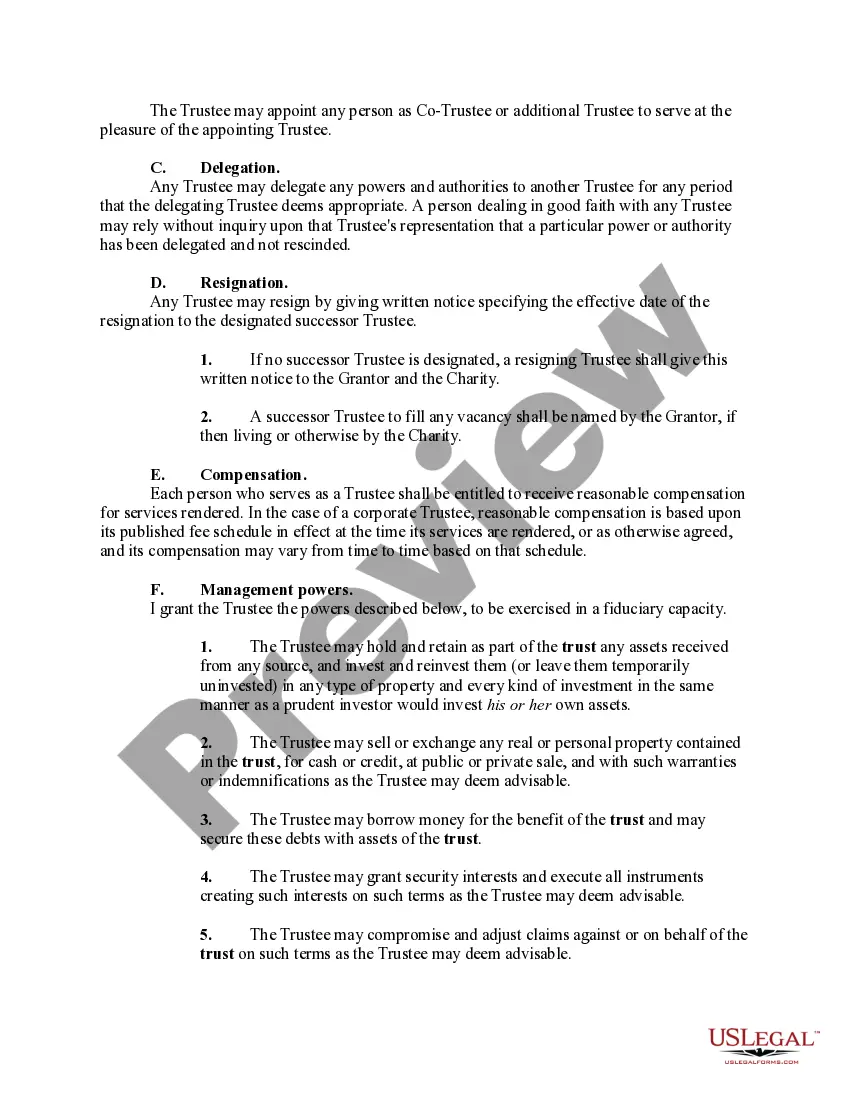
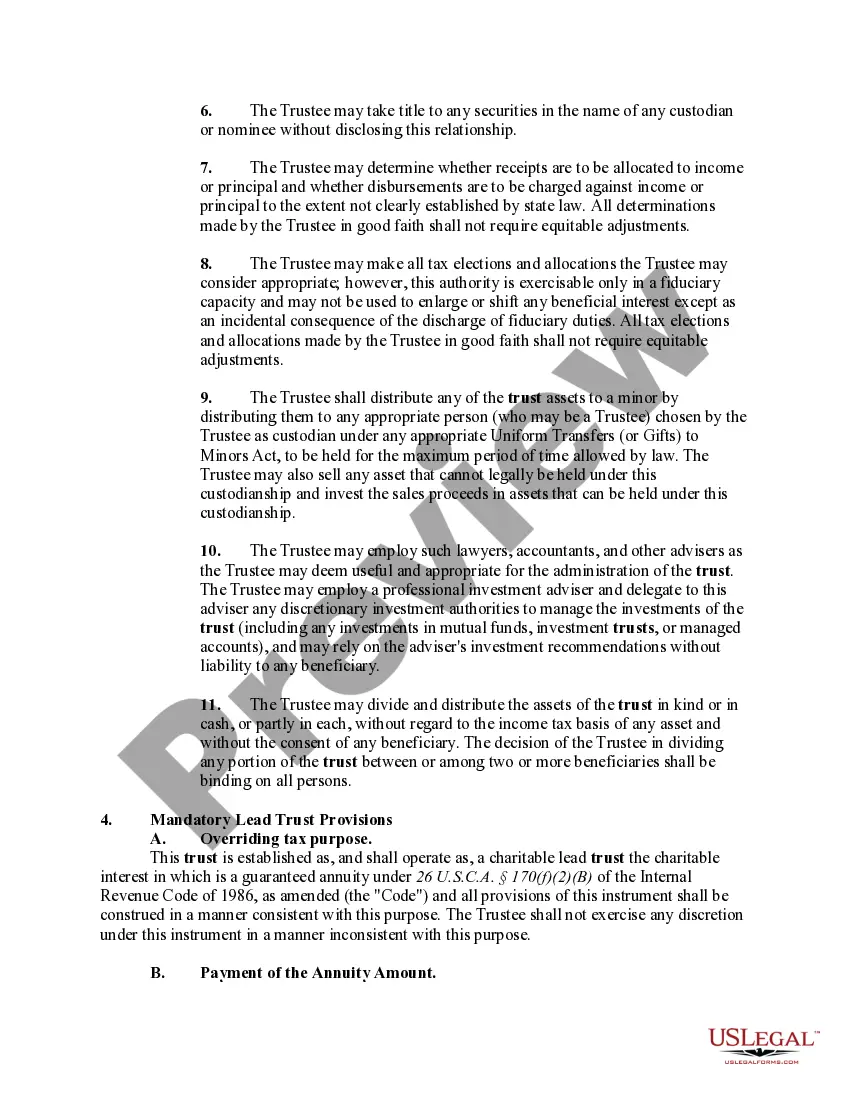
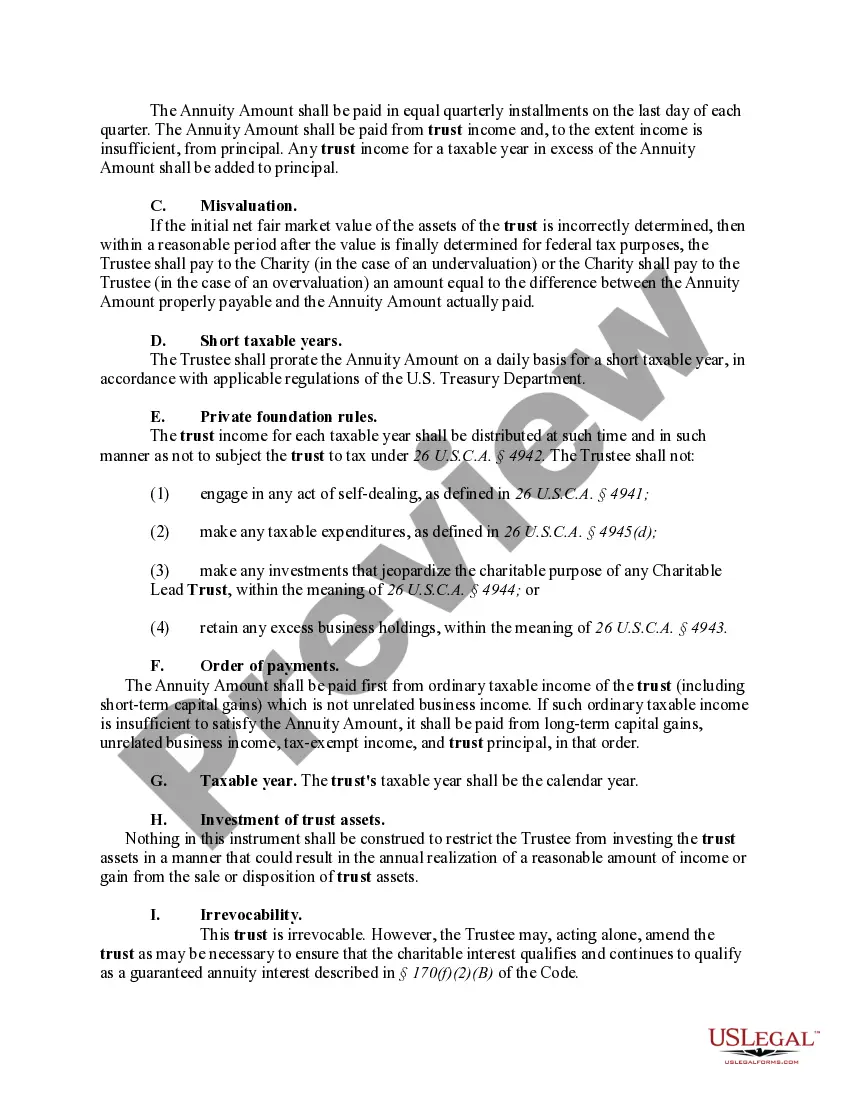
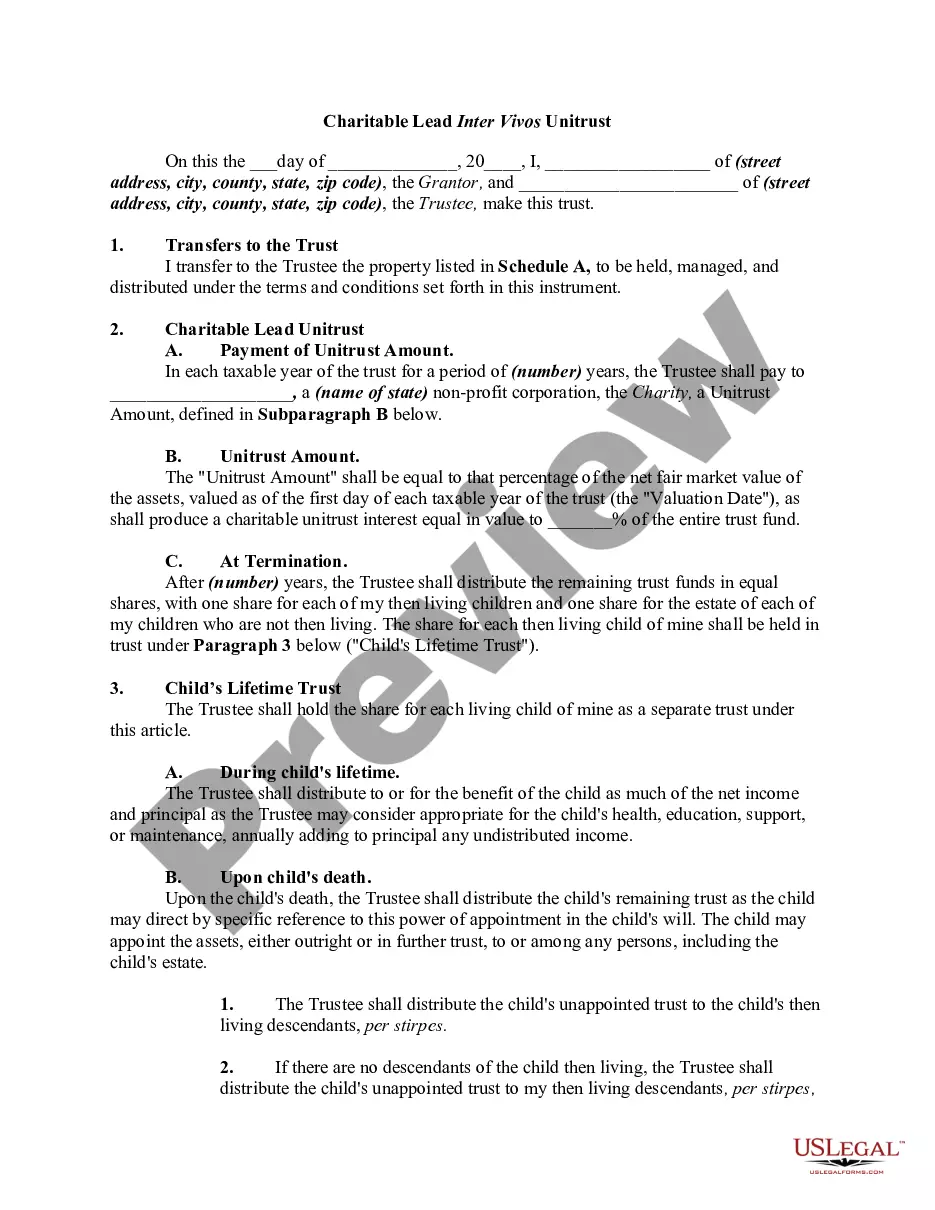
Charitable Remainder Trust
Description
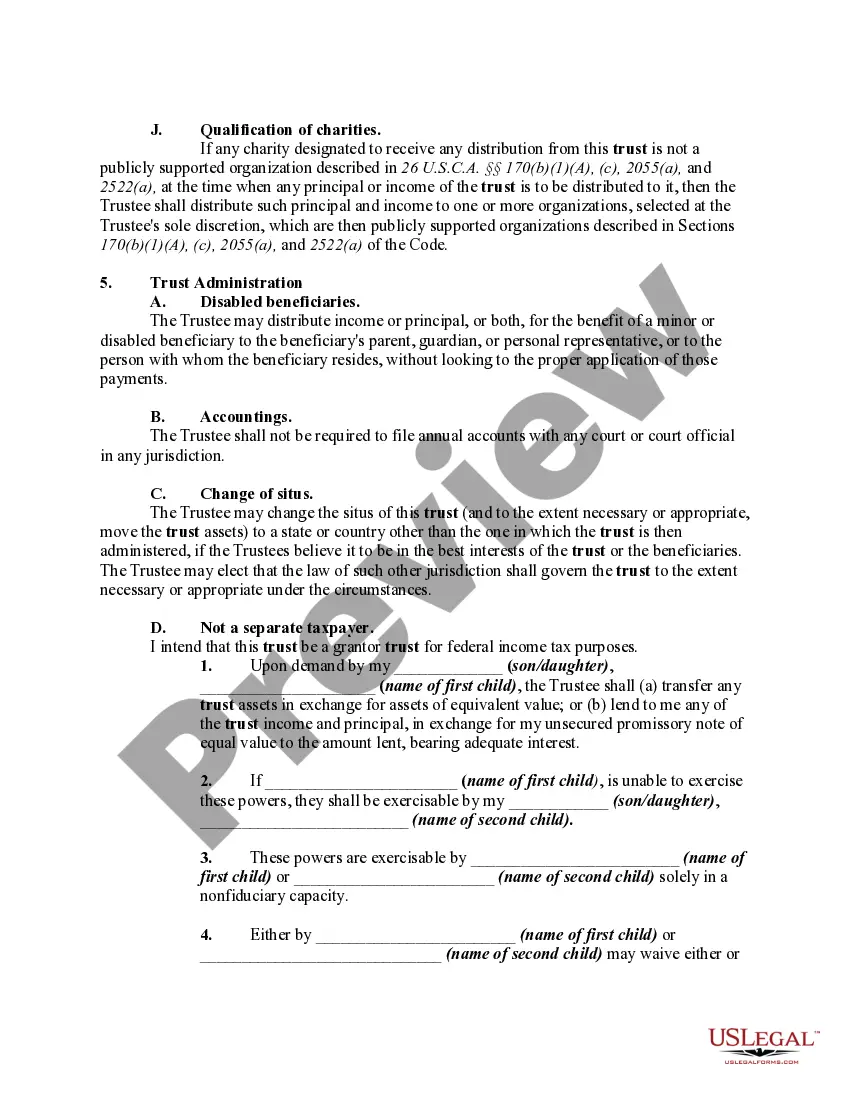
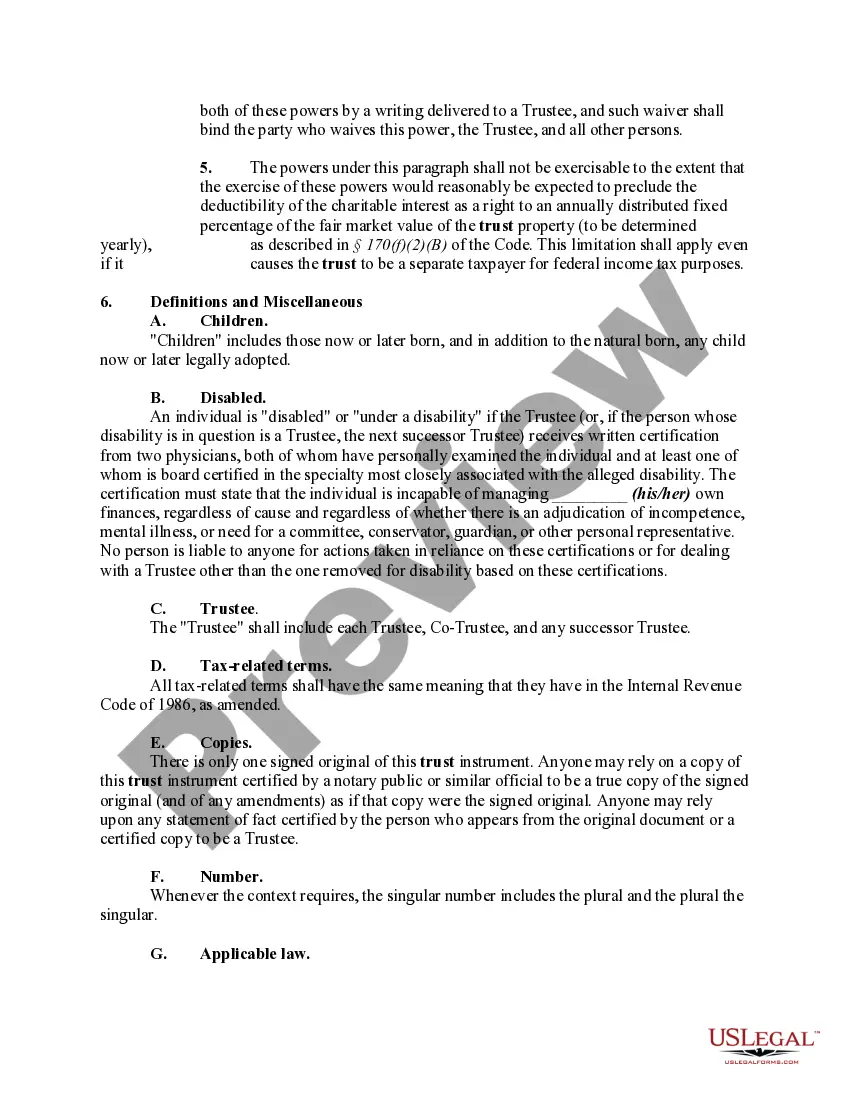
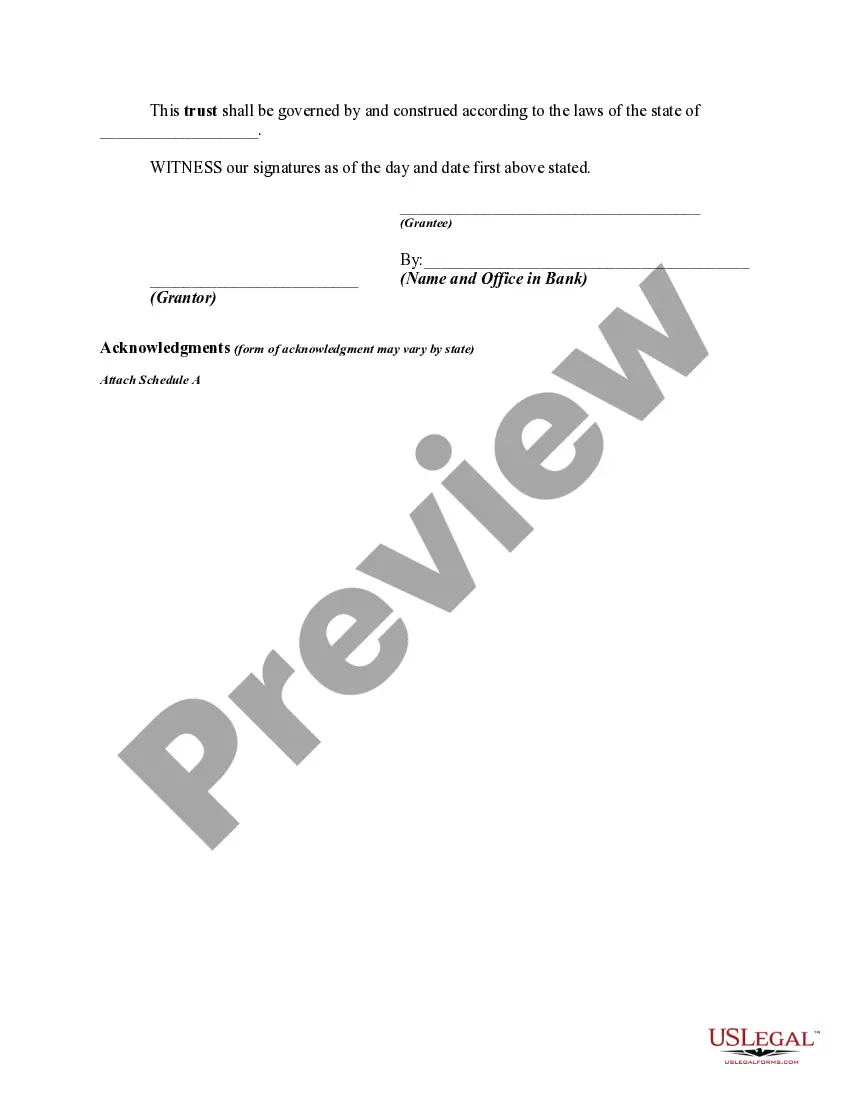
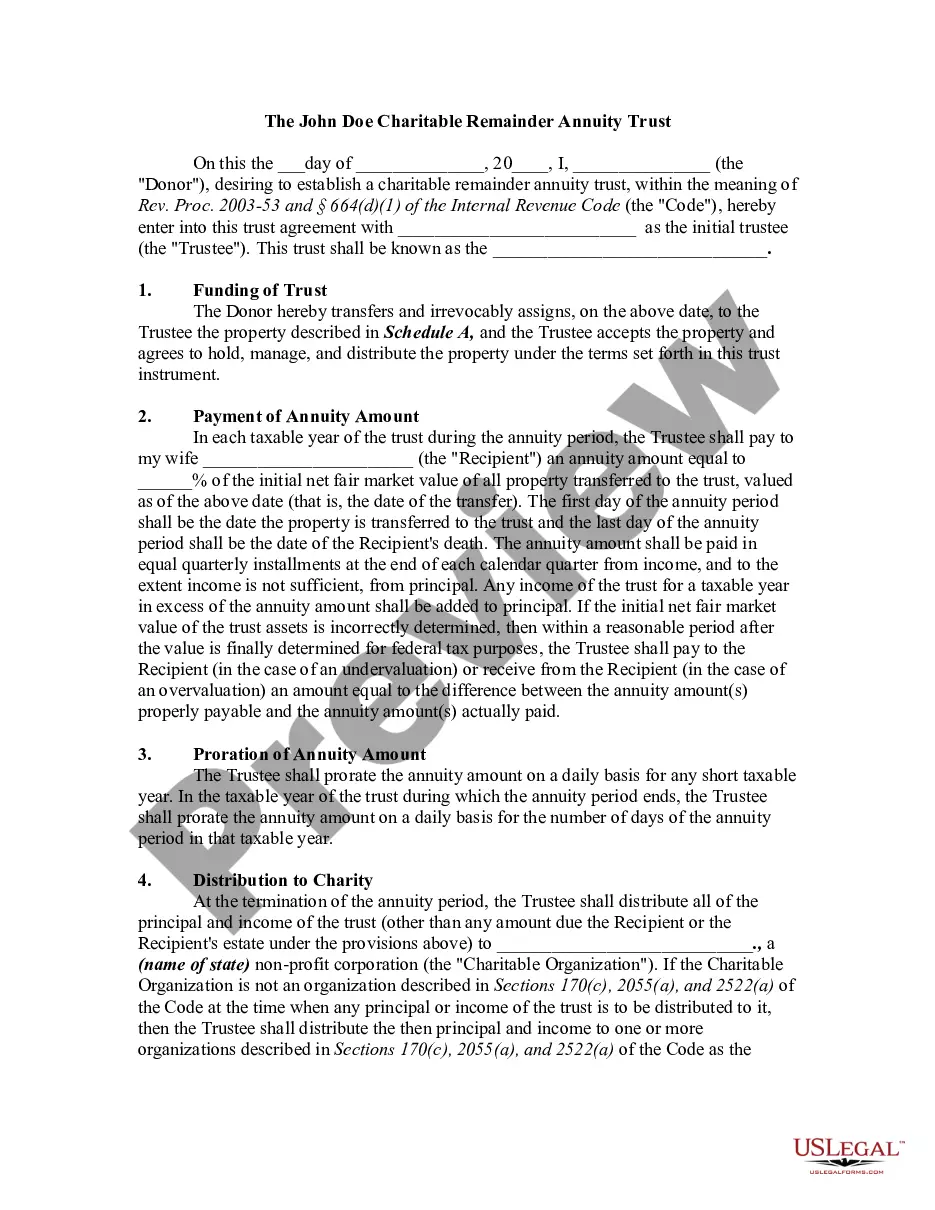
Get your form ready online
Our built-in tools help you complete, sign, share, and store your documents in one place.
Make edits, fill in missing information, and update formatting in US Legal Forms—just like you would in MS Word.
Download a copy, print it, send it by email, or mail it via USPS—whatever works best for your next step.
Sign and collect signatures with our SignNow integration. Send to multiple recipients, set reminders, and more. Go Premium to unlock E-Sign.
If this form requires notarization, complete it online through a secure video call—no need to meet a notary in person or wait for an appointment.
We protect your documents and personal data by following strict security and privacy standards.

Make edits, fill in missing information, and update formatting in US Legal Forms—just like you would in MS Word.

Download a copy, print it, send it by email, or mail it via USPS—whatever works best for your next step.

Sign and collect signatures with our SignNow integration. Send to multiple recipients, set reminders, and more. Go Premium to unlock E-Sign.

If this form requires notarization, complete it online through a secure video call—no need to meet a notary in person or wait for an appointment.

We protect your documents and personal data by following strict security and privacy standards.
Looking for another form?


How to fill out Charitable Inter Vivos Lead Annuity Trust?
- If you are an existing user, log into your account and find your required form under ‘My Forms’. Click the Download button. Ensure your subscription remains active; renew it if needed.
- For new users, begin by reviewing the available templates. Assess the Preview mode and ensure the document aligns with your specific requirements and local jurisdiction regulations.
- Should you need a different document, utilize the Search bar to find the correct form. Verify it matches your needs before proceeding.
- Purchase the chosen document by clicking on the Buy Now button, selecting your preferred subscription plan. You will need to create an account to gain full access to the library.
- Complete your purchase by entering your payment details using either a credit card or PayPal to activate your subscription.
- Download and save your form on your device. Access it anytime via the ‘My Forms’ section in your profile for easy reference.
After completing these steps, you will have successfully acquired your charitable remainder trust document. US Legal Forms empowers you with a streamlined process to ensure you can focus on your charitable goals rather than the complexities of legal documentation.
Start your journey today and explore the extensive library of forms to meet your legal needs!
Form popularity
FAQ
The income from a charitable remainder trust can vary based on its structure and the trust's assets. Typically, you can receive a fixed percentage of the trust's assets, ranging from 5% to 50%, which provides a predictable income stream. By leveraging resources like US Legal Forms, you can create a plan for your charitable remainder trust that effectively addresses your financial needs while supporting the interests you care about.
Charitable remainder trusts can be an excellent financial strategy for many individuals. They offer the benefit of generating income while supporting a charitable cause, making them attractive for those looking to leave a lasting legacy. As always, it is wise to consult a financial advisor to understand how a charitable remainder trust aligns with your personal financial goals.
Yes, a charitable remainder trust must file a tax return annually. This requirement ensures that the trust complies with IRS regulations and maintains its tax-exempt status. The filing process can be complex, so using platforms like US Legal Forms can simplify this task by providing the necessary forms and guidance.
Yes, you can create your own charitable remainder trust, but it's essential to follow legal requirements to ensure it operates correctly. Consulting with a legal expert or a trusted platform like US Legal Forms can provide you with the necessary templates and guidance needed to set it up. Having proper support will help you navigate the complexities of charitable remainder trusts and achieve your financial and philanthropic goals.
Charitable remainder trusts must follow specific rules to maintain their tax-exempt status. These rules include making annual payments to beneficiaries for a specified term or until their death, ensuring that at least 10% of the trust's assets go to charity upon termination. It is important to keep accurate records and follow IRS guidelines closely to protect the tax benefits associated with a charitable remainder trust.
A disqualified person in a charitable remainder trust includes individuals who have a close relationship with the trust creator, such as family members or substantial owners of the trust’s assets. This designation is crucial because transactions involving disqualified persons can lead to penalties and tax complications. It is essential to recognize these relationships to ensure compliance with IRS guidelines and maintain the trust's favorable tax treatment.
To establish a charitable remainder trust, you must create a formal trust agreement, which names the trust, identifies the beneficiaries, and outlines how assets will be managed. The trust must comply with IRS regulations, including designating a qualified charitable organization as a remainder beneficiary. Additionally, you need to determine the payout rate, which can significantly affect tax benefits and the trust's longevity.
The 5% rule for a charitable remainder trust pertains to the minimum payout that the trust must distribute to the income beneficiary. The trust must ensure that at least 5% of its value is distributed to the income beneficiary each year. This requirement balances the need for the beneficiary to receive income while also allowing for growth toward the charitable remainder. Understanding this rule is vital for effective trust management.
Some disadvantages of a charitable remainder trust include the complexity of its setup and potential operational costs. Donors may face restrictions on how assets are used once placed in the trust. Additionally, there is typically a need for professional advice to ensure compliance with tax regulations. These considerations are crucial for anyone thinking of utilizing a charitable remainder trust.
While charitable trusts offer many benefits, they also come with some disadvantages. For instance, once assets are placed in a charitable remainder trust, the donor cannot take them back. Additionally, setting up and maintaining the trust can involve legal and administrative costs. It is essential for individuals to weigh these factors carefully before deciding to establish a charitable trust.