Charitable Lead Annuity Trust Withholding
Description
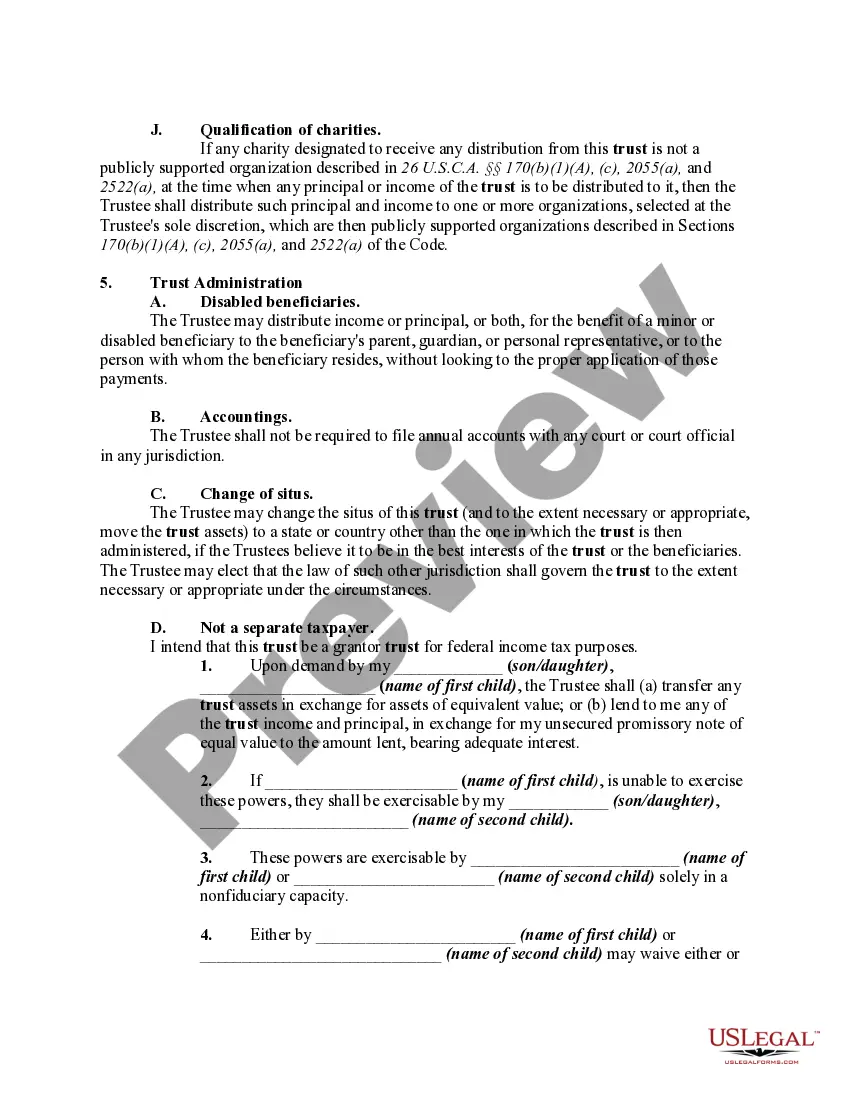
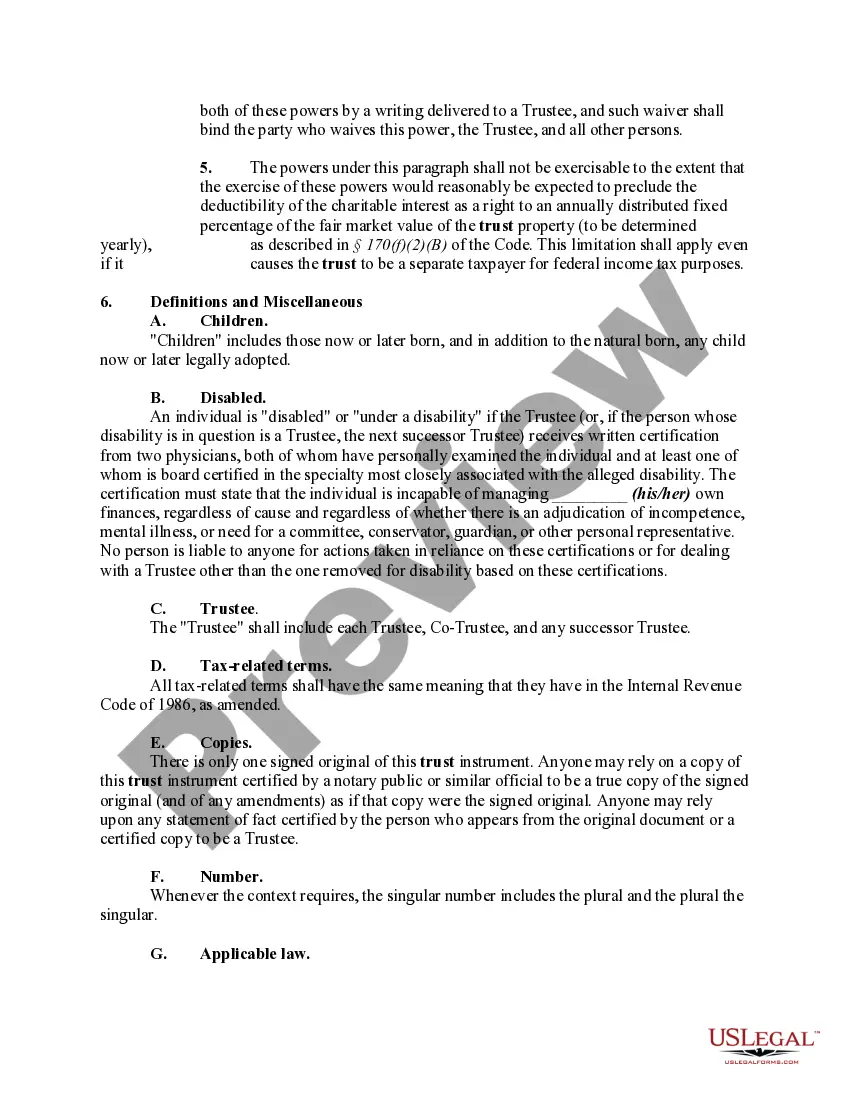
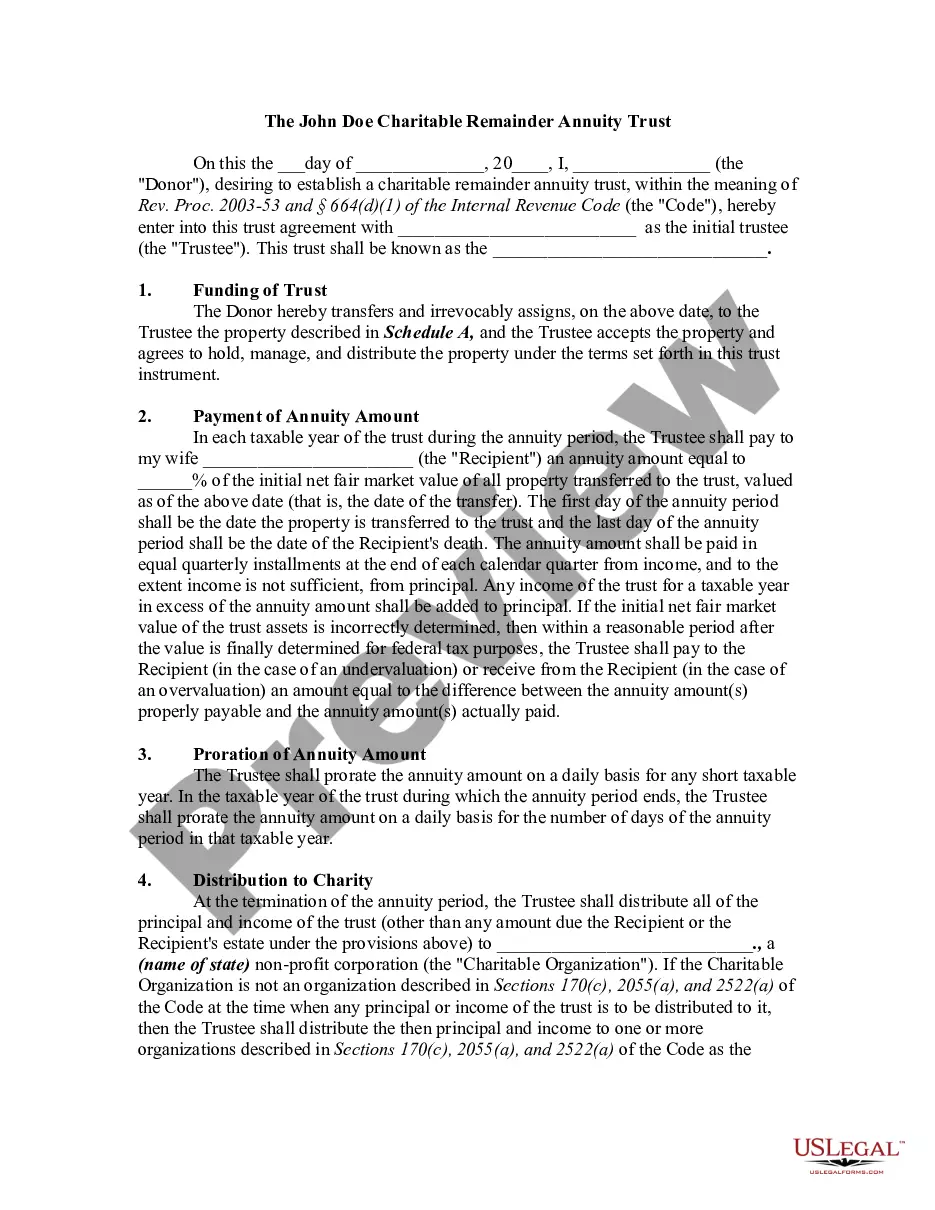
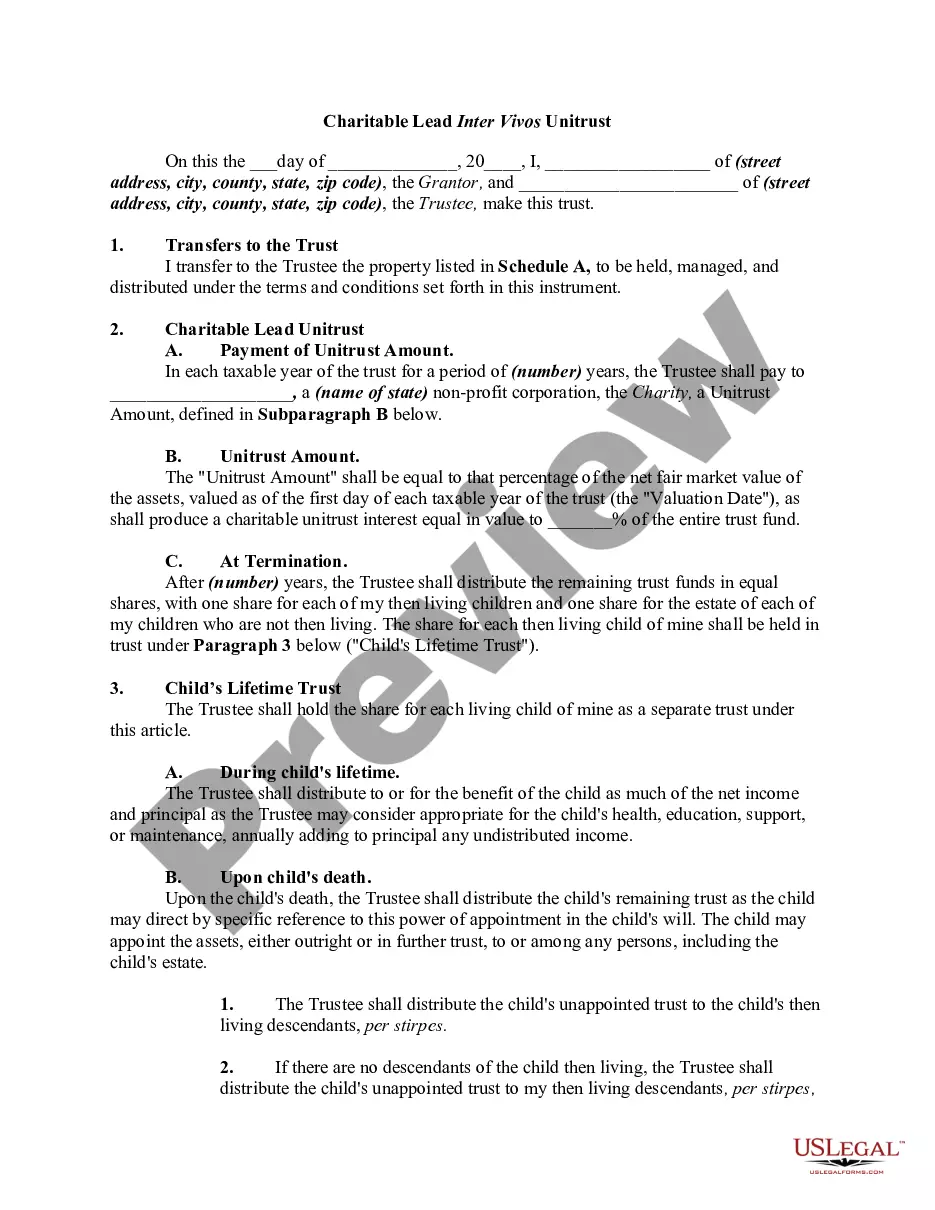
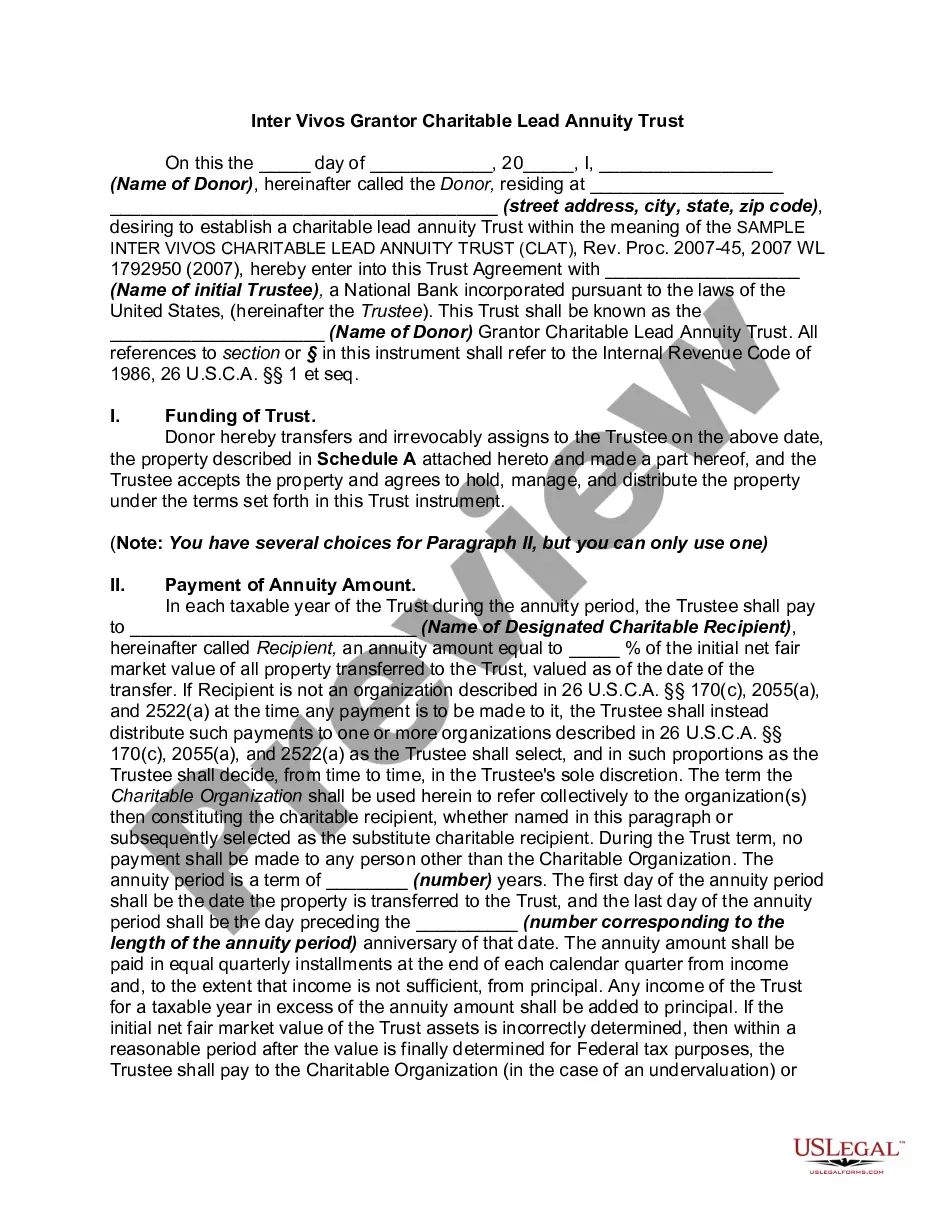
Get your form ready online
Our built-in tools help you complete, sign, share, and store your documents in one place.
Make edits, fill in missing information, and update formatting in US Legal Forms—just like you would in MS Word.
Download a copy, print it, send it by email, or mail it via USPS—whatever works best for your next step.
Sign and collect signatures with our SignNow integration. Send to multiple recipients, set reminders, and more. Go Premium to unlock E-Sign.
If this form requires notarization, complete it online through a secure video call—no need to meet a notary in person or wait for an appointment.
We protect your documents and personal data by following strict security and privacy standards.

Make edits, fill in missing information, and update formatting in US Legal Forms—just like you would in MS Word.

Download a copy, print it, send it by email, or mail it via USPS—whatever works best for your next step.

Sign and collect signatures with our SignNow integration. Send to multiple recipients, set reminders, and more. Go Premium to unlock E-Sign.

If this form requires notarization, complete it online through a secure video call—no need to meet a notary in person or wait for an appointment.

We protect your documents and personal data by following strict security and privacy standards.
Looking for another form?








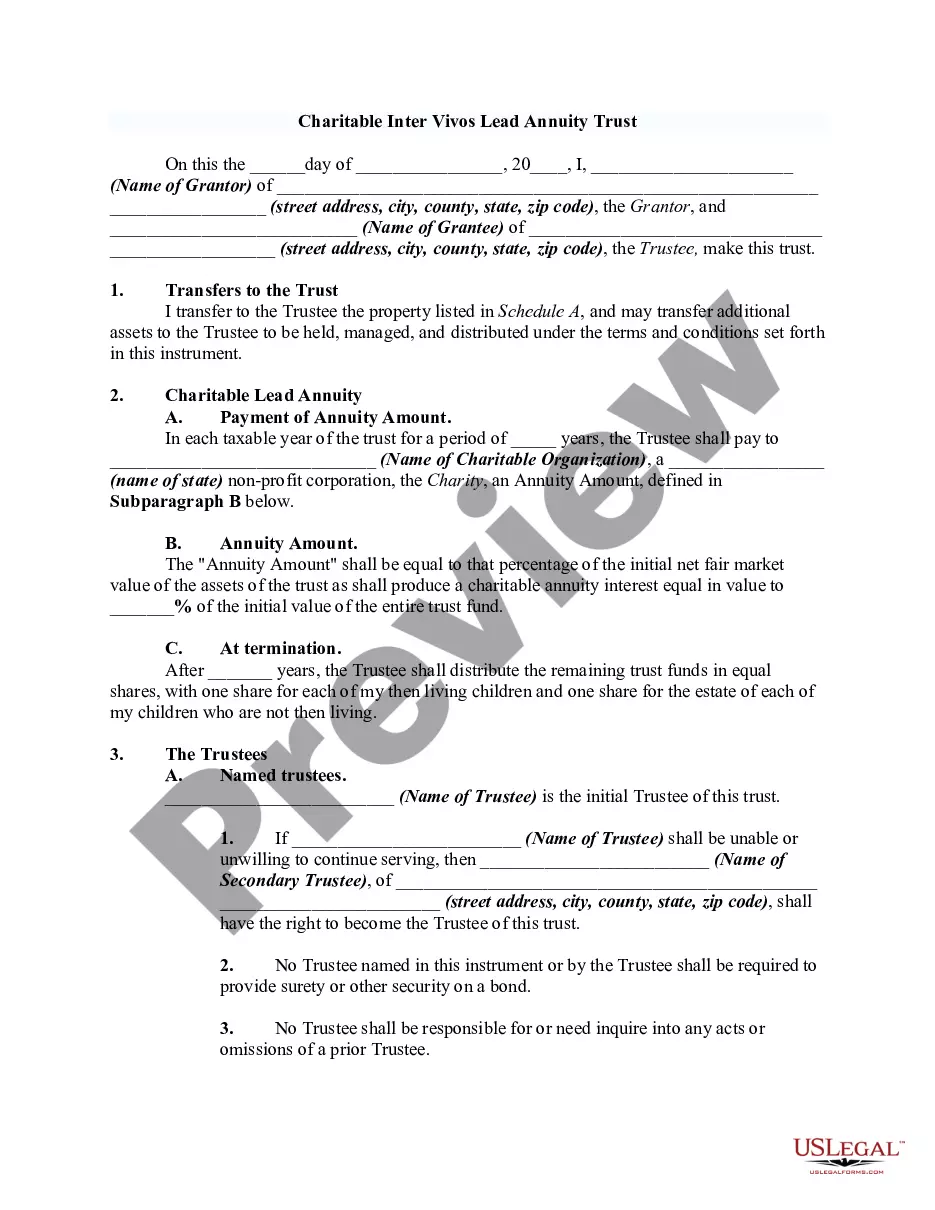
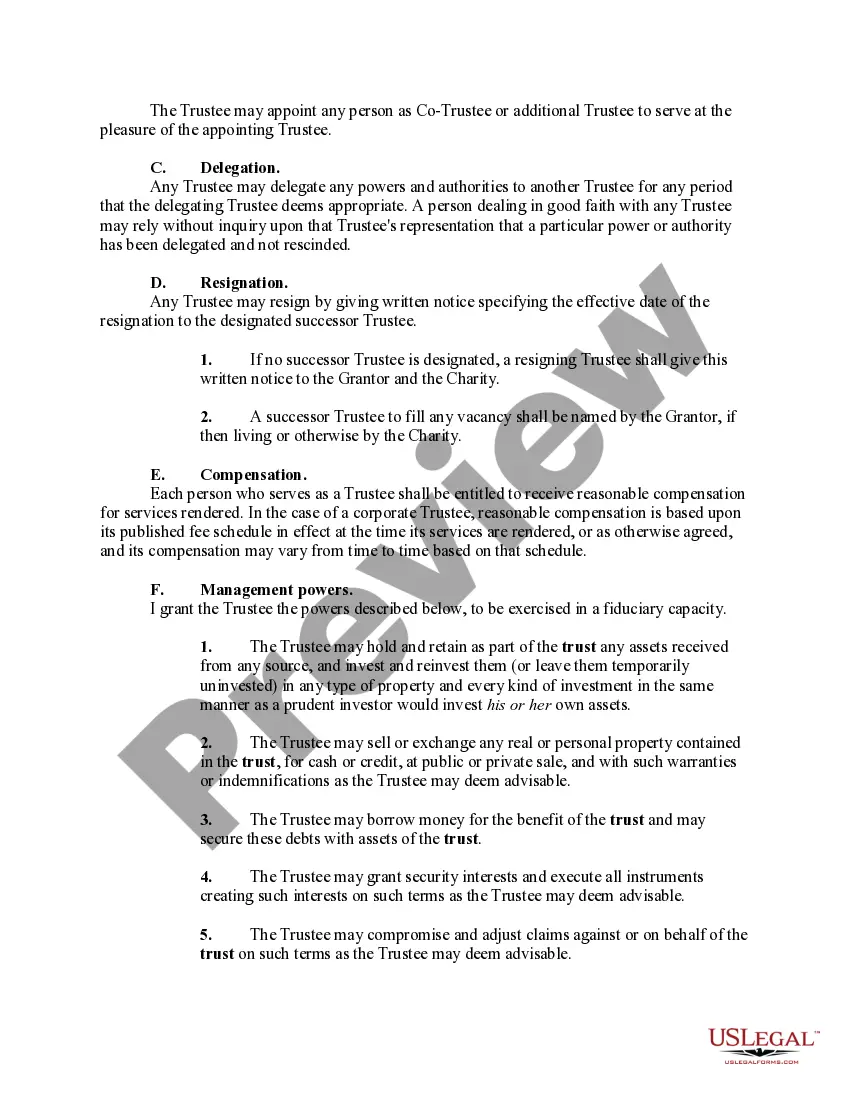
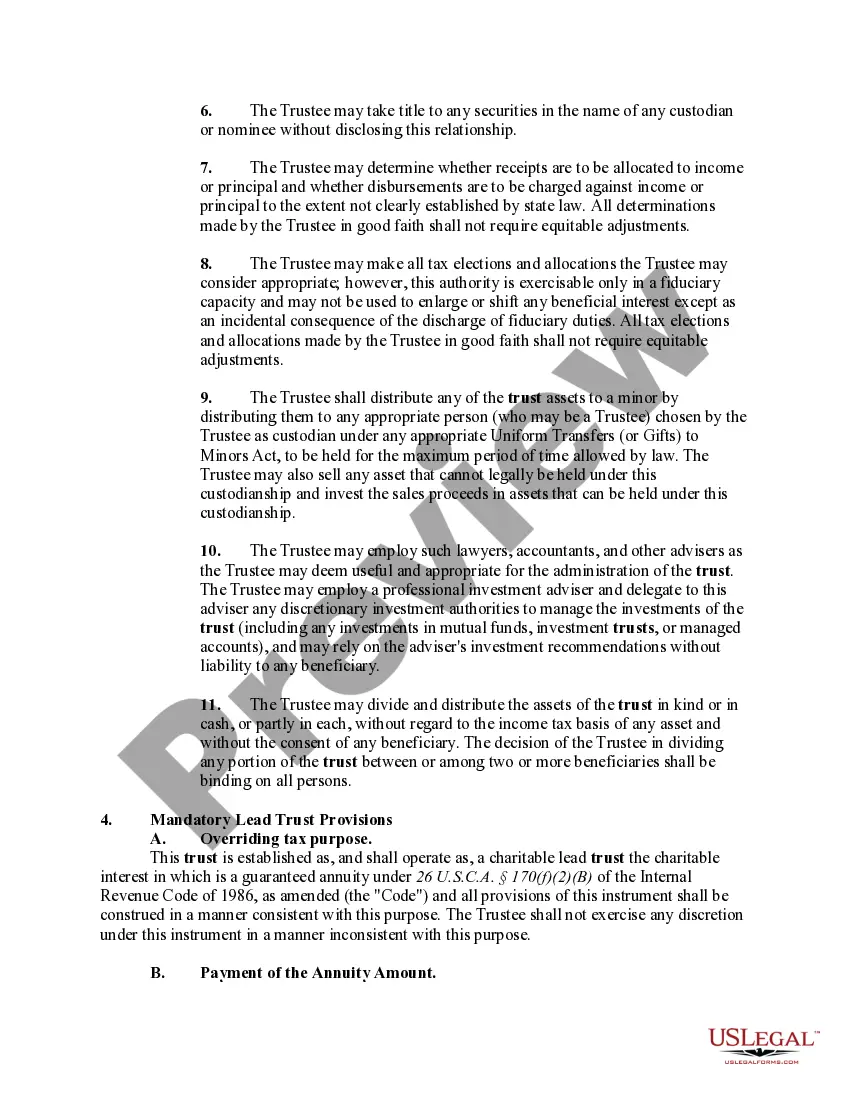
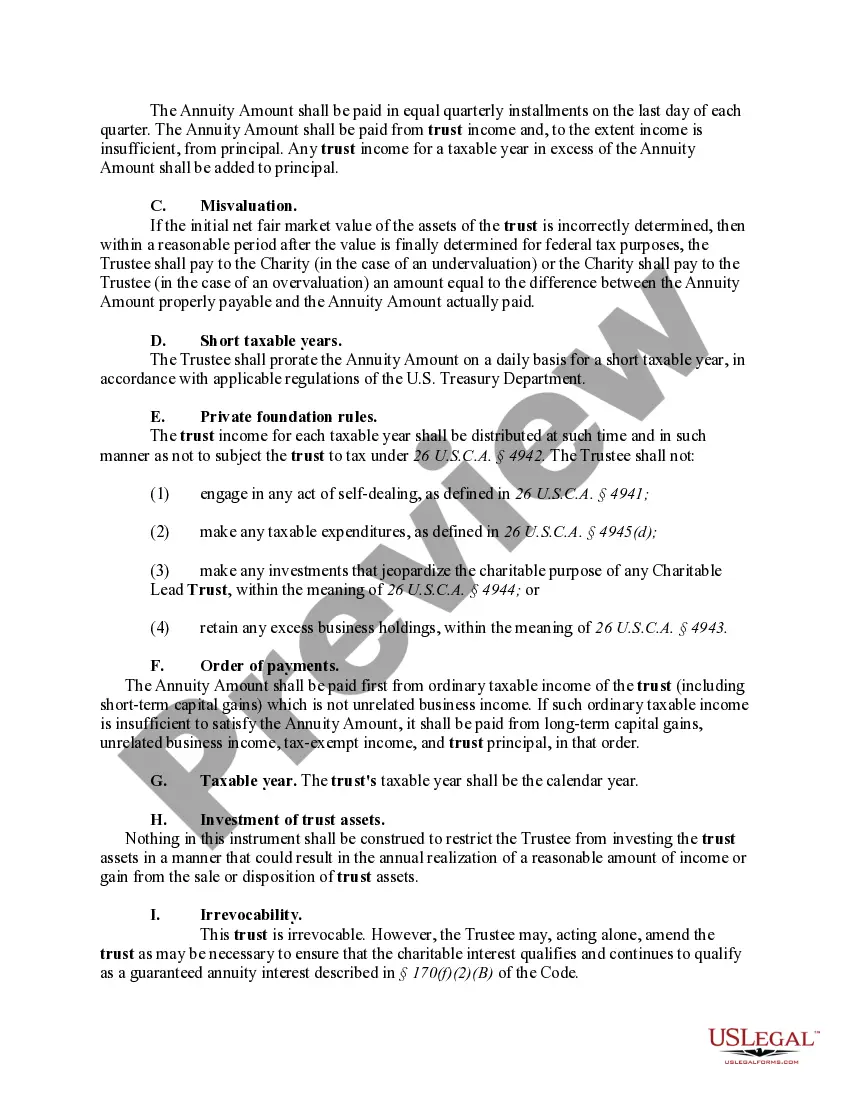
How to fill out Charitable Inter Vivos Lead Annuity Trust?
Regardless of whether it's for corporate reasons or personal matters, everyone eventually encounters legal circumstances in their lifetime.
Completing legal documents demands meticulous attention, starting with selecting the correct form template.
With an extensive US Legal Forms catalog available, you no longer need to waste time searching for the correct template online. Utilize the library’s user-friendly navigation to locate the right form for any situation.
- Obtain the form you require through the search bar or catalog navigation.
- Review the form’s description to confirm it fits your situation, jurisdiction, and county.
- Click on the form’s preview to examine it.
- If it's the wrong document, return to the search tool to find the Charitable Lead Annuity Trust Withholding template you need.
- Acquire the template once it aligns with your requirements.
- If you already have a US Legal Forms account, click Log in to access previously stored templates in My documents.
- If you don’t have an account yet, you can obtain the form by selecting Buy now.
- Select the suitable pricing option.
- Complete the profile registration form.
- Choose your payment method: either a credit card or PayPal account.
- Decide on the document format you desire and download the Charitable Lead Annuity Trust Withholding.
- Once saved, you can fill out the form using editing software or print it and complete it by hand.
Form popularity
FAQ
A charitable remainder trust can have some downsides that you should consider. First, it may require ongoing management and reporting, which could lead to additional administrative costs. Second, if you're not careful with the setup or distribution, you might face higher tax implications or issues with charitable lead annuity trust withholding. It’s essential to evaluate your situation and consult a professional to make informed decisions.
Some trusts may qualify for tax exemption, typically those with charitable purposes like charitable lead trusts. Irrevocable charitable trusts often receive favorable tax treatment due to their contributions to charitable organizations. However, it's crucial to examine each trust's specific structure and understand the implications of charitable lead annuity trust withholding to determine its tax status.
To file a Charitable Remainder Trust (CRT), start by ensuring that all necessary documents are prepared, including the trust agreement. You will typically file Form 5227 or Form 1041, depending on the structure of your trust. Consulting a knowledgeable tax professional can provide clarity on compliance and tax obligations, especially regarding charitable lead annuity trust withholding.
Yes, a charitable lead trust, including a charitable lead annuity trust, generally needs to file Form 1041 for income generated within the trust. This form helps report the trust's income, deductions, gains, and losses. Keeping proper records and understanding charitable lead annuity trust withholding can simplify the filing process and ensure accurate reporting.
Yes, Form 5227 can be filed electronically. This important form is used to report the activities of certain charitable trusts, including charitable lead annuity trusts. By using the right tax software or platform, you can streamline your filing process. Ensuring compliance with requirements tied to charitable lead annuity trust withholding becomes easier with electronic submission.
Charitable lead annuity trusts may incur taxes on income generated during their term. While the donor receives a tax deduction for the charitable contributions made, the trust's earnings can be subject to income tax. It’s essential to consult a tax professional to grasp the implications of charitable lead annuity trust withholding fully.
Charitable trusts, including charitable lead annuity trusts, can be subject to taxes on certain income. Typically, these trusts are designed to provide tax benefits while supporting charitable causes. However, the specific tax implications depend on the type of income generated by the trust. Understanding charitable lead annuity trust withholding can help you navigate these complexities.
Determining your withholding allowance can depend on various factors, including your income and family situation. To avoid overpaying taxes, assess your situation when you fill out your W-4 form. You might want to consult a tax professional to ensure you're correctly calculating your charitable lead annuity trust withholding. This step can save you from surprises at tax time.
Charitable lead trusts can offer tax benefits but are not necessarily tax-exempt in the same way as charitable trusts. They primarily allow the donor to make charitable donations from the income generated while passing remaining assets to heirs. Knowing how charitable lead annuity trust withholding operates can help you leverage these trusts effectively.
Charitable remainder trusts are generally not exempt from federal income tax on an annual basis. However, they allow for income distribution while enabling charitable deductions. Understanding the interactions with charitable lead annuity trust withholding can help you navigate tax implications and ensure favorable tax treatment.